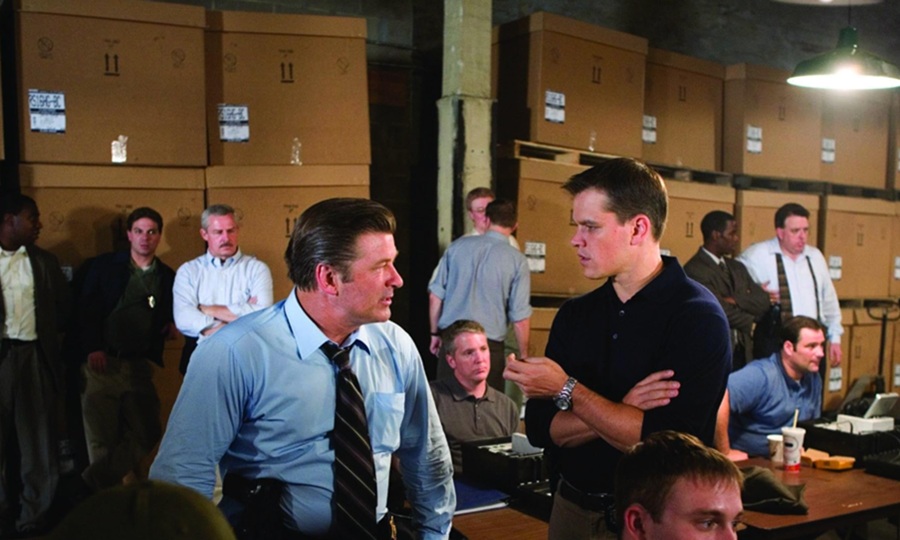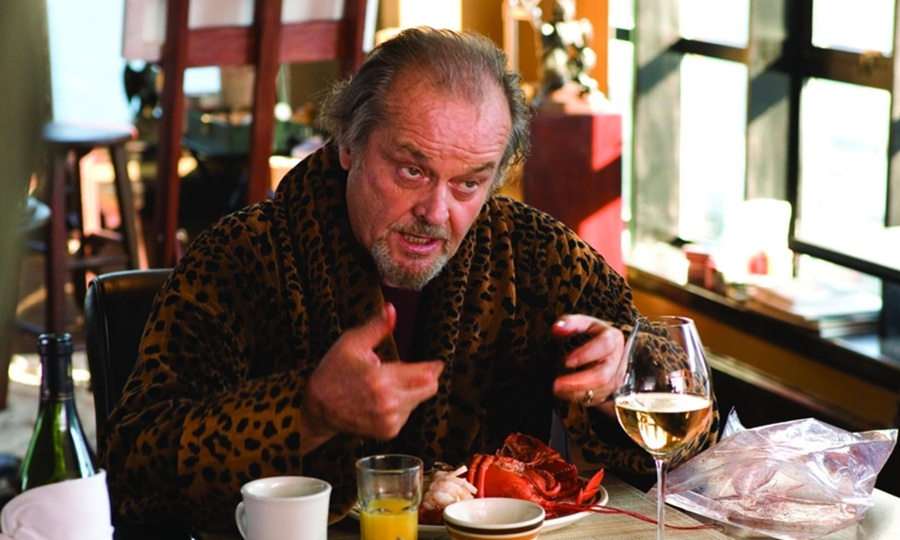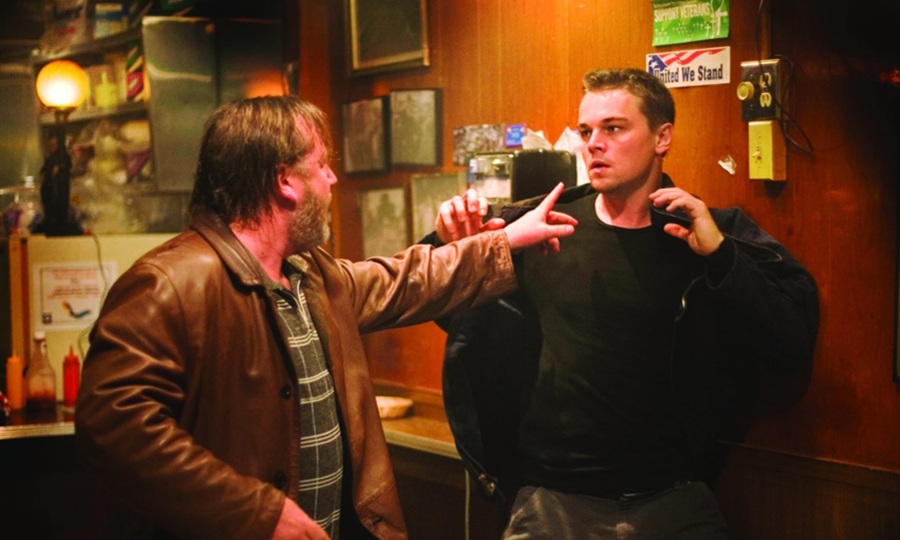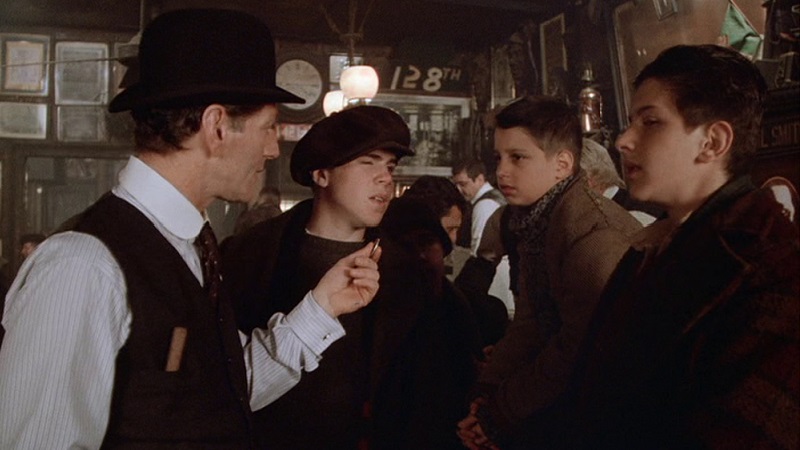
A Brooklyn State of Mind (1997)


‘Family First, Friends Second, The Mob Above All’

Directed by:
Frank Rainone

Written by:
Frank Rainone
Frederick J. Stroppel

Cast:
Vincent Spano (Al Stanco), Maria Grazia Cucinotta (Gabriela), Danny Aiello (Danny Parente), Abe Vigoda (Uncle Guy), Ricky Aiello (Nicky Vetrino), Tony Danza (Louie Crisci), Jennifer Esposito (Donna Delgrosso), Morgana King (Aunt Rose), Janice Steinmetz (Angie Stanco), Vincent Pastore (Vinnie ‘D’)

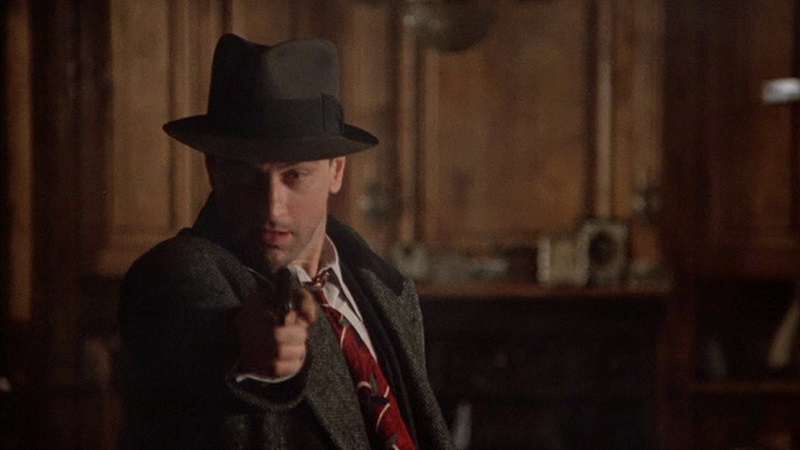
Childhood friends Al Stanco and Nicky Vetrino get sucked into the dark world of their mafia friend Danny Parente (Danny Aiello) while a young Sicilian girl, who rents a room from Al’s aunt, is making a movie about Brooklyn. She brings back old memories and some of the things she uncovers brings certain people in awkward positions. A time of new alliances has come to the neighborhood.

The good thing about A Brooklyn State of Mind is the way it creates a neighborhood feel. Brooklyn is shot and treated as a living and breathing character which gives you the feeling that you are really there. It is a nice place, a family place, but it isn’t all good. The real Brooklyn is also violent and corrupt. The mob is a destructive force, that much becomes clear.

A Brooklyn State of Mind had the potential to be a nice little movie, but doesn’t quite make it. The casting of Vincent Spano as leading man and Ricky Aiello is obviously a mistake. They come across as unnatural in a film that feels quite real. This authentic feel is also disturbed by the plot, which becomes very soapish towards the end. Danny Aiello makes up for this partly with his adequate role as the main villain.

Rating:

Quote:
DANNY PARENTE: “If you don’t want to be eaten, don’t swim with the big fish.”

Trivia:
Features two actors from The Godfather. Morgana King (Aunt Rose) who played Mama Corleone and Abe Vigoda (Uncle Guy) who played Sal Tessio.

Mobsters (1991)


‘They didn’t take orders…they took over’

Directed by:
Michael Karbelnikoff

Written by:
Michael Mahern
Nicholas Kazan

Cast:
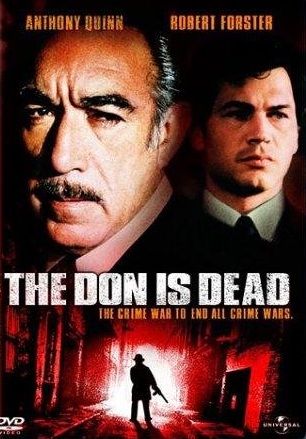
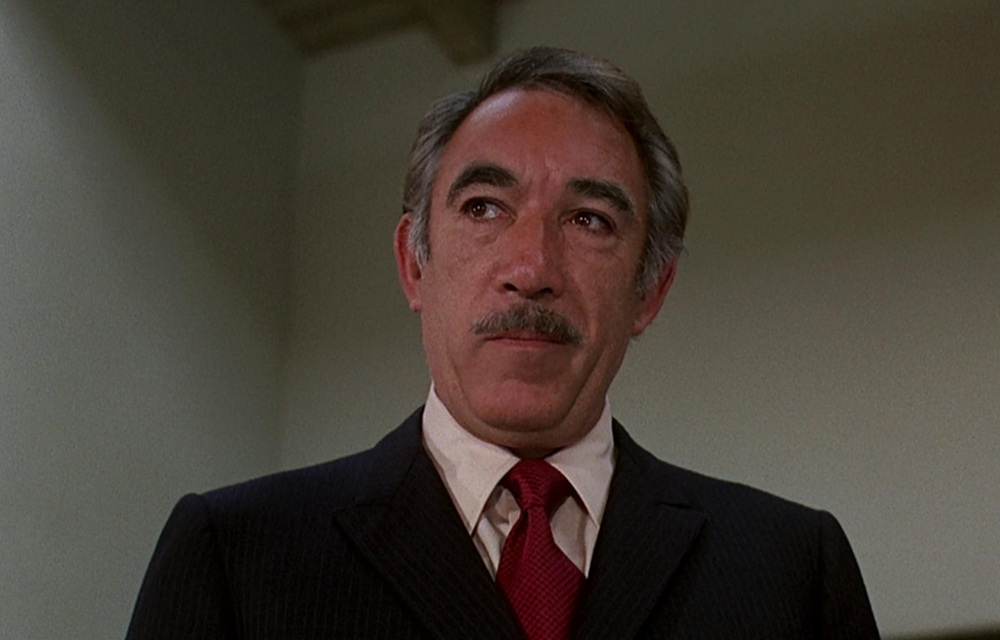
Christian Slater (Charlie ‘Lucky’ Luciano), Patrick Dempsey (Meyer Lansky), Richard Grieco (Bugsy Siegel), Costas Mandylor (Frank Costello), Lara Flynn Boyle (Mara Motes), F. Murray Abraham (Arnold Rothstein), Anthony Quinn (Don Giuseppe ‘Joe the Boss’ Masseria), Michael Gambon (Don Salvatore Faranzano), Christopher Penn (Tommy Reina), Nicholas Sadler (Mad Dog Coll), Joe Viterelli (Joe Profaci), Seymour Cassel (Father Bonotto)

This 1991 gangster movie – also known as The Evil Empiretells the true story of Charlie ‘Lucky’ Luciano. He grows up on Mott Street, New York in the twenties together with his friend Frank Costello. The two Italian kids start a partnership with the Jewish Meyer Lansky and Bugsy Siegel. As an organised gang, they start bootlegging and soon they team up with gambling genius Arnold Rothstein, the man who fixed the world series. Charlie becomes the leader of the gang.

The young men’s rise doesn’t go unnoticed by the two big bosses of New York; Don Masseria and Don Faranzano. They both want Charlie to work for them in order to become the biggest New York family. When Faranzano wants to hit them, Charlie and his friends have no choice but to temporarily join Masseria.

When the probation comes to an end, the time has come to knock off the traditional dons and start a nation-wide crime syndicate headed by a commission. But Masseria and Faranzano are no easy targets and start moving things themselves. It’s now a matter of who strikes first…

This movie, based on historic facts, doesn’t deliver on all fronts. The four leads are miscast as the ruthless, sociopathic criminals their characters are supposed to be. They’re just too mild-tempered and friendly looking to come across as anything near dangerous. Also the historic accuracy of the story is taken with a grain of salt to benefit the violent action the film contains.

What the movie does deliver on is beautiful production design. There are great montages of tommy guns, dancing girls, liqueur transports, crap games and spinning roulette wheels. The supporting cast is delicious with veteran actors such as Anthony Quinn, Michael Gambon and F. Murray Abraham. It’s a shame this film doesn’t fully live up to its promises, but it’s still worth a look, because of the impressive supporting cast and simply because the movie is so entertaining.

Rating:

Quote:
ARNOLD ROTHSTEIN: “What’s the secret of America? MONEY! Everything is money Charlie. But you’ll never make any money because you dress like a schmuck.”

Trivia:
This is the first American film that stars Michael Gambon.

The St. Valentine’s Day Massacre (1967)

Directed by:
Roger Corman

Written by:
Howard Browne

Cast:
Jason Robards (Al Capone), George Segal (Peter Gusenberg), Ralph Meeker (George Clarence ‘Bugs’ Moran), Jean Hale (Myrtle), Clint Ritchie (Jack McGurn), Frank Silvera (Nick Sorello), Joseph Campanella (Albert Wienshank), Richard Bakalyan (John Scalise), David Canary (Frank Gusenberg), Bruce Dern (Johnny May)

Roger Corman’s gangster movies are generally enjoyable. The St. Valentine’s Day Massacre that follows the famous violent event on February 14, 1929 has got to be his most boring one.

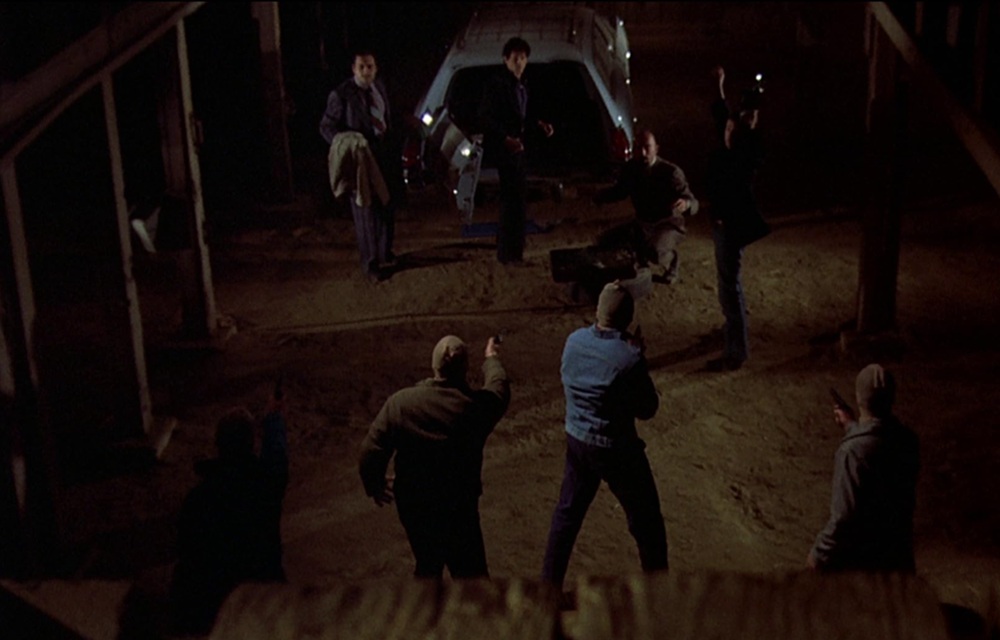
On this specific St. Valentine’s Day, Al Capone set a legendary trap for seven men that were working for his opponent Bugs Moran. In the gang war preceding it, Moran tried to kill Capone to take over the bootlegging and gambling profits in Chicago. The movie uses a sort of journalistic approach. A narrator introduces every character involved and covers the events in a newspaper sort of way.

Al Capone, played by Jason Robards, is the unchallenged leader of Chicago’s most powerful underworld organisation. Robards portrays ‘Alphonse’ as an uncontrolled and ruthless hothead. He yells too often, but still turns in a decent performance. All the supporting characters get a detailed background story provided by the narrator. Unfortunately, there are way too many to remember.

If you enjoy technically proficient Tommy Gun action, you may find something to like about this film. Otherwise, the too factual approach and lack of drama will probably leave you as cold as one of the stiffs from the massacre.

Rating:

Quote:
NARRATOR: “In the years following the passage of the National Prohibition Act of 1920, the nation’s underworld rises to power and battles amongst itself just as modern nations and corporations do.”

Trivia:
The St. Valentine’s Day Massacre’ is also an important event in Capone (1975), a gangster film produced by Roger Corman and starring Ben Gazzara as Al Capone.

Miller’s Crossing (1990)


‘Up is down, black is white, and nothing is what it seems’

Directed by:
Joel Coen

Written by:
Joel Coen
Ethan Coen

Cast:
Gabriel Byrne (Tom Reagan), Marcia Gay Harden (Verna), John Turturro (Bernie Bernbaum), Jon Polito (Johnny Caspar), J.E. Freeman (Eddie Dane), Albert Finney (Leo), Mike Starr (Frankie), Al Mancini (Tic-Tac), Steve Buscemi (Mink), Richard Woods (Mayor Dale Levander)

‘I’m talkin’ about friendship. I’m talkin’ about character. I’m talkin’ about—hell, Leo, I ain’t embarrassed to use the word—I’m talkin’ about ethics.’ That’s how Italian crime boss Johnny Caspar (Jon Polito) begins his speech to Irish kingpin Leo O’Bannion (Albert Finney) in the opening of Miller’s Crossing. It immediately recalls the first scene of The Godfather, where undertaker Bonasera appeals in much the same way to Don Vito Corleone.

The favor Caspar asks of O’Bannion is permission to whack two-timing bookie Bernie Bernbaum (John Turturro). Leo refuses, since Bernie is the brother of Verna (Marcia Gay Harden), the woman he’s fallen in love with. Of course, Caspar wasn’t really asking permission—he was informing Leo as a courtesy, as he angrily makes clear after being turned down. Gangsters with ethics toward one another: that’s the foundation of Miller’s Crossing. When Leo breaks this unspoken code among the city’s corrupt rulers, the result is all-out war.

The theme of crooks with ethics is embodied in Leo’s right-hand man Tom Reagan (Gabriel Byrne), the film’s central character. He follows a personal code that only he fully understands. Though secretly having an affair with Verna, Tom – unlike Leo – believes Bernie should be handed over to the Italians. He knows that breaking the underworld code is bad for business. But Leo is stubborn, and their disagreement grows until Tom finally confesses the affair. Leo cuts ties, and Tom immediately shifts allegiance to Caspar. His motive, however, is not self-interest. Though finished with Leo, Tom’s loyalty to his old friend remains.

The web of deceit that quickly unfolds in Miller’s Crossing is complex enough to merit a second viewing. Adding to the intricacy are numerous characters referenced but rarely seen. Still, the story – drawn from Dashiell Hammett novels like ‘The Glass Key’ and ‘Red Harvest’, and infused with classic gangster and neo-noir elements – is masterfully told. The Coens integrate these influences into a killer script, ironically born from a period of writer’s block. Their trademark humor and eccentric characters are on full display, while the dialogue carries a poetic cadence that might even make Shakespeare jealous.

The plotlines themselves may not be original, but the Coens conjure a dreamlike world where, as the tagline promises, nothing is what it seems. The mood is unmistakably Irish – you can almost smell the whiskey. Carter Burwell’s haunting score, the gorgeous cinematography, and evocative settings all heighten the effect. The tone shifts effortlessly from cartoonish to brutally violent, without warning or transition.

The cast is uniformly excellent. Gabriel Byrne makes Tom a sympathetic bastard it’s hard not to root for; if I had to trade places with a Prohibition-era gangster, I’d pick him without hesitation. The supporting roles are just as strong, with John Turturro delivering a powerhouse turn as Bernie, a spineless schemer whose lack of ethics drives the story. Miller’s Crossing also reinvents the use of hats and overcoats. Not that there’s any hidden meaning – there’s nothing’s more foolish than looking for meaning in a hat.

Features a terrific cameo from the Coen’s friend Sam Raimi as a trigger happy cop.

Rating:

Quote:
Tom Reagan: Nobody knows anybody. Not that well.

Trivia:
The Coen Brothers suffered writer’s block while working on the script for Miller’s Crossing. They took a three-week break and wrote the script for their next movie Barton Fink during that time, about a writer with writer’s block. There are two references to Barton Fink in this film. The first one is the name of Tom Reagan’s residence called ‘The Barton Arms’. The second is a newspaper article that reads ‘Seven Dead in Hotel Fire’.