Cult Radar: Part 12

FilmDungeon.com is glad to explore the video trenches to find that oddball treasure between the piles of crap out there. Of course, a treasure in this context can also be a film that’s so shockingly bad it’s worth a look, or something so bizarre that cult fans just have to see it. Join us on our quest and learn what we learn. Hopefully we’ll uncover some well-hidden cult gems.

Researched by: Jeppe Kleijngeld
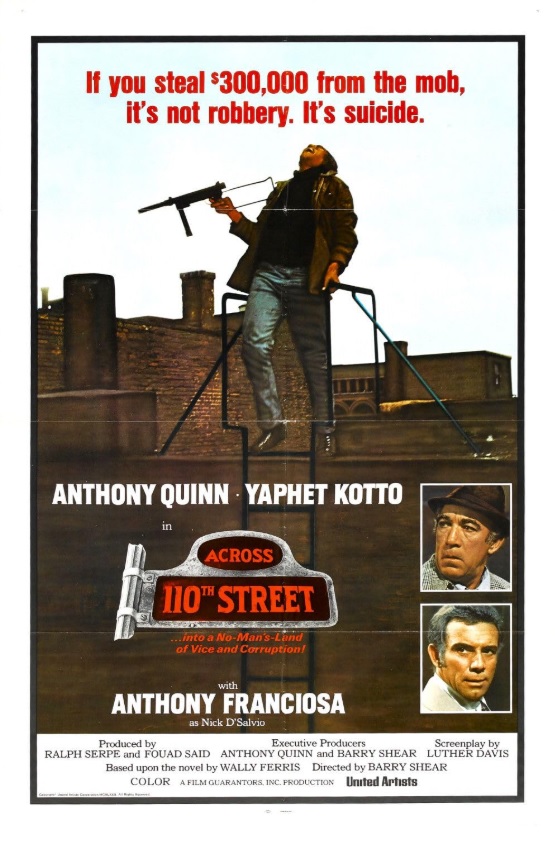
Across 110th Street (USA, 1972)

Directed by: Barry Shear
Written by: Luther Davis, Wally Ferris
Cast: Anthony Quinn, Yaphet Kotto, Anthony Franciosa

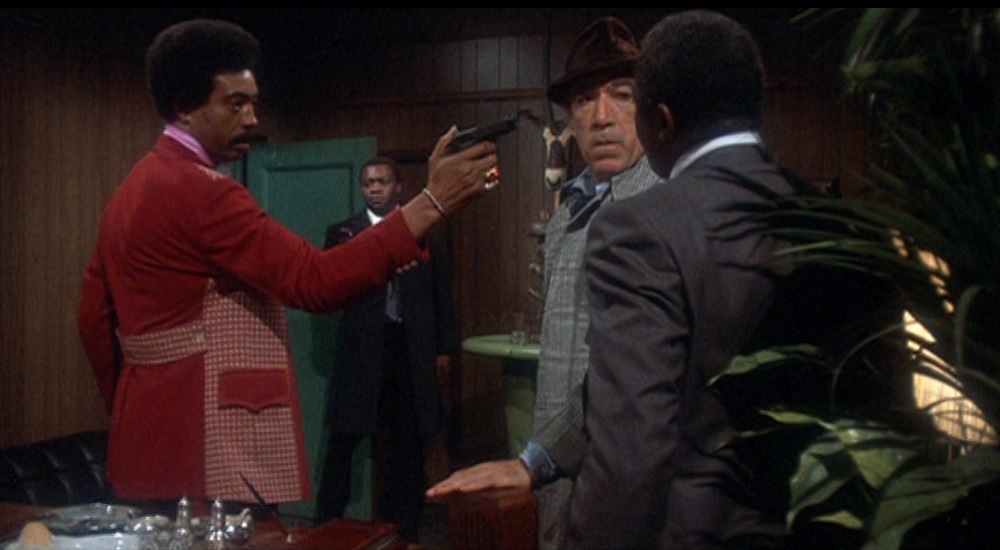
Tarantino’s Jackie Brown opens to the same rip-roaring title song as this movie: ‘Across 110th Street’ by Bobby Womack. It’s a homage to an exploitation classic, a New York set crime thriller about a gang of black criminals who rob the mob, sparking a brutal chase involving both the Mafia and the police. The police duo in charge consists of the corrupt captain Frank Matteli (Anthony Quinn) and Lieutenant William Aylesworth Pope (Yaphet Kotto); a street guy versus a guy who wants to do it by the book. Their chemistry is electric, giving the movie an emotional and moral backbone amid the chaos. The film was slammed at the time for the extreme violence, and while the film is indeed gritty, it is generally well acted and executed. Beneath the grit lies a sharp commentary on race, corruption, and urban decay in 1970s America. Watching it now, it’s easy to see why Tarantino holds it in such high regard.

The Curse of Frankenstein (UK, 1957)

Directed by: Terence Fisher
Written by: Jimmy Sangster (screenplay), Mary Shelley (novel)
Cast: Peter Cushing, Hazel Court, Robert Urquhart, Christopher Lee

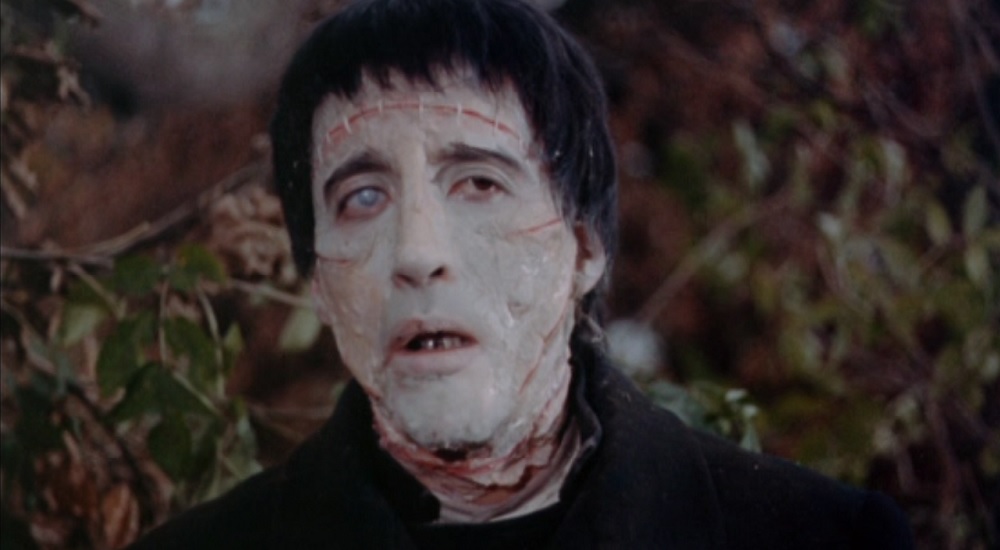
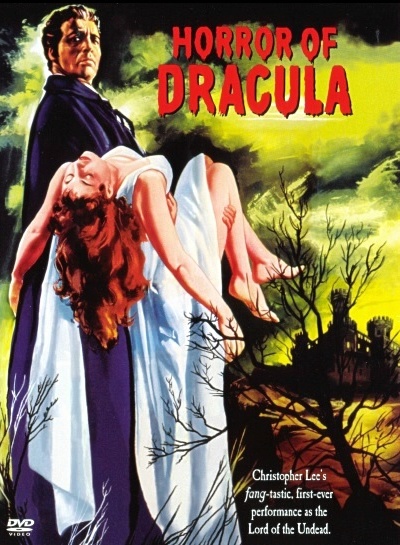
Peter Cushing stars as Dr. Frankenstein and Christopher Lee as the creature in Hammer Studios’ retelling of the Frankenstein legend. Directed by Terence Fisher, who would go on to make Horror of Dracula a year later, this film is often regarded as one of the finest adaptations of Mary Shelley’s novel, even rivaling the classic Universal versions. Told in flashback from a prison cell, Victor Frankenstein recounts the story of how his obsession with discovering the secret of life led him to commit unspeakable crimes. For a film made in 1957, the horror remains remarkably effective, due in large part to Lee’s chilling performance. As Hammer’s first color horror film, The Curse of Frankenstein was notable for its bold use of gore in color and its vivid gothic style. It marked the beginning of the studio’s signature brand of horror and launched a successful series of sequels, with Fisher directing several of them.

Dark Star (USA, 1974)

Directed by: John Carpenter
Written by: John Carpenter, Dan O’Bannon
Cast: Dan O’Bannon, Dre Pahich, Brian Narelle

John Carpenter’s debut film gives us a cynical look at outer space travel. Not the majestic kind Kubrick showed us in 2001: A Space Odyssey, but more like space travel as a monotonous, blue-collar grind. Dark Star is the name of the ship that looks like a surf board. The job of its crew is to destroy unstable planets. And while this may sound exciting, the five crew members – who have been on board Dark Star for twenty years – are mostly bored out of their minds and increasingly detached from reality. Co-writer and actor Dan O’Bannon originally conceived the idea of an alien aboard the ship, but budget limitations forced him to turn that concept into the film’s now-infamous beach-ball creature. His alien idea would later become Ridley Scott’s Alien (1979). Tarantino once called this movie a masterpiece. I don’t see it that way, but I like the 2001 parody concept and the execution, including the inventive special effects, is certainly well done.

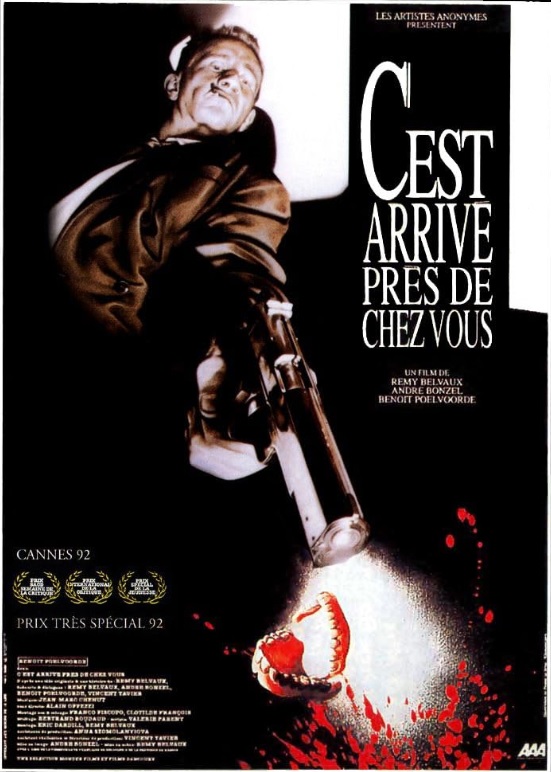
Man Bites Dog | C’est arrivé près de chez vous (Belgium, 1992)

Directed by: Rémy Belvaux, André Bonzel, Benoît Poelvoorde
Written by: Rémy Belvaux, André Bonzel, Benoît Poelvoorde
Cast: Benoît Poelvoorde, Jacqueline Poelvoorde-Pappaert, Nelly Pappaert

In this notorious cult classic from the French part of Belgium, a three-headed camera crew follows the gleefully depraved serial killer Ben, as he spends his days gruesomely murdering people for sport and profit. During the shoot, the crew becomes more and more complicit in Ben’s crimes. The sheer amount of killings is not very realistic, but the profiling of the killer, chillingly portrayed by Benoît Poelvoorde, convinces in all its sickness. The mockumentary concept was pretty new at the time, and the approach – taking the viewer inside the mind of a horrible human being, who – when he’s not busy killing people against depressing urban backdrops – is offering his warped and racist views in interviews – makes for disturbing cinema. The filmmakers, who worked on a shoestring budget, wanted to make something different, and they have succeeded in this task. C’est arrivé près de chez vous (‘It Happened Near You’) became a unique, deeply unsettling, and darkly comic milestone of cult cinema.

The Lady in Red (USA, 1979)

Directed by: Lewis Teague
Written by: John Sayles
Cast: Pamela Sue Martin, Robert Conrad, Louise Fletcher

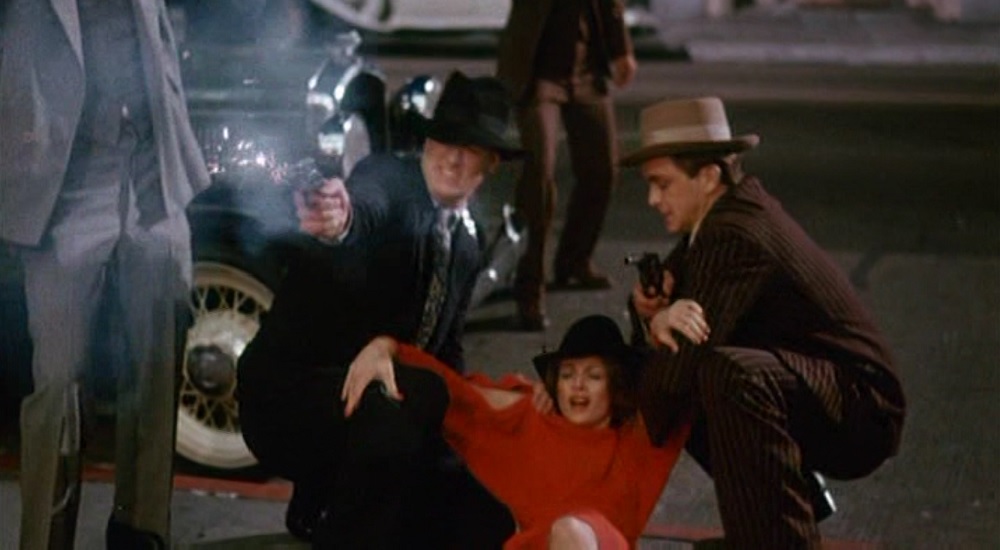
Farm girl Polly moves to Chicago, where she becomes romantically involved with gangster John Dillinger. The film is curious in that it’s not really about Dillinger, but about his girlfriend and the unwitting role she played in the gangster’s famous demise at a movie theater. It traces Polly’s own descent into crime: she starts out as a seamstress, tries her hand at prostitution, and eventually ends up in jail. After Dillinger’s death, she organizes a dangerous but lucrative armed robbery on her own. Written by John Sayles, directed by Lewis Teague, and produced by Julie Corman – indeed, Roger Corman’s wife – the film unmistakably feels like a Corman-style exploitation picture, complete with plenty of bloody, machine-gun action. In his 2021 book ‘Once Upon a Time in Hollywood‘, Quentin Tarantino mentioned that in an alternate Hollywood universe, he directed a remake of this film. It certainly sounds like something he’d do well. Who knows – maybe an idea for his tenth and final movie?
Cult Radar: Part 11

FilmDungeon.com is glad to explore the video trenches to find that oddball treasure between the piles of crap out there. Of course, a treasure in this context can also be a film that’s so shockingly bad it’s worth a look, or something so bizarre that cult fans just have to see it. Join us on our quest and learn what we learn. Hopefully we’ll uncover some well-hidden cult gems.

Researched by: Jeppe Kleijngeld

Q: The Winged Serpent (USA, 1982)

Directed by: Larry Cohen
Written by: Larry Cohen
Cast: David Carradine, Michael Moriarty, Candy Clark, Richard Roundtree

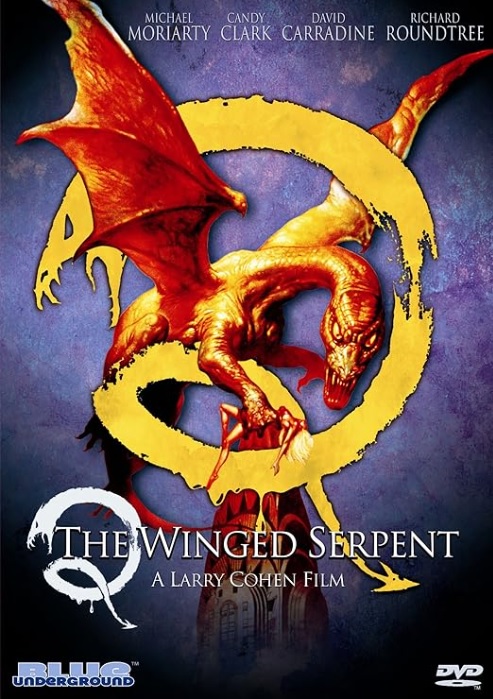
A series of unexplainable crimes occur in New York City: a girl sunbathing on a rooftop vanishes, and a window cleaner at the Empire State Building is decapitated. Two NYPD detectives (David Carradine and Richard Roundtree) investigate a ritualistic Aztec murder and soon discover that these crimes are connected. This entertaining supernatural fantasy-horror film by Larry Cohen (Black Caesar) was produced by legendary B-movie mogul Samuel Z. Arkoff and grew from a single idea by Cohen: what if the Chrysler Building housed the nest of a giant prehistoric bird? The special effects are mostly reserved for the film’s climax and they’re not even that bad. The characters are also surprisingly engaging. All in all, Q: The Winged Serpent is an enjoyable B-movie that will certainly appeal to fans of Arkoff’s cult film library.

A Lizard in a Woman’s Skin (Italy, France, Spain, 1971)

Directed by: Lucio Fulci
Written by: Lucio Fulci, Roberto Gianviti, José Luis Martínez Mollá
Cast: Florinda Bolkan, Stanley Baker, Jean Sorel

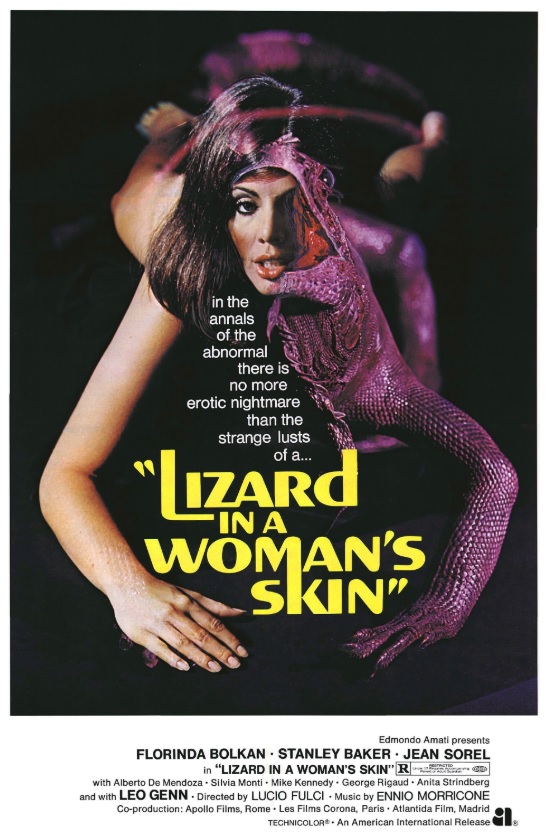
A Lizard in a Woman’s Skin is a strong example of the giallo genre – an Italian cinematic style that blends elements of slasher, thriller, psychological horror, and sexploitation, and that predates the later wave of American slasher films. The story follows the daughter of an influential politician (Florinda Bolkan), who dreams of an orgy at her ‘liberated’ neighbour’s house and of killing her after having sex with her. She recounts this dream to her psychiatrist, only to discover that the murder actually occurred exactly as she described. I initially took the film’s title literally and expected a Cronenberg-style body horror, but it turned out to be more of a lesson in Freudian dream analysis combined with a murder mystery set in London in the Swinging Sixties. One of the film’s most notorious moments is a dream sequence in which a dog is cut open so convincingly that director Lucio Fulci and his special effects artist were taken to court to prove it was fake. It’s a well-crafted film – stylish, atmospheric, and intriguing – though at times a bit slow and uneventful.

Street Trash (USA, 1987)

Directed by: J. Michael Muro
Written by: Roy Frumkes, J. Michael Muro
Cast: Mike Lackey, Vic Noto, Bill Chepil, Mark Sferrazza

Just how trashy is a movie called Street Trash? Renowned Steadicam operator J. Michael Muro directs this body-horror comedy about hobos – an often underrepresented group in movies. The story centers on a cheap liquor called Viper that causes anyone who drinks it to melt. This independent production is a prime example of the curious horror subgenre known as ‘melt movies’ (The Blob is another prime example). The film has little in the way of a traditional plot; instead, it’s a series of loosely connected vignettes linked by the effects of the Viper drink. Among the recurring characters are a psychopathic Vietnam veteran terrorizing hobos and a mobster played by Tony Darrow (GoodFellas, The Sopranos). Street Trash has understandably gained quite a cult following over the years, though I didn’t enjoy it much myself. The scene in which a bunch of hobos toss a severed penis around with the owner running after it was a bit too much for me.

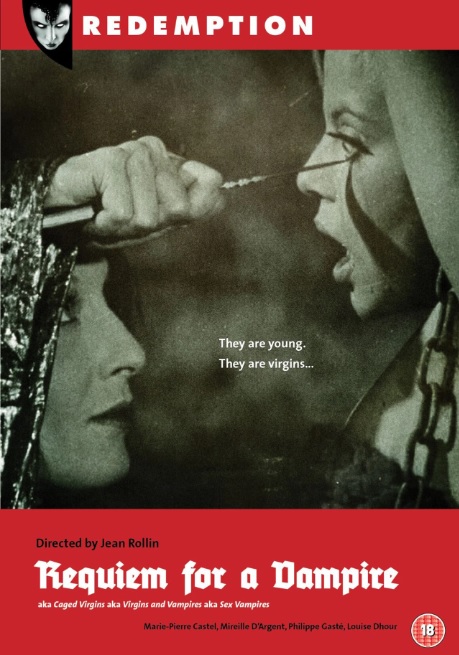
Requiem for a Vampire (France, 1972)

Directed by: Jean Rollin
Written by: Jean Rollin
Cast: Marie-Pierre Castel, Mireille Dargent, Philippe Gasté

This French cult treasure begins intriguingly: two girls and a man dressed as clowns are chased by a car and shot at. They fire back. The man doesn’t survive the pursuit, but the two girls manage to escape, eventually hiding near an abandoned water tower. They’re clearly on the run, but from whom? No explanation is given. It feels like a deliberate play with mise-en-scène that nonetheless holds your attention. Only after a while does a plot emerge, when the girls stumble upon strange rituals taking place in a remote château. The film is captivating – almost like a silent movie. The two leads don’t speak until they’re hypnotized by a vampire, who commands them to lure in victims for the resurrection of an ancient race. To do so, however, they must first lose their virginity. The lead actresses are well cast, and the combination of eerie locations, sensual imagery, haunting music, and dreamlike camerawork creates a mood that never lets go.

Quatermass and the Pit (United Kingdom, 1967)

Directed by: Roy Ward Baker
Written by: Nigel Kneale
Cast: James Donald, Andrew Keir, Barbara Shelley, Julian Glover

This Hammer production is more of a sci-fi mystery than the studio’s typical brand of horror. During the excavation of a new subway tunnel, workers uncover skulls and skeletons of ancient apemen. Professor Bernard Quatermass, a space scientist, is called in to investigate. When a strange metallic object is found nearby, he begins to suspect an alien origin and searches for the missing link in human evolution. This Quatermass film, the third based on a BBC television serial, feels very much like an old Star Trek episode, complete with familiar sci-fi elements such as telekinesis, telepathy, and alien insects. Though the pacing is a bit slow, several production aspects – especially the sound design – are excellently executed. The film also presents some intriguing science-fiction ideas, including the notion of recording the memories of a susceptible brain, revealing visions of insect wars that once took place on Mars.

Cult Radar: Part 3

FilmDungeon.com is glad to explore the video trenches to find that oddball treasure between the piles of crap out there. Of Course, a treasure in this context can also be a film that’s so shockingly bad it’s worth a look, or something so bizarre that cult fans just have to see it. Join us on our quest and learn what we learn. Hopefully we’ll uncover some well-hidden cult gems.

Researched by: Jeppe Kleijngeld

Dracula A.D. 1972 (UK, 1972)

Directed by: Alan Gibson
Written by: Don Houghton
Cast: Christopher Lee, Peter Cushing, Stephanie Beacham

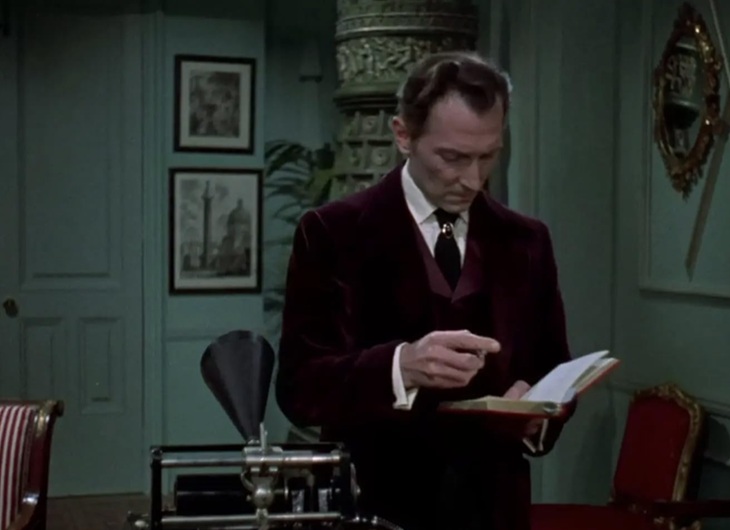
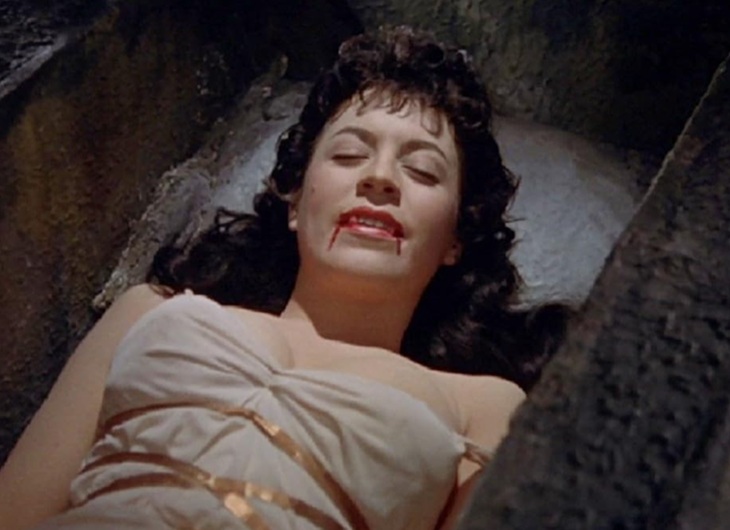
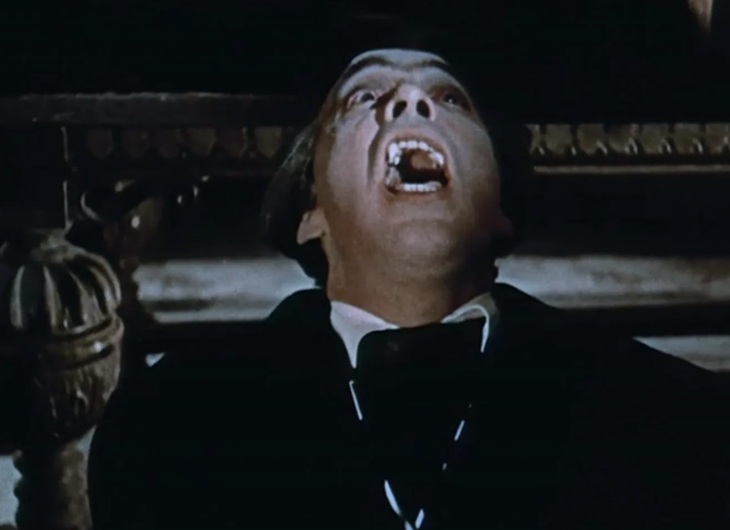
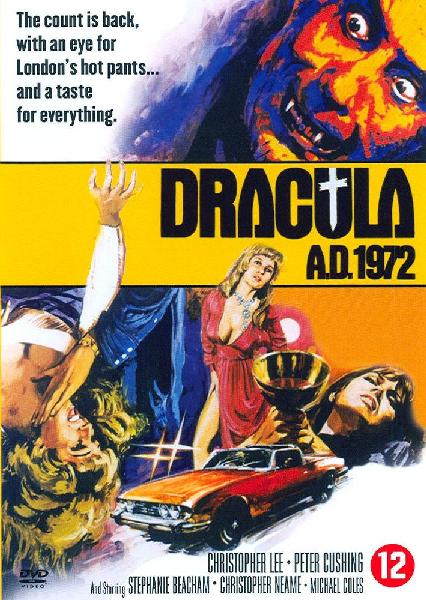
This is the sixth Hammer production that stars Christopher Lee as the uncanny Count Dracula. This time he appears in London during the seventies, as one of his descendants. Johnny Alucard (spell his surname backwards), performs a ritual which brings his old master back to life. Dracula rapidly starts to suck the blood out of young girls. Luckily for the London hippie community, a descendant of the legendary Van Helsing (Peter Cushing), discovers what’s going on and he bows to destroy the evil count forever. Lee and Cushing are a joy to watch as always. They are very charismatic speakers, both equipped with a great voice that enables them to make almost everything they say sound interesting. It’s only a shame that Lee gets too little screen time. Also, the actors playing the hippie characters are extremely unconvincing. Just because someone’s on acid doesn’t mean he will barely react to strange and shocking occurrences. One of the weaker and duller Hammer Dracula flicks.


The Galaxy Invader (USA, 1985)

Directed by: Don Dohler
Written by: Don Dohler, David Donoho, Anne Frith
Cast: Richard Ruxton, Faye Tilles, George Stover

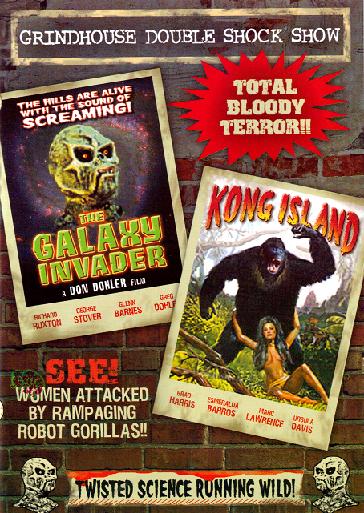
It starts with a Predator-like intro-shot of a fireball flying towards earth, followed by a pulpy credit sequence, including the typical cheesy synthesizer score. The fireball (spaceship) lands in Maryland and the aggressive alien creature onboard starts to roam the outside. A group of rednecks start to hunt it down for the money and a deadly confrontation ensues, while a UFO hobbyist and his former pupil get involved when they attempt to rescue the alien. The first time the Galaxy Invader appears (within five minutes), you’ll see a guy in a suit so ridiculous, it makes you wonder why they even bothered continuing this production at all. Despite these crappy effects, the movie is often quite hilarious because of the stupid (inter)actions of the yokels and the ludicrous action scenes. The alien shoots firework rockets from his gun for Christ sakes! It looks as though the budget was just a few thousand dollars. Great movie though, if you got a thing for the ultra-cheap stuff.


Kong Island (Italy, 1968)

Directed by: Robert Morris
Written by: Chang Cheh
Cast: Brad Harris, Marc Lawrence, Esmeralda Barros

Released on a Grindhouse double feature DVD together with The Galaxy Invader. The picture quality of this film is so bad that you can barely see what’s going on at times. Not that the story is very complicated. In the Nairobi jungle, a mad scientist creates a number of brain-controlled killer gorillas. They kidnap the young girl Diana who belongs to a local expedition group. Mercenary Burt leads a rescue party into the labyrinth jungle, financed by Diana’s father, a bastard who also secretly sponsors the scientist’s experiments. The rescue party gets ambushed and all except for Burt die. Soon after, he meets the ‘sacred monkey’, a girl raised by apes, who helps him find the scientist’s underground lab for a final showdown. Dull movie with virtually nothing to make it worth your while. Also known as Eve, The Wild Woman and King of Kong Island. Best to avoid.


Lucker (Belgium, 1986)

Directed by: Johan Vandewoestijne
Written by: Johan Vandewoestijne, John Kupferschmidt
Cast: Nick Van Suyt, Helga Vandevelde, Let Jotts

The heavily insane John Lucker (Nick Van Suyt) escapes from a mental institution. We learn that he has killed eight woman and performed sexual acts with their already decomposing corpses. That already says it all right? Lucker doesn’t talk much, which makes him all the more scary when he brutally murders someone. Not that it is so much better when he does talk. A prostitute, one of his victims, tells him “this is not my idea of a good time”. Same goes for the viewer: it’s all very unpleasant and nasty. But despite its dark and gloomy ugliness, there is something fascinating about Vandewoestijne’s approach. He created a visually impressive work that features good acting. Hats off for those poor victim girls, who make their torment seem very real. Also kudos for Van Suyt’s disturbing portrayal of John Lucker. A deeply messed-up maniac filled with misogyny. If you decide to watch this, prepare for the worst though.


Nightmare Concert (Italy, 1990)
OT: Un gatto nel cervello

Directed by: Lucio Fulci
Written by: John Fitzimmons, Lucio Fulci, Giovanni Simonelli, Antonio Tentori
Cast: Lucio Fulci, Brett Halsey, Ria De Simone

The DVD-cover of Nightmare Concert aka A Cat in the Brain describes this as Fulci’s bloodiest film. Hard to believe, but it is actually kind of true. I can’t remember many films with this much red in it. It is a special film as well: Fulci stars as himself, a film director with a taste for gore, who begins having violent fantasies. He visits a shrink who hypnotizes him. As a result, Fulci can no longer see the difference between his films and reality which results in loads of brutal slayings. The idea is crystal clear: screen violence leads to real violence. Many recognizable Fulci elements are present in Nightmare Concert: inventive kills (driving over a corpse ten times), less inventive kills (body part dismemberment by chainsaw), some sex and quite a lot of black humour. It is also completely over the top and contains a few lovely moments of self-parody. Just as trashy as most of Fulci’s films, but when the man is on a roll, who’s complaining?


Dracula A.D. 1972