A Knight of the Seven Kingdoms

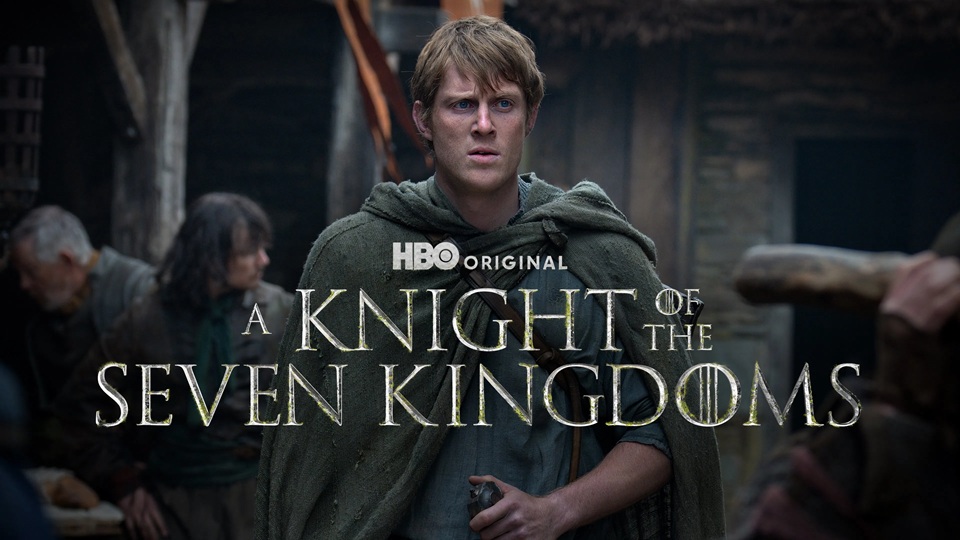
While waiting for season 3 of House of the Dragon – a show I am possibly enjoying even more than Game of Thrones – HBO has dropped a third Westeros show, which is titled: A Knight of the Seven Kingdoms. This is a prequel to Game of Thrones.

This is quite a different beast (dragon) than the previous two shows. It is lighter on its feet – in the beginning at least – and shorter in duration: season one consists of only six episodes of around 35 minutes each. It is however filled with interesting stories and memorable characters and is quite frankly a must see.

The show is an adaptation of ‘The Tales of Dunk and Egg’ series of novellas by George R. R. Martin, beginning with ‘The Hedge Knight’. It’s about a knight – Ser Duncan ‘Dunk’ the Tall (Peter Claffey) and his young squire Egg (Dexter Sol Ansell). Duncan’s master has died, but he made him a knight before he departed. Now Duncan wants to enter a tournament in Ashford.

At first glance, Dunc comes across as something of a lovable goof, but there’s an underlying depth to him that becomes evident early on and that’s what makes this series so compelling. The magic lies in the slow-burn revelation: as viewers, we’re right there with him on his journey, uncovering his layers as he uncovers them himself.

His partner in adventure, the quick-witted and resourceful Egg – brilliantly brought to life by Dexter Sol Ansell – adds the perfect dynamic: where Dunc stumbles, Egg steps in with sharpness and charm, making their bond one of the show’s strongest assets.

At the gathering in Ashford, a contingent of Targaryens arrives and, as we’ve come to expect from this family, their presence spells trouble. The tension escalates when Duncan strikes Prince Aerion ‘Brightflame’ Targaryen in defense of a lady’s honor, setting the stage for the fifth episode’s trial by combat.

This is where the show gets really exciting: a trial of seven, pitting seven knights against seven others in a brutal, no-holds-barred showdown. It’s easily one of the most visceral medieval battles I’ve ever seen on screen, with cinematography so stunning it leaves you breathless.

A Knight of the Seven Kingdoms feels refreshingly vibrant. It balances sharp humor, razor-sharp writing, and rich character development, all while delivering the lavish production values you’d expect from a Game of Thrones universe.

I eagerly await season 2 arriving in 2027. In the meantime, House of the Dragon Season 3 arrives in June 2026, promising an all-out war as the Dance of the Dragons erupts into full-scale battles. With the story hurtling toward its four-season climax, the stage is set for epic, fire-breathing chaos.

Gotti (1996)

Directed by:
Robert Harmon

Written by:
Jerry Capeci (book ‘The Last Gangster: Winning the War Against John Gotti and the Mob’)
Gene Mustain (book ‘The Last Gangster: Winning the War Against John Gotti and the Mob’)
Steve Shagan (teleplay)

Cast:
Armand Assante (John Gotti), William Forsythe (Sammy Gravano), Richard C. Sarafian (Paul Castellano), Frank Vincent (Robert DiBernardo), Anthony Quinn (Neil Dellacrose), Dominic Chianese (Joe Armone), Robert Miranda (Frank DeCicco), Scott Cohen (Gene Gotti), Vincent Pastore (Angelo Ruggiero), Tony Sirico (Joe Dimiglia)

John Gotti seemed destined for the Mafia. He was smart, tough, loyal to the code of omertà, never skimmed from the top, and respected the boss’s policy on narcotics. These qualities helped him rise to become boss of the infamous Gambino family in the 1980s. But Gotti also had his flaws: he craved media attention and was too careless about discussing sensitive business in unsecured settings.

Gotti is the biography of one of history’s best-known mobsters. The story begins in 1973, when Gotti first comes to the attention of his crime family, the Gambinos – then the most powerful of New York’s Five Families. Boss of bosses Carlo Gambino asks Gotti for a personal favor, which nearly goes wrong due to the interference from underboss Paul Castellano. The conflict almost dooms Gotti, but his mentor, second underboss Neil Dellacroce (Anthony Quinn), steps in to resolve it.

In the years that follow, Gotti steadily rises through the ranks alongside his close associate and fellow captain Sammy Gravano. When Gambino dies of old age in 1976, he names Castellano as his successor, to the disapproval of Gotti and other top figures. While Gotti was seen as a true man of Cosa Nostra, Castellano was regarded more as a businessman. Tensions eventually culminate in one of the most infamous gangland hits in history: the 1985 assassination of Castellano and his partner outside Sparks Steak House in Manhattan.

Now John Gotti is the boss. But, as noted earlier, his weaknesses ensured that his reign would be relatively short-lived (until 1992 to be precise). As a biographical made-for-tv HBO production, Gotti stands out for offering a complete look at the life and times of a legendary mobster. Armand Assante is memorable in the lead. The supporting cast – featuring many future Sopranos actors – is also strong, with Anthony Quinn and William Forsythe delivering standout performances. If you watch only one television production about the mob, make it Gotti .

Rating:

Quote:
JOHN GOTTI: “A Mexican, a Puerto-Rican and a black guy are sitting in a car. Who’s driving? The police.”

Trivia:
According to IMDb, this film was the highest rated original telefilm in HBO history at that time. The success of the film convinced HBO to cast film co-stars, Dominic Chianese, Vincent Pastore and Tony Sirico in a series in development at the time called The Sopranos (1999).

25 Years Ago On This Day, Pop Culture History Was Written

“It’s good to be in something from the ground floor. I came too late for that, I know. But lately, I’m getting the feeling that I came in at the end. The best is over.”
– Tony Soprano

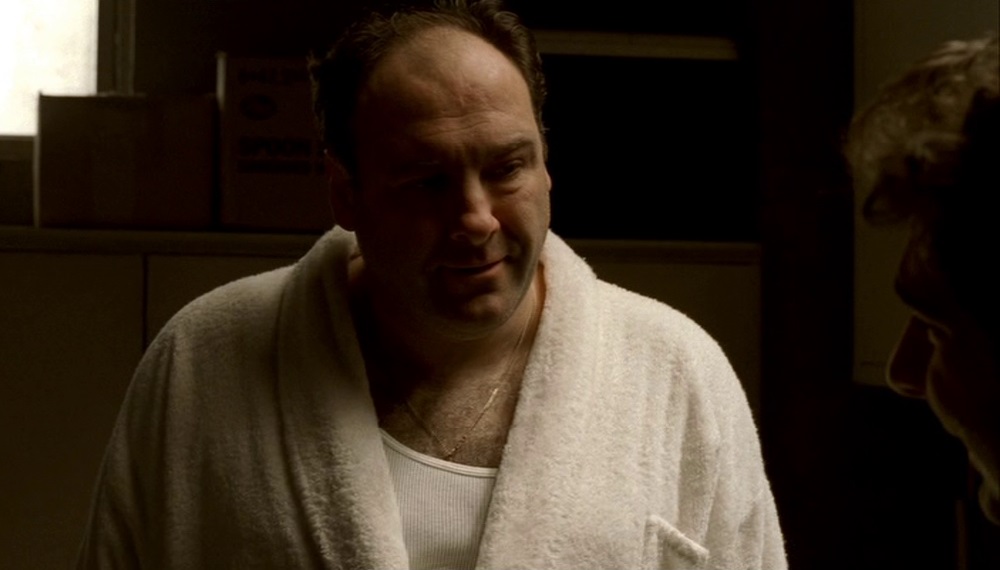
On January 10, 1999, pay channel HBO launched the pilot episode of The Sopranos, the show that would change television forever. Before this ground breaking phenomenon, movies were far superior to television in terms of intelligent writing, production design and the actors involved. The Sopranos changed all of that.

The Sopranos wasn’t the first show to break all the rules’, write Matt Zoller Seitz and Alan Sepinwall in their book ‘The Sopranos Sessions’ (see also Oz and Twin Peaks for example), ‘but it was the first show to do that and still become a massive, enduring hit.’

But what is so good about The Sopranos? Maurice Yacowar in ‘The Sopranos On The Couch’, writes: ‘For openers: it’s brilliantly written, performed, and filmed. Each episode has the polish of an excellent feature film – with a tighter yet more complex, resonant script than most. The show is also relentlessly entertaining. The characters are engrossing, the plot twists astonishing but coherent, and the dialogue mined with ironies and poetic resonance quite beyond what we are used to hearing on the boob tube or even on the commercial cinema these days. Unique for a television series, details connect not just across the hour but across a season and beyond. The viewer has to dig for links and meanings beyond what’s spelled out on the surface and is often left with mysteries. That makes the show more like European cinema – and a complete departure for American television. At the same time, The Sopranos provocatively raises major questions about how and why we live.’

In 2021, I published the ultimate The Sopranos tribute. You can read the highlights from this tribute below:

And if you still haven’t seen the show, it is not too late! It is still available on HBO. Seriously, you’d be a douchebag to miss it.

TV Dungeon: The Wire

(2004 – 2006, USA)

Creator: David Simon
Cast: Dominic West, John Doman, Wendell Pierce, Lance Reddick, Deirdre Lovejoy, Sonja Sohn, Dominic Lombarozzi, Seth Gilliam, Clarke Peters, Andre Royo, Michael K. Williams

5 Seasons (60 Episodes)

It took a while before The Wire was noticed by critics and TV-enthusiasts alike. Not until later seasons, it was recognized and acknowledged as one of the best shows to ever hit the airwaves. Barack Obama, for one, called it his favorite television show of all time. For his five season strong social epic, former Baltimore crime reporter David Simon didn’t leave one corner of his city untouched. The Wire provides full insight into the whole spectrum of drug trade, law enforcement, politics, the working class, the school system and the media.

In the show’s first season, a special Baltimore police unit puts in place a wiretap on the drug empire, run by Avon Barksdale. Principle characters on both sides of the law are introduced: Jim McNulty, a smart Irish cop with authority problems and Stringer Bell, Barksdale’s first lieutenant, are just two of the many characters that are somehow involved in ‘the game’, a word used to describe the drug trade, which is a major social problem in Baltimore’s large slums.

The Wire takes its time to establish plotlines and characters, not just in the first season but throughout the series. But whenever it delivers punches, it is nothing short of amazing. There are few shows that dare to take this much time for build-up and risk losing viewers than The Wire does. There are also few shows that deliver such captivating details and immensely satisfying pay-off to those who invested their time to get into it. The final episodes of each season are especially enjoyable as the carefully laid-out plotlines are concluded and new stories take off.

Some critics have described The Wire as a modern version of a Charles Dickens story. This seems like a fair assessment. The often tragic tales of young delinquents, in which adults and authorities are unable to change the problem, are told in a very transparent and moving way. At times it becomes painfully frustrating to see all solutions fail and young drug traders rise, while the older ones get killed or go to jail (or both in case of one memorable character).

Every season focuses on another group that is part of the problem. That is why the show is called The Wire (besides the wiretap): it provides its audience with the opportunity to listen in on all the involved parties, whether it be cops, dealers, dockworkers, politicians, teachers, social workers or journalists. By closely observing the many different characters’ private and professional lives, remarkable insight is given into the larger context of Baltimore’s massive social problems.

All of the show’s characters serve a clear purpose and are portrayed excellently by the talented cast. A standout character is Omar Little, a modern Robin Hood of sorts who robs drug traders for a living. Not only is this anti-hero black, ruthless and intelligent, he is also a homosexual. America’s nightmare indeed. A brilliant move in the show’s casting is also the usage of real-life cops and criminals, adding to the show’s great authenticity.

David Simon and his team have really achieved to make something very fresh and truly original out of what initially looked like just another cop show. Besides academic insight, The Wire also offers tremendous entertainment, mainly achieved through compelling character studies, intriguing conflicts, a unique atmosphere and genius writing. The timing of the plot twists and many surprises is always precisely right. The Wire is just essential television.