The original ‘Let It Be’ documentary now on Disney Plus

‘I think the Beatles are crackin’, I said. You can’t beat ‘em, I said, they’re all out on their own. They’ve got a style of their own. And they… Well, it’s my opinion, I think they look — they’re a lovely crowd. They’ve got good, good quality, they sing well, and, well what else shall I say but they’re real good people.’
– Man on the street during the rooftop concert.

In 2022, Peter Jackson told the full story of the ‘Get Back’ sessions by the Beatles in 1969 and the eight hour film was met with positive critical appraisal. The original documentary ‘Let It Be’ by Michael Lindsay-Hogg was released at an unfortunate time in May 1970 when the Beatles had just broken up. Therefore the reception was pretty negative at the time.

It is time for a re-appraisal. For the first time in 50 years, the documentary can be seen again at Disney Plus. It is preceded by a conversation between Peter Jackson and Michael Lindsay-Hogg about this amazing project. Jackson notes that although the ‘Get Back’ sessions came to be known as the end of the Beatles, it was probably their most productive period. Not only did they write and compose all these terrific ‘Let It Be’ tracks, but also many of the songs that would end up on ‘Abbey Road’ later that year.

This was originally supposed to be a concert film with some of the studio stuff being more like a sort of introduction. But when the idea of a concert was dropped, Lindsay-Hogg didn’t quite know what to do with the footage. What he eventually did with it, is actually great. ‘Let It Be’ consists for the most part of the Beatles just jamming and trying to find the right approach for all these new songs they’re cooking up.

In the first part in the Twickenham Studio’s, there is some palpable tension within the group with Paul taking charge and correcting the others at times. There is also that famous exchange between Paul in George in which George tells him he’ll play whatever he wants him to play. The bit where George leaves the band is left out. When they move to the studio of Apple Corps and old friend Billy Preston joins the sessions, the atmosphere noticeably improves.

So while the ingredients of the eventual split are there, there is quite a bit of laughing and fooling around. That was how their creative process worked. Jackson’s ‘Get Back’ gives us more context and dialogue while ‘Let It Be’ is all about the music. And watching these guys playing passionately together is a real joy. It is great to see the songs we know so well emerging here.

When this was filmed, the boys hadn’t performed live in years, and they were noticeably unsure about how to pick it up again. They’re adrift as a band. But then the famous rooftop concert happens and they clearly find some footing again. They start out with the fantastic song Get Back, and then you realize that their original plan actually worked. At that point, the Beatles really were back!

THE OTHER FOUR BEATLES MOVIES

A Hard Day’s Night (1964)

The first Beatles movie is a documentary of sorts, shot in razor sharp black and white images, that follows the band in slightly fictionalized form as they travel by train to a studio to do a television performance. Sixty years after its release, it is still a delight to see. There is hardly any story, but it doesn’t matter because we get to spend time with the boys who are funny, charming and extremely musically gifted. The Lennon dominated soundtrack is absolutely fantastic. The film’s extensive use of handheld cameras and sped-up footage gives it a very energetic feel. It’s as if the camera crew had trouble keeping up with the boys, which is in fact the way it was. Director Richard Lester later admitted to using amphetamine during the shoot to get him through it. The mostly improvised shoot really captures the madness of the Beatlemania days and cemented the band members status as rock and roll legends.

Help! (1965)

The higher budgeted follow-up to A Hard Day’s Night revolves around an Eastern cult group who are looking for a sacrificial ring that is worn by none other than Ringo! (he got his stage name originally because of his love for rings). After several attempts to steal it back in London fail, Ringo becomes a target to be sacrificed to their god Kaili, so the boys flee to the Austrian Alps and later The Bahama’s. The comedy act by the Beatles was inspired by Duck Soup by The Marx brothers and the BBC Radio Comedy Programme ‘The Goon Show’ that they listened to in their teen years. The boys appear to be more distanced than in the preceding feature though. According to John that is because they were constantly stoned at the time of filming. Help! didn’t receive the same favorable reviews as their first film, but it is now credited with pioneering the music video.

Magical Mystery Tour (1967)

It has the reputation of being their worst film. Magical Mystery Tour is not really a film though, but a 55 minute television special. And it’s not that different from their preceding two screen efforts: It features the Beatles doing comedy (some jokes corny and some pretty funny) and performing songs from a terrific original soundtrack. Storywise, there isn’t much there. It’s about a busload of weird characters taking a journey through the English countryside. What’s most enjoyable about it are the psychedelic clips for great songs, including Magical Mystery Tour (obviously), The Fool on the Hill (a beauty), Flying (their only instrumental track), I Am the Walrus ( a highlight), Blue Jay Way (George’s misty thing) and Your Mother Should Know (Paul’s lovely granny music). It’s a bit of an unscripted mess with lots of silliness, but the same can be said of the Richard Lester films. And it does feature John serving a woman spaghetti with a shovel, so that is worth the price of admission.

Yellow Submarine (1968)

80.000 leagues beneath the sea is a happy place called Pepperland. Then the music-hating Blue Meanies arrive and freeze everybody and hide all instruments. Only Fred escapes in a yellow submarine which he takes straight to Liverpool to retrieve the four heroes known as the Beatles. This is the start of a series of psychedelic adventures as the crew pass through the Sea of Time, the Sea of Monsters, the Sea of Holes, Nowhere Land and eventually Pepperland. The Beatles did this film to complete the three picture deal they signed with United Artists. The voices are provided by actors and the Beatles only appear in a cameo appearance at the end. Like everything they touched, it became a pioneering work of pop art. Before Yellow Submarine, animation was considered a children’s medium, and this feature led to the art form being taken more seriously. Visually, it’s a stunning piece of work, and as opposed to their preceding films, it is well written with a truckload of references to Beatles lyrics. John Lennon said he thought this was the best Beatles film. I think he was right.
10 Beatles anekdotes die je nog niet kent

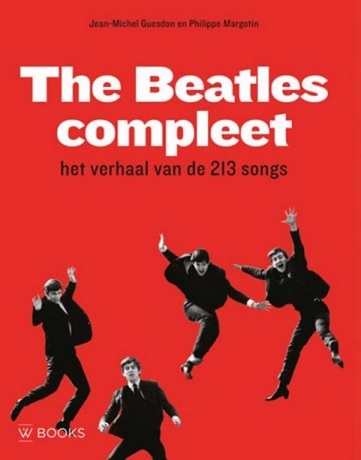
In het boek ‘The Beatles compleet: Het verhaal van de 213 songs’ staat de volledige opnamegeschiedenis van The Fabulous Four opgetekend.

Beatles anekdotes 1

Het uitgebreide fanboek bevat ook vele toffe anekdotes waaronder de volgende tien:

1. Naam van de band
Rock-’n-rollpionier Buddy Holly had grote invloed op de muziek van de jaren 60’. The Beatles – die eerst The Quarrymen (quarry betekent steengroeve) heetten – speelde onder meer zijn song ‘Words of Love’. De naam van Buddy’s begeleidingsband The Crickets vormde naar verluid de inspiratie voor de naam van The Beatles. Dit was eerst The Silver Beatles, maar Silver werd na korte tijd geschrapt. De bandnaam is ook een referentie naar the Beat Generation waarmee The Beatles een sterke connectie hadden.

2. Een jointje voor de Boys
Toen The Beatles in augustus 1964 Bob Dylan voor het eerst ontmoetten, bood hij hun een joint aan. De verraste Beatles gaven toe dat ze nog nooit marihuana hadden gerookt. Dylan, op zijn beurt verrast, vroeg: ‘Maar hoe zit het dan met die song?’ (‘I want to Hold Your Hand’) ‘Welke song?’ vroeg John Lennon. ‘Je weet wel: And when I touch you, I get high, I get high, I get high.’ Gegeneerd antwoordde John: ‘Zo gaat het niet. Het is: I can’t hide, I can’t hide, I can’t hide…’

3. Een nummer voor The Stones
De avond voordat het nummer ‘I Wanna Be Your Man’ zou worden opgenomen voor hun tweede album ‘With the Beatles’ op 11 september 1963, ontmoetten John en Paul de manager van The Rolling Stones. Hij vertelde dat de Stones snel een song nodig hadden als opvolger van ‘Come On’, hun eerste singel. De twee Beatles boden hem ‘I Wanna Be Your Man’ aan dat volgens hen goed bij de Stones paste. Ze vertrokken meteen naar studio 51, waar de Stones repeteerde, en voltooide daar tot ieders verbazing de song. Het werd een grote hit voor de Stones.

4. Dromen van gisteren
‘Ik heb zoveel lof voor ‘Yesterday’ gekregen, maar het was Paul’s kindje’, verklaarde John Lennon wanneer hij het had over de song die Paul McCartney in een droom had gehoord. Tijdens een verblijf in het huis van de familie Asher (van Paul’s vriendin Jane Asher) werd Paul op een ochtend wakker op zijn zolderkamertje. ‘Ik stond op, ging achter de piano zitten, speelde G, Fis mineur septiem – en ging van daaruit naar B en E mineur, en ten slotte terug naar E. Ik vond de melodie heel goed, maar omdat ik hem had gedroomd, kon ik niet geloven dat ik hem had geschreven.’ In deze fase was de tekst er nog niet. De werktitel was: Scrambled Eggs / Oh, my baby how I love your legs. Van alle Britse songs is ‘Yesterday’ het vaakst gedraaid om de Amerikaanse radio- en tv-zenders, namelijk ruim zeven miljoen keer.

5. Lennon: ‘Help!’
‘De meeste mensen denken dat het gewoon een snel rock- ’n rollnummer is. Dat had ik indertijd niet door; ik schreef het alleen maar omdat ik daartoe opdracht had gekregen’, zei John Lennon in 1980 over het nummer ‘Help’. ‘Pas later besefte ik dat ik echt om hulp schreeuwde.’ In die tijd voelde hij zich ongemakkelijk bij het succes, de eerbewijzen, het geld en de uitspattingen. Hij was terneergeslagen: ‘Dat hele Beatles-gedoe ging je begrip te boven. Ik at en dronk als een varken en was zo vet als een varken, ontevreden over mezelf, en onbewust schreeuwde ik om hulp. Het was dus mijn periode als dikke Elvis.’

Beatles anekdotes 2

6. Rubberen zolen
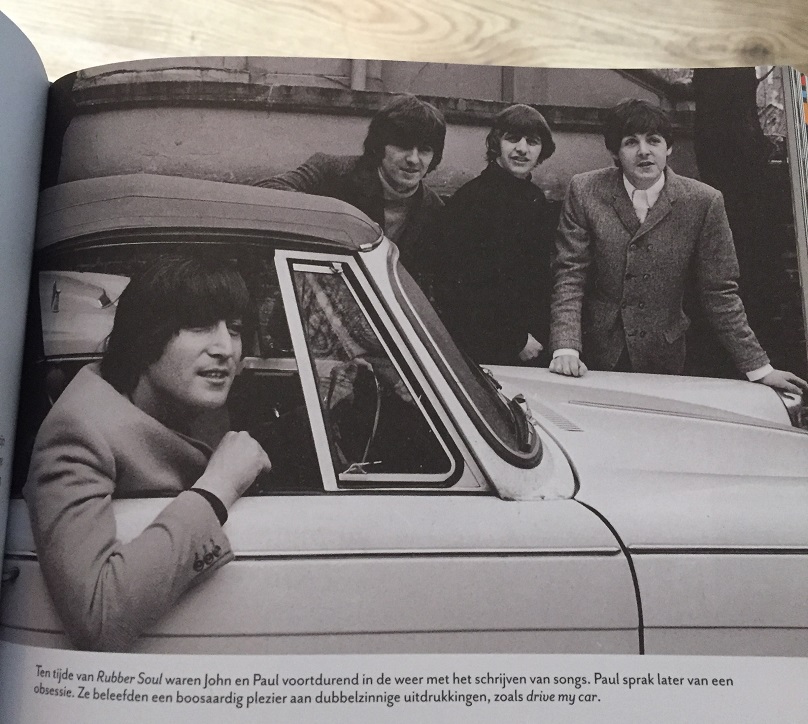
De hoes van ‘Rubber Soul’ maakte duidelijk dat de band een nieuwe richting was ingeslagen. ‘Ik vond het goed dat we op de hoes langere gezichten hadden gekregen’, aldus George Harrison hierover. ‘We waren niet onschuldig meer, niet meer naïef, en op ‘Rubber Soul’ waren we voor het eerst volwaardige wietrokers.’

Beatles anekdotes 3

Robert Freemans hoesfoto kreeg zijn vorm door stom toeval. Er werd een fotosessie georganiseerd in John’s huis in Weybridge – alle Beatles droegen daar een coltrui. Terug in London nodigde Freeman de Beatles uit om de dia’s te komen bekijken. Hij projecteerde ze op een stuk karton, om te laten zien hoe ze als hoesfoto zouden ogen. Het karton gleed echter wat naar achteren, zodat de foto langer leek. Paul: ‘Hij werd langer en wij zeiden: ‘dat is het, Rubber So-o-oul, hey, hey! Kun je het zo doen?’ Freeman zei: ‘Ja, ik kan het zo afdrukken.’ En dat was dat.’

Beatles anekdotes 4

7. Double A
John Lennon schreef ‘Day Tripper’ als song voor een single. De tekst was destijds voor veel fans een raadsel, want wat betekent day tripper? Letterlijk: iemand die een dagtocht maakt. Maar niet zomaar een tochtje – het woord verwijst naar ‘trippen’. ‘Het is een drugssong’, aldus Lennon. Toen Paul vier dagen later met ‘We Can Work It Out’ kwam, kreeg dat de voorkeur voor de A-kant boven ‘Day Tripper’. John maakte heftig bezwaar, en bij wijze van vernieuwend en diplomatiek compromis kreeg de volgende Beatlessingle een dubbele A-kant. Opnieuw waren The Beatles hun tijd ver vooruit.

8. Wie is:
Michelle – Waarschijnlijk Michelle Phillips van The Mamas and the Papas.
Eleanor Rigby – De voornaam van de actrice Eleanor Bron die in de film ‘Help!’ de priesteres had gespeeld, in combinatie met de naam van een winkel Rigby & Evens. Op de begraafplaats Woolton in Liverpool staat overigens een echte graf met de naam Eleanor Rigby, een vreemd toeval.
Doctor Robert – Waarschijnlijk dr. Robert Freeman, de eigenaar van een New Yorkse kliniek, die aan veel beroemdheden een cocktail voorschreef van vitamine B12 met een enorme dosis amfetamine.
Penny Lane – Een buurt in Liverpool, een straat en een busstation waar Paul doorheen kwam als hij naar het huis van John Lennon ging. The Beatles waren zich er waarschijnlijk niet van bewust dat Penny Lane was genoemd naar James Lane, een achttiende-eeuwse Britse slavenhandelaar die fel gekant was tegen de afschaffing van de slavernij.
The Walrus – Paul (althans volgens de tekst van het nummer ‘Glass Onion’).
Dear Prudence – De zus van Mia Farrow die haar huisje niet uit wou komen bij de lessen van Maharishi Mahesh Yogi in Rishikesh, India.
Martha My Dear – Paul’s hond, een bobtail.
Julia – John’s moeder
Hey Jude – John’s zoontje Julian (Paul schreef het als troost voor de scheiding van John en Cynthia Lennon).
Mean Mr. Mustard – Een gierigaard die briefjes van 5 pond in zijn lichaam (neus) verstopte.
Polythene Pam – Een meisje dat ‘Polythene Pat’ werd genoemd, vanwege haar vreemde gewoonte om plastic te eten.

9. Geen LSD
Er werd veel gespeculeerd over de song ‘Lucy in the Sky with Diamonds’, waarvan de eerste letters van de titelwoorden de afkorting LSD vormen. Volgens schrijver van de song John Lennon was dat geheel onbewust. De Lucy in de song was Lucy O’Donnell, het beste vriendinnetje van John’s zoontje Julian, die toen drie jaar was. Julian liet John een tekening zien waarop hij Lucy had afgebeeld. ‘Dat is Lucy in de lucht met diamanten’, zei Julian. John vond de titel geweldig en schreef meteen een song, waarbij hij zich liet inspireren door ‘Alice in Wonderland’.

10. The End
‘The End’ (oorspronkelijke titel ‘Ending) heeft een bijzondere betekenis, omdat het de laatste complete song op ‘Abbey Road’ is, het laatste album dat The Beatles opnamen. Wisten The Beatles in de zomer van 1969 al dat hun bijzondere avontuur ten einde was? The nummer is om drie redenen uniek: het is de laatste song van het laatste Beatlesalbum (afgezien van ‘Her Majesty’, dat als een soort postscriptum moet worden beschouwd), het bevat de enige drumsolo die Ringo ooit heeft gedrumd en het is het enige nummer waarop Paul, George en John ooit samen een gitaarsolo spelen.

‘Her Majesty’, het 0.23 durende 17de nummer op ‘Abbey Road’, is het kortste nummer dat The Beatles ooit hebben uitgebracht en heeft de twijfelachtige eer het laatste nummer van het laatste (opgenomen) album te zijn, hoewel dat niet de bedoeling was. Het oorspronkelijk weggegooide nummer belandde per ongeluk op de mastertape en werd zo de eerste ‘hidden track’ in de muziekgeschiedenis.