The Godfather: Part II (1974)

Directed by:
Francis Ford Coppola

Written by:
Mario Puzo (novel / screenplay)
Francis Ford Coppola (screenplay)

Cast:
Al Pacino (Don Michael Corleone), Robert Duvall (Tom Hagen), Diane Keaton (Kay Adams), Robert DeNiro (Vito Corleone), John Cazale (Fredo Corleone), Talia Shire (Connie Corleone), Lee Strasberg (Hyman Roth), Michael V. Gazzo (Frankie Pentangeli), G.D. Spradlin (Senator Pat Geary), Richard Bright (Al Neri)

Francis Ford Coppola’s The Godfather: Part II is a rare sequel that not only lives up to the legacy of its predecessor but in many ways deepens and expands it. Rich with atmosphere, emotional depth, and moral complexity, this beautifully dark chapter in the Corleone saga is, indeed, an offer you can’t refuse.

Following the immense success of the 1972 classic, a sequel was greenlit almost immediately. However, with only a small portion of unused material from Mario Puzo’s original novel – the early life of Vito Corleone – Coppola and Puzo crafted an original narrative chronicling Michael Corleone’s reign as head of the family, interwoven with the rise of his father, Vito. These parallel timelines form the heart of Part II, highlighting both the legacy and the transformation of the Corleone family.

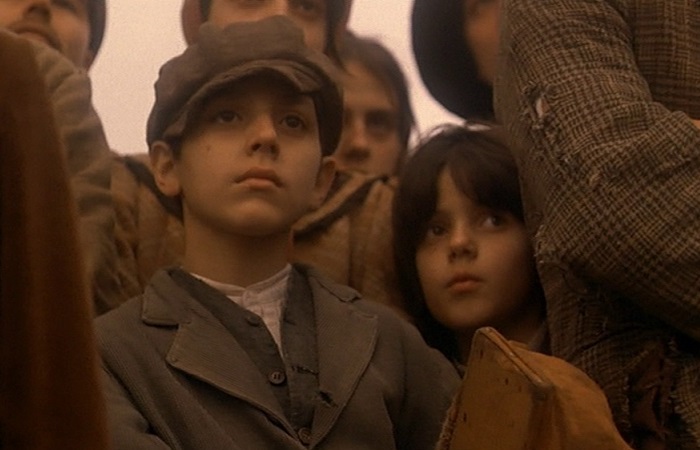
In Vito’s storyline, we witness his arrival in New York as a young immigrant, escaping the trauma of his family’s murder in Sicily. As he grows up, he confronts the oppressive rule of a local crime boss and takes the first steps toward becoming a benevolent – but ruthless – leader within the community. Robert De Niro is mesmerizing as the young Vito, embodying the character with subtlety and strength, and earning a well-deserved Academy Award for Best Supporting Actor.

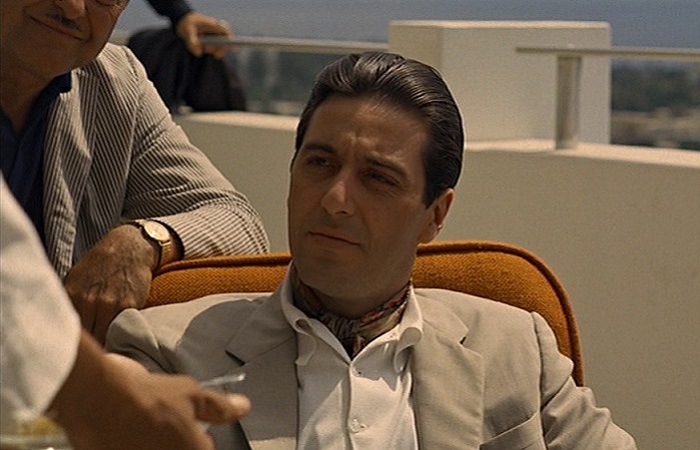
Meanwhile, Michael’s narrative unfolds in stark contrast. Now at the height of his power, Michael strives to legitimize the family business and expand into Cuba, partnering with the aging Hyman Roth. But betrayal and deception close in from all sides. Al Pacino delivers a haunting performance as a man consumed by control, paranoia, and an increasingly cold detachment from those closest to him. Despite the role being arguably the pinnacle of his career, Pacino was controversially overlooked by the Academy.

The film’s production design by Dean Tavoularis and the moody, shadow-drenched cinematography by Gordon Willis once again elevate the storytelling to operatic heights. But it’s the ensemble cast that truly shines – John Cazale as the fragile Fredo, Robert Duvall’s solid Tom Hagen, Diane Keaton’s heart-wrenching portrayal of Kay, and powerful additions like Lee Strasberg as Roth and Michael V. Gazzo as Pentangeli.

Coppola’s structural innovation – juxtaposing father and son at similar ages – profoundly enriches the film. While both Vito and Michael are motivated by a desire to protect and provide for their families, their approaches – and ultimate fates – are starkly different. Vito, though a criminal, retains warmth and humanity; Michael becomes increasingly isolated, sacrificing everything in his quest for power.

This is essentially the story of Michael Corleone’s downfall. He may get to keep his power, but he is completely lost, not understanding anymore how his actions have a destructive effect on his environment. He is now estranged from his wife and then from all others around him.

In the first movie, when Michael has the heads of the Five Families murdered, it is very satisfying, but when he deals with his enemies – including his own brother – at the end of The Godfather: Part II, it has completely the opposite effect. Michael’s transformation, which started in the first movie, is now complete. He is alone with all his power and it is with that frightening image that Coppola ends this remarkable film.

Rating:

Quote:
MICHAEL CORLEONE: Connie, if you don’t listen to me and marry this man… you’ll disappoint me.

Trivia:
Marlon Brando and Robert DeNiro are the only two actors to ever win separate Oscars for playing the same character. Brando won Best Actor for playing Vito Corleone in The Godfather (1972) and DeNiro won Best Supporting Actor for playing Vito Corleone in its sequel and prequel The Godfather: Part II (1974)


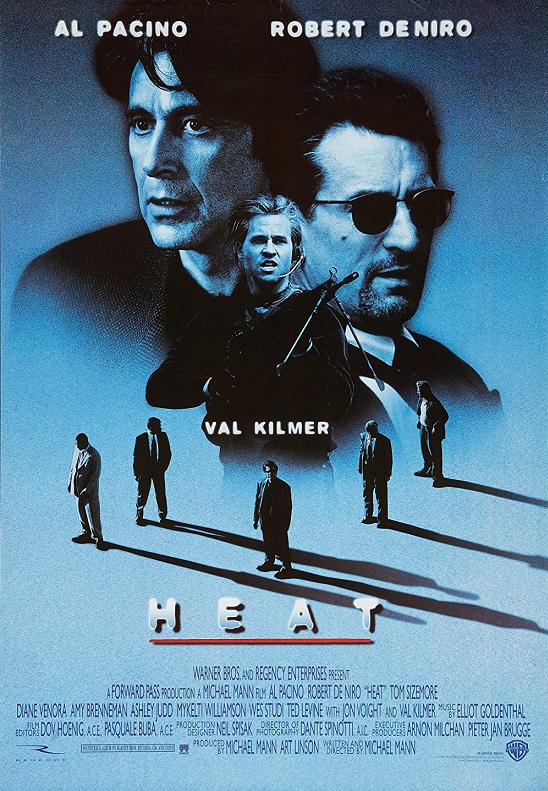
Heat (1995)

Directed by:
Michael Mann

Written by:
Michael Mann

Cast:
Al Pacino (Lt. Vincent Hanna), Robert De Niro (Neil McCauley), Val Kilmer (Chris Shiherlis), Jon Voight (Nate), Tom Sizemore (Michael Cheritto), Diane Venora (Justine Hanna), Amy Brenneman (Eady), Ashley Judd (Charlene Shiherlis), Mykelti Williamson (Sergeant Drucker), Wes Studi (Detective Casals)

Watching Heat recently really made me nostalgic for the nineties. Acting legends Al Pacino and Robert De Niro in the same movie? Those were the days. The supporting cast of Heat is also one to marvel at. But it’s not just the cast that makes it such a great cinematic experience. Heat is like a genius puzzle where every piece fits perfectly.

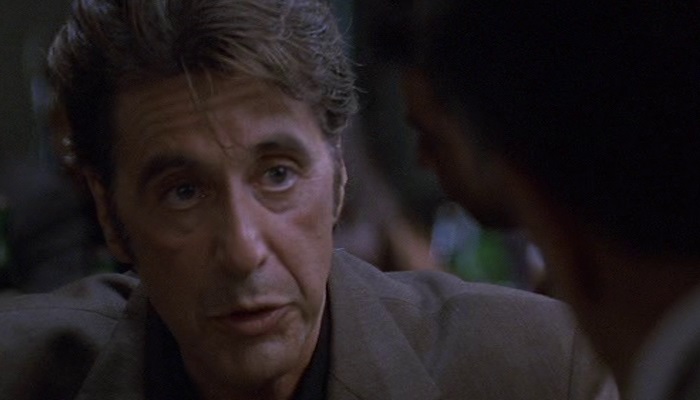
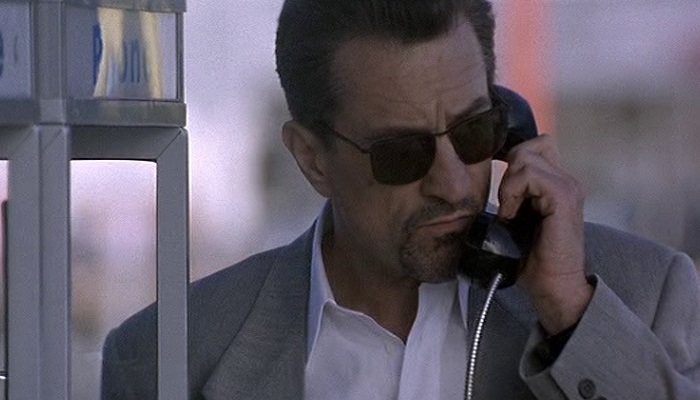
The starting point seems simple: there’s a good guy, detective Vincent Hanna (Pacino), who tries to catch the bad guy, robber Neil McCauley (De Niro). Both are dedicated professionals—so dedicated, in fact, that they struggle to maintain steady relationships. Hanna’s second marriage is crumbling, while McCauley hesitantly starts dating a woman, keeping her in the dark about his criminal life.

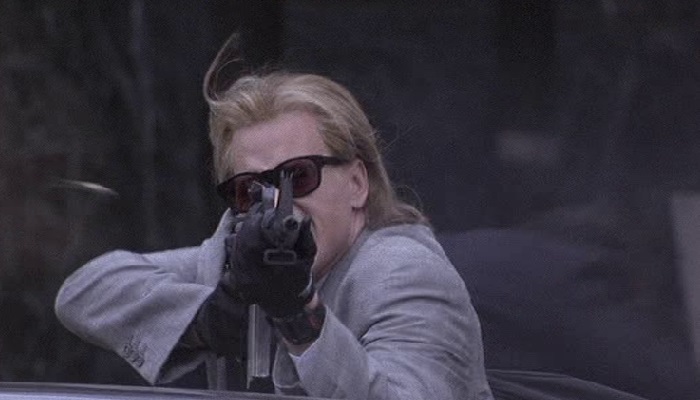
Writer/director Michael Mann based Heat on true crime stories. Neil McCauley, for instance, was inspired by a real person. He leads a crew of professional robbers, but as soon as they deviate from their usual approach, their perfect machine begins to unravel. Hanna is on their trail like a bloodhound. They decide to pull off one final, major heist—with Hanna and his equally professional team hot on their heels.

Yet the story goes much deeper, featuring an impressive array of side characters, each given just the right amount of screen time. In the end, the equation is perfectly balanced, and when the final piece falls into place, it’s a moment of true greatness.

The heart of the story is the relationship between Hanna and McCauley. Though they only meet twice in key scenes – once in the legendary diner scene and again in the tragic airport finale – their bond is palpable throughout.

Scenes from their private lives mirror each other, and whenever they learn something new about one another, they’re notably impressed. These two men respect each other. They’re equals in many ways, yet they’re on opposite sides of the law. Even though McCauley is far more cold-hearted than Hanna, it’s hard to favor one over the other. McCauley is such a professional that you can’t help but root for him.

Beyond the story and acting – both of which deserve a 10/10 – Mann and his crew also made the film look astonishing. The blue-lit Los Angeles feels cold and detached, a perfect backdrop for these characters, all of whom are disconnected from the world in their own way.

The direction is a triumph in itself. Every shot is like a painting, and every scene is meticulously crafted down to the smallest detail. There are a few fantastic set pieces: the two heists in the film are unforgettable, but many other scenes linger in the mind. Heat is touching, smart, cool, and extremely exciting. It’s Mann’s best film, hands down, and one of the greatest L.A. crime epics ever made.

Rating:

Quote:
VINCENT HANNA: “You know, we are sitting here, you and I, like a couple of regular fellas. You do what you do, and I do what I gotta do. And now that we’ve been face to face, if I’m there and I gotta put you away, I won’t like it. But I tell you, if it’s between you and some poor bastard whose wife you’re gonna turn into a widow, brother, you are going down.”

Trivia:
In an interview with Al Pacino on the DVD Special Edition, Pacino reveals that for the scene in the restaurant between Hanna and McCauley, Robert De Niro felt that the scene should not be rehearsed so that the unfamiliarity between the two characters would seem more genuine. Michael Mann agreed, and shot the scene with no practice rehearsals.

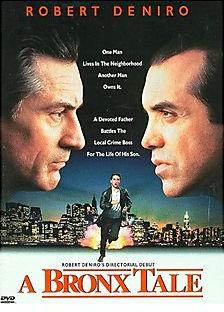
A Bronx Tale (1993)


‘One man lives in the neighbourhood, another man owns it’

Directed by:
Robert De Niro

Written by:
Chazz Palminteri (based on his play)

Cast:
Robert De Niro (Lorenzo Anello), Chazz Palminteri (Sonny), Lillo Brancato Calogero ‘C’ Anello (age 17), Francis Capra (Calogero ‘C’ Anello (age 9), Taral Hicks (Jane Williams), Kathrine Narducci (Rosina Anello), Clem Caserta (Jimmy Whispers)
Dave Salerno (Frankie Coffeecake), Joe Pesci (Carmine)

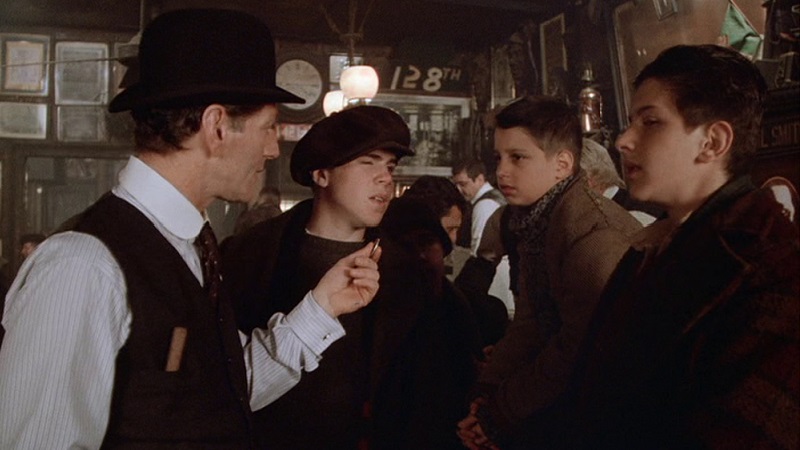
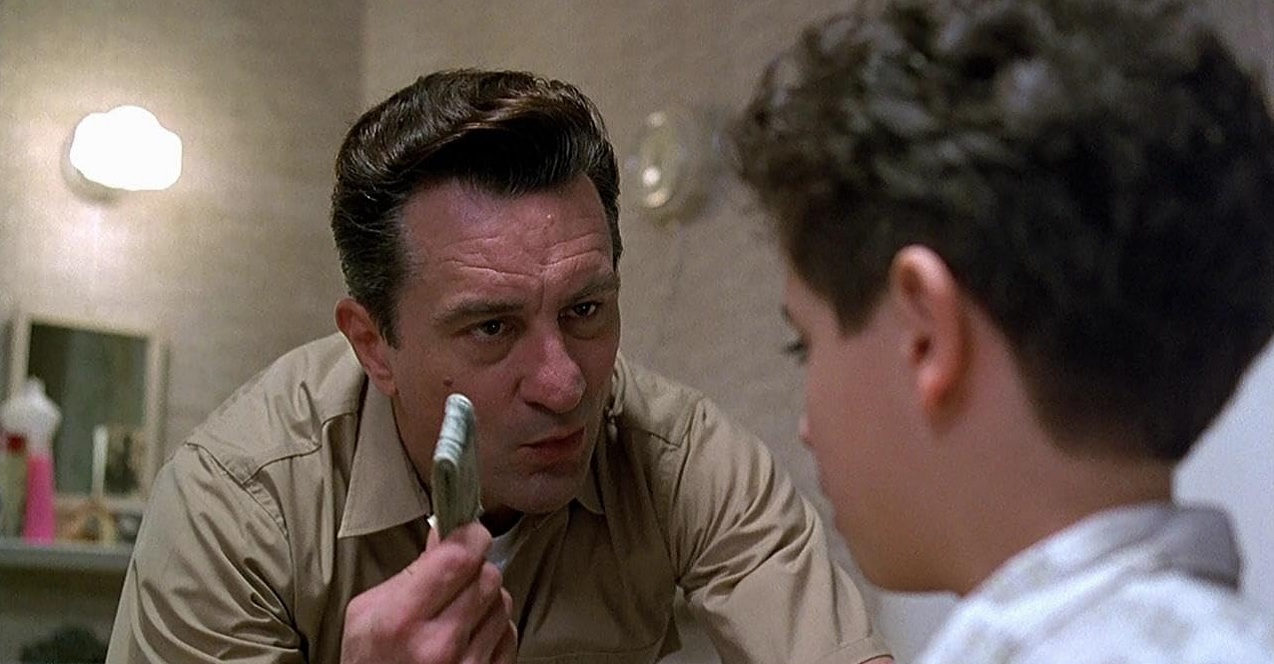
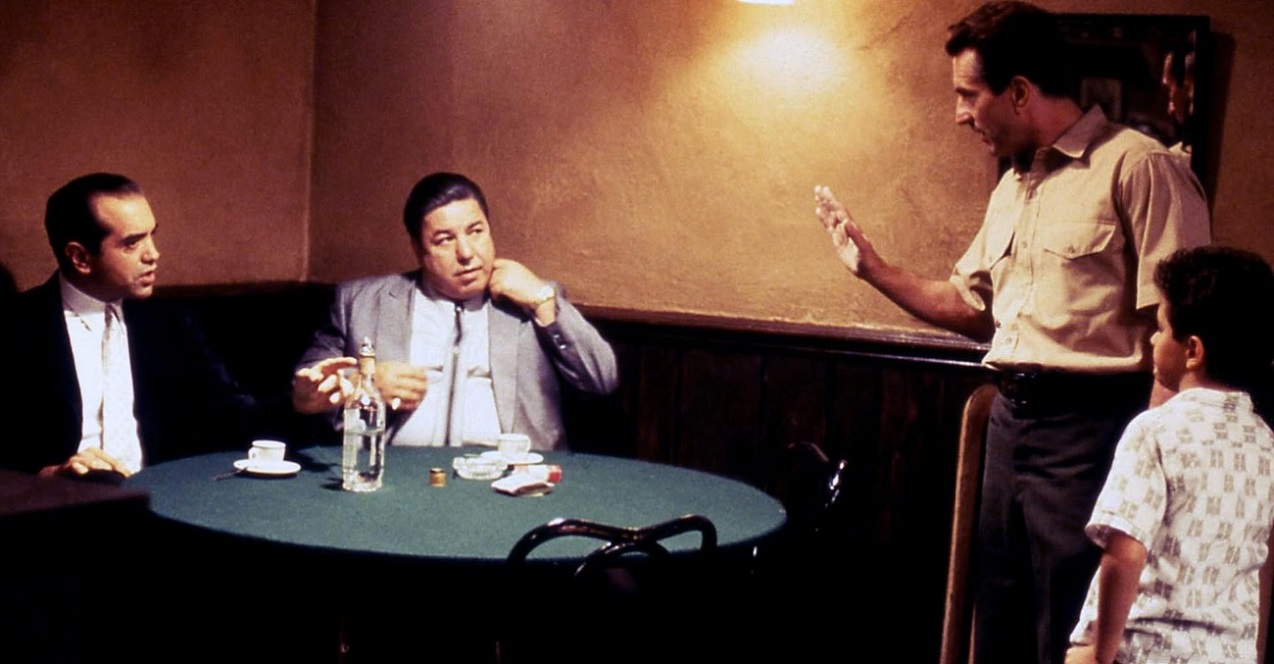
Set in the Bronx during the early 1960s, A Bronx Tale follows Calogero Anello, a young boy torn between two father figures: his honest, working-class dad Lorenzo, a bus driver who takes him to Yankees games, and Sonny, the local mob boss who rules the neighborhood from the bar next door. Though Lorenzo warns his son to stay away from the bar and its criminal elements, Calogero becomes increasingly fascinated by Sonny’s power and charisma.

When Calogero witnesses Sonny commit a murder outside their home, he chooses not to identify him to the police. From that moment on, Sonny takes the boy under his wing. Despite his father’s disapproval, Calogero begins to spend time with Sonny and his crew, learning street smarts that complement his formal education.

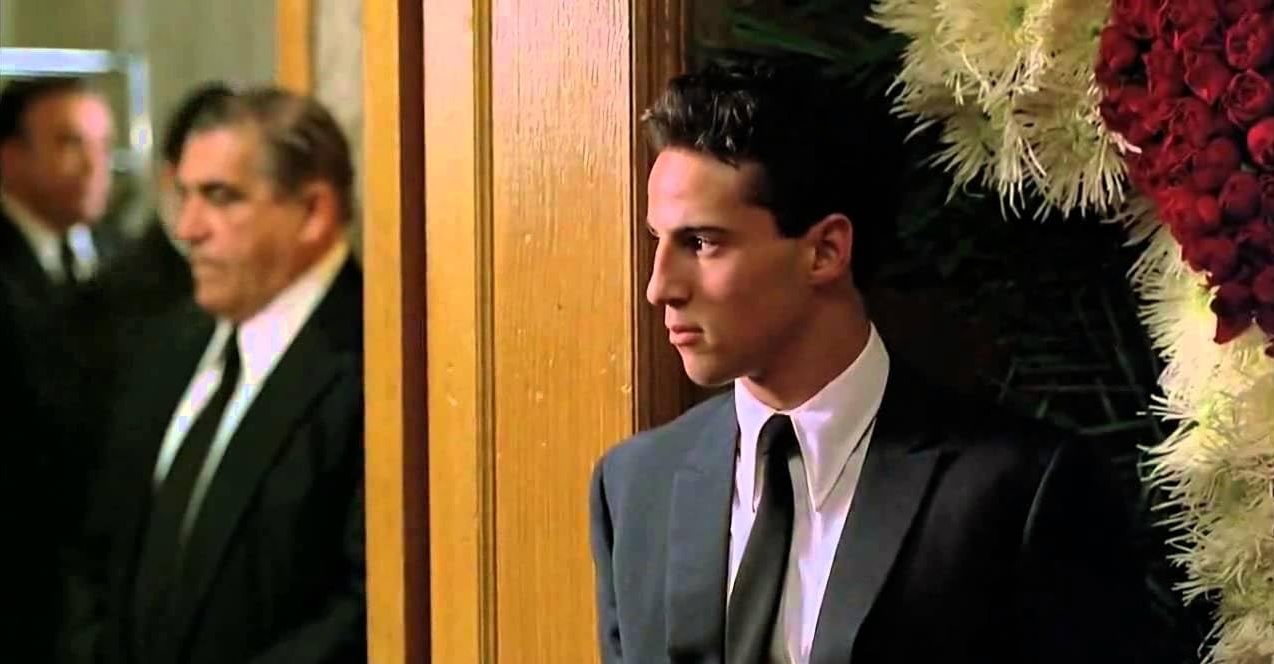
As he enters his teenage years, Calogero walks a fine line between two worlds. He avoids falling into a life of crime, but still associates with a group of reckless, racist friends. His life takes a turn when he falls in love with Jane, a Black girl from his school, just as racial tensions in the neighborhood begin to escalate. Faced with rising conflict and peer pressure, Calogero must decide who he wants to be – drawing on the contrasting life lessons imparted by his two mentors.

Robert De Niro’s directorial debut is a modest yet heartfelt film that captures the spirit of the 1960s Bronx with warmth and authenticity. Though it starts off resembling a mob drama like GoodFellas, it evolves into a thoughtful coming-of-age story about identity, morality, and the power of choice. The period soundtrack – featuring The Impressions, The Four Tops, Dion & The Belmonts, and Dean Martin – enhances the film’s nostalgic charm.

While the film tackles racial issues with sincerity, the relationship between Calogero and Jane feels underdeveloped and at times unconvincing. Nevertheless, the performances are solid across the board. Chazz Palminteri delivers a compelling portrayal of the tough yet complex Sonny, while De Niro plays against type as the principled, soft-spoken Lorenzo. Joe Pesci also makes a brief but memorable appearance.

Overall, A Bronx Tale is a touching and nuanced film that blends the grit of street life with the warmth of a coming-of-age story. It may not hit every note perfectly, but its heart is in the right place.

Rating:

Quote:
LORENZO: “The saddest thing in life is wasted talent.”

Trivia:
The story, written by Chazz Palminteri, is semi-autobiographical. His real name is Calogero Lorenzo Palminteri.

GoodFellas (1990)

‘Three Decades of Life in the Mafia’

Directed by:
Martin Scorsese

Written by:
Martin Scorsese (screenplay)
Nicolas Pileggi (book ‘Wiseguy’ / screenplay)

Cast:
Ray Liotta (Henry Hill), Lorraine Bracco (Karen Hill), Robert De Niro (James ‘Jimmy’ Conway), Joe Pesci (Tommy DeVito), Paul Sorvino (Paul Cicero), Frank Sivero (Frankie Carbone), Tony Darrow (Sonny Bunz), Mike Starr (Frenchy), Frank Vincent (Billy Batts), Chuck Low (Morris ‘Morrie’ Kessler)

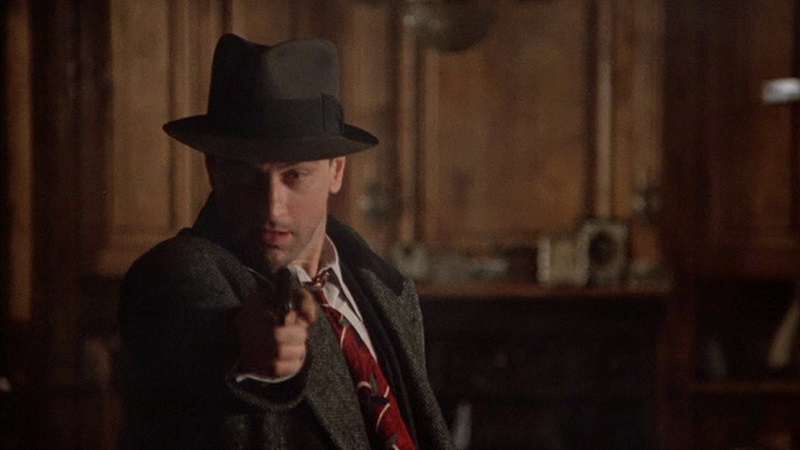
GoodFellas tells the story of the 30 year lasting involvement of the Irish/Italian Henry Hill (Liotta) in the New York Mafia. It is based on the real life story of Henry Hill who went into the witness protection programme and described his experiences in the bestseller ‘Wiseguy’ by Nicolas Pileggi. Scorsese starts his movie with a most memorable scene playing in the seventies. The brutal murder of Gambino mobster Billy Batts at the hands of Hill’s feared associates Jimmy Conway (De Niro) and Tommy De Vito (Pesci). ‘As far as back as I could remember I always wanted to be a gangster’ is Hill’s classic voice-over response. Later in the film when we return to this scene, we will learn that this is the point where things are taking a downturn for Henry and his pals. Batts was a made guy and killing him could get them all whacked when discovered.

After this extremely violent scene of great impact we are glued to our seats and the film takes off at an enormous pace. We flash back to the fifties, a glorious time for the wiseguys in Brooklyn. In a sort of documentary style Hill describes his fascination with the Mafia and how he worked his way up into that world of glory, power and violence. It isn’t until long before Hill becomes an accepted and even very popular associate of the most violent crew in the neighborhood. The crew is headed by Paul Cicero (Paul Sorvino). His mentor becomes Jimmy Conway, an Irishman who like Henry can never become a ‘made guy’ because of his Irish blood. They are respected because they know how to earn, the greatest virtue a wiseguy can have. With the respect they get, they gain in power. They never have to wait in line anywhere and when they enter a club they get treated like movie stars with muscle.

After Henry’s youth is covered, there are basically three distinctive parts that follow: the glory days, in which Henry and his enterprising friends make giant scores, live the luxury life and still appear to have somewhat of innocence left. In these days Henry also meets his future wife Karen who gets a voice-over of her own, commenting on the Mafia life from the wives perspective. In the part that follows things start to slip. Sloppy and often unnecessary murders take place, largely due to psychopath Tommy. Henry and Jimmy have to face a long prison sentence and drugs make their entry. The final part consists of Henry’s paranoid cocaine trip leading to his arrest and downfall as a mobster.

The beauty of GoodFellas lies partly in its innovative use of cinematic techniques that not only help to tell the story as effectively as possible, but add to the immensely entertaining experience that watching this film is. Scorsese uses as many tricks as the running time allows him: freeze-frames, tracking shots, jump-cuts, pov-shots and extensive use of voice-over. It all fits perfectly in the narrative. Not one image feels even slightly misplaced, not one note of music mismatched, not one delivery of dialogue that doesn’t look and sounds flawless and effortless. Scorsese makes us feel what the characters feel by cleverly using cinematic language and succeeding brilliantly in making us part of Henry’s world.

Then there is the authenticity of the film that is just plain brilliance. Scorsese had the opportunity to observe the wiseguys well in his childhood and is aided by the perfect cast and production designers to bring his vision to the screen. It looks and feels so real that you can almost smell the garlic on De Niro’s breath as he is whispering something in Henry’s ear. The dark Mafia hangouts contrast beautifully with the colorful New York scene as the brutal acts of violence contrast with the family birthdays, christenings and weddings. It is like watching real Mafia footage. The inner workings of the mob are explained in great detail. A fine contribution by author and journalist Nicolas Pileggi who co-wrote the script with Martin Scorsese.

Scorsese and his team have managed to include in this movie what must be the largest number of famous cinematic finds in at least a decade; the mind-blowing steadicam shot of Henry and Karen taking the backdoor of the Copacabana, the shot of Jimmy visibly contemplating the murder of wig-man Morrie, the improvised ‘do you think I’m funny’ scene and the Layla montage of bodies of Lufthansa heist accomplices being found all over the city. Just to mention a few.

In basis, GoodFellas follows the classic rise-and-fall narrative of the gangster film, but in the process recreates an entire narrative technique breaking every rule in the book as it goes along. Storywise it differentiates itself from films such as The Godfather by strictly focusing on the street-level guys. It employs techniques to make you root for the bad guys. Just like the character Jimmy does in the movie. Where drug trade is firmly ruled against by Don Vito Corleone in The Godfather, it does indeed cause the demise of the protagonists in GoodFellas. The last half hour is one bad-ass cocaine trip experienced by Hill. Edited with enormous pace and dynamics.

It is hard to say that Pesci steals the show as hot-headed Mafioso because all the performances are so great. But Pesci certainly portrays the most relentless mobster in film history and he justly won an Oscar for the role. De Niro shines in a role more in the background. His behaviorism in the film is so detailed that only that demands multiple viewings. Liotta is the perfect leading man, charismatic and absolutely believable as the likable wiseguy Henry. Lorraine Bracco, as Henry’s counterpart Karen, gives an equally enjoyable and fitting performance.

Altogether GoodFellas really is a masterpiece. Everything about it is stylish and fascinating. It is a richly detailed look into the Italian underworld making us alternately feel fascination and repugnance for the gangsters. The atmosphere is so great that you can watch this film over and over just for the sheer joy and level of experience it lends to. It is the ultimate piece of pop cinema out there. Brilliant at so many levels and some of the finest hours of cinema in my life.

Rating:

Quote:
BILLY BATTS: “Now go home and get your fucking shine box!”

Trivia:
Voted #1 in the 100 Greatest Movies Of All Time List from Total Film in November 2005. You know why? It was out of respect!

Read also: Wiseguy Guide for Rookies