‘Three Decades of Life in the Mafia’
Directed by:
Martin Scorsese
Written by:
Martin Scorsese (screenplay)
Nicolas Pileggi (book ‘Wiseguy’ / screenplay)
Cast:
Ray Liotta (Henry Hill), Lorraine Bracco (Karen Hill), Robert De Niro (James ‘Jimmy’ Conway), Joe Pesci (Tommy DeVito), Paul Sorvino (Paul Cicero), Frank Sivero (Frankie Carbone), Tony Darrow (Sonny Bunz), Mike Starr (Frenchy), Frank Vincent (Billy Batts), Chuck Low (Morris ‘Morrie’ Kessler)
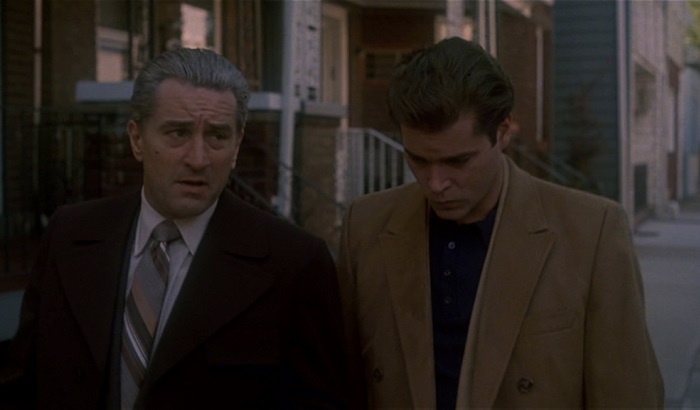

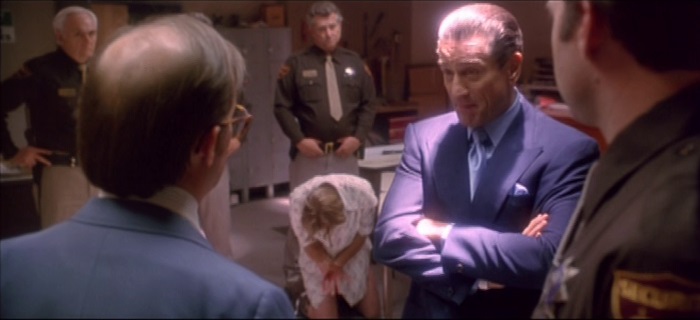
GoodFellas tells the story of the 30 year lasting involvement of the Irish/Italian Henry Hill (Liotta) in the New York Mafia. It is based on the real life story of Henry Hill who went into the witness protection programme and described his experiences in the bestseller ‘Wiseguy’ by Nicolas Pileggi. Scorsese starts his movie with a most memorable scene playing in the seventies. The brutal murder of Gambino mobster Billy Batts at the hands of Hill’s feared associates Jimmy Conway (De Niro) and Tommy De Vito (Pesci). ‘As far as back as I could remember I always wanted to be a gangster’ is Hill’s classic voice-over response. Later in the film when we return to this scene, we will learn that this is the point where things are taking a downturn for Henry and his pals. Batts was a made guy and killing him could get them all whacked when discovered.
After this extremely violent scene of great impact we are glued to our seats and the film takes off at an enormous pace. We flash back to the fifties, a glorious time for the wiseguys in Brooklyn. In a sort of documentary style Hill describes his fascination with the Mafia and how he worked his way up into that world of glory, power and violence. It isn’t until long before Hill becomes an accepted and even very popular associate of the most violent crew in the neighborhood. The crew is headed by Paul Cicero (Paul Sorvino). His mentor becomes Jimmy Conway, an Irishman who like Henry can never become a ‘made guy’ because of his Irish blood. They are respected because they know how to earn, the greatest virtue a wiseguy can have. With the respect they get, they gain in power. They never have to wait in line anywhere and when they enter a club they get treated like movie stars with muscle.
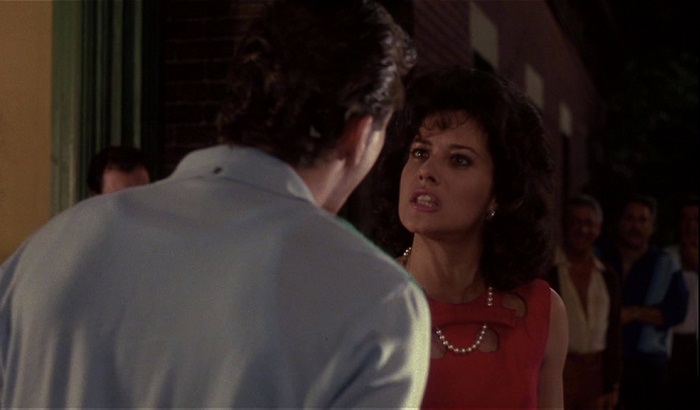
After Henry’s youth is covered, there are basically three distinctive parts that follow: the glory days, in which Henry and his enterprising friends make giant scores, live the luxury life and still appear to have somewhat of innocence left. In these days Henry also meets his future wife Karen who gets a voice-over of her own, commenting on the Mafia life from the wives perspective. In the part that follows things start to slip. Sloppy and often unnecessary murders take place, largely due to psychopath Tommy. Henry and Jimmy have to face a long prison sentence and drugs make their entry. The final part consists of Henry’s paranoid cocaine trip leading to his arrest and downfall as a mobster.
The beauty of GoodFellas lies partly in its innovative use of cinematic techniques that not only help to tell the story as effectively as possible, but add to the immensely entertaining experience that watching this film is. Scorsese uses as many tricks as the running time allows him: freeze-frames, tracking shots, jump-cuts, pov-shots and extensive use of voice-over. It all fits perfectly in the narrative. Not one image feels even slightly misplaced, not one note of music mismatched, not one delivery of dialogue that doesn’t look and sounds flawless and effortless. Scorsese makes us feel what the characters feel by cleverly using cinematic language and succeeding brilliantly in making us part of Henry’s world.
Then there is the authenticity of the film that is just plain brilliance. Scorsese had the opportunity to observe the wiseguys well in his childhood and is aided by the perfect cast and production designers to bring his vision to the screen. It looks and feels so real that you can almost smell the garlic on De Niro’s breath as he is whispering something in Henry’s ear. The dark Mafia hangouts contrast beautifully with the colorful New York scene as the brutal acts of violence contrast with the family birthdays, christenings and weddings. It is like watching real Mafia footage. The inner workings of the mob are explained in great detail. A fine contribution by author and journalist Nicolas Pileggi who co-wrote the script with Martin Scorsese.
Scorsese and his team have managed to include in this movie what must be the largest number of famous cinematic finds in at least a decade; the mind-blowing steadicam shot of Henry and Karen taking the backdoor of the Copacabana, the shot of Jimmy visibly contemplating the murder of wig-man Morrie, the improvised ‘do you think I’m funny’ scene and the Layla montage of bodies of Lufthansa heist accomplices being found all over the city. Just to mention a few.
In basis, GoodFellas follows the classic rise-and-fall narrative of the gangster film, but in the process recreates an entire narrative technique breaking every rule in the book as it goes along. Storywise it differentiates itself from films such as The Godfather by strictly focusing on the street-level guys. It employs techniques to make you root for the bad guys. Just like the character Jimmy does in the movie. Where drug trade is firmly ruled against by Don Vito Corleone in The Godfather, it does indeed cause the demise of the protagonists in GoodFellas. The last half hour is one bad-ass cocaine trip experienced by Hill. Edited with enormous pace and dynamics.
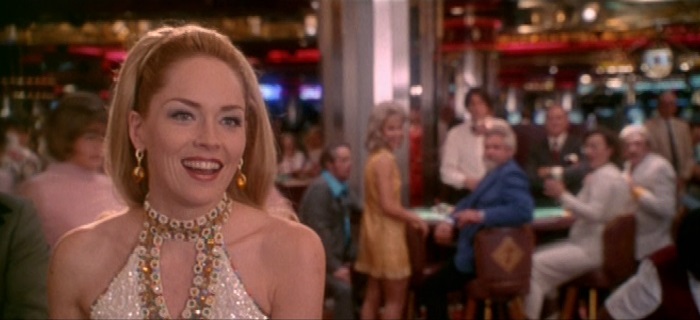
It is hard to say that Pesci steals the show as hot-headed Mafioso because all the performances are so great. But Pesci certainly portrays the most relentless mobster in film history and he justly won an Oscar for the role. De Niro shines in a role more in the background. His behaviorism in the film is so detailed that only that demands multiple viewings. Liotta is the perfect leading man, charismatic and absolutely believable as the likable wiseguy Henry. Lorraine Bracco, as Henry’s counterpart Karen, gives an equally enjoyable and fitting performance.
Altogether GoodFellas really is a masterpiece. Everything about it is stylish and fascinating. It is a richly detailed look into the Italian underworld making us alternately feel fascination and repugnance for the gangsters. The atmosphere is so great that you can watch this film over and over just for the sheer joy and level of experience it lends to. It is the ultimate piece of pop cinema out there. Brilliant at so many levels and some of the finest hours of cinema in my life.
Rating:

Quote:
BILLY BATTS: “Now go home and get your fucking shine box!”
Trivia:
Voted #1 in the 100 Greatest Movies Of All Time List from Total Film in November 2005. You know why? It was out of respect!
Read also: Wiseguy Guide for Rookies