Easy Riders, Raging Bulls

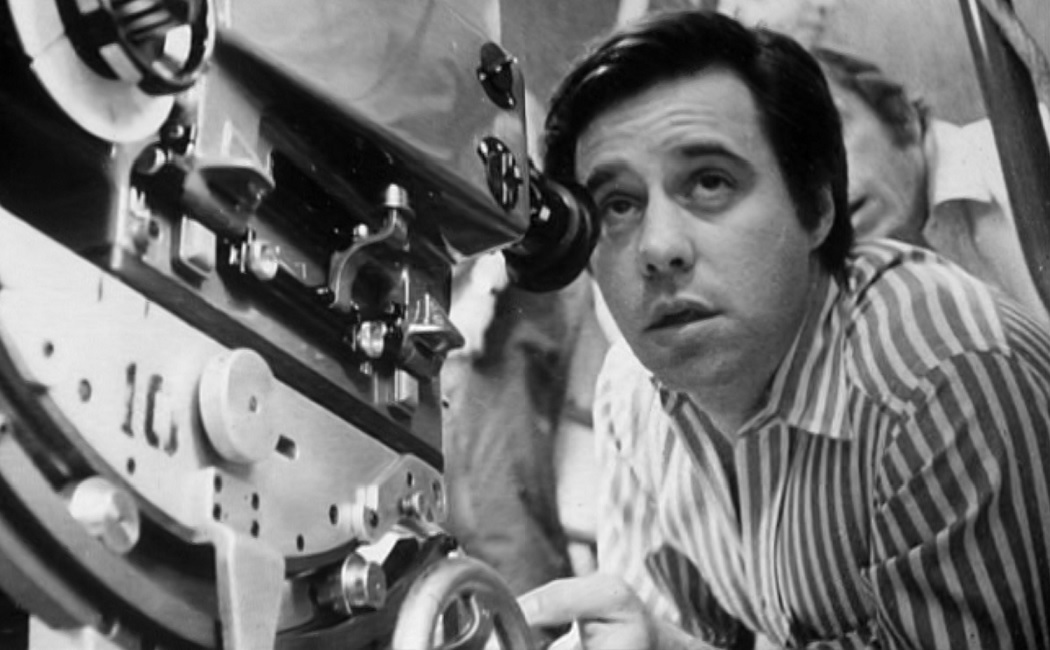
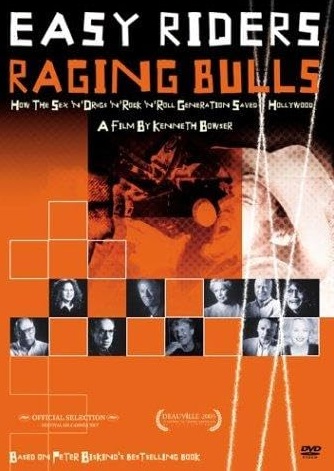
BBC documentary (2003) by Kenneth Bowser, based on the book by Peter Biskind. Easy Riders, Raging Bulls: How the Sex-Drugs-and-Rock ‘N Roll Generation Saved Hollywood tells the story of Hollywood in the 1960s, a time when the studio system was in crisis. Their films had become increasingly irrelevant.

The problem was that movies were run by studios rather than directors, and the studios had lost touch with what audiences wanted to see. Then a new generation of filmmakers emerged who reconnected with viewers. Directors such as George Lucas, Steven Spielberg, Martin Scorsese, Dennis Hopper, Sam Peckinpah, Francis Ford Coppola, Arthur Penn, Warren Beatty, Robert Altman, Jack Nicholson, and Peter Bogdanovich.

“In 1963 the studio system collapsed”, says Bogdanovich. “It was over.” After the disaster of Cleopatra (1963, Joseph L. Mankiewicz, Rouben Mamoulian), the Fox lot was shut down. It became a ghost town. Television took over. The old moviegoers died off, and American films grew more and more meaningless.

Meanwhile, art theaters screening foreign films were doing very well. Many of the new generation of filmmakers learned the language of cinema from auteurs like Fellini, Godard, and Truffaut.

Outside the studio system, Roger Corman played a pivotal role in training young filmmakers to make low-budget B-movies that performed well at the box office. Jonathan Demme, Martin Scorsese, Ron Howard, and Francis Ford Coppola all started under Corman. They succeeded by targeting the youth who flocked to the thousands of drive-in theaters across the country, audiences that loved horror and action. Corman also had a knack for choosing hot topics: Hells Angels were in the news, so he made The Wild Angels (1966, Roger Corman). LSD was trendy, so he made The Trip (1967, Roger Corman) based on a screenplay by Jack Nicholson.

In Hollywood, directors proved just how out of touch the studios were. Executives hated Bonnie and Clyde, but young people loved it. Studios had to adapt. Paramount, in deep trouble, was taken over by Gulf & Western, led by the eccentric Austrian Charlie Bluhdorn. He brought in the now-legendary Bob Evans as a producer, who helped turn the studio around. How? By giving directors more creative control. Like he did with Polanski, who made Rosemary’s Baby in 1968.

At Columbia, Bert Schneider also trusted and empowered directors, resulting in massive hits, most notably Easy Rider, released in 1969. The drug-fueled chaos of director Dennis Hopper and his team is visible on screen. It was a great film, and audiences loved it. It was the kind of movie that never would have been made under the old studio system. The same goes for Midnight Cowboy by John Schlesinger, also released in 1969 – an outstanding film. That same year saw The Wild Bunch by Sam Peckinpah, which pushed violent realism to a whole new level.

The 1970s began, and the director’s era was in full swing. Peter Bogdanovich released The Last Picture Show in 1971, a film rich in emotional depth and sexual content, more than audiences were used to at the time. Dennis Hopper tried to follow up on Easy Rider with The Last Movie, but botched the edit due to his drug use and constant partying. “I had final cut, but I cut my own throat,” he says in the documentary.

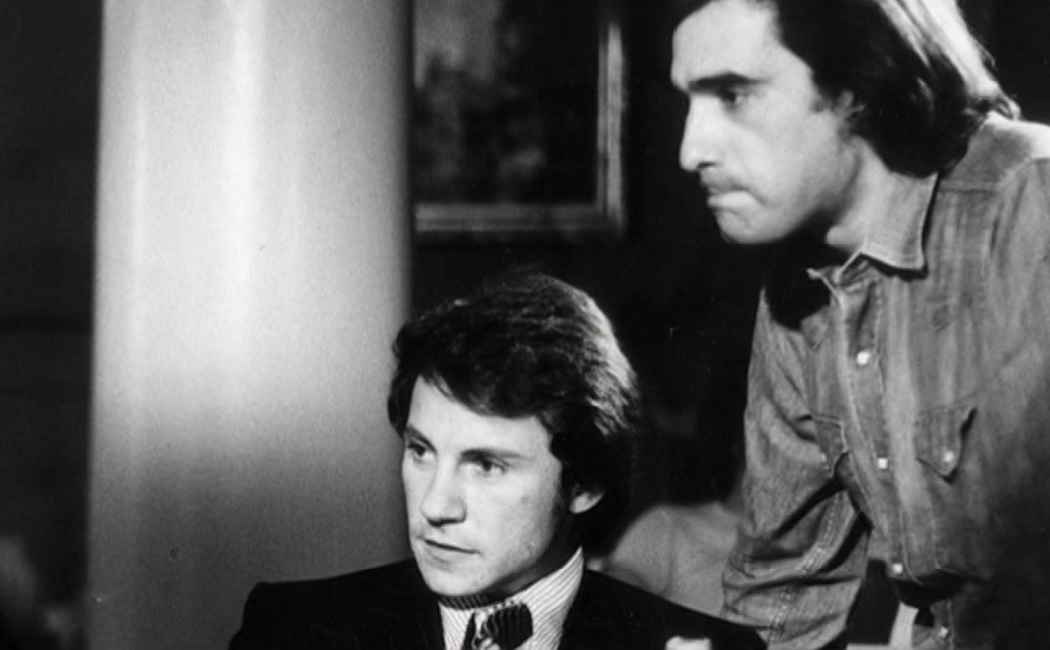
In 1972, Paramount released The Godfather in 4,000 theaters simultaneously, a massively successful strategy. The history of that production was recently chronicled in the excellent miniseries The Offer. Coppola had now become one of the greats. He used his influence to bring George Lucas back to Hollywood, where he made the wildly successful American Graffiti in 1973 – a film studios didn’t understand, but youth audiences loved. That same year marked the rise of another major talent: Martin Scorsese, whose Mean Streets won over critics and audiences alike with its originality and authenticity.

But 1973 belonged to Warner Bros., which released The Exorcist by William Friedkin. Using the same wide-release strategy as The Godfather, it became a huge box office hit. It was Friedkin’s second success after The French Connection, cementing his status as one of the untouchable directors of the time.

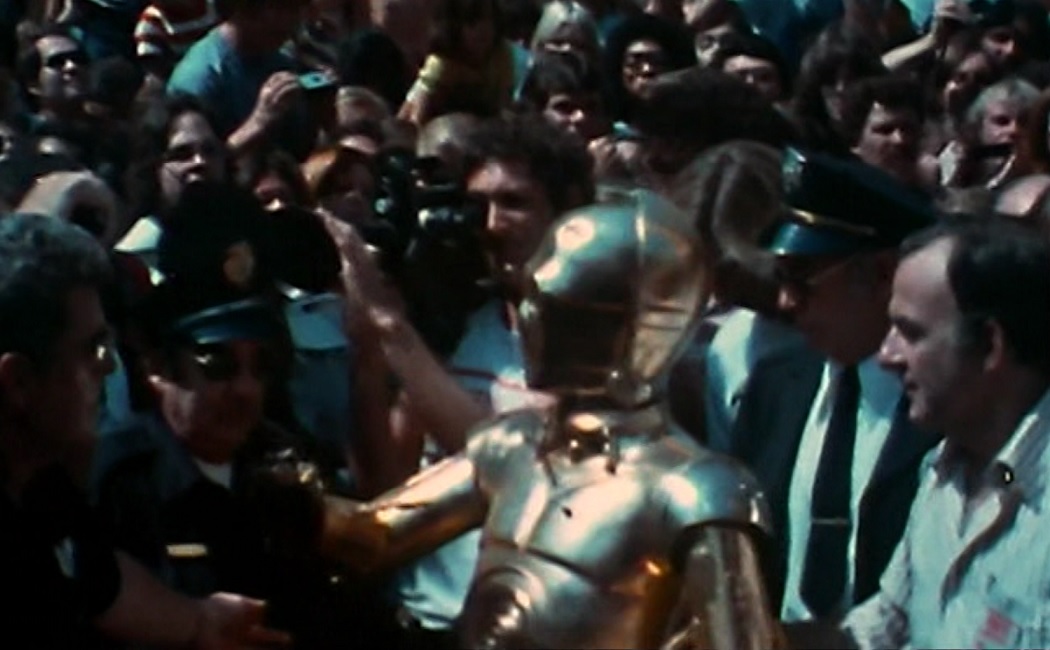
By now, the auteurs had taken over Hollywood. This led to artistic triumphs like Chinatown (1974). But the young directors hadn’t forgotten Corman’s trick of attracting young audiences. In 1975, Spielberg released Jaws, a film that redefined what success looked like in Hollywood. Corman said: “When I saw Jaws I thought: these guys know what I’m doing, and they have the money and talent and skills to do it better.” George Lucas took it even further with Star Wars in 1977. The age of the blockbuster had arrived.

It had taken a decade, but Hollywood was back on its feet. Expensive B-movies like Alien, Superman, and their sequels became the new studio model. For about ten years, directors ruled. That era came to an end in the late ’70s, but it was a glorious decade that produced countless classics – films still regarded today as some of the greatest ever made.

Andor Season 2: The Most Political Star Wars Show Arrives at Exactly the Right Moment

Andor (2022–2025 – 24 episodes)
Creator: Tony Gilroy
Starring: Diego Luna, Denise Gough, Stellan Skarsgård, Adria Arjona & Kyle Soller

The second season of Andor leads directly into the events of Rogue One, which itself sets the stage for A New Hope. It’s a story of rebellion, defiance, and resistance – values the world desperately needs right now but seems to be running short on. The timing of Andor is striking, coinciding with an authoritarian shift currently underway in the United States.

The series opens with a thrilling scene in which the main hero, Cassian Andor, steals a TIE fighter. He struggles to fly it, leading to a daring and spectacular escape. Before taking off, he tells a resistance ally: “The Empire cannot win. You will never be right unless you’re doing what you can to stop them.” It’s a line that feels less like fiction and more like prophecy.

In the original Star Wars films, the Empire was portrayed as an all-powerful, faceless regime with little internal resistance. Andor pulls back the curtain, revealing the machinery of authoritarianism – and the cracks within it. We see how such regimes function, and we meet those who make them work. These Imperial functionaries are a million times more competent than the members of Trump’s regime, but they still run into their share of challenges.

Among these enablers of evil, Dedra and Syril – introduced in Season 1 – are the most fascinating. Now involved in a love affair, their current mission is to work on an energy programme on the planet Ghorman. The Empire wishes to extract a valuable mineral called Kalkite. Sound familiar? Dedra gets the top job, and Denise Gough shines in the role – utterly convincing as a sycophantic bureaucrat championing a fascist program to “Make the Empire Great Again.”

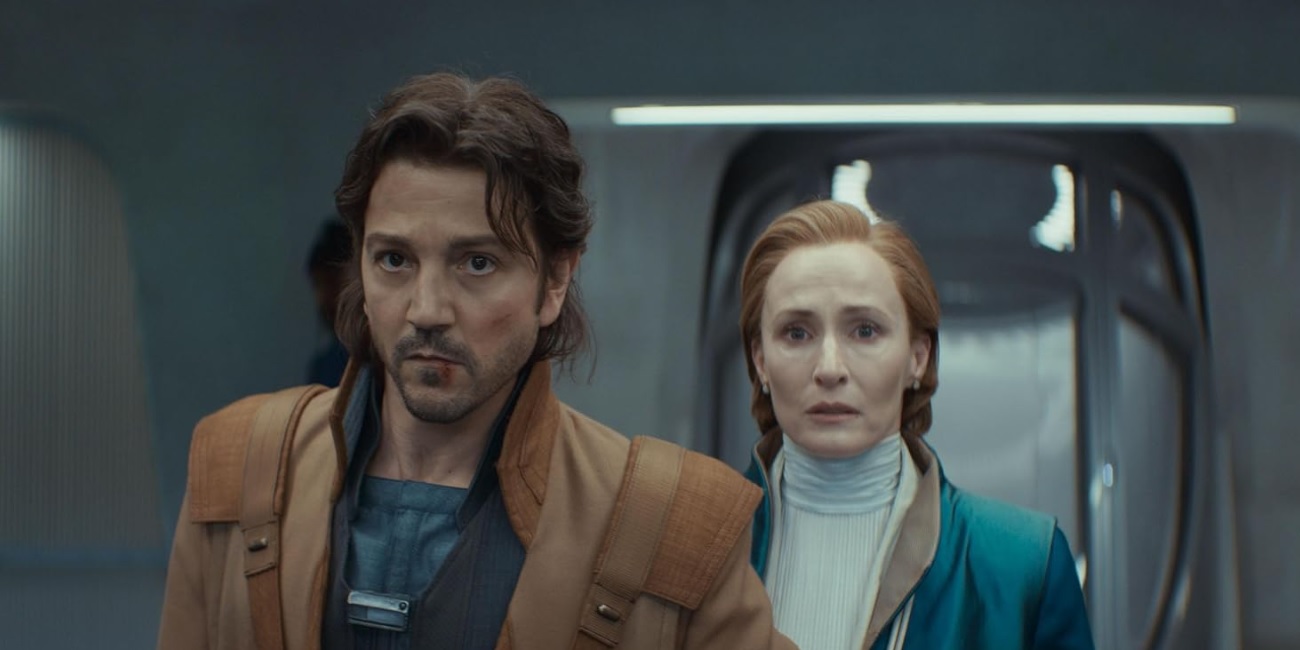
Andor is a refreshingly original take on the Star Wars universe, offering a chilling portrayal of life under autocracy. Ironically, it’s produced by Disney which like so many other free institutions is currently under attack by the Trump government for its commitment to diversity and inclusion. But Andor responds in kind: with fierce resistance. Its rebels – Cassian, his partner Bix, Luthen, and Mon Mothma – are flawed, human, and fiercely dedicated. They’re all willing to risk everything for the cause.

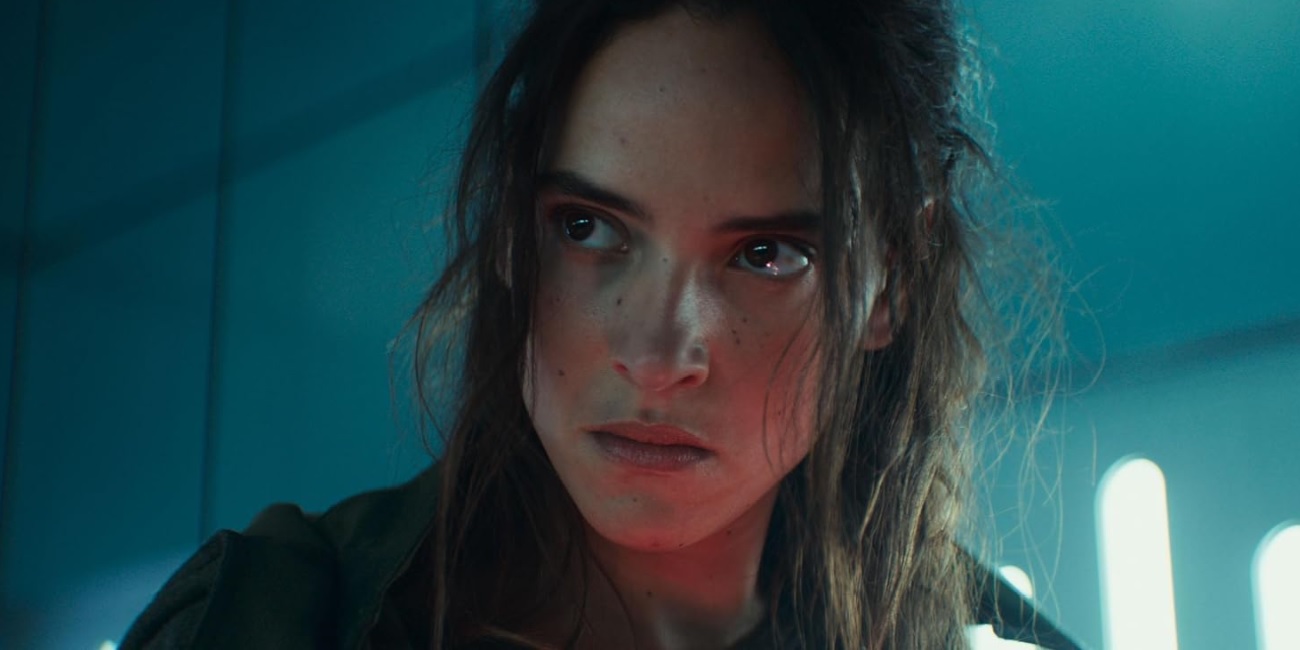
The story unfolds slowly but deliberately, structured into four arcs of three episodes each, moving steadily toward the Battle of Yavin and the destruction of the Death Star. We follow Cassian as he escapes with resistance fighters in the stolen TIE fighter; Mon Mothma as she balances a strategic marriage for her daughter with her political double life; and Bix, suffering from PTSD, hiding during an immigrant crackdown on a farming planet; a clear parallel to current global events.

Meanwhile, Dedra and Syril navigate their lives on Coruscant. Dedra handles her overbearing mother-in-law while being invited to join a secret imperial operation on Ghorman.

The pacing can be slow at times, but the show remains compelling throughout. In episode 8, the tone turns especially grim when a massacre takes place on Ghorman – evoking contemporary parallels to the genocide in Gaza. The killer droids deployed during the assault give us a harrowing preview of what future wars might look like. The rebels – and the audience – finally discover that Orson Krennic (a scene stealing Ben Mendelsohn) has spent ten years developing the Death Star. The Ghorman minerals were essential to his work, regardless of the cost to the planet.

From that point on, the narrative builds steadily toward the beginning of Rogue One. With its second and final season, Andor now stands as the best Star Wars series Disney has produced. The visuals are stunning – hard to imagine 20 years ago that a series could look like this in 2025 – and the story offers a bold, original angle within the Star Wars mythology. The cast is uniformly excellent. While many deserve praise, Diego Luna (whose name feels fitting for the galaxy far, far away) anchors the series with a nuanced, committed performance.

The political parallels are unmistakable. A stormtrooper arresting a senator in the Senate, Mon Mothma’s colleagues afraid to vote against Palpatine, state propaganda distorting the truth: these are no longer just fantasy. They’re reflections of what’s happening in the real world.

Andor also reminds us what revolution really is. It’s not one dramatic act, but a thousand small ones by people willing to make sacrifices. In the end, everyone is drawn in. Everyone must choose: become an enabler of tyranny or a rebel prepared to risk everything. For the characters in Andor, the choice is stark. There are no grey areas anymore.

The heart of the show – and perhaps our current moment – is best captured in Mon Mothma’s impassioned Senate speech: “When truth leaves us. When we let it slip away, when it is ripped from our hands, we become vulnerable to the appetite of whatever monster screams the loudest.”

Revenge of the Sith is 20 Years Old. It Is a Prophetic Vision of America Today

TRUMP WARS

Episode III

REVENGE OF THE MAGA

War! The republic is crumbling under ruthless attacks by Maga Lord Elon Musk.
There are assholes on both sides. Evil is everywhere.

In a stunning move, the fiendish president Donald J. Trump, has wiped out trillions in stock market value with an insanely stupid and useless trade war.

As the separatist MAGA-republicans attempt to siege the Capitol with their law enforcement hostages, Bernie Sanders is on his way to kick some Republican ass…

The Dark Side Calling
Exactly twenty years ago, Star Wars Episode III – Revenge of the Sith hit Dutch theaters as the dark turning point in the Star Wars saga. I remember the Darth Vader posters hanging all around the city where I worked. It was a monumental cinema experience, but it was also a dark movie that depicted the fall of a Republic, the rise of an Empire, and the death of democracy at the hands of a terrible authoritarian. Not to mention the tragic fate of all the characters we had grown to love.

Today, it feels less like science fiction and more like prophecy, as the United States of America – once the leading democracy in the world – is now rapidly becoming an authoritarian dictatorship.

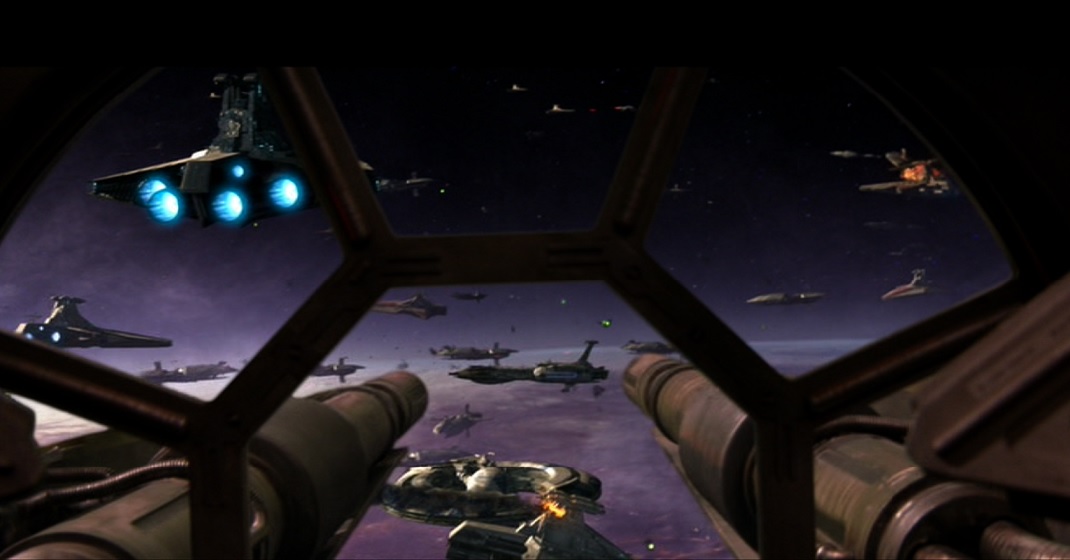
The opening shot of Revenge of the Sith is a real triumph. Anakin and Obi-Wan fly through the besieged airspace above Coruscant, and it’s all filmed in one terrific and dizzying shot. Technically, this might be the best of the Star Wars movies.
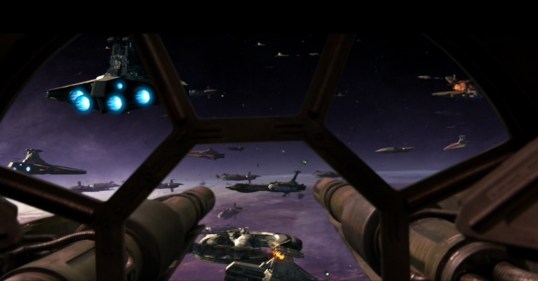
When Anakin and Obi-Wan board the ship where Palpatine is held hostage by Count Dooku and General Grievous, we notice that Anakin is wearing black clothes. This is already a symbol of where he is heading. But he is still a good guy here, unwilling to leave his friend behind in a time of trouble.

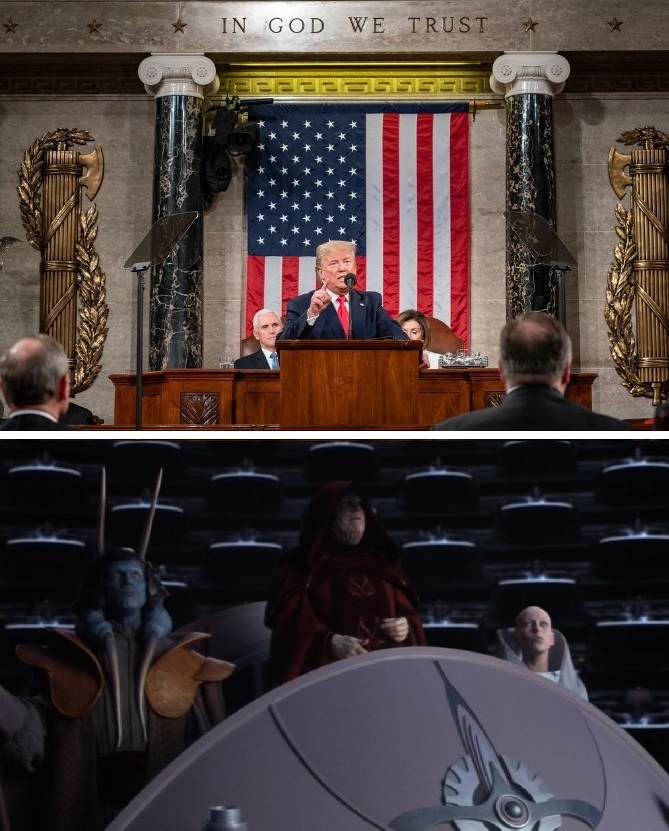
Obi-Wan looks a bit like J.D. Vance, the vice president in Trump’s regime. But make no mistake – he is nothing like him in character. He is a great Jedi Knight, just as Qui-Gon Jinn predicted he would become. Vance also looks like Count Dooku (the great Christopher Lee), and he is closer to this Dark Lord in character, though nowhere near as smart.

Then – in the showdown with Count Dooku – we get the first warning sign of Anakin’s approaching downfall. “My powers have doubled since we last met, Count.” Overconfidence, pride, anger… these are all hallmarks of a character vulnerable to Dark Side manipulation. Add fear to that, and Palpatine will have an easy mark.
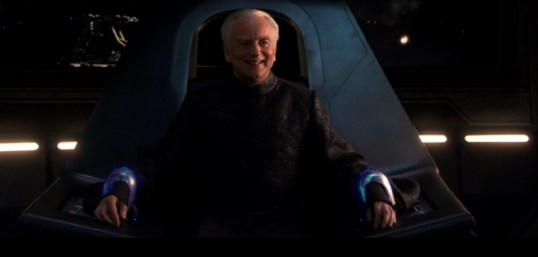
Count Dooku provokes Anakin, leading him to tap into the Dark Side. He uses his anger and aggression to defeat Dooku by cutting off both his hands. Then Palpatine urges him to kill Dooku, and he does. It turns out Anakin had told Palpatine about his mother and the slaughter of the Sand People. Palpatine is using that information to turn Anakin.

So he already has his hooks in the young Jedi. But Anakin is still a good person at this point. He refuses to abandon a wounded Obi-Wan and ensures the entire team escapes from the cruel cyborg General Grievous.

Then Anakin pulls off an amazing emergency landing with a spacecraft. Visually, this parallels the Trump era, where burning planes and helicopters seem to fall from the sky regularly due to Elon Musk’s firing of air traffic controllers.

Fear is the Mind Killer
The Senate gives the Chancellor permission to continue the war against the Separatists. Dictators always use emergency powers to dismantle democracy – and Palpatine and Trump are no exceptions. Trump’s emergency powers are invoked for bogus reasons. The USA is supposedly at war with Venezuelan gang members. That is ridiculous, but in Trump-land, that doesn’t matter.

The reason for these powers in Revenge of the Sith is that General Grievous is still alive. But we see that Grievous secretly works for Palpatine. The General is worried about Count Dooku’s death, but Palpatine assures him, “Soon, I will have a new apprentice. One far younger and more powerful.” He is clearly preparing for his masterstroke.

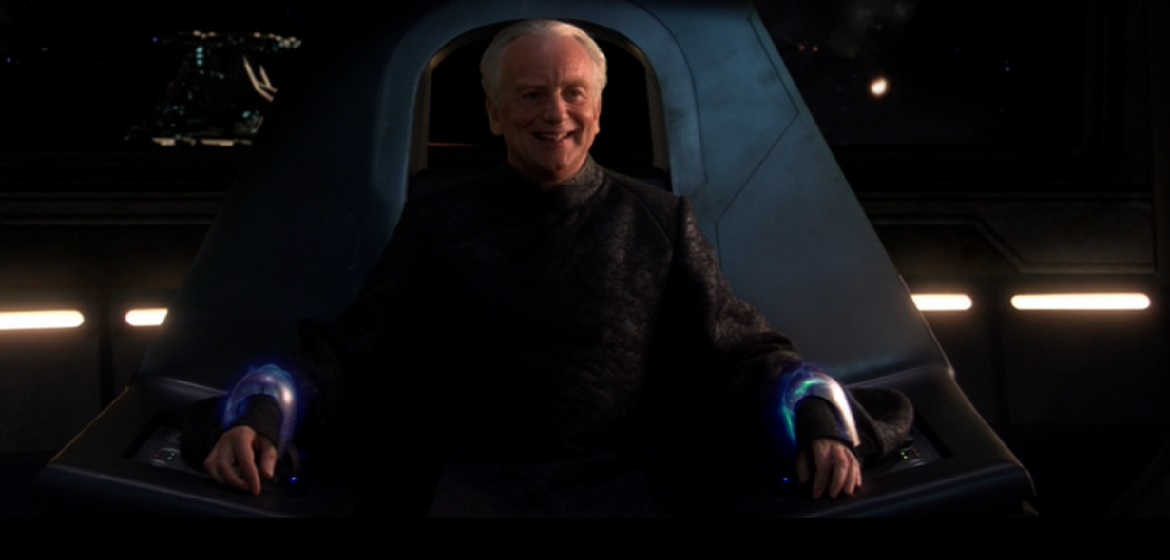
Revenge of the Sith has a terrific cast. Ian McDiarmid is especially powerful, delivering his lines as though in a Shakespearean play.

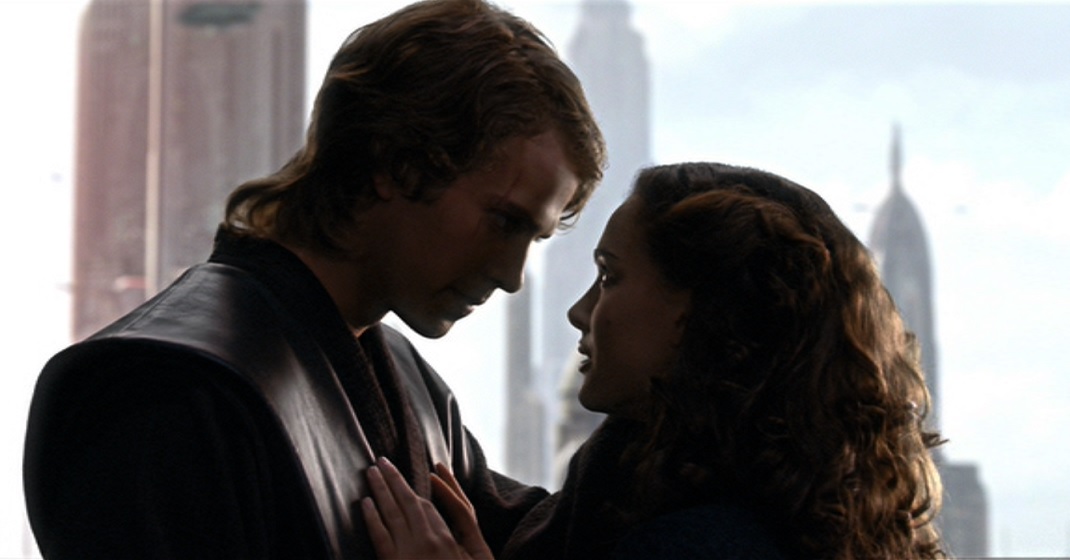
Meanwhile, Anakin learns from Padmé that she is pregnant. This is the happiest moment of his life, he tells her. Of course, their love is extremely dangerous in a time of Dark Side seduction. And then it happens: the nightmare. Anakin sees Padmé, his great love, dying, and it terrifies him.

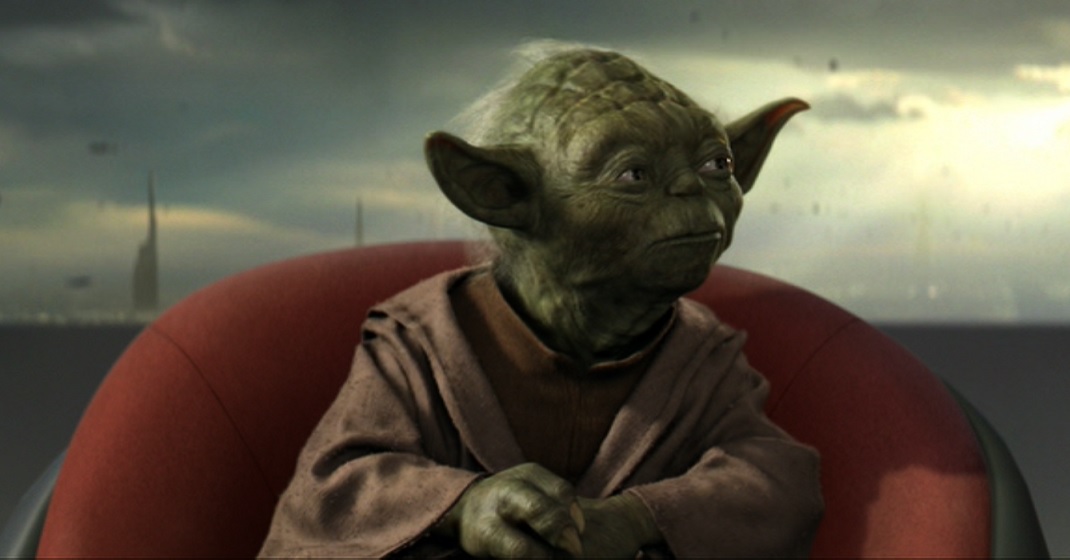
A coaching session with Yoda seems to bring some enlightenment: “Be mindful. Fear of loss is a path to the Dark Side.” If only Anakin had truly understood what those words meant.

Missed Warning Signs
Anakin and Obi-Wan meet, and Obi-Wan is worried about Palpatine, who is about to receive even more executive powers from the Senate. This parallels America today, where Trump has already made Congress powerless and is actively ignoring the courts.

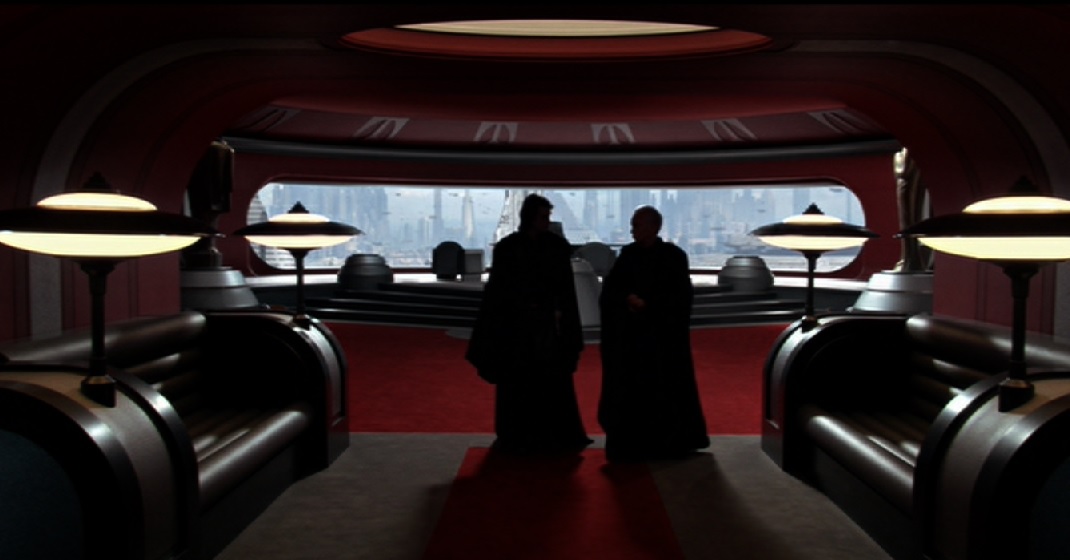
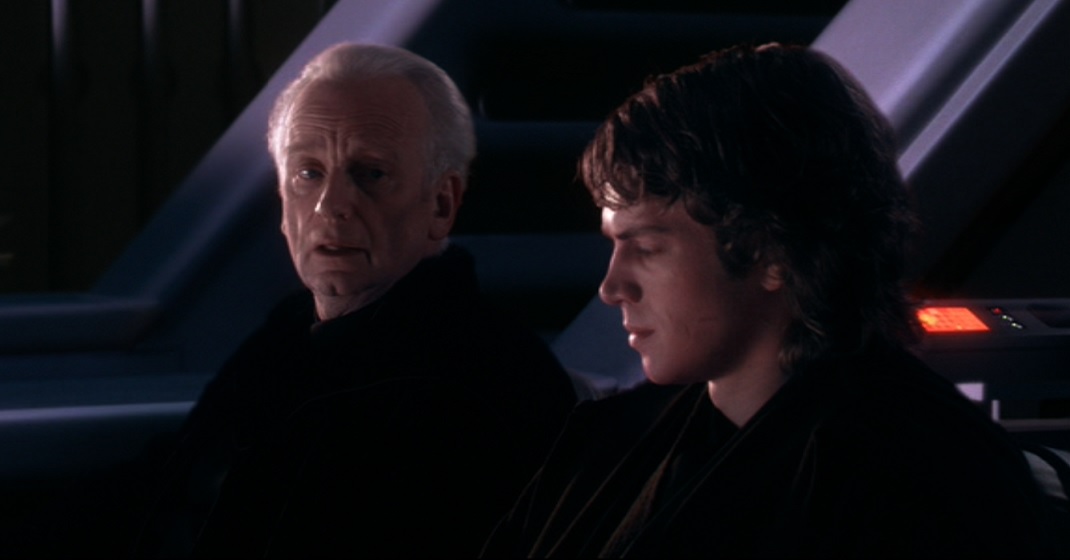
Anakin meets with Palpatine, who flatters him by proposing he become the Chancellor’s representative on the Jedi Council. There are beautiful shots here of Anakin and Palpatine – clearly staged to resemble Darth Vader and the Emperor walking together. “I need you to be the eyes, ears, and voice of the Republic.”

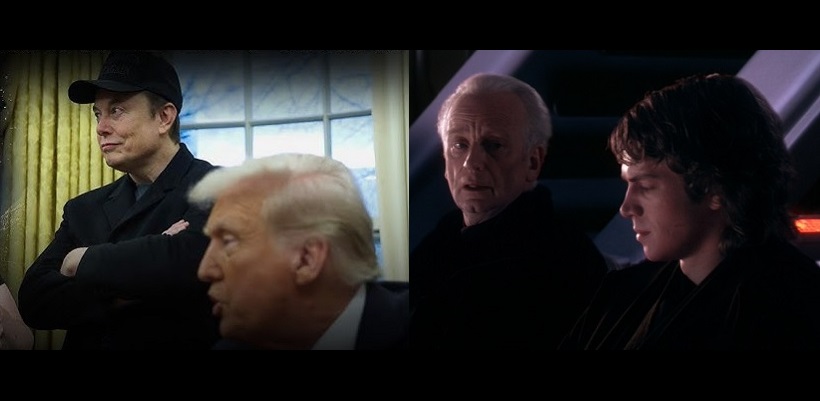
He gives Anakin a special task – just as Trump did with Musk, sending him into government agencies to extract data and build a massive surveillance system, yet another weapon for his dictatorship ambitions.
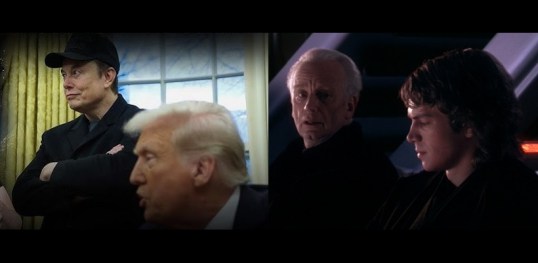
Anakin is brought before the Jedi Council. They accept him, but do not grant him the rank of Master. His angry response should have been a clear warning sign. There were plenty of warning signs during Trump’s campaign too – like mimicking Hitler and other fascist leaders in his speeches.

“It’s unfair”, says Anakin. That’s practically a direct copy of Trump. Narcissists like Trump are always playing the victim. “No country has ever been treated as unfairly as the United States”, Trump often complains. And he constantly claims to be the victim of a political witch hunt.

Standing With the Underdog
In that fateful Council meeting, Yoda utters one of the greatest lines of the film when learning that the Wookiees are under attack from the Separatists: “Go I will. Good relations with the Wookiees I have.”

The battle on the Wookiee planet Kashyyyk recalls Ukraine – a country with limited arms being attacked by a massive mechanized army (Russia). Yet they are stronger, because they are defending their freedom.

In the Ukraine war, Trump has sided with Russia, because he doesn’t care about Ukraine. It is just a pawn in a much greater battle for global control. Russia could be seen as standing in for the Separatists, though they see themselves as an empire.

The Ultimate Gaslighter
Things in Revenge of the Sith turn ugly very quickly. This is another hallmark of establishing a dictatorship. Events accelerate so fast that the good guys – in this case, the Jedi – can’t keep up.

They ask Anakin to spy on Palpatine, because “our allegiance is to the Senate, not its leader.” Most Republicans in the USA seem to have forgotten this pledge. They are 100% loyal to Trump, which is the heart of Project 2025.

Anakin argues with Padmé, who suggests that maybe the democracy they were trying to protect no longer exists. The parallel to the USA is stark: the political system is heavily influenced by money, and democracy is no longer functioning.

Palpatine’s final move is to portray the Jedi as attempting to illegally seize control of the Republic. Trump similarly convinced Americans that “evil” Biden was doing the same through the so-called deep state. By encouraging conspiracy theories, anti-science views, and mistrust in institutions, Trump sowed the seeds for victory.

“All who gain power are afraid to lose it. Even the Jedi”, Palpatine tells Anakin at a beautifully staged space opera. Also: “Good is a point of view, Anakin.” Indeed, we now have two competing truths: the Trump-Fox News truth and the Biden-CNN truth. On social media, we live in separate bubbles.

“The MAGA rely on their passion for their strength. They think inward – only about themselves.” “And the Jedi don’t?” This is classic MAGA: twisting narratives to vilify their opponents.

Palpatine tells Anakin the Sith legend of Darth Plagueis and the secret to immortality. This is the film’s Faustian moment. Many in the Trump administration made a similar bargain: loyalty in exchange for power.

ORDER 66 – PROJECT 2025
Before Palpatine’s rise in the Star Wars prequels, the Sith had been extinct for a millennium. Trump was also in a deep hole after losing the 2020 election. But he made a comeback – first by taking over the Republican Party, then by preparing for a return to power through Project 2025.

Trump is like Palpatine in many ways, particularly in his hunger for absolute power. Even physically, his grotesque expression mirrors Palpatine’s post-transformation face. And make no mistake – Trump is a manipulator, exploiting anyone in his way. While he lacks subtlety or strategy, he remains extremely dangerous. His bulldozer tactics may hinder him, but America’s fate remains undecided.
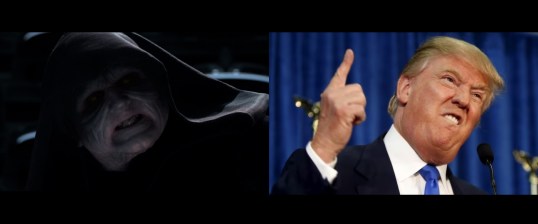
When the Jedi try to arrest Palpatine, the fate of the Republic is sealed. “I am the Senate!”, he screams. That’s typical Trump, who also believes his executive power should be limitless.

He kills three Jedi and convinces Anakin to kill Mace Windu. “He is a traitor”, Palpatine gaslights Anakin. Windu makes one last attempt to persuade him: “He has control of the Senate and the courts. He’s too dangerous to be left alive.” If there is one line in the film that best reflects the current Trump predicament, it is that one.
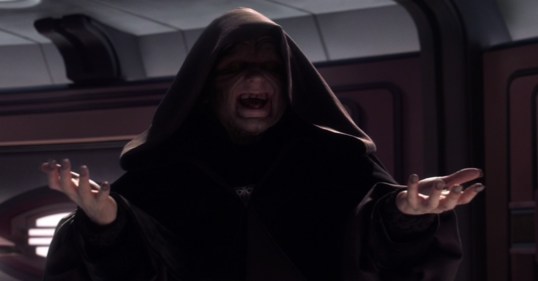
But Anakin – afraid of losing Padmé if Palpatine dies – makes a fateful choice and cuts off Windu’s hands. Windu is then killed by the now monstrous-looking Palpatine. “UNLIMITED POWER!!!” Anakin’s descent to the Dark Side is complete. Then he carries out Order 66. “Once more, the Sith will rule the galaxy, and we shall have peace.”

Trump seeks to rule the galaxy like Palpatine. He wants control over universities, the media, and the courts. He wants to own Canada, Mexico, Greenland, Panama, and Gaza. And he wants world leaders to bow before him in the Oval Office.

A pressing question remains: will Trump have his own Order 66? Will he use the military to suppress his own people and further his autocratic goals? The first steps already seem underway.

Final Transformation
Palpatine quickly consolidates his power. He sends Darth Vader to kill the Jedi younglings and Separatist leaders, then holds an emergency Senate session to declare the Republic reorganized into the first Galactic Empire.

Padmé utters the now-famous line: “This is how liberty dies – with thunderous applause.”

Exactly. This recalls Trump’s victory, cheered by many – including business elites. His sycophants continue to praise him no matter what terrible things he says or does.

The finale of Revenge of the Sith is painful and heartbreaking – as it should be. Yoda and Obi-Wan discover the murdered younglings. Obi-Wan tells Padmé what Anakin has done. Then, after their brutal duel on Mustafar, Anakin is burned alive. It’s dark, powerful stuff.

In their final confrontation, Anakin tells Obi-Wan he now sees the Jedi as evil. Just like Trump and Musk view Democrats and the values they once stood for – like climate protection, freedom, and diversity – as evil.

“I sense Elon is in danger. His Tesla stock is burning.”
Elon Musk has similarities to Anakin. A smart, energetic kid with a passion for technology, he once did good – like supporting Ukraine with Starlink satellites. But he crossed a line. He’s transformed into a Dark MAGA figure and caused massive harm.
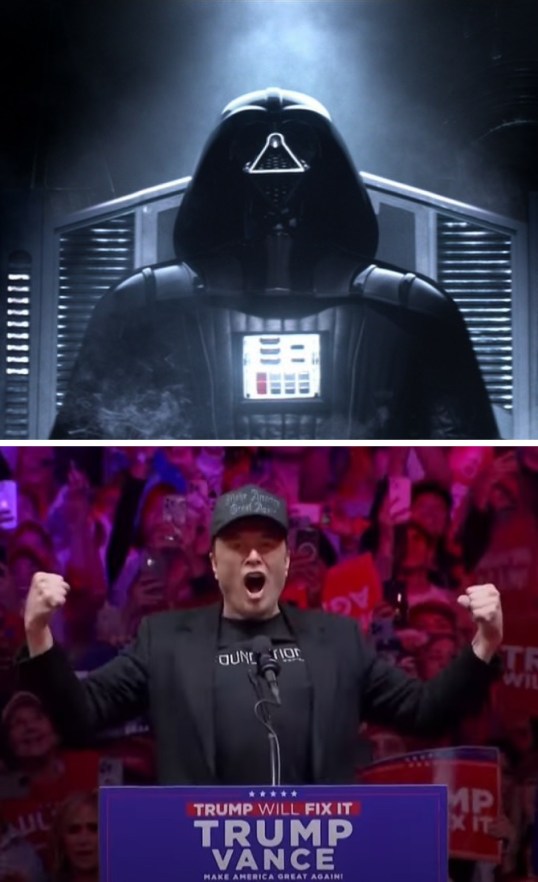
Like Anakin kills the Jedi younglings, Elon Musk is responsible for the deaths of thousands of children by slashing USAID funds. He has sunk to a level of evil that few would ever imagine to be possible. The only solution to the Trump-Musk regime is now complete destruction.

That shot where the Vader mask closes over Anakin’s burned face is powerful. His transformation is complete.

Final Thoughts
After the death of Padmé and the birth of Luke and Leia, Yoda and Obi-Wan go into exile – like Harris, Biden, and Waltz, after failing to stop the Trumpian menace.

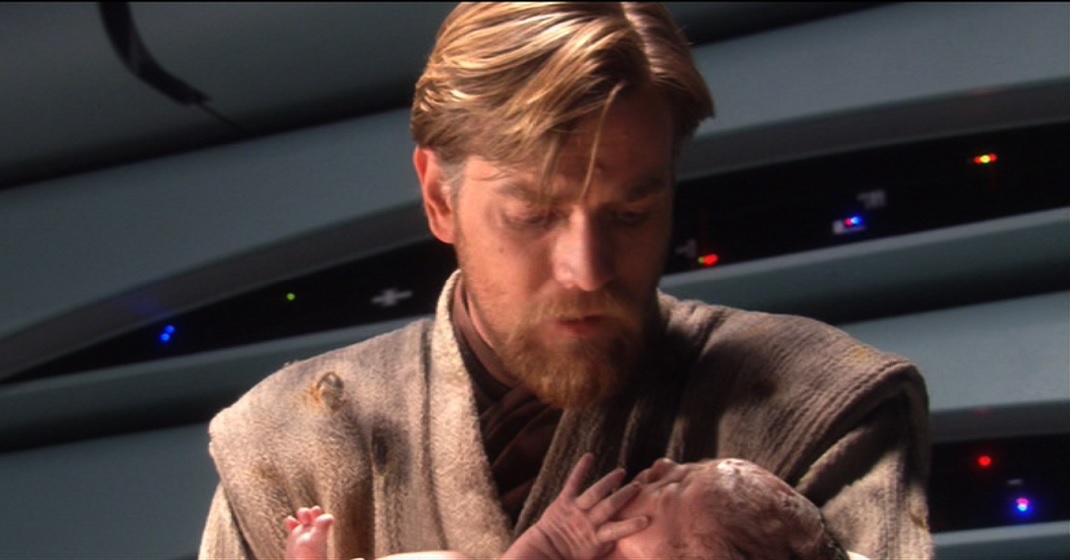
After all that darkness, the film ends on a hopeful note. Leia is delivered to her adoptive parents. Obi-Wan brings Luke to his aunt and uncle on Tatooine as they look out at the twin sunset.
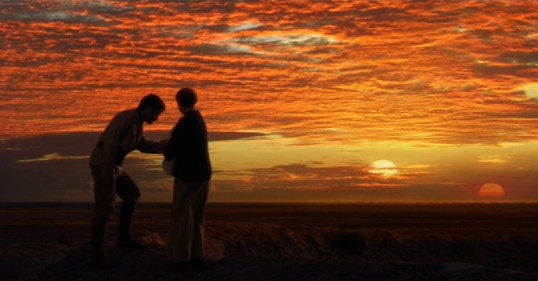
The message: there is always hope.
It’s Official: The Acolyte is Disney’s First Real Star Wars Failure

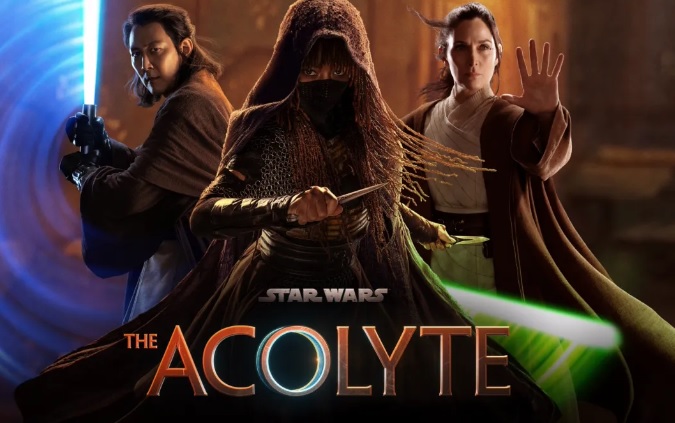
In recent years, Disney has released one Star Wars series after the other. Most were pretty good with especially The Mandalorian and Andor getting rave reviews. The latest is The Acolyte, of which the first two episodes were released on June 5 on Disney Plus.

If you ask the critics, the series is a successful addition to the SW universe. If you ask the fans you get quite a different view. At IMDb, the show is currently rated with a painful 3,4 and most of the 1.5 K user reviews are extremely negative. A sample of the comments: ‘Jar Jar Binks was a museum masterpiece next to this’, ‘this is laughably bad writing & direction’ and ‘the worst Star Wars project since the Holiday Special.’ Autch.

I am aware of the fact that Star Wars fans are notoriously difficult to please. Many of the prequels and sequels were also harshly criticized when they first came out, although since the Disney takeover of Lucas Film, the prequel films by George Lucas’ have risen somewhat in popularity again .

After viewing the first five episodes of The Acolyte, I have to say I am with the fans on this one though. Judging the series on the basis of plot, characters, acting, action and atmosphere, I find it to be a pretty terrible show. Yes, the fifth episode indeed contains some excellent lightsabre action, but because the writing is so weak, the showdowns lose almost all of their potential impact.

The Acolyte is the first series to venture outside of the Skywalker era. It takes place about a hundred years before the rise of the Empire in the peaceful High Republic era. The story revolves around a female force user who is killing off Jedi’s. Her twin sister is accused of the crime, but after her innocence is proven, she joins the Jedi in order to track down her sister and we learn of their family tragedy that caused her sister to crave for revenge. We also learn that she is guided by a dark master, whose appearance is very Sith-like.

The main point thematically, seems to be that the Jedi themselves can be an oppressive force, which in this case has resulted in the rise of evil. The problem is that the characters and their motivations are not one bit convincing. It is also problematic that this feels like another rise of the Sith story for which we have no need. Lucas has done this already in the prequels, and in my opinion he did a fine job, although certainly not flawless.

The show really gets embarrassing in episode 3 when the Witches are introduced: a new group of force users. The dialogues make George Lucas seem like a William Shakespeare. Things don’t improve in the following episodes. Were there no question marks with the producers when they read the scripts? What is it that convinced them to invest 180 million dollars (!) in this show? It’s mind boggling.

I am not gonna finish it after watching episode 5. It is now revealed who the bad guy is and frankly, I thought this was a terrible choice as well. I am not curious to find out what Sol is hiding nor do I care to find out how the relationship between the twin sisters is gonna develop. I am still interested in new Star Wars series by Disney, but The Acolyte is pretty much a disaster as far as I’m concerned. I can only hope that Disney will learn from this costly mistake.