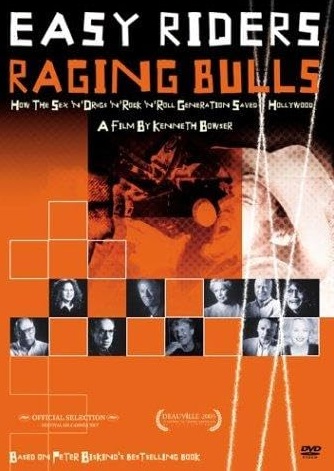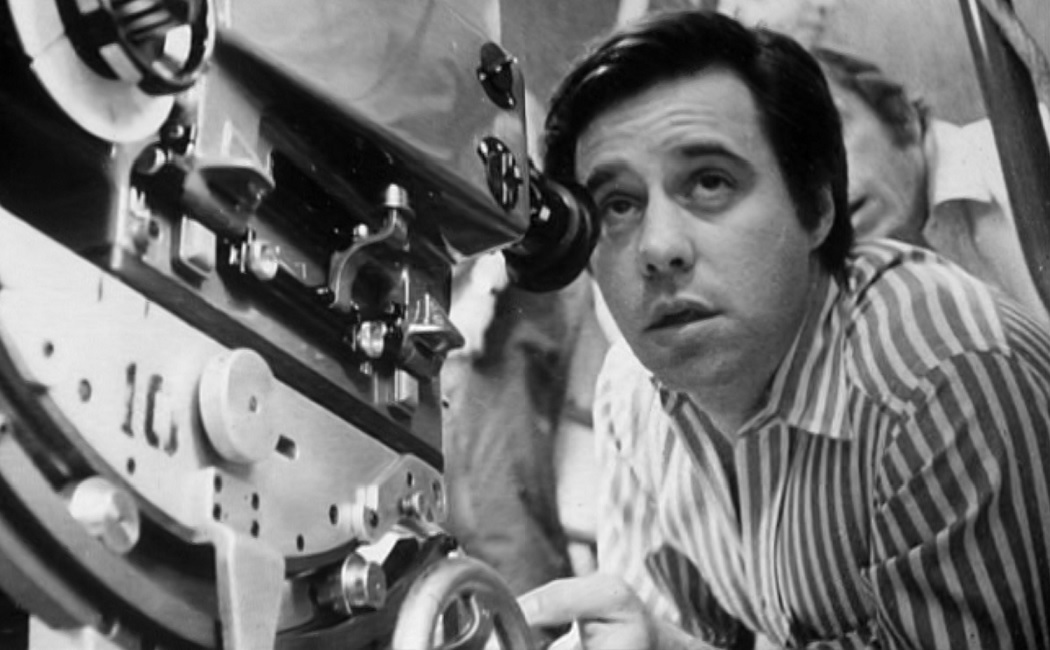
Easy Riders, Raging Bulls

BBC documentary (2003) by Kenneth Bowser, based on the book by Peter Biskind. Easy Riders, Raging Bulls: How the Sex-Drugs-and-Rock ‘N Roll Generation Saved Hollywood tells the story of Hollywood in the 1960s, a time when the studio system was in crisis. Their films had become increasingly irrelevant.

The problem was that movies were run by studios rather than directors, and the studios had lost touch with what audiences wanted to see. Then a new generation of filmmakers emerged who reconnected with viewers. Directors such as George Lucas, Steven Spielberg, Martin Scorsese, Dennis Hopper, Sam Peckinpah, Francis Ford Coppola, Arthur Penn, Warren Beatty, Robert Altman, Jack Nicholson, and Peter Bogdanovich.

“In 1963 the studio system collapsed”, says Bogdanovich. “It was over.” After the disaster of Cleopatra (1963, Joseph L. Mankiewicz, Rouben Mamoulian), the Fox lot was shut down. It became a ghost town. Television took over. The old moviegoers died off, and American films grew more and more meaningless.

Meanwhile, art theaters screening foreign films were doing very well. Many of the new generation of filmmakers learned the language of cinema from auteurs like Fellini, Godard, and Truffaut.

Outside the studio system, Roger Corman played a pivotal role in training young filmmakers to make low-budget B-movies that performed well at the box office. Jonathan Demme, Martin Scorsese, Ron Howard, and Francis Ford Coppola all started under Corman. They succeeded by targeting the youth who flocked to the thousands of drive-in theaters across the country, audiences that loved horror and action. Corman also had a knack for choosing hot topics: Hells Angels were in the news, so he made The Wild Angels (1966, Roger Corman). LSD was trendy, so he made The Trip (1967, Roger Corman) based on a screenplay by Jack Nicholson.

In Hollywood, directors proved just how out of touch the studios were. Executives hated Bonnie and Clyde, but young people loved it. Studios had to adapt. Paramount, in deep trouble, was taken over by Gulf & Western, led by the eccentric Austrian Charlie Bluhdorn. He brought in the now-legendary Bob Evans as a producer, who helped turn the studio around. How? By giving directors more creative control. Like he did with Polanski, who made Rosemary’s Baby in 1968.

At Columbia, Bert Schneider also trusted and empowered directors, resulting in massive hits, most notably Easy Rider, released in 1969. The drug-fueled chaos of director Dennis Hopper and his team is visible on screen. It was a great film, and audiences loved it. It was the kind of movie that never would have been made under the old studio system. The same goes for Midnight Cowboy by John Schlesinger, also released in 1969 – an outstanding film. That same year saw The Wild Bunch by Sam Peckinpah, which pushed violent realism to a whole new level.

The 1970s began, and the director’s era was in full swing. Peter Bogdanovich released The Last Picture Show in 1971, a film rich in emotional depth and sexual content, more than audiences were used to at the time. Dennis Hopper tried to follow up on Easy Rider with The Last Movie, but botched the edit due to his drug use and constant partying. “I had final cut, but I cut my own throat,” he says in the documentary.

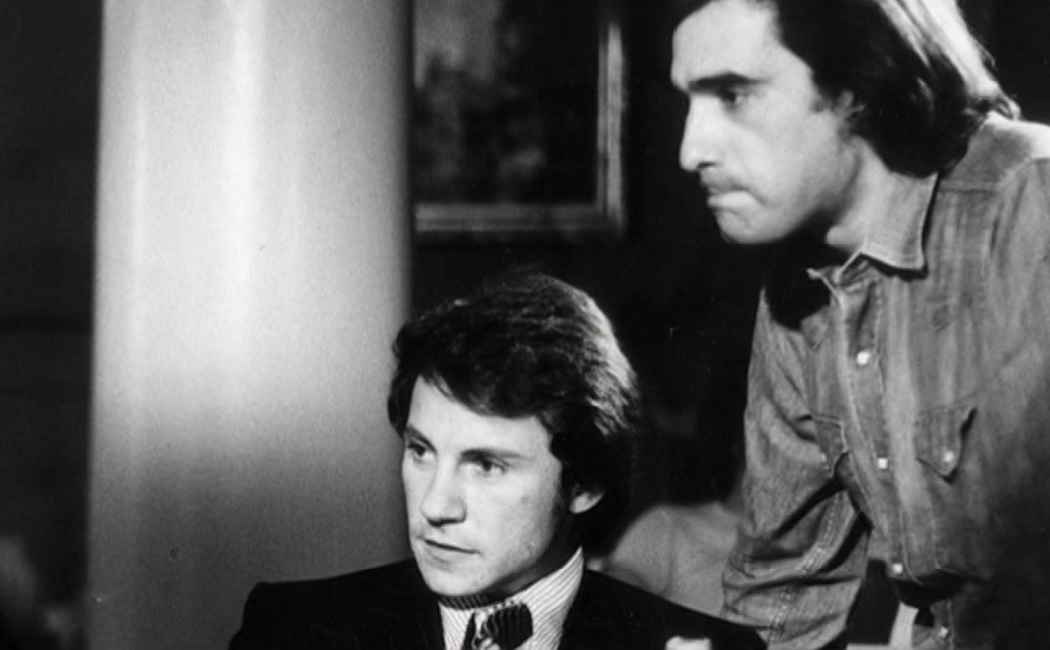
In 1972, Paramount released The Godfather in 4,000 theaters simultaneously, a massively successful strategy. The history of that production was recently chronicled in the excellent miniseries The Offer. Coppola had now become one of the greats. He used his influence to bring George Lucas back to Hollywood, where he made the wildly successful American Graffiti in 1973 – a film studios didn’t understand, but youth audiences loved. That same year marked the rise of another major talent: Martin Scorsese, whose Mean Streets won over critics and audiences alike with its originality and authenticity.

But 1973 belonged to Warner Bros., which released The Exorcist by William Friedkin. Using the same wide-release strategy as The Godfather, it became a huge box office hit. It was Friedkin’s second success after The French Connection, cementing his status as one of the untouchable directors of the time.

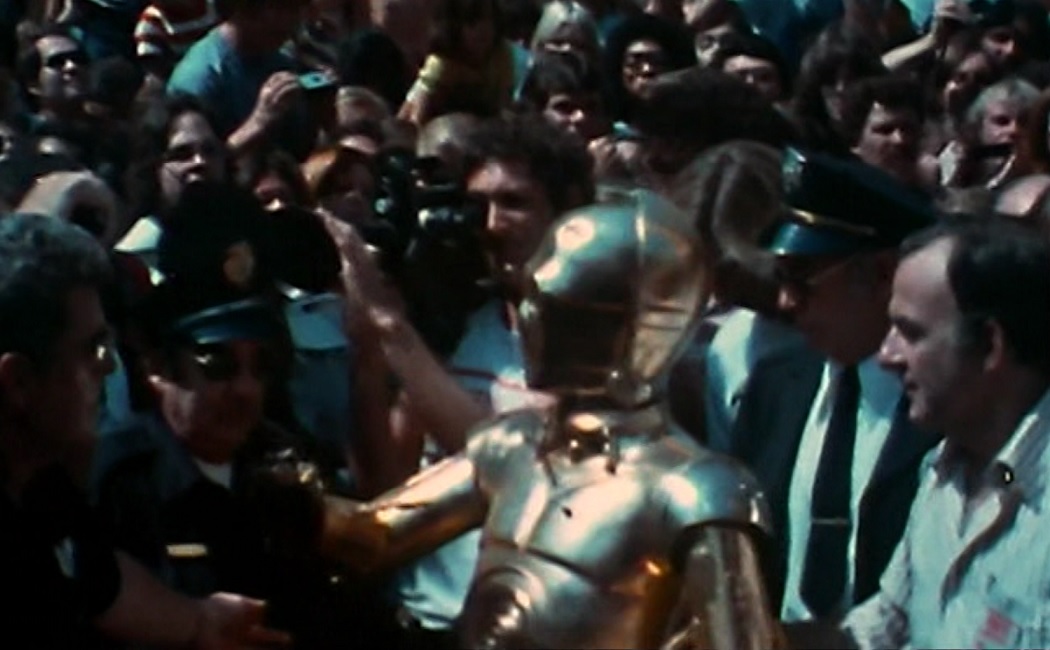
By now, the auteurs had taken over Hollywood. This led to artistic triumphs like Chinatown (1974). But the young directors hadn’t forgotten Corman’s trick of attracting young audiences. In 1975, Spielberg released Jaws, a film that redefined what success looked like in Hollywood. Corman said: “When I saw Jaws I thought: these guys know what I’m doing, and they have the money and talent and skills to do it better.” George Lucas took it even further with Star Wars in 1977. The age of the blockbuster had arrived.

It had taken a decade, but Hollywood was back on its feet. Expensive B-movies like Alien, Superman, and their sequels became the new studio model. For about ten years, directors ruled. That era came to an end in the late ’70s, but it was a glorious decade that produced countless classics – films still regarded today as some of the greatest ever made.

The 7 Best Movies About Restaurants

With the holiday season fast approaching, there’s no better time to gather with friends and family for a festive dinner. But if you’d rather stay in, why not enjoy a similar experience through a great movie or TV show centered around the world of food?

Rosa and I recently watched The Final Table on Netflix – not once, but twice – and we highly recommend it. This captivating competition show delves into the artistry and creativity of cooking on a global scale. Another excellent choice is the Emmy Award-winning series The Bear on Disney Plus. This comedy-drama follows a renowned chef who takes over his late brother’s sandwich shop in Chicago. It’s a gripping and highly entertaining portrayal of the intense, often stressful world of restaurant life.

When it comes to food-centric entertainment, these two TV productions are must-sees. But what about movies? For the occasion of Christmas 2024, I’ve curated an exclusive menu featuring seven of the finest films about food, restaurants, and fine dining. Just be sure to have some delicious snacks and drinks on hand while you watch these!

07. Burnt (2015)

On the Menu
– Summer vegetables on a bed of ricotta
– Smoked mackerel with duck egg
– Potato truffle velouté
– And many other beautiful looking dishes…

The Movie
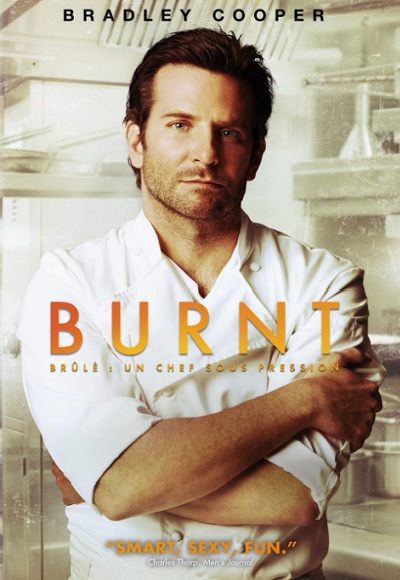
Adam Jones (Bradley Cooper), a once-renowned head chef, is determined to reclaim his place in the culinary world after a self-imposed exile. Battling the ghosts of his past – fueled by booze and drugs – he heads to London to restart his career. There, he joins the restaurant of an old friend, Tony (Daniel Brühl), who has a not-so-secret crush on him. Adam’s ultimate goal? To earn the coveted three Michelin stars. To achieve this, Adam recruits former colleagues – some of whom he must make amends with – and hires the talented sous-chef Helene (Sienna Miller). The setup is engaging, but Adam is acting like such a gorilla-asshole that you almost don’t care what happens anymore. But then the filmmakers pull the right move at the right moment, and the characters become more relatable again. The film has a great cast, with Daniel Brühl portraying an especially likable character. Despite the somewhat flawed screenplay, the story gradually pulls you in, leaving you invested in the outcome of this engaging character study featuring delicious looking cuisine.

06. The Hundred-Foot Journey (2014)

On the Menu
– Saag Aloo
– Murgh Masala With Cashews
– Cardamom-infused Pigeon With Truffles
– Boeuf Bourguignon
– Veal With the Five French Mother Sauces: Béchamel, Espagnole, Hollandaise, Tomato, and Velouté

The Movie
Produced by Steven Spielberg and Oprah Winfrey, directed by Lasse Hallström and based on the best-selling novel by Richard C. Morais, The Hundred-Foot Journey is a real feel-good movie with a lead role for the unlikely combination of French and Indian cuisine (subtlety versus teemingness). An Indian family starts a restaurant in the French village of St. Antonin across the street from the prestigious restaurant Le Saule Pleureur run by the competitive restaurateur Madame Mallory (Helen Mirren). Immediately a fierce battle breaks out between the two parties, but Madame Mallory discovers that her competitor’s son Hassan is a brilliant chef. And since she wants a second Michelin Star, the sworn culinary adversaries might find some unity after all in their love of food. Like the diverse cuisine on display, Hallström has made a very rich film filled with many ingredients like beauty, love, passion, grief, ambition, talent and culture.

05. Chef (2014)

On the Menu
– An overcharged caviar egg
– Chocolate lava cake with the core not quite molten
– Grilled cheese sandwich
– Cubanos (Real Cuban sandwiches)
– Yuca Fries
– Tostones
– BBQ brisket sliders
– Medianoches
– Platanos
– Cerveza

The Movie
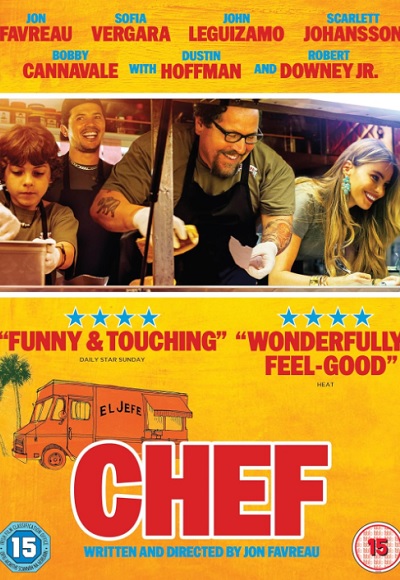
In this delightful food-centric film, directed by and starring Jon Favreau, a successful chef makes a bold decision to quit his job after clashing with his boss over creative freedom. He decides to buy a food truck and embarks on a culinary tour through the Miami area with his son. Thanks to his stellar cooking of classic Cuban dishes and his son’s knack for social media, their venture quickly becomes a smashing success. Chef is a true feel-good movie that’s as visually appealing as it is heartwarming. The characters are constantly eating all these mouthwatering dishes. It makes you wanna cook and eat yourself, and this is precisely what makes a movie like this so enjoyable. The impressive supporting cast adds even more flavor, featuring performances from Robert Downey Jr., Scarlett Johansson, Dustin Hoffman, John Leguizamo, Bobby Cannavale, Sofía Vergara, and Oliver Platt.

04. Dinner Rush (2000)

On the Menu
– Lobster & fried spaghetti with champagne vanilla sauce, garnished with salmon caviar and chives
– Snapper carpaccio with blood orange sauce (for the critics)
– Pumpkin risotto with chestnuts (also for the critics)

The Movie
Dinner Rush successfully fuses the mob movie and the restaurant film. A Tribeca restaurant owner and bookmaker (Danny Aiello) is squeezed out by two mobsters from Queens. They already killed his partner and on this particular night, they’re coming over to try to make a deal with him. There is a lot more going on. His son Udo is a talented chef who wants to take over the business. Their other cook Duncan has gambling debts and is two-timing with Udo’s girlfriend. There is also a food critic, a waitress with aspirations, a detective with his wife, and a power blackout… How this night will turn out is hard to tell, but something is gonna go down, that is certain. Very enjoyable movie, obviously made by a cast and crew with a lot of passion for this movie and Italian cuisine. You can almost taste it by looking at the screen.

03. Boiling Point (2021)

On the Menu
– Duck With Soy, Lamb, Krab, Oysters, Salmon, Liver, Mackerel, Brill, Risotto
– Château Marie
– Steak and Chips (off the menu)

The Movie
A health & safety downgrade, a rascist customer, a horrible food critic, an allergy fuck-up, an annoying ex-colleage, lazy staff members, drugs, debts, booze, and more. Boiling Point gives us a tension-drenched evening in a busy restaurant made in one, single, 90 minute shot. It is an amazing accomplishment, because nowhere does it feel inauthentic. Stephen Graham is superb als chef Andy, but all the supporting players are excellent as well. Due to the first Covid-19-lockdown, they could only make four takes and used the third one for the final movie. If you want a completely realistic sense of what it is like to work in an overcrowded restaurant on the busiest night of the year, then this is the one to check out. Followed by a television series with the same title and concept.

02. The Founder (2016)

On the Menu
Delicious:
– Hamburgers (grilled for exactly the right length, two pickles, mustard, ketchup)
– French fries
– Soda
– Milkshakes (with and without milk)

The Movie
The Founder tells the fascinating origin story of the world’s largest hamburger chain. Ray Kroc (Michael Keaton) is a relentless and ambitious milkshake mixer salesman who stumbles upon a hidden gem in 1954: an innovative family-run restaurant offering a revolutionary fast-food experience and the best burgers he’s ever tasted. Sensing a once-in-a-lifetime opportunity, Kroc strikes a deal with the McDonald brothers to franchise their concept. Initially, the partnership flourishes, but tensions arise as Kroc’s cutthroat ambition clashes with the brothers’ principles. Determined to succeed at all costs, Kroc makes bold and ruthless business moves that ultimately transform McDonald’s into a global empire. The Founder is a standout business origin story, anchored by a terrific performance from Michael Keaton. The film has many memorable moments, but the ending for me stands out in which one of the McDonalds brothers asks Kroc why he didn’t just steal the concept but went for the franchise formula instead. “It’s the name”, he says. “That glorious name McDonalds. It sounds like America. Would you ever eat at a place called Kroc’s?” Indeed.

01. The Menu (2022)

On the Menu
– Raw local oyster in a mignonette emulsion with lemon caviar and an oyster leaf.
– Amuse-bouche: Cucumber melon, milk snow and charred lace.
– First Course: ‘The Island’. Various plants from Hawthorn Island and fresh raw scallops. Served on a rock.
– Second Course: ‘No bread’. Just savory accompaniments.
– Third Course: ‘Memory’. House-smoked Bresse chicken thigh Al Pastor and tortillas made with heirloom masa.
– Fourth Course: ‘The Mess’. Pressure cooked vegetables, roasted filet, potato confit, beef jus, bone marrow.
– Palate Cleanser: Wild bergamot and red clover tea.
– Sixth Course: ‘Man’s Folly’. Dungeness crab, fermented yogurt whey, dried sea lettuce, umeboshi, kelp.
– Supplementary Course: A cheeseburger, crinkle cut fries.
– Dessert Dish: ‘S’mores’. Marshmallow, chocolate, Graham cracker, customers, staff, restaurant.

The Movie
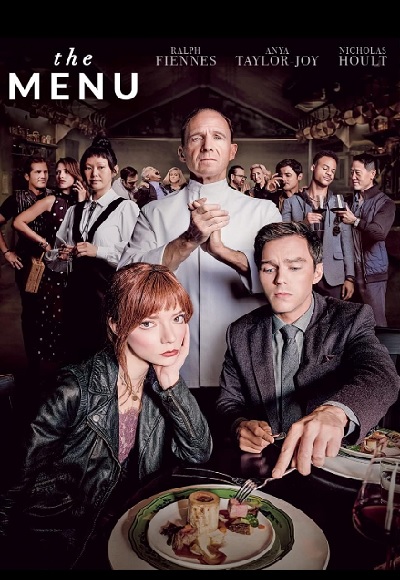
The renowned chef Slowik (Ralph Fiennes) has twelve special guests over at his exclusive restaurant on Hawthorn Island for a unique tasting experience. The price tag is 1250 dollars a person, but for that they will get a night full of culinary surprises and more. If you don’t know what is going to happen yet, go see this movie. The elite is about to learn a few lessons and it’s very nourishing. The Menu is a beautiful work of art. The cast with Ralph Fiennes, Anya Taylor-Joy and Nicholas Hoult, the screenplay, the direction by Mark Mylod (Succession) and the art direction are as exquisite as the dishes served. Like Slowik is obsessed with his craft, so were the makers of this thriller in getting every little detail right. As a viewer, you become a part of the experience that Slowik has prepared and it’s an extremely memorable dining experience that is worth every penny. Bon appetit.

Duel

Director: Steven Spielberg
Written by: Richard Matheson
Cast: Dennis Weaver, Jacqueline Scott, Eddie Firestone

Year / Country: 1971, USA
Running Time: 90 mins.

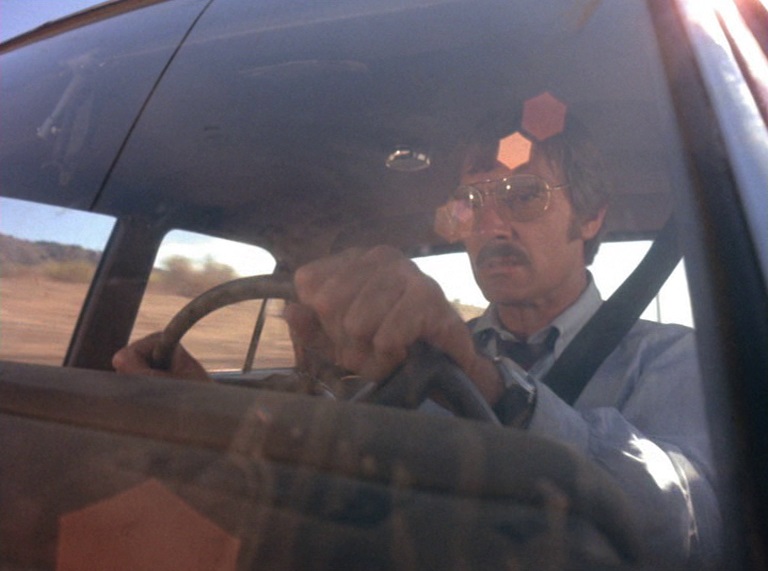
A business commuter, played by Dennis Weaver, leaves his home in the morning unsuspecting that this will be a day from hell. He is targeted by an enormous, menacing truck for termination and he doesn’t know why. The duel of the title refers to the showdown between him and the unknown truck driver on the desert highways that lasts the entire movie.

Duel is Steven Spielberg’s masterful debut that captures the peril of an ordinary man thrust into extraordinary circumstances. Duel immediately establishes his cinematic genius. Originally made for television, the movie transcends its medium with exceptional production quality, boasting sharp editing, stunning cinematography, and masterful pacing. Spielberg demonstrates an innate ability to generate tension, crafting nail-biting action scenes that foreshadow the brilliance he would later bring to iconic films like Indiana Jones and Jurassic Park.

The running time could have been cut with ten minutes to make it perfect, but overall, he manages to maintain tension throughout its running time. The film also features clever visual metaphors, such as subtle nods to themes of impotence and primal survival instincts. The main character David Mann comments that it takes nothing to be back inside the jungle again. And that is precisely what happens to him. Instinct takes over and man becomes a force for survival. In Duel, Spielberg proves he is a director of extraordinary promise, blending tension, action, and deeper thematic layers into an unforgettable cinematic experience.

Rating:

Biography: Steven Spielberg (1946, Cincinnati, Ohio), is one of the most influential and celebrated filmmakers in cinema history. A pioneer of modern blockbuster filmmaking, Spielberg’s career spans over five decades, encompassing a wide range of genres and iconic films. Spielberg’s breakthrough came in 1975 with Jaws, a suspenseful thriller that became the first modern blockbuster. He followed this success with a string of iconic films, including Close Encounters of the Third Kind (1977), Raiders of the Lost Ark (1981), E.T. the Extra-Terrestrial (1982), and Jurassic Park (1993). Spielberg’s versatility as a director is evident in his more serious works, such as Schindler’s List (1993), which earned him his first Academy Award for Best Director, and Saving Private Ryan (1998), which won him a second. These films cemented his reputation as a master of both spectacle and substance.

Filmography (a selection): Amblin’ (1968, short), Duel (1971, TV-Movie), The Sugarland Express (1974), Jaws (1975), Close Encounters of the Third Kind (1977), Indiana Jones and the Raiders of the Lost Ark (1981), E.T. the Extra-Terrestrial (1982), Indiana Jones and the Temple of Doom (1984), The Color Purple (1985), Empire of the Sun (1987), Indiana Jones and the Last Crusade (1989), Jurassic Park (1993), Schindler’s List (1993), Saving Private Ryan (1998), Minority Report (2002), War of the Worlds (2005), Lincoln (2012), Ready Player One (2018)

Light & Magic: The Making of Cinema Magic

Special effects have always been a huge part of movies. From King Kong (1933), to the Ray Harryhousen films with the brilliant stop-motion effects, to the stunning 2001: A Space Odyssey (1968). Movies offer viewers the chance to see things that cannot be seen any other way. The six-part Disney Plus documentary Light & Magic tells the story of Industrial Light & Magic (ILM) that played an enormous part in the evolution of visual effects in Hollywood movies. The company was founded by George Lucas when he was working on his first Star Wars movie in 1977. He visited every optical effects company in the industry, but found none that could deliver what he had in mind.

2001: A Space Odyssey had really pushed the boundaries in what could be achieved in visual effects, but the movie was slow. Lucas wanted to create speed and energy. He wanted to see dog flights in space. He met a special effects man called John Dykstra, who was part of a small community of special effects people. He hired him to set up the team of model makers, storyboard artists and camera and light people at the newly founded ILM.

The first two episodes show the extremely challenging process of getting the first Star Wars film made. Thousands of elements had to be combined into extremely complicated shots. There were many desperate moments, but the end result was amazing and audiences and industry experts were blown away. Nobody but the people at ILM could have done it back then. It inspired many directors to also push the envelope in special effects the following years and decades, like James Cameron: “I went home, and said to my wife; ‘I quit my job. You have to pay the bills for a while, cause I’m gonna make a film’.”

The third episode is about ILM’s challenge to create a worthy sequel: The Empire Strikes Back (1980). This classical space opera had even more complicated special effects to accomplish. Like always with sequels, the scale was much larger than the first movie. The team also got other assignments than Star Wars, namely Raiders of the Lost Ark (1981), Dragonslayer (1981) and ET: the Extra-Terrestrial (1982). Movies that were nominated for or won Academy Awards for their amazing visual effects.

Lucas also got interested in computers and he hired Ed Catmull to digitize processes. The computer team made the impressive terraforming sequence in Star Trek 2: The Wrath of Kahn (1982) and this can be seen as the beginning of computer generated effects in movies. This inspired Lucas and the ILM people to get into it. Catmull’s division (Pixar) was later sold to Steve Jobs and they turned it into a cartoon company.

The next major project was Return of the Jedi (1983), the most complex movie in terms of visual effects ever conceived. “It was not a fun movie to make”, says one of the team members. But the result surely was fun to watch. Each of the 900 visual effects shots was a triumph for the ILM team. It was followed up by a number of other eighties classics: Indiana Jones and the Temple of Doom (1984), The Goonies (1985) and Back to the Future (1985). Each new project had its own challenges, and the attitude at ILM always was: ‘let’s do something that’s never been done before.’

In episode 5 titled ‘Morphing’, the computer era is really about to take off. The first successful computer effect was the water creature in James Cameron’s The Abyss (1989). Now that film could be translated into pixels that could be manipulated, anything became possible. But the industry needed a proof of concept and the 90 seconds sequence in The Abyss was just that. But as always with new technology, there is resentment at first. They called digital ‘the dark side’. Digital wasn’t yet seen as the main thing, but as an addition to old school effects. The model shop remained the central place in ILM’s laboratory.

Then one day, James Cameron called and he wanted to do something way bigger than The Abyss. He pitched them: Terminator 2: Judgment Day (1991). A liquid metal man was a huge leap from a water snake. The team had only nine months to create the T-1000. They first had to capture actor Robert Patrick in data. They filmed his muscles and how he moved. Once they had him digital, they combined all special effects with the right lighting, so it all seems to be part of the same world. The end result was stunning. One ILM guy recalls the T-1000 walking through the bars in the mental institution; an impossible shot. This was truly groundbreaking stuff.

The following year, another major movie would truly signal the end of traditional special effects. They had planned to create the dinosaurs in Jurassic Park (1993) with advanced stop motion animation. Spielberg hired the best guys in the business. Stan Winston would design the creatures and Phil Tippett would animate them. He also hired Michael Lantieri, a practical effects genius and Dennis Muren, a visual effects wizard. The team had already built the dinosaurs, and Light & Magic gives us a few images of what the Velociraptors looked like with stop-motion. They’re certainly impressive, but since we are now used to digital effects, the unrealness becomes an issue. Once they did a successful test with a digital T-Rex running through a landscape everybody knew: visual effects will never be the same again. “I feel extinct”, said Tippett, and Spielberg used that line in the movie.

So 1993 was the year of the big breakthrough of digital effects, and they would be used for many successful movies in the nineties, like The Mask (1994), Forrest Gump (1994), Jumanji (1995) and Star Wars Episode I: The Phantom Menace (1999). The documentary series ends with the final innovation that the visionary George Lucas had anticipated all along. The tv-series The Mandalorian (2019) is shot entirely in a round set called ‘The Volume’. This is ILM’s replacement for the green-screen. It uses a massive, curved LED screen to create photorealistic backdrops, circumventing the need for outdoor locations or extensive physical sets. Due to this innovation, The Mandalorian is able to deliver Star Wars effects on a tv-schedule and budget. ILM, which had started with a group of creative designers in a warehouse at Van Nuys, is still pushing the boundaries in creating cinema magic today, now also for the small screen.