For the ultimate Beatles movie experience, we’ll have to Wait until 2028, when Sam Mendes is set to release a series of four biopics – one for each Beatle. This promises to be a magnificent, once-in-a-lifetime cinematic event. Until then, there are already some great films out there that celebrate the legacy of the Greatest Band Ever. A perfect place to start is with this Double Bill, featuring two films inspired by Beatles’ songs – one named after a John Lennon track and the other after a Paul McCartney classic. Once you’ve enjoyed these two movies, Across the Universe (2007) is another highly recommended Beatles-inspired film. For a deeper dive into their early days, Backbeat (1994) dramatizes the band’s formative years in Hamburg. But back to this Double Bill: Nowhere Boy (2009) explores John Lennon’s troubled childhood. Raised by his strict aunt Mimi after his parents couldn’t – or wouldn’t – take care of him, the film delves into his complex relationship with his biological mother Julia, beautifully played by Anne-Marie Duff, alongside Kristin Scott Thomas as Mimi. It also highlights the origins of The Quarrymen, the band that would eventually evolve into the Beatles, and Lennon’s legendary first meeting with Paul McCartney. Aaron Johnson shines as the young Lennon, perfectly capturing his wit, imagination, and artistic genius. Having read Lennon’s biography, I feel this film authentically portrays his early life and character. Mendes’ upcoming film will likely draw inspiration from Nowhere Boy, especially in its portrayal of touching moments from the band’s early days, such as their first gigs and the tragic loss of John’s mother, Julia. Yesterday (2019) takes a more fantastical approach, blending comedy and romance with a unique premise: what if the world forgot the Beatles, except for one profoundly unsuccessful singer-songwriter called Jack Malik? Malik suddenly finds himself performing these forgotten classics and skyrocketing to fame. The film delivers plenty of laughs, with witty lines like “The White Album has some diversity issues” and “A Hard Day’s Night – what does that even mean?” But it also offers deeper, more poignant moments, including a memorable scene where Jack competes in a songwriting duel with Ed Sheeran. Perhaps the film’s most touching sequence is Jack’s encounter with John Lennon, who, in this alternate reality, never became a Beatle but instead lives quietly as a fisherman, much like his father once did. It’s a beautifully imagined moment, one that makes the film much more than just a fun, nostalgic ride. Ultimately, both Nowhere Boy and Yesterday share a common message: All you need is love… and The Beatles.
Tagarchief: Yesterday
John & Paul: A Love Story in Songs
‘Ticket to Ride’ glints with meanings; you can walk around it forever and see different shafts of light bounding off its surfaces. It’s about a break-up, viewed through a haze of pot smoke. It’s about a generational shift in the balance of power between men and women. It’s about a shift in the balance of power between John and Paul, as John comes to suspect that Paul doesn’t rely on him quite as much as he relies on Paul.’
This new book by British author Ian Leslie tells the story of John Lennon’s and Paul McCartney’s intimate relationship. Starting with their first meeting at the Woolton Village Fête and ending with Paul’s response to John’s death in 1980. It tells the story by way of the richest primary source of all: the songs they wrote together. Each chapter is anchored in a song that tells us something about the state of their relationship at that time. The main point is that even after the Beatles broke up, John and Paul were inseparable. They merged their souls and multiplied their talents to create the greatest bodies of music in history.
This is also a love story. John and Paul were more than just friends or collaborators in the sense that we normally understand these terms. Their friendship was in a sense a romance, full of longing and passion, riven by jealousy.
The biographical stories told aren’t new – although I certainly learnt new things – but Leslie’s approach still feels fresh. The psychology behind the stories is what sets it apart. Every anecdotal story is approached by how things must have felt and been experienced by John and Paul. It delves into their state of mind at the time certain songs were written.
The first song Leslie discusses is ‘Come Go With Me’, which John performed with the Quarrymen at the Woolton Village Fête. His improvised lyrics impressed Paul, who realized they might connect through a shared passion for music and songwriting. It moves on with their first songs: ‘I Lost My Little Girl’ by Paul and ‘Hello Little Girl’ by John. This was right away the first instance in which the two were borrowing and building on each other’s ideas.
They began writing songs together, something nobody was doing at that time except the Great Ones from America. The two trusted each other enough to let the other hear their unfinished work, and the more they shared the closer they became.
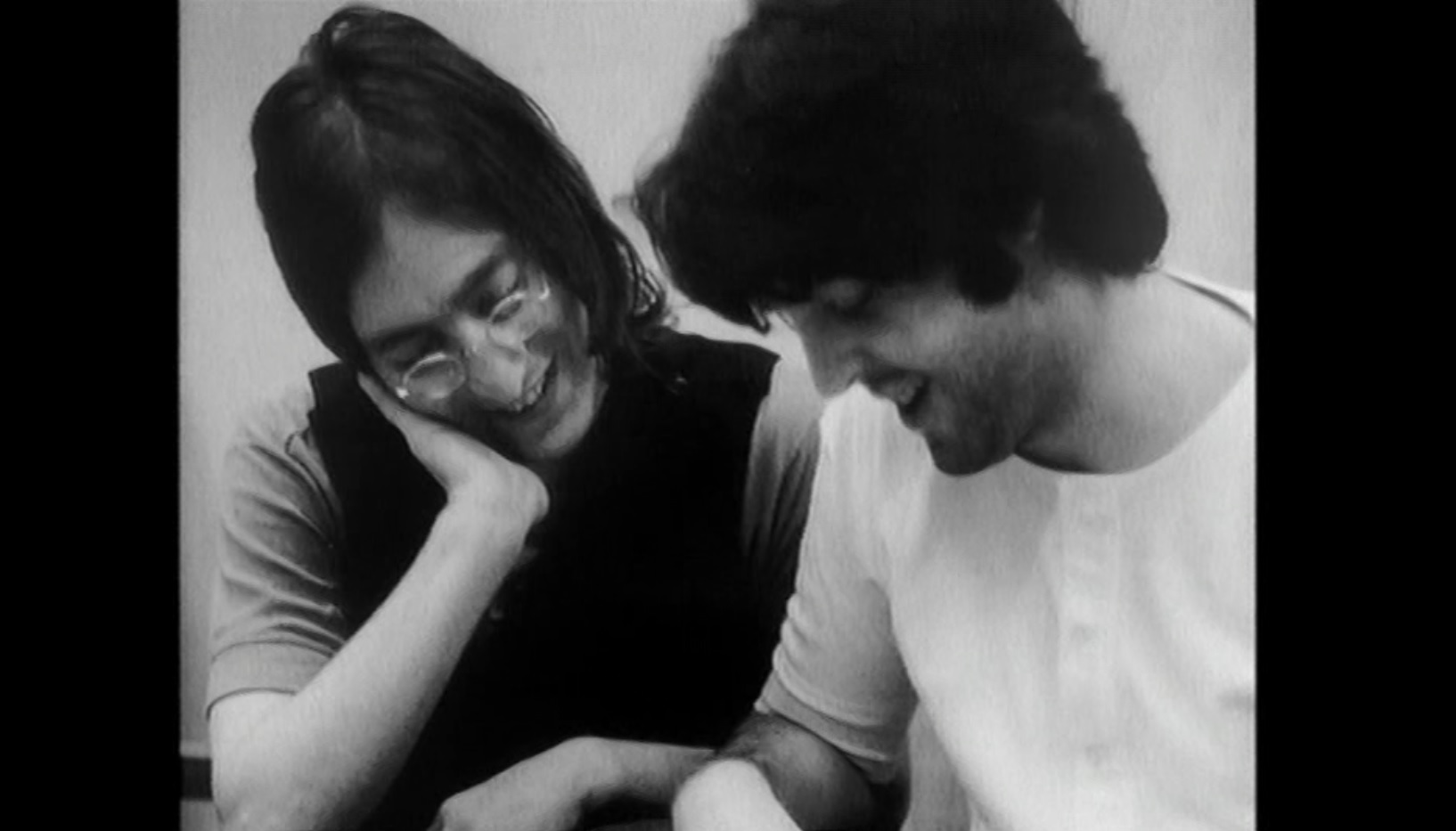
They bonded even more deeply over the loss of their mothers—Paul at 14, John at 17. Paul: “Each of us knew that had happened to the other. At that age you’re not allowed to be devastated and particularly as young boys, teenage boys, you just shrug it off.” It shattered them he later said, but they had to hide how broken they felt. “I’m sure I formed shells and barriers in that period that I’ve got to this day. John certainly did.”
Shells and barriers are defensive fortifications, but for John and Paul this shared trauma also blasted open an underground tunnel through which they were able to communicate in secret from the rest of the world, and even from themselves. In music they could say what they felt without having to say it at all. In 2016, McCartney told Rolling Stone Magazine: “Music is like a psychiatrist. You can tell a guitar things that you can’t tell people. And it will answer you with things people can’t tell you.”
The story goes on with their rise in Hamburg and then in Liverpool. Those who knew the pair marveled at how close they were. Bernie Boyle, a Cavern regular who did some work for the Beatles as a roadie, observed their eerie mental connection: “They were so tight, it was like there was a telepathy between them: on stage, they’d look at each other and know instinctively what the other was thinking.”
People were drawn to them, but were also wary of them, for both were capable of shriveling outsiders with wit. Together they had an aura of unbreachable assurance. This was partly the arrogance of the damaged. The well known trauma psychiatrist Bessel van der Kolk observes: “After trauma the world becomes sharply divided between those who know and those who don’t.”
In their early years, McCartney brought in ballads to their performances like ‘Till There Was You’. John felt discomfort during those moments, but he realized that these songs contributed to the band’s more varied approach than just rock ‘n roll. Besides, John – despite his tough image – secretly also loved the genres that they both got familiar with in their childhood, like folk, music hall, jazz and show-tunes.
It was the song ‘Please Please Me’ that really got the Lennon-McCartney songwriting partnership going. At that point, it became a second revenue stream within the band just for the two of them. ‘Please Please Me’ was their first number one hit and was the final move towards the Lennon-McCartney songwriting explosion that would soon be unleashed.
The book goes on to describe many of the songs that followed, focusing on how John and Paul conceived them, delivered them, and why their combination of voices and sensibilities made the music so enduring. Leslie also teases out the hidden meanings some songs carried for each of them; messages they sometimes couldn’t say directly.
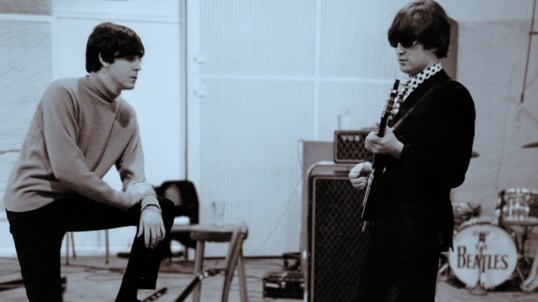
There were also differences in their approach to songwriting. John’s song ideas were often used as a creative platform to which the others could bring their brilliant contributions. Paul – the most accomplished musician and instrumental allrounder – tended to bring more fully fledged songs to the band with clear ideas of what he wanted.
In the first five albums, John was mostly the song originator of the band. Paul’s ‘Yesterday’ was an important moment in their relationship, argues Leslie. John always felt uncertain about it, perhaps because it showed that Paul was such a brilliant songwriter in his own right and that he could do without John. After the break-up, John wrote ‘Imagine’ and according to a collaborator at that time, John felt he had finally written a melody as good as ‘Yesterday’.
After the creative highlight that was ‘Sgt. Pepper’s’, the disintegration of the band started in John’s mind. During their time in India, John was depressed as evident by songs such as ‘I’m So Tired’ and ‘Yer Blues’. The Beatles had been his closest connection and had pulled him through the most difficult of times. Now, it was time to start anew.
Leslie covers the break-up and post-break-up years in great detail, showing how the songs of that period reflect what was going on in their minds. For example, John’s ‘Look At Me’ – which was written in India – is about John’s sense of identity hanging on by being seen by Paul, his creative partner. And if he is not being seen by Paul, who is he supposed to be?
After the break-up, their connection always remained strong and they always kept communicating through music. There were the famous songs at which they were having digs at each other (‘Too Many People’ and ‘How Do You Sleep?’). There was also the instance of John’s final live performance at a concert by Elton John. He chose three songs to perform and one of them was ‘I Saw Her Standing There’. Why did he choose this Paul-song? Because he was scared and needed to summon Paul to get him though, Leslie argues.
The book ends with John’s murder and Paul’s heartbreaking response. The bond was severed forever, yet Paul found a way to keep speaking to John – as always through music. His song ‘Here Today’ is a conversation with the friend, rival, and partner he could never replace.
10 Beatles anekdotes die je nog niet kent
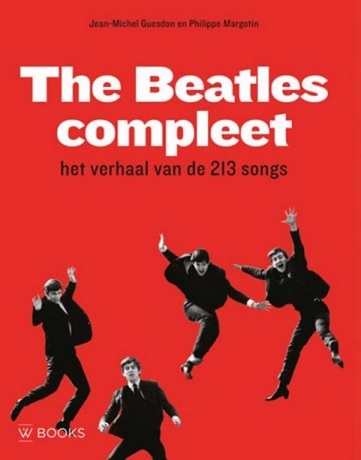
In het boek ‘The Beatles compleet: Het verhaal van de 213 songs’ staat de volledige opnamegeschiedenis van The Fabulous Four opgetekend.
Het uitgebreide fanboek bevat ook vele toffe anekdotes waaronder de volgende tien:
1. Naam van de band
Rock-’n-rollpionier Buddy Holly had grote invloed op de muziek van de jaren 60’. The Beatles – die eerst The Quarrymen (quarry betekent steengroeve) heetten – speelde onder meer zijn song ‘Words of Love’. De naam van Buddy’s begeleidingsband The Crickets vormde naar verluid de inspiratie voor de naam van The Beatles. Dit was eerst The Silver Beatles, maar Silver werd na korte tijd geschrapt. De bandnaam is ook een referentie naar the Beat Generation waarmee The Beatles een sterke connectie hadden.
2. Een jointje voor de Boys
Toen The Beatles in augustus 1964 Bob Dylan voor het eerst ontmoetten, bood hij hun een joint aan. De verraste Beatles gaven toe dat ze nog nooit marihuana hadden gerookt. Dylan, op zijn beurt verrast, vroeg: ‘Maar hoe zit het dan met die song?’ (‘I want to Hold Your Hand’) ‘Welke song?’ vroeg John Lennon. ‘Je weet wel: And when I touch you, I get high, I get high, I get high.’ Gegeneerd antwoordde John: ‘Zo gaat het niet. Het is: I can’t hide, I can’t hide, I can’t hide…’
3. Een nummer voor The Stones
De avond voordat het nummer ‘I Wanna Be Your Man’ zou worden opgenomen voor hun tweede album ‘With the Beatles’ op 11 september 1963, ontmoetten John en Paul de manager van The Rolling Stones. Hij vertelde dat de Stones snel een song nodig hadden als opvolger van ‘Come On’, hun eerste singel. De twee Beatles boden hem ‘I Wanna Be Your Man’ aan dat volgens hen goed bij de Stones paste. Ze vertrokken meteen naar studio 51, waar de Stones repeteerde, en voltooide daar tot ieders verbazing de song. Het werd een grote hit voor de Stones.
4. Dromen van gisteren
‘Ik heb zoveel lof voor ‘Yesterday’ gekregen, maar het was Paul’s kindje’, verklaarde John Lennon wanneer hij het had over de song die Paul McCartney in een droom had gehoord. Tijdens een verblijf in het huis van de familie Asher (van Paul’s vriendin Jane Asher) werd Paul op een ochtend wakker op zijn zolderkamertje. ‘Ik stond op, ging achter de piano zitten, speelde G, Fis mineur septiem – en ging van daaruit naar B en E mineur, en ten slotte terug naar E. Ik vond de melodie heel goed, maar omdat ik hem had gedroomd, kon ik niet geloven dat ik hem had geschreven.’ In deze fase was de tekst er nog niet. De werktitel was: Scrambled Eggs / Oh, my baby how I love your legs. Van alle Britse songs is ‘Yesterday’ het vaakst gedraaid om de Amerikaanse radio- en tv-zenders, namelijk ruim zeven miljoen keer.
5. Lennon: ‘Help!’
‘De meeste mensen denken dat het gewoon een snel rock- ’n rollnummer is. Dat had ik indertijd niet door; ik schreef het alleen maar omdat ik daartoe opdracht had gekregen’, zei John Lennon in 1980 over het nummer ‘Help’. ‘Pas later besefte ik dat ik echt om hulp schreeuwde.’ In die tijd voelde hij zich ongemakkelijk bij het succes, de eerbewijzen, het geld en de uitspattingen. Hij was terneergeslagen: ‘Dat hele Beatles-gedoe ging je begrip te boven. Ik at en dronk als een varken en was zo vet als een varken, ontevreden over mezelf, en onbewust schreeuwde ik om hulp. Het was dus mijn periode als dikke Elvis.’
6. Rubberen zolen
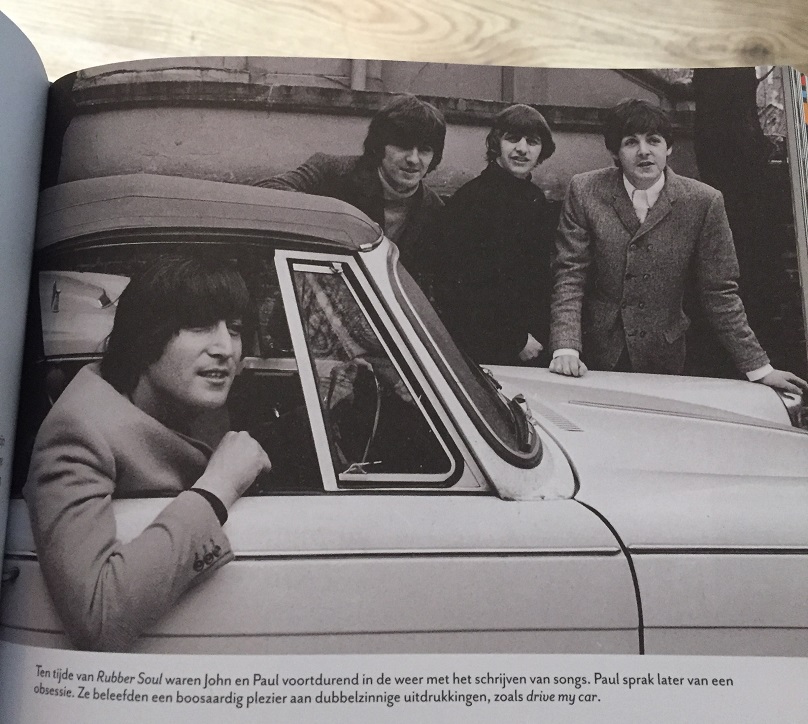
De hoes van ‘Rubber Soul’ maakte duidelijk dat de band een nieuwe richting was ingeslagen. ‘Ik vond het goed dat we op de hoes langere gezichten hadden gekregen’, aldus George Harrison hierover. ‘We waren niet onschuldig meer, niet meer naïef, en op ‘Rubber Soul’ waren we voor het eerst volwaardige wietrokers.’
Robert Freemans hoesfoto kreeg zijn vorm door stom toeval. Er werd een fotosessie georganiseerd in John’s huis in Weybridge – alle Beatles droegen daar een coltrui. Terug in London nodigde Freeman de Beatles uit om de dia’s te komen bekijken. Hij projecteerde ze op een stuk karton, om te laten zien hoe ze als hoesfoto zouden ogen. Het karton gleed echter wat naar achteren, zodat de foto langer leek. Paul: ‘Hij werd langer en wij zeiden: ‘dat is het, Rubber So-o-oul, hey, hey! Kun je het zo doen?’ Freeman zei: ‘Ja, ik kan het zo afdrukken.’ En dat was dat.’
7. Double A
John Lennon schreef ‘Day Tripper’ als song voor een single. De tekst was destijds voor veel fans een raadsel, want wat betekent day tripper? Letterlijk: iemand die een dagtocht maakt. Maar niet zomaar een tochtje – het woord verwijst naar ‘trippen’. ‘Het is een drugssong’, aldus Lennon. Toen Paul vier dagen later met ‘We Can Work It Out’ kwam, kreeg dat de voorkeur voor de A-kant boven ‘Day Tripper’. John maakte heftig bezwaar, en bij wijze van vernieuwend en diplomatiek compromis kreeg de volgende Beatlessingle een dubbele A-kant. Opnieuw waren The Beatles hun tijd ver vooruit.
8. Wie is:
Michelle – Waarschijnlijk Michelle Phillips van The Mamas and the Papas.
Eleanor Rigby – De voornaam van de actrice Eleanor Bron die in de film ‘Help!’ de priesteres had gespeeld, in combinatie met de naam van een winkel Rigby & Evens. Op de begraafplaats Woolton in Liverpool staat overigens een echte graf met de naam Eleanor Rigby, een vreemd toeval.
Doctor Robert – Waarschijnlijk dr. Robert Freeman, de eigenaar van een New Yorkse kliniek, die aan veel beroemdheden een cocktail voorschreef van vitamine B12 met een enorme dosis amfetamine.
Penny Lane – Een buurt in Liverpool, een straat en een busstation waar Paul doorheen kwam als hij naar het huis van John Lennon ging. The Beatles waren zich er waarschijnlijk niet van bewust dat Penny Lane was genoemd naar James Lane, een achttiende-eeuwse Britse slavenhandelaar die fel gekant was tegen de afschaffing van de slavernij.
The Walrus – Paul (althans volgens de tekst van het nummer ‘Glass Onion’).
Dear Prudence – De zus van Mia Farrow die haar huisje niet uit wou komen bij de lessen van Maharishi Mahesh Yogi in Rishikesh, India.
Martha My Dear – Paul’s hond, een bobtail.
Julia – John’s moeder
Hey Jude – John’s zoontje Julian (Paul schreef het als troost voor de scheiding van John en Cynthia Lennon).
Mean Mr. Mustard – Een gierigaard die briefjes van 5 pond in zijn lichaam (neus) verstopte.
Polythene Pam – Een meisje dat ‘Polythene Pat’ werd genoemd, vanwege haar vreemde gewoonte om plastic te eten.
9. Geen LSD
Er werd veel gespeculeerd over de song ‘Lucy in the Sky with Diamonds’, waarvan de eerste letters van de titelwoorden de afkorting LSD vormen. Volgens schrijver van de song John Lennon was dat geheel onbewust. De Lucy in de song was Lucy O’Donnell, het beste vriendinnetje van John’s zoontje Julian, die toen drie jaar was. Julian liet John een tekening zien waarop hij Lucy had afgebeeld. ‘Dat is Lucy in de lucht met diamanten’, zei Julian. John vond de titel geweldig en schreef meteen een song, waarbij hij zich liet inspireren door ‘Alice in Wonderland’.
10. The End
‘The End’ (oorspronkelijke titel ‘Ending) heeft een bijzondere betekenis, omdat het de laatste complete song op ‘Abbey Road’ is, het laatste album dat The Beatles opnamen. Wisten The Beatles in de zomer van 1969 al dat hun bijzondere avontuur ten einde was? The nummer is om drie redenen uniek: het is de laatste song van het laatste Beatlesalbum (afgezien van ‘Her Majesty’, dat als een soort postscriptum moet worden beschouwd), het bevat de enige drumsolo die Ringo ooit heeft gedrumd en het is het enige nummer waarop Paul, George en John ooit samen een gitaarsolo spelen.
‘Her Majesty’, het 0.23 durende 17de nummer op ‘Abbey Road’, is het kortste nummer dat The Beatles ooit hebben uitgebracht en heeft de twijfelachtige eer het laatste nummer van het laatste (opgenomen) album te zijn, hoewel dat niet de bedoeling was. Het oorspronkelijk weggegooide nummer belandde per ongeluk op de mastertape en werd zo de eerste ‘hidden track’ in de muziekgeschiedenis.