Dromen en dronken deliriums in San Juan (Over ‘The Rum Diary’ van Hunter S. Thompson)

‘Sounds of a San Juan night, drifting across the city through layers of humid air; sounds of life and movement, people getting ready and people giving up, the sound of hope and the sound of hanging on, and behind them all, the quiet, deadly ticking of a thousand hungry clocks, the lonely sound of time passing in the long Caribbean night.’
– The Rum Diary (1998)

The Rum Diary 1

Door Jeppe Kleijngeld

In 1960 bracht beroemd Gonzo journalist Hunter S. Thompson wat tijd door in San Juan, Puerto Rico waar hij werkte voor een sportblad, het begin van zijn carrière als sportverslaggever naast politieke junkie en toonaangevend auteur van de countercultuur beweging. Het blad ging kopje onder en Thompson solliciteerde bij de Engelstalige krant ‘The San Juan Star’, maar hij werd afgewezen. Terug in de Verenigde Staten kreeg hij in 1961 een baantje als beveiligingsbeambte bij de waterbronnen van Big Sur, Californië. In deze periode van acht maanden schreef hij twee boeken: ‘Prince Jellyfish’ en ‘The Rum Diary’. Thompson probeerde een uitgever te vinden voor deze boeken en faalde. ‘Prince Jellyfish’ is nooit uitgegeven, maar ‘The Rum Diary’ uiteindelijk wel in 1998.

‘The Rum Diary’ fictionaliseert Thompson’s ervaringen in Puerto Rico en zijn kwaliteiten als schrijver spatten van de pagina’s van deze prachtige roman. Het verhaal gaat over de jonge journalist Paul Kemp die bij een verlopen krant terecht komt in Puerto Rico, waar een zooitje dronken en parasitaire journalisten het proberen zo lang mogelijk uit te zingen voordat de krant definitief bankroet gaat.

Kemp heeft het gevoel dat hij al veel jaren verspild heeft, maar hij loopt tegen nieuwe mogelijkheden aan. Chenault – de sensuele vriendin van een collega – doet zijn lustgevoelens dermate opkomen dat het bijna te veel wordt. Dan is er de gladde PR-man Sanderson, die betrokken is bij louche dealtjes in de bloeiende economie van het Caribische land, waardoor Kemp geconfronteerd wordt met zijn eigen ambitieniveau. Wil hij voor weinig geld blijven schrijven over wat hij observeert? Of wil hij die kennis inzetten om rijk te worden, zoals Sanderson dat doet?

Hunter S. Thompson aan het werk in Aruba. De foto is gemaakt bij de Aruba Palm Beach Club met op de achtergrond het Aruba Caribbean Hotel. Thompson bezocht Aruba terwijl hij woonde op Puerto Rico.

Hunter S. Thompson aan het werk in Aruba. De foto is gemaakt bij de Aruba Palm Beach Club met op de achtergrond het Aruba Caribbean Hotel. Thompson bezocht Aruba terwijl hij woonde op Puerto Rico.

‘The Rum Diary’ is een roman over de jaren 60’ toen de wereld nog open lag voor Westerlingen om overal in te duiken en het welvaartsniveau lager lag, maar de hebzucht des te groter was. Ook is het een verhaal over liefde, drank, journalistiek en jezelf ontdekken. Kemp is nog niet het extreme Gonzo alter ego van Thompson dat Raoul Duke zou worden in ‘Fear and Loathing in Las Vegas’, maar een iets gematigdere persoonlijkheid. Johnny Depp die Kemp portretteerde in de verfilming zei dat hij Kemp speelde als een jonge Raoul Duke die nog op zoek was naar zijn stem.

Thompson’s kracht als schrijver ligt vooral in het typeren van groepen mensen, tijdsbeelden en plaatsen. Dat doet hij uitstekend in het uiterst sfeervolle ‘The Rum Diary’. Ik kreeg heel sterk de neiging om Al’s Backyard op te zoeken en me te buiten te gaan aan rum, bier, sigaretten en hamburgers.

Thompson’s legendarische humor is ook al regelmatig aanwezig en doet soms denken aan de paranoia hilariteit van ‘Fear and Loathing in Las Vegas’, zoals in de volgende passage; ‘We spend the next six hours in a tiny concrete cell with about twenty Puerto Ricans. We couldn’t sit down because they had pissed all over the floor, so we stood in the middle of the room, giving out cigarettes like representatives of the Red Cross. They were a dangerous-looking lot. Some were drunk and others seemed crazy. I felt safe as long as we could supply them with cigarettes, but I wondered what would happen when we ran out. The guard solved this problem for us, at a nickel a cigarette. Each time we wanted one for ourselves we had to buy twenty – one for every man in the cell.’

De verfilming van ‘The Rum Diary’ heeft net als de boekuitgave lang op zich laten wachten. In 2000 werd een poging gedaan om het project van de grond te krijgen met Johnny Depp en Nick Nolte. De poging mislukte en de toen nog levende Thompson schreef een woedende brief naar de productiefirma en noemde het project een ‘waterhead fuckaround’. Een tweede poging tot verfilming in 2002 mislukte eveneens en uiteindelijk ging de productie pas in 2009 – na de dood van Thompson in 2005 – van start met Bruce Robinson (‘Withnail and I’) als regisseur. De film kwam in 2011 uit en kreeg gemengde kritieken. Een opvallend verschil met het boek is de integratie van de karakters Sanderson en Yeamon. Ook legt de desperate krantenuitgever Lotterman in de film niet het loodje aan het einde van het verhaal in tegenstelling tot het boek.

Wordt binnenkort vervolgd met een beschrijving van Hunter S. Thompson’s tweede boek ‘Hell’s Angels’.

Icon 11 - Bird

5 Reasons ‘Scarface’ Rarely Makes it to Critics’ Favorite Lists

Me, I want what's coming to me.

‘Me, I want what’s coming to me.’

Although Brian De Palma’s 1983 gangster movie ‘Scarface’ is legendary within the popular culture domain, it is hardly considered a masterpiece, such as ‘The Godfather’, ‘The Godfather Part II’ and ‘GoodFellas’. Should it?

Yes, I definitely think so. There is no other movie that shows the rise and fall of a gangster more effectively than Scarface. Okay, the high is pretty brief – and consists mostly of a musical number (‘Push it to the limit’), during which Tony Montana (Al Pacino) is buying tigers and snorting lot’s of cocaine. But I guess that is what a gangster’s high would ultimately feel like; empty, shallow and unsatisfying. Even the kick of having the desirable Elvira (Michelle Pfeiffer) doesn’t last more than five minutes screentime.

The late film critic Roger Ebert – who awarded ‘Scarface’ a maximum of four stars – said it very poignantly. ‘The movie has been borrowed from so often that it’s difficult to understand how original it seemed in 1983, when Latino heroes were rare, when cocaine was not a cliché, when sequences at the pitch of the final gun battle were not commonplace. Just as a generation raised on ‘The Sopranos’ may never understand how original ‘The Godfather’ was, so ‘Scarface’ has been absorbed into its imitators.’

‘Scarface’ is listed in IMDb’s Top 250 (position 117), but that list is put together by users’ votes. On critic lists, such as the AFI 100 Best American Films, the All Time 100 (by Time) or Rotten Tomatoes’ 100 highest ranked films, it doesn’t appear. So what is it about ‘Scarface’ that obstructs it from being seen as a masterpiece, like the before mentioned gangster classics? Here are the five most probable reasons:

1.  The chainsaw scene
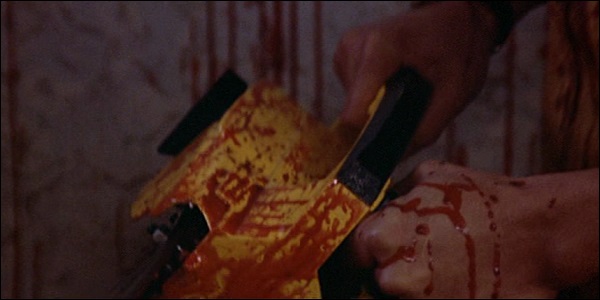
Scarface 1 - The chainsaw scene
Gangster films are violent, that is accepted. But Coppola and Scorsese have a way of turning even the most off-putting bit of violence into something really stylish and cinematic. The way De Palma handles the chainsaw scene, 24 minutes within the movie, is just plain ugly. ‘Now the leg huh’, remarks the sadistic Hector as he puts the saw in Tony Montana’s friend. This scene alone puts ‘Scarface’ in the extreme cinema league. And films that are extreme in this sense are rarely considered as Academy Award contenders.

2. The general ugliness
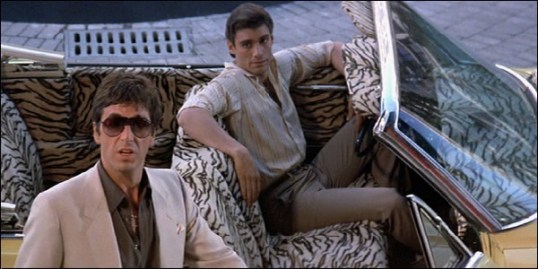
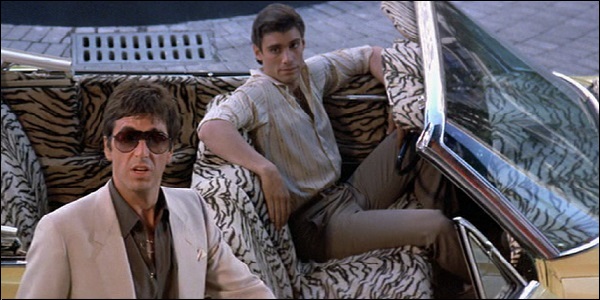
Scarface 2 - Ugly Car
Most of it is done deliberately, but the look and feel of ‘Scarface’ is just ugly dugly. That shirt that Montana is wearing, holy Christ! Also look at the sets. Miami in the eighties is just terrible. From the refugee camp where Montana and his partners murder the communist Rebenga, to the Miami Beach area where they start their careers as drug runners, these locations are just god awful. The language doesn’t help either: ‘Why don’t you try sticking your head up your ass, see if it fits’, Montana tells Hector. Can you hear Vito Corleone utter such a line? Or how about this one: ‘This town is like a great big pussy just waiting to get fucked.’ That doesn’t sound like ‘Casablanca’ does it? Last but not least: the music. From the cringe worthy synthesizer sounds to eighties hits like ‘She’s on Fire’. It is so wrong, it’s right.

3. The general foulness
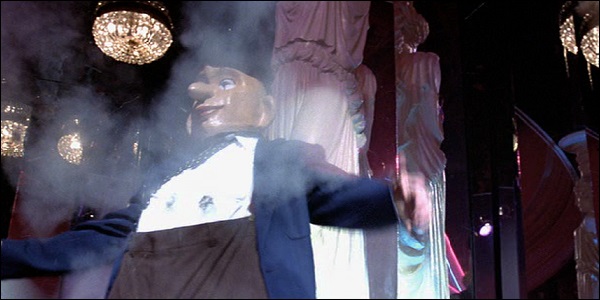
Scarface 3 - The Clown
‘Scarface’ is in the end a very cynical movie in which the American Dream can only be achieved through extreme violence and corruption. Tony’s quest for power leads to ton’s of dead bodies: even a clown is whacked for god’s sake! A world in which a vile assassin like Tony Montana is the ultimate hero, is just very hard to accept. And the film gets uglier and uglier as it progresses. Tony’s drunken diner speech is the ultimate example of the repellent worldview on display. ‘Is this it? That’s what it’s all about, Manny? Eating, drinking, fucking, sucking? Snorting? Then what? You’re 50. You got a bag for a belly. You got tits, you need a bra. They got hair on them. You got a liver, they got spots on it, and you’re eating this fucking shit, looking like these rich fucking mummies in here… Look at that. A junkie. I got a fucking junkie for a wife. She don’t eat nothing. Sleeps all day with them black shades on. Wakes up with a Quaalude, and who won’t fuck me ‘cause she’s in a coma. I can’t even have a kid with her, Manny. Her womb is so polluted; I can’t even have a fucking little baby with her!’ It is kind of depressing when he puts it like that.

4. The sister storyline
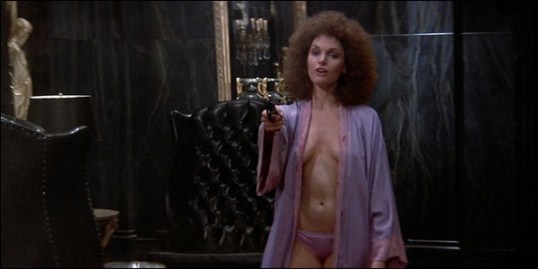
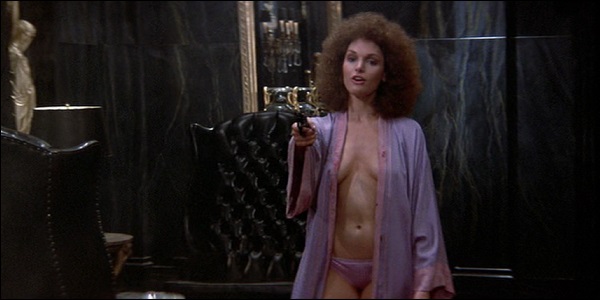
Scarface 4 - Sister Shooting at Tony
Incest is never a pleasant topic, and even though nothing actually happens sexually between Tony and his sister Gina, it still raises some controversy. It also adds further to the already unpleasant vibe that the movie creates. Tony’s sickening jealousy of every man who even looks at his sister, let alone touches her, leads to aggression and eventually the murder on his best friend Manny. One of the hardest parts to watch involves Gina walking into Tony’s study, undressed, asking him to fuck her while shooting at him.

5. The over-the-top climax
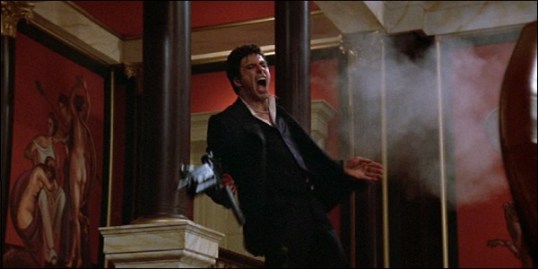
Scarface 5 - Climax
The climax of ‘Scarface’ is so over the top that it is hard to comprehend during the first viewing. Many gangster films end with a massacre, but this is Rambo on cocaine. Fitting how this ending may be, it is so much of everything, that it may affect the judgment of its more critical audience.

None of this really matters though. ‘Scarface’ is a true classic. And though it may not always be appreciated as it should, ‘every dog has its day.’ ‘Scarface’ could go right to the top.
Intermezzo #56

Turn it down you say.
Well, all I got to say to you is time and time again I say,
No, no, no, no, no, no, no.
Tell me not to play.
Well, all I got to say to you when you tell me not to play I say,
No, no, no, no, no, no, no.
So, if you ask me why I like the way I play it.
There’s only one thing I can say to you.

I wanna rock (Rock).
I want to rock (Rock).
I wanna to rock (Rock).

I Wanna Rock
Twisted Sister (1984), Stay Hungry