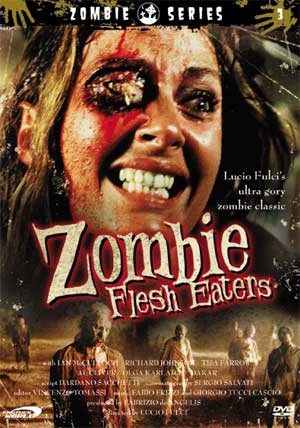
Zombie Flesh Eaters

OT: Zombi 2

Director: Lucio Fulci
Written by: Elisa Briganti
Cast: Tisa Farrow, Ian McCulloch, Richard Johnson, Al Cliver

Year / Country: 1979, Italy
Running Time: 91 mins.

Sun, sea and zombies in Lucio Fulci’s unofficial sequel to George A. Romero’s Dawn of the Dead, which is weird considering that was a sequel itself (to Night of the Living Dead). Also, this film has nothing to do with Dawn. Well, it’s about zombies obviously and it pretty much kicks ass as well.

A seemingly abandoned sailboat is found in the New York harbor with a zombie on board (zombies are called ‘zombies’ in this flick. Cool huh?). A reporter and the daughter of the missing boat owner head for the Atlantic to find out what happened. Along with two friendly sailors they meet in St. Thomas, they head out for the supposedly cursed island Matool. Already underway they stumble upon a zombie who is fighting a shark underwater. This is a spectacular scene: classic stuff!

On the island, the struggle for survival really begins. The horror starts with the infamous eye splinter scene, another classic moment, but perhaps not so brutal if you see it coming. From then on it is kill or be killed for the main characters. Fulci is not known for delivering a subtle underlying message. Neither is he specialized in directing actors to towering heights. No, he is a man of the gore. And he does what he does best with this movie.

Compared to Romero’s classic to which this is supposedly a sequel, it is done in a more low budget style. There are fewer zombies and it certainly misses the intellectual layer. But, the tropical location is almost as cool as Dawn’s shopping mall, the make-up and special effects are far out, and the music adds to a creepy atmosphere. This might just be Fulci’s best film. Definitely a must see for zombie aficionados.

Rating:

Biography: Lucio Fulci (1927, Rome – 1996, Rome) originally studied medicine but quickly turned to filmmaking instead. He started his film career with directing comedies, musicals and spaghetti westerns. Later he turned to Italian shock horror films and made a name for himself as the goriest director ever. His international career came off the ground in 1979 when he directed Zombi 2, an unofficial sequel to George A. Romero’s Dawn of the Dead, which had been released in Italy under the title Zombies. Fulci died from diabetes in 1996.

Filmography (a selection): The Thieves (1959) / The Jukebox Kids (1959) / Getting Away with It the Italian Way (1962) / The Strange Type (1963) / The Maniacs (1964) / 002 Operation Moon (1965) / How We Stole the Atomic Bomb (1967) / The Conspiracy of Torture (1969) / A Lizard in a Woman’s Skin (1971) / Don’t Torture Donald Duck (1972) / White Fang (1973) / Challenge to White Fang (1974) / Four of the Apocalypse (1975) / Silver Saddle (1978) / Zombi 2 (1979) / City of the Living Dead (1980) / The Beyond (1981) / The New York Ripper (1982) / Evil Eye (1982) / The New Gladiators (1984) / Dangerous Obsession (1986) / Zombi 3 (1988) / Demonia (1990) / Door to Silence (1991)
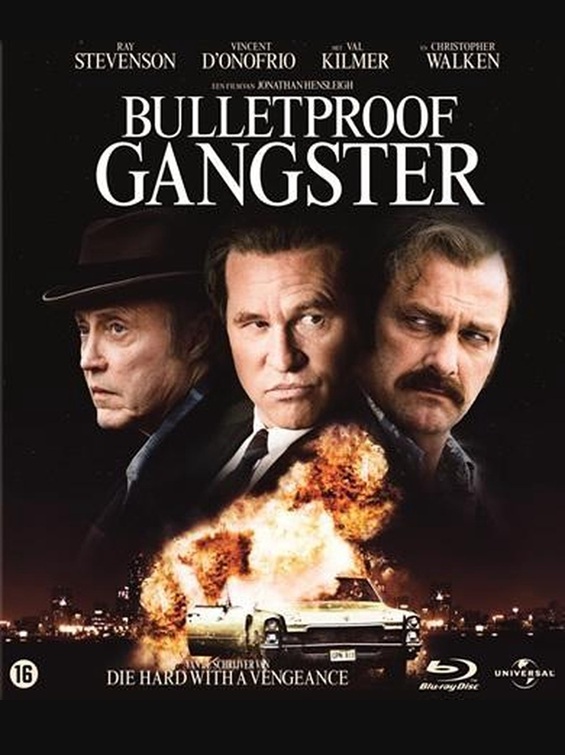
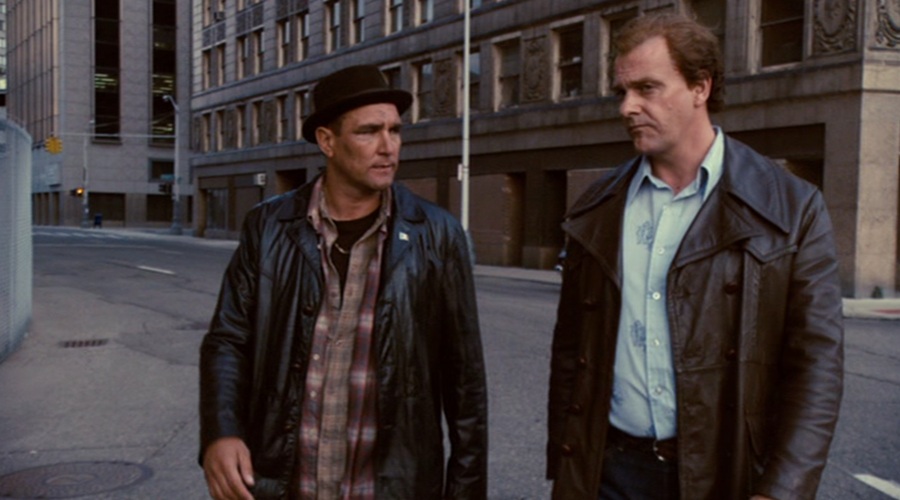
Bulletproof Gangster (2011)


‘Based on the true story of Danny Greene the man the mob couldn’t kill’

Directed by:
Jonathan Hensleigh

Written by:
Jonathan Hensleigh
Jeremy Walters
Rick Porrello (book ‘To Kill the Irishman’)

Cast:
Ray Stevenson (Danny Greene), Vincent D’Onofrio (John Nardi), Val Kilmer (Joe Manditski), Christopher Walken (Shondor Birns), Linda Cardellini (Joan Madigan), Tony Darrow (Mikey Mendarolo), Robert Davi (Ray Ferritto), Fionnula Flanagan (Grace O’Keefe), Vinnie Jones (Keith Ritson), Steve Schirripa (Mike Frato)

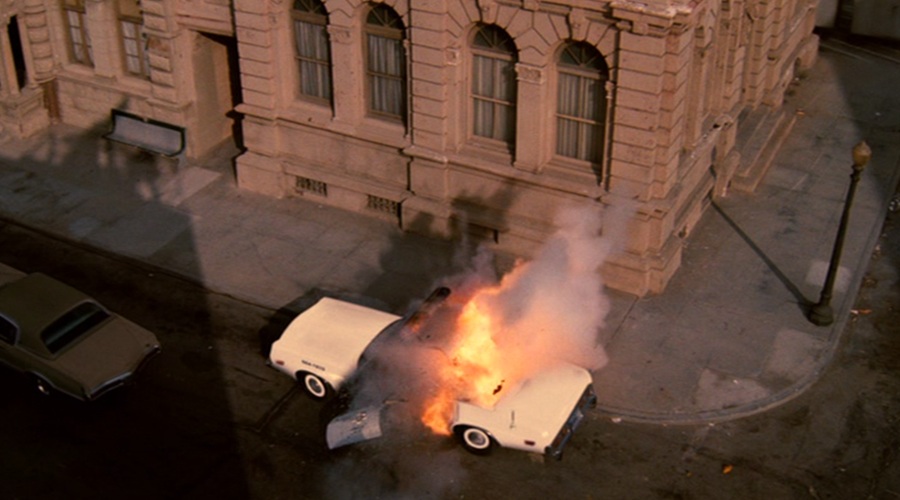
Bulletproof Gangster (also known as Kill the Irishman, after the book it’s based on) is a biopic about former union man turned Irish mob boss Danny Greene, set during the Cleveland Mafia war of the 1970s, in which his enemies failed time and again to kill him. Hence the title although Kill the Irishman might be more fitting, since they mostly tried to kill him with bombs rather than bullets.

It’s a classic rags-to-riches story. Greene starts as a dockworker, albeit a well-read one. He didn’t finish school but was famously self-educated. With the backing of mobster John Nardi, he rises to become a popular union president.

Meanwhile, his old neighborhood friend Joe (Val Kilmer) joins the Cleveland PD, following his former friend’s career and narrating the story. After Greene’s arrest, he’s barred from union work for life, so he enters the garbage business with mobster Jack Licavoli’s blessing.

But when mob boss John Scalish – who ran the Cleveland mob since the 1940s – dies, a brutal gang war erupts between Greene and Nardi on one side and Licavoli on the other. That summer, bomb after bomb rocks Cleveland, killing many gangsters. How long can the seemingly blessed Irishman survive?

This gangland tale covers one of the few untold chapters of American Mafia history. Director Jonathan Hensleigh, screenwriter of Die Hard With a Vengeance, clearly has a penchant for explosives, and it shows in this appropriately explosive film. The cast features many familiar faces from gangster movies, including Paul Sorvino as Tony Salerno.

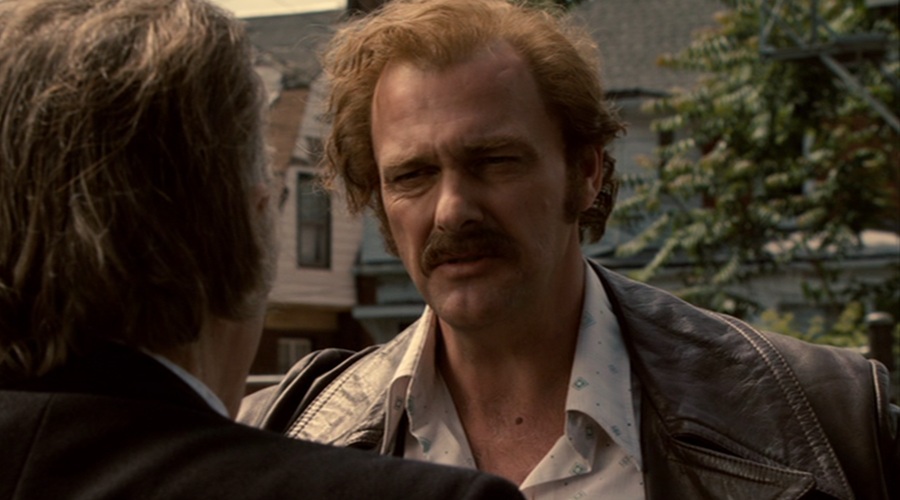
Of the cast members, especially Vincent D’Onofrio and Christopher Walken stand out as the historical mob figures John Nardi and Jewish gang boss Shondor Birns.

Bulletproof Gangster might not be a biopic as captivating as GoodFellas, Casino or Donnie Brasco, but offers what you might expect: an entertaining mob film with one retaliation after the other.

Rating:

Quote:
DANNY GREENE: “I’m an Irish catholic with the grace of God on my shoulder. I’m not going anywhere until he says so.”

Trivia:
The plot to kill the Irishman (Danny Greene) involved an unprecedented breach of FBI security when a clerk was bribed by the mob and actually stole a list of confidential informants from a top secret room. Cleveland agents acted quickly, plugging the leak and arresting their clerk.

Eten en gegeten worden

Een vraag die me vooral te binnen schoot na het kijken van de documentaire ‘Food, Inc.’ was; hoe kan het toch dat mensen in de Verenigde Staten stelselmatig worden genaaid door de oppermachtige overheid? De documentaire toont aan hoe de overheid beslist wat de gewone man eet en dat is vooral fast food. Een hamburger bij de McDonalds is namelijk veel goedkoper dan groente. Hoe kan dat?

Maïs is een bijzonder gewas, want je kunt er enorm veel van produceren en de toepasbaarheid is gigantisch. In bijna 90 procent van het voedsel in de supermarkt zit maïs verwerkt. Er zitten geweldige shots in ‘Food, Inc.’ genomen vanuit een helikopter van oneindige maïsvelden. De productie van megahoeveelheden maïs wordt gestimuleerd door de overheid. Het vormt de basis van food engineering. Nieuwe producten die goedkoop in grote hoeveelheden te maken zijn en niet bederven. Bijna alle onbekende ingrediënten in supermarktproducten worden gemaakt van maïs. Plus je kunt het aan dieren voeren.

Dit is de basis van het huidige voedselsysteem in de VS (maar zeker ook in Europa). Ongezonde producten zijn goedkoop, want ze worden gesponsord door de overheid. Een hamburger bij de McDonalds kost 1 euro/1 dollar. Een broccoli in de supermarkt is duurder. Dat komt omdat hamburgers in de gesubsidieerde massa-voedselgroep vallen: maïs en tarwe. Ook cola valt hier onder. Het resultaat: Amerikanen eten gigantische hoeveelheden zout, vet en suiker. Dit zijn stoffen die je in de natuur weinig aantreft. Het resultaat: de organen die suiker afbreken raken beschadigt en mensen krijgen ziektes zoals diabetes. 1 op de 3 geborenen na 2000 in de VS krijgt al jong diabetes. Onder minderheden is dat zelfs 1 op 2.

Dit systeem wordt in stand gehouden doordat er binnen de Amerikaanse overheid en voedseltoezichthouders mensen in topposities zitten met enorme belangen in de voedselindustrie. De wetten en regels dienen dus weer eens de grote bedrijven en niet de gewone man op de straat. Dat werkt precies hetzelfde als bij de grote zakenbanken op Wall Street en met feitelijk alle belangrijke industrieën. In Amerika maken grote corporates de dienst uit. De gewone man heeft niets te vertellen. Het maakt niet eens uit op welke partij hij stemt. Zowel de democraten als de republikeinen delen het bed met in dit geval de voedsellobby.

Toch eindigt ‘Food, Inc.’ met een positieve noot, namelijk de opkomst van de organische voedselindustrie. Ze begonnen klein, maar werden al snel populair onder consumenten. Reden voor de grote corporates om erin te duiken. De impact van de samenwerking tussen deze twee werelden is enorm. Grote bedrijven als Walmart worden nu eenmaal gedreven door massavraag van consumenten. Hoe meer ze organisch willen – en daarvoor extra willen betalen – hoe sneller er een gezonder voedselsysteem zal ontstaan. Simpele economie. Gedreven door vraag en aanbod. Kan de gewone man toch nog invloed hebben, maar alleen als hij wat geld te besteden heeft. Een achterstandsgezin is afhankelijk van de laagst geprijsde producten en dat zijn voorlopig frisdranken, met ammoniak besmeurt vlees, en andere goedkope bende.

Overigens moet je oppassen met klagen over dit slechte voedsel. Je kunt in Colorado celstraf krijgen voor het beledigen van een hamburger. Oprah werd aangeklaagd na een paar kritische opmerkingen over besmet rundvlees. Alleen in Amerika…gelukkig wel.

Ik ben trouwens zelf met ingang van 18 mei 2012 gestopt met het eten van vlees (zielig voor dieren en slecht voor het milieu). Ik heb mijn vleesetende leven afgesloten met een Big Mac, die me tegen de verwachting in niet goed smaakte. Moet ik nu ook oppassen voor de vleeslobby?