Nieuwe verblijven op Het Konijneneiland

Stichting Het Konijneneiland, oftewel het toonaangevende konijnentijdelijkverblijfthuis gevestigd te Schermerhorn heeft drie nieuwe verblijven voor de geliefde viervoeters. De verblijven zijn extra ruim van opzet, zodat de konijnen zo aangenaam mogelijk kunnen leven totdat zij nieuwe baasjes gevonden hebben.

Als ik zeg dat ik bij Het Konijneneiland werk krijg ik altijd standaard de vraag of de konijnen zich niet erg snel gaan vermenigvuldigen op zo’n eiland. Het antwoord is nee. Dat komt omdat de konijnen in koppels in een grote ren zitten en niet met de andere konijnen in aanraking komen. Nog belangrijker; ze zijn gesteriliseerd. Op het eiland zitten momenteel slechts zes konijnen. De reden dat dit aantal beperkt wordt gehouden is simpel; bij het konijneneiland gaat kwaliteit voor kwantiteit. De dieren wordt een Hilton-achtige ervaring geboden en er wordt gezocht naar baasjes die dit ook mogelijk willen maken.

Mocht u ook een mooie plek hebben (een grote tuin of veldje) en een mooi groot konijnenhok, dan kunt u contact met ons opnemen via jeponline(at)hotmail.com.

Voor de verblijven gaat veel dank uit naar Leo van den Bogaert van The Unschooled Mind Company.

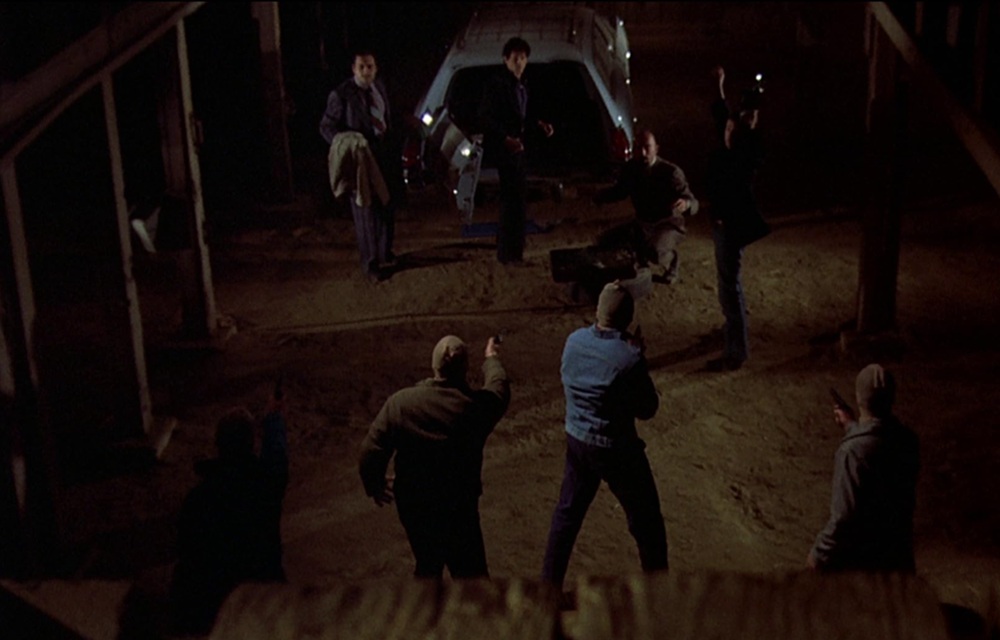
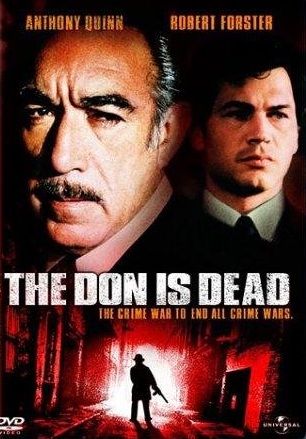
The Don is Dead (1973)


‘Power built an empire. Passion destroyed it.’

Directed by:
Richard Fleischer

Written by:
Marvin H. Albert (novel & screenplay)
Christopher Trumbo (adaptation)
Michael Butler (adaptation)

Cast:
Anthony Quinn (Don Angelo), Robert Forster (Frank), Al Letteri (Vince Fargo), Frederic Forrest (Tony Fargo), Angel Tompkins (Ruby Dunne), Charles Cioffi (Orlando), Jo Anne Meredith (Marie), Barry Russo (Don Bernardo), Abe Vigoda (Don Talusso), Victor Argo (Augie the Horse)

A mob movie clearly made to capitalize on The Godfather’s success, The Don Is Dead is directed by Richard Fleischer (Conan the Destroyer) and features familiar faces from The Godfather, including Al Lettieri (Sollozzo) and Abe Vigoda (Tessio).

The screenplay is by Peter Maas, known for his mob stories like The Valachi Papers – adapted into a 1972 film starring Charles Bronson.

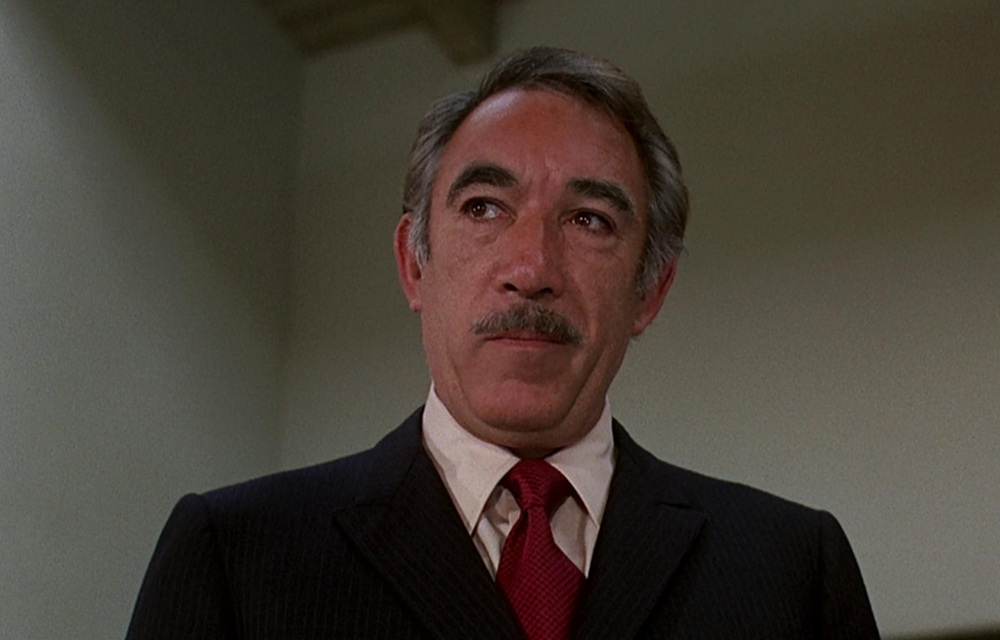
The plot follows Frank (a young Robert Forster), the reckless son of mob boss Don Paolo. When Paolo dies of a heart attack, his territory is divided between two rival leaders: the formidable Don Angelo (Anthony Quinn) and another Don who refuses to share. After Paolo’s funeral, a brutal mob war erupts, escalating when Frank savagely beats up Angelo’s new mistress.

While the film captures a dark, gritty atmosphere, it lacks characters the audience can root for. Without emotional investment, the endless cycle of murders and retaliations feels hollow – none of the deaths resonate. It’s not a bad movie, but beyond Anthony Quinn’s strong performance, there’s little to recommend.

Rating:

Quote:
AUGIE THE HORSE: “You must think of our groups of families as a corporation.”

Trivia:
This is the second gangster film in which Al Lettieri declares that a Don is “slippin”. The first time was about Marlon Brando’s Don Corleone in The Godfather, and now he’s talking about about Anthony Quinn’s Don Angelo.”

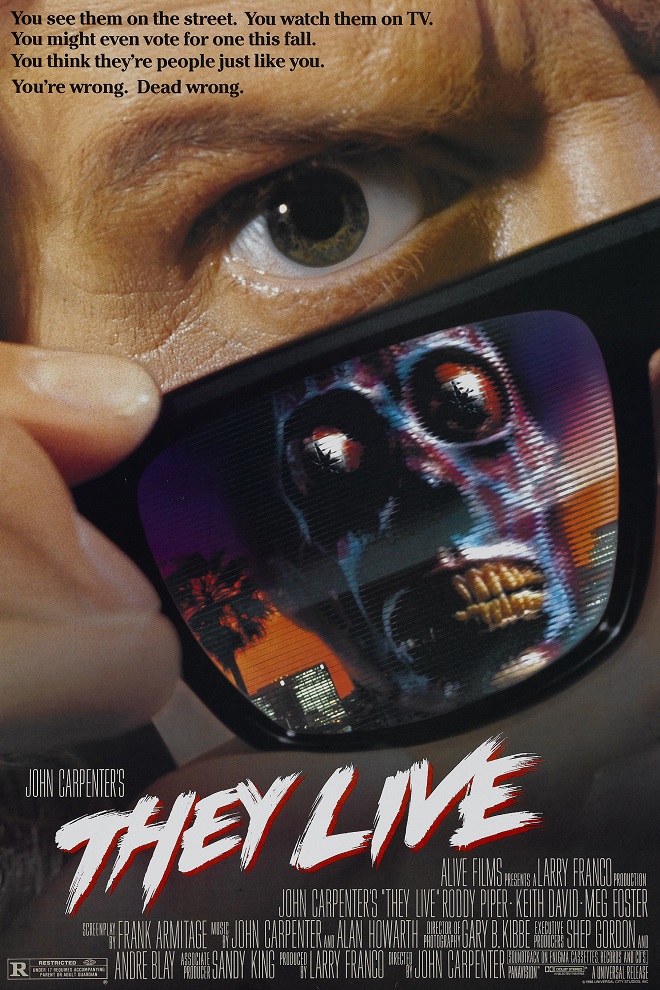
They Live


‘You see them on the street. You watch them on TV. You might even vote for one this fall. You think they’re people just like you. You’re wrong. Dead wrong.’

Director: John Carpenter
Written by: Ray Nelson (story), John Carpenter
Cast: Roddy Piper, Keith David, Meg Foster, George ‘Buck’ Flower

Year / Country: 1988, USA
Running Time: 90 mins.
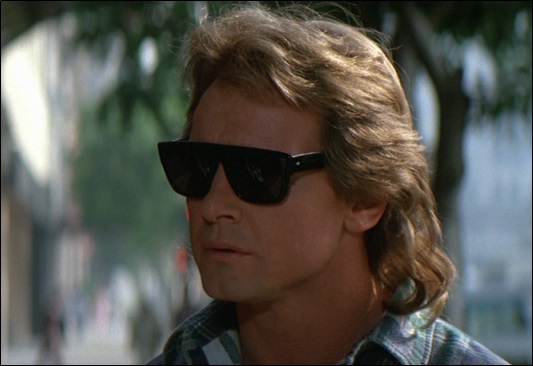
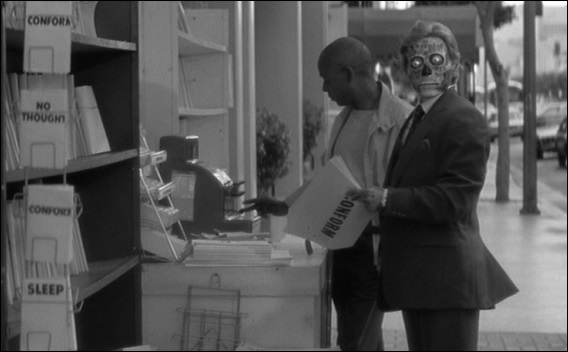
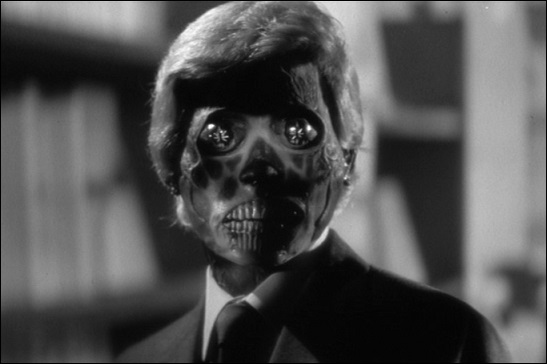
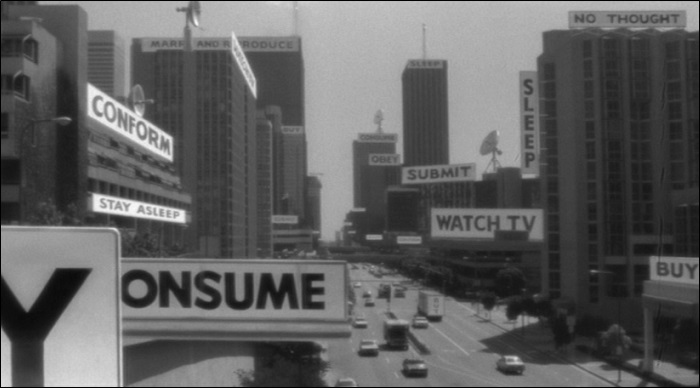
The concept for They Live is brilliant. A drifter (wrestler Roddy Piper) discovers an underground movement. When he puts on a pair of sunglasses – produced by this movement, he finds that the world is dominated by an evil alien race. Street signs and television programmes contain hidden messages, such as ‘obey’, ‘buy’ and ‘consume’ and normal people suddenly look like monsters. The whole world is enslaved by these aliens.

The drifter finds a few allies and cooks up a plan to disrupt the alien operations. If they can turn off the signal at the source, the world will have a serious wake-up call. But the aliens are everywhere and they have human accomplices to help them. These humans sold-out their own species in return for promotions and bigger bank accounts.

In this entertaining story, director Carpenter inserted a not-so-well hidden meaning himself. People are only focussed on wealth and making more money. Thus, they are vulnerable to becoming slaves to their own greed. The humans in They Live are sedated and therefore insensitive to their surroundings, only wanting to consume more. The poor have become the unwilling worker bees for the rich.

This message runs through the film, but luckily Carpenter does not take himself too seriously. They Live is above all a fun sci-fi/action thriller with lots of tongue-in-cheek humour. Highlights are Piper’s discovery of the alien conspiracy, a ridiculous wrestling match between Piper and Keith David in an alley and the final minutes in which both aliens and humans get a big surprise.

Rating:

Biography: John Carpenter (1948, New York) was born in Carthage, New York. He attended Western Kentucky University and then USC film school in Los Angeles. While there, he started work on his feature debut Dark Star (1974). Although Carpenter has directed films in numerous other genres (dark comedy, sci-fi, romance), he is known primarily for making horror films: Halloween (1978), The Fog (1980), The Thing (1982), et cetera. He is also known as the ‘Master of Horror’ or the ‘Prince of Darkness’ (after one of his films).

Filmography (a selection): Revenge of the Colossal Beast (1962, short), Gorgo Versus Godzilla (1969, short), Dark Star (1974), Assault on Precinct 13 (1976), Halloween (1978), The Fog (1980), Escape from New York (1981), The Thing (1982), Christine (1983), Starman (1984), Big Trouble in Little China (1986), Prince of Darkness (1987), They Live (1988), Memoirs of an Invisible Man (1992), In the Mouth of Madness (1994), Village of the Damned (1995), Escape from L.A. (1996), Vampires (1998), Ghosts of Mars (2001)

Pulp Fiction (1994)


‘Girls like me don’t make invitations like this to just anyone!’

Directed by:
Quentin Tarantino

Written by:
Quentin Tarantino (stories / screenplay)
Roger Avary (stories)

Cast:
John Travolta (Vincent Vega), Samuel L. Jackson (Jules Winnfield), Uma Thurman (Mia Wallace), Tim Roth (Pumpkin), Amanda Plummer (Honey Bunny), Bruce Willis (Butch Coolidge), Ving Rhames (Marsellus Wallace), Eric Stoltz (Lance), Rosanna Arquette (Jody), Harvey Keitel (Winston Wolf)

After Quentin Tarantino’s insanely cool debut in 1992, Reservoir Dogs – which he wrote and directed – the expectations of him in movieland were quite high. Two years later he delivered. When Pulp Fiction premièred at Cannes in 1994, they didn’t know what hit them. Tarantino’s L.A.-based crime opus, inspired by the Black Mask pulp magazine, blew them all away.

The three intersecting stories that are told non-chronologically in Pulp Fiction are all amazing in their own way. The first one about two hitmen Vincent Vega (John Travolta) and Jules Winnfield (Samuel L. Jackson) that have to dispose of a headless body and blood-soaked car is both mean and hysterical. The second one in which Vega takes gangster boss Marcellus Wallace’s wife Mia (Uma Thurman) out on a date (“it’s not a date!”) is druggy, cool, sensual and exciting. The third story about boxer Butch (Bruce Willis) who swindles Marcellus Wallace is romantic, ironic and twisted. The whole plot is tied together by a crazy short about a young couple in love who decide to rob the restaurant they are having breakfast in.Whether a person knows about movies or not, it is hard to miss that this is an amazingly clever movie. The screenplay is out of this world and so is the cast (5 million dollars of the 8 million budget went to the cast). The non-chronological structure to which Tarantino holds the patent is never done better. And although not his most mature, the dialogues about foot massages, piercings, TV-pilots and uncomfortable silences are unforgettable. Especially the exchanges between Vega and Winnfield are absolutely hilarious.

Of course, this being Tarantino’s early masterpiece, it contains a trainload of movie references. One could even call it his ultimate homage to cinema. But what makes it richer and cleverer than just a highly entertaining crime flick stuffed with pop-culture dialogues and references, is the biblical thread that runs through it. It is truly remarkable how the separate stories intertwine and destiny comes into play the whole time. For example, Butch and Marcellus Wallace walk into the most terrible place on earth, but it does put them square in the end. And what becomes a life changing event for Winnfield, is ignored by Vega for whom things soon end badly. All the characters get a lesson in some sort of way. Some get a second chance and some don’t. The viewer can keep looking into this and discover new things all the time. In this respect, the screenwriters did a wonderful job and justly won an Oscar for it.

The nineties was a glorious time for cinema, when surprises like Pulp Fiction would still appear once in a while. Although, we can only hope for this period to return, we can also re-live the beautiful movie experiences from the past. Like the content of the mysterious briefcase in the movie, Pulp Fiction is a treasure that will undoubtedly still be viewed and honored long into the future.

Rating:

Quote:
JULES:  “Marcellus Wallace don’t like to be fucked by anybody except Mrs. Wallace.”

Trivia:
Samuel L. Jackson auditioned for the part of Mr. Orange in Reservoir Dogs (1992), but it went to Tim Roth. Tarantino enjoyed Jackson’s work so much that he wrote the part of Jules specifically for him.