Gotti (1996)

Directed by:
Robert Harmon

Written by:
Jerry Capeci (book ‘The Last Gangster: Winning the War Against John Gotti and the Mob’)
Gene Mustain (book ‘The Last Gangster: Winning the War Against John Gotti and the Mob’)
Steve Shagan (teleplay)

Cast:
Armand Assante (John Gotti), William Forsythe (Sammy Gravano), Richard C. Sarafian (Paul Castellano), Frank Vincent (Robert DiBernardo), Anthony Quinn (Neil Dellacrose), Dominic Chianese (Joe Armone), Robert Miranda (Frank DeCicco), Scott Cohen (Gene Gotti), Vincent Pastore (Angelo Ruggiero), Tony Sirico (Joe Dimiglia)

John Gotti seemed destined for the Mafia. He was smart, tough, loyal to the code of omertà, never skimmed from the top, and respected the boss’s policy on narcotics. These qualities helped him rise to become boss of the infamous Gambino family in the 1980s. But Gotti also had his flaws: he craved media attention and was too careless about discussing sensitive business in unsecured settings.

Gotti is the biography of one of history’s best-known mobsters. The story begins in 1973, when Gotti first comes to the attention of his crime family, the Gambinos – then the most powerful of New York’s Five Families. Boss of bosses Carlo Gambino asks Gotti for a personal favor, which nearly goes wrong due to the interference from underboss Paul Castellano. The conflict almost dooms Gotti, but his mentor, second underboss Neil Dellacroce (Anthony Quinn), steps in to resolve it.

In the years that follow, Gotti steadily rises through the ranks alongside his close associate and fellow captain Sammy Gravano. When Gambino dies of old age in 1976, he names Castellano as his successor, to the disapproval of Gotti and other top figures. While Gotti was seen as a true man of Cosa Nostra, Castellano was regarded more as a businessman. Tensions eventually culminate in one of the most infamous gangland hits in history: the 1985 assassination of Castellano and his partner outside Sparks Steak House in Manhattan.

Now John Gotti is the boss. But, as noted earlier, his weaknesses ensured that his reign would be relatively short-lived (until 1992 to be precise). As a biographical made-for-tv HBO production, Gotti stands out for offering a complete look at the life and times of a legendary mobster. Armand Assante is memorable in the lead. The supporting cast – featuring many future Sopranos actors – is also strong, with Anthony Quinn and William Forsythe delivering standout performances. If you watch only one television production about the mob, make it Gotti .

Rating:

Quote:
JOHN GOTTI: “A Mexican, a Puerto-Rican and a black guy are sitting in a car. Who’s driving? The police.”

Trivia:
According to IMDb, this film was the highest rated original telefilm in HBO history at that time. The success of the film convinced HBO to cast film co-stars, Dominic Chianese, Vincent Pastore and Tony Sirico in a series in development at the time called The Sopranos (1999).

Van Capo tot CEO: Bedrijfslessen van de maffia

Voor de jaarlijkse CFO Day vonden we bij Sijthoff Media dit jaar een bijzondere spreker. Jan-Joost Kroon is organisatiedeskundige én maffia-expert. Sinds hij Scarface zag in zijn jeugd is hij gefascineerd door de Italiaanse en Siciliaanse misdaadorganisaties.

Hij vond mijn blogs over gangsterfilms erg tof – en we hadden dus meer dan genoeg reden om bij elkaar te komen voor een sit-down. Erg leuk om iemand te ontmoeten die weet wie Anthony ‘The Ant’ Spilotro en Benjamin ‘Lefty’ Ruggiero zijn.

In 2022 bracht hij een boek uit dat de basis was voor zijn CFO Day verhaal: ‘Van CAPO naar CEO: Leerzame inzichten van de Italiaanse maffia’.

In zijn boek bestudeert hij de Drie, de drie grote organisaties/families die de georganiseerde misdaad besturen in Italie en Sicilie:
● ‘Ndrangheta – Oorsprong: Calabrië
● Camorra – Oorsprong: Napels
● Cosa Nostra – Oorsprong: Sicilië

Deze Zuid-Italiaanse organisaties zijn al decennialang succesvol – hun gezamenlijke jaaromzet wordt geschat op zo’n 150 miljard euro. Jan-Joost beschrijft hoe dat succes tot stand komt.

Sterke tradities
Iedere business professional kent de uitspraak ‘culture eats strategy for breakfast’. Een hele serie tradities houdt de organisatie bij elkaar. Denk aan de doop van Michael Corleone’s neefje in The Godfather, de ceremonie in The Sopranos waarin van Christopher Moltisanti een ‘made guy’ wordt gemaakt, en het communiefeest van Michael Corleone’s zoontje waarmee The Godfather: Part 2 geopend wordt. Rituelen borgen de groepsidentiteit.

Loyaliteit
Het zakelijkste succesvol van de Drie is nu de ‘Ndrangheta met een geschatte omzet van 80 miljard euro per jaar. Terwijl de Cosa Nostra een tijdlang met de Italiaanse staat in gevecht was, is de ‘Ndrangheta in stilte doorgegroeid. Het is een echt familiebedrijf, schrijft Jan-Joost. Alleen familie komt erbij via een gearrangeerd huwelijk. Krachtig, want familie verraad je niet zomaar. Plus voor familie ben je bereid een stap extra te zetten.

Flexibiliteit
De Camorra kan meer vergeleken worden met een MKB-bedrijf vanwege de flexibiliteit, de compacte manier van werken en de snelheid waarmee ze handelen en inspringen op kansen. Zoals na de grote aardbeving van 1980 was de Camorra er als de kippen bij om bouwcontracten af te sluiten voor de bouw van nieuwe huizen. De maffia kent geen comfort keuzes: ze zijn altijd bezig met de volgende stap. Met actie. Met de beste willen zijn.

Onderdeel van de lokale samenleving
Het bekendste van de drie is nog altijd de Cosa Nostra – vrij vertaald: ‘onze zaak’. Deze organisatie heeft een klassieke piramidestructuur en functioneert als een soort multinational die in elk economisch aspect van een regio meespeelt. Ze bepaalt wat er wél en niet gebeurt in de wijk. Door slim in te spelen op het wantrouwen richting de Noord-Italiaanse overheid, positioneert de Cosa Nostra zich als beschermheer: “Laat die mensen in Rome maar, wij weten wat hier speelt en zorgen voor jullie.”

Heldere rolverdeling en structuur
De kracht van de Cosa Nostra zit hem in de sterke structuur en de duidelijkheid van ieders werkzaamheden. De organisatie zélf is de kracht, een leider kan vervangen worden. Iedere medewerker van een maffia-organisatie weet wat er van hem verwacht wordt en hoe hij kan bijdragen aan het succes. Ontwikkelkansen voor persoonlijke carrière zijn daarmee ook duidelijk. De maffia heeft ook heldere kernwaarden die nooit veranderen: Eer, loyaliteit, macht en respect.

Goed in talentmanagement
De maffia blijkt verrassend goed in talentontwikkeling. Een belangrijke les: bemoei je niet te veel met het werk van je mensen. Vind de juiste mensen, leid ze goed op, geef heldere kaders, en laat ze dan hun werk doen. De leiding is wel beschikbaar, maar niet betuttelend. Ook op het gebied van belonen en straffen valt er iets te leren. Bij de maffia zijn de consequenties van falen of succes kraakhelder. In veel bedrijven ontbreekt die duidelijkheid.

De maffia is een blijver
Jan-Joost beschrijft ook hoe diep de maffia-politiek verweven is met de samenleving, en waarom hij denkt dat deze organisaties – mede door culturele factoren – nooit zullen verdwijnen. Een schokkende constatering, maar overtuigend onderbouwd. Het versterkt het centrale punt van zijn boek: de maffia is, hoe immoreel ook, een extreem goed geleide, veerkrachtige en succesvolle organisatie. Daar kun je als bedrijfsleider van leren – zónder mee te gaan in het gebrek aan ethiek.

LEES OOK: 10 Management Lessons From Highly Successful Gangsters

#####

Hieronder nog een LinkedIn-post van Jan Joost:

Een volmaakte vendetta

Een mooi product van populaire cultuur ontsnapt zelden aan mijn aandacht. Zo ook niet dit nieuwe maffiaboek.

R.J. Ellory heeft een prachtige literaire thriller afgeleverd. Over een man – Ernesto Cabrera Perez – die de dochter van de gouverneur van Louisiana ontvoert. In ruil voor haar veilige terugkeer wil hij zijn levensverhaal vertellen aan politieman Ray Hartmann, die net als hem geboren en getogen is in New Orleans.

Hij vertelt zijn verhaal, over hoe hij sinds de jaren 60’ huurmoorden heeft gepleegd voor de Amerikaanse maffia. Dit voert hen van Cuba, naar Chicago, New York, Las Vegas en terug naar New Orleans. Ellory gebruikt in het levensverhaal van Perez de historie van de Cosa Nostra in Amerika; de vijf families van New York, de moorden op Kennedy en Jimmie Hoffa, het verhaal van Al Capone en nog veel meer. Ook de historie van Cuba wordt uitgebreid beschreven als achtergrond van Perez’ onthutsende levensverhaal.

De beschrijvingen van New Orleans, met zijn moerassen, straten en huisjes, zijn werkelijk schitterend. Ook ligt het tempo van Ellory’s thriller hoog genoeg om continu te blijven boeien. De moordpartijen van Perez zijn gruwelijk genoeg om te schokken, maar het verhaal is zodanig opgebouwd dat Perez wel volledig te begrijpen is als mens. Je veroordeeld hem niet, al zijn er zeker momenten dat je hem vervloekt voor zijn wreedheid.

De conclusie van het boek is helaas wat minder vindingrijk dan gehoopt, maar desalniettemin is dit zeker een aanrader. Voor kenners van de Amerikaanse maffia is het een feest van herkenning. Maar ook de liefhebbers van de literaire thriller komen ruimschoots aan hun trekken.

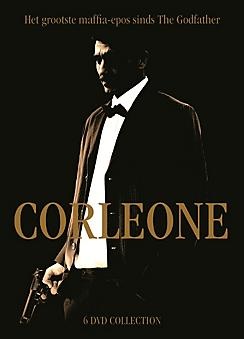
TV Dungeon: Corleone

(2007, mini-series, Italy)
AKA: Il capo dei capi

Directed by: Alexis Cahill & Enzo Monteleone

Cast: Claudio Gioè, Daniele Liotti, Simona Cavallari, Salvatore Lazzaro, Gioia Spaziani, Massimo Venturiello, Marco Leonardi

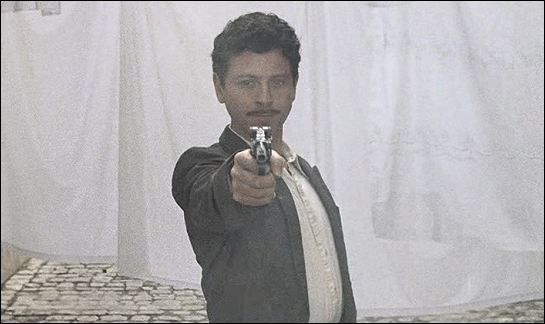
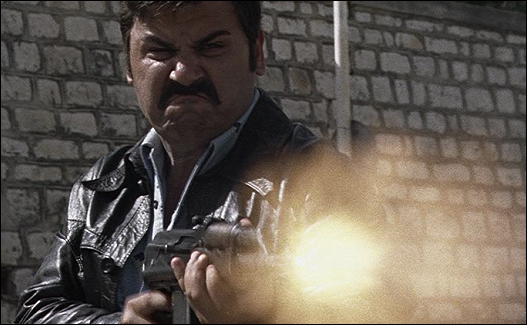
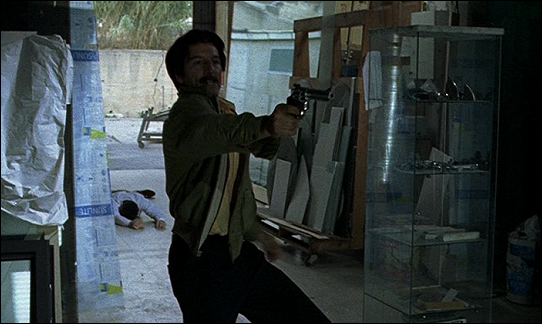
How does one become ‘il capo dei capi’ or boss of all bosses? That question is answered in the mini-series Corleone. In a fifty year period, Toto Riini grows up from little boy in Corleone on Sicily to the highest ranking member of the Sicilian Cosa Nostra (literally ‘Our Thing’). He does so by slowly murdering anybody who opposes him or who has any real power within the Mafia.

The Corleoneses, Toto Riina and his underboss Bernardo Provenzano, are provincial Mafiosi. They join the Mafia at a young age to escape from poverty. They rise to the top of the organisation quickly. In Sicily’s capital Palermo, the Corleoneses are perceived as hicks by the Mafia, but they are smart, ambitious and extremely ruthless as the Palermeans are about to find out. Riina was known as ‘the Beast’. It is a well chosen name considering the extreme high bodycount that can be attributed to him.

The mini-series is based on the book by Giuseppe D’Avanzo and Attilio Bolzoni. The makers wanted to not only show Riini’s rise to power and how he made it to the top, but also show the struggles of the law that wanted to put an end to him and his Mafia. Many judges and policemen died in this decade long battle. That much becomes clear in Corleone. For a long time, the law didn’t stand a real chance, but through sacrifice and perseverance they eventually got results.

To make the distinction between the good side and the evil side, the writers of this mini-series introduced a fictional character in this otherwise largely fact-based story. The true-hearted Biagio Schirò grows up with Riini in Corleone, but rather than becoming a mobster like his friends he joins the police. He follows Riini’s career closely and tries to bring him down, along with many real historical law figures, such as judge Giovanni Falcone. They stand for everything that the mob doesn’t.

In terms of production design, the makers did a good job of capturing the old times on the beautiful Sicily. Dramatically however, the series falls short. There isn’t enough suspense or character development to keep the viewer entertained for six times 100 minutes. Not even close. They could have told this story in a three hour mini-series. Now it quickly becomes repetitious. A shame, because the right basis is there.