Dungeon Classics #39: True Romance

FilmDungeon’s Chief Editor JK sorts through the Dungeon’s DVD-collection to look for old cult favorites….

True Romance (1993, USA, France)

Director: Tony Scott
Cast: Christian Slater, Patricia Arquette, Dennis Hopper
Running Time: 119 mins.

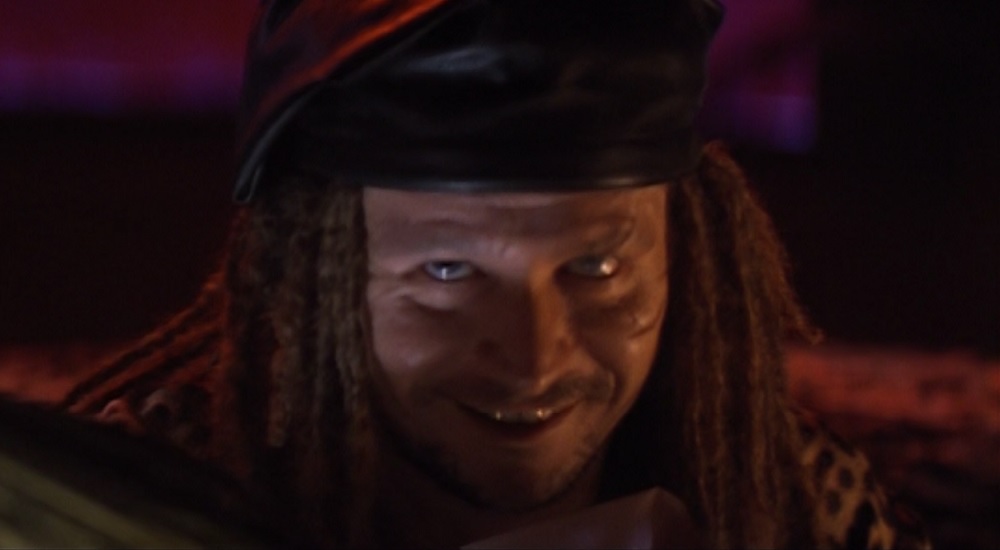
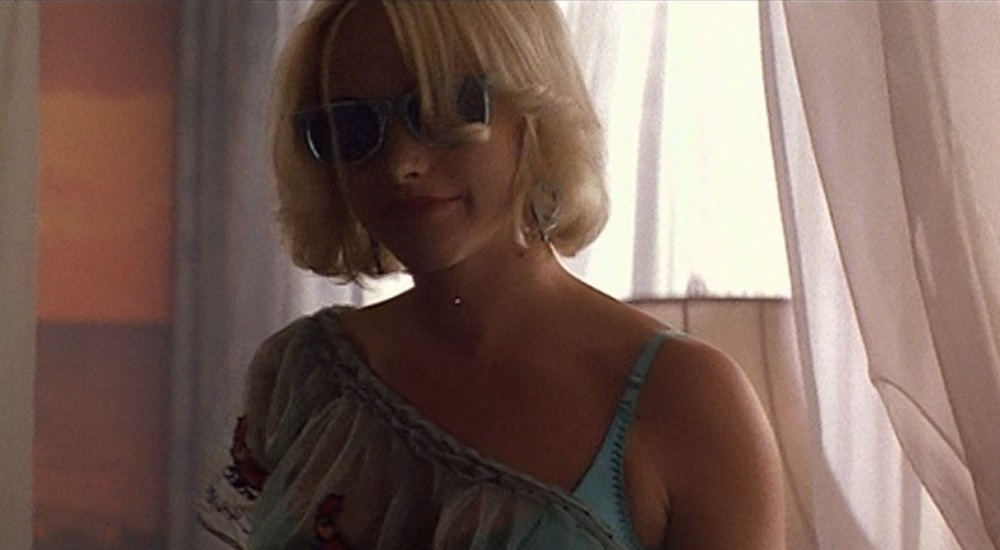
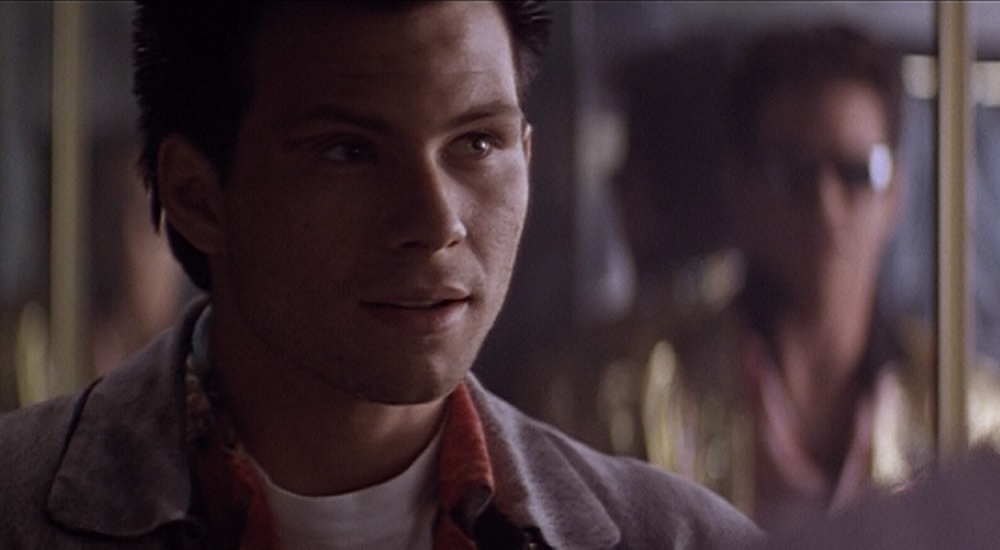
In the early nineties, Tarantino wrote a couple of screenplays, including True Romance and Reservoir Dogs. He chose Reservoir Dogs for his directorial debut and was willing to sell True Romance. In 1993, after his debut was released, he took a date to the perfect date movie: True Romance, the film he had written. And boy, did it turn out to be a good movie; great fucking movie. Just looking at the cast members rolling by in the opening credits is astonishing; seeing so many (future) stars in one ensemble cast is rare. Director Tony Scott couldn’t deal with the screenplay’s non-chronological structure, so he changed it to a linear one. But aside from that, it’s a real Tarantino movie: the sharp dialogue, the great characters, the humor, the sudden bursts of violence; it’s all there. And then there’s an amazing sequence, one of the best he ever wrote: the famous Sicilian scene with Dennis Hopper and Christopher Walken. Oh man, that is legendary. Also memorable is the brutal confrontation between Alabama and the sadistic Virgil, played by James Gandolfini. The whole movie is basically a rollercoaster in which the two main characters – Clarence (Christian Slater) and Alabama (Patricia Arquette) – fall in love, get married, kill Alabama’s pimp, take off with his coke, and head to Hollywood to sell it, stumbling into one crazy situation after another while always keeping the film’s romantic core intact. True Romance is Scott’s best film and by far the best Tarantino movie not directed by Tarantino. In other words: it’s a must-see.

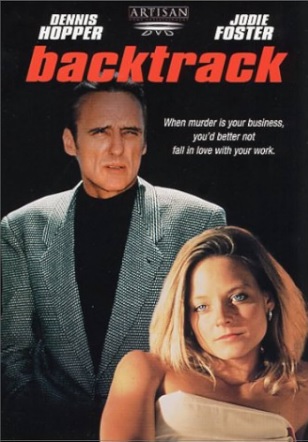
Backtrack (1990)


‘When murder is your business, you’d better not fall in love with your work.’

Directed by:
Dennis Hopper

Written by:
Rachel Kronstadt Mann, Ann Louise Bardach

Cast:
Dennis Hopper (Milo), Jodie Foster (Anne Benton), Joe Pesci (Leo Carelli), Dean Stockwell (John Luponi), Vincent Price (Lino Avoca), John Turturro (Pinella), Fred Ward (Pauling), Julie Adams (Martha), Tony Sirico (Greek), Sy Richardson (Capt. Walker)

Alright, so this is quite a strange film by Dennis Hopper. It was originally released as Catchfire, but that version was apparently so bad that Hopper had his name replaced in the credits with the pseudonym Alan Smithee. Backtrack is the 18-minutes-longer cut made for cable TV, with Hopper’s directorial credit restored.

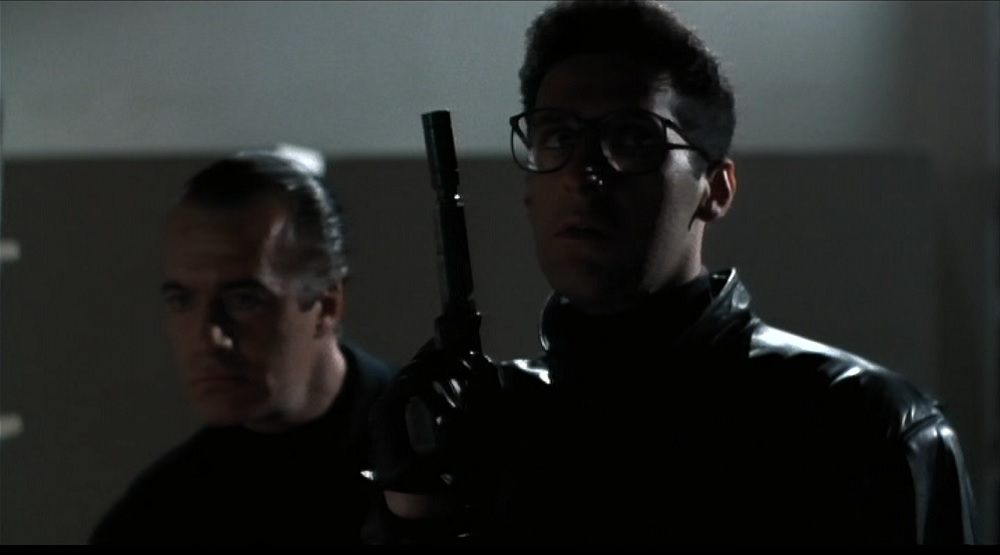
Jodie Foster plays an artist who witnesses a mafia murder. The mob – led by the explosive Leo Carelli (Joe Pesci, in the same year he gave his ultimate mobster performance in GoodFellas) – hires hitman Milo (Dennis Hopper) to silence her.

What makes it puzzling is the sheer amount of talent involved: Jodie Foster, Joe Pesci (uncredited, despite a substantial role), Dean Stockwell, John Turturro, and others. The film also features familiar faces like Charlie Sheen, Bob Dylan (!), and Tony Sirico (Paulie Walnuts from The Sopranos). Yet, despite this very impressive cast, no one is given particularly strong dialogue – not even the two leads.

The bigger problem is that the film never decides what it wants to be. Is it a tense thriller? An arthouse experiment? A romantic gangster film in the vein of Bonnie and Clyde? Or an action movie given that out of nowhere, there’s a helicopter chase? The tone shifts constantly, leaving the viewer wondering: what exactly am I watching? That question is never answered.

It’s also unclear what motivates Hopper’s character, Milo, a saxophone-playing hitman. He suddenly falls in love with his target, but why? And why does she start to reciprocate? Their relationship feels entirely unconvincing.

Originally, Hopper’s cut ran 180 minutes. It’s difficult to imagine what his true vision for the film might have been. The studio, Vestron Pictures, disliked his version and re-edited it without his consent. Hopper was furious and sued, but by then the company had already gone bankrupt.

In short, Backtrack is a curious film for many reasons, but unfortunately the final product simply doesn’t work. It’s a shame, given the remarkable cast, but the movie is proof that without a strong screenplay, even great talent can’t save the day.

Rating:

Quote:
MILO: “There’s something going on here that I really don’t understand. But I like it.”

Trivia:
The movie includes three Oscar winners: Jodie Foster, Joe Pesci and Bob Dylan; and three Oscar nominees: Dennis Hopper, Catherine Keener and Dean Stockwell.

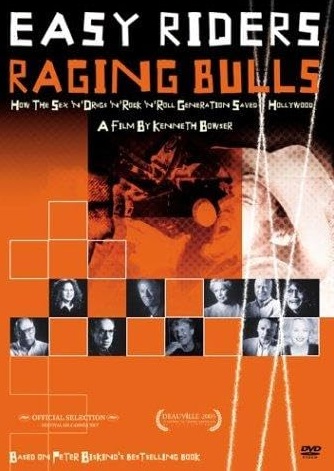
Easy Riders, Raging Bulls

BBC documentary (2003) by Kenneth Bowser, based on the book by Peter Biskind. Easy Riders, Raging Bulls: How the Sex-Drugs-and-Rock ‘N Roll Generation Saved Hollywood tells the story of Hollywood in the 1960s, a time when the studio system was in crisis. Their films had become increasingly irrelevant.

The problem was that movies were run by studios rather than directors, and the studios had lost touch with what audiences wanted to see. Then a new generation of filmmakers emerged who reconnected with viewers. Directors such as George Lucas, Steven Spielberg, Martin Scorsese, Dennis Hopper, Sam Peckinpah, Francis Ford Coppola, Arthur Penn, Warren Beatty, Robert Altman, Jack Nicholson, and Peter Bogdanovich.

“In 1963 the studio system collapsed”, says Bogdanovich. “It was over.” After the disaster of Cleopatra (1963, Joseph L. Mankiewicz, Rouben Mamoulian), the Fox lot was shut down. It became a ghost town. Television took over. The old moviegoers died off, and American films grew more and more meaningless.

Meanwhile, art theaters screening foreign films were doing very well. Many of the new generation of filmmakers learned the language of cinema from auteurs like Fellini, Godard, and Truffaut.

Outside the studio system, Roger Corman played a pivotal role in training young filmmakers to make low-budget B-movies that performed well at the box office. Jonathan Demme, Martin Scorsese, Ron Howard, and Francis Ford Coppola all started under Corman. They succeeded by targeting the youth who flocked to the thousands of drive-in theaters across the country, audiences that loved horror and action. Corman also had a knack for choosing hot topics: Hells Angels were in the news, so he made The Wild Angels (1966, Roger Corman). LSD was trendy, so he made The Trip (1967, Roger Corman) based on a screenplay by Jack Nicholson.

In Hollywood, directors proved just how out of touch the studios were. Executives hated Bonnie and Clyde, but young people loved it. Studios had to adapt. Paramount, in deep trouble, was taken over by Gulf & Western, led by the eccentric Austrian Charlie Bluhdorn. He brought in the now-legendary Bob Evans as a producer, who helped turn the studio around. How? By giving directors more creative control. Like he did with Polanski, who made Rosemary’s Baby in 1968.

At Columbia, Bert Schneider also trusted and empowered directors, resulting in massive hits, most notably Easy Rider, released in 1969. The drug-fueled chaos of director Dennis Hopper and his team is visible on screen. It was a great film, and audiences loved it. It was the kind of movie that never would have been made under the old studio system. The same goes for Midnight Cowboy by John Schlesinger, also released in 1969 – an outstanding film. That same year saw The Wild Bunch by Sam Peckinpah, which pushed violent realism to a whole new level.

The 1970s began, and the director’s era was in full swing. Peter Bogdanovich released The Last Picture Show in 1971, a film rich in emotional depth and sexual content, more than audiences were used to at the time. Dennis Hopper tried to follow up on Easy Rider with The Last Movie, but botched the edit due to his drug use and constant partying. “I had final cut, but I cut my own throat,” he says in the documentary.

In 1972, Paramount released The Godfather in 4,000 theaters simultaneously, a massively successful strategy. The history of that production was recently chronicled in the excellent miniseries The Offer. Coppola had now become one of the greats. He used his influence to bring George Lucas back to Hollywood, where he made the wildly successful American Graffiti in 1973 – a film studios didn’t understand, but youth audiences loved. That same year marked the rise of another major talent: Martin Scorsese, whose Mean Streets won over critics and audiences alike with its originality and authenticity.

But 1973 belonged to Warner Bros., which released The Exorcist by William Friedkin. Using the same wide-release strategy as The Godfather, it became a huge box office hit. It was Friedkin’s second success after The French Connection, cementing his status as one of the untouchable directors of the time.

By now, the auteurs had taken over Hollywood. This led to artistic triumphs like Chinatown (1974). But the young directors hadn’t forgotten Corman’s trick of attracting young audiences. In 1975, Spielberg released Jaws, a film that redefined what success looked like in Hollywood. Corman said: “When I saw Jaws I thought: these guys know what I’m doing, and they have the money and talent and skills to do it better.” George Lucas took it even further with Star Wars in 1977. The age of the blockbuster had arrived.
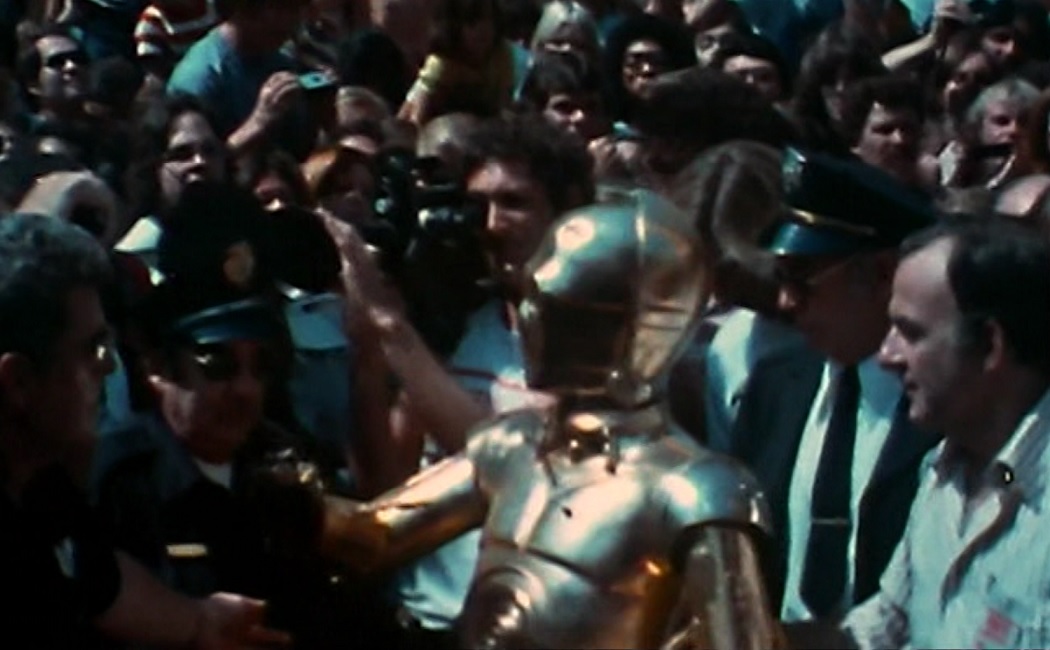
It had taken a decade, but Hollywood was back on its feet. Expensive B-movies like Alien, Superman, and their sequels became the new studio model. For about ten years, directors ruled. That era came to an end in the late ’70s, but it was a glorious decade that produced countless classics – films still regarded today as some of the greatest ever made.
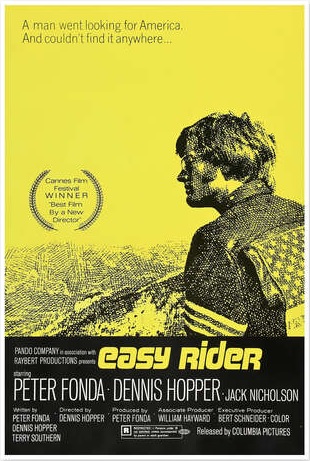
Easy Rider

Director: Dennis Hopper
Written by: Peter Fonda, Dennis Hopper, Terry Southern
Cast: Peter Fonda, Dennis Hopper, Jack Nicholson

Year / Country: 1969, USA
Running Time: 95 mins.

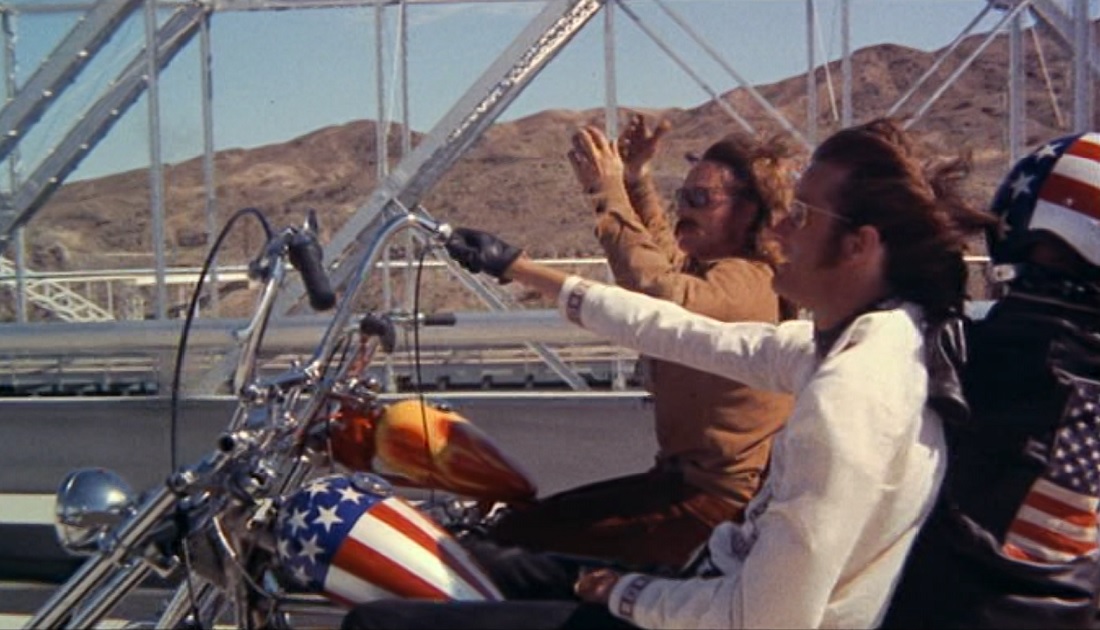
Two American bikers, Billy (Dennis Hopper) and Captain America (Peter Fonda), make a drug deal in Los Angeles, selling a stash of cocaine. They stash the money in plastic tubes hidden inside Captain America’s gas tank, which is decorated in stars and stripes like the American flag. Then they hit the road, heading for the Mardi Gras festival in New Orleans.

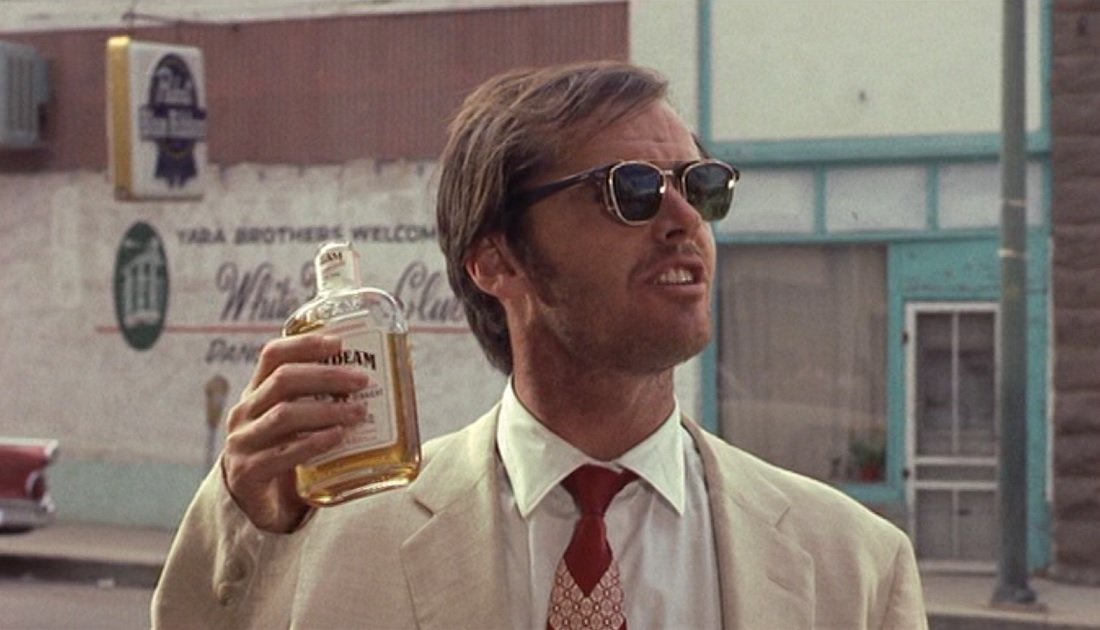
These two are counterculture figures; bikers, yes, but more hippie than outlaw. They ride through the American South and Southwest, camping under the stars, smoking grass by the fire, and drifting freely. Along the way, they encounter fellow wanderers, free-spirited hippie women, and the memorable, alcoholic lawyer George Hanson (Jack Nicholson).

Easy Rider has a unique atmosphere all its own. The film’s striking images of wide-open, desolate landscapes, paired with its incredible rock soundtrack, create a dreamlike sense of freedom. It’s a road movie, yes, but also a time capsule. The tagline sums it up perfectly: ‘A man went looking for America. And couldn’t find it anywhere…’ Throughout the journey, they meet farmers, hippies, rednecks – a cross-section of America. But beneath it all is a deeper tension: a clash between the angry and the peaceful.

The film’s marijuana-smoking scenes feel genuine, and the acid trip near the end is raw and unsettling – likely because the cast actually used real drugs during filming. That honesty helps make Easy Rider the ultimate hippie movie, capturing the spirit and disillusionment of its era.

The film was a surprise box office success, shaking up the Hollywood system and briefly shifting creative power to the directors. For a moment, they – not the studios – understood what audiences really wanted to see. The film became a landmark of New Hollywood, capturing the spirit of the 1960s and earning Hopper an Academy Award nomination for Best Original Screenplay.

Rating:

Biography: Dennis Hopper (1936, Kansas – 2010, Los Angeles) was an American actor, director, writer, and artist known for his intense screen presence and deep ties to countercultural cinema. Hopper began his career in the 1950s with small roles in films like Rebel Without a Cause (1955), alongside James Dean. His early work in Hollywood was promising, but his rebellious nature and substance abuse problems often put him at odds with studios. He achieved cult status with Easy Rider (1969), which he co-wrote, directed, and starred in alongside Peter Fonda. He continued his directing career with a mix of critical and commercial disappointments, as well as a few moderately successful films. As an actor, however, he delivered memorable performances in several major hits, including Blue Velvet and Speed. Beyond his film work, Hopper was also a prolific photographer and painter, with his artwork exhibited in galleries around the world.

Filmography: Mary Jennifer at the Beach (1964, short), Easy Rider (1969), The Last Movie (1971), Out of the Blue (1980), Colors (1988), Catchfire (1990), The Hot Spot (1990), Chasers (1994), Homeless (2000, short), Pashmy Dream (2008, short)