Hunter S. Thompson in 1970 – Decadentie en verderfelijkheid in het Zuiden

‘Just pretend you’re visiting a huge outdoor loony bin. If the inmates get out of control we’ll soak them down with mace.’
– The Kentucky Derby is Decadent and Depraved (1970)

‘The Kentucky Derby is Decadent and Depraved’ is een sportartikel dat Thompson schreef in 1970 voor het controversiële blad Scanlan’s Monthly, dat slechts een kort leven beschoren was (1970-1971).

Normaal wijd ik alleen blogs aan Thompson’s boeken (tot duver over ‘Hell’s Angels’ en ‘The Rum Diary’), maar voor dit artikel van Thompson maak ik een uitzondering. Hier zijn twee redenen voor; 1.) Het is misschien wel het eerste echte Gonzo-verhaal dat Thompson schreef en 2.) Thompson ontmoet in dit verhaal de Britse cartoonist Ralph Steadman met wie hij een levenslange vriendschap en samenwerking zou ontwikkelen. Steadman zou ook een (bij)personage worden in veel van Thompson’s latere verhalen, zoals ‘Fear and Loathing: On the Campaign Trail ’72’ en ‘The Curse of Lono’.

In het verhaal doet Thompson verslag van een beroemde jaarlijkse paardenrace, ‘The Kentucky Derby’, die plaatsvindt in Louisville, Kentucky, Thompson’s geboorteplaats. Het verslag lijkt op een voorproefje op ‘Fear and Loathing in Las Vegas’, dat immers ook begint als rapportage van een race (The Mint 400).

In plaats van de Zuiderse paardenrace zelf te verslaan, focust Thompson zich puur op de dronken, ellendige, door inteelt verwekte bezoekers van de race. Hij doet dit samen met zijn nieuwe partner in crime, Ralph Steadman, die vanuit London is gestuurd om sketches te maken van het paardenspektakel.

Ook Steadman is vooral geïnteresseerd in het tekenen van bezoekers. Gedurende het verhaal zoeken Thompson en Steadman doorlopend naar het perfecte ‘Kentucky Derby’ varkensgezicht voor de hoofdillustratie. Maar op het einde van het evenement, na dagen van alcoholconsumptie, kijken ze in de spiegel en constateren ze dat ze zelf de figuren zijn geworden die ze wilden karakteriseren.

Het artikel werd niet wijdverspreid, maar trok wel de aandacht van veel journalisten vanwege de ongewone en bijzondere stijl. Bill Cardoso (redacteur van The Boston Globe Sunday Magazine) noemde het artikel een doorbraak. ‘This is it, this is pure Gonzo. If this is a start, keep rolling.’ En zo geschiedde…

Icon 13 - Gonzo

Dromen en dronken deliriums in San Juan (Over ‘The Rum Diary’ van Hunter S. Thompson)

‘Sounds of a San Juan night, drifting across the city through layers of humid air; sounds of life and movement, people getting ready and people giving up, the sound of hope and the sound of hanging on, and behind them all, the quiet, deadly ticking of a thousand hungry clocks, the lonely sound of time passing in the long Caribbean night.’
– The Rum Diary (1998)

The Rum Diary 1

Door Jeppe Kleijngeld

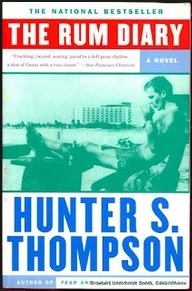
In 1960 bracht beroemd Gonzo journalist Hunter S. Thompson wat tijd door in San Juan, Puerto Rico waar hij werkte voor een sportblad, het begin van zijn carrière als sportverslaggever naast politieke junkie en toonaangevend auteur van de countercultuur beweging. Het blad ging kopje onder en Thompson solliciteerde bij de Engelstalige krant ‘The San Juan Star’, maar hij werd afgewezen. Terug in de Verenigde Staten kreeg hij in 1961 een baantje als beveiligingsbeambte bij de waterbronnen van Big Sur, Californië. In deze periode van acht maanden schreef hij twee boeken: ‘Prince Jellyfish’ en ‘The Rum Diary’. Thompson probeerde een uitgever te vinden voor deze boeken en faalde. ‘Prince Jellyfish’ is nooit uitgegeven, maar ‘The Rum Diary’ uiteindelijk wel in 1998.

‘The Rum Diary’ fictionaliseert Thompson’s ervaringen in Puerto Rico en zijn kwaliteiten als schrijver spatten van de pagina’s van deze prachtige roman. Het verhaal gaat over de jonge journalist Paul Kemp die bij een verlopen krant terecht komt in Puerto Rico, waar een zooitje dronken en parasitaire journalisten het proberen zo lang mogelijk uit te zingen voordat de krant definitief bankroet gaat.

Kemp heeft het gevoel dat hij al veel jaren verspild heeft, maar hij loopt tegen nieuwe mogelijkheden aan. Chenault – de sensuele vriendin van een collega – doet zijn lustgevoelens dermate opkomen dat het bijna te veel wordt. Dan is er de gladde PR-man Sanderson, die betrokken is bij louche dealtjes in de bloeiende economie van het Caribische land, waardoor Kemp geconfronteerd wordt met zijn eigen ambitieniveau. Wil hij voor weinig geld blijven schrijven over wat hij observeert? Of wil hij die kennis inzetten om rijk te worden, zoals Sanderson dat doet?

Hunter S. Thompson aan het werk in Aruba. De foto is gemaakt bij de Aruba Palm Beach Club met op de achtergrond het Aruba Caribbean Hotel. Thompson bezocht Aruba terwijl hij woonde op Puerto Rico.

Hunter S. Thompson aan het werk in Aruba. De foto is gemaakt bij de Aruba Palm Beach Club met op de achtergrond het Aruba Caribbean Hotel. Thompson bezocht Aruba terwijl hij woonde op Puerto Rico.

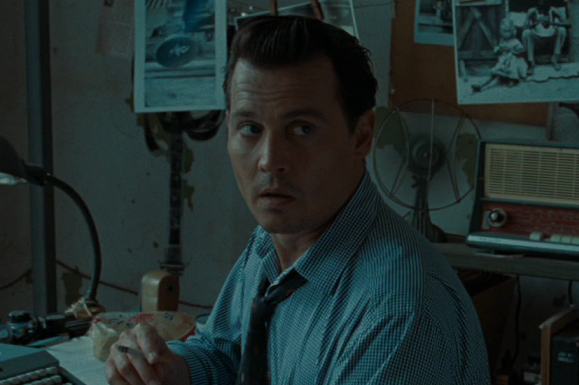
‘The Rum Diary’ is een roman over de jaren 60’ toen de wereld nog open lag voor Westerlingen om overal in te duiken en het welvaartsniveau lager lag, maar de hebzucht des te groter was. Ook is het een verhaal over liefde, drank, journalistiek en jezelf ontdekken. Kemp is nog niet het extreme Gonzo alter ego van Thompson dat Raoul Duke zou worden in ‘Fear and Loathing in Las Vegas’, maar een iets gematigdere persoonlijkheid. Johnny Depp die Kemp portretteerde in de verfilming zei dat hij Kemp speelde als een jonge Raoul Duke die nog op zoek was naar zijn stem.

Thompson’s kracht als schrijver ligt vooral in het typeren van groepen mensen, tijdsbeelden en plaatsen. Dat doet hij uitstekend in het uiterst sfeervolle ‘The Rum Diary’. Ik kreeg heel sterk de neiging om Al’s Backyard op te zoeken en me te buiten te gaan aan rum, bier, sigaretten en hamburgers.

Thompson’s legendarische humor is ook al regelmatig aanwezig en doet soms denken aan de paranoia hilariteit van ‘Fear and Loathing in Las Vegas’, zoals in de volgende passage; ‘We spend the next six hours in a tiny concrete cell with about twenty Puerto Ricans. We couldn’t sit down because they had pissed all over the floor, so we stood in the middle of the room, giving out cigarettes like representatives of the Red Cross. They were a dangerous-looking lot. Some were drunk and others seemed crazy. I felt safe as long as we could supply them with cigarettes, but I wondered what would happen when we ran out. The guard solved this problem for us, at a nickel a cigarette. Each time we wanted one for ourselves we had to buy twenty – one for every man in the cell.’

De verfilming van ‘The Rum Diary’ heeft net als de boekuitgave lang op zich laten wachten. In 2000 werd een poging gedaan om het project van de grond te krijgen met Johnny Depp en Nick Nolte. De poging mislukte en de toen nog levende Thompson schreef een woedende brief naar de productiefirma en noemde het project een ‘waterhead fuckaround’. Een tweede poging tot verfilming in 2002 mislukte eveneens en uiteindelijk ging de productie pas in 2009 – na de dood van Thompson in 2005 – van start met Bruce Robinson (‘Withnail and I’) als regisseur. De film kwam in 2011 uit en kreeg gemengde kritieken. Een opvallend verschil met het boek is de integratie van de karakters Sanderson en Yeamon. Ook legt de desperate krantenuitgever Lotterman in de film niet het loodje aan het einde van het verhaal in tegenstelling tot het boek.

Wordt binnenkort vervolgd met een beschrijving van Hunter S. Thompson’s tweede boek ‘Hell’s Angels’.

Icon 11 - Bird

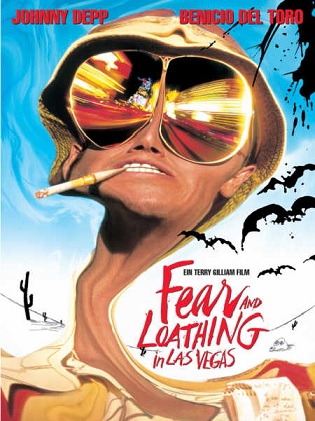
Fear and Loathing in Las Vegas

Director: Terry Gilliam
Written by: Hunter S. Thompson (book), Terry Gilliam (screenplay), Tony Grisoni (screenplay), Tod Davies (screenplay), Alex Cox (screenplay)
Cast: Johnny Depp, Benicio Del Toro, lot’s of cameo’s including; Tobey Maguire, Gary Busey, Ellen Barkin, Christina Ricci, Cameron Diaz, Flea and Harry Dean Stanton

Year / Country: 1998, USA
Running Time: 118 mins.

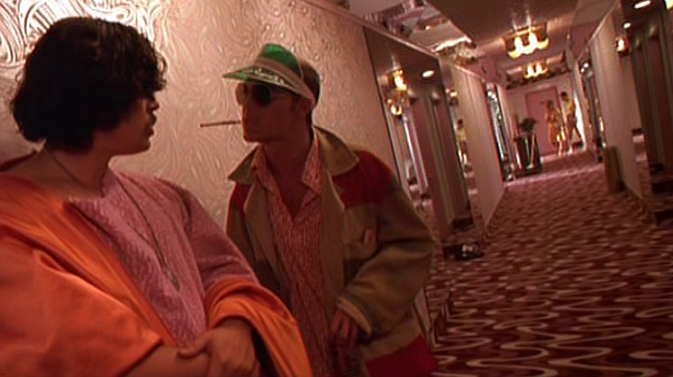
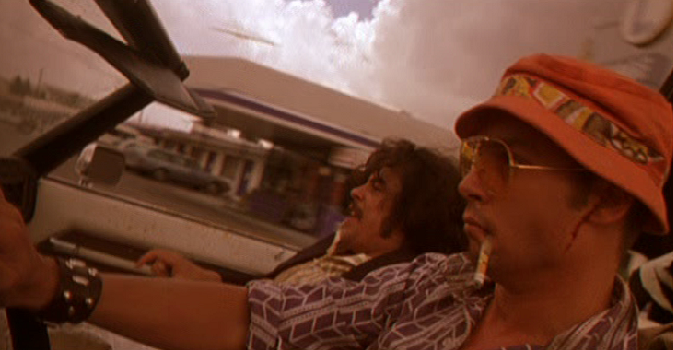
It is the foul year of our lord 1971 and Gonzo journalist Hunter S. Thompson (Raoul Duke in the story) and his Samoan attorney Dr. Gonzo decide to undertake the ultimate trip of the seventies. The official assignment is to cover the Mint 400 desert race in Las Vegas, but they have something bigger in mind. They want to find the American dream. Armed to the teeth with highly dangerous narcotics, they head out to Las Vegas in their fire red convertible… Some trip it’s gonna be…

While searching for the American dream, Thompson and Dr. Gonzo only find fear and loathing. Intolerable vibrations in a town not at all suitable for the use of psychedelic drugs. The atmosphere is extremely menacing, but as they behave as animals, nobody even notices them. Vegas turns out to be a savage town. And while soldiers are dying in Vietnam, used car dealers from Dallas throw their money in the slot machines, Debbie Reynolds sings in the Desert Inn and the national police force meets at a congress about marijuana. Thompson and Dr. Gonzo are there.

Thompson’s novel ‘Fear and Loathing in Las Vegas’, which was first published in two parts in Rolling Stone Magazine, became a cultural phenomenon (and my personal favorite book of all time). The movie adaptation by Terry Gilliam is a literal one. Thompson wrote his famous novel Gonzo style, which means the events are told through the eyes and vision of the author who fully participates in the story himself. Since Thompson was heavily under the influence during the writing process, he claims he can’t fully remember which parts truly happened and which ones did not (fully). Therefore this literal adaptation is a highly enjoyable blast, though not always realistic.

There is one downside to director Gilliam’s literal approach. In the novel, all the psychedelic escapades form an integral part of what is obviously a literary masterpiece. In the translation to film however, these escapades sometimes appear to be useless fuckarounds, especially during the final part of the film. However, that is a minor criticism for this is obviously a highly enjoyable movie. Depp and Del Toro are both terrific in their method acting approaches to their roles. Thompson’s poetic writing, beautifully narrated by Depp in voice-over, runs through the movie that captures the era and hallucinogenic nightmare perfectly. Combined with a beautiful seventies soundtrack and Grade A settings, the great time capsule that is Fear and Loathing in Las Vegas is complete. Also, it is one of the funniest movies of all time. So buy the ticket and take the ride.

Rating:

Biography: Terry Gilliam (1940, Minneapolis) started his career as the only American member of the British comedy group Monty Python. As animator, he was responsible for the bizarre cartoons used in the sketches. In 1975 he directed his first movie for Monty Python, namely Monty Python and the Holy Grail. After his period with Monty Python, he moved on as independent director and had remarkable success with his bizarre masterpiece Brazil in 1985. After that success, things went downhill for Gilliam; The Adventures of Baron Munchausen became an expensive flop and the disastrous production of the never completed Don Quichotte became legendary. Despite these problems, Gilliam returned and directed a number of valuable contributions to cinema, including sci-fi masterpiece Twelve Monkeys and cult classic Fear and Loathing in Las Vegas.

Filmography: Storytime (1968, short) / The Miracle of Flight (1974, short) / Monty Python and the Holy Grail (1975) / Jabberwocky (1977) / Time Bandits (1981) / The Crimson Permanent Assurance (1983, short) / The Adventures of Baron Munchausen (1988) / The Fisher King (1991) / Twelve Monkeys (1995) / Fear and Loathing in Las Vegas (1998) / The Brothers Grimm (2005) / Tideland (2005) / The Imaginarium of Doctor Parnassus (2009) / The Legend of Hallowdega (2010, short) / The Wholly Family (2011, short) / The Zero Theorem (2013) / The Man Who Killed Don Quixote (2018)

The Rum Diary


Director:
Bruce Robinson
Written by: Bruce Robinson (screenplay), Hunter S. Thompson (novel)
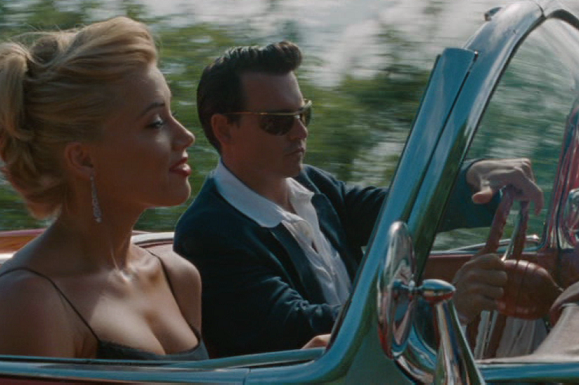
Cast: Johnny Depp, Amber Heard, Michael Rispoli, Aaron Eckhart

Year / Country: 2011, USA
Running Time: 115 mins.

The title ‘The Rum Diary’ can mean two things. Hunter S Thompson’s novel that is told in this movie or The San Juan Star, the near bankrupt Puerto Rican newspaper where main character Paul Kemp (Thompson’s alter ego) takes a job as journalist. Why? Because the entire writing staff is completely drunk. The same seems to apply for the whole population of Puerto Rico in the 1960’s, the setting of The Rum Diary.

This is a story about alcohol and lots of it. But, whenever Kemp takes time off of drinking, he engages in a compelling journalistic endeavor, shining light on the culture and problems of the relatively unknown country he resides in. This is also a love story. Kemp falls head over heels for the stunning Chenault, the girlfriend of corrupt businessman Sanderson, who wants Kemp to write stories in favor of his unethical real estate plans.

Kemp’s dilemma, going along with the flow or exposing the ‘bastards’ as he puts it, is the backbone of this movie. The pace is as relaxed as the setting and director Robinson succeeds well in translating the mood of Thompson’s novel to the white screen. The cast is on a roll as well. Depp, who once said he would like to play Thompson every few years, is solid as always. He gets excellent comic support from press associates Michael Rispoli, Richard Jenkins and Giovanni Ribisi. Amber Heard and Aaron Eckhart play Chenault and Sanderson, whose characters add the necessary intrigue and substance to the story.

Obviously this is no Fear and Loathing in Las Vegas and the drug fuelled craziness portrayed in that movie is largely absent. This is Thompson Light; a smaller movie without too much excessive behavior. Director Robinson did add one pretty funny drug scene that can be considered as a wink to big brother Fear and Loathing. In The Rum Diary, the author Thompson is still searching for his unique voice and it is pleasant to join him on this quest. It is best to keep some rum within reach though as you might get thirsty underway.

Rating:

Biography: Bruce Robinson (1946, Broadstairs, Kent) started his career as an actor, but did not find it fulfilling nor lucrative. He started writing screenplays and in 1984, his Cambodia script The Killing Fields was turned into a memorable war movie by Roland Joffé. With his second script, he chose to direct himself. Withnail & I, which is largely autobiographical, became a cult classic. Robinson’s subsequent films, the advertising satire How To Get Ahead in Advertising and the serial-killer thriller Jennifer 8, while less memorable than his debut, still showed Robinson’s talents. In 2011 he brought The Rum Diary, a novel by legendary writer and Gonzo journalist Hunter S. Thompson, to the screen which received mixed reviews.

Filmography: Withnail & I (1987) / How to Get Ahead in Advertising (1989) / Jennifer Eight (1992) / The Rum Diary (2011)