Blow

Director: Ted Demme
Written by: Bruce Porter (book), David McKenna (screenplay), Nick Cassavetes (screenplay)
Cast: Johnny Depp, Penélope Cruz, Franka Potente, Rachel Griffiths

Year / Country: 2001, USA
Running Time: 118 mins.

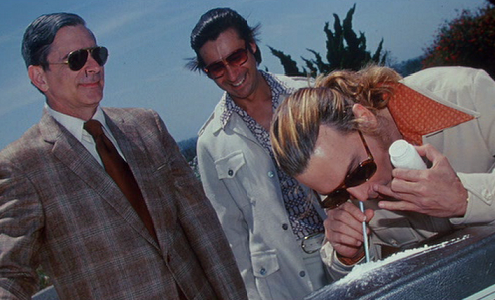
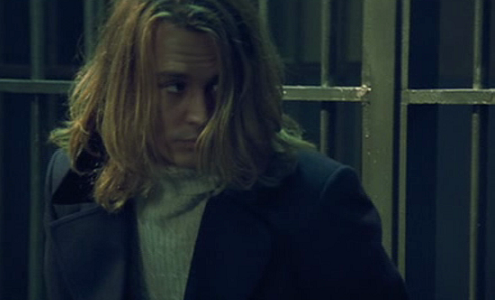
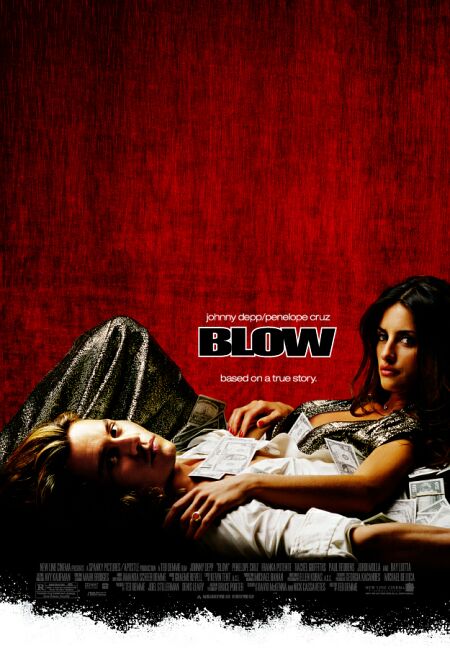
Biopic about George Jung, perhaps the biggest American cocaine smuggler of all time. The movie begins with George’s youth in Massachusetts, where he sees his dad working his ass off and ending up poor anyway. He decides he wants to become rich. George moves to California in the late sixties where he becomes a huge marijuana dealer and importer.

After the death of his girlfriend and a prison sentence he picks up a new trade; importing cocaine. After not too long, he is dealing directly with Pablo Escobar and his Medellín Cartel. 85 percent of all cocaine used in the United States in that time – the disco eighties – now comes from Jung. Then he meets a new love interest: the Colombian Mirtha (Cruz). This means trouble mildly put. In addition to that, a conflict ensues with his business partner and Jung is headed for the end. His empire was built too swiftly; the foundations were not strong enough.

Within the rise and fall crime biopic genre, Blow is a successful addition. It leans a bit heavy on GoodFellas with the voice-over, the soundtrack, the editing and casting (Ray Liotta plays Jung’s dad), but after a while you notice that Blow is not just another rip-off gangster movie. It is about a man and the choices he makes. In displaying that, the movie succeeds because ultimately it touches you where it matters; in the heart.

Rating:

Biography: Ted Demme (1963, New York – 2002, Santa Monica) was an American film director and producer. His career had modest beginnings – starting as a production assistant at MTV, he later created the cable network’s seminal hip-hop show Yo! MTV Raps. Later, he directed several movies, TV episodes and documentaries. He frequently worked with Denis Leary and was the nephew of movie director Jonathan Demme. In 2002, one year after directing the successful Blow, he died from an accidental cocaine induced thrombotic heart attack. He was only 38 years old.

Filmography: Yo! MTV Raps (1988, TV series) / No Cure for Cancer (1992, TV doc) / The Bet (1992, short) / Who’s the Man? (1993) / The Ref (1994) / Beautiful Girls (1996) / Homicide: Life on the Street (1994-96, TV episodes) / Gun (1997, TV episode) / SUBWAYStories: Tales from the Underground (1997, TV segment) / Denis Leary: Lock ‘N Load (1997, TV) / Snitch (1998) / Life (1999) / Action (1999, TV episode) / Blow (2001) /
A Decade Under the Influence (2003, doc)

Cult Radar: Part 8

FilmDungeon is glad to explore the video trenches to find that oddball treasure between the piles of crap out there. Of Course, a treasure in this context can also be a film that’s so shockingly bad it’s worth a look, or something so bizarre that cult fans just have to see it. Join us on our quest and learn what we learn. Hopefully we’ll uncover some well-hidden cult gems.

Researched by: Jeppe Kleijngeld

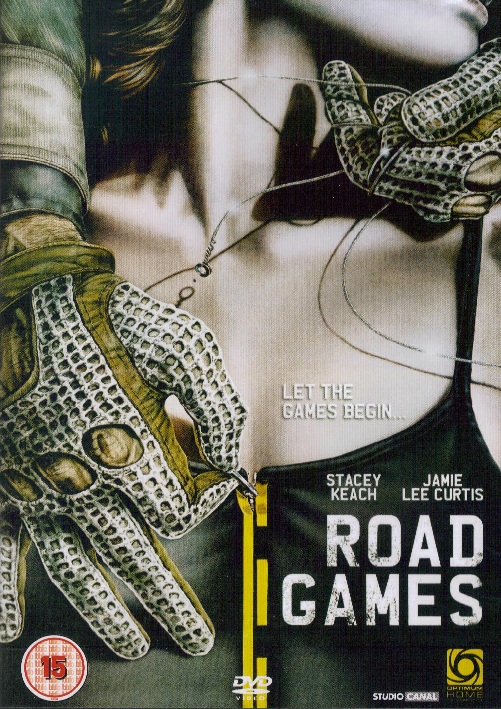
Roadgames (Australia, 1981)

Directed by: Richard Franklin
Written by: Richard Franklin, Everett De Roche
Cast: Stacy Keach, Jamie Lee Curtis, Marion Edward, Grant Page

Pat Quid (Stacy Keach) is an American ‘truckie’ in Australia, assigned to drive a load of pork from Melbourne to Perth. Along the road in the outback, he gets suspicious of a fellow driver. He suspects the man might be a wanted serial killer and shares his suspicions with hitchhiker Pamela (Jamie Lee Curtis). Then she vanishes and the deadly cat and mouse game with the killer really takes off. Roadgames is an Ozploitation flick released in 2008 by Optimum Home Entertainment, who released many other Ozploitation classics around that time following the success of Not Quite Hollywood: The Wild, Untold Story of Ozploitation (2008). It is clearly inspired by Hitchcock of whom director Richard Franklin (Patrick, Psycho II) is a major fan. Although the screenplay certainly has elements of engaging mystery, an adequate dosage of tension is missing in its direction. The musical score is composed by Mad Max’s Brian May (not to be confused by Queen’s Brian May). The killer is portrayed by famous Australian stunt performer Grant Page.

The Car (USA, 1977)

Directed by: Elliot Silverstein
Written by: Michael Butler Dennis Shryack, Lane Slate
Cast: James Brolin, Kathleen Lloyd, John Marley

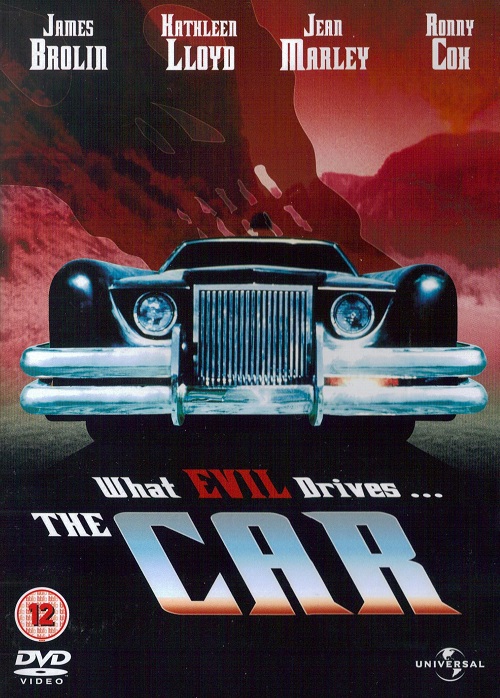
A large, black two-door sedan is killing people randomly in a small desert town, blaring its horn rhythmically whenever it makes a kill. There doesn’t appear to be a driver in the car, as if Evil itself is behind the steering wheel. Sheriff Wade Parent (James Brolin) must find a way to stop the sedan, while also protecting his beloved ones. The Car is an unusual and entertaining thriller from the director of Cat Ballou. Although the dialogues and some of the acting sucks, the pretty awesome car action, the surroundings (Utah) and some eerie moments make it a decent movie in its kind.

Patrick (Australia, 1978)

Directed by: Richard Franklin
Written by: Everett De Roche
Cast: Susan Penhaligon, Robert Thompson, Robert Helpmann

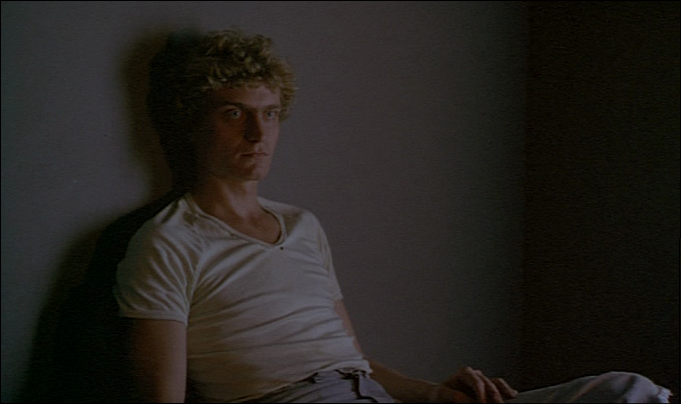
A comatose killer named Patrick uses psychokinesis to infiltrate the life of his new nurse, the attractive Kathy (Penhaligon). Low budget ozzy flick does little to shock the viewer. It is, however, stylishly directed by director Franklin, who knows some tricks to create suspense. The cinematography and editing are also pretty well done. Thompson is at times effectively scary as Patrick, but because the film is overlong and outdated, he won’t get much shock out of the contemporary viewer.

Long Weekend (Australia, 1978)

Directed by: Colin Eggleston
Written by: Everett De Roche
Cast: John Hargreaves, Briony Behets, Mike McEwan

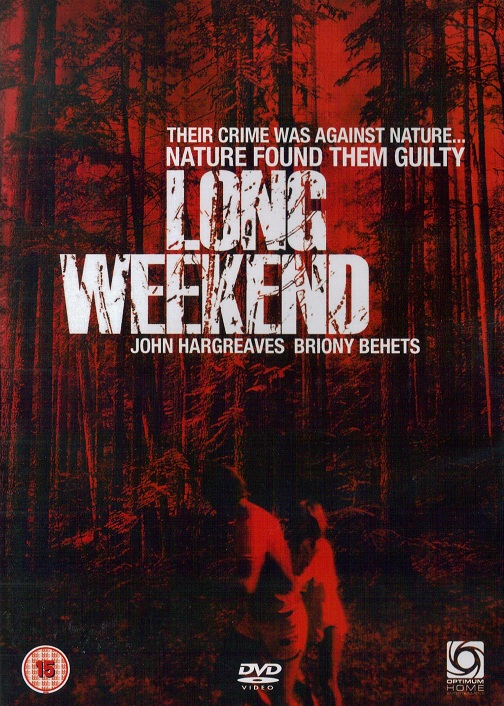
‘Their crime was against nature… Nature found them guilty.’ When this is your tagline, you know you got a potential cult classic on your hands. Long Weekend is about a loathsome couple who head into nature for a camping trip. They arrive at a beautiful, abandoned beach area and start treating nature like shit. Their irreverent behavior causes repugnance from the viewer. Luckily nature feels the same way and gives them what they got coming. Hilarious when you think about it and very satisfying as well. From the writer of Patrick and Roadgames and the director of Fantasm Comes Again comes a very awesome Australian cult flick. Besides funny, Long Weekend is also effectively chilling when it needs to be. Excellent work.

Election (Hong Kong, 2005)
OT: Hak se wui

Directed by: Johnnie To
Written by: Nai-Hoi Yau, Tin-Shing Yip
Cast: Simon Yam, Tony Leung Ka Fai, Louis Koo

Stylish crime film by Johnnie To about the election of a new Triad boss. Two rivals, Big D and Lok, both want the position which leads to a bloody internal battle. What is always good about Johnnie To’s gangster flicks is that there is a slight absurd touch about them. Election also has this in spades. The result is a violent, comical Hong Kong movie that offers some insight into the workings of a Triad family. Followed one year later by Election 2.


Patrick

Death Race 2

Director: Roel Reiné
Written by: Paul W.S. Anderson, Tony Giglio
Cast: Luke Goss, Lauren Cohan, Sean Bean, Ving Rhames

Year / Country: 2010, South Africa
Running Time: 96 mins.

Direct-to-video sequel to Paul W.S. Anderson’s Death Race from 2008, which was in itself a remake of the Roger Corman produced cult movie Death Race 2000 from 1975. Anderson did come up with the story, but the director of this futuristic actioner is Dutchman Roel Reiné.

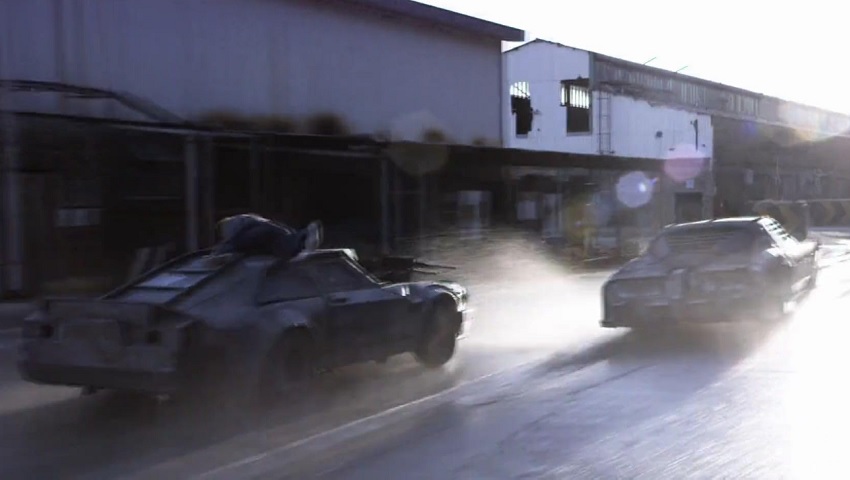
Storywise, this is a prequel to the first film and tells the origins of legendary driver Frankenstein. In the near future, prisons are run by private corporations, and in order to optimize the profits, they organise bloody spectacles that viewers can watch through paid internet streams. First, inmates fight one on one in bloody battles, but as audiences get bored, a deadly race is organised with fast cars armed with machine guns, napalm and missile launchers. Inmate Luke (Luke Goss), a talented getaway driver, is forced to participate.

In a film like this, it’s inevitable to encounter some implausibilities, which could be forgivable if the usually talented cast weren’t burdened with poorly written roles and clunky dialogue. The high-speed action is executed with skill, though the spectacular opening chase scene sets a standard that the rest of the film struggles to match.

One highlight is the ending – a satisfying homage to the 1975 cult classic that fans will undoubtedly appreciate.

If you’re seeking bloody violence, this film delivers in spades. Just don’t expect much beyond that.

Rating:

Biography: Roel Reiné (1969, Eindhoven, The Netherlands) went to the States after the success of his first film The Delivery. He had breakfast with Dutch director Paul Verhoeven, who told him, ‘you have to live here to make movies.’ Reiné made one more movie in The Netherlands before he moved to the States.

Filmography (a selection): The Delivery (1999), Adrenaline (2003), Pistol Whipped (2008), Drifter (2008), Deadwater (2008), Wolfseinde (2008-2009, TV Series), The Marine 2 (2009), The Lost Tribe (2010), Death Race 2 (2010), Death Race 3: Inferno (2013), Michiel de Ruiter (2015), Hard Target 2 (2016), Redband (2018)

The Public Enemy


All his life he took what he wanted…Why not women?

Directed by:
William A. Wellman

Written by:
Kubec Glasmon
John Bright
Harvey F. Thew

Cast:
James Cagney (Tom Powers), Jean Harlow (Gwen Allen), Edward Woods (Matt Doyle), Joan Blondell (Mamie), Donald Cook (Mike Powers), Leslie Fenton (Nails Nathan), Beryl Mercer (Ma Powers), Robert O’Connor (Paddy Ryan), Murray Kinnell (Putty Nose)

William A. Wellman’s The Public Enemy stands as one of the defining works of early gangster cinema. Released in 1931 – the same year as Little Caesar starring Edward G. Robinson – it helped kick off a gritty, hard-hitting genre that would become a Hollywood staple.

The film opens in industrial America circa 1909, where barrels of bootleg booze roll through the streets and petty crime leads to organized underworld dealings. At the heart of the story are two Irish-American youths who drift into gang life. One of them is Tom Powers, a volatile and ambitious thug played by the electric James Cagney in a star-making performance.

Cagney’s Tom Powers isn’t just another gangster – he’s a smoldering embodiment of the American outlaw spirit, tough, unpredictable, and ultimately doomed. And while the film famously features Cagney’s brutal shooting of a horse (what is it with gangsters and horses?), it’s the iconic grapefruit scene – where he smashes a half grapefruit into Mae Clarke’s face – that has become the movie’s enduring image.

Though Edward G. Robinson’s Little Caesar beat The Public Enemy to theaters by a few months, Wellman’s film surpasses it in terms of visual style and production value. Beautifully shot with a sharp eye for period detail, the direction gives the film a sense of realism and cinematic flair that feels advanced for its time. Interestingly, the film’s lead role was originally assigned to Edward Woods, with Cagney cast as his sidekick. But during rehearsals, Wellman recognized Cagney’s screen presence and wisely switched the roles. The result is one of the most memorable debuts in film history; Cagney utterly commands the screen.

The story charts Tom Powers’ rise through the criminal ranks during Prohibition, chronicling his growing influence and inevitable downfall. Like many gangster films of the era, such as Scarface (1932), The Public Enemy operates as a cautionary tale. While it thrills with its violence and bravado, it ultimately condemns the gangster lifestyle. As Powers’ actions begin to take a toll on those around him, the film steers toward its grim, uncompromising conclusion. Cagney’s final line – “I ain’t so tough” – rings with bitter irony.

The Public Enemy marked the beginning of two major cinematic milestones: the emergence of James Cagney as a major star and the ascendance of the gangster film as a serious Hollywood genre. Nearly a century later, it remains a landmark of American cinema: stylish, shocking, and still relevant.

Rating:

Quote:
PADDY RYAN: “As far as I’m concerned there’s only two kinds of people: Right and wrong. Now, I think you’re right. You’ll find that I am, unless you cross me.”

Trivia:
The scene where Tom shoots the horse that threw and killed Sam ‘Nails’ Nathan in a riding accident was based on an actual incident. In 1924, Sam ‘Nails’ Morton, a member of Dion O’Banion’s gang, was thrown from his horse and killed while riding in Chicago’s Lincoln Park. Other members of the gang, led by Louis ‘Two Gun’ Alteri, kidnapped the horse, took it to the spot where the accident occurred, and shot it dead. Source: Carl Sifakis, ‘Encyclopedia Of American Crime.’