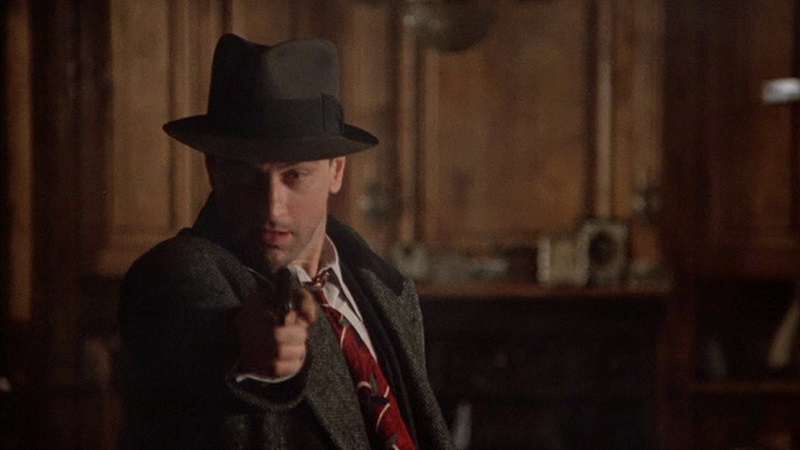
The St. Valentine’s Day Massacre (1967)

Directed by:
Roger Corman

Written by:
Howard Browne

Cast:
Jason Robards (Al Capone), George Segal (Peter Gusenberg), Ralph Meeker (George Clarence ‘Bugs’ Moran), Jean Hale (Myrtle), Clint Ritchie (Jack McGurn), Frank Silvera (Nick Sorello), Joseph Campanella (Albert Wienshank), Richard Bakalyan (John Scalise), David Canary (Frank Gusenberg), Bruce Dern (Johnny May)

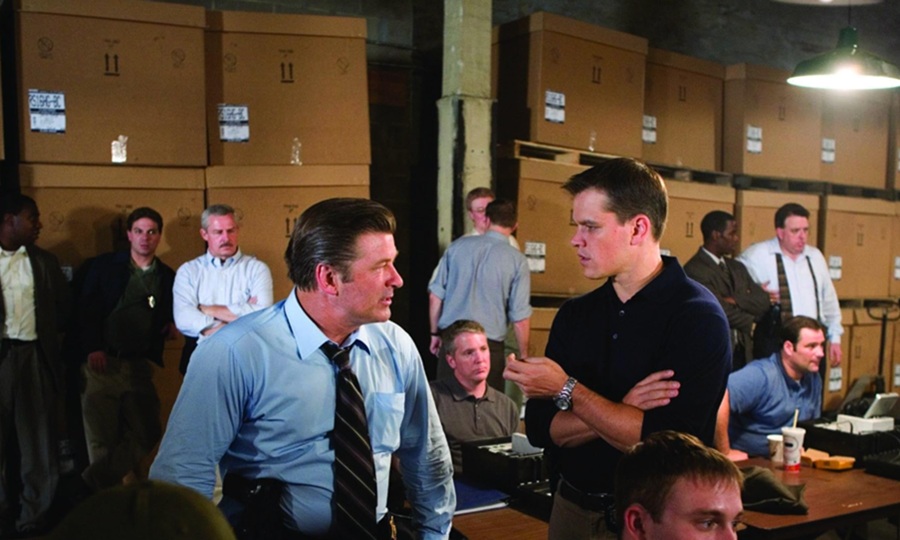
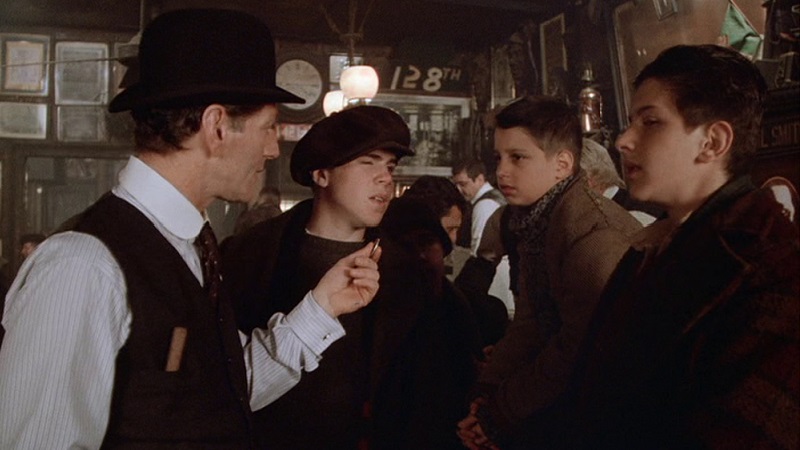
Roger Corman’s gangster movies are generally enjoyable. The St. Valentine’s Day Massacre that follows the famous violent event on February 14, 1929 has got to be his most boring one.

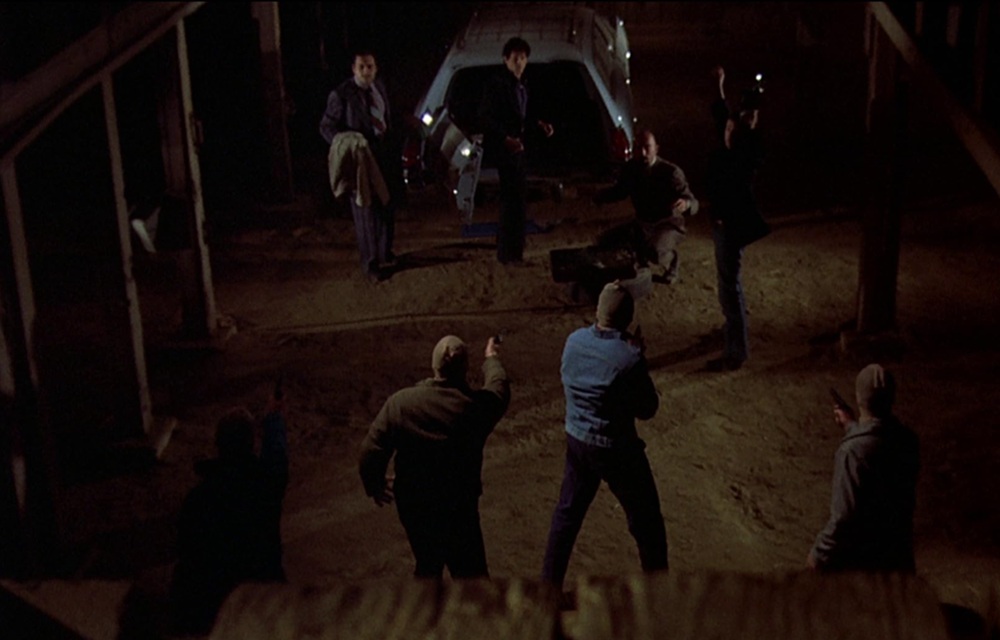
On this specific St. Valentine’s Day, Al Capone set a legendary trap for seven men that were working for his opponent Bugs Moran. In the gang war preceding it, Moran tried to kill Capone to take over the bootlegging and gambling profits in Chicago. The movie uses a sort of journalistic approach. A narrator introduces every character involved and covers the events in a newspaper sort of way.

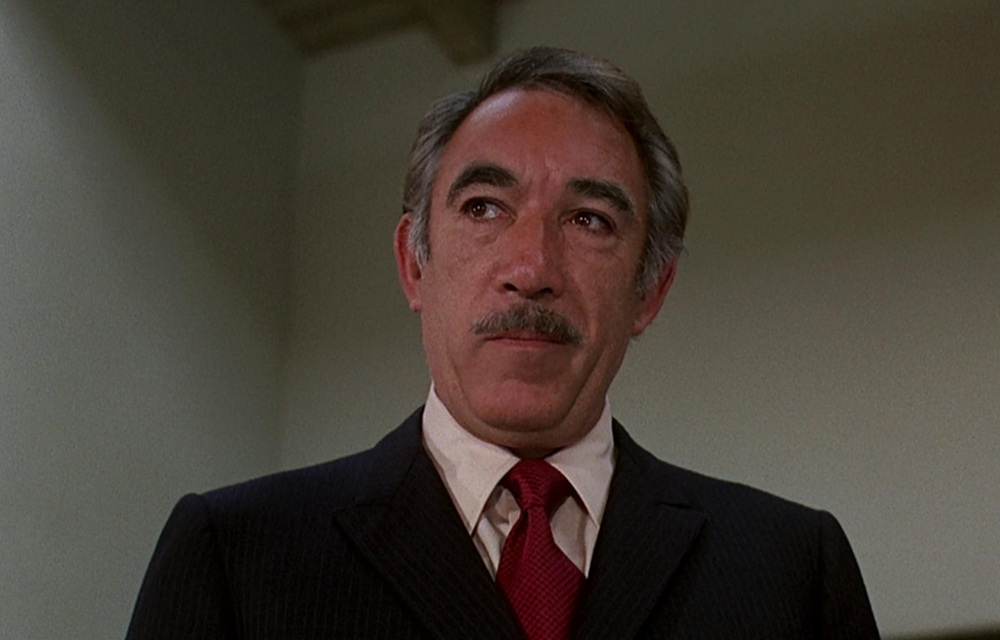
Al Capone, played by Jason Robards, is the unchallenged leader of Chicago’s most powerful underworld organisation. Robards portrays ‘Alphonse’ as an uncontrolled and ruthless hothead. He yells too often, but still turns in a decent performance. All the supporting characters get a detailed background story provided by the narrator. Unfortunately, there are way too many to remember.

If you enjoy technically proficient Tommy Gun action, you may find something to like about this film. Otherwise, the too factual approach and lack of drama will probably leave you as cold as one of the stiffs from the massacre.

Rating:

Quote:
NARRATOR: “In the years following the passage of the National Prohibition Act of 1920, the nation’s underworld rises to power and battles amongst itself just as modern nations and corporations do.”

Trivia:
The St. Valentine’s Day Massacre’ is also an important event in Capone (1975), a gangster film produced by Roger Corman and starring Ben Gazzara as Al Capone.

Miller’s Crossing (1990)


‘Up is down, black is white, and nothing is what it seems’

Directed by:
Joel Coen

Written by:
Joel Coen
Ethan Coen

Cast:
Gabriel Byrne (Tom Reagan), Marcia Gay Harden (Verna), John Turturro (Bernie Bernbaum), Jon Polito (Johnny Caspar), J.E. Freeman (Eddie Dane), Albert Finney (Leo), Mike Starr (Frankie), Al Mancini (Tic-Tac), Steve Buscemi (Mink), Richard Woods (Mayor Dale Levander)

‘I’m talkin’ about friendship. I’m talkin’ about character. I’m talkin’ about—hell, Leo, I ain’t embarrassed to use the word—I’m talkin’ about ethics.’ That’s how Italian crime boss Johnny Caspar (Jon Polito) begins his speech to Irish kingpin Leo O’Bannion (Albert Finney) in the opening of Miller’s Crossing. It immediately recalls the first scene of The Godfather, where undertaker Bonasera appeals in much the same way to Don Vito Corleone.

The favor Caspar asks of O’Bannion is permission to whack two-timing bookie Bernie Bernbaum (John Turturro). Leo refuses, since Bernie is the brother of Verna (Marcia Gay Harden), the woman he’s fallen in love with. Of course, Caspar wasn’t really asking permission—he was informing Leo as a courtesy, as he angrily makes clear after being turned down. Gangsters with ethics toward one another: that’s the foundation of Miller’s Crossing. When Leo breaks this unspoken code among the city’s corrupt rulers, the result is all-out war.

The theme of crooks with ethics is embodied in Leo’s right-hand man Tom Reagan (Gabriel Byrne), the film’s central character. He follows a personal code that only he fully understands. Though secretly having an affair with Verna, Tom – unlike Leo – believes Bernie should be handed over to the Italians. He knows that breaking the underworld code is bad for business. But Leo is stubborn, and their disagreement grows until Tom finally confesses the affair. Leo cuts ties, and Tom immediately shifts allegiance to Caspar. His motive, however, is not self-interest. Though finished with Leo, Tom’s loyalty to his old friend remains.

The web of deceit that quickly unfolds in Miller’s Crossing is complex enough to merit a second viewing. Adding to the intricacy are numerous characters referenced but rarely seen. Still, the story – drawn from Dashiell Hammett novels like ‘The Glass Key’ and ‘Red Harvest’, and infused with classic gangster and neo-noir elements – is masterfully told. The Coens integrate these influences into a killer script, ironically born from a period of writer’s block. Their trademark humor and eccentric characters are on full display, while the dialogue carries a poetic cadence that might even make Shakespeare jealous.

The plotlines themselves may not be original, but the Coens conjure a dreamlike world where, as the tagline promises, nothing is what it seems. The mood is unmistakably Irish – you can almost smell the whiskey. Carter Burwell’s haunting score, the gorgeous cinematography, and evocative settings all heighten the effect. The tone shifts effortlessly from cartoonish to brutally violent, without warning or transition.

The cast is uniformly excellent. Gabriel Byrne makes Tom a sympathetic bastard it’s hard not to root for; if I had to trade places with a Prohibition-era gangster, I’d pick him without hesitation. The supporting roles are just as strong, with John Turturro delivering a powerhouse turn as Bernie, a spineless schemer whose lack of ethics drives the story. Miller’s Crossing also reinvents the use of hats and overcoats. Not that there’s any hidden meaning – there’s nothing’s more foolish than looking for meaning in a hat.

Features a terrific cameo from the Coen’s friend Sam Raimi as a trigger happy cop.

Rating:

Quote:
Tom Reagan: Nobody knows anybody. Not that well.

Trivia:
The Coen Brothers suffered writer’s block while working on the script for Miller’s Crossing. They took a three-week break and wrote the script for their next movie Barton Fink during that time, about a writer with writer’s block. There are two references to Barton Fink in this film. The first one is the name of Tom Reagan’s residence called ‘The Barton Arms’. The second is a newspaper article that reads ‘Seven Dead in Hotel Fire’.

Casino (1995)


‘No one stays at the top forever’

Directed by:
Martin Scorsese

Written by:
Nicholas Pileggi (book and screenplay)
Martin Scorsese (screenplay)

Cast:
Robert De Niro (Sam ‘Ace’ Rothstein), Sharon Stone (Ginger McKenna), Joe Pesci (Nicky Santoro), James Woods (Lester Diamond), Frank Vincent (Frank Marino), Pasquale Cajano (Remo Gaggi), Kevin Pollak (Phillip Green), Don Rickles (Billy Sherbert), Vinny Vella (Artie Piscano), Alan King (Andy Stone)

With Casino, director Martin Scorsese has made another powerful statement about the gangster lifestyle, but like its setting Las Vegas, it is way flashier than its New York based predecessor GoodFellas. Scorsese regular Robert De Niro portrays Sam ‘Ace’ Rothstein, an overly serious professional gambler, who is sent to Las Vegas by the Midwest Mafia to run the Tangiers Casino. This task is handled superbly by control freak Rothstein (“an equal amount of blueberries in each muffin”), but as Rothstein’s protector, gangster Nicky Santoro (Joe Pesci) explains in voice-over: “In the end, we fucked it all up”.

It is easy to see why Scorsese wanted to tell this real-life story, written by Nicholas Pileggi (who also wrote the book Wiseguy on which GoodFellas is based). There is some real poetry in this tale of greed and power. Rothstein, who plays every bet as safe as possible, takes a real chance by marrying the unstable hustler Ginger (Sharon Stone). He also miraculously survives an attempt on his life by an amazing coincidence. Two very interesting occurrences for a man who doesn’t believe in luck.

Visually, Scorsese takes Casino further than any of his previous movies. There are loads of terrific shots and camera moves. The fifty million dollar budget is well spent on beautiful seventies Vegas settings and to portray Rothstein’s and Ginger’s flamboyant lifestyle. The greed of this desert city is also visualised in what must be the largest amount of dollar shots in cinema history.

Pesci delivers a chilling performance as a psychopathic mobster. His Nicky Santoro is less of a loose cannon than his Tommy De Vito from GoodFellas, but he’s possibly even scarier and more violent. No surprise then, that Santoro is the biggest contributor to the extremely harsh violence Casino portrays. The infamous vice and baseball bat scenes are very unpleasant to look at, but many of the other killings are repellent and nasty as well.

Stone’s Ginger brings some balance to the business oriented and almost documentary-style story of the Mafia’s Las Vegas. Although some scenes of her drug problems and failing marriage with Rothstein feel repetitious, they are never dull. Stone, like De Niro, delivers a flawless performance. Some minor flaws don’t detract from Casino’s status as an absolute gangster classic.

Rating:

Quote:
NICKY SANTORO: “You called my friends a faggot? You told him to go fuck himself? Is that what you did? You told him to go fuck himself? You fuckin’ hick! You fuckin’ hick you! Come here!”

Trivia:
Among other Las Vegas regulars, veteran comedy headliners Alan King, Don Rickles, and Dick Smothers appear in major, non-comedic roles.

Blood In, Blood Out (1993)


‘An epic story of three brothers. Bound by blood. Divided by fate. Driven by destiny.’

Directed by:
Taylor Hackford

Written by:
Ross Thomas (story)
Jimmy Santiago Baca (screenplay)
Jeremy Lacone (screenplay)
Floyd Mutrux (screenplay)

Cast:
Damian Chapa (Miklo), Jesse Borrego (Cruz), Benjamin Bratt (Paco), Enrique Castillo (Montana), Victor Rivers (Magic Mike), Delroy Lindo (Bonafide), Tom Towles (Red Ryder), Carlos Carrasco (Popeye), Teddy Wilson (Wallace), Billy Bob Thornton (Lightning), Lanny Flaherty (Big Al)

Blood In, Blood Out explores the brutal initiation ritual of Latino gangs: to join, one must kill or risk being killed.

Miklo, a half-blatino outsider with white skin and blue eyes, returns to East L.A.’s barrios after a falling out with his Caucasian father. Reuniting with his cousins Paco and Cruz – members of the ‘Vatos Locos’ gang – he faces constant ridicule for his appearance. But when Miklo proves his loyalty by confronting the rival ‘Tres Puntos’ gang, he earns his place with a ‘VL’ tattoo on his hand.

Tragedy strikes soon after: a violent clash with ‘Tres Puntos’ leaves Cruz permanently disabled and Miklo imprisoned for murder. The film’s second act splits into three powerful narratives: Miklo’s harrowing first stint in San Quentin, Cruz’s descent into drug addiction, and Paco’s unexpected career as a narcotics agent.

Director Taylor Hackford delivers a gripping, if slightly overlong (nearly three hours), portrait of Latino life, where crime and poverty loom large, yet family bonds remain unbreakable. Inspired by poet Jimmy Santiago Baca’s real-life experiences, the intertwined stories are compelling and well-crafted, with Miklo’s prison arc standing out as the most gripping.

Jesse Borrego shines as Cruz, delivering a performance that is both heartbreaking and authentic. The film’s rich supporting cast – including standout turns from Danny Trejo and Billy Bob Thornton – adds depth to this intense, entertaining saga. Despite its length, Blood In, Blood Out offers enough raw emotion and drama to hold your attention until the end.

Rating:

Quote:
POPEYE: “Hey, Cinderella, go find yourself a fella, you’re on the clock bitch and midnight is coming, you got the wrong man.”

Trivia:
The original cut for this film lasted five and a half hours.