How did I almost miss this show? It is fantastic. The Offer is about the making of The Godfather, which is still considered to be one of the greatest movies ever made. I had some knowledge about its troubled production history, but the movie still offers new insights. Especially about the involvement of the real Mafia in the production.
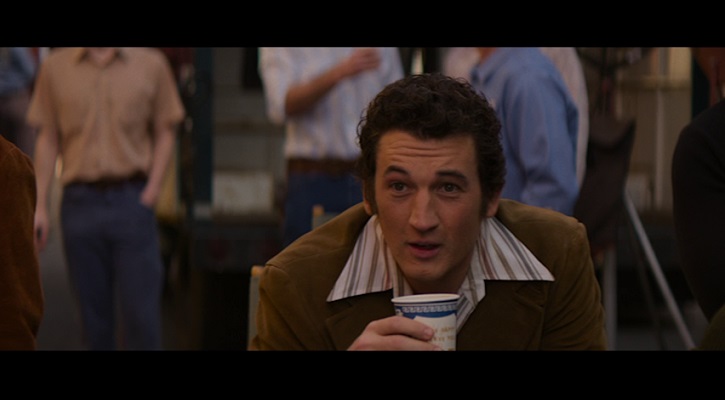
The limited series is based on the experiences of Albert S. Ruddy, the producer of the film. Ruddy (Miles Teller from Top Gun: Maverick) started his career as a television writer-producer and he wanted to make the transition to the more alluring (especially in those days!) big screen. He pleads for a job with Bob Evans, the brilliant head of Paramount Studios, who sees something in the passionate young man and decides to give him his shot at the title.
The mini-series then follows the typical film’s development process, which starts with the hiring of a screenplay writer (Ruddy hires the author of the book Mario Puzo and immediately breaks a golden rule in Hollywood) and a director (Coppola, who was supposed to be able to bring in the film low budget). At the same time, he gets Joe Colombo to deal with. Apart from being the boss of one of the five New York mob families, Colombo was leader of the Italian-American Civil Rights League and he thought The Godfather was a complete insult.
Then starts the casting process which is even more troubling. Coppola is in love with Al Pacino (“the shortest unknown actor in the world”), whom Bob Evens absolutely hates. And both Ruddy, Coppola and Puzo are dead set on Marlon Brando for the role of the Don, but he is known to be a major troublemaker by the studio’s.
Another storyline of The Offer revolves around Evans’ marriage with actress Ali McGraw. Due to the pressures of his work, he can’t go with her to Texas where she is to shoot The Getaway with womanizer Steve McQueen. When he loses her, the studio boss cannot bring himself to return to work, but The Godfather cannot succeed without him, as number cruncher Barry Lapidus (Colin Hanks) threatens to destroy all creativity in his absence.
It is a lot of fun watching Ruddy & Co deal with all these insurmountable challenges, and seeing the masterpiece that is to be The Godfather slowly emerging. The main cast members are all great. What was always gonna be impossible is to find suitable actors to play The Godfather’s cast members: Brando, Pacino, Caan, Duvall… Talking about insurmountable challenges, but they managed to at least not screw it up.
The Offer can best be compared with Mad Men: another show about the creative process mixed with business. But since this is the story about a fantastic period in American cinema, it is even more enjoyable for movie lovers such as myself. Also, seeing the dozen ways The Godfather could have gone off the rails, will make you appreciate this movie even more as the miracle that it is.
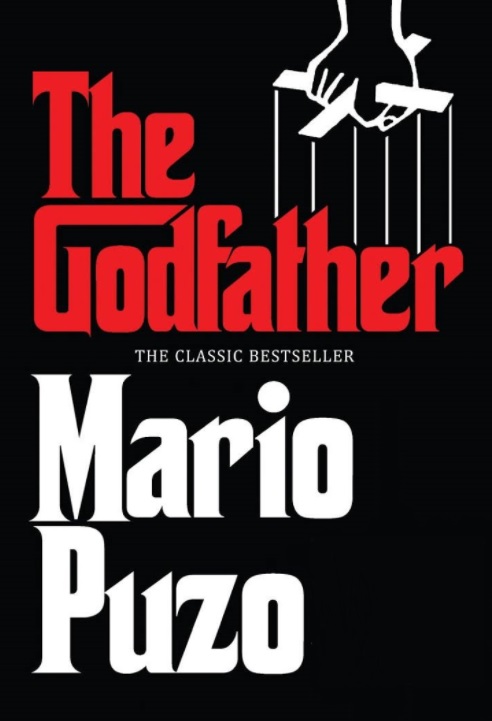
De schrijver van de bestseller ‘The Godfather’ uit 1969 heeft nog een aantal populaire boeken over de maffia geschreven. Met ‘The Sicilian’ heb ik ze allemaal gelezen (hij schreef ook ‘The Last Don’ en ‘Omerta’).
‘The Sicilian’ gaat over het prachtige, maar door problemen geteisterde eiland Sicilië dat in de jaren na de oorlog – na het desintegreren van de fascistische overheid van Mussolini – formeel wordt geregeerd door de Christendemocraten en informeel door ‘de vrienden van de vrienden’ – de maffia – met aan het hoofd de almachtige Don Croce.
De mensen zijn straatarm en worden volledig uitgeknepen door de machthebbers. In dit tijdsgewricht vol onrecht staat er een volksheld op die het volk wil bevrijden: Salvatore ‘Turi’ Giuliano. Samen met zijn beste vriend Gaspare ‘Aspanu’ Pisciotta begint hij een guerrillabeweging. Vanuit de bergen plegen zij overvallen en kidnappen ze belangrijke figuren voor losgeld. De buit distribueren ze vervolgens onder de boeren en het gewone volk. Giuliano wordt de Robin Hood van Sicilië.
Na zeven jaar bandieterij, escaleren de zaken volledig en de geliefde Giuliano is gedwongen naar Amerika te vluchten. En de man die hem daar als geen ander bij kan helpen is Michael Corleone die aan het einde is gekomen van zijn periode onderduiken op het door Italië geregeerde eiland. Maar zal Giuliano in staat zijn te ontkomen aan de sluwe Don Croce?
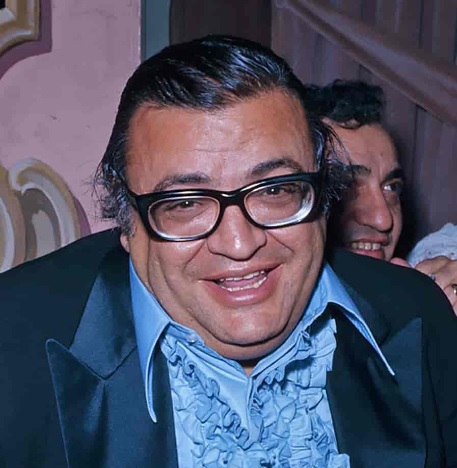
Mario Puzo
Het talent van Mario Puzo is dat zich feilloos kan verplaatsen in mannen met macht (ja, het zijn altijd mannen); hoe ze praten, hoe ze denken en hoe ze hun acties bepalen. Hoe erg je als lezer ook op je hoede bent voor de volgende maffia-valstrik of het volgende verraad, hij blijft je altijd een stap voor. The schrijvers van Game of Thrones en House of the Dragon zijn Puzo wel wat verschuldigd, vind ik.
‘The Sicilian’ kan beschouwd worden als een soort spin-off verhaal in de saga van ‘The Godfather’. Een verhaal dat een deep dive neemt in de ziel van de Siciliaan, de geschiedenis van het land en de oorsprong van de mythische maffia. De bandiet Giuliano bestond echt en het verhaal is deels gebaseerd op zijn leven.
In 1987, verfilmde Michael ‘The Deer Hunter’ Cimino het boek met Christopher Lambert als Giuliano en John Turturro als Pisciotta. Het werd geen succes helaas. Lambert weet totaal niet te overtuigen en eigenlijk is geen enkele keuze van de filmmakers goed uitgepakt. Het is niet spannend, niet meeslepend en niet romantisch. Het is niet vreselijk om naar te kijken, maar ik heb er eigenlijk niets positiefs over te melden. Het boek daarentegen is zeer de moeite waard.
Today it was 50 years ago that The Godfather, one of the greatest films ever made, was released in the Netherlands. It was based on the excellent novel by Mario Puzo. As often happens with a screen adaptation, a lot of stuff was either left out or changed. Below are the fifteen most important differences between Puzo’s bestselling novel and the classic movie by Francis Ford Coppola.
1. Sonny’s Cockyness
The following passage from the novel explains more about why Sonny was always the cock of the walk: Sonny Corleone was tall for a first-generation American of Italian parentage, almost six feet, and his crop of bushy, curly hair made him look even taller. He was built as powerfully as a bull, and it was common knowledge that he was so generously endowed by nature that his martyred wife feared the marriage bed as unbelievers once feared the rack. It was whispered that when as a youth he had visited houses of ill fame, even the most hardened and fearless putain, after an awed inspection of his massive organ, demended double price.
2. Another Request For the Don
All the wedding guests that ask requests of Don Corleone at his daughter’s wedding are in both the novel and the movie except one. Understandably, it was cut out because it is the least interesting. A guy needs 500 dollars to open a pizzeria. What is interesting though is his name: Anthony Coppola. The novel was released in 1969 and author Mario Puzo did not yet know that it would be adapted into a movie by a guy named Coppola. Funny he chose that name.
3. Woltz is a Real Pervert
Placing the severed racehorse head in movie producer Jack Woltz’s bed was brutal. In the film the guy is portrayed as an asshole, but not as a big enough fucker to deserve this kind of punishment. In the novel however, Hagen finds out he ‘did a number’ on a twelve year old girl during his visit to Woltz’s ranch. Later, it is explained that the 60-year old movie mogul can indeed only get it up with very young girls. So apart from the notion that hurting animals is always wrong, Woltz definitely had something bad like this coming.
4. Bonasera Gets His Vengeance
After a long conversation with the undertaker Bonasera, we see the Don give out the order to punish the two men who have hurt his daughter, but we don’t witness the actual event in the film. In the novel we learn that Paulie Gatto was in charge of this operation (the guy who gets killed after which the famous line “leave the gun, take the cannoli” – which btw is not in the novel – is uttered). He uses two professional fighters who kick the two abusers to a pulp when they leave a bar. Like ordered by Don Corleone, they survive. But their faces are unrecognizable. Bonasera is very happy indeed, until his phone rings some time later.
5. Fontane Makes a Career Switch
The singer Johnny Fontane plays a larger role in the book than in the film. We learn that the Don’s service to Fontane has paid off. He played in Woltz’s picture which earned him an Academy Award. And that is not all. Tom Hagen visits him after the picture is wrapped up and tells him that Don Corleone will bankroll him in becoming a movie producer. Soon after the Don is shot, but Fontane still gets the money to produce one movie at the time. He ends up as successful as Woltz.
6. More On Luca Brasi
In the movie, it is obvious that Luca Brasi is a dangerous killer who works exclusively for the Corleone Family. But there is nothing about his background really. In the novel, he plays a larger role. Partly because there is more story about the Don’s rise to power, which wasn’t used in The Godfather: Part II (see also 7). About Luca we learn that he is absolutely terrifying and has done some horrible deeds. Some he did in service of the Don, like butchering two hitmen Al Capone had sent to New York as a favor to Don Maranzano who was at war with the Corleone Family. But some he did for himself, like incinerating his own baby in an oven and murder his girlfriend with whom he had the child. No wonder everybody in the movie seems to be afraid of this brute.
7. The First Mob War and Sonny’s Involvement
When the Corleone Family goes to the mattresses in The Godfather, we get the faint impression that this was not the first war they were in. It is not. In the novel, Don Vito fights a bloody war in the early 1930’s with another New York boss: Don Maranzano. It was in this war that Sonny Corleone made his reputation as a brutal general. As a boy, Sonny had witnessed his father kill Don Fanucci and he confronted his father with this (that’s right, this is not in The Godfather: Part II). After that, he became involved in the family business and it turned out that he had a talent for violence and cruelty. He may have missed the strategic subtleness the Don searched for in his successor, but he surely was effective. The war against Maranzano was resolved by killing the Don while he was eating in a restaurant (similar to the real-life assassination of Don Masseria of New York).
8. Kay and Mama Corleone
After Michael had left her after killing Sollozzo and McCluskey, Kay Adams visits the Corleone estate but gets very little information from Tom Hagen. The jerk almost didn’t invite her in! Mama Corleone is not happy with this treatment and she asks inside Kay for lunch. Despite Tom’s objections, she tells Kay gently that “Mikey not gonna write you. He hide two-three years. Maybe more. You go home to your family and find a nice young fellow and get married.” After Kay leaves, she is trying to get used to the fact that the young man she had loved was a cold-blooded murderer. And that she had been told by the most unimpeachable source: his mother.
9. Michael’s Scapegoat
In the movie, it is never explained how exactly Don Corleone managed to get Michael home from Sicily. The police are after him after all, which we know in the novel because they come to Kay’s house to question her. The don did it by finding a scapegoat for the Sollozzo-McCluskey murders. This guy was part of a small Sicilian mob family, who acted as intermediaries when the bosses needed to plan safe negotiations. The man had committed a brutal murder and had been sentenced to death. Don Vito made him falsely confess to killing McCluskey and Sollozzo and he had the waiter from the restaurant provide false witness testimony. Problem solved.
10. Lucy Gets an Operation
On Connie’s wedding in The Godfather I, Sonny cheats on his wife with Lucy Mancini. In part III, she apparently had a son from Sonny called Vincent. There is nothing about her getting pregnant in the book, but there is quite a lot of stuff about their love affair, and there is a chapter on her after Sonny’s death. It is in this chapter that we learn that she has quite a big box. Apparently which is why she matched so well with Sonny (see point 1). Not sure if this is Puzo’s finest writing, but I’m just giving you the facts here. After Sonny’s death, the Corleone Family gives Lucy a job in Vegas and a nice monthly income. She meets a doctor, who she has an affair with. He fixes her ‘down there’ and later also fixes Johnny Fontane’s voice box. Great guy.
11. More On Al Neri
Michael Corleone’s enforcer Al Neri was apparently a cop before he came into Michael’s service. A brutal cop who would put the fear of God into many delinquents. One day, he kills a vile pimp who had cut up a young girl and her mother. He gets a heavy sentence, and this is when the Corleones step in. They use their political influence to set him free, and immediately offer him a job. Now Michael got his own Luca Brasi, a powerful weapon in the battles he is about to get engaged in.
12. Fabrizio Gets What’s Coming To Him
Michael’s big revenge differs quite a bit in the movie. In the novel, it doesn’t take place during the baptism. Coppola combined the happenings to make it more dramatic and Michael more diabolical. Great move. Also, Moe Greene gets killed earlier in the story. More importantly, in the novel Michael only whacks two of the four dons of the opposing families: Barzini and Tattaglia. Also, Fabrizio, the bodyguard who killed Michael’s wife in Sicily, is shot to death in a bar. “Michael Corleone sends his regards”. A scene was filmed for The Godfather: Part II, in which Fabrizio is killed by a car bomb, but it was cut from the movie.
13. Tessio Off the Hook?
After Tessio is to be killed for his betrayal, he asks Tom Hagen if he can get him off the hook. “Can’t do it, Sally”, Hagen answers. In the book, Tom had actually checked with Michael if Tessio could be saved. “Any way to get Tessio off the hook?” Michael’s answer: “No way”. At least he tried, which makes Tom a bit less cold than in the movie, although in the world of the mob, it’s not really possible to give traitors passes. The don’s position would be threatened very soon.
14. Hagen Reconciling With Kay The Godfather famously ends with Michael’s door being closed on Kay; the moment she realizes of course that it was all true: Michael had killed Carlo and the heads of the five families. The perfect ending. In the novel, there is a scene after that realization in which Tom Hagen visits Kay and actually explains to her why Michael killed Carlo. And he makes it sound very reasonable. After that, Kay decides to give it another shot with Michael. How does she deal with Michael’s sins?
15. Kay Burning a Candle
The novel ends with Kay going to church to burn a candle for Michael Corleone’s soul. Like she had seen Mama Corleone do for her husband. So history repeats itself and Kay, despite being a real Americana, becomes a Sicilian wife for Michael. So, he made the right choice hooking up with her again after his exile on Sicily.
There are a lot of references in Mario Puzo’s famous novel to ‘The Five Families’, which doesn’t seem to include the Corleone Family.
For example in the following passage: ‘For the last year the Corleone Family had waged war against the five great Maffia Families of New York and the carnage had filled the newspapers. If the five families include the Corleone’s, then why doesn’t it say: … against the other four great Mafia Families?
There are many other references, like: ‘The heads of the Five Families made frantic efforts to prepare a defence against the bloody retaliatory war that was sure to follow Sonny’s death.’ Or: ‘The Five Families and the Corleone Empire were in stalemate.’
Then the big meeting of bosses comes, so we can finally learn who the Five Families are and Puzo messes it up. It reads: ‘The representatives of the Five Families of New York were the last to arrive and Tom Hagen was struck by how much more imposing, impressive, these five men were than the out-of-towners, the hicks. For one thing, the five New York Dons were in the old Sicilian tradition, they were ‘men with a belly’ meaning, figuratively, power and courage; and literally, physical flesh, as if the two went together, as indeed they seemed to have done in Sicily. The five New York Dons were stout, corpulent men with massive leontine heads, features on a large scale, fleshy imperial noses, thick mouths, heavy folded cheeks. They had the look of no-nonsense busy men without vanity.’
Don Corleone is already there from the beginning, so you would expect five bosses to be introduced now, but we only get four: Anthony Stracci, Ottilio Cuneo, Emilio Barzini and Philip Tattaglia. What the hell?!?!
There is also another passage here pointing to five families besides the Corleones. It reads: ‘Of the five New York Families opposing the Corleones, Stracci was the least powerful but the most well disposed.’ That proves it: there is a family missing here.
Yes, in real-life there are five New York Families (Bonanno, Colombo, Gambino, Genovese, Lucchese) and not six, but these passages in the novel make it very clear that the Corleone Empire is NOT considered as one of the five. Why did Puzo create this unclear situation? This seems rather sloppy for a capable writer like him.
Francis Ford Coppola could have corrected this mistake in the movie, but he didn’t. The movie also includes a few of these references. Like Tom Hagen proclaiming: “All the five families would come after you, Sonny.…” Or Don Vito saying: “I want you to arrange a meeting with the heads of the Five Families.”
I have searched for an answer, but found nothing. We, lovers of popular culture, will have to live forever with this frustrating, inconsequent, mess-up. Good luck with that.





 FRAGMENTEN UIT HET SCHEMERLAND