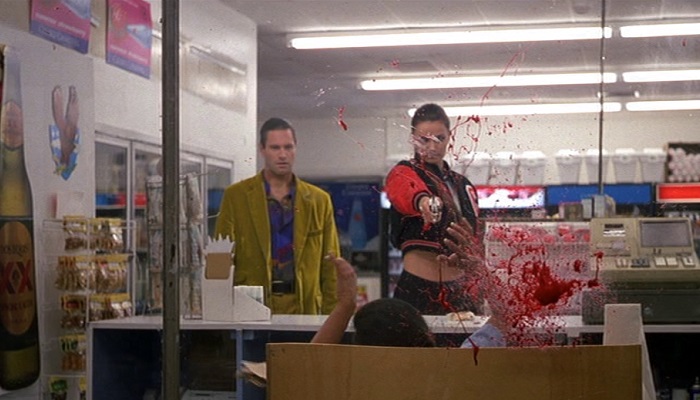
Once Upon a Time in Hollywood (het boek)

The first novel by Quentin Tarantino….

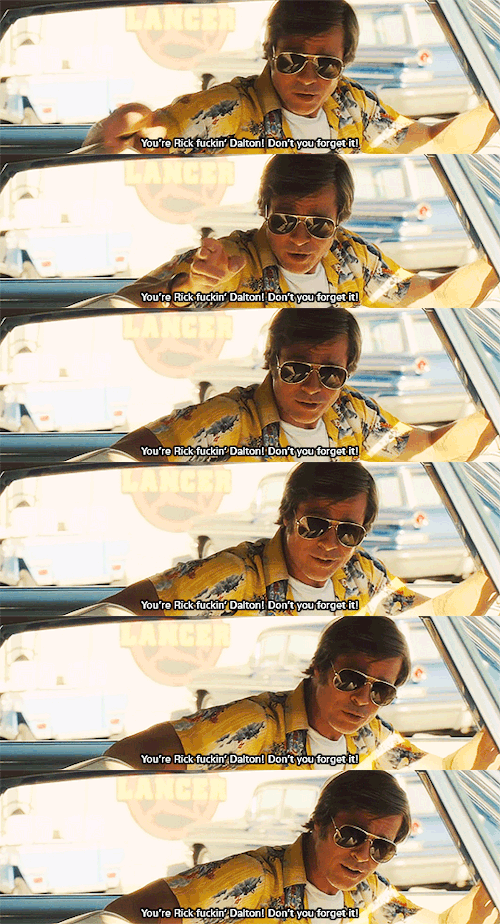
Jawel, van zijn unieke ode aan het Hollywood uit zijn jeugd heeft QT nu een boek gemaakt. En dat medium heeft zijn voordelen, ervaart de debuterende romanschrijver. In een boek kun je veel meer informatie stoppen dan in een film. Zo leren we in het eerste hoofdstuk – de afspraak tussen acteur Rick Dalton (Leonardo DiCaprio in de film) en de speciale agent Marvin Schwarz (Al Pacino in de film) – de hele carrière van Rick kennen.

Rick barst in tranen uit in het kantoor van Schwarz omdat hij zich een ‘has been’ voelt. Hij heeft het zelf verkloot. In seizoen 3 van Bounty Law gedroeg hij zich onuitstaanbaar en maakte hij een hoop vijanden. Daardoor is het vierde seizoen er nooit gekomen en is de filmcarrière die hij zo ambieerde ook in het slop geraakt. We leren hoe diep het incident met Steve McQueen hem zit. Dat hij de hoofdrol had kunnen spelen in The Great Escape, een rol die een A-lister van hem had gemaakt.

Voor Schwarz, een specialist in het casten van Amerikaans talent in Europese cinema, is het allemaal goed nieuws. McQueen kunnen de Italianen niet krijgen, maar wel: Rick Dalton. De show Bounty Law is bovendien in Europa uitgezonden net als verschillende (B-)films waar Dalton in heeft gezeten. Een herstart van zijn carrière ligt in het verschiet, kortom, maar hij zal zijn beeld van succes moeten bijstellen. En dat valt niet mee voor de bipolaire acteur die lijdt aan extreme stemmingswisselingen.

De onzekere Rick wordt getroost door zijn stunt double Cliff Booth (Brad Pitt in de film), een heel relaxed personage dat het leven neemt zoals het komt. In het boek leren we Cliff beter kennen dan in de film. Zo ontdekken we dat Cliff gefascineerd is door buitenlandse films. Op zondag gaat hij in zijn eentje naar buitenlandse films met ondertiteling: iets dat Rick (en overigens de meeste Amerikanen) nooit zouden doen. Tarantino wijdt een heel hoofdstuk aan Cliff’s filmsmaak. En zijn uitstekende smaak lijkt op de mijne: Kurosawa en Lone Wolf & Cub vindt hij te gek. Bij Truffaut en Fellini haakt hij af.

Vanzelfsprekend zit er net als in de film enorm veel humor in het boek. Neem deze laugh-out-loud passage: It was during the third season on Bounty Law (‘61 – ‘62) that Cliff Booth was brought in to double the series lead. Rick didn’t take Cliff right off. For one really good reason: Cliff was way too handsome to be a stuntman. Bounty Law was Rick’s pussy party. He didn’t need a swingin’ dick, who looked better in Rick’s costume than Rick did, horning in on all that ample tail.

Cliff blijkt ook een een man te zijn die nogal wat mensen om zeep heeft geholpen. Als oorlogsheld heeft hij meer confirmed Japanese kills op zijn naam staan dan welke Amerikaanse soldaat dan ook. Maar ook buiten het leger heeft hij gemoord. Twee gangsters, een vriend waarmee hij aan hondengevechten deelnam (daar heeft hij zijn hond Brandy vandaan die de hippies te grazen neemt in de film) en zijn vrouw. Die laatste schiet hij in tweeën met een harpoengeweer. In zijn verdediging; het was een verschrikkelijke bitch, Cliff had er meteen spijt van en hij heeft haar lichaam zeven uur lang bij elkaar gehouden voordat ze stierf.

Een ander personage dat meer aan bod komt is Charlie Manson. De sekteleider was in de film niet meer dan een edelfigurant. In het boek brengen we een aantal hoofdstukken door in het gezelschap van Manson en zijn familie. Alleen de verrassende wending uit de film, dat drie van zijn volgelingen per ongeluk het huis van Rick inlopen in plaats van dat van Sharon Tate, vindt middenin het boek plaats in plaats van aan het einde.

Met welke scène het boek dan wel eindigt zal ik hier niet verklappen. Maar wat we wel leren is dat het hippie-incident erg goed is voor de carrière van Rick. Hij wordt uitgenodigd in talkshows om te vertellen over hoe hij de vlammenwerper uit The 14 Fists of McCluskey heeft gebruikt om een hippie te toasten, en hij wordt weer volop gecast in films. Kortom, in het alternatieve Hollywood-universum dat Tarantino geschapen heeft komt het met Dalton, Booth én niet te vergeten Sharon Tate (Margot Robbie in de film) helemaal goed.
Dungeon Classics #13: Thursday

FilmDungeon’s Chief Editor JK sorts through the Dungeon’s DVD-collection to look for old cult favorites….

Thursday (1998, USA)

Director: Skip Woods
Cast: Thomas Jane, Aaron Eckhart, Paulina Porizkova
Running Time: 87 mins.

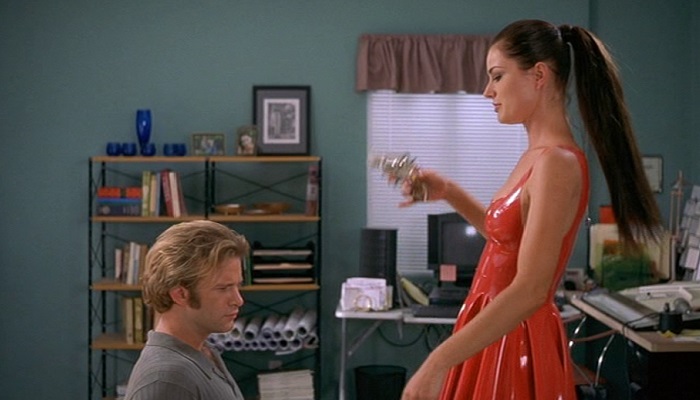
The past comes back to haunt suburban architect Casey (Jane) on what seems to be like a day from hell. While his wife is away, his old drug dealing pal Nick (Eckhart) comes by who leaves him with a suitcase. This later turns out to be chock full of heroin. Not long after, more criminals, crooked cops and a homicidal woman show up to make Casey’s life more miserable. Luckily for him, his old criminal instincts also return with a vengeance, so how the day will end is all but certain. Thursday got some critique for ripping off Tarantino, but missing the poetic touches of the master. At times, it does indeed feel a bit exploitative. However, it is also very entertaining and the cast is excellent. No, it is nowhere near Pulp Fiction, but as far as Tarantino-esque crime movies go, this one belongs to the best of the bunch as far as I’m concerned.

Le samouraï (1967, Review)

Directed by:
Jean-Pierre Melville

Written by:
Jean-Pierre Melville
Georges Pellegrin

Cast:
Alain Delon … Jef Costello
Francois Périer … Superintendent
Nathalie Delon … Jane Lagrange
Cathy Rosier … Valérie, The Pianist
Jacques Leroy … Man in the passageway
Michel Boisrond … Wiener
Robert Favart … Bartender
Jean-Pierre Posier … Olivier Rey
Catherine Jourdan … Hatcheck Girl
Roger Fradet … First Inspector

‘There is no greater solitude than that of the samurai. Unless it is that of the tiger in the jungle. Perhaps…’
– BUSHIDO (Book of the Samuraï)

As the above quote that opens Le samouraï indicates, this film revolves around a loner. Hired killer Jef Costello (Alain Delon) lives in a greyish apartment with a bird as his only company. As soon as he gets up from his sofa, he engages in a dangerous mission: a contract murder in a crowded nightclub. Many patrons spot him in his conspicuous outfit: a raincoat, a hat and white gloves, much like how the gangsters in old Hollywood movies dressed.

After the murder, the police start to round up the usual suspects including Costello. He turns out to be a professional however; the beautiful Jane provides him with a watertight alibi. There is something strange at work though. The nightclub’s pianist, who clearly had a good look at Jef, lies to the police and says it wasn’t him. The cops are forced to release him, but the superintendent doesn’t trust it and has him tailed. In the meantime, we meet Jef’s employers who are unhappy with the many eyeball witnesses and plan to have him removed.

Le samouraï is a very minimalist film with also a sense of avant garde in it. It reminds a lot of John Boorman’s Point Blank that was released in the same year. The story is deceivingly simple, but leaves much room for various interpretations. Rather than on storytelling, director Melville focuses on style and he does so in a brilliant fashion. This movie is just perfectly crafted. Every image, many just showing uber-cool protagonist Jef roaming around in Paris, is shot amazingly and serves a purpose as well. The colour pallet consists of solely cold colours.

Although inspired by American gangster flicks, Le samouraï is still very distinguishable due to Melville’s master’s touch. In turn, it has inspired many modern gangster authors including John Woo and Quentin Tarantino. The films from Woo – most notably A Better Tomorrow and The Killer – feature scenes almost literally lifted from Le samouraï.

The first viewing is a bit awkward because of the cold, distant tone. But multiple viewings are bound to reveal a lot of hidden substance in the multi-layered screenplay. Both critically and commercially this is considered as one of Melville’s greatest successes.

Quote:
OLIVER REY: ‘A wounded wolf. He’ll leave a trace now. No, we have to get rid of him and quick.’

Trivia:
This is Johnnie To’s favourite film.

QT8: The First Eight

I was 13 years old when I saw the video Reservoir Dogs at my local video store. There were – for me at the time – not many familiar actors in it. But the cover looked pretty cool with guys in suits with guns. Plus there was a lot of praise on it from critics, so I decided to give it a shot. I had no idea what to expect, but Jesus Christ was it a good movie! Ridiculously great filmmaking. One of the best movies I had seen at that point and to this day still.

It is funny to hear all these actors in the documentary QT8: The First Eight basically relate to the exact same experience. Tim Roth, shown while being carried in the warehouse by Harvey Keitel, remembers talking to Keitel about what they had just shot and saying: “Man, this is going to be a really great movie!” Keitel agreed.

Reservoir Dogs premiered on Cannes in 1992, very prestigious for a debut, and it was a great success. Everybody wanted to meet Quentin there and he became a movie making star overnight. Everybody said: “Can you believe this guy? He can write and direct and it’s sensational stuff.”

For a long time I was jealous of Tarantino. And when I watch this documentary I still am. I mean, wouldn’t it be something to be able to write screenplays like this guy? And this is also a shared emotion by many people interviewed for this doc. Talent like this is rare. Many people, including me, tried to write scripts like him. But to no avail.

His first screenplays – True Romance and Natural Born Killers – he had to sell to pay the rent. True Romance was originally told in non-chronological order Tarantino-style. Oh and the pop culture loving Clarence, basically Quentin’s alter ego – died at the end. Luckily Tony Scott changed that. At least I for one liked the happy ending.

Tarantino wanted to become a director, so he wrote a script that he could do on a low budget: Reservoir Dogs. Harvey Weinstein distributed the film. After that everybody in Hollywood wanted to work with him, but the Weinstein’s got to produce all his movies up until The Hateful Eight. Then the scandal broke out, and Tarantino – who according to Michael Madsen had known about Weinstein’s misconduct for some time (read Tarantino’s confession-story here) – switched to Sony for his ninth movie Once Upon a Time in Hollywood.

And this Weinstein-business is the only major stain on Tarantino’s career. That, and pushing Uma Thurman to do a car stunt in Kill Bill, which went wrong causing permanent physical problems for her. No good, Mr. Quentin. But there is a lot to balance it out. He is described by everyone in the doc as a very nice guy who enjoys life, and appears to be a great friend for his many cronies.

Pulp Fiction, that followed Reservoir Dogs, is one of the masterpieces of the past 50 years. Michael Madsen, for whom the part of Vincent Vega was originally written, was committed to Wyatt Earp at that time. Nightmare! He takes it well, commenting on the extremely successful casting of John Travolta. “It is one of main reasons the movie worked.” Plus Travolta can dance and Madsen – who did a dance scene in Reservoir Dogs – can’t, at least in his own opinion. “They would have had to change the script into that they don’t win the dance contest.”

How do you follow up a masterpiece like Pulp? You don’t. Just make a very good genre film instead starring Pam Grier, queen of the blaxploitation movies Quentin went to see during his childhood. Jackie Brown is a beautiful film about people trying to figure out what to do with their lives. Then he made another genre film with a strong female lead, a mash-up between Hong Kong cinema and a spaghetti western. Kill Bill is an astonishing accomplishment. Bit of trivia: The razor the Bride uses to escape from the coffin in Vol. 2 is the same used by Mr. Blonde in the torture scene in Dogs. Everything is related in the Tarantino universe.

Then he went on to make another feministic movie with powerful girls in it. Death Proof is a clever slasher flick / carploitation movie shot by the maestro himself. With an unforgettable Kurt Russell as Stuntman Mike. After that came his war movie effort. Inglourious Basterds is unlike any war film ever done before. It is storytelling at his best. Django Unchained is another historic film and it’s brutal. It might just be a little too funny for a film about slavery. But Tarantino likes to hand out justice to his characters. Hitler gets machine gunned to death in Basterds and in Django, the black hero – after having killed a ton of slavers – rides off into the sunset with his girl, an image you won’t find in many westerns.

The Hateful Eight, the final movie treated in this doc, is in a way Reservoir Dogs redone as western. Everything comes full circle. Even Weinstein’s story. Apparently John ‘The Hangman’ Ruth (played by Kurt Russell) is based on the monstrous Weinstein. He gets a big fat lesson in the film. Tarantino said many times that he wants to quit at ten movies, because otherwise he fears the quality will go down and people will say: ‘This one is not so good, but this guy used to make great movies’. Let’s hope he will break his word and continue to make movies forever. His style and voice are unique and irreplaceable in Hollywood. Whatever happens, currently nine films are in the can. And I will certainly keep enjoying his work till the end of my days and share it with friends. When you absolutely, positively, want to blow away everybody motherfucker in the room, accept no substitutes.