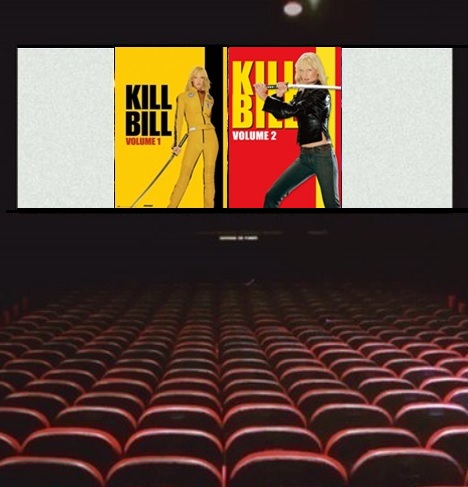
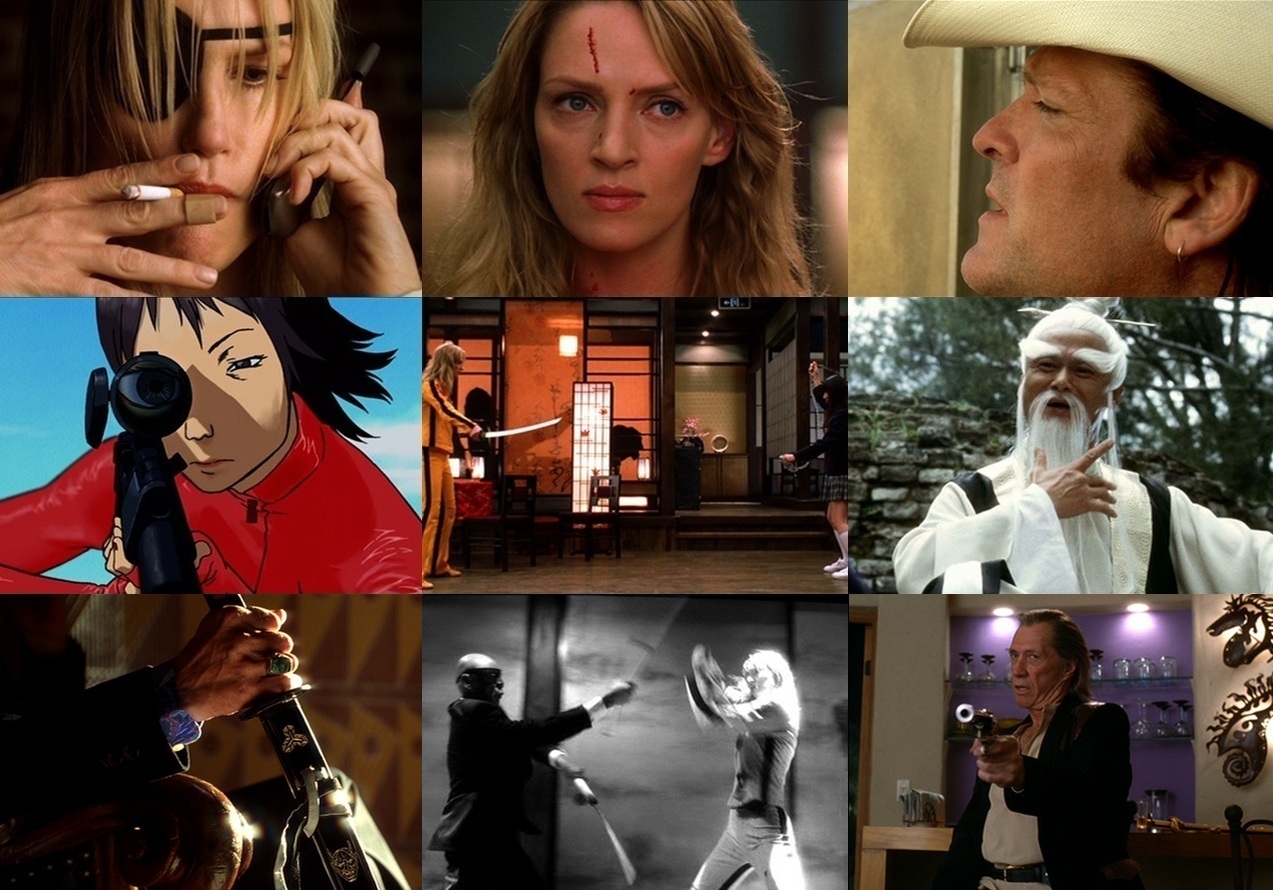
After Jackie Brown, Tarantino took a long break (six years), but when he returned, he did so with a vengeance. If you’re going to compare a Tarantino movie, you compare it to every other movie ever made that wasn’t made by Quintin Tarantino. By that standard, the two-part Kill Bill saga stands among the finest pieces of cinematic art of the century so far. Here, Tarantino does what he does best – lifting fragments from forgotten genre and exploitation cinema and fusing them into something wholly original – better than ever before. It’s a double-edged sword in many ways: a bold blend of Eastern and Western influences, effortlessly shifting between comic-book ultraviolence and moments of genuine emotional weight. This tonal balance works largely thanks to Uma Thurman’s superb central performance as The Bride, which anchors the madness with real feeling. The story itself is simple, yet utterly captivating. The characters are fascinating and endlessly quotable. The style is unmistakable and unmatched. Volume 1 plays like the ultimate samurai/yakuza/action movie of your childhood – the one you could watch endlessly – only somehow even better. Volume 2, by contrast, leans into the rhythms of a spaghetti western, offering more of Tarantino’s signature dialogue and a terrific performance by David Carradine, who reimagines his Kung Fu character Kwai Chang Caine as a pop culture loving and psychopathic mentor. Structured in ten chapters and told out of chronological order, Kill Bill unfolds as a true epic, packed with all of Tarantino’s hallmarks: razor-sharp humor, wax-museum characters, stylized violence, brilliant music choices, and a Pussy Wagon–load of pop culture references. The only Double Bill I actually experienced in theaters – back when Volume 2 was released in 2004 – and one I’ll never forget. Whenever The Whole Bloody Affair finally arrives in European theaters, I will be there for sure.
Tagarchief: Samurai
Dungeon Classics #8: Shogun Assassin
FilmDungeon’s Chief Editor JK sorts through the Dungeon’s DVD-collection to look for old cult favorites….
Shogun Assassin (1980, Japan | USA)

Director: Robert Houston, Kenji Misumi
Cast: Tomisaburô Wakayama, Akihiro Tomikawa, Kayo Matsuo
Running Time: 85 mins.
In the early seventies, the classic manga Lone Wolf and Cub – about a hunted warrior who travels around with his young son – was first published and quickly adapted into a six-part film series. These are still the most entertaining samurai movies ever made, full of compelling stories in feudal Japan, astonishing violence and swordplay, and inspiring Buddhist wisdom. In 1980, American actor-director Robert Houston made the American version. For this he somewhat simplified the story, provided a now classic voice-over track (referenced in a.o. Kill Bill: Vol. 2 and the album Liquid Swords by Wu Tang Clan-member Genius GZA) and a typical eighties synthesizer soundtrack. Houston did a fine job editing together the best parts of the first and second (the best) movie. You couldn’t wish for a more action-packed samurai flick. And the final duel with the Masters of Death is truly unforgettable. If you want to get really dirty, I would advise the original series of six, but nothing wrong with this one for starters. It’s masterful.
Warrior Wisdom #2: The True Way
Magomura Kanbei: Lord Ogami, you are an assassin. You receive money to kill. I am a hired hand, I receive money for my services. What is the way of the ‘True Warrior’ that you spoke of? And does such a warrior exist? I am prepared to stake my life in search of the answer. Once again, I request a duel.
Ogami Itto: I accept.
Magomura Kanbei: Let us begin.
The short duel begins. Kanbei manages to make a deep cut on Ogami’s back, but takes a sword through his gut himself.
Magomura Kanbei: A moment. There’s one thing I must ask you.
Ogami Itto: Speak.
Magomura Kanbei: This past year my Lord Munetada had been offered the post of Elder and was on his way to Edo. We were attacked by a mob of ronin. It was a plot by those who opposed my Lord’s promotion to Elder. We were greatly outnumbered, so in order to mount a defence our best hope lay in a bold attack. I ran forth to slay them. I fought with all my might and drove the enemy back. But the fact that I had advanced to slay them, leaving my Lord’s side, was judged undutiful and unworthy of a samurai. Before I realised it, I had become a disgrace to my clan. I was expelled. What was the way of the True Warrior? To die defending my Lord, even if it was clear that it was a hopeless cause? The Way of the Warrior, it is not about how one lives, but how one dies, surely? Lord Ogami, will you tell me? What is the True Way of the Warrior?
Ogami Itto: The True Way of the Warrior is… to live to die.
Magomura Kanbei: “To live to die”.
Ogami Itto: If I had been in your position I would certainly have attacked.
Magomura Kanbei: It heartens me to hear those words from you. Lord Ogami, would you allow a lowly being such as myself to request that you, once the Official Executioner, act as my second?
Ogami Itto: For those who know the True Way of the Warrior, rank does not exist. I shall grant your request.
Magomura Kanbei: Finally, I can die as a warrior with no regrets.
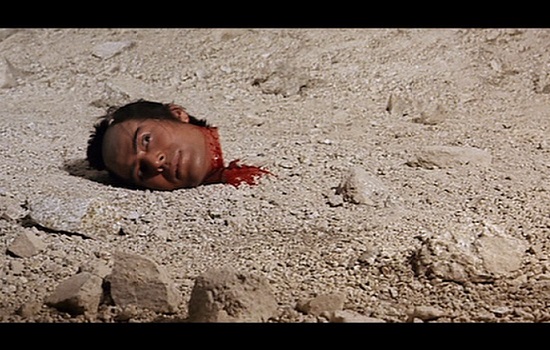
After all is done, the head smiles.