Gotti (1996)

Directed by:
Robert Harmon

Written by:
Jerry Capeci (book ‘The Last Gangster: Winning the War Against John Gotti and the Mob’)
Gene Mustain (book ‘The Last Gangster: Winning the War Against John Gotti and the Mob’)
Steve Shagan (teleplay)

Cast:
Armand Assante (John Gotti), William Forsythe (Sammy Gravano), Richard C. Sarafian (Paul Castellano), Frank Vincent (Robert DiBernardo), Anthony Quinn (Neil Dellacrose), Dominic Chianese (Joe Armone), Robert Miranda (Frank DeCicco), Scott Cohen (Gene Gotti), Vincent Pastore (Angelo Ruggiero), Tony Sirico (Joe Dimiglia)

John Gotti seemed destined for the Mafia. He was smart, tough, loyal to the code of omertà, never skimmed from the top, and respected the boss’s policy on narcotics. These qualities helped him rise to become boss of the infamous Gambino family in the 1980s. But Gotti also had his flaws: he craved media attention and was too careless about discussing sensitive business in unsecured settings.

Gotti is the biography of one of history’s best-known mobsters. The story begins in 1973, when Gotti first comes to the attention of his crime family, the Gambinos – then the most powerful of New York’s Five Families. Boss of bosses Carlo Gambino asks Gotti for a personal favor, which nearly goes wrong due to the interference from underboss Paul Castellano. The conflict almost dooms Gotti, but his mentor, second underboss Neil Dellacroce (Anthony Quinn), steps in to resolve it.

In the years that follow, Gotti steadily rises through the ranks alongside his close associate and fellow captain Sammy Gravano. When Gambino dies of old age in 1976, he names Castellano as his successor, to the disapproval of Gotti and other top figures. While Gotti was seen as a true man of Cosa Nostra, Castellano was regarded more as a businessman. Tensions eventually culminate in one of the most infamous gangland hits in history: the 1985 assassination of Castellano and his partner outside Sparks Steak House in Manhattan.

Now John Gotti is the boss. But, as noted earlier, his weaknesses ensured that his reign would be relatively short-lived (until 1992 to be precise). As a biographical made-for-tv HBO production, Gotti stands out for offering a complete look at the life and times of a legendary mobster. Armand Assante is memorable in the lead. The supporting cast – featuring many future Sopranos actors – is also strong, with Anthony Quinn and William Forsythe delivering standout performances. If you watch only one television production about the mob, make it Gotti .

Rating:

Quote:
JOHN GOTTI: “A Mexican, a Puerto-Rican and a black guy are sitting in a car. Who’s driving? The police.”

Trivia:
According to IMDb, this film was the highest rated original telefilm in HBO history at that time. The success of the film convinced HBO to cast film co-stars, Dominic Chianese, Vincent Pastore and Tony Sirico in a series in development at the time called The Sopranos (1999).

Fans of American Popular Culture Really Can’t Refuse This Show

How did I almost miss this show? It is fantastic. The Offer is about the making of The Godfather, which is still considered to be one of the greatest movies ever made. I had some knowledge about its troubled production history, but the movie still offers new insights. Especially about the involvement of the real Mafia in the production.

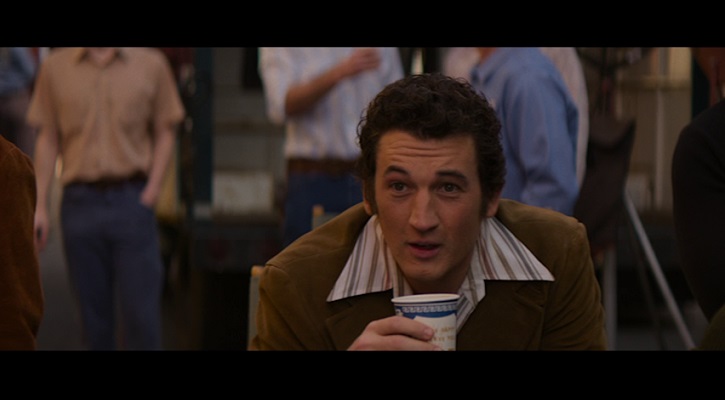
The limited series is based on the experiences of Albert S. Ruddy, the producer of the film. Ruddy (Miles Teller from Top Gun: Maverick) started his career as a television writer-producer and he wanted to make the transition to the more alluring (especially in those days!) big screen. He pleads for a job with Bob Evans, the brilliant head of Paramount Studios, who sees something in the passionate young man and decides to give him his shot at the title.

The mini-series then follows the typical film’s development process, which starts with the hiring of a screenplay writer (Ruddy hires the author of the book Mario Puzo and immediately breaks a golden rule in Hollywood) and a director (Coppola, who was supposed to be able to bring in the film low budget). At the same time, he gets Joe Colombo to deal with. Apart from being the boss of one of the five New York mob families, Colombo was leader of the Italian-American Civil Rights League and he thought The Godfather was a complete insult.

Then starts the casting process which is even more troubling. Coppola is in love with Al Pacino (“the shortest unknown actor in the world”), whom Bob Evens absolutely hates. And both Ruddy, Coppola and Puzo are dead set on Marlon Brando for the role of the Don, but he is known to be a major troublemaker by the studio’s.

Another storyline of The Offer revolves around Evans’ marriage with actress Ali McGraw. Due to the pressures of his work, he can’t go with her to Texas where she is to shoot The Getaway with womanizer Steve McQueen. When he loses her, the studio boss cannot bring himself to return to work, but The Godfather cannot succeed without him, as number cruncher Barry Lapidus (Colin Hanks) threatens to destroy all creativity in his absence.

It is a lot of fun watching Ruddy & Co deal with all these insurmountable challenges, and seeing the masterpiece that is to be The Godfather slowly emerging. The main cast members are all great. What was always gonna be impossible is to find suitable actors to play The Godfather’s cast members: Brando, Pacino, Caan, Duvall… Talking about insurmountable challenges, but they managed to at least not screw it up.

The Offer can best be compared with Mad Men: another show about the creative process mixed with business. But since this is the story about a fantastic period in American cinema, it is even more enjoyable for movie lovers such as myself. Also, seeing the dozen ways The Godfather could have gone off the rails, will make you appreciate this movie even more as the miracle that it is.

Who are the Five Families in ‘The Godfather’?

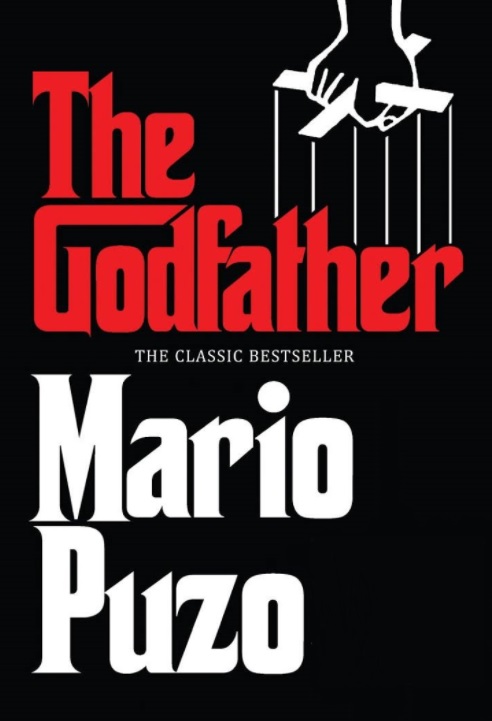
There are a lot of references in Mario Puzo’s famous novel to ‘The Five Families’, which doesn’t seem to include the Corleone Family.

For example in the following passage: ‘For the last year the Corleone Family had waged war against the five great Maffia Families of New York and the carnage had filled the newspapers. If the five families include the Corleone’s, then why doesn’t it say: … against the other four great Mafia Families?

There are many other references, like: ‘The heads of the Five Families made frantic efforts to prepare a defence against the bloody retaliatory war that was sure to follow Sonny’s death.’ Or: ‘The Five Families and the Corleone Empire were in stalemate.’

Then the big meeting of bosses comes, so we can finally learn who the Five Families are and Puzo messes it up. It reads: ‘The representatives of the Five Families of New York were the last to arrive and Tom Hagen was struck by how much more imposing, impressive, these five men were than the out-of-towners, the hicks. For one thing, the five New York Dons were in the old Sicilian tradition, they were ‘men with a belly’ meaning, figuratively, power and courage; and literally, physical flesh, as if the two went together, as indeed they seemed to have done in Sicily. The five New York Dons were stout, corpulent men with massive leontine heads, features on a large scale, fleshy imperial noses, thick mouths, heavy folded cheeks. They had the look of no-nonsense busy men without vanity.’

Don Corleone is already there from the beginning, so you would expect five bosses to be introduced now, but we only get four: Anthony Stracci, Ottilio Cuneo, Emilio Barzini and Philip Tattaglia. What the hell?!?!

There is also another passage here pointing to five families besides the Corleones. It reads: ‘Of the five New York Families opposing the Corleones, Stracci was the least powerful but the most well disposed.’ That proves it: there is a family missing here.

Yes, in real-life there are five New York Families (Bonanno, Colombo, Gambino, Genovese, Lucchese) and not six, but these passages in the novel make it very clear that the Corleone Empire is NOT considered as one of the five. Why did Puzo create this unclear situation? This seems rather sloppy for a capable writer like him.

Francis Ford Coppola could have corrected this mistake in the movie, but he didn’t. The movie also includes a few of these references. Like Tom Hagen proclaiming: “All the five families would come after you, Sonny.…” Or Don Vito saying: “I want you to arrange a meeting with the heads of the Five Families.”

I have searched for an answer, but found nothing. We, lovers of popular culture, will have to live forever with this frustrating, inconsequent, mess-up. Good luck with that.

The Don’s Dilemma Reconsidered

A dilemma in business is usually a choice that one must make between two outcomes that are both undesirable. For a great example, look no further than The Godfather, in which family patriarch Don Vito Corleone has to decide whether or not to enter the drug trade. As a reminder of this deal – that sets The Godfather’s whole plot in motion – read Tom Hagen’s notes here below:

“Sollozzo is known as the Turk. He’s supposed to be good with a knife, but only in matters of business with some sort of reasonable complaint. His business is narcotics. He has fields in Turkey where they grow poppy. In Sicily he has the plants to process them into heroin. Now, he needs cash, he needs protection from the police for which he gives a piece of the action. I couldn’t figure out how much. The Tattaglia family is behind him here in New York. They have to be in it for something. He is known as a top narcotics man.”

The Consiglieri Question: What would you advise Don Vito about the Turk’s proposal?

Now this is much more tricky as it may seem at first glance. Don Corleone is very well connected, but his current rackets (gambling, unions) are easily overlooked by corrupt police officers and politicians. Drugs: different story. So, entering this trade would create a major problem for the Don in maintaining his valuable business relationships which he also considers as dear personal friendships. On the other hand, the attractiveness of narcotics, moneywise, is way too big for the Mafia to resist. The Don’s major competitors will surely get involved with Sollozzo, and if the Corleones won’t play ball it might lead to serious conflict. Maybe even war. And off course, this is exactly what comes to pass.

The Don’s consigliere Tom Hagen seems to focus mostly on the second consideration. This is his advice to Don Vito: “Well I say yes. There’s more money potential in narcotics than anything else we’re looking at. Now if we don’t get into it, somebody else will. Maybe one of the five families, maybe all of them. Now with the money they earn, they can buy more police and political power. Then they come after us. Now, we have the unions and gambling, and they’re the best things to have, but narcotics is a thing of the future. If we don’t get a piece of that action, we risk everything we have. Not now, but ten years from now.”

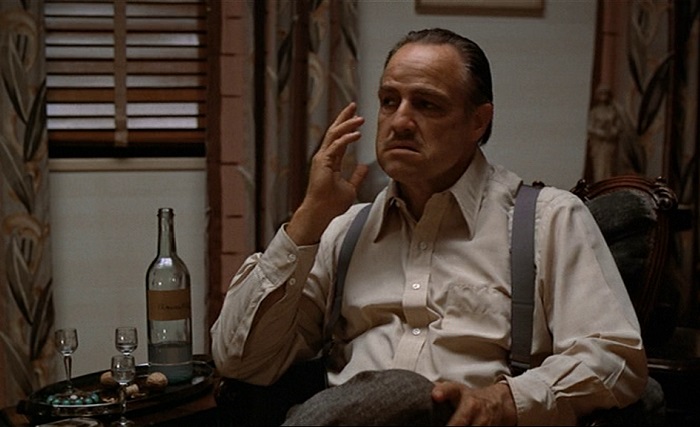
Is Hagen right? Is it the smart play to help the Turk? If you consider the shitstorm the Corleone Family ended up in after Don Vito turned him down (“I must say ‘no’ to you, and I’ll give you my reasons”) you would probably say yes. Definitely yes. But maybe Vito’s answer wasn’t so wrong after all. You see, every business starts with the core principles of the founder(s). Vito started out by helping the community he lives in. Off course, he also used despicable violence against those who opposed him, but he didn’t believe in squeezing out poor people like the old Mustache Pete’s were doing in New York. Similarly, he thinks drugs will bring destruction to the communities they live and operate in. He knows very well that saying no to Sollozzo might lead to repercussions. But rather than going against his principles, he turns him down anyway.

And this a valuable lesson for any business leader dealing with a major dilemma. If one of the options goes against your core values and the other doesn’t, then you know what decision you have to make. Even if it means, you will have to deal with major negative consequences, at least you will have stayed true to your core principles. And in the end, this always lasts longer.

© Jeppe Kleijngeld, maart 2020