15 Differences Between The Godfather Novel and Movie

Today it was 50 years ago that The Godfather, one of the greatest films ever made, was released in the Netherlands. It was based on the excellent novel by Mario Puzo. As often happens with a screen adaptation, a lot of stuff was either left out or changed. Below are the fifteen most important differences between Puzo’s bestselling novel and the classic movie by Francis Ford Coppola.

1. Sonny’s Cockyness
The following passage from the novel explains more about why Sonny was always the cock of the walk: Sonny Corleone was tall for a first-generation American of Italian parentage, almost six feet, and his crop of bushy, curly hair made him look even taller. He was built as powerfully as a bull, and it was common knowledge that he was so generously endowed by nature that his martyred wife feared the marriage bed as unbelievers once feared the rack. It was whispered that when as a youth he had visited houses of ill fame, even the most hardened and fearless putain, after an awed inspection of his massive organ, demended double price.

2. Another Request For the Don
All the wedding guests that ask requests of Don Corleone at his daughter’s wedding are in both the novel and the movie except one. Understandably, it was cut out because it is the least interesting. A guy needs 500 dollars to open a pizzeria. What is interesting though is his name: Anthony Coppola. The novel was released in 1969 and author Mario Puzo did not yet know that it would be adapted into a movie by a guy named Coppola. Funny he chose that name.

3. Woltz is a Real Pervert
Placing the severed racehorse head in movie producer Jack Woltz’s bed was brutal. In the film the guy is portrayed as an asshole, but not as a big enough fucker to deserve this kind of punishment. In the novel however, Hagen finds out he ‘did a number’ on a twelve year old girl during his visit to Woltz’s ranch. Later, it is explained that the 60-year old movie mogul can indeed only get it up with very young girls. So apart from the notion that hurting animals is always wrong, Woltz definitely had something bad like this coming.

4. Bonasera Gets His Vengeance
After a long conversation with the undertaker Bonasera, we see the Don give out the order to punish the two men who have hurt his daughter, but we don’t witness the actual event in the film. In the novel we learn that Paulie Gatto was in charge of this operation (the guy who gets killed after which the famous line “leave the gun, take the cannoli” – which btw is not in the novel – is uttered). He uses two professional fighters who kick the two abusers to a pulp when they leave a bar. Like ordered by Don Corleone, they survive. But their faces are unrecognizable. Bonasera is very happy indeed, until his phone rings some time later.

5. Fontane Makes a Career Switch
The singer Johnny Fontane plays a larger role in the book than in the film. We learn that the Don’s service to Fontane has paid off. He played in Woltz’s picture which earned him an Academy Award. And that is not all. Tom Hagen visits him after the picture is wrapped up and tells him that Don Corleone will bankroll him in becoming a movie producer. Soon after the Don is shot, but Fontane still gets the money to produce one movie at the time. He ends up as successful as Woltz.

6. More On Luca Brasi
In the movie, it is obvious that Luca Brasi is a dangerous killer who works exclusively for the Corleone Family. But there is nothing about his background really. In the novel, he plays a larger role. Partly because there is more story about the Don’s rise to power, which wasn’t used in The Godfather: Part II (see also 7). About Luca we learn that he is absolutely terrifying and has done some horrible deeds. Some he did in service of the Don, like butchering two hitmen Al Capone had sent to New York as a favor to Don Maranzano who was at war with the Corleone Family. But some he did for himself, like incinerating his own baby in an oven and murder his girlfriend with whom he had the child. No wonder everybody in the movie seems to be afraid of this brute.

7. The First Mob War and Sonny’s Involvement
When the Corleone Family goes to the mattresses in The Godfather, we get the faint impression that this was not the first war they were in. It is not. In the novel, Don Vito fights a bloody war in the early 1930’s with another New York boss: Don Maranzano. It was in this war that Sonny Corleone made his reputation as a brutal general. As a boy, Sonny had witnessed his father kill Don Fanucci and he confronted his father with this (that’s right, this is not in The Godfather: Part II). After that, he became involved in the family business and it turned out that he had a talent for violence and cruelty. He may have missed the strategic subtleness the Don searched for in his successor, but he surely was effective. The war against Maranzano was resolved by killing the Don while he was eating in a restaurant (similar to the real-life assassination of Don Masseria of New York).

8. Kay and Mama Corleone
After Michael had left her after killing Sollozzo and McCluskey, Kay Adams visits the Corleone estate but gets very little information from Tom Hagen. The jerk almost didn’t invite her in! Mama Corleone is not happy with this treatment and she asks inside Kay for lunch. Despite Tom’s objections, she tells Kay gently that “Mikey not gonna write you. He hide two-three years. Maybe more. You go home to your family and find a nice young fellow and get married.” After Kay leaves, she is trying to get used to the fact that the young man she had loved was a cold-blooded murderer. And that she had been told by the most unimpeachable source: his mother.

9. Michael’s Scapegoat
In the movie, it is never explained how exactly Don Corleone managed to get Michael home from Sicily. The police are after him after all, which we know in the novel because they come to Kay’s house to question her. The don did it by finding a scapegoat for the Sollozzo-McCluskey murders. This guy was part of a small Sicilian mob family, who acted as intermediaries when the bosses needed to plan safe negotiations. The man had committed a brutal murder and had been sentenced to death. Don Vito made him falsely confess to killing McCluskey and Sollozzo and he had the waiter from the restaurant provide false witness testimony. Problem solved.

10. Lucy Gets an Operation
On Connie’s wedding in The Godfather I, Sonny cheats on his wife with Lucy Mancini. In part III, she apparently had a son from Sonny called Vincent. There is nothing about her getting pregnant in the book, but there is quite a lot of stuff about their love affair, and there is a chapter on her after Sonny’s death. It is in this chapter that we learn that she has quite a big box. Apparently which is why she matched so well with Sonny (see point 1). Not sure if this is Puzo’s finest writing, but I’m just giving you the facts here. After Sonny’s death, the Corleone Family gives Lucy a job in Vegas and a nice monthly income. She meets a doctor, who she has an affair with. He fixes her ‘down there’ and later also fixes Johnny Fontane’s voice box. Great guy.

11. More On Al Neri
Michael Corleone’s enforcer Al Neri was apparently a cop before he came into Michael’s service. A brutal cop who would put the fear of God into many delinquents. One day, he kills a vile pimp who had cut up a young girl and her mother. He gets a heavy sentence, and this is when the Corleones step in. They use their political influence to set him free, and immediately offer him a job. Now Michael got his own Luca Brasi, a powerful weapon in the battles he is about to get engaged in.

12. Fabrizio Gets What’s Coming To Him
Michael’s big revenge differs quite a bit in the movie. In the novel, it doesn’t take place during the baptism. Coppola combined the happenings to make it more dramatic and Michael more diabolical. Great move. Also, Moe Greene gets killed earlier in the story. More importantly, in the novel Michael only whacks two of the four dons of the opposing families: Barzini and Tattaglia. Also, Fabrizio, the bodyguard who killed Michael’s wife in Sicily, is shot to death in a bar. “Michael Corleone sends his regards”. A scene was filmed for The Godfather: Part II, in which Fabrizio is killed by a car bomb, but it was cut from the movie.

13. Tessio Off the Hook?
After Tessio is to be killed for his betrayal, he asks Tom Hagen if he can get him off the hook. “Can’t do it, Sally”, Hagen answers. In the book, Tom had actually checked with Michael if Tessio could be saved. “Any way to get Tessio off the hook?” Michael’s answer: “No way”. At least he tried, which makes Tom a bit less cold than in the movie, although in the world of the mob, it’s not really possible to give traitors passes. The don’s position would be threatened very soon.

14. Hagen Reconciling With Kay
The Godfather famously ends with Michael’s door being closed on Kay; the moment she realizes of course that it was all true: Michael had killed Carlo and the heads of the five families. The perfect ending. In the novel, there is a scene after that realization in which Tom Hagen visits Kay and actually explains to her why Michael killed Carlo. And he makes it sound very reasonable. After that, Kay decides to give it another shot with Michael. How does she deal with Michael’s sins?

15. Kay Burning a Candle
The novel ends with Kay going to church to burn a candle for Michael Corleone’s soul. Like she had seen Mama Corleone do for her husband. So history repeats itself and Kay, despite being a real Americana, becomes a Sicilian wife for Michael. So, he made the right choice hooking up with her again after his exile on Sicily.

Read also: The Don’s Dilemma Reconsidered


Bullets Over Hollywood

Bullets Over Hollywood (2005, USA)

Director: Elaina Archer
Written by: John McCarty (book), Elaina Archer, Tom Marksbury
Features: Paul Sorvino (narrator), Leonard Maltin, Michael Madsen, Edward McDonald, ao.

Running Time: 70 mins.

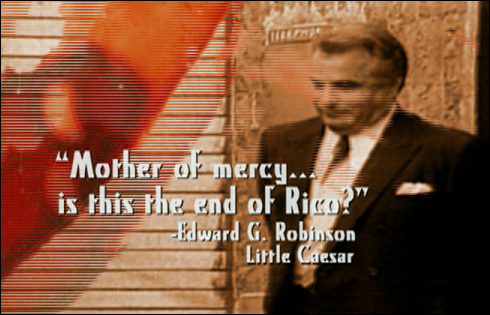
This Hugh Hefner produced documentary shows the fascination of moviegoers with the mob. ‘Once in the racket, always in the racket’, Al Capone said who became the archetype of the gangster and role-model for some legendary movie characters like Caesar ‘Rico’ Bandello (Little Caesar) and Tony Camonte/Montana (Scarface) This also applies to Hollywood when it comes to making gangster films. Every time you think the realms of the genre have been fully explored, some new masterpiece comes along. After the time that Cagney, Robinson and Bogart dominated the screen, a new generation of filmmakers emerged in the seventies with Coppola, Scorsese and De Palma. Then at the brink of the new millennium, the Hollywood gangster legend continued on the small screen with The Sopranos.

Bullets Over Hollywood opens with the very first gangster film: The Musketeers Of Pig Alley, made in 1912. It then goes on to chronologically move through gangster film history right up until The Sopranos. The documentary combines film fragments, interviews and real gangster footage while Paul Sorvino (GoodFellas) provides the narrative. It is an interesting viewing for enthusiasts of the genre, but misses real insight in the works that it covers. Some interesting facts are revealed such as the story that Howard Hawks was forced by Hollywood to add ‘the shame of the nation’ to his gangsterfilm Scarface, because they didn’t want to glorify gangsters. Also interesting is some behind-the-scene footage of gangster classics, but these fragments are unfortunately a little brief. Altogether this is worth a look. If only to hear Leonard Maltin rave about The Godfather and to re-experience some of the finest sequences in the history of this fascinating American phenomenon.

Rating:


The Musketeers Of Pig Alley (1912, D.W. Griffith)

The Book of Boba Fett – a Postmodern Mashup

This week, the final episode aired of The Book of Boba Fett, an action bonanza featuring the biggest laser gun battle Star Wars has ever seen. It’s directed by Robert Rodriquez, who shows he is still a true action cannoneer.

The series initially got a luke(skywalker)warm reception, but during the second half the reviews improved. Not coincidentally, this was after the Mandalorian showed up and took central stage for an entire episode. And this reveals the show’s weakness, namely the title character. Who ever said Boba Fett, who barely had any lines in the original movies, was an interesting enough character to give his own television show? The Mandalorian on the other hand is great; he’s mysterious, a badass, can crack a joke once in a whole and follows a strict code of honor. Therefore his show is widely considered as the most successful Star Wars production under Disney since the acquisition from Lucasfilm in 2012.

The Mandalorian – like TBoBB developed by actor-director Jon Favreau – was loosely based on the classic Japanese manga Lone Wolf and Cub, about an assassin traveling through feudal Japan with his infant boy. The boy in The Mandalorian was Baby Yoda, an instant audience favorite. The Book of Boba Fett is based on another classic: The Godfather. Boba Fett, after surviving being swallowed by the Sarlacc and taken prisoner by the Tusken Raiders, moves to Tatooine to take over the crime syndicate previously ruled by Jabba the Hutt. Unfortunately, Boba is closer to Fredo than Vito, Michael or Sonny Corleone. He is just not particularly intelligent or cunning and it’s hard at times to figure out what’s even driving him at all. And frankly, Temuera Morrison is not the most versatile actor in the world. Why would he be suitable for a lead role?

So far the bad news, because TBoBB certainly has its merits. The supporting characters are excellent for one thing. The first one is called Fennec Shand (portrayed by Ming-Na Wen), a female assassin who partners up with Boba. She’s an interesting character and has good chemistry with Boba/Temuera. Second, the already mentioned Mandalorian shows up and the same applies for Baby Yoda (Grogu) and Luke Skywalker (the post Return of the Jedi-version). Finally, Cad Bane arrives in style in episode 6 and I can truthfully say that this one of those genuinely terrific bad guys Star Wars is known for. So thumbs up for that.

Another reason to watch: the amazing set pieces. This is pure Star Wars cinema quality. It’s incredible what they can do nowadays in cinema let alone television. It looks and smells and feels 100% like Star Wars. What might also persuade movie lovers is the tons of references, both visually and verbally, to classic cult movies. To Star Wars itself obviously (Wookies really do pull arms out of sockets), spaghetti westerns, Robert Rodriquez-references, The Godfather (‘it is the smart move’, ‘my offer is this: nothing’), The Untouchables, Lone Wolf and Cub, and probably many more I missed or forgot. You really get the feeling that you’re watching a show made by people who didn’t have an original concept to go on, but do love movies and had a huge budget to spend, so they threw in all this stuff from the classics.

Therefore, though obviously not as great as The Mandalorian, it still provides plenty of bang for your spacebucks.

22 Unforgettable Character Introductions in Movies

By Jeppe Kleijngeld

Sometimes a character is introduced in a movie in a way that immediately tells you all you need to know. Is this character friendly, bad, cool or slick? Is he/she the ultimate hero? The ultimate badass? The ultimate gangster? In this list you will find 22 character introductions that stick. If you’ve seen the movies, chances are you probably remember them. Enjoy!

22. Don Vito Corleone in The Godfather

Played by
: Marlon Brando
First lines: “Why did you go to the police? Why didn’t you come to me first?”
Why memorable: What better way to introduce the mighty Don Corleone than to show him during a day at the office? We learn a lot of things from this. For one thing, he has power, lots of power. He has everybody in his pocket. Respect and honor matter more to him than money. Don Corleone knows how to treat a friend, but when you’re in his debt you can expect him to ask something in return. Through three little visits by relations we learn exactly how the Don works (a favor for a favor), what his principles are (“you can act like a man!”) and how he sees himself (“we’re not murderers, despite of what this undertaker says”). Marvelous.

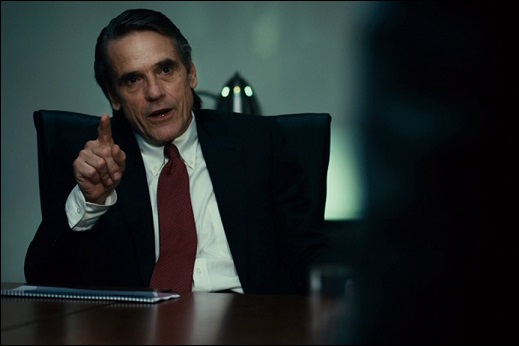
21. John Tuld in Margin Call

Played by
: Jeremy Irons
First lines: “Please, sit down.”
Why memorable: He arrives by helicopter, the CEO of a big Wall Street bank, at the brink of the mother of all market crashes. The moment he enters the conference room, he hypnotizes everybody, including the audience. Jeremy Irons completely rules in this scene. He has great lines to work with (“Maybe you could tell me what is going on. And please, speak as you might to a young child. Or a golden retriever. It wasn’t brains that brought me here; I assure you that”), and his delivery is completely mesmerizing.

20. Garland ‘The Marietta Mangler’ Greene in Con Air

Played by
: Steve Buscemi
First lines: “He’s a font of misplaced rage. Name your cliché. Mother held him too much or not enough.”
Why memorable: The fun thing about Con Air is the high density of insane criminals on board of a hijacked airplane; Cyrus ‘The Virus’ Grissom; Johnny 23; Diamond Dog; et cetera. When you think you’ve got them all, a new bunch arrives, including Garland Greene aka the ‘Marietta Mangler’, who slaughtered 37 people. “Should be interesting”, Grissom says. Greene’s entrance is pretty hilarious; a steel security truck; a gimp-like suit; loads of guards and impressed remarks by the toughest of criminals. Then Grissom has his mask removed and we look at…Steve Buscemi, a creepy Steve Buscemi no less. Later, he surprisingly turns out to be pretty friendly.

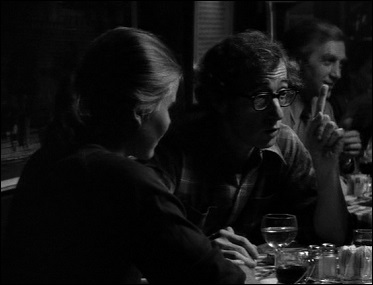
19. Isaac Davis in Manhattan

Played by
: Woody Allen
First lines: “Chapter 1. He adored New York City. He idolized it all out of proportion. Uh, no. Make that; he romanticized it all out of proportion. Better.”
Why memorable: This particular scene really nails Woody Allen. While we view beautiful black and white images of Manhattan, we hear him in a voice-over describing why he loves this city. Typically Allen, he does so in a really neurotic way, changing his description about six times in only a few minutes. Boy, can he talk! Arguably Allen is not portraying Isaac Davis here, but he is really playing himself. In either case, you get to know the man right away with this intro. Whether that is positive or negative is a matter of taste.

18. Django in Django

Played by
: Franco Nero
First lines: “Whatever I’m doing here is none of your business.”
Why memorable: What a great way to start a movie! First, we get a credit sequence in which we see a mysterious man carry a coffin behind him through the desert. We don’t see his face. The campy credits seem to come straight out of an old Italian horror flick. The title song ‘Django’ plays and not only is it beautiful, it also tells us the story; once you’ve loved her, whoa-oh…now you’ve lost her, whoa-oh-oh-oh…but you’ve lost her for-ever, Django. In the scene after, Django eliminates five sadistic bandits that want to burn a girl alive. It is confirmed, Django is a bloody hero! No matter what happens next, we will be with him.

17. Amélie Poulain in Le Fabuleux Destin d’Amélie Poulain

Played by
: Audrey Tautou
First lines: “Les poules couvent souvent au couvent.” (‘The chickens cluck more often than the rooster crows.’)
Why memorable: The romantic fairytale Amelie, opens with a depiction of the childhood of main character Amélie Poulain in Paris neighborhood Montmartre. Because of circumstances and the personalities of her parents, Amélie grows up at home, where she retreats into her own fantasy world where vinyl records are made like crepes and crocodile monsters come to visit her. This introduction gives us the perfect sense of who Amélie will become as she grows up; a woman who wants to make people happy with little things and a woman impossible not to love.

16. Bill in Kill Bill

Played by
: David Carradine
First lines: “Do you find me sadistic? You know I’ll bet I could fry an egg on your head right now if I wanted to.”
Why memorable: His handkerchief tells us who he is; Bill from the title. The guy that needs to die! What he does in the first scene is unforgivable; shooting the lovely Bride (Uma Thurman) through the head. Yet, there is this duality about Bill that makes him interesting. He is a cold blooded bastard here, but the way he touches the Bride and the things he says, tell us that he really cares about her. We want to learn more about him. The fact that we don’t see his face only adds to his mystery. Add to that his awesome voice (David Carradine’s) and you’ve got a character (and bad guy) entrance to dream of.

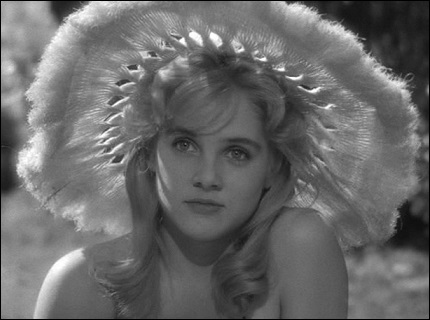
15. Lolita in Lolita

Played by
: Sue Lyon
First lines: “Goodnight (kisses mother). Goodnight (kisses Humbert Humbert).”
Why memorable: The middle-aged college professor Humbert Humbert (James Mason) immediately rents the room of the house he is checking out when he sees 14-year-old nymphet Lolita in the garden. “What was the decisive factor?”, asks landlady and Lolita’s mom Charlotte Haze. “Was it the garden?”
“No, I guess it’s your cherry pie”. Yeah right Humbert, you horny old goat. It is understandable though. Actress Sue Lyon looks terrific and plays the seductive vamp Lolita completely and utterly convincing. Mason’s facial expressions in response to Lolita are hilarious.

14. Darth Vader in Star Wars: Episode IV – A New Hope

Played by
: David Prowse (body) and James Earl Jones (voice)
First lines: “Where are those transmissions you intercepted? WHAT have you done with those PLANS?”
Why memorable: The ultimate sci-fi baddie makes his introduction right at the start of Episode IV. His evil nature and his power are apparent from the first frame; his black cape, his helmet, his breathing, et cetera. The way he chokes a rebel to death makes us fear him. Darth Vader is evil, incarcerated, or rather incyborgated. A really great introduction to a brilliant character.

13. Anton Chigurh in No Country for Old Men

Played by
: Javier Bardem
First lines: “Step out of the car please, sir.”
Why memorable: In his first two scenes in No Country for Old Men, Anton Chigurh is like the Devil himself. Although his haircut is something awful, this man surely is frightening. Even the hardened sheriff played by Tommy Lee Jones thinks so. First, Chigurh uses his handcuffs to kill the cop who arrested him. He does so with a sardonic pleasure, almost as if he is possessed. Afterwards he immediately kills another man, a civilian this time, using an oxygen tank. This is beyond much doubt the most brutal introduction to a mad killer ever.

12. Bridget Gregory in The Last Seduction

Played by
: Linda Fiorentino
First lines: “I can’t hear you people! You maggots sound like suburbanites. 50 bucks for a lousy coin set, you sell one at the time. I got a hundred bucks for the next sucker who makes a triple sale.”
Why memorable: The greatest of femme fatales is Bridget Gregory in The Last Seduction. Right from the get go her deadliness is obvious. Yet, she is still stunningly sexy and irresistible. In this scene, she is bullying men around in a sales office. Her aggression is off-putting, yet she could pull in any guy like a magnet. Bridget is a woman you just don’t say no to, no matter how obviously bad for your health she is.

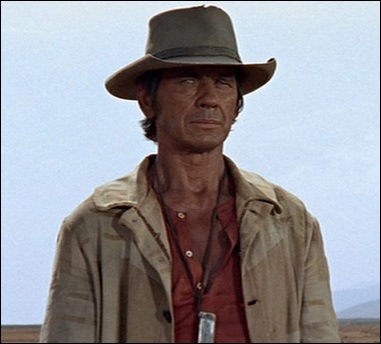
11. Harmonica in Once Upon a Time in the West

Played by
: Charles Bronson
First lines: “And Frank?”
Why memorable: Three men that look like bandits are waiting for a train. When it arrives nobody exits. Then, when they are about to leave they hear the music. Hello Harmonica. Our mysterious hero plays rather than talks. He seems to be looking for a man named Frank, who the bandits work for. It is not hard to guess his purpose with Frank when he kills the three men. Harmonica does not only play, he knows how to shoot too.

10. Harold Shand in The Long Good Friday

Played by
: Bob Hoskins
First lines: “Good old George.”
Why memorable: Our favorite British gangster Harold Shand, is introduced when he arrives at the airport. He walks around in a cool white suit and with a very cool, tough guy expression. The musical score is awesome. This is a guy who is in control. He is the man! We definitely want to spend more time with Harold. A great character like Harold Shand deserves an introduction like this.

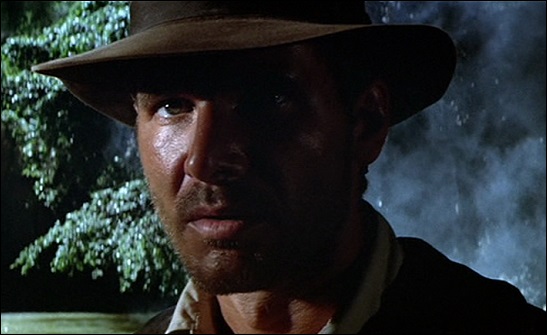
9. Indiana Jones in Raiders of the Lost Ark

Played by
: Harrison Ford
First lines: “This is it… This is where Forrestal cashed in.”
Why memorable: The first thing we see are his whip and his hat, the two most important items Indy carries with him. He wouldn’t be Indiana Jones without them. We don’t see his face though. That comes later when one of his companions wants to shoot him in the back. He turns around and uses his whip to take away his revolver. You don’t surprise Indiana Jones like that! From here on we know; this is the greatest adventurer in the world and we will gladly follow him to the darkest places.

8. Jessica Rabbit in Who Framed Roger Rabbit

Played by
: Betsy Brantley (performance model) and Kathleen Turner (voice)
First lines: “You had plenty money nineteen twenty-two. You let other woman make a fool of you.”
Why memorable: When you hear the name Jessica Rabbit, wife of wacky toon character Roger Rabbit, you just assume you are dealing with a rabbit. Wrong! She is the most beautiful woman ever animated. Gorgeous, voluptuous shapes and a face to dream off; Jessica oozes sex. Private detective Eddie Valiant is stunned when he sees her perform in a nightclub and with him the audience.

7. Jack Sparrow in Pirates of the Caribbean

Played by
: Johnny Depp
First lines: “What do you say to three Shillings and we forget the name?”
Why memorable: The pirate of all pirates is introduced brilliantly. Jack Sparrow is seen standing proudly on a mast in a beautiful tilting shot, supported by epic-sounding music. But, as it turns out; the ship is not as impressive as it initially appears. It is a small sized sloop and it is sinking. The best part is that Jack exactly makes it to the shore; the second he puts foot on land, his ‘ship’ is gone. That immediately makes clear the dilemma of his character; he is a pirate without a ship. And he walks kind of funny, but hey; it is Johnny Depp after all.

6. Jesus Quintana in The Big Lebowski

Played by
: John Turturro
First lines: “Are you ready to be fucked, man?”
Why memorable: Talking about unforgettable… Everybody who has ever seen The Big Lebowski remembers this scene: the purple outfit, the one polished nail, the bowling ball licking, the perfect strike and his Latin dance to celebrate. Jesus Quintana is forever branded in the collective cinematic consciousness thanks to this moment. This is truly legendary stuff.

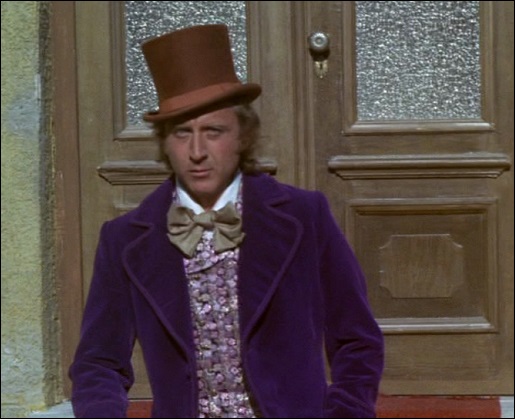
5. Willy Wonka in Willy Wonka & the Chocolate Factory

Played by
: Gene Wilder
First lines: “Welcome my friends”
Why memorable: Which kid wouldn’t want to meet a master chocolate maker? Before his entrance in the movie Willy Wonka & the Chocolate Factory, he is already presented as legendary; he was born to be candyman. Then we meet him 40 minutes into the movie and we think; so this is the guy? Hehehe. Gene Wilder puts one quite the show. He first fools the crowd by acting as a cripple and then he charmingly invites the lucky golden ticket winners into his factory, including poor kid Charlie Bucket and his granddad. Heart-warming and lovely.

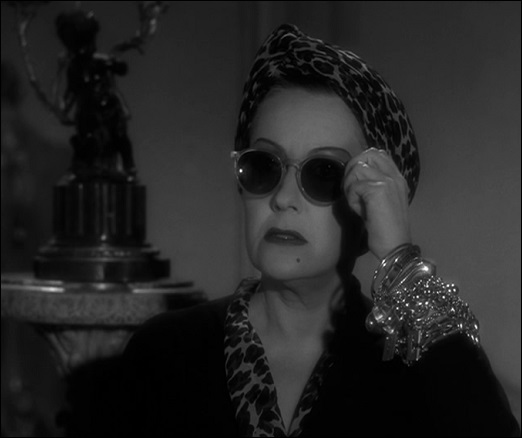
4. Norma Desmond in Sunset Blvd.

Played by
: Gloria Swanson
First lines: “Have him come up, Max.”
Why memorable: A screenwriter, Joe Gillis, has a blow-up and walks up to a fancy Hollywood house to get a spare. Then he meets her; Norma Desmond, a famous actress from the Hollywood silent pictures era. Her motto: “I am big. It’s the pictures that got small.” Her madness is apparent from the beginning as she takes Gillis for the funeral director there to bury her deceased chimp. Then they start talking about movies and we learn her narcissistic personality, forever ruined by her career. She is both sad and dreadful, a wonderful character, and introduced very poignantly.

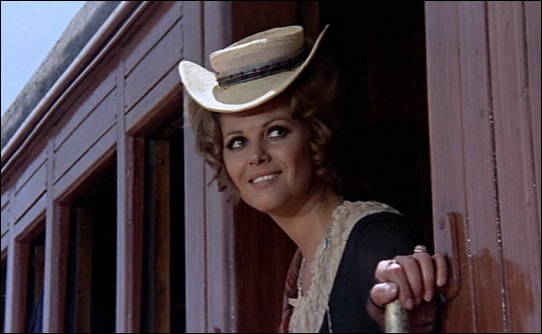
3. Jill in Once Upon a Time in the West

Played by
: Claudia Cardinale
First lines: “Sweetwater. Brett McBain’s farm.”
Why memorable: You don’t need words for a great introduction, director Sergio Leone shows us. In this beautiful scene we witness how a strong, independent woman arrives in the Wild West and things are about to change. The music by Ennio Morricone is breathtaking and so are the images of Jill walking through the town looking for her escort. We don’t need an explanation; just seeing her on that train station tells us all we need to know.

2. Hannibal Lecter in The Silence of the Lambs

Played by
: Anthony Hopkins
First lines: “Good morning. You’re one of Jack Crawford’s aren’t you?”
Why memorable: Hannibal is introduced as the character was originally envisioned; deeply scary and fascinating. It is the anticipation that is created before meeting him that makes his introduction work like hell. FBI agent Starling is nervous about the meeting and so are we. FBI-boss Crawford tells Starling; don’t tell him anything personal, you don’t want Lecter inside your head. Prison director Chilton calls him a monster. Then, when Starling finally arrives at his cell, he is already standing there; this is enough to give you the chills. In the conversation that follows we learn that he is charming, extremely intelligent and psychopathic, but in a very complex way. This whole scene is unforgettable.

1. Frank in Once Upon a Time in the West

Played by
: Henry Fonda
First lines: “Now that you’ve called me by name.”
Why memorable: Henry Fonda originally turned down the role of Frank. Director Sergio Leone flew to the United States and met with Fonda, who asked why he was wanted for the film. Leone replied: “Picture this: the camera shows a gunman from the waist down pulling his gun and shooting a running child. The camera pans up to the gunman’s face and…it’s Henry Fonda!” (source: IMDb). Until then, with one exception, Fonda had only been cast in ‘good guy’ roles. Leone wanted the audience to be shocked. And it works like hell. Combined with his own theme music (all main characters in OUATITW have musical leitmotifs that relate to them), it is the most powerful character introduction ever. Those deep blue eyes, that sardonic smile… this is what evil looks like.

Originally published on FilmDungeon