You know that we do take-away.
We deliver too.
Open twenty-four hours, babe.
Just waiting on a call from you.

The Sopranos
Episode 26 – Funhouse (Season 2 Final)
Directed by
John Patterson
Written by
David Chase & Todd A. Kessler
Regular Cast
James Gandolfini … Tony Soprano
Lorraine Bracco … Dr. Jennifer Melfi
Edie Falco … Carmela soprano
Michael Imperioli … Christopher Moltisanti
Dominic Chianese … Corrado ‘Junior’ Soprano
Vincent Pastore … Salvatore ‘Big Pussy’ Bonpensiero
Steven Van Zandt … Silvio Dante
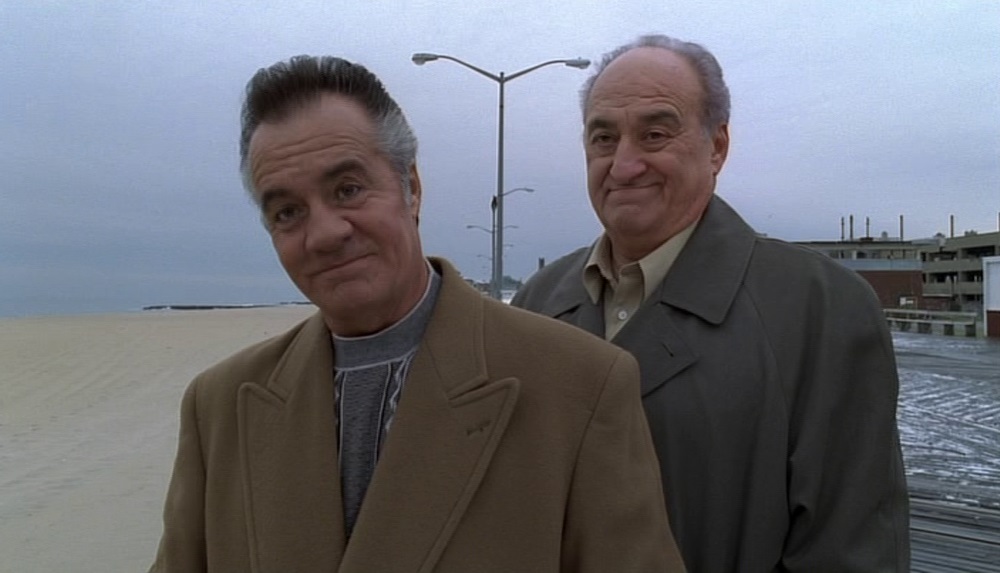
Tony Sirico … Paulie ‘Walnuts’ Gualtieri
Robert Iler … Anthony ‘A.J.’ Soprano
Jamie-Lynn Sigler … Meadow Soprano
Nancy Marchand … Livia Soprano
Guest Players
Jerry Adler … Herman ‘Hesh’ Rapkin
Federico Castelluccio … Furio Guinta
John Ventimiglia … Artie Bucco
Dan Grimaldi … Patsy Parisi
Frank Pellegrino … Frank Cubitoso
Robert Patrick … David Scatino
Louis Lombardi, Jr. … Skip Lipari
Matt Servitto … Agent Harris
Sofia Milos … Anna Lisa
Maureen Van Zandt … Gabriella Dante
Toni Kalem … Angie Bonpensiero
David Margulies … Neil Mink
Nicole Burdette … Barbara Giglione
Tom Aldredge … Hugh DeAngelis
Suzanne Shepherd … Mary DeAngelis
John Fiore … Gigi Cestone
Robert Lupone … Bruce Cusamano
Barbara Andres … Quintina
Sig Libowitz … Hillel
David Anzuelo … Flight Attendant
Kathleen Fasolino … Meadow’s friend
Ray Garvey … Airport Guard
David Healy … Vice Principal
Ajay Mehta … Sundeep Kumar
Jay Palit … Indian Man
Wrap Up
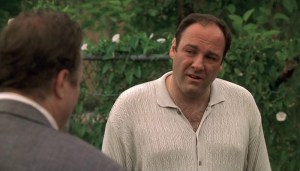
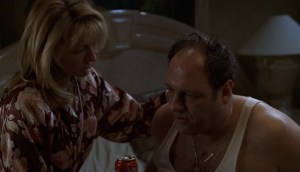
Tony is feeling pretty good, despite his mother busting his chops after Janice left. He solves it by giving her airline tickets of the Scatino bust-out, so she can go and visit an old aunt (aunt Quinn, the other miserabile). He’s earning good enough money with a prepaid phone card scheme to buy Carmela a mink coat and he’s not so depressed anymore. Another reason for Tony’s untroubled state-of-mind is the demise of Richie, ‘All my enemies are smoked’, Tony tells his crew optimistically during a diner. But it is too good to be true, his unconsciousness tries to tell him. He gets food poisoning the day after. And in a fever dream Silvio tells him, ‘our true enemy has yet to reveal himself’, in true Al Pacino style. Silvio is even wearing the maroon vest Pacino wore in The Godfather III.
Pussy’s not feeling so well. He has to give his phone card earnings straight to FBI Agent Skip Lipari. He didn’t get food poisoning though, even though he ate at the same restaurants; an Indian place and Artie Bucco’s. Tony suspects Artie’s shellfish, but when Artie calls Pussy they find out he doesn’t have any symptoms, while they had different courses at the Indian place. Tony starts dreaming again, about him at the boardwalks. First he dreams that he sets himself on fire in front of his friends because he’s diagnosed with terminal cancer (‘what if they’re wrong?’). Then he dreams that he shoots Paulie Walnuts during a card game. He discusses the meaning with Dr. Melfi in a dream therapy session, while he also talks about Pussy. ‘Pussy’ in multiple ways.
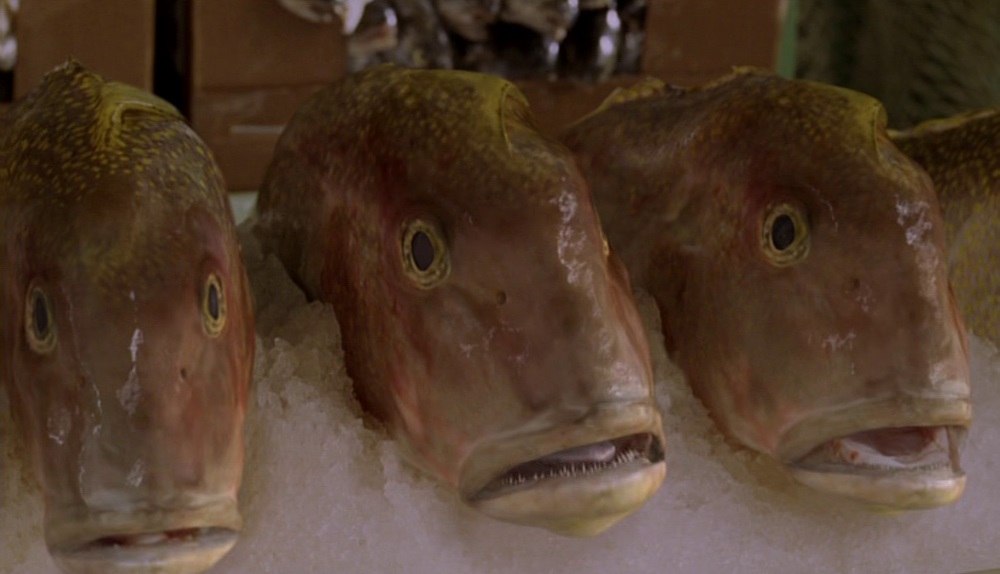
Tony knows something is not feeling right about Big Pussy. He also knows someone has to get whacked, because of the Paulie dream. In another dream sequence, a fish who looks and talks like Big Pussy tells Tony he has been working with the federal government. Tony still doesn’t want to believe it, but when he wakes up he knows what has to be done. A little later, Tony and Silvio come by Big Pussy’s house to pick him up to help them buy a boat. Tony, still sick, pretends to get another attack and goes into the upstairs bathroom. While Silvio keeps Big Pussy downstairs with Angie, drinking coffee, Tony searches the bedroom. He finds what he was looking for; wiring equipment and tapes. When Tony comes downstairs he says, ‘who’s ready to buy a boat?’
Paulie Walnuts is waiting by the boat and Pussy is getting nervous. The boat departs and when open water is reached, Pussy is taken below deck, where Tony confronts him with his betrayal. After denying it, Big Pussy has no choice but to confess. He knows his number is up. And after a last round of tequila with his friends, the inevitable happens, Tony, Paulie and Silvio shoot Pussy and he drops dead in the cabin. His body is placed in a bag with weights and entrusted to the Atlantic Ocean.
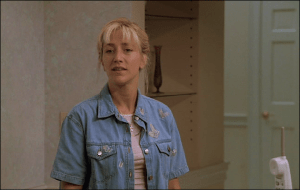
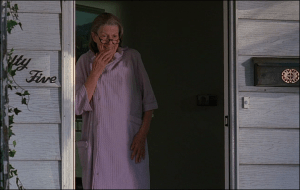
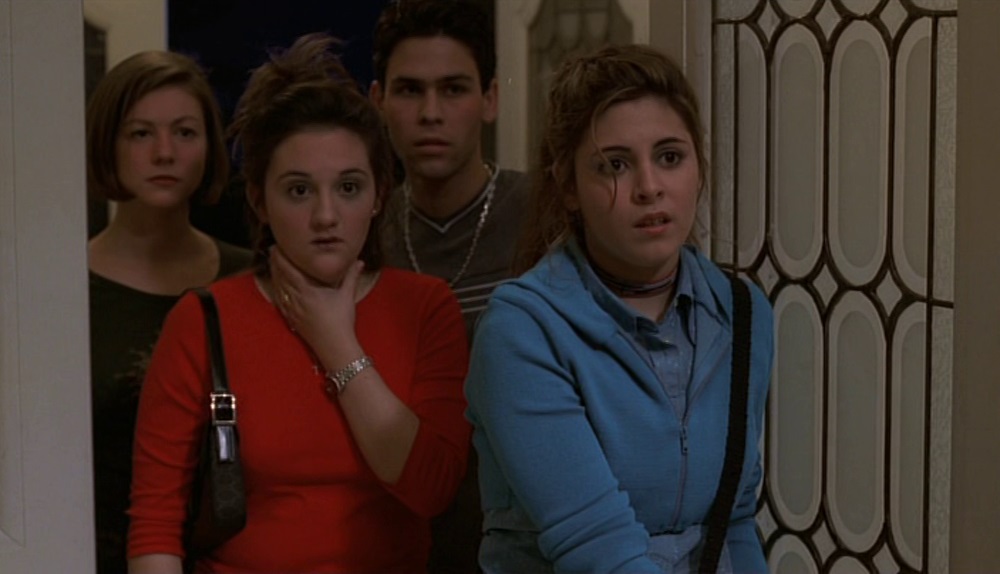
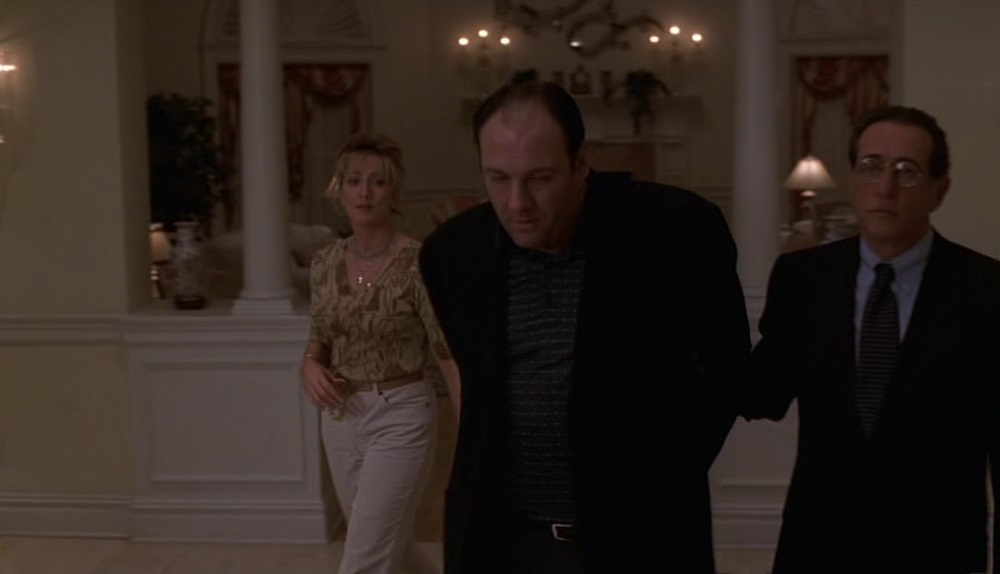
When Tony comes home, his mother calls to tell him that she is being held by airport security for the Scatino tickets. Not much later the FBI comes by with a warrant. Just when Tony is handcuffed, Meadow comes in with her friends, one day before her graduation. Luckily Tony gets off easy but he is still concerned. The season ends the way it started, with a montage of all the Soprano crew’s businesses, such as Barone Sanitation, the Jewish owned hotel, the phone card scam and David Scatino who’s divorced, broke and leaving town. The scene is scored by The Rolling Stones with ‘Thru and Thru’, an insanely great choice.
At Meadows graduation party the whole Soprano cast is present and it’s one big happy family again. Tony stands alone in the living room, smoking a cigar and reflecting on recent times. The final shot is from the ocean, where Pussy sleeps forever.
Why Great?
This final episode of the second season is extremely well written and directed. It is a powerful and surprising final episode that reminds of a Greek tragedy. Tony has to make his hardest decision yet. This is totally necessary in his leadership position, but he was also the one who loved Big Pussy most whose death is therefore a great loss for him. And for the viewer as well. Pussy’s passing and the dream sequences leading up to it are so far the most exciting and memorable moments of the Soprano saga.
When I first watched ‘Funhouse’, I just couldn’t believe it. I was hoping for a terrific episode to wrap up the season, like season 1 did with ‘I Dream of Jeannie Cusamano’. A conventional finale that neatly ties up the remaining storylines, although The Sopranos was never conventional. ‘Funhouse’ did something else entirely. By adding twenty minutes of dreamtime I got much closer to Twin Peaks than to the mob films it originally seemed to be based on. It does resolve the main remaining story – that Big Pussy is indeed ‘singing’ for the feds – but it does so in a brilliantly surprising way. By delving into the main character’s subconscious and making him realise the ugly truth his conscious self couldn’t accept.
Michael Imperioli (who plays Christopher) has a theory*1 about the episode. That Tony didn’t have food poisoning at all, but that it was the knowledge that he had to kill his friend that made him so sick. And killing his friend he does. The scene on the boat, of which the interior scenes were shot in a studio, is a dramatic highlight of the show. Brilliant acting by the cast, especially James Gandolfini and Vincent Pastore as Pussy. It’s ridiculous that season 2 didn’t win the major Emmy Awards that year, but they weren’t ready for The Sopranos yet. The show has been groundbreaking from the beginning, and this episode really took it to another level again.
Finest Moment: Pussy on the Brain
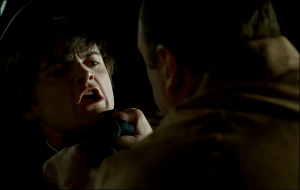
Tony is having fever dreams while suffering from bad food poisoning. All dreams have certain elements in common; danger, cancer (destruction from inside out) and Pussy. It all leads up to this final dream; the dream in which Pussy – in fish shape, but it really looks like Pussy! – reveals to Tony that he is working for the government. It is in moments like this that The Sopranos is at its most powerful; using a dream as a method to really push the plot forward. In the first season, when his mother wanted him whacked, Tony was in denial and started fantasising about a Madonna. But he didn’t acknowledge the truth until he heard his mother speak on the FBI tapes. Now, Tony has learned to listen to his subconscious. He has been having a strange feeling about Pussy for a long time and now he is open to the ultimate truth. When he wakes up he knows. The fish is also a brilliant find. In a macho gang like the Sopranos, it is considered unmanly to betray your friends. Therefore, it is Pussy – the guy with the feminine name – who’s a rat. There is also a pussy joke in there, pussy smells like… you get the picture. The reference is also to death, as in ‘sleeps with the fishes’, and it foreshadows Pussy’s ultimate resting place, the ocean. This dream is the perfect crossover between the series’ essentials; the mob and psychiatry.


*1 Talking Sopranos Podcast, episode 26 – Funhouse.













 FRAGMENTEN UIT HET SCHEMERLAND