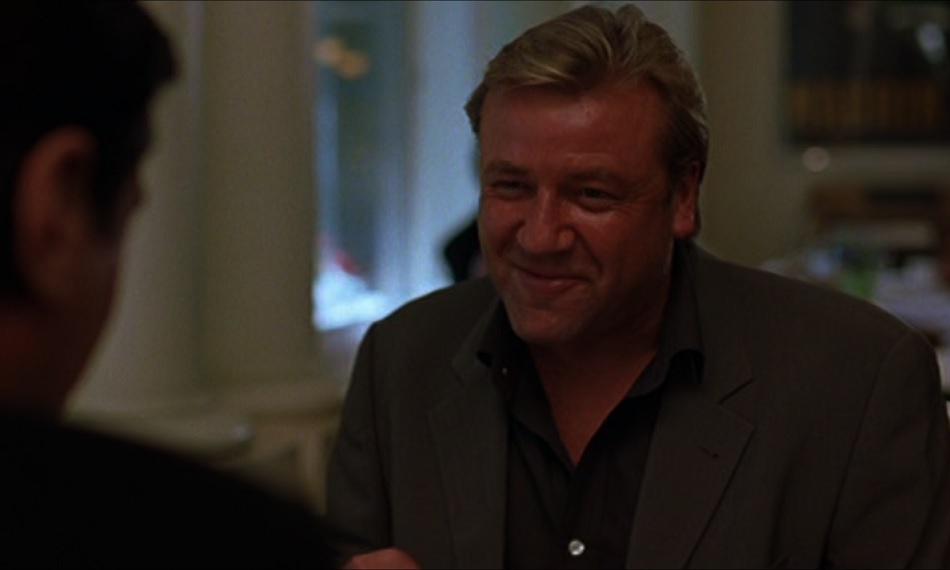
Apple TV Special: Mr. Scorsese

Mr. Scorsese is a five episode film portrait about one of the greatest film directors of all time now playing on Apple TV. It’s the most extensive documentary ever shot about the Italian American cinematic master, featuring interviews with a.o. Leonardo DiCaprio, Robert De Niro and Daniel Day Lewis. Reason enough for me to subscribe to Apple TV. An additional benefit of the subscription is that Marty’s latest film – Killers of the Flower Moon – is also available on the channel.

Scorsese is a very sympathetic guy; I have seen many interviews with him before, logical since he’s my favorite filmmaker, but in this series, you really get to know the man. He grew up in Little Italy and later Manhattan. He was very asthmatic as a child and he couldn’t play outside. There is this shot in GoodFellas where a young Henry Hill is staring out of the window observing the wiseguys outside. That’s Marty right there.

Movie theaters had air conditioning, so that’s where young Martin wanted to be as much as possible. He could breath there, and the movies formed his mind. At home he watched old Italian films with his family. He started making extensive storyboards which his father thought wasn’t very manly. Marty learned of the mobsters who controlled much of the economic activity in his neighbourhood. His father had a good job in the garment industry, which was worked out by the mob. He told young Marty: “Don’t ever let them do you a favor. They’re nothing but bloodsuckers.”

The young Scorsese initially wanted to become a priest, but that path wasn’t for him. Neither were the streets. Literature wasn’t part of his culture either, but a priest encouraged him and his friends to look beyond what they knew; to go to college, to read, learn, and explore. He attended a talk about film school and heard a professor speak passionately about cinema. That was the moment he knew what he wanted to do.

At New York film school he met Thelma Schoonmaker, his future editor. She recalls seeing his student work and knowing immediately that “he had it.” His student film It’s Not Just You, Murray! (1964) won the award for Best Student Film. In 1967 he made his first feature, Who’s That Knocking at My Door, starring Harvey Keitel.

Scorsese married young, but his first marriage collapsed quickly because his mind went more and more to making movies. He went to Hollywood to further his career and met an amazing assortment of talent there: Coppola, Schrader, Spielberg, Lucas and De Palma, known collectively as the ‘Movie Brats’. They were given this name because they were the first generation of formally trained filmmakers to unite film knowledge with artistic ambition.

In the early seventies, King of the B-movies Roger Corman gave Scorsese the chance to direct a movie. This became Boxcar Bertha (1972), a Bonnie and Clyde-style crime movie. His artistic friends hated it. Marty thought it was a good practice in shooting on budget and shooting on time, but his friends thought he had betrayed himself as an artist.

John Cassavetes had seen his feature Who’s That Knocking at My Door and advised him to make more personal movies like that. About Boxcar Bertha he said: “You just spent a year of your life making a piece of shit. Don’t do that again.” Scorsese showed him his Mean Streets screenplay and Cassavetes told him to go find a lead actor to star in it. Then he met De Niro who was from the same neighbourhood.

Mean Streets was based on people and experiences from his neighborhood and people fell in love with it, because it felt completely authentic. That makes sense, because it was real. Now, Marty got more opportunities. With his next film Alice Doesn’t Live Here Anymore (1974), he showed he could also direct women. Ellen Burstyn won the Academy Award for Best Actress for her lead role.

Although Scorsese gained recognition, this period also marked the start of heavy drug use. Film remained his way of working through deep inner turmoil. Drawn to darker characters, he was captivated by Paul Schrader’s script for Taxi Driver. He and De Niro set out to portray a loner like Travis Bickle without turning him into a caricature. Travis is isolated in almost every frame. Taxi Driver (1976) was a huge critical success and won the Palme d’Or.

Everybody praised it. It hit a nerve and showed a true understanding of the American unconscious. A lone man who commits atrocities, like the snipers who killed politicians at that time. Travis has a saviour complex: he wants to save the girls and kill the bad guys. The final scene was too violent for the sensors, so Scorsese changed the colour of the blood to dark, rusty brown or brownish-pink rather than bright red. Daniel Day Lewis was hypnotized by the film and went to see it five or six times. It was the first time he saw Bob (De Niro) act, which was a big thing for him.

After the success of Taxi Driver, he made the costly musical failure New York, New York (1977). His second marriage also fell apart and what started then was a period of self destructive behavior. He started doing lots of drugs and tried to find his cinematic muse again. He almost died – and part of him wanted to because he didn’t know how to create anymore. De Niro had a big part in getting him back on his feet. They went to Sint Maarten where they worked on the script for their next masterpiece: Raging Bull (1980).

Thelma Schoonmaker explains the film’s shooting and editing, and the documentary allows you to rediscover the beauty of its black-and-white imagery. It’s a true work of art. Scorsese had found his muse again, and also his third wife: the daughter of Ingrid Bergman and Roberto Rossellini.

After Raging Bull he wanted to do Gangs of New York and The Last Temptation of Christ. The scripts were there, but the movies were too expensive to make at that time. He did another project with De Niro, The King of Comedy (1982), which flopped. Scorsese’s career was now once again in a bad state. “He was done for in Hollywood”, they told him.

He made a comeback with After Hours (1985), an odd ball comedy shot on a low budget. Key to the film, Scorsese explains, was the collaboration with Director of Photography Michael Ballhaus, who would later shoot GoodFellas. In 1985, he married for the fourth time, this time with Barbara De Fina, who would produce a number of his movies, including Casino.

The re-established Scorsese followed up After Hours with The Color of Money (1986), a pool hall movie starring Paul Newman and Tom Cruise, and a sequel to The Hustler (1961). The movie did well, so now Scorsese could finally make his beloved project The Last Temptation of Christ (1988). He made the film to “get to know Christ better”, he explains.

The budget was tight, so he could only do two takes of every shot during the difficult shoot in Morocco. It was very tough, he says. Even tougher was the reception of the film: people were very upset. It was banned in Rome, Israel, and India – and someone set off a bomb during a screening in Paris. Blockbuster didn’t carry the film. Marty needed FBI protection for the second time (he had gotten threats after Taxi Driver and had needed protection then as well).

While working on The Color of Money, Scorsese read Wiseguy by Nicholas Pileggi, the true story of mobster Henry Hill and his life within the Lucchese crime family. Pileggi and Scorsese had both grown up in the same neighborhood and collaborated on the screenplay for GoodFellas. Scorsese had the film fully mapped out in his head – frame by frame, song by song. The result is pure montage, weightless and electric. Scorsese created a new cinematic language for this movie. “It has this crazy energy”, says Spielberg. “Like a runaway train.”

Previews strangely enough saw a lot of walk-outs. Executives wanted him to cut out the last twenty minutes, which is the whole cocaine sequence. Marty stood up to them and saved the movie. God bless him.

After GoodFellas, Scorsese worked with De Niro again in Cape Fear (1991), a successful remake of the 1962 thriller – and in 1995 they made another mob masterpiece with Casino. It’s about mob guys who were given paradise with Las Vegas – but they got kicked out of paradise because they are so evil. The movie has a unique structure like GoodFellas, but it takes it one step further.

In between, he explored another closed society with The Age of Innocence (1993), his first collaboration with Daniel Day-Lewis. It’s about a man imprisoned by the culture he belongs to, and a great love doomed to remain unconsummated.

In 1997, he returned to another genre he loved to do: the spiritual film. Kundun (1997) is about the Dalai Lama in Tibet. There were no actors in that country, so he had to get all these performances out of non-actors. The film was panned-down as dull. Then came Bringing Out the Dead, a loose follow-up to Taxi Driver, but it was still born at the box office.

Scorsese was dead again, but then who came knocking? Leonardo DiCaprio was now Hollywood’s new golden boy, a guaranteed name for box office success – and a movie star with resources to invest in the projects he chose to star in. Now, Scorsese finally got the opportunity to make his long awaited dream: Gangs of New York (2002).

The film reconstructs 1860s New York in massive sets built in Rome. This was the Five Points neighbourhood, which was dominated by gangs. Scorsese calls it science fiction in reverse. George Lucas came to visit the sets and said that “this is the last time sets like this will ever be built”.

The film has an uncanny reverence to today’s political violence, with the natives who can be seen as the proud boys of that time. People who claim to be the only true Americans and are prepared to use savage violence on immigrants.

Fortunately, the very expensive film – that was produced by Harvey Weinstein – did well at the box office.

He continued to work with DiCaprio, first on The Aviator (2004), a biopic about Howard Hughes, a man obsessed with filmmaking and aviation. The film received 11 Oscar nominations, and then it dawned on the film community that Scorsese never won an Oscar. But, even though The Aviator won in nearly every category, it lost the director award to Clint Eastwood for Million Dollar Baby.

But two years later, they made it up by giving him the Oscar for The Departed (2006), another gangster film. It was awarded to him by his old friends George Lucas, Steven Spielberg and Francis Ford Coppola – a bittersweet moment. In 2010, he made another film with DiCaprio, Shutter Island. And to complete the streak with Leo, he made The Wolf of Wall Street (2013), a commentary on how excessive and moralless capitalism has overtaken our society.

Marty once again portrays the dark side of human nature in all its forms, including terrible domestic violence. Scorsese has often been accused of glorifying bad behavior, but another way to see his work is that he refuses to sanitize human nature. The Wolf of Wall Street was a massive success, tapping directly into post-financial-crisis anger.

The documentary concludes with The Irishman (2019) and early footage from Killers of the Flower Moon (2023). We also see Scorsese at home, caring for his fifth and final wife, Helen Schermerhorn Morris, who suffers from Parkinson’s disease. It’s deeply moving to see the great filmmaker in this intimate setting.

Steven Spielberg provides the perfect closing tribute for this must-see documentary about the legendary director: “There is only one Marty Scorsese. He is a cornerstone of this art form. There is nobody like him and there will never be anybody like him again.”

Indeed.

Mijn 10 favoriete videogames aller tijden

Ik zou mezelf niet echt gamer noemen, maar toch heb ik wel enige liefde voor het medium. Vorig jaar heb ik van mijn bescheiden bijverdiensten in België een Playstation 5 gekocht – en na jaren van niet gamen ben ik nu weer af en toe achter de console te vinden, vaak samen met Rosa.

Ik speel momenteel o.a. Robocop: Rogue City, GTA V, Hot Wheels Unleashed 2 – Turbocharged, en Red Dead Redemption 2 (de best beoordeelde game ooit op IMDb). Van die games is Robocop: Rogue City mijn favoriet. Het is een stijlvolle, gewelddadige shooter met Peter Weller (de originele RoboCop) in de hoofdrol. Het verhaal is een echte RoboCop original en speelt zich af tussen de gebeurtenissen van RoboCop 2 en RoboCop 3.

Hoewel de graphics van moderne games prachtig zijn, weten de games nog minder te betoveren dan de spelletjes die ik in mijn jeugd speelde. Mijn leven als gamer bestaat uit vier fases: in mijn hele jonge jaren speelde ik games op de Commodore 64 – spelletjes die je moest laden met een cassettebandje. Daarna kwam de Nintendo 8 Bit, een fantastische console waarvan ik de games in mijn lagere schooltijd kapot heb gespeeld.

In mijn studietijd had ik een Playstation 2 waarmee ik honderden uren in de werelden van GTA heb doorgebracht. En nu dus een PS5, waarmee ik me weliswaar vermaak, maar die me nog niet volledig heeft ingepakt. Maar GTA VI moet nog uitkomen, dus ik voorspel dat dat het grote verschil gaat maken. Tussen deze fases door heb ik ook nog verschillende games op de PC gespeeld.

Als ik nadenk over mijn favoriete games en de magie daarvan, is er nog geen PS5 titel doorgedrongen tot de Top 10. Dit gaat hopelijk veranderen het komende jaar. Hierbij mijn top 10 beoordeeld aan de hand van jeugdherinnering en de mate waarin een game je echt kan meevoeren in een andere wereld.

10. Manhunt (Playstation 2)

In dit spel speel je een veroordeelde moordenaar die door een sadistische snuffmovie-producent wordt opgesloten in een jachtterrein vol gewelddadige gangs. Je missie: vermoord alle gangleden om door te mogen naar het volgende level. Hoe gruwelijker de kill, hoe meer punten. Deze game is zó extreem spannend dat dit voor mij nooit is geëvenaard door welke andere game dan ook. De sfeer is intens duister en beklemmend. Een echt donkere parel van Rockstar North.

09. Ikari Warriors (Nintendo 8-bit)

Deze uiterst simpele shooter van de NES uit 1986 heb ik opgenomen simpelweg omdat ik me er zoveel uren mee vermaakt heb. Het spel is erg moeilijk – en een gemiddeld potje duurt vijf minuten – maar met de code ABBA kun je steeds weer drie nieuwe levens krijgen en het spel uitspelen. Hier doe je geloof ik anderhalf tot twee uur over.

08. Blue Max (Commodore 64)

Een vergelijkbaar verhaal als Ikari Warriors, alleen was ik hier pas vijf jaar oud toen ik deze game eindeloos speelde. Je bestuurt een bommenwerper die in de Eerste Wereldoorlog gebouwen moet vernietigen en vijandelijke vliegtuigen moet neerhalen. De game is verrassend speelbaar en nog steeds erg vermakelijk.

07. Grand Theft Auto IV (PC)

GTA IV kwam uit in 2008 en was qua ontwerp een enorme sprong voorwaarts ten opzichte van andere games uit die tijd. Het openwereldontwerp en de mechanics waren indrukwekkend vernieuwend. Ook het verhaal over een Oost-Europese crimineel die een stad à la New York op stelten zet wist me te raken. Het enige nadeel vond ik het sociale systeem waarbij je allerlei vriendschappen moest onderhouden. Daar ben ik niet zo goed in…

06. Super Mario Bros. (Nintendo 8-bit)

Samen met Duck Hunt was dit mijn allereerste game-ervaring op de NES – een enorme upgrade ten opzichte van de Commodore 64. Super Mario Bros. is simpelweg een prachtige game: eindeloos herspeelbaar, met iconisch leveldesign en fantastische muziek.

05. Duke Nukem 3D & Wolfenstein 3D (PC)

Hier smokkel ik stiekem een extra titel de Top 10 binnen. Deze twee klassieke first-person shooters uit de jaren ’90 zijn extreem vermakelijk en heerlijk gewelddadig. In de ene neem je het op tegen aliens, in de andere tegen nazi’s. Vijanden aan flarden schieten met een arsenaal aan wapens en explosieven blijft simpelweg leuk. Ik speel ze allebei nog weleens op de PC – for old times’ sake.

04. StarCraft (PC)

StarCraft is een briljant ontworpen strategiespel met een enorme culturele impact, vooral in Zuid-Korea. Je voert oorlog als één van drie rassen: de marine-achtige Terrans, de steeds evoluerende insectachtige Zerg en de machtige, mysterieuze Protoss. Ik geef toe dat ik het spel nooit heb uitgespeeld zonder cheatcodes (‘show me the money’), maar het heeft me ongelooflijk veel plezier gegeven.

03. Grand Theft Auto: San Andreas (Playstation 2)

Een cadeautje van Loesje voor Sinterklaas 2004. Het jaar daarop heeft ze me nauwelijks gezien ;-). Dit openwereld-gangsterspel is een ode aan de gangster- en hiphopscene van Los Angeles in de jaren ’90. De mogelijkheden in het spel zijn bijna eindeloos, het verhaal is fantastisch – met onder andere Samuel L. Jackson als corrupte agent – en de soundtrack is ronduit waanzinnig.

02. Super Mario Bros 3 (Nintendo 8-bit)

Tijdens een vakantie in Frankrijk, eind jaren ’80, speelde ik dit voor het eerst in een arcadehal op een camping. Ik was meteen verkocht. Het leveldesign is schitterend en de mogelijkheden en geheimen zijn vele malen uitgebreider dan in het originele Super Mario Bros.. Dit is zonder twijfel een van de beste en meest vermakelijke spellen ooit gemaakt.

01. Grand Theft Auto: Vice City (Playstation 2)

Een gangsterspel in een open wereld, gemodelleerd naar Miami in de jaren ’80, met een verhaal dat voelt als een mix tussen Scarface en Goodfellas? Dat móét wel mijn favoriete game aller tijden zijn. Met Ray Liotta als Tommy Vercetti, die zich van net vrijgekomen maffialid opwerkt tot ultieme gangsterbaas van Vice City. Dit spel was een droom die uitkwam en liet zien wat er allemaal mogelijk was binnen het medium. Hoe indrukwekkend GTA VI ook gaat worden: ik verwacht niet dat ze dit ooit nog gaan overtreffen. Een absolute klassieker.

LEES OOK: Mijn 10 favoriete comics & graphic novels

Nice Dreams


Director: Tommy Chong
Written by: Tommy Chong, Cheech Marin
Cast: Cheech Marin, Tommy Chong, Stacy Keach The Sarge Stedanko

Year / Country: 1981, USA
Running Time: 88 mins.

In their third feature, once again directed by Tommy Chong himself, the duo is dealing marijuana cones from an ice-cream truck. Police Sgt. Stedanko (Stacy Keach), whom we first met in Up in Smoke, the original Cheech and Chong movie, is addicted to dope and convinced that getting high is the best way to nail his suspected drug peddlers. Meanwhile, lizards are crawling all over the plants of the duo’s suppliers, and Stedanko begins to develop distinctly lizard-like features of his own.

As comedians, Cheech and Chong are known for heavy improvisation. Some of it works better than the rest, and not every joke or line of dialogue lands. Still, the movie is worth the price of admission for the sequence in which they attempt to have a threesome with a Latina woman, only for her animal-hating Mexican husband to come home unexpectedly. It’s a terrific stretch of pure slapstick chaos.

The film is also packed with wonderfully oddball characters, including Paul Reubens as the uniquely weird Howie Hamburger Dude and Dr. Timothy Leary playing himself, sending the guys on one hell of an acid trip inside an insane asylum. Nice Dreams is a cultural time capsule, a groovy museum piece of curious eighties pop culture. These dudes really knew how to conjure comedy magic.

Rating:

Biography: Tommy Chong (1938, Edmonton, Canada) is a comedian, actor, writer, and activist best known as one half of the legendary stoner duo Cheech & Chong. Raised partly in Canada and later the United States, Chong first made his mark in music and improvisational comedy before teaming up with Cheech Marin in the late 1960s. Together, they became countercultural icons with hit comedy albums and films like Up in Smoke, shaping weed humor for generations to come. Beyond comedy, Chong has appeared in films and TV shows, including a memorable role on That ’70s Show, and has been a vocal advocate for cannabis legalization, even serving a brief prison sentence in the early 2000s that further cemented his status as a counterculture symbol.

Filmography: Cheech and Chong’s Next Movie (1980), Nice Dreams (1981), Still Smokin (1983), Cheech & Chong’s The Corsican Brothers (1984), Toto: Without Your Love (1986, Music Video), Far Out Man (1990)

Cheech and Chong’s Next Movie


Director: Tommy Chong
Written by: Tommy Chong, Cheech Marin
Cast: Cheech Marin, Tommy Chong, Evelyn Guerrero, Betty Kennedy

Year / Country: 1980, USA
Running Time: 99 mins.

After the extreme success of Up in Smoke, there just had to be a Next Movie for stoner duo Cheech & Chong. And from the opening moments – where the word “man” appears four times in the first three lines – you immediately know exactly what kind of movie you’re in for.

Once again, story takes a back seat. Cheech lands a date with the hot chiquita from the welfare office, while Chong hangs out with his Texan cousin Red (played by Cheech Marin), who arrives in L.A. carrying a massive bag of weed. From there, the film unfolds as a loose string of comedy sketches, nearly all of them revolving around drugs and general idiocy, set against the now familiar L.A. backdrop.

Highlights include a lowrider showdown, the systematic torment of their neighbors, and – because why not – an alien abduction in a marijuana field. As with most sketch-based comedies, some bits land better than others, but the tone is consistent throughout: unapologetically dumb, rude, hazy, and laid-back.

Critics were not impressed. Roger Ebert famously wrote, “This movie is embarrassing. There’s no invention in it, no imagination, no new comic vision, no ideas about what might be really funny.” He’s not wrong. And yet, the chemistry between Cheech and Chong remains endlessly watchable. In the end, the biggest joke may be the meta one: that these two lovable burnouts found an audience large enough – and devoted enough – to support an entire franchise built almost entirely on being this relaxed about effort.

Rating:

Biography: Tommy Chong (1938, Edmonton, Canada) is a comedian, actor, writer, and activist best known as one half of the legendary stoner duo Cheech & Chong. Raised partly in Canada and later the United States, Chong first made his mark in music and improvisational comedy before teaming up with Cheech Marin in the late 1960s. Together, they became countercultural icons with hit comedy albums and films like Up in Smoke, shaping weed humor for generations to come. Beyond comedy, Chong has appeared in films and TV shows, including a memorable role on That ’70s Show, and has been a vocal advocate for cannabis legalization, even serving a brief prison sentence in the early 2000s that further cemented his status as a counterculture symbol.

Filmography: Cheech and Chong’s Next Movie (1980), Nice Dreams (1981), Still Smokin (1983), Cheech & Chong’s The Corsican Brothers (1984), Toto: Without Your Love (1986, Music Video), Far Out Man (1990)