Photo by J.Kleyngeld
Shot with Hipstamatic
Lens: Aurora NCL
Film: Midnight Sun AS
Photo by J.Kleyngeld
Shot with Hipstamatic
Lens: Aurora NCL
Film: Midnight Sun AS
Lees ook: Top 10 films over de financiële wereld

Geen bank, maar een imperium met meer dan 900 miljard dollar aan activa. Financiële schandalen? Check. Obscene bonussen? Dubbel check. Nauwelijk toezicht? Check check check. Voor het ultieme toonbeeld van excessen in finance, kijk niet verder dan zakenbank Goldman Sachs.
De financiële instantie – die opereert vanuit een anonieme toren in New York – groeide in 30 jaar tijd uit van gewone spaarbank tot machtigste bank ter wereld. Een geldmachine met 37.000 haaien op de loonlijst. En bovenal het unieke beïnvloedingsnetwerk maakt de bank oppermachtig: veel oud-medewerkers trekken aan de touwtjes in de politiek. Al moet gezegd worden; in Trumps regering houden ze het niet vol, behalve minister van Financiën Steven Mnuchin.
De core business van Goldman is speculeren voor eigen rekening. De bank doet niet langer zaken met particulieren. Ze worden geholpen door extreem gunstige wet- en regelgeving (of juist gebrek daaraan, republikeinen haten regulering). In 2007 bereikte de bank de top van zijn macht door grootscheepse deregulering en goedkoop politiek geld. Dan begint de kredietcrisis. Zeven miljoen gezinnen kunnen hun hypotheekschuld niet betalen en raken dakloos. Goldman Sachs speculeert in een signature move tegen de huiseigenaren.
Het is slechts één van de voorbeelden van ultiem laag moraal. Een oud-medewerker (een vrouwelijke haai) vertelt dat ze opstapte bij de bank omdat ze hoorde dat op 11 september 2001, nadat het eerste vliegtuig zich in het WTC had geboord, dat de chef van de afdeling grondstoffen zijn team beval zich volop op de handel te storten. Uit die volatiliteit viel geld te verdienen, vond de bankier. Journalist Matt Taibbi van Rolling Stone Magazine noemde Goldman Sachs in 2009 niet voor niets “a great vampire squid wrapped around the face of humanity, relentlessly jamming its blood funnel into anything that smells like money.”

Goldman betaalt het beste. Als je voor de bank werkt, wordt je miljonair. Maar het gaat in de competitieve cultuur om de beste zijn en dat vraagt een offer in integriteit. Klanten (zogenoemde ‘muppets’) zijn er om genaaid te worden. Zoals de behoudende Duitse bank IKB waaraan Goldman gebundelde risicovolle hypotheken verkocht (met AAA-status, dankjewel omgekochte rating-agentschappen). IKB werd in de crisis genationaliseerd door de Duitse overheid en Goldman maakte 13 miljard winst door tegen de eigen klant te speculeren. Dit ABACUS-schandaal is de grootste kraak allertijden.
Toen de crisis uitbrak liet minister van Financiën Hank Paulson – oud CEO van Goldman Sachs die 350 miljoen dollar verdiende aan de verkoop van zijn eigen aandelen – investeringsbank Lehman Brothers failliet gaan (weer een concurrent minder). Vervolgens redde hij verzekeraar AIG met belastinggeld. Goldman Sachs zou toevallig 10 miljard verliezen bij het faillissement van AIG. Nu krijgt de bank het volledige bedrag terug. Van belastinggeld. En zijn er enige gevolgen voor het veroorzaken van de crisis? Nope. Nada. Het wordt een redding zonder sancties. De verantwoordelijken voor de crisis zijn allemaal blijven zitten. Ze doen ‘het werk van God’, zegt topman Lloyd Blankfein even later.
Goldman ging vrolijk verder en bracht de hele Eurozone in gevaar door te speculeren tegen Griekenland. Is er inmiddels een tegenmacht ontstaan? Zal Goldman Sachs overleven? Kijkend naar de evolutie zijn er enkele buitengewoon agressieve diersoorten, zoals schorpioenen, die zowel angstaanjagend als buitengewoon zijn. Ze overleven zelfs een kernexplosie. Zo’n diersoort is Goldman. Die gaat voorlopig niet verdwijnen.
Goldman Sachs: The Bank That Runs the World is nu te zien op Netflix

Checked and double checked. Darlings killed! This is it:
10. Bad Taste (1987)

Peter Jackson’s inventive low budget debut film is a delight in gory horror and awesome humor. It’s about aliens coming to New Zealand to set-up a supply chain in human flesh for their intergalactic fast food restaurants. What they didn’t count on was secret agent Derek (played by Jackson himself) and his team! Great to see that the visionary director behind The Lord of the Rings trilogy started his career with this hilarious B-movie.
Greatest Moment: The vomit scene: ‘ahhhh, l think the gruel is ready!!’
09. The Bride of Frankenstein (1935)

Back at the old days, they made great films too, you know. And the Universal Monster Movies are not to be ignored when you’re rating your all-time favorite horrors. The beautiful gothic scenery, spot-on art direction, excellent make-up effects, the universal themes, the humor (the monster smoking a cigar!)… The Bride of Frankenstein is the best in its genre and at least as impressive in the time it was made as its contemporary counterparts. Ehhh, which contemporary counterparts by the way?
Greatest moment: The monster and the hermit.
08. Army of Darkness (1992)

You want some more Evil Dead? Come get some! Ash is back with a chainsaw attached to his wrist and a boomstick on his back. This time around he’s kicking Evil’s ass in medieval times. Isn’t it groovy? Well, yes it is. Besides Raimi’s action-packed script and trademark camera tricks, fans can enjoy a brilliant turn from B-Movie star Bruce Campbell. With his masterful comic timing, loads of one-liners and his lady man skills, he makes Ash a truly lovable hero. Not to mention a horror icon. Hail to the King baby!
Greatest moment: The pit.
07. Scream (1996)
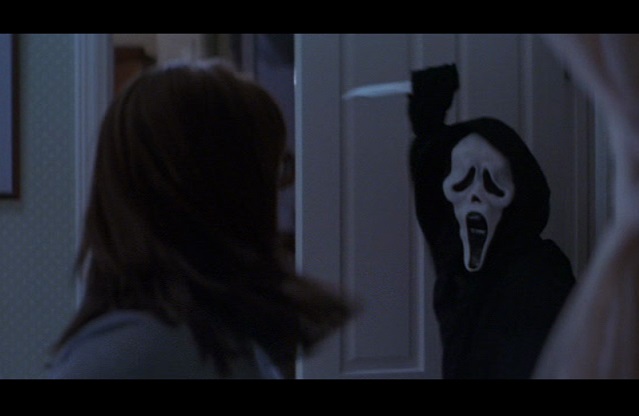
This postmodern take on the slasher genre is both an incredible homage and superb addition to the genre. The screenplay by Kevin Williamson is masterfully written and director Wes Craven finds exactly the right balance between suspense, teenage stupidity, humor and extreme violence. Followed by three decent sequels (and a tv-show), but this first one is the best by far.
Greatest Moment: The revelation who the killer is.
06. Predator (1987)
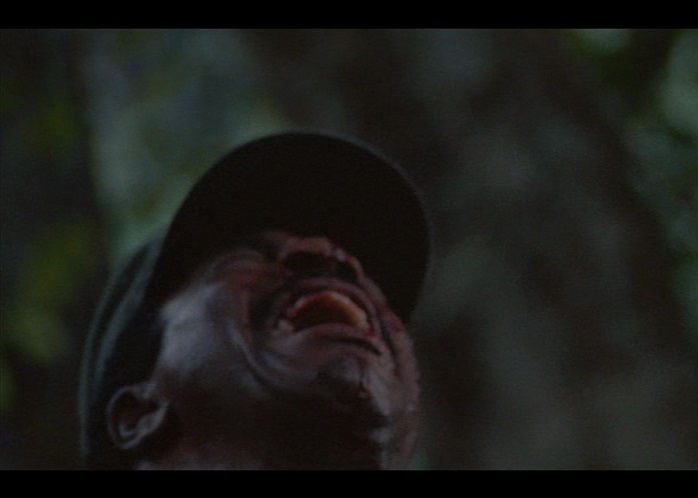
The first Predator is an unique movie that holds a very special place in my heart. The concept is fairly simple (mysterious alien hunts and kills soldiers and mercenaries in South American jungle), the execution is flawless. It features the greatest team of warriors ever assembled that faces off against the greatest alien ever created for cinema. It’s just awesome in every way.
Greatest moment: There are many great scenes featuring the predator, but Schwarzenegger’s team butchering an entire guerrilla army is so bad-ass that I have to pick that one.
5. Dead Ringers (1988)

Two bodies. Two minds. One Soul. Separation can be a terrifying thing.
No monsters or killers are needed to make a creepy film. The human psyche can be terrifying enough by itself. Jeremy Irons gives an Oscar worthy double performance as a pair of twins who become mentally intertwined together. Brilliant psychological horror by master of bodily transformation, David Cronenberg.
Greatest Moment: The superbly creepy credit sequence and the unsettling ending.
04. Psycho (1960)

Psycho is such an inspirational film that it spawned an entire genre of slasher / serial killer movies. With its groundbreaking narrative techniques and tension building it’s hard to deny the importance of Hitchcock’s masterpiece in cinema history. Janet Leigh is a joy to watch and so is Anthony Perkins in his lunatic performance.
Greatest moment: The shower scene off course, which is completely shocking to this day.
03. A Nightmare on Elm Street (1984)

The scariest horror movie of my childhood and frankly an almost traumatic experience. I recently saw it and even though the scare effect is weakened down somewhat, it is still a deeply chilling experience. Master of Horror Wes Craven takes all the terrible emotions the worst nightmares can cause and uses them to maximum effect.
Greatest moment: The protagonist Nancy has a number of terrifying dreams.
02. Evil Dead II (1987)
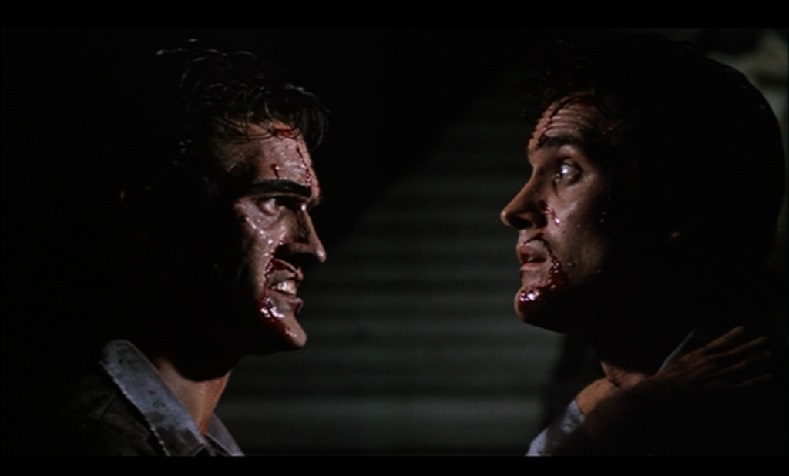
Groovy! Comedy and scares are effectively combined in this sequel to Raimi’s classic The Evil Dead*. Yes, it is a sequel, the beginning is just an altered summary of the first flick. Bruce Campbell makes Ash a true horror icon as he chops up his girlfriend and fight his own hand. Slapstick humor and rapid chainsaw action make this a true classic in the genre and Raimi’s best film. They don’t make ‘m like this anymore. Classic.
Greatest moment: In the cellar with sweet Henrietta. Complete madness.
01. Dawn of the Dead (1978)
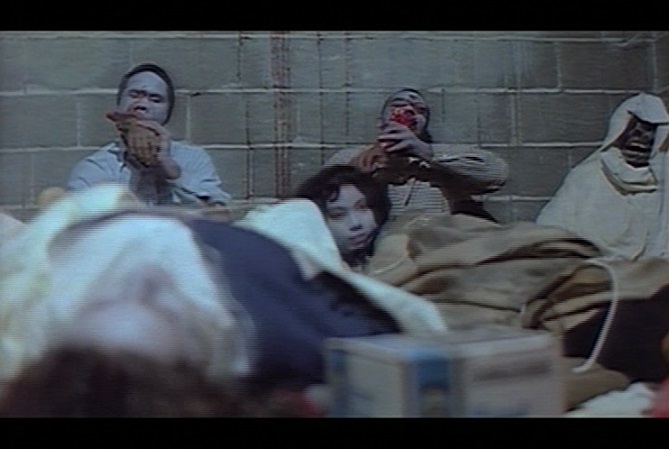
This is it, my all-time favorite horror movie. What makes it so good? It is just a trip to become part of Romero’s apocalyptic zombie world for a couple of hours. When used properly as in Dawn of the Dead, zombies are really a marvelous invention. They can be sad, scary, or comical and at the same time serve as a metaphor for the consumerist society. The shopping mall as a zombie survivor stronghold works incredibly well. The movie features well written characters, appropriately disgusting special make-up effects by Tom Savini and great music. It is the most atmospheric horror film; very rich in ideas and horrific imagery. I love it.
Greatest moment: Going shopping off course!
*OMITTED:
The Evil Dead (1981)

In 1980 three friends went out to shoot a cheap horror movie that was destined to become a genre classic. The handsome one, Bruce Campbell, became the actor of the group. ‘He was the one that girls wanted to look at.’ Sam Raimi later became a top director in Hollywood (directing Spiderman). And finally, Rob Tapert became a successful producer. The Evil Dead is still a very effective horror flick to this day with many unforgettable moments, such as the tree rape scene and blood-soaked finale.
Greatest Moment: The gory climax in the cabin.