The Public Enemy (1931)


All his life he took what he wanted…Why not women?

Directed by:
William A. Wellman

Written by:
Kubec Glasmon
John Bright
Harvey F. Thew

Cast:
James Cagney (Tom Powers), Jean Harlow (Gwen Allen), Edward Woods (Matt Doyle), Joan Blondell (Mamie), Donald Cook (Mike Powers), Leslie Fenton (Nails Nathan), Beryl Mercer (Ma Powers), Robert O’Connor (Paddy Ryan), Murray Kinnell (Putty Nose)

William A. Wellman’s The Public Enemy stands as one of the defining works of early gangster cinema. Released in 1931 – the same year as Little Caesar starring Edward G. Robinson – it helped kick off a gritty, hard-hitting genre that would become a Hollywood staple.

The film opens in industrial America circa 1909, where barrels of bootleg booze roll through the streets and petty crime leads to organized underworld dealings. At the heart of the story are two Irish-American youths who drift into gang life. One of them is Tom Powers, a volatile and ambitious thug played by the electric James Cagney in a star-making performance.

Cagney’s Tom Powers isn’t just another gangster – he’s a smoldering embodiment of the American outlaw spirit, tough, unpredictable, and ultimately doomed. And while the film famously features Cagney’s brutal shooting of a horse (what is it with gangsters and horses?), it’s the iconic grapefruit scene – where he smashes a half grapefruit into Mae Clarke’s face – that has become the movie’s enduring image.

Though Edward G. Robinson’s Little Caesar beat The Public Enemy to theaters by a few months, Wellman’s film surpasses it in terms of visual style and production value. Beautifully shot with a sharp eye for period detail, the direction gives the film a sense of realism and cinematic flair that feels advanced for its time. Interestingly, the film’s lead role was originally assigned to Edward Woods, with Cagney cast as his sidekick. But during rehearsals, Wellman recognized Cagney’s screen presence and wisely switched the roles. The result is one of the most memorable debuts in film history; Cagney utterly commands the screen.

The story charts Tom Powers’ rise through the criminal ranks during Prohibition, chronicling his growing influence and inevitable downfall. Like many gangster films of the era, such as Scarface (1932), The Public Enemy operates as a cautionary tale. While it thrills with its violence and bravado, it ultimately condemns the gangster lifestyle. As Powers’ actions begin to take a toll on those around him, the film steers toward its grim, uncompromising conclusion. Cagney’s final line – “I ain’t so tough” – rings with bitter irony.

The Public Enemy marked the beginning of two major cinematic milestones: the emergence of James Cagney as a major star and the ascendance of the gangster film as a serious Hollywood genre. Nearly a century later, it remains a landmark of American cinema: stylish, shocking, and still relevant.

Rating:

Quote:
PADDY RYAN: “As far as I’m concerned there’s only two kinds of people: Right and wrong. Now, I think you’re right. You’ll find that I am, unless you cross me.”

Trivia:
The scene where Tom shoots the horse that threw and killed Sam ‘Nails’ Nathan in a riding accident was based on an actual incident. In 1924, Sam ‘Nails’ Morton, a member of Dion O’Banion’s gang, was thrown from his horse and killed while riding in Chicago’s Lincoln Park. Other members of the gang, led by Louis ‘Two Gun’ Alteri, kidnapped the horse, took it to the spot where the accident occurred, and shot it dead. Source: Carl Sifakis, ‘Encyclopedia Of American Crime.’

Z Channel: A Magnificent Obsession

Z-Channel 3

(2004, USA)

Director: Xan Cassavetes
Features: Robert Altman, Penelope Sheeris, Jim Jarmusch, Quentin Tarantino, ao.

Running Time: 120 mins.

Documentary about the legendary Z Channel in Los Angeles, a pay TV channel where great cinema was shown between 1974 and 1988. Aspiring filmmaker Jerry Harvey became chief programmer of the channel and created a Walhalla for cinema lovers in that time in L.A.

Unfortunately, Harvey was mentally very unstable and in 1988 he committed suicide after killing his wife. After his death, Z Channel was finished as well when it turned into a sports channel. In this ‘legacy’ of Harvey, former friends, teachers and colleagues as well as filmmakers explain why Z Channel was such a successful and important platform for cinema at that time.

It was before VHS made its way into the living room, and people were dependent on television, besides cinema, to view movies. Harvey combined art films and commercial films in his programming which turned out to be a fantastic formula. Quentin Tarantino and Jim Jarmusch explain how much they loved Z Channel when they were growing up, and how it formed an important part of their education. Director Xan Cassavetes, the daughter of actor-director John Cassavetes and actress Gena Rowlands, got hooked to Z Channel after being grounded as a child. It was the beginning of her obsession with cinema.

The channel was so popular that even market leaders HBO and Showtime couldn’t muscle it out of L.A. Z Channel had a zero turnrate which means that no subscriber ever cancelled the channel.

Z-Channel 1
Programmer Harvey wrote the screenplay for the western China 9, Liberty 37

Another one of Harvey’s triumphs was to show uncut versions of films such as The Wild Bunch, Heaven’s Gate, Once Upon a Time in America and 1900. Films that were initially trashed by critics now became very successful features. Z Channel also became a platform for European directors, like Paul Verhoeven, that found work in America thanks to the screening of their European work on the channel. Harvey and his team also organised regular film festivals with retrospectives of Kurosawa and the likes. It must have been truly magnificent.

Cassavetes shows a great collection of film fragments that give a good sense of how brilliant and revolutionary the Z Channel programming must have been. Cinema lovers will be thrilled at the idea of seeing something like Fassbinder’s Berlin Alexanderplatz uncut on television. It was not made to last. Like one of the interviewees says; ‘you just never know when you are living in a glorious time’. The downfall of Z Channel came together with the downfall of Harvey. An obvious loss that Cassavetes makes manifestly clear.

Z-Channel 4
Boxoffice hit The Empire Strikes Back had its television premiere on Z Channel

Review originally written for International Film Festival Rotterdam, where this documentary was screened in 2005.

See also: List of Film Fragments in Z Channel: A Magnificent Obsession

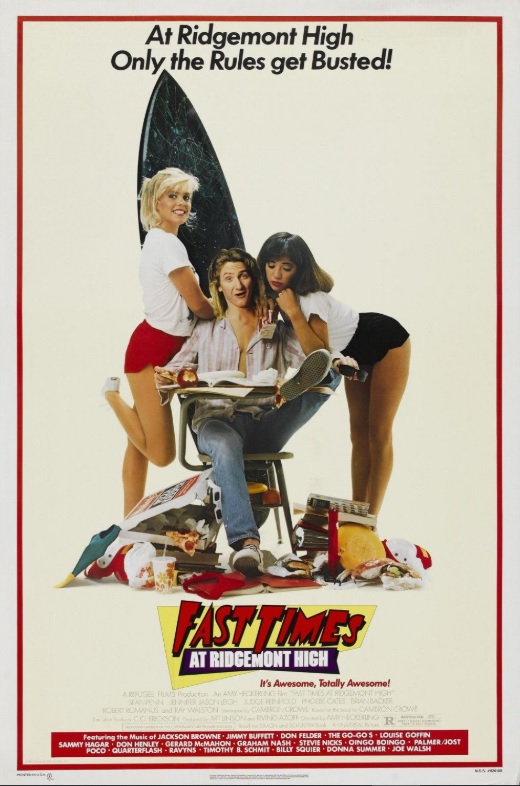
Fast Times at Ridgemont High

Director: Amy Heckerling
Written by: Cameron Crowe
Cast: Sean Penn, Jennifer Jason Leigh, Judge Reinhold, Robert Romanus

Year / Country: 1982, USA
Running Time: 90 mins.

Adolescence is way too confusing. Hormones go haywire and temptations arise everywhere. Fast Times at Ridgemont High is about this foggy period. Like Dazed and Confused, it deals with teenagers discovering life: Two girls experimenting with sex (Phoebe Cates and Jennifer Jason Leigh), a surfer who is permanently stoned (Sean Penn) and a popular guy who has to work stupid fast food jobs (Judge Reinhold).

Along the way they make discoveries: One of the girls finds out that she wants romance rather than sex, a teacher turns out to be cooler than initially thought and it is possible to quit a stupid job. The film is written by Cameron Crowe, who was one time named as ‘spokesman for the post-baby boom generation’ because his first films focussed on this age group. His screenplay for Fast Times at Ridgemont High is based on his experiences at Clairemont High School in San Diego, where he went undercover as a student for a year.

There isn’t much of a story – just a bunch of kids hanging around a mall – but it is the characters that count. And those are a lovely bunch. Jennifer Jason Leigh is adorable as the young experimenting high school girl Stacy, Sean Penn’s Jeff Spicoli adds a new dimension to the classic stoner character and Robert Romanus is very smooth as the cool hustler Mike Damone. Too bad he never really broke through since he is very charismatic.

Fast Times at Ridgemont High will make you flash back to your own teenage years in no time. There are many great scenes – such as Reinhold’s masturbation scene, Romanus and Leigh’s sex scene and Penn’s stoner dream – that will stick with you for years to come. Best of all, the film has got a heart. A big one.

Rating:

Biography: Amy Heckerling (1954, New York) studied Film and TV at New York University. She got her breakthrough with Fast Times at Ridgemont High in 1982. Since then she has made a number of successful comedies, most notably Look Who’s Talking, which she thought up while she was pregnant, and Clueless.

Filmography: Getting It Over with (1977, short), Fast Times at Ridgemont High (1982), Johnny Dangerously (1984), European Vacation (1985), Fast Times (1986, TV episodes), Look Who’s Talking (1989), Look Who’s Talking Too (1990), Clueless (1995), Clueless (1996, TV episodes), A Night at the Roxbury (1998), Loser (2000), The Office (2005, TV episode), I Could Never Be Your Woman (2007)

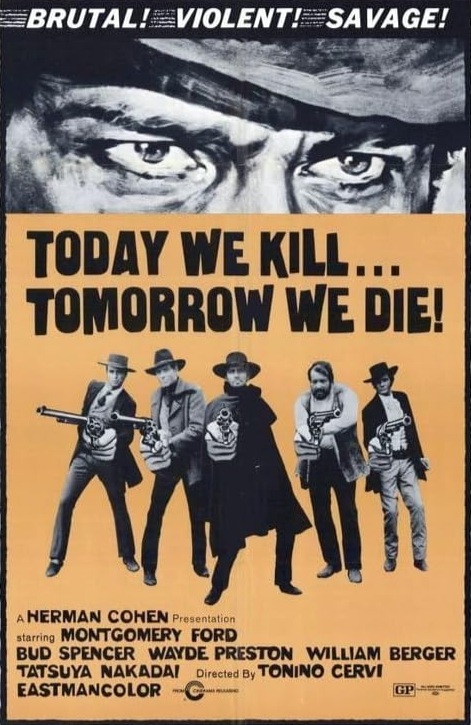
Today We Kill, Tomorrow We Die!

Director: Tonino Cervi
Written by: Dario Argento, Tonino Cervi
Cast: Montgomery Ford, William Berger, Tatsuya Nakadai, Bud Spencer

Year / Country: 1968, Italy
Running Time: 90 mins.

The angry Bill Kiowa (Montgomery Ford) has been in a jail cell for five years, practicing his gun draw with a self made wooden gun. “I don’t have any feelings, except maybe hate”, he tells the sheriff upon his release.

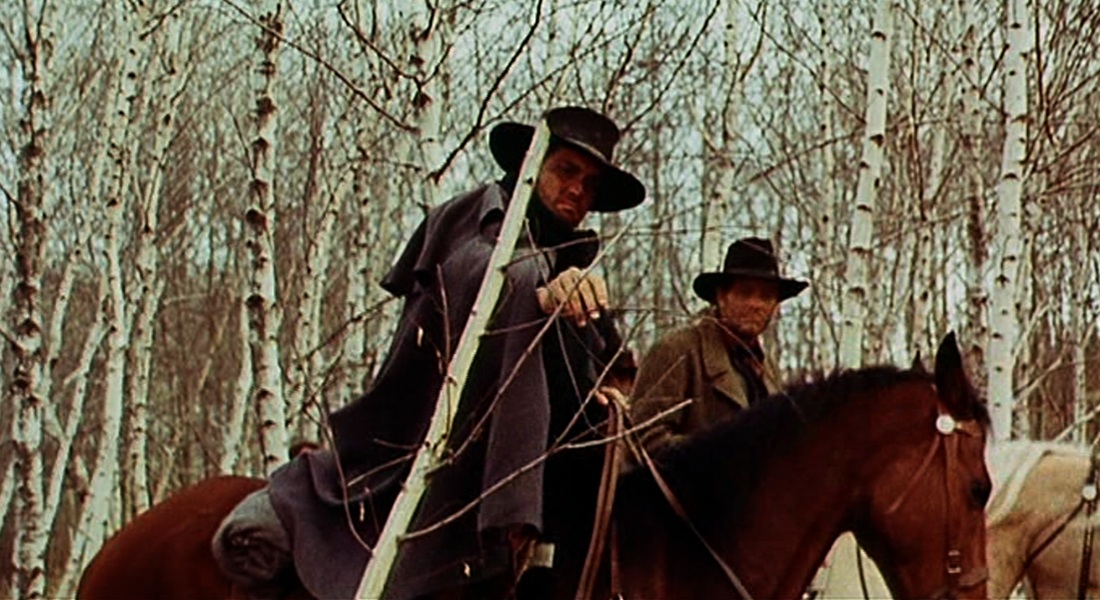
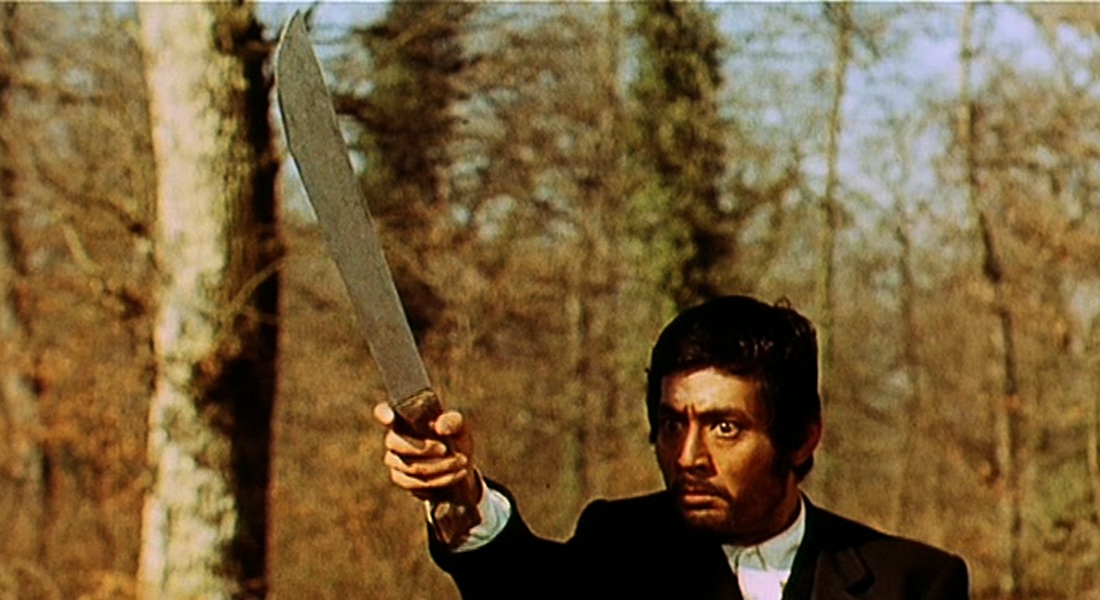
The man Kiowa is after is the evil Elfego (Kurosawa actor Tatsuya Nakadai), who leads a gang of Comancheros, half breeds of Comanche and Mexican descent. Kiowa musters four mercenaries to take on Elfego’s gang, including the giant O’Bannion (an early role from Bud Spencer) and a homosexual card playing gunslinger played by William Berger.

Halfway through the movie, we learn in a black and white flashback why Kiowa wants revenge on Elfego. Sounds familiar? That’s because horror maestro Dario Argento, writer of Once Upon a Time in the West is responsible for the screenplay. The vendetta between the two gangs ends in a beautiful autumn forest. The Comancheros meet a violent end one by one before Kiowa and Elfego have their final confrontation.

Although the story is not very original, the casting, locations and gritty atmosphere make Today We Kill, Tomorrow We Die! an enjoyable feature. Ford makes a good hero, with enough attention paid to his darker personality traits, while Nakadai seemingly enjoys his role as melancholic and perverted villain. The budget was obviously modest, but the excellent cinematography hides this fact well.

Producer Tonino Cervi, who directs his only western here, may not be Leone. But then again who is? He accomplished a stylish and entertaining B-film in the finest revenge tradition.

Rating:

Biography: Tonino Cervi (1929, Milan, Italy – 2002, Siena, Italy) is an Italian writer, producer and director. He collaborated with many famous Italian filmmakers throughout his career, including Federico Fellini and Vittorio De Sica on Boccaccio ‘70.

Filmography: Today We Kill, Tomorrow We Die! (1968), Queens of Evil (1970), La nottata (1974), Chi dice donna, dice donna (1976), Nest of Vipers (1977), The Imaginary Invalid (1979), Il turno (1981), The Naked Sun (1984), The Miser (1990), Looking for Madame Butterfly (1995, TV), Household Accounts (2003)