A JK Classic Re-Release: Brains For Breakfast (2000)

On my YouTube channel, Jeppy’s Video Circus, I usually post short videos in three categories.

The first is pop culture features, like Schwarzenegger’s 100 Greatest Kills and Ranking the Top 100 Beatles Songs.

The second is experimental shorts, such as Passenger and Light Parade.

The third category is amateur movies I made during my childhood, including A Bad Trip and Nicky and Mugs.

I’ve just released another one called Brains For Breakfast and this one might be my favorite.

The Amateur
The unfinished video was shot in 2000, about halfway through my five-year stretch as an amateur filmmaker.

That period began in 1998, when my buddy Jean-Marc and I took a two-week videomaking course in Charme, France, taught by the Amsterdam-based Open Studio. They taught us the basics of filmmaking: camera work, directing, editing, screenwriting – the whole package.

The following year, I shot a number of shorts with my friends in Heiloo, including Nicky and Mugs and A Bad Trip. Many unfinished projects from that time still live in the dusty archives of my desktop.

In an upcoming short called Dreaming of HeilooWeed, I plan to edit those fragments into a medley of our unfinished amateur films.

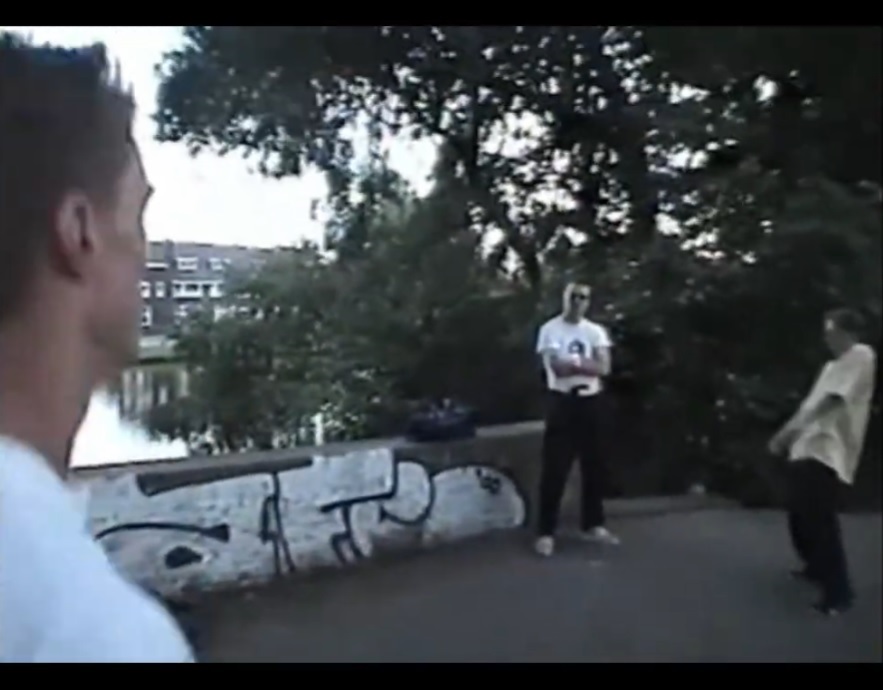
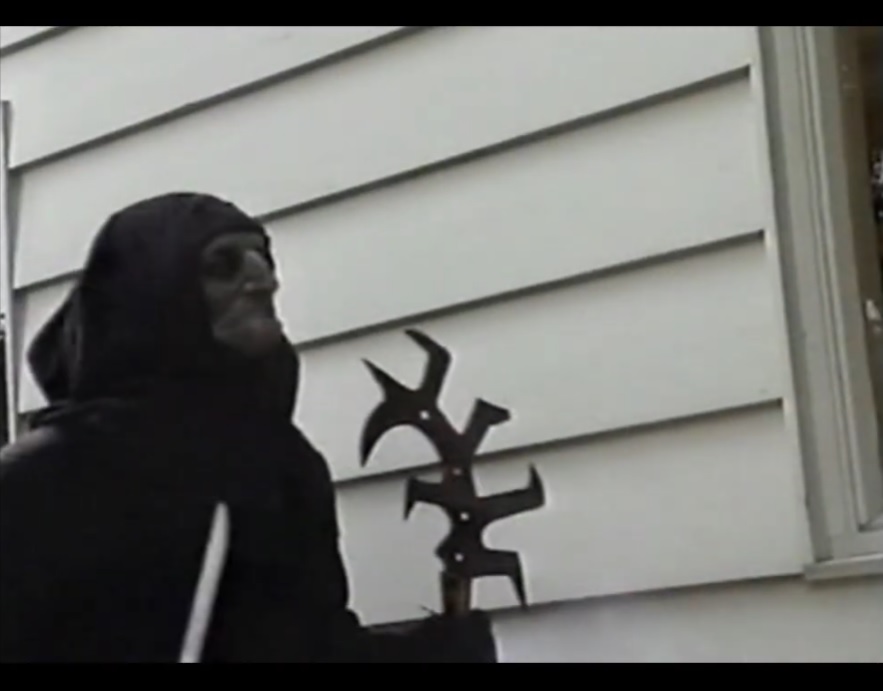
In 2000, we created what I consider the highlight of that era: Brains For Breakfast, which is now available on YouTube.

That same year, I also traveled through India and Nepal, where I shot a two-hour travel movie.

In 2001, my friends and I spent three months in Thailand, where I filmed another travel documentary – though calling it a ‘travel movie’ doesn’t quite do it justice. It’s part Jackass, part comic meditation on backpacking. I plan to edit it into a half-hour YouTube version next year, titled 2001: A Thailand Odyssey.

By 2002, my movie career had started to fade, and I moved on to other things. I made a few videos that year, but nothing particularly noteworthy.

That is, until 2020 – when I picked up filmmaking again as a hobby.

About Brains For Breakfast
Brains For Breakfast
can best be described as a horror-comedy, heavily inspired by Peter Jackson (Bad Taste) and Sam Raimi (The Evil Dead).

The story follows weed dealer Jimmie Lombardo, who suddenly finds himself in the middle of an alien invasion, one with the sole purpose of stealing Dutch weed.

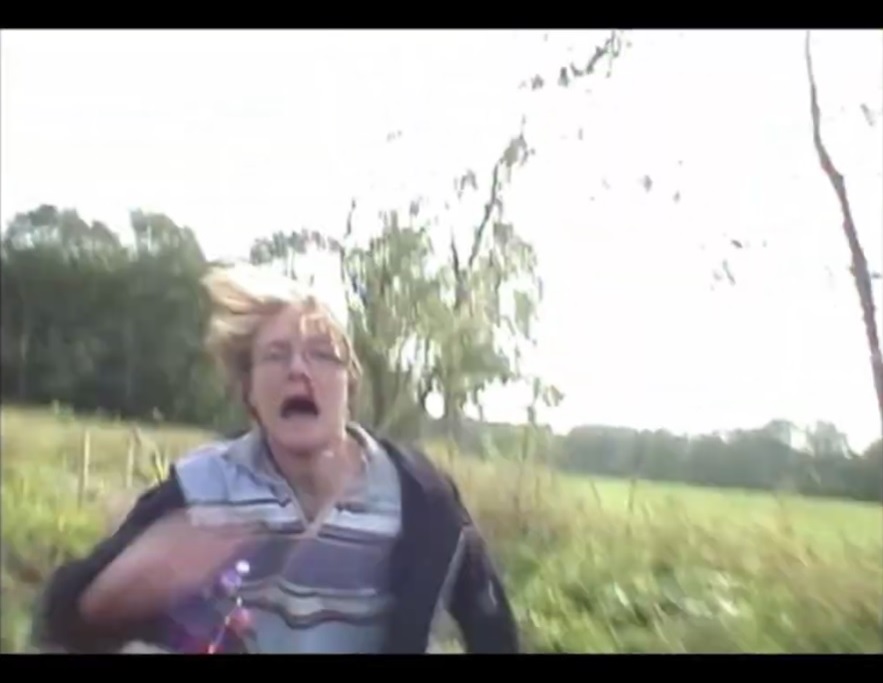
What I love most about it is the humor. There are some genuinely funny moments, along with a few surprisingly effective scenes, like the one where an alien shoots a guy on a bicycle from a balcony.

I also have a soft spot for all the amateurish mistakes: jumping the axis, catching the cameraman’s shadow, or scenes that shift from early evening to near-dark in the blink of an eye. All of it adds to the charm and hilarity.

Since the film was never finished, I decided to create an ending by adding a short ‘making-of’ segment, showing us trying to pull off one of our great ‘special effects’.

I’m happy with how it turned out, and I hope you’ll enjoy it too. Check out Brains For Breakfast below on YouTube!
Dungeon Classics #18: Meet the Feebles

FilmDungeon’s Chief Editor JK sorts through the Dungeon’s DVD-collection to look for old cult favorites….

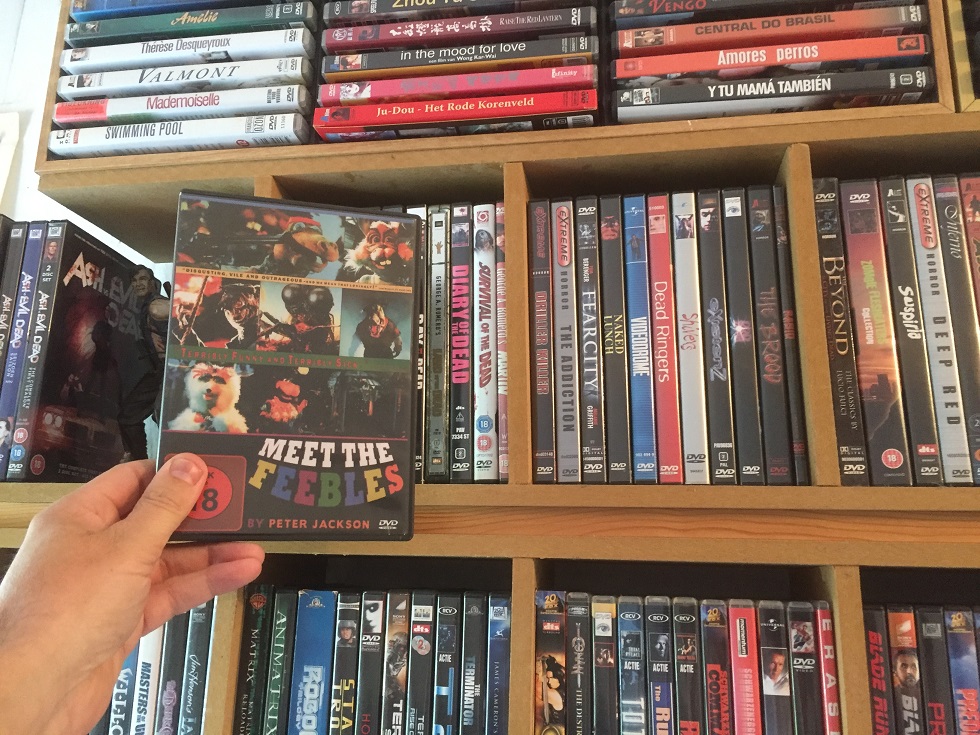
Meet the Feebles (1989, New Zealand)

Director: Peter Jackson
Cast: Danny Mulheron, Donna Akersten, Stuart Devenie
Running Time: 97 mins.

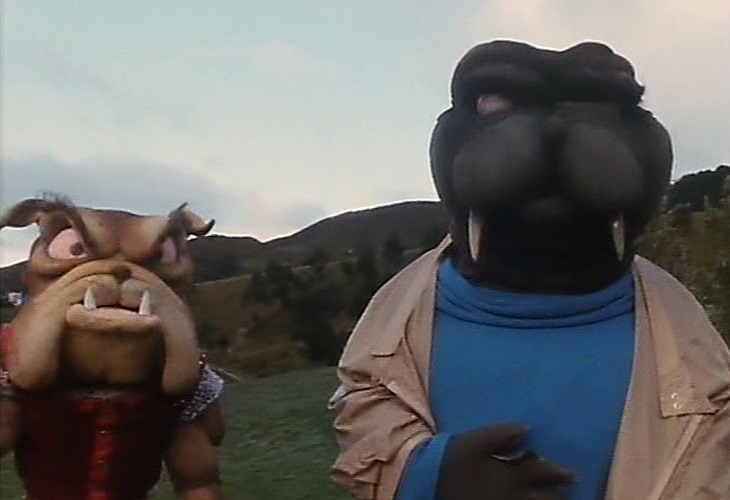
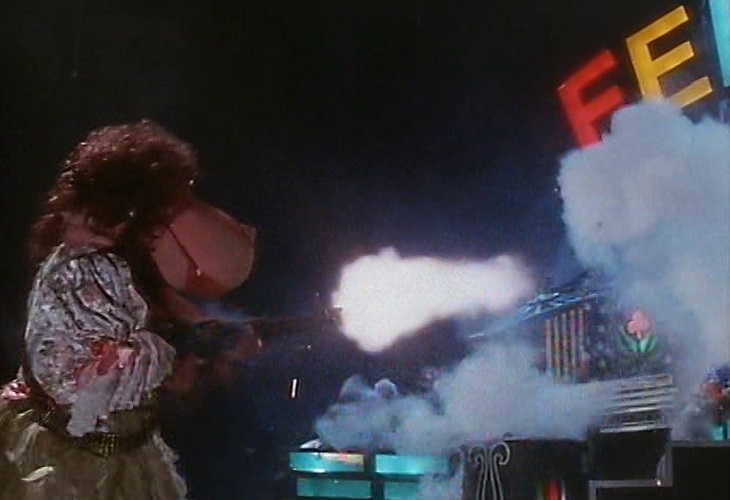
Before he got into serious filmmaking with Heavenly Creatures and The Lord of the Rings, Peter Jackson was just having fun in New Zealand. His second feature film after Bad Taste is this weird puppet movie which is filled with sex, violence, dark twisted humor and thick Kiwi accents. The Feebles is a variety show starring the hysteric Heidi the Hippo. Behind the scenes, dark things are going on. Bletch the Walrus, who runs the show, is also an exploitative gangster dealing drugs and cheating on his girlfriend Heidi. Trevor the Rat is shooting puppet porn in the basement and attempts to drug and rape one of the dancers (a dog). And a paparazzi fly is constantly hanging out in the toilet eating shit and making up lies about the cast members. As can be expected from Jackson at this point in his career; there are plenty of body fluids flying around. Obviously it’s not for all tastes, but if you are curious about the legendary director’s early stuff, look no further.

How to Write a Television Series

Originally published on FilmDungeon.com on 24-12-2007

As a lifelong devotee of the moving image, I developed the idea of writing screenplays. What better way is there to get your break into movies when you’re a non-professional that wants to be a filmmaker? I had already written a movie screenplay. A low-budget horror-comedy comparable with Peter Jackson’s Bad Taste. The problem with actually filming it was that a considerable budget was required. I am from the Netherlands where even renowned filmmakers struggle to get another project done. So who was going to invest in a cult film with a microscopic target group and an inexperienced director?

It was time for a strategy change. TV-series are the next best thing. And being the creator of a TV-series is what many would call a dream job. So would I. You get to write and produce a mini-movie every week, and when successful, you can continue it for as long as a decade. So I decided to start the creation of my very own TV-series. I already knew my subject. Or concept if you will. Now I needed some ideas on how to craft my screenplay.

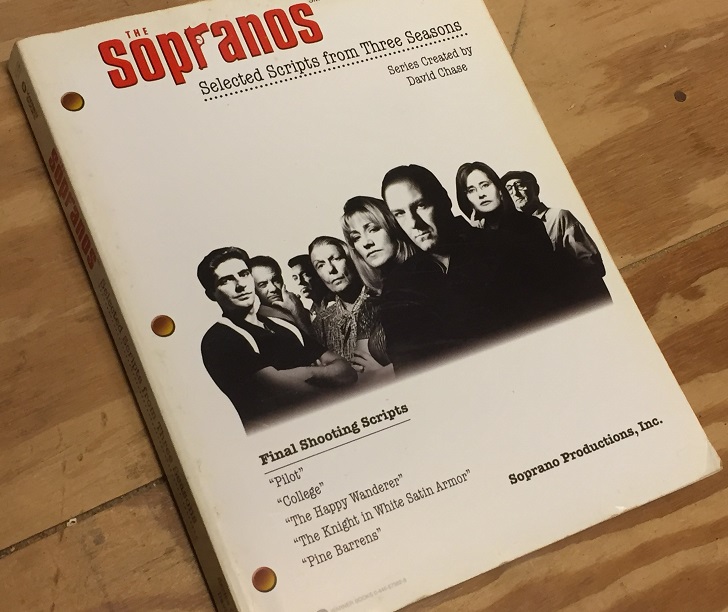
To get this done I bought a book: The Sopranos – Selected Scripts From Three Seasons. This is an extremely useful book for aspiring TV-writers. But knowing the show is probably a prerequisite. It describes the process of writing a series. The creator of the show, David Chase, explains how he came up with the overall theme of every season. Then, together with his writing team, he started working on the individual episodes. Every episode has three or four storylines. One major storyline called A. Then there are smaller ones called B, C and sometimes D.

Once the storylines were decided, the actual scenes were described. The five example screenplays in the book are in between 35 and 80 scenes long, and approximately 60 pages (1 hour of TV). When the scenes for every story were decided they are sequenced in a logical order. Then the episodes were divided among the writers. They had approximately two weeks to come up with the first draft. Then the show’s creator read it and gave the writer feedback on what he liked and didn’t like about it. Then the second draft was written and this process continued till the final draft was ready for production.

A great benefit of this book is that it contains five example TV-plays. If you need direction on the format of a TV-screenplay, all you have to do is check out one of these. After finishing the book I was ready to start the creation process of my very own TV-series. First a lot of research had to be done. I collected newspaper articles and started reading books on my subject. I started shaping my fictional world by describing the characters, their life stories and their personality traits.

The research and preparation took me a whole year. Of course I did it all in my spare time. I also had a day job to keep going. After this year I was ready to write an actual episode; the pilot. I wanted to do this in one go, because I thought it would make the writing process easier. So during a holiday in Crete I wrote the pilot script. It was certainly fun to do. But finishing the script was a weird sensation. I was proud that I had not given up, and had now completed it. But I was also wondering if what I wrote was actually any good…

Update 2021
No, that pilot tv-script I wrote is not very good. However, I haven’t lost my passion for this writing business. I recently decided to give it another go. That Bad Taste like script I mentioned earlier, I have decided to rewrite it. And it will be in English, so it is fit for international audiences.

Will it ever be a movie? Small chance. No one will want to produce it, that’s for sure. It’s too weird and has no commercial appeal I think. But if I ever get my hands on some money that has no immediate purpose, I might produce it myself. It has the potential to become a fantastic amateur cult movie.

And I would put it straight on YouTube when it would be done. It would be a lot of fun to make for the voluntary or underpaid cast and crew, that’s for sure. So I take another advice from David Chase, don’t stop believing!

Book: Peter Jackson & the Making of Middle-Earth

By Jeppe Kleijngeld

The Lord of the Rings trilogy has been the biggest movie event of my generation. By far. Strange to think that it almost didn’t happen. An initial 200 million dollar budget for the director of splatter horror Bad Taste (one of my favorites), was too much of a risk for any Hollywood studio to take. Then Bob Shaye, CEO of New Line Cinema, took a giant leap of faith….

Ian Nathan’s Anything You Can Imagine describes Peter Jackson’s heroic quest that started more than 20 years ago. After he had completed Heavenly Creatures – a critical success that showed he could handle an emotional story – and ghost movie The Frighteners – that lead to the foundation of special effects houses Weta Digital and Weta Workshop in New Zealand – the now hot director selected Rings as one of his new projects to pursue (the others were new versions of two ape classics: King Kong and Planet of the Apes).

Development of The Lord of the Rings started off at Miramax, together with the notorious Weinstein brothers who approached the project with numerous Tony Soprano tactics. Especially Harvey. Problems arose when the Weinsteins couldn’t raise more than 75 million dollars for the initial plan of a two movie adaptation which wasn’t nearly enough. After Jackson understandably refused to make it into one large movie, the Hollywood mogul and Kiwi director had a fall out. Then Jackson’s US manager Ken Kamiss negotiated with Harvey Weinstein and they got four weeks to strike a deal with another studio. This became the now legendary deal with New Line Cinema, who gambled the studio’s future on the project. It was New Line’s Bob Shaye who suggested they make it into three rather than two movies. The Weinsteins got a great bargain out of it: big time profits and their names on the movies’ credits.

So began the longest and most exhaustive production in the history of motion pictures. No studio had ever attempted to shoot a whole trilogy in one go, for good reasons. “Had we known in advance how much we would have to do, we would have never done it”, said Jackson. But a strong passion and drive by the entire cast and crew to bring Tolkien’s world to the big screen in the best possible way they could, eventually lead to a glorious result. Nobody expected it to become that good.

I remember being completely blown away at every screening back in 2001, 2002 and 2003. These movies are absolutely perfect. The first time I saw the fellowship march on Howard Shore’s brilliant score. The wondrous Gollum crawling into frame in the beginning of The Two Towers. The Rohirrim’s epic assault at the Pelennor Fields… And so many other magic moments forever branded in the collective cinematic consciousness. Jackson gave me and my generation a cinematic experience that could match, or even exceed, the excitement of the original Star Wars trilogy.

In The Two Towers, when Gandalf returns from death, he explains to his baffled friends: “I have been sent back until my task is done.” These words are not directly from Tolkien, but from screenwriters Fran Walsh, Peter Jackson and Philippa Boyens. They emphasized fate as one of the core themes of the story: “Bilbo was meant to find the ring. In which case you were also meant to have it. And that is an encouraging thought.” However pragmatic these New-Zealanders may be, fate was their compass in making those movies. Many chance encounters paved the way, major obstacles arose during production, but they overcame them all. It took the toughness of the bravest of hobbits to drive this one home. Even the conservative Academy didn’t fail to notice what they accomplished, and The Return of the King was awarded 11 major Oscars (except those for acting, the outstanding ensemble cast made it tough to single out any one actor).

Years later, fate lead to Jackson directing The Hobbit and so he had the ‘once in a lifetime experience’ twice (but there won’t be a third time, he has said). Jackson and his loyal team never expected to make better movies than Rings. They made The Hobbit to satisfy the fans. And they did for most part. To them, Jackson is a hero. A maverick filmmaker with an unique vision and the drive and mental toughness to accomplish things previously undreamed of. Jackson and his fellowship of collaborators reminded Hollywood on how to make really major cinema. They also put New-Zealand firmly on the map as country where movies and special effects are dreamt up.

Because special effects are Jackson’s big thing. He discovered the magic of filmmaking when he was nine years old and saw the original King Kong on television. Since that moment, he worked non-stop on creating special effects in his garage and eventually he completed a whole movie (Bad Taste) which became a cult hit. However successful his career got since, he never stopped aiming to satisfy that nine year old boy. In making The Lord of the Rings, he focused on making movies that he would enjoy himself. Even though he is a brilliant, technical craftsman and storyteller, his youthful energy is what really catapults his films from merely good to terrific.

With The Lord of the Rings, he wrote movie history. Anything you can imagine perfectly captures this history of how an outsider succeeded wildly in Hollywood. Much like the heroes of his story, he did it by staying true to himself. He may not have had to face the horrific challenges Frodo had, but at times it certainly came close. Sometimes you need an unlikely hero to change the course of history. And very much like his protagonist Frodo Baggins, Peter Jackson certainly fits that bill.