Cult Radar: Part 12

FilmDungeon.com is glad to explore the video trenches to find that oddball treasure between the piles of crap out there. Of course, a treasure in this context can also be a film that’s so shockingly bad it’s worth a look, or something so bizarre that cult fans just have to see it. Join us on our quest and learn what we learn. Hopefully we’ll uncover some well-hidden cult gems.

Researched by: Jeppe Kleijngeld
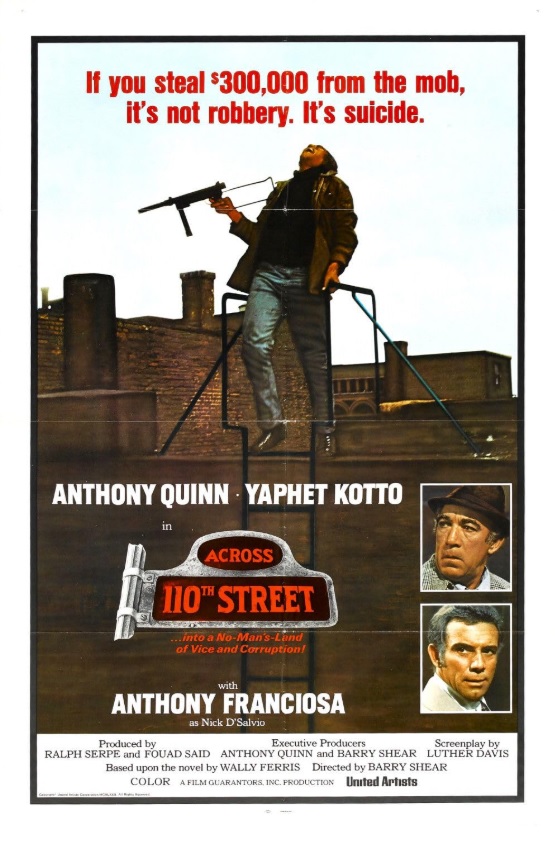
Across 110th Street (USA, 1972)

Directed by: Barry Shear
Written by: Luther Davis, Wally Ferris
Cast: Anthony Quinn, Yaphet Kotto, Anthony Franciosa

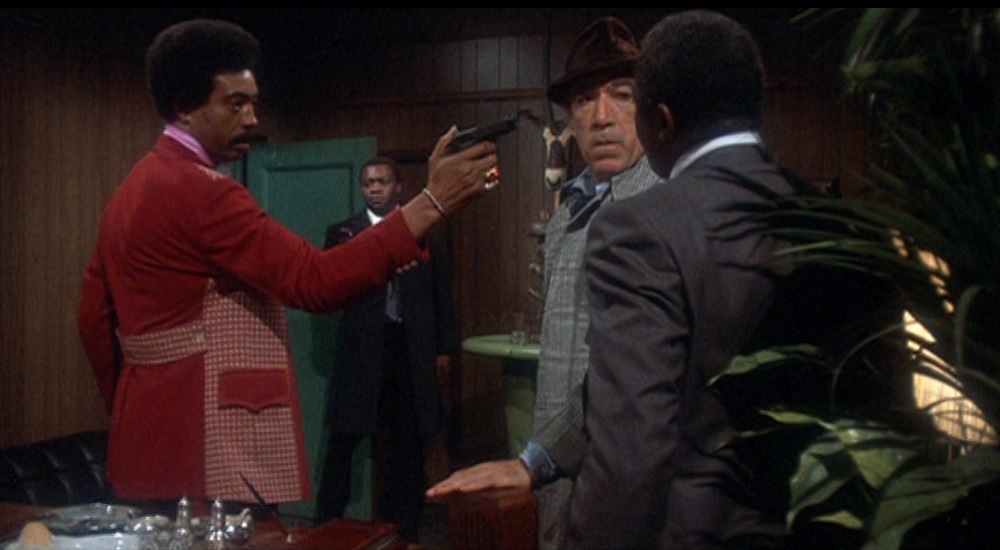
Tarantino’s Jackie Brown opens to the same rip-roaring title song as this movie: ‘Across 110th Street’ by Bobby Womack. It’s a homage to an exploitation classic, a New York set crime thriller about a gang of black criminals who rob the mob, sparking a brutal chase involving both the Mafia and the police. The police duo in charge consists of the corrupt captain Frank Matteli (Anthony Quinn) and Lieutenant William Aylesworth Pope (Yaphet Kotto); a street guy versus a guy who wants to do it by the book. Their chemistry is electric, giving the movie an emotional and moral backbone amid the chaos. The film was slammed at the time for the extreme violence, and while the film is indeed gritty, it is generally well acted and executed. Beneath the grit lies a sharp commentary on race, corruption, and urban decay in 1970s America. Watching it now, it’s easy to see why Tarantino holds it in such high regard.

The Curse of Frankenstein (UK, 1957)

Directed by: Terence Fisher
Written by: Jimmy Sangster (screenplay), Mary Shelley (novel)
Cast: Peter Cushing, Hazel Court, Robert Urquhart, Christopher Lee

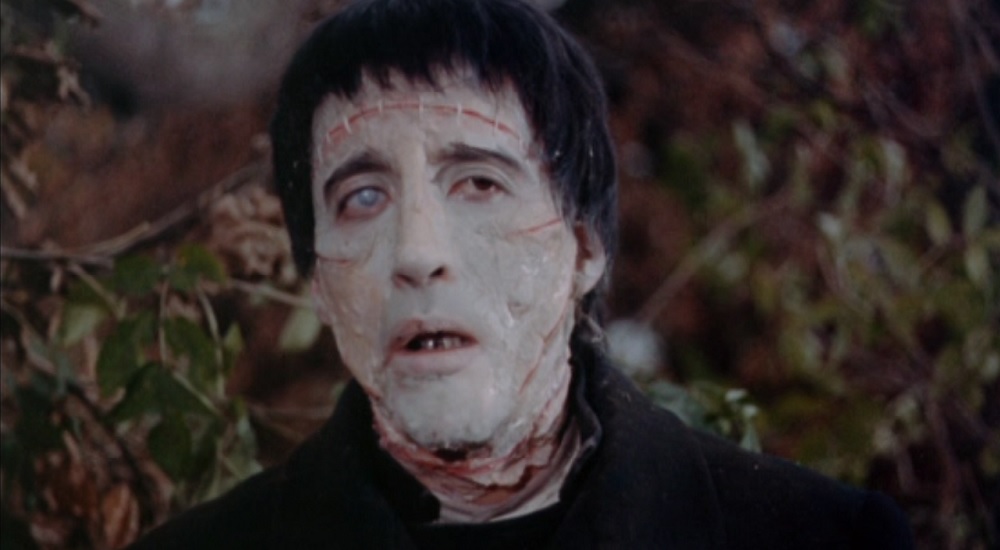
Peter Cushing stars as Dr. Frankenstein and Christopher Lee as the creature in Hammer Studios’ retelling of the Frankenstein legend. Directed by Terence Fisher, who would go on to make Horror of Dracula a year later, this film is often regarded as one of the finest adaptations of Mary Shelley’s novel, even rivaling the classic Universal versions. Told in flashback from a prison cell, Victor Frankenstein recounts the story of how his obsession with discovering the secret of life led him to commit unspeakable crimes. For a film made in 1957, the horror remains remarkably effective, due in large part to Lee’s chilling performance. As Hammer’s first color horror film, The Curse of Frankenstein was notable for its bold use of gore in color and its vivid gothic style. It marked the beginning of the studio’s signature brand of horror and launched a successful series of sequels, with Fisher directing several of them.

Dark Star (USA, 1974)

Directed by: John Carpenter
Written by: John Carpenter, Dan O’Bannon
Cast: Dan O’Bannon, Dre Pahich, Brian Narelle

John Carpenter’s debut film gives us a cynical look at outer space travel. Not the majestic kind Kubrick showed us in 2001: A Space Odyssey, but more like space travel as a monotonous, blue-collar grind. Dark Star is the name of the ship that looks like a surf board. The job of its crew is to destroy unstable planets. And while this may sound exciting, the five crew members – who have been on board Dark Star for twenty years – are mostly bored out of their minds and increasingly detached from reality. Co-writer and actor Dan O’Bannon originally conceived the idea of an alien aboard the ship, but budget limitations forced him to turn that concept into the film’s now-infamous beach-ball creature. His alien idea would later become Ridley Scott’s Alien (1979). Tarantino once called this movie a masterpiece. I don’t see it that way, but I like the 2001 parody concept and the execution, including the inventive special effects, is certainly well done.

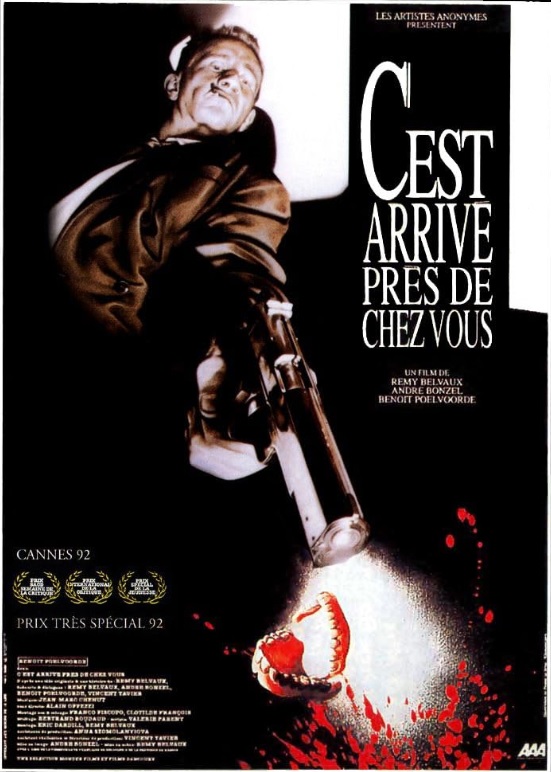
Man Bites Dog | C’est arrivé près de chez vous (Belgium, 1992)

Directed by: Rémy Belvaux, André Bonzel, Benoît Poelvoorde
Written by: Rémy Belvaux, André Bonzel, Benoît Poelvoorde
Cast: Benoît Poelvoorde, Jacqueline Poelvoorde-Pappaert, Nelly Pappaert

In this notorious cult classic from the French part of Belgium, a three-headed camera crew follows the gleefully depraved serial killer Ben, as he spends his days gruesomely murdering people for sport and profit. During the shoot, the crew becomes more and more complicit in Ben’s crimes. The sheer amount of killings is not very realistic, but the profiling of the killer, chillingly portrayed by Benoît Poelvoorde, convinces in all its sickness. The mockumentary concept was pretty new at the time, and the approach – taking the viewer inside the mind of a horrible human being, who – when he’s not busy killing people against depressing urban backdrops – is offering his warped and racist views in interviews – makes for disturbing cinema. The filmmakers, who worked on a shoestring budget, wanted to make something different, and they have succeeded in this task. C’est arrivé près de chez vous (‘It Happened Near You’) became a unique, deeply unsettling, and darkly comic milestone of cult cinema.

The Lady in Red (USA, 1979)

Directed by: Lewis Teague
Written by: John Sayles
Cast: Pamela Sue Martin, Robert Conrad, Louise Fletcher

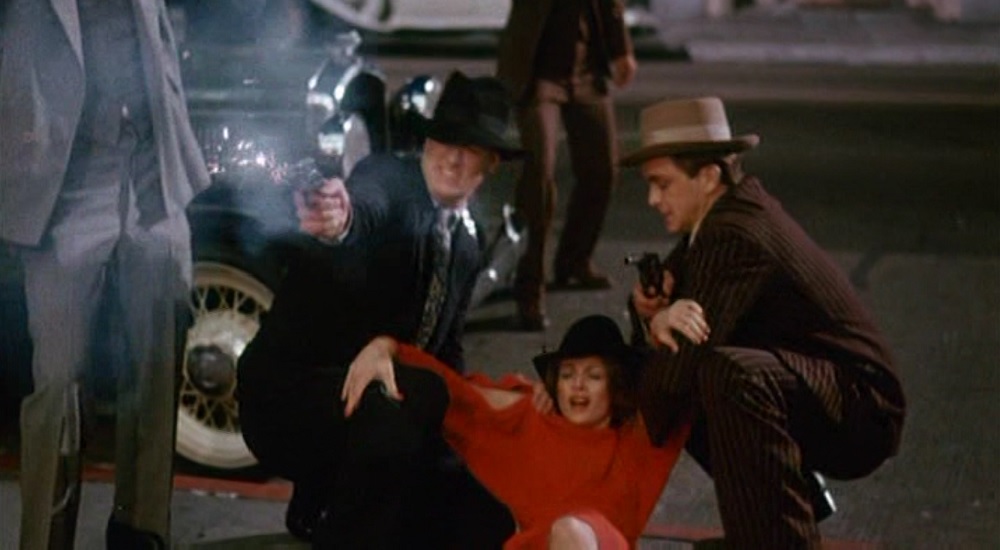
Farm girl Polly moves to Chicago, where she becomes romantically involved with gangster John Dillinger. The film is curious in that it’s not really about Dillinger, but about his girlfriend and the unwitting role she played in the gangster’s famous demise at a movie theater. It traces Polly’s own descent into crime: she starts out as a seamstress, tries her hand at prostitution, and eventually ends up in jail. After Dillinger’s death, she organizes a dangerous but lucrative armed robbery on her own. Written by John Sayles, directed by Lewis Teague, and produced by Julie Corman – indeed, Roger Corman’s wife – the film unmistakably feels like a Corman-style exploitation picture, complete with plenty of bloody, machine-gun action. In his 2021 book ‘Once Upon a Time in Hollywood‘, Quentin Tarantino mentioned that in an alternate Hollywood universe, he directed a remake of this film. It certainly sounds like something he’d do well. Who knows – maybe an idea for his tenth and final movie?
Cannibalism Now!

In Cannibal Holocaust from 1980, a four-headed film crew heads into the Amazon jungle to shoot a documentary about cannibalism. They never return. When their cans of film are found later on, the gruesome truth about their faiths is uncovered. The film has been extremely controversial since its release and is still banned in several countries. Cannibal Holocaust remains a very unpleasant viewing today due its nauseatingly realistic scenes of violence and mutilation. Still, the shocking subject matter seems to have a certain appeal on many people. What is it with cannibalism that fascinates people so much and how is this fascination translated into cinema?

In Western civilization, cannibalism is considered as something perverted, disgusting, extremely primitive, sick and demented. In most countries there is not even a law against cannibalism. Whenever an occasional case of cannibalism does come to light, the perpetrator is mostly convicted of another act such as murder or necrophilia. The eating of individuals from the same species does still occur, but it happens very marginally. The fact that it still happens means that it is definitely human. We can only admit to this repressed fascination by engaging in fantasy. Through books, music and – off course – movies we can come to terms with the cannibal inside of us.

Cannibals in cinema go back a long time. As far as I can tell, the first movie that features cannibalism is the short Queenie and the Cannibal from 1912. It is the beginning of a very long list. Last century alone, 90 movies premiered with the notion ‘cannibalism’ in the title. Movies that feature the theme cannibalism encompass several genres and subgenres. Very often they are horrors, adventures or crossovers. Mostly, they are also exploitation and sexploitation flicks (or straight out porn). Many can also be classified as racist – as natives are portrayed as savage flesh eaters. Some examples of these types of cannibal movies include; Emanuelle and the Last Cannibals (1977), The Mountain of the Cannibal God (1978), Cannibal Ferox (1981), The Flesh (1991) and Diary of a Cannibal (2007). Human’s fascination with the subject is also translated into the zombie film. After all, despite the fact that they are dead, zombies are still humans that eat other human’s flesh.

Exploitation films that deal with cannibalism are often horrors, but there are quite a lot of comedies as well. Ivan Reitman’s second feature film is the Canadian comedy-horror Cannibal Girls about three beautiful young women who lure men with their seductive charm to their home in order to kill and eat them. By drinking their blood and eating their flesh the women maintain their youthfulness and immortality. Eating Raoul is a 1982 black comedy in which cannibalism is used for the central gag. Another black comedy and horror is Motel Hell (1980) about a farmer / hotel owner who makes meat products with special ingredients. Auntie Lee’s Meat Pies (1992) already tells you all you need to know with its title and Trey Parker from South Park made Cannibal! The Musical (1993) in his college days. This blend of comedy, biography and musical is loosely based on the history of Alfred ‘Alferd’ Packer who was convicted for cannibalism in 1874.

While Italians can often be credited for nasty exploitation cannibal films, the French are largely responsible for putting cannibals in the Art House. A Taste For Woman (1964) is a black comedy by French director Jean Leon from an adapted screenplay by Roman Polanski. This is about a vegetarian restaurant that acts as cover for a sect that eats women as part of a full moon ceremony. Jean-Luc Godards Week End (1967) shows the savage journey of a bourgeois couple through France. They eventually fall prey to hippy cannibals. In Delicatessen (1991) by Marc Caro and Jean-Pierre Jeunet a butcher / landlord sells human flesh to his odd tenants in a post-apocalyptic world. Finally Les amants criminels (1999, François Ozon) is a thriller that retells the Hansel and Gretel legend, only with the wicked witch replaced by a woodsman with cannibalistic tendencies.

While the Art House and Grindhouse cinemas have had their taste of cannibalism, mainstream Hollywood has also exploited the theme for big time box-office return. The Silence of the Lambs was a sleeper hit in 1991, and its main star Hannibal ‘The Cannibal’ Lecter, portrayed by Anthony Hopkins, returned in Hannibal (2001) and Red Dragon (2002). Especially the first sequel has scenes of explicit cannibalism in it, just look at the scene in which Lecter feeds on Ray Liotta’s brains. In Sin City (2005), the mute serial killer Kevin (Elijah Wood) kills prostitutes, mounts their heads on a wall like hunting trophies and cannibalizes their remains, feeding the leftovers to his pet wolf.

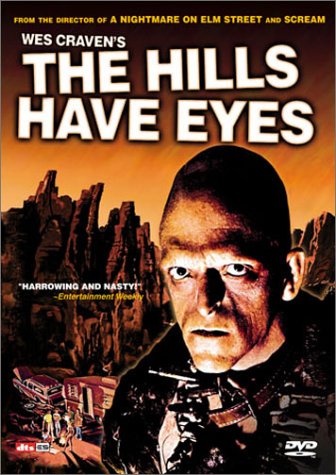
Not a Hollywood film, but immensely popular was The Texas Chain Saw Massacre in 1974. In it, a group of friends stumble upon a family of cannibals in rural Texas. The film was made independently by director Tobe Hooper for just around 140.000 dollars. Due to its graphic content, the film was banned in several countries, but did make 30.8 million dollars at the U.S. box office alone. It got five sequels and a remake in 2003. A quite similar film is The Hills Have Eyes, which is a cult classic directed by Wes Craven in 1977. The story revolves around a family of mutant cannibals that prey on a family who have been stranded in the Nevada desert. In 1991, Craven also made The People Under the Stairs about a psychotic and cannibalistic couple played by Everett McGill and Wendy Robie who also played a couple in Twin Peaks. They ‘keep’ people between the walls of their house and eat the occasional liver.

While Cannibal Holocaust and The Texas Chainsaw Massacre only pretend to be based on reality, there are also real real-life stories about cannibalism that have been turned into movies. Think about Grimm Love aka Rohtenburg. This movie is based on the true story of self-confessed cannibal Armin Meiwes and the ‘internet cannibal movement’. In March 2001 Meiwes killed and partially ate a man he had met on the internet. The eating was based on a mutual agreement. The movie was banned in Germany after Meiwes filed a complaint against it. True cannibalism is also found in Alive (1993). This film tells the story of the Uruguayan national rugby teams’ plane that crashed in the middle of the Andes Mountains in 1972. The survivors have to take desperate measures to stay alive, including eating their deceived friends and family members.

Except for voluntary cannibalism there are also quite a few examples of people who force or trick people into eating other humans. Look no further than The Cook, the Thief, His Wife & Her Lover (1989) and Titus (1999) based on a play by William Shakespeare. There is also Jennifer’s Body (2009), starring Megan Fox and Amanda Seyfried and written by Oscar winning screenplay writer Diablo Cody. In it, Megan Fox plays a high school beauty queen who eats her boyfriends.

Judging from this overview, movies that feature cannibalism come in many forms and vary strongly in quality. Compared to food, they range from the cheapest junk to the highest culinary achievement. Either way, the theme has successfully manifested itself into cinema and still fascinates people to this day and will undoubtedly continue to do so in the future.

Not Quite Hollywood

Director: Mark Hartley
Written by: Mark Hartley
Features: Dan Burstall, Bob Ellis, Dennis Hopper, Russell Mulcahy

Year / Country: 2008, Australia / USA
Running Time: 99 mins.

The title Not Quite Hollywood is not a misnomer. The exploitation pictures that have been coming out of Australia since the early seventies are characterized by sleazy sex and cheap violence. This delicious story of OZploitation explores the realms of Australian B-cinema through interviews with key players from the industry as well as fans and critics like Quentin Tarantino.

Not Quite Hollywood is basically told in three segments; sex, horror and car movies. The first genre took off in the seventies when new freedoms were won and the strong censorship was cut down. Besides sex, sex, sex, this segment also treats some of the more commercial Australian export successes such as Stork and the Barry McKenzie movies, prime examples of bad taste. The films that came out in this time are placed in a cultural context. As one of the interviewees describes it: The movies were not about who Australians really were, but how they wanted the outside world to think they were.

The second part focuses mostly on horror films. Apart from absolute rubbish, some very competent horror films were made in Ozzy. The slasher Patrick was such a huge success that the Italians even made an unauthorized sequel called Patrick Vive Ancora. The final chapter is all about car movies such as the famous Mad Max, a genre the Australians do very well.

This film is the perfect pick for a beer night with your mates. The upbeat and often hilarious documentary not only entertains, but also provides many ideas for fun exploitation flicks to (re-)watch later on. If the whole Ozzy slang is unknown to you, subtitles are recommended.

Rating:

Biography: Mark Hartley has made Australian B-cinema his specialty. After directing several documentaries / making-offs on classic Australian cult movies, he made the ultimate documentary about OZploitation called Not Quite Hollywood. He is also Australia’s busiest music video maker, directing over 150 promos for local and international artists including Powderfinger, The Living End, Sophie Monk, The Cruel Sea and Joe Cocker.

Filmography (a selection): A Date with Destiny (1990, short) / Which Way Did They Go, Skip (2003, short doc) / Turkey Shoot: Blood and Thunder Memories (2003, short doc) / Meet the Team: The Making of ‘The Club’ (2003, short doc) / ‘Fantasm’ Penetrated (2004, short doc) / Puttin’ on the Show: The Making of ‘Starstruck’ (2004, short doc) / A Dream Within a Dream: The Making of ‘Picnic at Hanging Rock’ (2004, doc) / Crashing the Party: The Making of ‘Don’s Party’ (2005, doc) / Thrills and Nuclear Spills: The Making of ‘The Chain Reaction’ (2005, short doc) / Jaws on Trotters: The Making of ‘Razorback’ (2005, doc) / The Adventures of Bazza in Chunderland: The Making of ‘The Adventures of Barry McKenzie’ (2007, doc) / Not Quite Hollywood (2008, doc).

Cult Radar: Part 9

FilmDungeon is glad to explore the video trenches to find that oddball treasure between the piles of crap out there. Of Course, a treasure in this context can also be a film that’s so shockingly bad it’s worth a look, or something so bizarre that cult fans just have to see it. Join us on our quest and learn what we learn. Hopefully we’ll uncover some well-hidden cult gems.

Researched by: Jeppe Kleijngeld

Tormented (UK, 2009)

Directed by: Jon Wright
Written by: Stephen Prentice
Cast: Alex Pettyfer, April Pearson, Dimitri Leonidas

Fat schoolboy Darren got bullied to the point where he committed suicide. Tormented opens at his funeral. Not only do Darren’s tormentors don’t have any regrets whatsoever, they even throw a party to celebrate his demise. That’s just too much… Soon after, each member of the group of bullies starts receiving text messages from the dead Darren. They first think that someone is playing a prank on them, but as soon as the first body drops, they know they’re totally screwed. Tormented is a very effective horror flick that is both funny and inventively satisfying. Whether you thought high school was fun or not, this will keep you entertained for an hour and a half easily. Reviewer Kim Newman, who runs a Dungeon over at Empire Magazine gave it four stars also. It’s a recommendation.

Nude Nuns with Big Guns (USA, 2010)

Directed by: Joseph Guzman
Written by: Joseph Guzman, Robert James Hayes II
Cast: Asun Ortega, David Castro, Perry D’Marco

Violence, drugs, guns, boobs and off course lesbian sex. Nude Nuns With Big Guns is an immoral cocktail delivered by Freak Show Entertainment, the team behind the similar Run Bitch Run!. An abused nun has a vision from God. She is told to slay all sinners that are somehow connected to an elaborate heroin network, led by a money hungry padre who uses naked nuns as personnel. Sister Sarah is not supposed to show any mercy and she doesn’t! Is this entertaining? It kind of is in the sense that it is well shot and cut. Your eventual appreciation of Nude Nuns With Big Guns will depend mostly on your tolerance for graphic sex and violence featuring nuns. If this is low, you can easily deduct a star from this rating.

Hobo with a Shotgun (Canada, 2011)

Directed by: Jason Eisener
Written by: John Davies, Jason Eisener, Rob Cotterill
Cast: Rutger Hauer, Molly Dunsworth, Gregory Smith, Brian Downey

The awesome film poster promises an exploitation film pur sang and delivers. Hobo With a Shotgun was originally a fake trailer that won a Grindhouse competition organized by Robert Rodriguez. The story is about a homeless guy (Rutger Hauer) that takes on psychopathic scum in a city riddled with crime and depravity. Since it was made on a modest budget and has no Hollywood stars in its cast, it is more convincing than Tarantino’s and Rodriquez’ own Grindhouse pictures Death Proof and Planet Terror. The cheap violence gives you the real sense of watching a cult flick from the seventies. However, the sadistic violence is so excessive and beastly that it is hard to care about the characters at all, even the protagonists. The build-up is also not entirely effective; Hauer changes into a bloodthirsty vigilante in minutes, taking away some of the pleasure when he settles the score. Still, the underlying message about the human condition is well delivered and the exploitation feel is sublime; you can almost hear the exciting screams in the grindhouse theater. This hobo is certainly worth spending some loose change on.

Orcs! (USA, 2011)

Directed by: Andrew Black, James MacPherson
Written by: Anne K. Black, Jason Faller, Kynan Griffin and Justin Partridge
Cast: Adam Johnson, Renny Grames, Maclain Nelson

‘It’s an orc! No, it’s not. There is no such thing.’ A movie in which orcs show up in modern times sounds pretty horrendous. While certainly no masterpiece, Orcs! manages to entertain during its first half, which is basically a comedy about two idiot park rangers. Some jokes and The Lord of the Rings references are pretty funny. The second half is one long and tiresome battle against the orcs. This is the boring part. The costumes and special effects are laughable. All in all, don’t watch Orcs!. Just don’t!

Killer Klowns from Outer Space (USA, 1988)

Directed by: Stephen Chiodo
Written by: Charles Chiodo, Edward Chiodo, Stephen Chiodo
Cast: Grant Cramer, Suzanne Snyder, John Allen Nelson

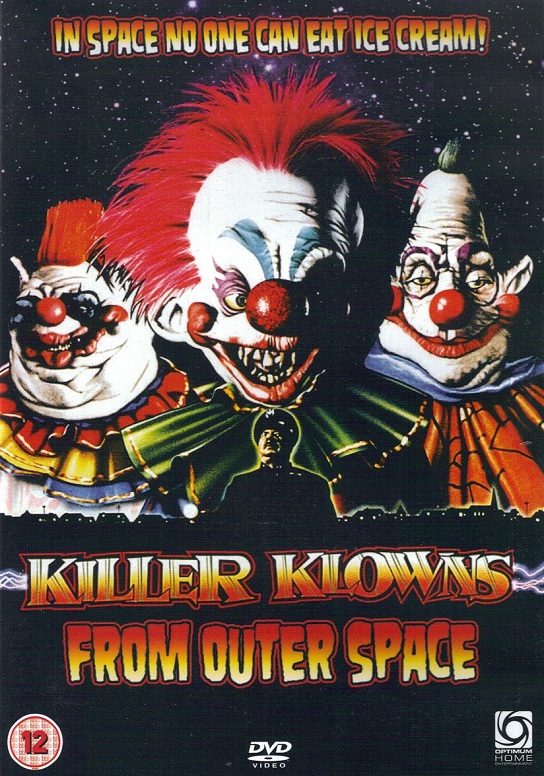
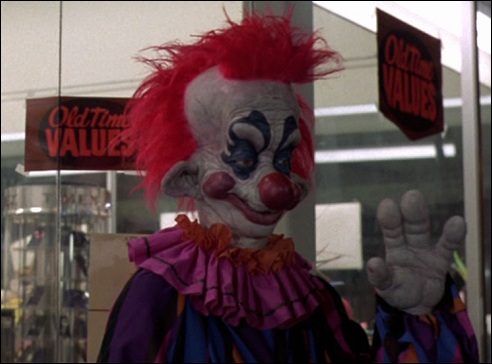
From the special effects team behind Critters and Team America: World Police comes an original eighties classic. On a Friday night in Cove Crescent, a couple of youngsters witness a shooting star land nearby. At the place of impact, a circus tent appears, but what’s inside aint no funhouse… The acting in Killer Klowns From Outer Space may not be world class, but the production design is very well done and reason enough to check this out. It certainly beats cotton candy.