Cult Radar: Part 12

FilmDungeon.com is glad to explore the video trenches to find that oddball treasure between the piles of crap out there. Of course, a treasure in this context can also be a film that’s so shockingly bad it’s worth a look, or something so bizarre that cult fans just have to see it. Join us on our quest and learn what we learn. Hopefully we’ll uncover some well-hidden cult gems.

Researched by: Jeppe Kleijngeld
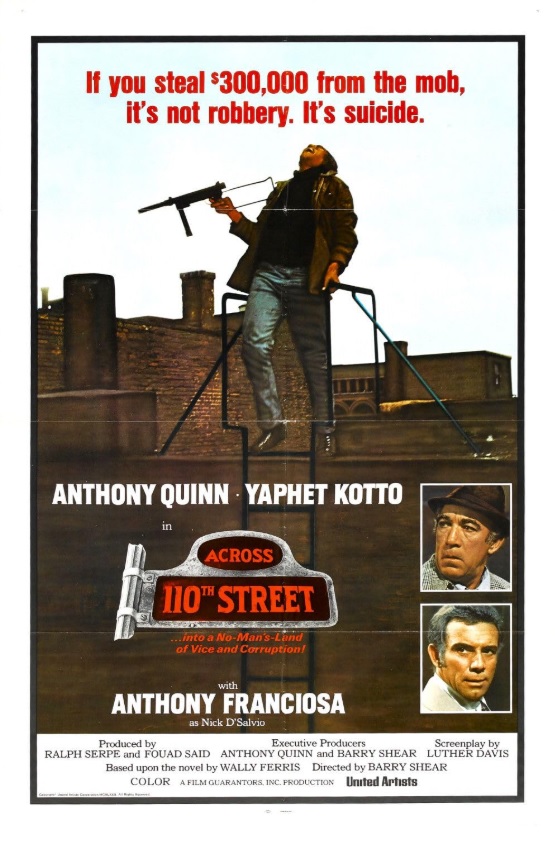
Across 110th Street (USA, 1972)

Directed by: Barry Shear
Written by: Luther Davis, Wally Ferris
Cast: Anthony Quinn, Yaphet Kotto, Anthony Franciosa

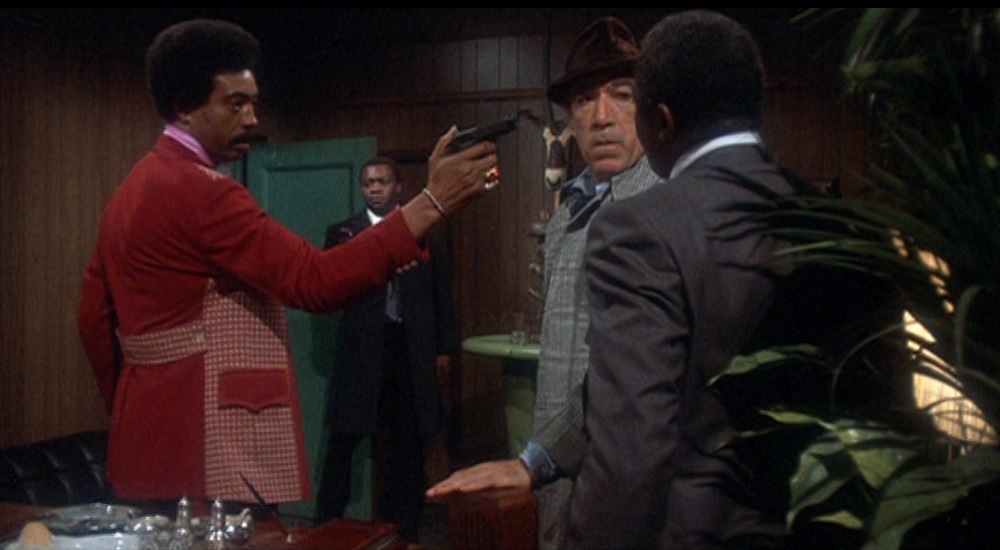
Tarantino’s Jackie Brown opens to the same rip-roaring title song as this movie: ‘Across 110th Street’ by Bobby Womack. It’s a homage to an exploitation classic, a New York set crime thriller about a gang of black criminals who rob the mob, sparking a brutal chase involving both the Mafia and the police. The police duo in charge consists of the corrupt captain Frank Matteli (Anthony Quinn) and Lieutenant William Aylesworth Pope (Yaphet Kotto); a street guy versus a guy who wants to do it by the book. Their chemistry is electric, giving the movie an emotional and moral backbone amid the chaos. The film was slammed at the time for the extreme violence, and while the film is indeed gritty, it is generally well acted and executed. Beneath the grit lies a sharp commentary on race, corruption, and urban decay in 1970s America. Watching it now, it’s easy to see why Tarantino holds it in such high regard.

The Curse of Frankenstein (UK, 1957)

Directed by: Terence Fisher
Written by: Jimmy Sangster (screenplay), Mary Shelley (novel)
Cast: Peter Cushing, Hazel Court, Robert Urquhart, Christopher Lee

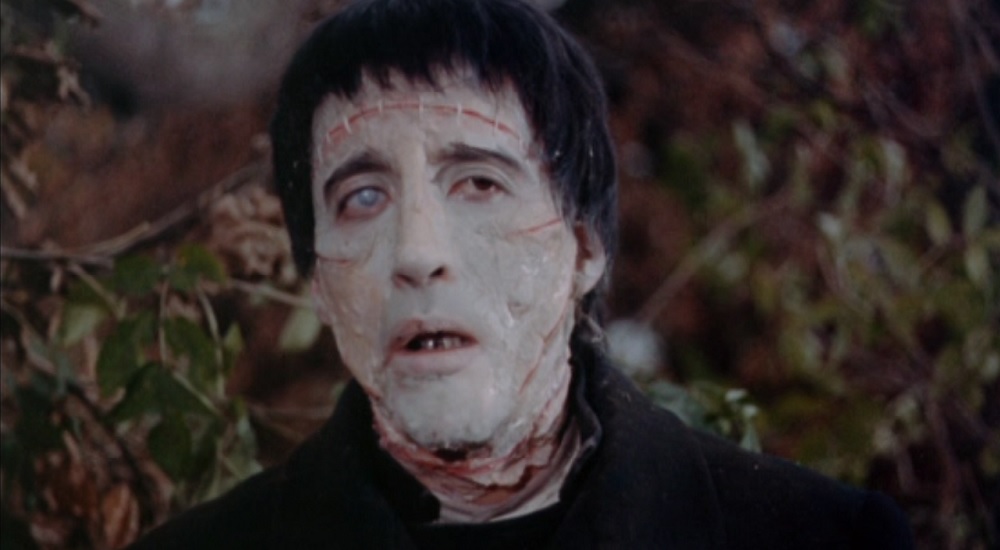
Peter Cushing stars as Dr. Frankenstein and Christopher Lee as the creature in Hammer Studios’ retelling of the Frankenstein legend. Directed by Terence Fisher, who would go on to make Horror of Dracula a year later, this film is often regarded as one of the finest adaptations of Mary Shelley’s novel, even rivaling the classic Universal versions. Told in flashback from a prison cell, Victor Frankenstein recounts the story of how his obsession with discovering the secret of life led him to commit unspeakable crimes. For a film made in 1957, the horror remains remarkably effective, due in large part to Lee’s chilling performance. As Hammer’s first color horror film, The Curse of Frankenstein was notable for its bold use of gore in color and its vivid gothic style. It marked the beginning of the studio’s signature brand of horror and launched a successful series of sequels, with Fisher directing several of them.

Dark Star (USA, 1974)

Directed by: John Carpenter
Written by: John Carpenter, Dan O’Bannon
Cast: Dan O’Bannon, Dre Pahich, Brian Narelle

John Carpenter’s debut film gives us a cynical look at outer space travel. Not the majestic kind Kubrick showed us in 2001: A Space Odyssey, but more like space travel as a monotonous, blue-collar grind. Dark Star is the name of the ship that looks like a surf board. The job of its crew is to destroy unstable planets. And while this may sound exciting, the five crew members – who have been on board Dark Star for twenty years – are mostly bored out of their minds and increasingly detached from reality. Co-writer and actor Dan O’Bannon originally conceived the idea of an alien aboard the ship, but budget limitations forced him to turn that concept into the film’s now-infamous beach-ball creature. His alien idea would later become Ridley Scott’s Alien (1979). Tarantino once called this movie a masterpiece. I don’t see it that way, but I like the 2001 parody concept and the execution, including the inventive special effects, is certainly well done.

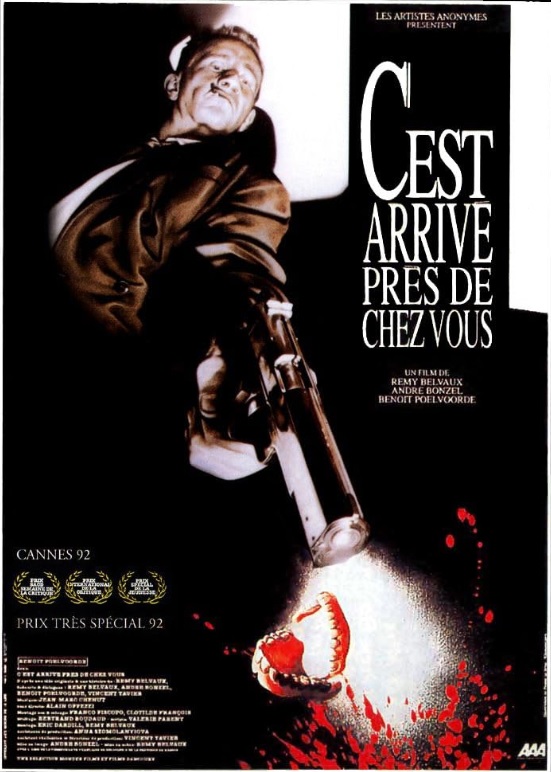
Man Bites Dog | C’est arrivé près de chez vous (Belgium, 1992)

Directed by: Rémy Belvaux, André Bonzel, Benoît Poelvoorde
Written by: Rémy Belvaux, André Bonzel, Benoît Poelvoorde
Cast: Benoît Poelvoorde, Jacqueline Poelvoorde-Pappaert, Nelly Pappaert

In this notorious cult classic from the French part of Belgium, a three-headed camera crew follows the gleefully depraved serial killer Ben, as he spends his days gruesomely murdering people for sport and profit. During the shoot, the crew becomes more and more complicit in Ben’s crimes. The sheer amount of killings is not very realistic, but the profiling of the killer, chillingly portrayed by Benoît Poelvoorde, convinces in all its sickness. The mockumentary concept was pretty new at the time, and the approach – taking the viewer inside the mind of a horrible human being, who – when he’s not busy killing people against depressing urban backdrops – is offering his warped and racist views in interviews – makes for disturbing cinema. The filmmakers, who worked on a shoestring budget, wanted to make something different, and they have succeeded in this task. C’est arrivé près de chez vous (‘It Happened Near You’) became a unique, deeply unsettling, and darkly comic milestone of cult cinema.

The Lady in Red (USA, 1979)

Directed by: Lewis Teague
Written by: John Sayles
Cast: Pamela Sue Martin, Robert Conrad, Louise Fletcher

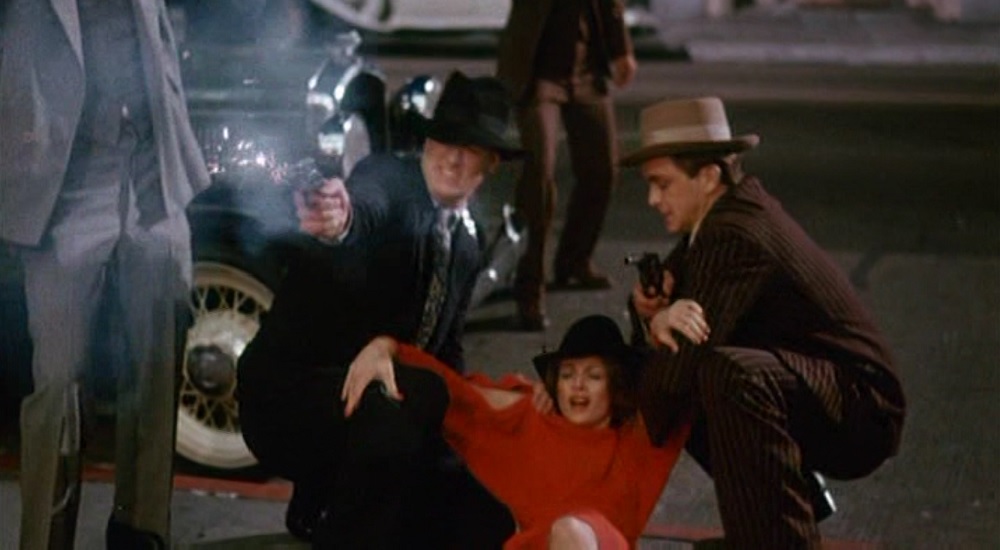
Farm girl Polly moves to Chicago, where she becomes romantically involved with gangster John Dillinger. The film is curious in that it’s not really about Dillinger, but about his girlfriend and the unwitting role she played in the gangster’s famous demise at a movie theater. It traces Polly’s own descent into crime: she starts out as a seamstress, tries her hand at prostitution, and eventually ends up in jail. After Dillinger’s death, she organizes a dangerous but lucrative armed robbery on her own. Written by John Sayles, directed by Lewis Teague, and produced by Julie Corman – indeed, Roger Corman’s wife – the film unmistakably feels like a Corman-style exploitation picture, complete with plenty of bloody, machine-gun action. In his 2021 book ‘Once Upon a Time in Hollywood‘, Quentin Tarantino mentioned that in an alternate Hollywood universe, he directed a remake of this film. It certainly sounds like something he’d do well. Who knows – maybe an idea for his tenth and final movie?
The Story of Film: Time Traveling For the Cinemad

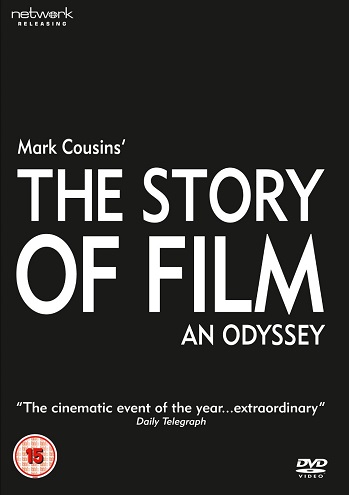
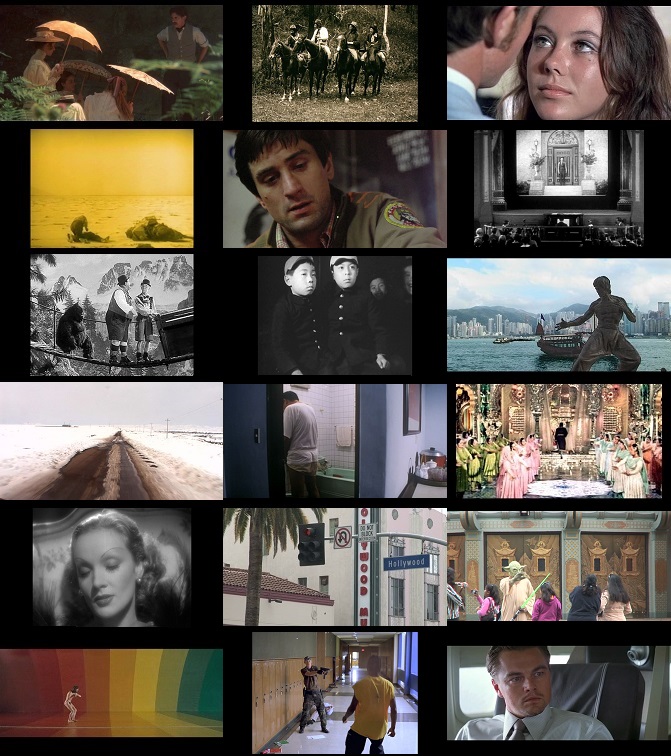
It had to be done someday; making a literal odyssey through the history of cinema and documenting it into a film. The traveller is Mark Cousins. The film is a 15 hour documentary called ‘The Story of Film’. Through cinematic innovation, the story of film is told, from the silent era to the multimillion dollar digital age, covering all continents, major cinematic hallmarks and most talented people in cinema.

The Story of Film 1

The beginning
In 1885 George Eastman of Kodak came up with the idea of film on a role. Then Edison figured that if you spin the images in a box you get the illusion of movement. Lumiere went on to invent the film projector and with that: Cinema! It is not difficult to imagine the excitement of those first screenings. When cinemas started appearing everywhere, it enabled people – who did not travel back then – to see other countries. Not just places, but other worlds. Like what the position of woman was in other countries.

After the invention came the content. And despite of what many believe, it is not the money men that drive cinema. They can’t. Because what you need is the visual ideas, and a clear understanding of what is in people’s hearts. It is psychology that became the driving force of film if anything.

Cousins continues to show us the birth of basic cinema language and techniques that are now common, such as editing, the close up, tracking shots and flashbacks. The road trip then takes us further to the places and the people that brought life to this sublime art form.

1910s
In this period a lot was happening in Scandinavia. Maybe it was the Northern Light, Cousins comments. Or the sense of destiny and mortality in Scandinavian literature that made Danish and Swedish movies more graceful and honest. In 1906 the first feature film was shot in Australia: ‘The Story of the Kelly Gang’. The first feature film in Hollywood was ‘The Squaw Man’ (1914). In 1911 the first movie studio was build. Another interesting thing about this period was that a lot of women were working in Hollywood writing and directing, such as Lois Weber and Alice Guy. They did not always get the credits though.

1920s
In Hollywood, cinema became big business in this period (and a men’s world as well). The 1920s saw the birth of an industry in Hollywood. But the studio system did not get in the film, according to Stanley Donen (director ‘Singing in the Rain’). There were also rebels that emerged – like Orson Welles – that tried to break the bubble. In Europe, cinema developed also. Thematically, the city was often the Big Evil. Think for example ‘Metropolis’ and ‘Sunrise: A Song of Two Humans’. In Japan it was as if the Japanese filmmakers tried to compensate for the massacres their country caused by making very humanistic films. In 1921, the first great Japanese movie was made: ‘Souls on the Road’.

1930s
A lot of innovations were introduced in the 1930s like sound and the use of two camera’s with overhead lighting. From Hollywood came horror movies like ‘Frankenstein’ which borrowed heavily from Germany (Der Golem). And the first gangster pictures appeared, which is an original American genre. The cartoon also arrived and was a very successful new genre. Mickey Mouse was a smash hit and in 1937 came the even more successful ‘Snow White and the Seven Dwarfs’. In Britain, the legendary Alfred Hitchcock started working. He understood the basic human emotion ‘fear’ like no other, and his films are still extremely influential to this day.

1940s
The war years meant less glory, and more gloomy films. In Italy we witnessed the birth of neo realism. The sensational ‘The Bicycle Thieves’ (1939) is a movie that best illustrates this style. In 1941 came ‘Citizen Kane’ – a film that is still often considered by many as one of the greatest movies of all time. It used deep staging so audiences could choose where to look. This was previously used in films like ‘Gone With the Wind’ (1939) and ‘Stagecoach’ (1939), which Welles said to have seen 39 times. A dark genre arrived in Hollywood, called Film Noir. These films, such as ‘Double Indemnity’ usually had characters with flaws that drove them towards their faith, even while they tried to avoid it. The decade ended as depressing as it began with a massive communist hunt in Hollywood: the studios had to fire the (alleged) lefties. This is still a major trauma in Hollywood.

1950s
In America in the fifties, we had the suburban, Christian society. But under the surface there was anger, frustration and tension. Classic films like ‘On the Waterfront’ (1954) and ‘Rebel Without a Cause’ (1955) best illustrate this. In Europe four legendary directors led the way in changing cinema. They were Jacques Tati, Robert Bresson, Ingmar Bergman and Federico Fellini, and they made films more personal and self aware than they had ever been. The era ended with the new wave to which French director Jean-Luc Godard belonged and in Italy Pier Paolo Pasolini. The later used religious music for everyday struggles. He felt consumerism was taking over.

The Story of Film 2

1960s
Sergio Leone made his first ‘spaghetti western’ (Italian made Western) and introduced deep focus, which was made possible by the Italian cinematic invention technoscope in 1960. This gives Leone’s movies an epic feel to them. Thematically, Leone was inspired by Japanese Master Akira Kurosawa (lone gunman / lone samurai). Filmmaking went global in the sixties. In Eastern Europe, directors like Roman Polanski and Milos Forman started their careers. In the Soviet Union, one of the greatest directors ever started working: Andrei Tarkovsky, who knew how to create remarkable imagery. According to Tarkovsky: ‘Imagery contains an awareness of the infinite.’ Late sixties, film schools were popping up all around the USA and a new generation was on its way.

1970s
After the realism in movies in the sixties, the seventies saw a return of old fashioned, romantic and entertaining cinema – and of the box office smash hits, think ‘Star Wars’, ‘The Exorcist’ and ‘Jaws’. ‘The Godfather’ was the return of an old Hollywood genre: the gangster film. New kids were fighting to open up new form, most notably Martin Scorsese with ‘Taxi Driver’ and ‘Mean Streets’. When people think of the seventies, they think about Spielberg, Lucas, Coppola and Scorsese. But there was more. In i.a. Britain and Italy, identity was a major theme. In Germany, Rainer Werner Fassbinder (woman in closed places) and Wim Wenders (men in open spaces) had their glory years. And Werner Herzog the explorer went across the world. He was not so much interested in the feminism or Americana of his contemporaries, but in prime evil life. After John Ford, he is the most important landscape filmer in the history of film. The 70’s also saw the arrival of Asian mainstream, epic films from India (‘Sholay’) and a lot of cinematic activity in Africa.

1980s
After the magnificent seventies came the not-so-great eighties. ‘Protest’ is the central theme of this decade. The 5th generation in China – Chen Kaige and Zhang Yimou – made interesting movies. From Russia came one of the greatest war movies: ‘Come and See’. In America, ‘Top Gun’ was a smash hit, and many movies were influenced by music video’s, like ‘Flashdance’. In France, filmmakers got more into popular culture, which was a protest in itself. Notable directors that moved up in the film world were David Lynch (with ‘Blue Velvet’) and David Cronenberg in Canada with ‘Videodrome’, a prophetic vision of the modern world in which the real and the televisual are dangerously confused.

1990s
Described by Cousins as the last days of celluloid, before the coming of digital. And directors like Wong Kar Wai and Hou Hsiao-hsien used celluloid devotedly. The 90s saw passionate films about other worlds (‘The Matrix’), but also an obsession about reality, for example in the work of Iranian director Abbas Kiarostami who tried to eliminate all dolly’s and clapperboards from the set. From Japan came horror movies about the fear for technology, like ‘Tetsuo’ about a man blending with metal. In Copenhagen, filmmakers returned to primitive filmmaking with Dogma, while Hollywood saw the increasing use of digital effects (‘Terminator 2’ / ‘Gladiator’ / ‘Jurassic Park’). Not only what was in the camera changed, what happened in front of the camera changed as well. Modern became post-modern: The idea that there are no new truths and everything is recycled. Tarantino made this his trade, but respected established directors, like Scorsese, used it as well.

2000s
Documentaries – like ‘Fahrenheit 9/11’ – did as well as blockbusters and blockbusters tried to be like documentaries. Innovative movies were made in the USA. Like ‘Requiem For a Dream’: The great distortion movie. The subconscious got at work in ‘Mulholland Drive’. And in Thailand: ‘Tropical Malady’, a film that changes from simplistic tale of friendship to the mythical story of the hunter and the hunted. The film reincarnates like its main character. Another innovative example is ‘Russian Ark’, which consists of one 90 minute long take showing Aristocrats walking downstairs in a massive palace towards the slaughter.

And the future of cinema? Who knows. Perhaps one day we can share dreams like in ‘Inception’. One thing is for sure: Whatever form it may take, the art of cinema is here to stay and deserves to be celebrated likes this.

Icon 29 - Movie Camera


- Aanbevolen Divider

Top 10 intro (credit sequences) van TV-series

https://jkleyngeld.wordpress.com/2011/09/07/

5 elementen van een krachtig verhaal

10 management lessons from highly successful gangsters

5 Reasons ‘Scarface’ Rarely Makes it to Critics’ Favorite Lists

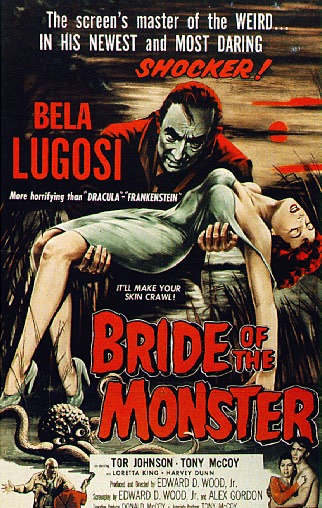
Bride of the Monster

Director: Edward D. Wood Jr.
Written by: Edward D. Wood Jr., Alex Gordon
Cast: Bela Lugosi, Tor Johnson, Tony McCoy, Loretta King

Year / Country: 1955, USA
Running Time: 68 mins.

Bride of the Monster is perhaps the greatest display of director Ed Wood’s ‘talents’. It might also be his best film and the only one that was financially successful upon release. A true salute to incompetence.

In this homage to classic monster movies like Frankenstein, the uncanny scientist Eric Vornoff (Bela Lugosi) lives in a mysterious house in the swamps, performing experiments in terror. He is aided by the huge butler Lobo (wrestler Tor Johnson) and a gigantic octopus.

When a number of people disappear, the police, the press and a Van Helsing type of monster expert start an investigation around Vornoff. They find out he has been tempering with God’s creations, resulting in the beginning of an ‘atomic super race’.

There are quite a few hilarious scenes and dialogues in this movie. The highlight by far is the octopus monster. Wood inserted real footage for the underwater scenes and an incredibly fake rubber octopus for the surface ones. The mismatch between the two is spectacularly funny. Whenever a victim is struggling with the dead tentacles you can only think ‘this can’t be serious’. Still, Wood’s passion for the medium is undeniable.

The movie ends with an atomic explosion as a warning for the use of nuclear power. This was one of the demands of the film’s financier. Believe it or not, it is very fitting in the context of this film. Conclusion: if you watch one Ed Wood movie, watch Bride of the Monster. Oh yeah, it’s that bad.

Rating:

Biography: Edward D. Wood Jr. (1924, New York – 1978, Hollywood) is widely considered as the world’s worst filmmaker. His low-budget movies, usually mergers of science-fiction and horror, are mostly complete disasters in terms of production values and continuity. In 1994, Edward D. Wood Jr. became the subject of an amazing biopic directed by Tim Burton called Ed Wood.

Filmography: The Sun Was Setting (1951, TV short), Trick Shooting with Kenne Duncan (1953, short), Glen or Glenda (1953), Crossroad Avenger: The Adventures of the Tuscon Kid (1953, TV short), Boots (1953, short), Jail Bait (1954), Bride of the Monster (1955), The Night the Banshee Cried (1957, short), Final Curtain (1957, short), Plan 9 from Outer Space (1959), Night of the Ghouls (1959), The Sinister Urge (1960), Take It Out in Trade (1970), The Young Marrieds (1971), Necromania: A Tale of Weird Love (1971)