Apple TV Special: Mr. Scorsese

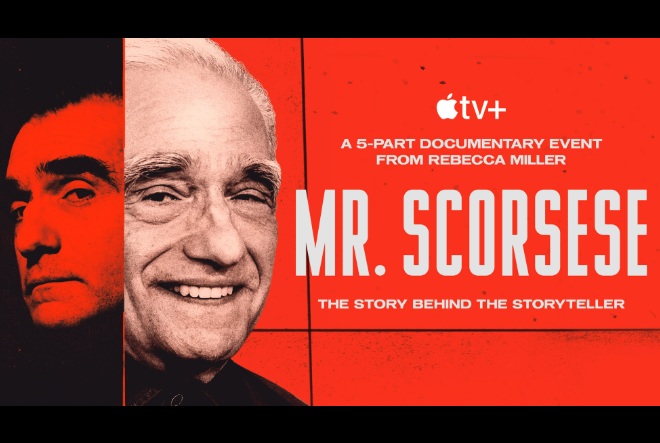
Mr. Scorsese is a five episode film portrait about one of the greatest film directors of all time now playing on Apple TV. It’s the most extensive documentary ever shot about the Italian American cinematic master, featuring interviews with a.o. Leonardo DiCaprio, Robert De Niro and Daniel Day Lewis. Reason enough for me to subscribe to Apple TV. An additional benefit of the subscription is that Marty’s latest film – Killers of the Flower Moon – is also available on the channel.

Scorsese is a very sympathetic guy; I have seen many interviews with him before, logical since he’s my favorite filmmaker, but in this series, you really get to know the man. He grew up in Little Italy and later Manhattan. He was very asthmatic as a child and he couldn’t play outside. There is this shot in GoodFellas where a young Henry Hill is staring out of the window observing the wiseguys outside. That’s Marty right there.

Movie theaters had air conditioning, so that’s where young Martin wanted to be as much as possible. He could breath there, and the movies formed his mind. At home he watched old Italian films with his family. He started making extensive storyboards which his father thought wasn’t very manly. Marty learned of the mobsters who controlled much of the economic activity in his neighbourhood. His father had a good job in the garment industry, which was worked out by the mob. He told young Marty: “Don’t ever let them do you a favor. They’re nothing but bloodsuckers.”

The young Scorsese initially wanted to become a priest, but that path wasn’t for him. Neither were the streets. Literature wasn’t part of his culture either, but a priest encouraged him and his friends to look beyond what they knew; to go to college, to read, learn, and explore. He attended a talk about film school and heard a professor speak passionately about cinema. That was the moment he knew what he wanted to do.

At New York film school he met Thelma Schoonmaker, his future editor. She recalls seeing his student work and knowing immediately that “he had it.” His student film It’s Not Just You, Murray! (1964) won the award for Best Student Film. In 1967 he made his first feature, Who’s That Knocking at My Door, starring Harvey Keitel.

Scorsese married young, but his first marriage collapsed quickly because his mind went more and more to making movies. He went to Hollywood to further his career and met an amazing assortment of talent there: Coppola, Schrader, Spielberg, Lucas and De Palma, known collectively as the ‘Movie Brats’. They were given this name because they were the first generation of formally trained filmmakers to unite film knowledge with artistic ambition.

In the early seventies, King of the B-movies Roger Corman gave Scorsese the chance to direct a movie. This became Boxcar Bertha (1972), a Bonnie and Clyde-style crime movie. His artistic friends hated it. Marty thought it was a good practice in shooting on budget and shooting on time, but his friends thought he had betrayed himself as an artist.

John Cassavetes had seen his feature Who’s That Knocking at My Door and advised him to make more personal movies like that. About Boxcar Bertha he said: “You just spent a year of your life making a piece of shit. Don’t do that again.” Scorsese showed him his Mean Streets screenplay and Cassavetes told him to go find a lead actor to star in it. Then he met De Niro who was from the same neighbourhood.

Mean Streets was based on people and experiences from his neighborhood and people fell in love with it, because it felt completely authentic. That makes sense, because it was real. Now, Marty got more opportunities. With his next film Alice Doesn’t Live Here Anymore (1974), he showed he could also direct women. Ellen Burstyn won the Academy Award for Best Actress for her lead role.

Although Scorsese gained recognition, this period also marked the start of heavy drug use. Film remained his way of working through deep inner turmoil. Drawn to darker characters, he was captivated by Paul Schrader’s script for Taxi Driver. He and De Niro set out to portray a loner like Travis Bickle without turning him into a caricature. Travis is isolated in almost every frame. Taxi Driver (1976) was a huge critical success and won the Palme d’Or.

Everybody praised it. It hit a nerve and showed a true understanding of the American unconscious. A lone man who commits atrocities, like the snipers who killed politicians at that time. Travis has a saviour complex: he wants to save the girls and kill the bad guys. The final scene was too violent for the sensors, so Scorsese changed the colour of the blood to dark, rusty brown or brownish-pink rather than bright red. Daniel Day Lewis was hypnotized by the film and went to see it five or six times. It was the first time he saw Bob (De Niro) act, which was a big thing for him.

After the success of Taxi Driver, he made the costly musical failure New York, New York (1977). His second marriage also fell apart and what started then was a period of self destructive behavior. He started doing lots of drugs and tried to find his cinematic muse again. He almost died – and part of him wanted to because he didn’t know how to create anymore. De Niro had a big part in getting him back on his feet. They went to Sint Maarten where they worked on the script for their next masterpiece: Raging Bull (1980).

Thelma Schoonmaker explains the film’s shooting and editing, and the documentary allows you to rediscover the beauty of its black-and-white imagery. It’s a true work of art. Scorsese had found his muse again, and also his third wife: the daughter of Ingrid Bergman and Roberto Rossellini.

After Raging Bull he wanted to do Gangs of New York and The Last Temptation of Christ. The scripts were there, but the movies were too expensive to make at that time. He did another project with De Niro, The King of Comedy (1982), which flopped. Scorsese’s career was now once again in a bad state. “He was done for in Hollywood”, they told him.

He made a comeback with After Hours (1985), an odd ball comedy shot on a low budget. Key to the film, Scorsese explains, was the collaboration with Director of Photography Michael Ballhaus, who would later shoot GoodFellas. In 1985, he married for the fourth time, this time with Barbara De Fina, who would produce a number of his movies, including Casino.
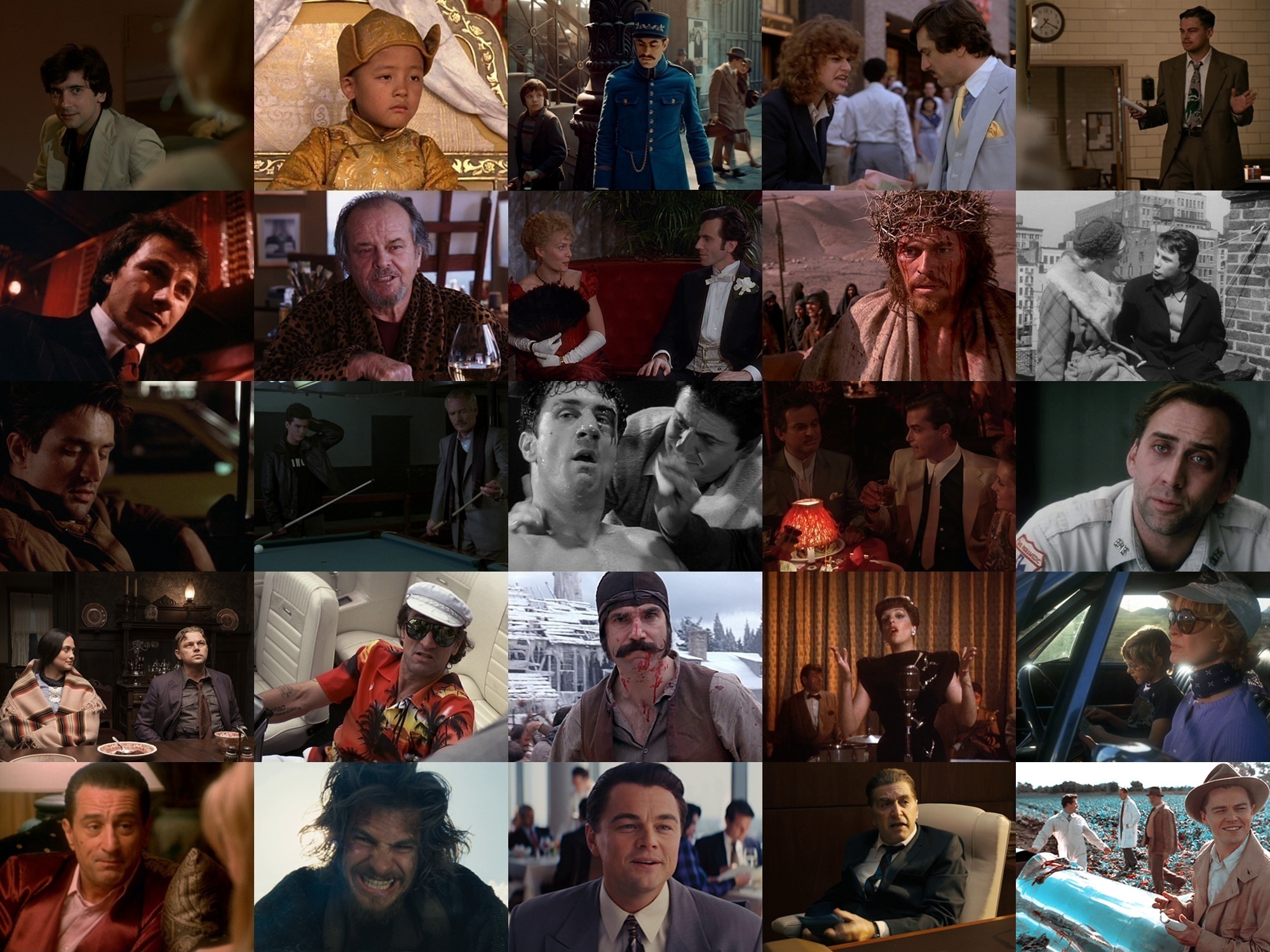
The re-established Scorsese followed up After Hours with The Color of Money (1986), a pool hall movie starring Paul Newman and Tom Cruise, and a sequel to The Hustler (1961). The movie did well, so now Scorsese could finally make his beloved project The Last Temptation of Christ (1988). He made the film to “get to know Christ better”, he explains.

The budget was tight, so he could only do two takes of every shot during the difficult shoot in Morocco. It was very tough, he says. Even tougher was the reception of the film: people were very upset. It was banned in Rome, Israel, and India – and someone set off a bomb during a screening in Paris. Blockbuster didn’t carry the film. Marty needed FBI protection for the second time (he had gotten threats after Taxi Driver and had needed protection then as well).

While working on The Color of Money, Scorsese read Wiseguy by Nicholas Pileggi, the true story of mobster Henry Hill and his life within the Lucchese crime family. Pileggi and Scorsese had both grown up in the same neighborhood and collaborated on the screenplay for GoodFellas. Scorsese had the film fully mapped out in his head – frame by frame, song by song. The result is pure montage, weightless and electric. Scorsese created a new cinematic language for this movie. “It has this crazy energy”, says Spielberg. “Like a runaway train.”

Previews strangely enough saw a lot of walk-outs. Executives wanted him to cut out the last twenty minutes, which is the whole cocaine sequence. Marty stood up to them and saved the movie. God bless him.

After GoodFellas, Scorsese worked with De Niro again in Cape Fear (1991), a successful remake of the 1962 thriller – and in 1995 they made another mob masterpiece with Casino. It’s about mob guys who were given paradise with Las Vegas – but they got kicked out of paradise because they are so evil. The movie has a unique structure like GoodFellas, but it takes it one step further.

In between, he explored another closed society with The Age of Innocence (1993), his first collaboration with Daniel Day-Lewis. It’s about a man imprisoned by the culture he belongs to, and a great love doomed to remain unconsummated.

In 1997, he returned to another genre he loved to do: the spiritual film. Kundun (1997) is about the Dalai Lama in Tibet. There were no actors in that country, so he had to get all these performances out of non-actors. The film was panned-down as dull. Then came Bringing Out the Dead, a loose follow-up to Taxi Driver, but it was still born at the box office.

Scorsese was dead again, but then who came knocking? Leonardo DiCaprio was now Hollywood’s new golden boy, a guaranteed name for box office success – and a movie star with resources to invest in the projects he chose to star in. Now, Scorsese finally got the opportunity to make his long awaited dream: Gangs of New York (2002).

The film reconstructs 1860s New York in massive sets built in Rome. This was the Five Points neighbourhood, which was dominated by gangs. Scorsese calls it science fiction in reverse. George Lucas came to visit the sets and said that “this is the last time sets like this will ever be built”.

The film has an uncanny reverence to today’s political violence, with the natives who can be seen as the proud boys of that time. People who claim to be the only true Americans and are prepared to use savage violence on immigrants.

Fortunately, the very expensive film – that was produced by Harvey Weinstein – did well at the box office.

He continued to work with DiCaprio, first on The Aviator (2004), a biopic about Howard Hughes, a man obsessed with filmmaking and aviation. The film received 11 Oscar nominations, and then it dawned on the film community that Scorsese never won an Oscar. But, even though The Aviator won in nearly every category, it lost the director award to Clint Eastwood for Million Dollar Baby.

But two years later, they made it up by giving him the Oscar for The Departed (2006), another gangster film. It was awarded to him by his old friends George Lucas, Steven Spielberg and Francis Ford Coppola – a bittersweet moment. In 2010, he made another film with DiCaprio, Shutter Island. And to complete the streak with Leo, he made The Wolf of Wall Street (2013), a commentary on how excessive and moralless capitalism has overtaken our society.

Marty once again portrays the dark side of human nature in all its forms, including terrible domestic violence. Scorsese has often been accused of glorifying bad behavior, but another way to see his work is that he refuses to sanitize human nature. The Wolf of Wall Street was a massive success, tapping directly into post-financial-crisis anger.

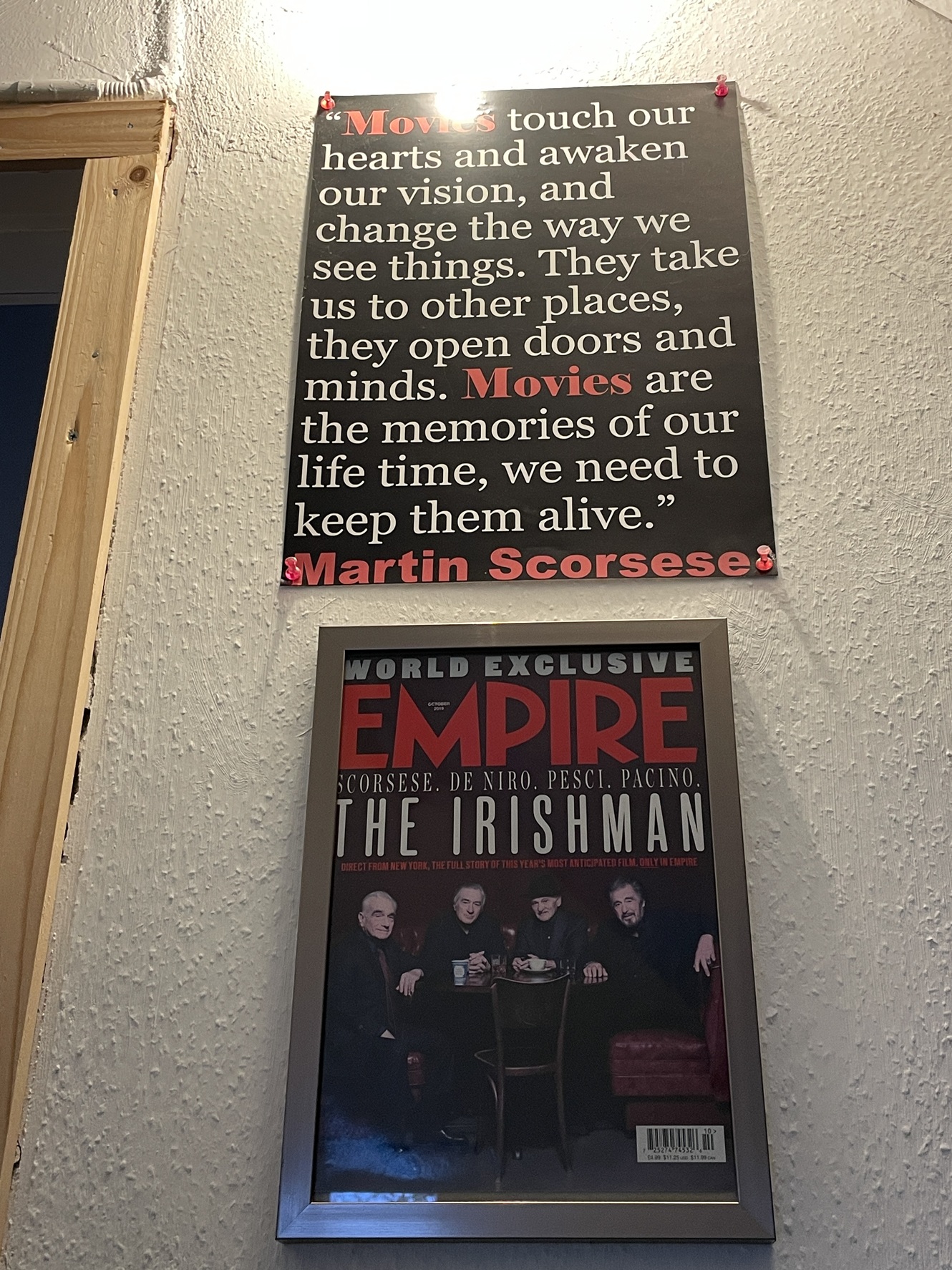
The documentary concludes with The Irishman (2019) and early footage from Killers of the Flower Moon (2023). We also see Scorsese at home, caring for his fifth and final wife, Helen Schermerhorn Morris, who suffers from Parkinson’s disease. It’s deeply moving to see the great filmmaker in this intimate setting.

Steven Spielberg provides the perfect closing tribute for this must-see documentary about the legendary director: “There is only one Marty Scorsese. He is a cornerstone of this art form. There is nobody like him and there will never be anybody like him again.”

Indeed.
Harvey’s Law (over het Voice-schandaal)

Sinds de val van Harvey Weinstein lijkt er geen einde te komen aan de pandemie van MeToo-schandalen die naar buiten komen. Nu blijkt zelfs het brave Nederlandse volksvermaak ‘The Voice of Holland’ geïnfecteerd. Afgelopen donderdag bracht het YouTube programma BOOS tientallen verhalen naar buiten van ex-kandidaten die te maken hebben gehad met grensoverschrijdend seksueel gedrag van prominente medewerkers.

De beschuldigingen: Bandleider Jeroen Rietbergen heeft vrouwen lastiggevallen met vunzige appjes, ongepaste opmerkingen, ongewenste handtastellijkheden en dickpics. Coach Ali B heeft, zo wordt gesteld, zijn positie misbruikt om seks te hebben met verschillende van ‘zijn’ talenten. Marco Borsato, voormalig coach, heeft jonge kandidaten betast van ‘The Voice Kids’. En tegen de regisseur zijn vijftien klachten voor wangedrag ingediend, maar wat hij precies gedaan heeft is nog niet helemaal duidelijk. Tegen alle vier lopen inmiddels aanklachten.

Zo’n MeToo zaak voelt toch vreemd omdat er nog niks bewezen is, maar de vermeende daders wel direct volledig afgefikt en gecancelled worden. Desalniettemin is er weinig reden om te twijfelen aan de journalistieke integriteit van BOOS. Ook zijn er zoveel kandidaten die zich gemeld hebben dat deze zaak niet als een reeks incidenten kan worden afgedaan. Er is duidelijk sprake van een diepgeworteld cultuurprobleem.

Zenderbaas John de Mol heeft naar eigen zeggen slechts één keer een signaal binnengekregen over ongepast gedrag. Een kandidaat had een klacht ingediend over een ongepast appje van Rietbergen, waarna De Mol hem “alle hoeken van zijn kantoor heeft laten zien”. Maar desondanks vond hij dat zijn (inmiddels ex-)zwager nog een kans verdiende. Daarmee heeft hij misschien wel zijn grootste succes permanent de nek omgedraaid.

Toen hem gevraagd werd te reageren op de daders, had hij daar de grootste moeite mee. “Hoe haal je het in je hersens”, wist hij nog uit brengen. Begrijpelijk, dit gedrag is moeilijk te begrijpen. Wat ging er om in de hersenen van deze uiterst succesvolle entertainers? Hoe konden ze hun reputatie zo op het spel zetten? En waarvoor eigenlijk? Want ga maar na wat de gevolgen voor hen (zullen) zijn: hun carrières, nalatenschap, reputatie, inkomensstromen en huwelijken allemaal kapot. Dan hangt hen ook nog vervolging door justitie boven het hoofd.

De enige verklaring die ik heb is dat mannen in hoge posities toch wat hoger scoren op het narcistische spectrum. En verschillende onderzoeken over leiderschap hebben dit ook uitgewezen. Het gevolg: ze wanen zich onaantastbaar. En in de entertainment industrie hebben deze narcisten te maken met de constante verleiding door de aanwezigheid van bloedmooie vrouwen. Die kunnen ze simpelweg niet weerstaan met hun primitieve oerbreinen.

De nog overwegend masculiene bedrijfsculturen bij de grote bedrijven zijn er niet op toegerust dergelijk gedrag aan te pakken. Vrouwen hebben niet het gevoel gehoord te worden en de mannen durven niks te zeggen tegen gorilla-collega’s die over de schreef gaan. Zo blijft het probleem dooretteren totdat het zo groot wordt dat het uit elkaar barst.

Wie dacht dat er met de veroordeling van Harvey Weinstein dus een eind was gekomen aan dit soort praktijken zat ernaast. Ook de Voice zal niet het laatste geval zijn en dat komt door wat ik Harvey’s Law zal noemen: ‘Waar in de entertainment industrie machtige mannen de kans hebben hun positie te misbruiken voor seks met vrouwen zullen ze dit altijd doen.’

Natuurlijk is dit niet echt een wet; er zijn zeker uitzonderingen op de regel. Bij een hoop entertainment bedrijven gaat het niet mis of in elk geval in mindere mate. Maar Murphy’s Law is ook geen echte wetmatigheid. Als alles mis zou gaan wat er mis kan gaan zou de wereld allang vergaan zijn. Maar er zit toch een kern van waarheid in.

Dus de entertainment industrie – met daarin veel ongelijke machtsverhoudingen tussen mannen en vrouwen – zal het decor blijven van dergelijke scenario’s. De loketten waar De Mol het over had werken niet. Het enige wat een kans heeft is wanneer mannen – en dit is al vaak in de media geroepen de afgelopen week – hun bek gaan opendoen en andere mannen gaan aanspreken op hun neanderthalergedrag. Hopelijk lukt dit in de toekomst beter. Voor de Voice – toch nog steeds één van de beste programma’s van televisie – komt dit helaas te laat.

QT8: The First Eight

I was 13 years old when I saw the video Reservoir Dogs at my local video store. There were – for me at the time – not many familiar actors in it. But the cover looked pretty cool with guys in suits with guns. Plus there was a lot of praise on it from critics, so I decided to give it a shot. I had no idea what to expect, but Jesus Christ was it a good movie! Ridiculously great filmmaking. One of the best movies I had seen at that point and to this day still.

It is funny to hear all these actors in the documentary QT8: The First Eight basically relate to the exact same experience. Tim Roth, shown while being carried in the warehouse by Harvey Keitel, remembers talking to Keitel about what they had just shot and saying: “Man, this is going to be a really great movie!” Keitel agreed.

Reservoir Dogs premiered on Cannes in 1992, very prestigious for a debut, and it was a great success. Everybody wanted to meet Quentin there and he became a movie making star overnight. Everybody said: “Can you believe this guy? He can write and direct and it’s sensational stuff.”

For a long time I was jealous of Tarantino. And when I watch this documentary I still am. I mean, wouldn’t it be something to be able to write screenplays like this guy? And this is also a shared emotion by many people interviewed for this doc. Talent like this is rare. Many people, including me, tried to write scripts like him. But to no avail.

His first screenplays – True Romance and Natural Born Killers – he had to sell to pay the rent. True Romance was originally told in non-chronological order Tarantino-style. Oh and the pop culture loving Clarence, basically Quentin’s alter ego – died at the end. Luckily Tony Scott changed that. At least I for one liked the happy ending.

Tarantino wanted to become a director, so he wrote a script that he could do on a low budget: Reservoir Dogs. Harvey Weinstein distributed the film. After that everybody in Hollywood wanted to work with him, but the Weinstein’s got to produce all his movies up until The Hateful Eight. Then the scandal broke out, and Tarantino – who according to Michael Madsen had known about Weinstein’s misconduct for some time (read Tarantino’s confession-story here) – switched to Sony for his ninth movie Once Upon a Time in Hollywood.

And this Weinstein-business is the only major stain on Tarantino’s career. That, and pushing Uma Thurman to do a car stunt in Kill Bill, which went wrong causing permanent physical problems for her. No good, Mr. Quentin. But there is a lot to balance it out. He is described by everyone in the doc as a very nice guy who enjoys life, and appears to be a great friend for his many cronies.

Pulp Fiction, that followed Reservoir Dogs, is one of the masterpieces of the past 50 years. Michael Madsen, for whom the part of Vincent Vega was originally written, was committed to Wyatt Earp at that time. Nightmare! He takes it well, commenting on the extremely successful casting of John Travolta. “It is one of main reasons the movie worked.” Plus Travolta can dance and Madsen – who did a dance scene in Reservoir Dogs – can’t, at least in his own opinion. “They would have had to change the script into that they don’t win the dance contest.”

How do you follow up a masterpiece like Pulp? You don’t. Just make a very good genre film instead starring Pam Grier, queen of the blaxploitation movies Quentin went to see during his childhood. Jackie Brown is a beautiful film about people trying to figure out what to do with their lives. Then he made another genre film with a strong female lead, a mash-up between Hong Kong cinema and a spaghetti western. Kill Bill is an astonishing accomplishment. Bit of trivia: The razor the Bride uses to escape from the coffin in Vol. 2 is the same used by Mr. Blonde in the torture scene in Dogs. Everything is related in the Tarantino universe.

Then he went on to make another feministic movie with powerful girls in it. Death Proof is a clever slasher flick / carploitation movie shot by the maestro himself. With an unforgettable Kurt Russell as Stuntman Mike. After that came his war movie effort. Inglourious Basterds is unlike any war film ever done before. It is storytelling at his best. Django Unchained is another historic film and it’s brutal. It might just be a little too funny for a film about slavery. But Tarantino likes to hand out justice to his characters. Hitler gets machine gunned to death in Basterds and in Django, the black hero – after having killed a ton of slavers – rides off into the sunset with his girl, an image you won’t find in many westerns.

The Hateful Eight, the final movie treated in this doc, is in a way Reservoir Dogs redone as western. Everything comes full circle. Even Weinstein’s story. Apparently John ‘The Hangman’ Ruth (played by Kurt Russell) is based on the monstrous Weinstein. He gets a big fat lesson in the film. Tarantino said many times that he wants to quit at ten movies, because otherwise he fears the quality will go down and people will say: ‘This one is not so good, but this guy used to make great movies’. Let’s hope he will break his word and continue to make movies forever. His style and voice are unique and irreplaceable in Hollywood. Whatever happens, currently nine films are in the can. And I will certainly keep enjoying his work till the end of my days and share it with friends. When you absolutely, positively, want to blow away everybody motherfucker in the room, accept no substitutes.

#MeToo en de val van Harvey Weinstein

“The fat guy from Queens had used his power to exploit the dreams of woman who had come to Hollywood to search for fame.”

De #MeToo-beweging begon met de val van de machtige filmproducent Harvey Weinstein, een karikatuur van het type filmbons dat niet meer bestaat. Weinstein is de afgelopen 30 jaar als producent betrokken is geweest bij veel van mijn favoriete films. Met name alle Tarantino’s en The Lord of the Rings.

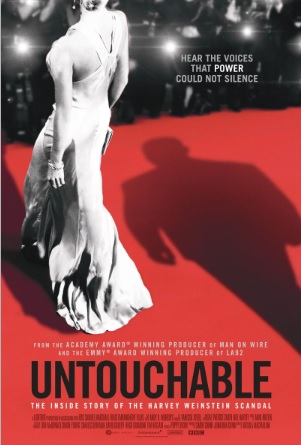
Iedereen was het erover eens: hij was briljant. Hij had oog voor talenten, deed risicovolle investeringen en wist enorm veel publiciteit te genereren voor zijn projecten. Maar behalve filmmaken was hij nog op een ander vlak actief: seksueel misbruik van vrouwen. In de documentaire Untouchable komen verschillende van zijn slachtoffers aan het woord. De misbruik-tactieken van Weinstein komen in de verhalen steeds overeen: Eerst over carrière praten en dan de actrice alleen op een hotelkamer krijgen. ‘Iedereen doet het. Wil je me echt tot vijand maken?’

Waarom heeft het zo lang geduurd voordat hij werd gepakt? Simpel, door de machtsverhoudingen. De vrouwen die hij misbruikte wilde het allemaal maken in Hollywood. Weinstein kon ze rollen geven en ze introduceren bij de juiste mensen. In het geruchtencircuit kreeg de vrouw meestal de schuld: “Zij heeft Harvey gepijpt voor een rol.” De enkele keren dat hij beschuldigd werd, stuurde hij er een leger advocaten op af die de zaak snel in de doofpot stopte. En zo kon hij 30 jaar lang ongestoord doorgaan met zijn praktijken.

De emotionele schade voor de vrouwen is groot. “Het is moeilijk te geloven dat mij dit overkwam. Ik snijd dit eruit; het lijkt een scene uit een slechte film.”
En: “Het ontneemt je iets in relaties met anderen. En zij weten niet waarom.”

Uiteindelijk heeft een groep actrices zich verenigd en met behulp van onderzoeksjournalist Ronan Farrow hebben ze getuigenissen verzameld en een belastende geluidsopname. Toen dit naar buiten kwam barstte de bom en verspreidde het #MeToo-vuur zich binnen de kortste keren over de hele wereld.

#MeToo heeft een keerzijde: het kan voor eeuwig de reputatie ruïneren van mensen die het eigenlijk niet verdienen. Maar in het geval van Weinstein is het fijn om te zien dat machtsmisbruik niet ongestraft blijft. Op 6 januari, 2020, zal de rechtszaak tegen de gevallen filmbons plaatsvinden.

Update 11 maart 2020

De uitspraak: Harvey Weinstein’s Stunning Downfall: 23 Years in Prison