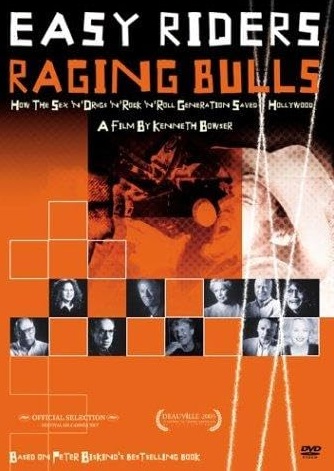
Easy Riders, Raging Bulls

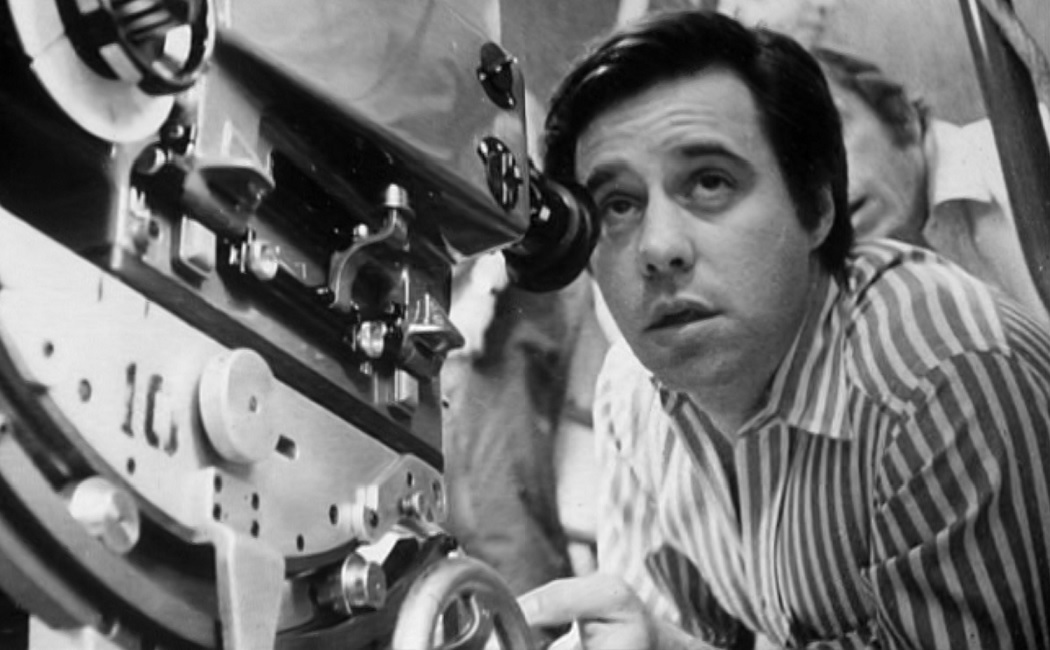
BBC documentary (2003) by Kenneth Bowser, based on the book by Peter Biskind. Easy Riders, Raging Bulls: How the Sex-Drugs-and-Rock ‘N Roll Generation Saved Hollywood tells the story of Hollywood in the 1960s, a time when the studio system was in crisis. Their films had become increasingly irrelevant.

The problem was that movies were run by studios rather than directors, and the studios had lost touch with what audiences wanted to see. Then a new generation of filmmakers emerged who reconnected with viewers. Directors such as George Lucas, Steven Spielberg, Martin Scorsese, Dennis Hopper, Sam Peckinpah, Francis Ford Coppola, Arthur Penn, Warren Beatty, Robert Altman, Jack Nicholson, and Peter Bogdanovich.

“In 1963 the studio system collapsed”, says Bogdanovich. “It was over.” After the disaster of Cleopatra (1963, Joseph L. Mankiewicz, Rouben Mamoulian), the Fox lot was shut down. It became a ghost town. Television took over. The old moviegoers died off, and American films grew more and more meaningless.

Meanwhile, art theaters screening foreign films were doing very well. Many of the new generation of filmmakers learned the language of cinema from auteurs like Fellini, Godard, and Truffaut.

Outside the studio system, Roger Corman played a pivotal role in training young filmmakers to make low-budget B-movies that performed well at the box office. Jonathan Demme, Martin Scorsese, Ron Howard, and Francis Ford Coppola all started under Corman. They succeeded by targeting the youth who flocked to the thousands of drive-in theaters across the country, audiences that loved horror and action. Corman also had a knack for choosing hot topics: Hells Angels were in the news, so he made The Wild Angels (1966, Roger Corman). LSD was trendy, so he made The Trip (1967, Roger Corman) based on a screenplay by Jack Nicholson.

In Hollywood, directors proved just how out of touch the studios were. Executives hated Bonnie and Clyde, but young people loved it. Studios had to adapt. Paramount, in deep trouble, was taken over by Gulf & Western, led by the eccentric Austrian Charlie Bluhdorn. He brought in the now-legendary Bob Evans as a producer, who helped turn the studio around. How? By giving directors more creative control. Like he did with Polanski, who made Rosemary’s Baby in 1968.

At Columbia, Bert Schneider also trusted and empowered directors, resulting in massive hits, most notably Easy Rider, released in 1969. The drug-fueled chaos of director Dennis Hopper and his team is visible on screen. It was a great film, and audiences loved it. It was the kind of movie that never would have been made under the old studio system. The same goes for Midnight Cowboy by John Schlesinger, also released in 1969 – an outstanding film. That same year saw The Wild Bunch by Sam Peckinpah, which pushed violent realism to a whole new level.

The 1970s began, and the director’s era was in full swing. Peter Bogdanovich released The Last Picture Show in 1971, a film rich in emotional depth and sexual content, more than audiences were used to at the time. Dennis Hopper tried to follow up on Easy Rider with The Last Movie, but botched the edit due to his drug use and constant partying. “I had final cut, but I cut my own throat,” he says in the documentary.

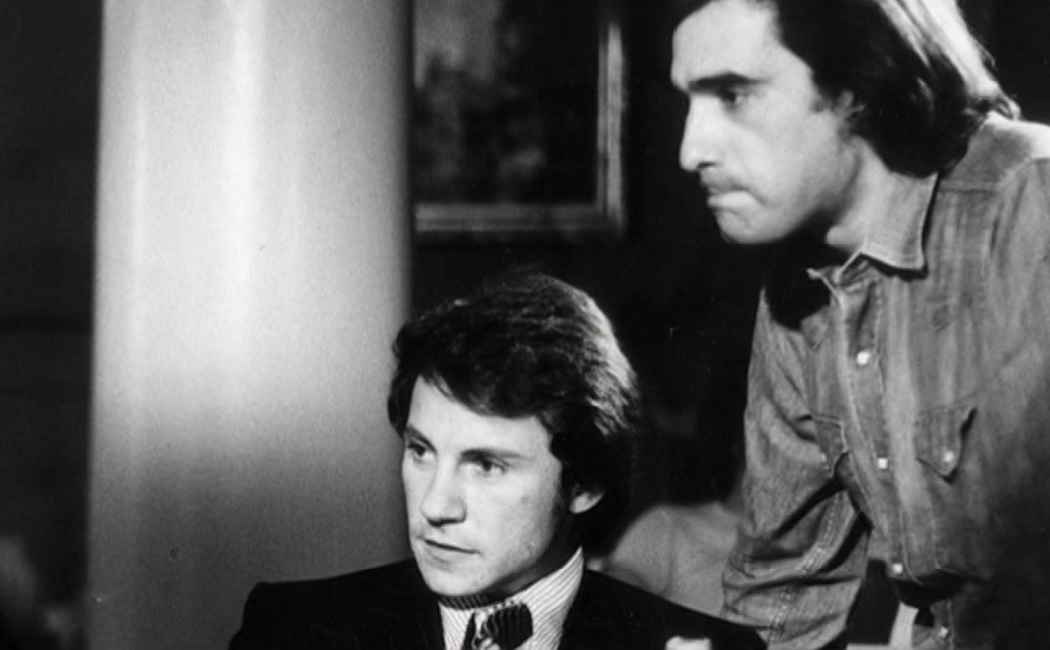
In 1972, Paramount released The Godfather in 4,000 theaters simultaneously, a massively successful strategy. The history of that production was recently chronicled in the excellent miniseries The Offer. Coppola had now become one of the greats. He used his influence to bring George Lucas back to Hollywood, where he made the wildly successful American Graffiti in 1973 – a film studios didn’t understand, but youth audiences loved. That same year marked the rise of another major talent: Martin Scorsese, whose Mean Streets won over critics and audiences alike with its originality and authenticity.

But 1973 belonged to Warner Bros., which released The Exorcist by William Friedkin. Using the same wide-release strategy as The Godfather, it became a huge box office hit. It was Friedkin’s second success after The French Connection, cementing his status as one of the untouchable directors of the time.

By now, the auteurs had taken over Hollywood. This led to artistic triumphs like Chinatown (1974). But the young directors hadn’t forgotten Corman’s trick of attracting young audiences. In 1975, Spielberg released Jaws, a film that redefined what success looked like in Hollywood. Corman said: “When I saw Jaws I thought: these guys know what I’m doing, and they have the money and talent and skills to do it better.” George Lucas took it even further with Star Wars in 1977. The age of the blockbuster had arrived.
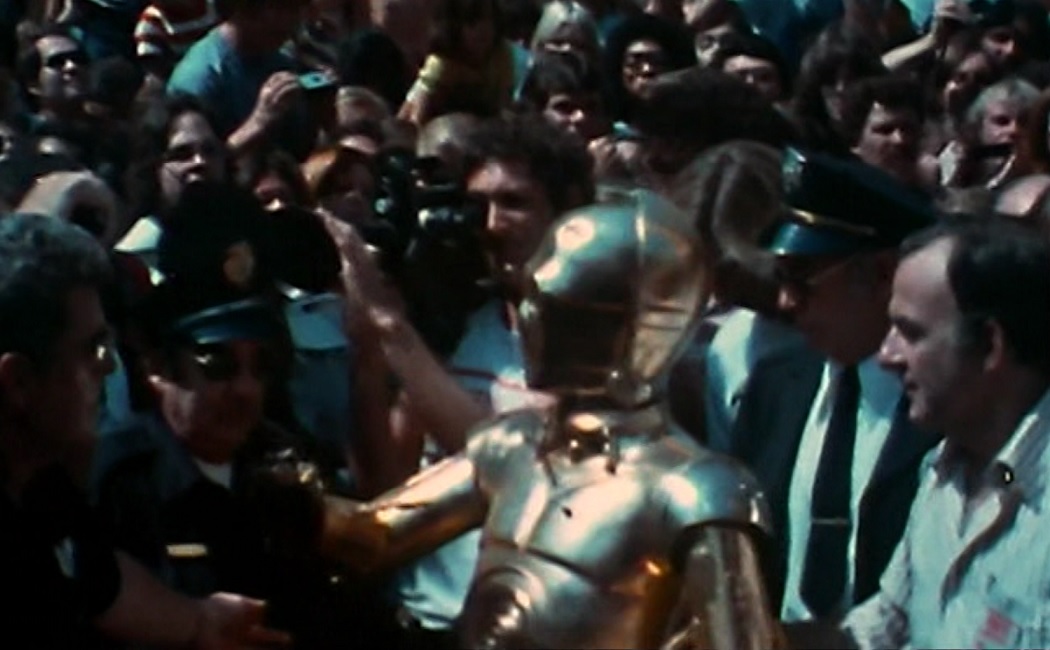
It had taken a decade, but Hollywood was back on its feet. Expensive B-movies like Alien, Superman, and their sequels became the new studio model. For about ten years, directors ruled. That era came to an end in the late ’70s, but it was a glorious decade that produced countless classics – films still regarded today as some of the greatest ever made.
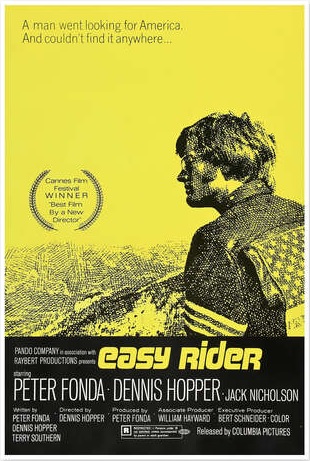
Easy Rider

Director: Dennis Hopper
Written by: Peter Fonda, Dennis Hopper, Terry Southern
Cast: Peter Fonda, Dennis Hopper, Jack Nicholson

Year / Country: 1969, USA
Running Time: 95 mins.

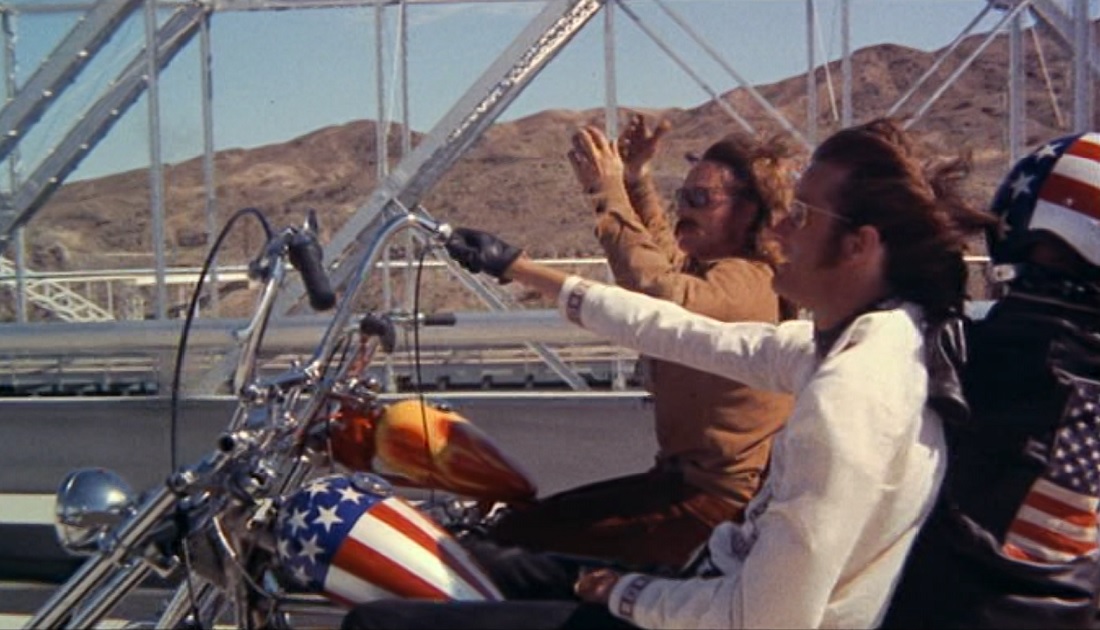
Two American bikers, Billy (Dennis Hopper) and Captain America (Peter Fonda), make a drug deal in Los Angeles, selling a stash of cocaine. They stash the money in plastic tubes hidden inside Captain America’s gas tank, which is decorated in stars and stripes like the American flag. Then they hit the road, heading for the Mardi Gras festival in New Orleans.

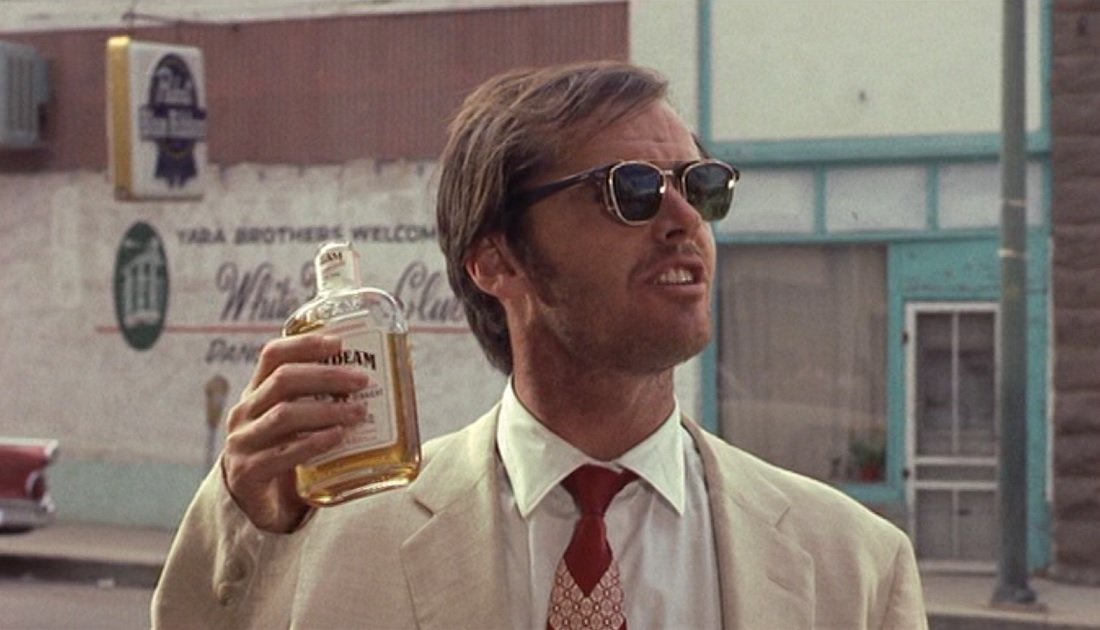
These two are counterculture figures; bikers, yes, but more hippie than outlaw. They ride through the American South and Southwest, camping under the stars, smoking grass by the fire, and drifting freely. Along the way, they encounter fellow wanderers, free-spirited hippie women, and the memorable, alcoholic lawyer George Hanson (Jack Nicholson).

Easy Rider has a unique atmosphere all its own. The film’s striking images of wide-open, desolate landscapes, paired with its incredible rock soundtrack, create a dreamlike sense of freedom. It’s a road movie, yes, but also a time capsule. The tagline sums it up perfectly: ‘A man went looking for America. And couldn’t find it anywhere…’ Throughout the journey, they meet farmers, hippies, rednecks – a cross-section of America. But beneath it all is a deeper tension: a clash between the angry and the peaceful.

The film’s marijuana-smoking scenes feel genuine, and the acid trip near the end is raw and unsettling – likely because the cast actually used real drugs during filming. That honesty helps make Easy Rider the ultimate hippie movie, capturing the spirit and disillusionment of its era.

The film was a surprise box office success, shaking up the Hollywood system and briefly shifting creative power to the directors. For a moment, they – not the studios – understood what audiences really wanted to see. The film became a landmark of New Hollywood, capturing the spirit of the 1960s and earning Hopper an Academy Award nomination for Best Original Screenplay.

Rating:

Biography: Dennis Hopper (1936, Kansas – 2010, Los Angeles) was an American actor, director, writer, and artist known for his intense screen presence and deep ties to countercultural cinema. Hopper began his career in the 1950s with small roles in films like Rebel Without a Cause (1955), alongside James Dean. His early work in Hollywood was promising, but his rebellious nature and substance abuse problems often put him at odds with studios. He achieved cult status with Easy Rider (1969), which he co-wrote, directed, and starred in alongside Peter Fonda. He continued his directing career with a mix of critical and commercial disappointments, as well as a few moderately successful films. As an actor, however, he delivered memorable performances in several major hits, including Blue Velvet and Speed. Beyond his film work, Hopper was also a prolific photographer and painter, with his artwork exhibited in galleries around the world.

Filmography: Mary Jennifer at the Beach (1964, short), Easy Rider (1969), The Last Movie (1971), Out of the Blue (1980), Colors (1988), Catchfire (1990), The Hot Spot (1990), Chasers (1994), Homeless (2000, short), Pashmy Dream (2008, short)

The Verdict: John Wick: Chapter IV

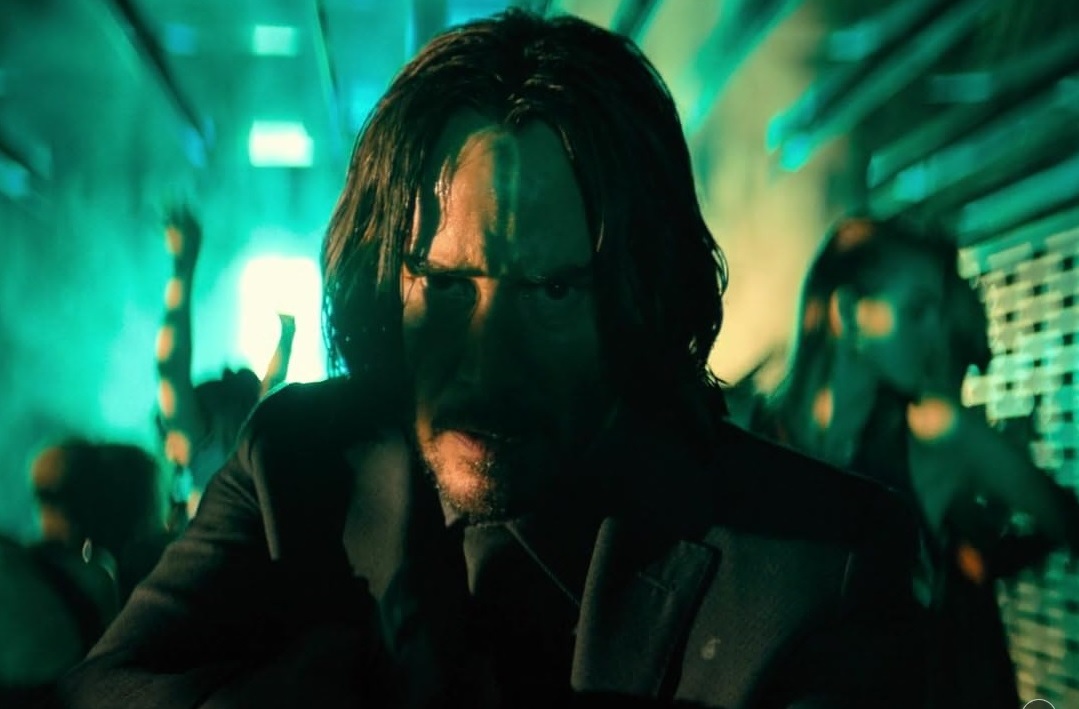
I had a friend in the early zeroes who, when we would send him over to the video store to rent a movie, he would surely come back with the dumbest, most stupefying action movie sequel ever produced. I don’t see this friend any longer, but I am pretty sure John Wick: Chapter IV will now be his favorite movie of all time. The first John Wick movie was no masterpiece, but it was a decent action flick that had some of the elements needed to enjoy a movie of this kind. Elements that are completely lacking in part IV: a story, humor, tension (John Wick can fall off any building and survive) or emotion (if he would get killed, so what?). All it does have is endlessly boring video game action with the same type of kill being repeated over and over, and this for an almost insulting 2 hours and 49 minutes. Is there nothing positive to say? Some of the actors are in good shape and many of the visuals are pretty impressive. There is some talk of the death of cinema these days, and John Wick: Chapter IV certainly supports the case of the pessimists perfectly. Hollywood screenwriters that lack original ideas and producers pumping a depraved amount of money in a completely mindless sequel is definitely what John Wick: Chapter IV brings to the High Table. And with a fifth movie in the works and a television show already out, this trend is not likely to be reversed any time soon.

John Wick: Chapter IV is now available on Amazon Prime

The verdict: to stream or not to stream? Not to stream

Bruce Campbell: A B-Moviestar’s Biography

For every George Clooney and Steven Spielberg, there are thousands of working class slobs in Tinsel Town. Bruce Campbell’s biography ‘If Chins Could Kill: Confessions of a B-Movie Actor’ is a homage to this B-crowd. Bruce who? That’s the point exactly. For those of us who grew up on a diet of classy horror movies in the eighties and nineties, he is a household name, for he was the star of one of the greatest horror series of that era: the holy Evil Dead trilogy (consisting of The Evil Dead, Evil Dead II and Army of Darkness).

‘If Chins Could Kill’ tells Bruce’s story. It was first published in 2001, so it doesn’t include the television adaptation of Evil Dead called Ash Vs. Evil Dead, but that’s no problem; there are plenty of great stories preceding that terrific cult show. In chapter 1, Campbell describes his childhood in Detroit, Michigan, with his parents and two older brothers. They did their fair share of monkeying around, and then good old Bruce became interested in girls. It became a lifelong obsession.

As he grew older, he had to find a way to keep on having fun. He discovered that his father Charles was an actor in a local theater. At age 14, Bruce joined the group and he soon played his first roles on stage. In the years that followed, he met various would-be actors and filmmakers, including one who would make it really big: Sam Raimi. After shooting a bunch of pretty cool 8 MM amateur films, Campbell, Raimi and another guy called Robert Tapert wondered: can we make a profession out of this?

The junior film crew decided to focus on the horror genre, because of the low budget required. For inspiration, they watched many horror shows at the drive-in theater and got a good sense of what audiences liked (when do they laugh? When do they scream?). Then they shot Within the Woods, the short predecessor of The Evil Dead. Their next challenge was a considerable one; they had to raise 150.000 dollars to be able to shoot their first feature length horror movie on 16 MM film (which they would afterwards blow up to 35 MM for cinema screenings) and to cover all other expenses. This seemed impossible, but they bought suits, went to work, and eventually raised the money.

After a grueling 12-week shoot in a run-down cabin in the woods of Tennessee, they canned the film, and luckily for the private investors, they delivered a genre classic. It turned out that its director was a genuine talent in visual storytelling, and Campbell undeniably a true horror star. True to the aim of his book, Campbell describes all the collaborators and the challenges they had to overcome to get this movie made. None of the other actors continued acting after The Evil Dead and all pursued other occupations.

If you’re serious about shooting a low budget movie, you should definitely read this book. It contains many tips on raising money, and then actually shooting it with hardly any resources. After that come the reshoots, the editing and sound editing, and then comes an even tougher part: marketing and selling the damn thing. Luckily for the crew, Stephen King saw their film at a movie event and wrote positively about it. His recommendation did miracles for the marketing of what was originally known as Book of the Dead, an unmarketable title; people might think they’d have to do reading at the screening. The investors of the retitled The Evil Dead made their money back, but the boys didn’t make anything. Yet, they now had a film under their belt.

What followed was the major flop Crimewave, co-written by The Coen Brothers. Campbell didn’t get a whole lot of work after that. He was in a soap series where he met his wife to be (a fragment from this show can be seen in Fargo, in the scene in which sociopath Gaear is watching television in the cabin). Crimewave could have been a career ender in Hollywood, but they had a fallback project: doing a sequel to the successful Evil Dead. Evil Dead II: Dead By Dawn (1987) became a legendary sequel and it is still considered to be among the greatest horror films ever made (it’s second on my top 10 horror list).

Still, Campbell – despite having played a lead role in a popular film – was no mainstream star and had to work as a security guard to make ends meet (“hey, you’re that guy from Evil Death, say that groovy line”). He also got divorced and met his new wife (a make-up artist) at a movie set. Campbell’s career would be closely tied to Raimi’s and in 1993, they would complete the trilogy with Army of Darkness. If you’ve ever wondered how much Bruce made with starring in the lead role in this movie ( I did!), the answer is in this book. It’s 500 K. This seems like an okay sum, but you have to subtract 25 percent for agents and managers leaving 375.000. Then deduct taxes (federal and state at the highest level) and you’re left with 187.500. Because he was recently divorced, his wife got half leaving Bruce with 93.750. This is still a lot of money, but considering it was two years work, he made just 46.875 a year, which is not what you’d expect a movie star (even a B-movie star) to make.

Still, Campbell continued to find work and most importantly: have fun. Especially when he went to New Zealand to work as actor and director on the tv-show Hercules: The Legendary Journeys and spin-of Xena: The Warrior Princess. In Campbell’s words: “shooting this show in New Zealand, away from studio interference, brought me back to the fun of filmmaking, like when we were shooting 8 MM movies back in Michigan.”

Read also: Ash vs Evil Dead: 5 Greatest Moments