Cult Radar: Part 12

FilmDungeon.com is glad to explore the video trenches to find that oddball treasure between the piles of crap out there. Of course, a treasure in this context can also be a film that’s so shockingly bad it’s worth a look, or something so bizarre that cult fans just have to see it. Join us on our quest and learn what we learn. Hopefully we’ll uncover some well-hidden cult gems.

Researched by: Jeppe Kleijngeld

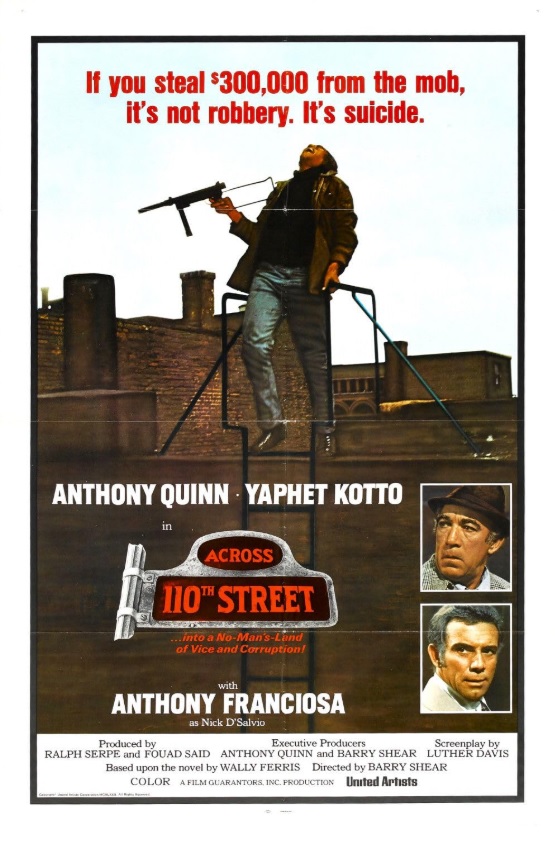
Across 110th Street (USA, 1972)

Directed by: Barry Shear
Written by: Luther Davis, Wally Ferris
Cast: Anthony Quinn, Yaphet Kotto, Anthony Franciosa

Tarantino’s Jackie Brown opens to the same rip-roaring title song as this movie: ‘Across 110th Street’ by Bobby Womack. It’s a homage to an exploitation classic, a New York set crime thriller about a gang of black criminals who rob the mob, sparking a brutal chase involving both the Mafia and the police. The police duo in charge consists of the corrupt captain Frank Matteli (Anthony Quinn) and Lieutenant William Aylesworth Pope (Yaphet Kotto); a street guy versus a guy who wants to do it by the book. Their chemistry is electric, giving the movie an emotional and moral backbone amid the chaos. The film was slammed at the time for the extreme violence, and while the film is indeed gritty, it is generally well acted and executed. Beneath the grit lies a sharp commentary on race, corruption, and urban decay in 1970s America. Watching it now, it’s easy to see why Tarantino holds it in such high regard.

The Curse of Frankenstein (UK, 1957)

Directed by: Terence Fisher
Written by: Jimmy Sangster (screenplay), Mary Shelley (novel)
Cast: Peter Cushing, Hazel Court, Robert Urquhart, Christopher Lee

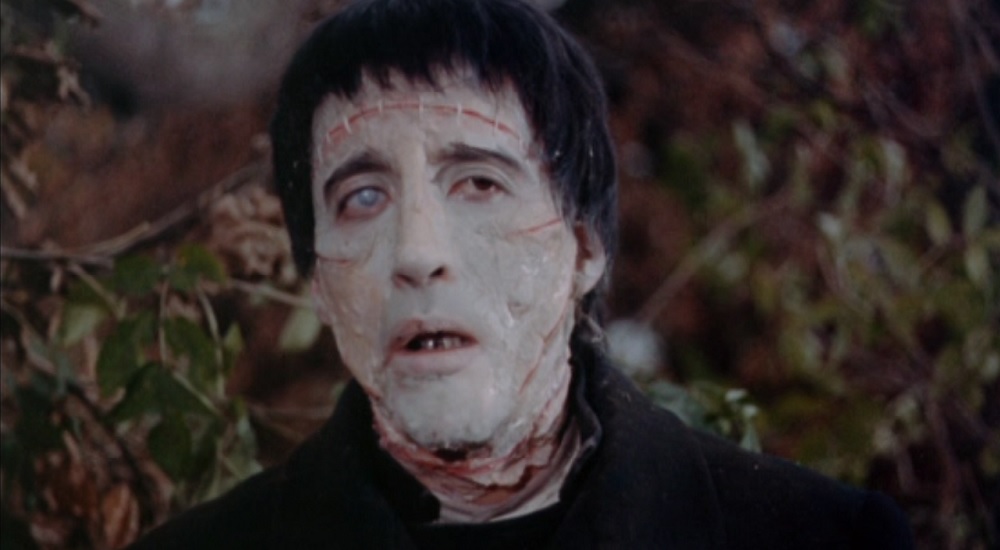
Peter Cushing stars as Dr. Frankenstein and Christopher Lee as the creature in Hammer Studios’ retelling of the Frankenstein legend. Directed by Terence Fisher, who would go on to make Horror of Dracula a year later, this film is often regarded as one of the finest adaptations of Mary Shelley’s novel, even rivaling the classic Universal versions. Told in flashback from a prison cell, Victor Frankenstein recounts the story of how his obsession with discovering the secret of life led him to commit unspeakable crimes. For a film made in 1957, the horror remains remarkably effective, due in large part to Lee’s chilling performance. As Hammer’s first color horror film, The Curse of Frankenstein was notable for its bold use of gore in color and its vivid gothic style. It marked the beginning of the studio’s signature brand of horror and launched a successful series of sequels, with Fisher directing several of them.

Dark Star (USA, 1974)

Directed by: John Carpenter
Written by: John Carpenter, Dan O’Bannon
Cast: Dan O’Bannon, Dre Pahich, Brian Narelle

John Carpenter’s debut film gives us a cynical look at outer space travel. Not the majestic kind Kubrick showed us in 2001: A Space Odyssey, but more like space travel as a monotonous, blue-collar grind. Dark Star is the name of the ship that looks like a surf board. The job of its crew is to destroy unstable planets. And while this may sound exciting, the five crew members – who have been on board Dark Star for twenty years – are mostly bored out of their minds and increasingly detached from reality. Co-writer and actor Dan O’Bannon originally conceived the idea of an alien aboard the ship, but budget limitations forced him to turn that concept into the film’s now-infamous beach-ball creature. His alien idea would later become Ridley Scott’s Alien (1979). Tarantino once called this movie a masterpiece. I don’t see it that way, but I like the 2001 parody concept and the execution, including the inventive special effects, is certainly well done.

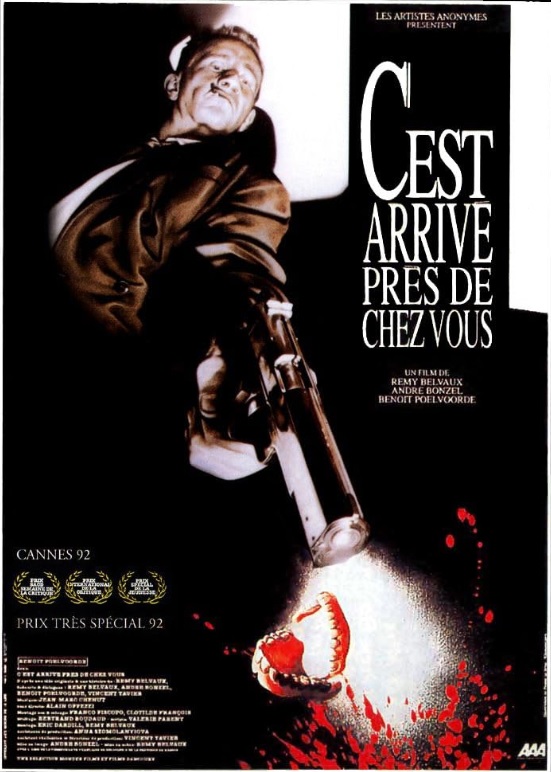
Man Bites Dog | C’est arrivé près de chez vous (Belgium, 1992)

Directed by: Rémy Belvaux, André Bonzel, Benoît Poelvoorde
Written by: Rémy Belvaux, André Bonzel, Benoît Poelvoorde
Cast: Benoît Poelvoorde, Jacqueline Poelvoorde-Pappaert, Nelly Pappaert

In this notorious cult classic from the French part of Belgium, a three-headed camera crew follows the gleefully depraved serial killer Ben, as he spends his days gruesomely murdering people for sport and profit. During the shoot, the crew becomes more and more complicit in Ben’s crimes. The sheer amount of killings is not very realistic, but the profiling of the killer, chillingly portrayed by Benoît Poelvoorde, convinces in all its sickness. The mockumentary concept was pretty new at the time, and the approach – taking the viewer inside the mind of a horrible human being, who – when he’s not busy killing people against depressing urban backdrops – is offering his warped and racist views in interviews – makes for disturbing cinema. The filmmakers, who worked on a shoestring budget, wanted to make something different, and they have succeeded in this task. C’est arrivé près de chez vous (‘It Happened Near You’) became a unique, deeply unsettling, and darkly comic milestone of cult cinema.
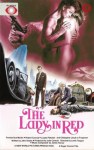
The Lady in Red (USA, 1979)

Directed by: Lewis Teague
Written by: John Sayles
Cast: Pamela Sue Martin, Robert Conrad, Louise Fletcher

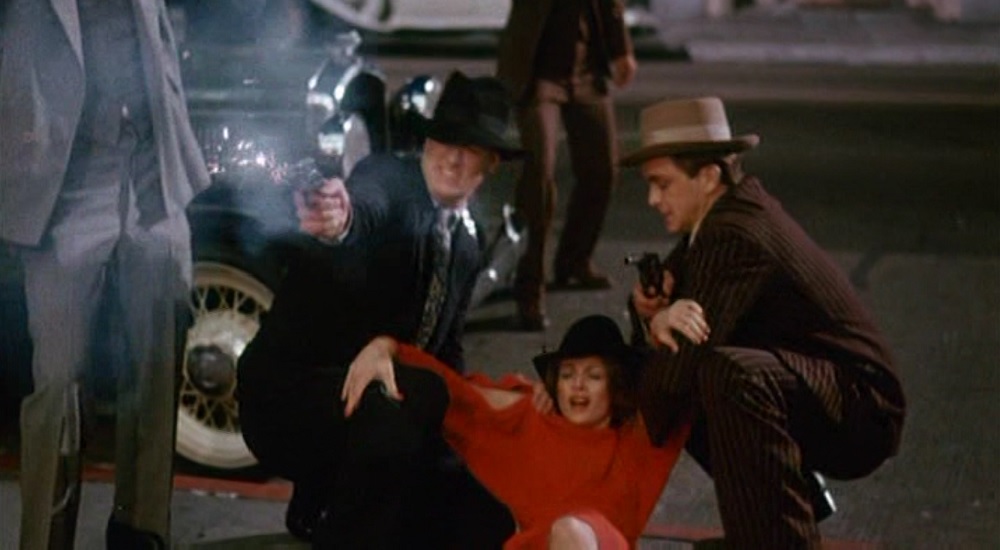
Farm girl Polly moves to Chicago, where she becomes romantically involved with gangster John Dillinger. The film is curious in that it’s not really about Dillinger, but about his girlfriend and the unwitting role she played in the gangster’s famous demise at a movie theater. It traces Polly’s own descent into crime: she starts out as a seamstress, tries her hand at prostitution, and eventually ends up in jail. After Dillinger’s death, she organizes a dangerous but lucrative armed robbery on her own. Written by John Sayles, directed by Lewis Teague, and produced by Julie Corman – indeed, Roger Corman’s wife – the film unmistakably feels like a Corman-style exploitation picture, complete with plenty of bloody, machine-gun action. In his 2021 book ‘Once Upon a Time in Hollywood‘, Quentin Tarantino mentioned that in an alternate Hollywood universe, he directed a remake of this film. It certainly sounds like something he’d do well. Who knows – maybe an idea for his tenth and final movie?
What Will Be Tarantino’s 10th and Final Film?

It is well established that Quentin Tarantino wants to complete his career as director with a total of 10 films. With Once Upon a Time in Hollywood (2019) as his ninth, that that leaves just one final movie to cap off an iconic career.

Tarantino has taken long breaks between projects before. After Jackie Brown (1997), he didn’t return with another feature until Kill Bill: Vol. 1 in 2003. So the current six-year gap since Once Upon a Time in Hollywood isn’t unusual, but fans are still eagerly waiting for news.

In 2023, it looked like Tarantino had settled on his swan song: The Movie Critic. The film was to center on a character inspired by a real-life reviewer for an adult magazine Tarantino encountered as a teenager while restocking porno mag vending machines. During his work, Tarantino said he came to really appreciate the writing of this film critic.

“He was as cynical as hell. His reviews were a cross between early Howard Stern and what Travis Bickle might be if he were a film critic”, Tarantino said. Tarantino wanted an actor he had never worked with as the main character and Brad Pitt was said to be in talks to join the cast, though not as the title critic. The project sounded promising, but in 2024, Tarantino shelved it for artistic reasons. Just like that, The Movie Critic was off the table.

There was also buzz about Tarantino tackling a Star Trek film – an unusual move, given his preference for original stories (with Jackie Brown, adapted from Elmore Leonard, being the lone exception). But on the ReelBlend podcast, he suggested that a Star Trek film perhaps wouldn’t ‘count’ as his tenth. That project, too, now seems dead.

So what’s next? According to The Hollywood Reporter, while rewriting The Movie Critic, Tarantino toyed with an ambitious idea: a ‘farewell metaverse’ in which characters from his past films might reappear in a ‘movie within a movie’ format – either as their original characters or as fictionalized versions of the actors who played them. But for now, that’s just speculation.


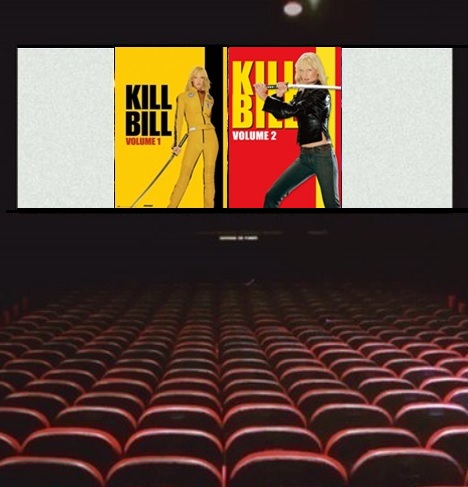
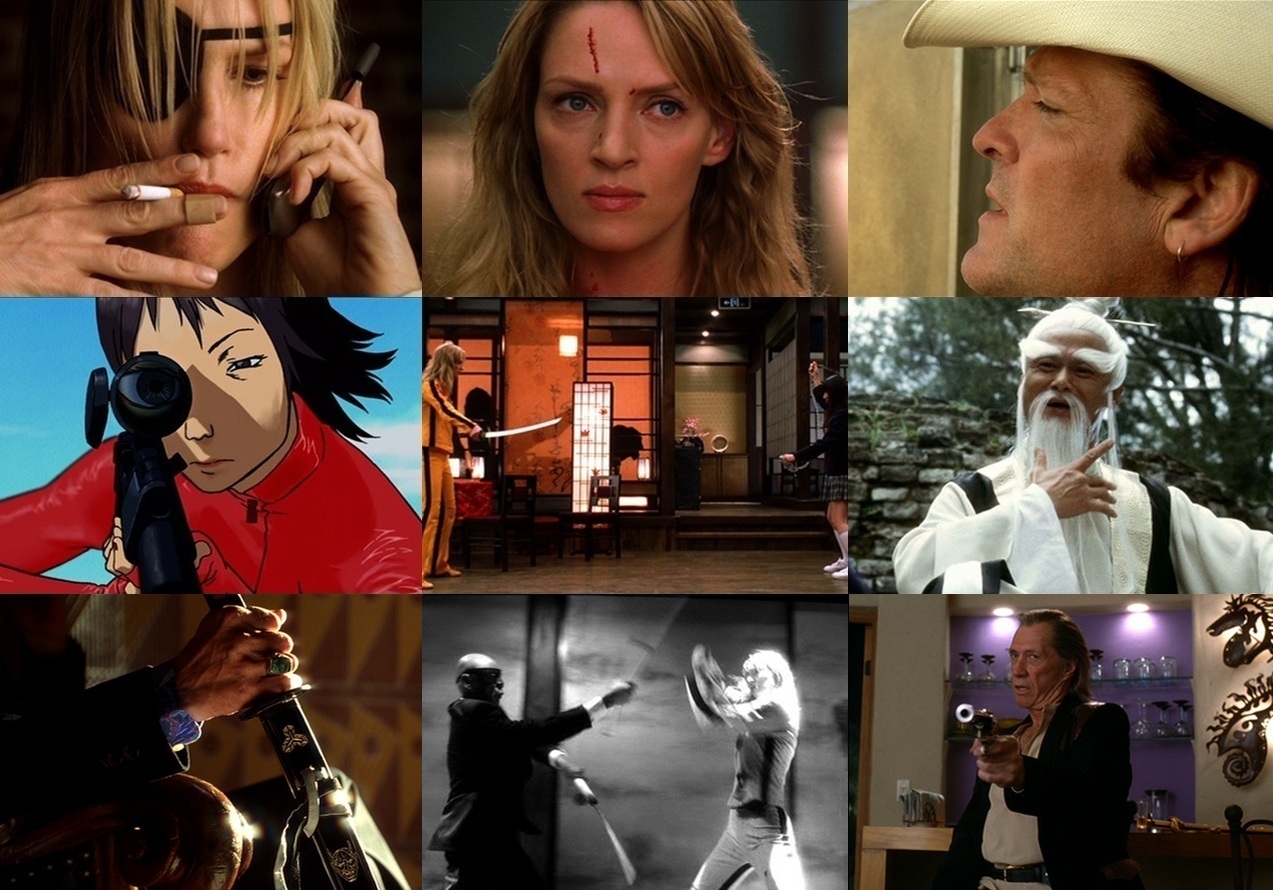
In my DVD collection, I left over a single place for Tarantino’s final film. His filmography as director so far: 1. Reservoir Dogs, 2. Pulp Fiction, 3. Jackie Brown, 4. Kill Bill (counting as one film), 5. Death Proof, 6. Inglourious Basterds, 7. Django Unchained, 8. The Hateful Eight, and 9. Once Upon a Time in Hollywood.

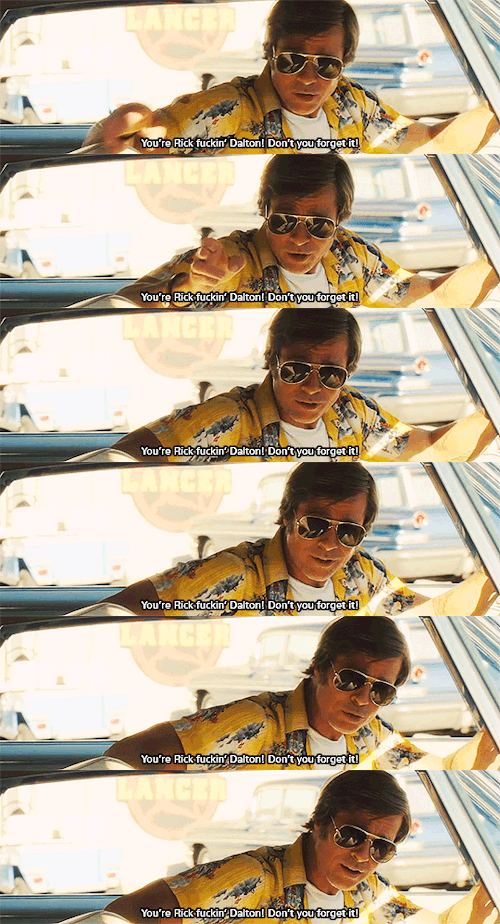
The only concrete Tarantino-related project currently in the pipeline is The Continuing Adventures of Cliff Booth, a spin-off from Once Upon a Time in Hollywood. In this film, Brad Pitt’s character – stuntman and all-around tough guy Cliff Booth – becomes a Hollywood studio fixer. The film is being directed by David Fincher for Netflix, marking the first time since From Dusk Till Dawn (1996) that Tarantino is writing but not directing a film.

So what about the final film? At the 2025 Sundance Film Festival, Tarantino addressed this very question. “I don’t want to rush into production”, he said. “I’ve been in a hurry for the last 30 years, but not right now.” The reason? His family. “My son turns five next month, and my daughter is two and a half. The idea of taking on a huge project when my kids are so young doesn’t appeal to me.”

Tarantino added that he wants to wait until his son is at least six. “That way, he’ll know what’s going on, he’ll be there, and it’ll be a memory for the rest of his life.” That could mean production starts sometime next year, but only if inspiration strikes.

Interestingly, Tarantino revealed at Sundance that he’s currently working on a stage play. While he didn’t share any details, he hinted that if the play turns out well, it might be adapted into his final film. “If it’s a fiasco, it’s just a play. But if it succeeds, maybe it becomes the movie.”

So there you have it: while Tarantino’s tenth film remains a mystery, we know he’s not in a rush. In the meantime, The Continuing Adventures of Cliff Booth promises to deliver more of the filmmaker’s signature style even if he’s not in the director’s chair this time. And who knows? That stage play just might be the unexpected final chapter in a legendary career.

Reservoir Dykes: Four Times Tarantino Referenced the Netherlands (VIDEO)

My first video for Jeppy’s Video Circus in 2025 is another pop culture special.

I’m kicking off the year with another deep dive into pop culture – this time, exploring how Quentin Tarantino has (knowingly or not) woven the Netherlands into his cinematic universe.

Most fans remember the famous Pulp Fiction dialogue about Dutch culture (you know the one). But fewer people realize that Tarantino’s nods to the Netherlands go beyond that. In fact, subtle references pop up in Reservoir Dogs, Jackie Brown, and Kill Bill: Vol. 2 – and I break them down in this video.

Right after wrapping up the edit, I stumbled upon something fascinating: Tarantino once had an idea for a movie set entirely in Amsterdam. The film, The Vega Brothers, would’ve brought together Vic Vega (Michael Madsen’s character from Reservoir Dogs) and Vincent Vega (John Travolta’s character from Pulp Fiction) in a prequel.

In a ReelBlend podcast, Tarantino explained the concept: the film would follow Vincent Vega as he runs a nightclub for Marcellus Wallace in Amsterdam. His brother Vic comes to visit, and – naturally – chaos ensues. Honestly, it sounds like it could’ve been an instant classic.

Sadly, the idea was shelved. Tarantino felt both actors had aged out of the roles and didn’t want to go The Irishman route with de-aging tech. A real shame, because that setting and those characters could’ve made for something special.

Anyway, check out the video below for all the Dutch connections you might’ve missed in Tarantino’s films. Hope you enjoy it!

10 Reasons the Nineties’ Cinema Kicked Ass

I was a little young to realize what a terrific time for cinema the nineties were. Holy crap. Around forty percent of my favorite movies come from the nineties, including my number one of all time: GoodFellas. In this article, I will give you 10 reasons why the nineties kicked complete ass as a movie decade.

1. Tarantino’s Arrival
In 1992, a young film maverick silently arrived with Reservoir Dogs. Many viewers and critics were a little off-put by the violence and immoral characters, but yet loved the non-chronological storytelling, the brilliant dialogues and the awesome performances. The talent of this new writer/director named Quentin Tarantino was undeniable.

Two years later he blew critics and audiences away with his epic Pulp Fiction. Tarantino was for the nineties what Scorsese was for the seventies; a significant promise. And he delivered. The nineties saw him direct an excellent third movie, Jackie Brown (1997), and two of his screenplays were turned into memorable films: True Romance (1993) and Natural Born Killers (1994). In 1996 he also made From Dusk Till Dawn with another promising young director from Texas. Robert Rodriguez had debuted in 1992 with the low budget miracle El Mariachi which he followed up with Desperado (1995). A duo was formed…

2. It Was a Time to Thrill
The nineties was the decade of the thriller. Especially the detective versus serial killer genre flourished with The Silence of the Lambs (1991) and Se7en (1995). Of course these two spawned countless imitations, but none as good. Another excellent movie in the psychopath category is Rob Reiner’s adaptation of Stephen King’s Misery in 1990. That movie’s villain Annie Wilkes (played by Kathy Bates) is probably even scarier than Hannibal Lecter, Buffalo Bill and John Doe combined.

The nineties also had more than its share in fantastic crime thrillers. Top examples include Brian de Palma’s Carlito’s Way (1993), Luc Besson’s Leon (1994), Michael Mann’s Heat (1995), Brian Singer’s The Usual Suspects (1995) and Curtis Hanson’s L.A. Confidential (1997). Special mention in the Thriller department goes to Paul Verhoeven’s erotic contribution Basic Instinct (1992), an absolute classic in its genre.

3. Glory Days For the Coens
They already made an impression as independent filmmakers in the 1980’s. Both their debut Blood Simple and second feature Raising Arizona tasted like more. In the 1990’s they really became film-buffs’ favorites. Miller’s Crossing (1990) is a perfect take on Dashiell Hammett and possibly their finest crafted work. Later, this decade, they had a brilliant black comedy run with the unforgettable classics Fargo (1996) and The Big Lebowski (1998). These Coen Brothers are absolutely terrific.

4. History Can Be Fun
Sure, every period has produced great historical movies, but the nineties had a very impressive reaping in the War / History genre. Way above average to be sure. In 1990 a certain Kevin Costner brought the American frontier to the big screen with the Oscar-winning epic Dances With Wolves. It was a marvelous revitalization of the Western genre. World War 2 is also captured in several Oscar-winning pictures, most notably Steven Spielberg’s Schindler’s List (the ultimate WWII film), but also in Saving Private Ryan (also by Spielberg), La Vita E Bella (by Roberto Benigni) and The Thin Red Line (by Terrence Malick).

Another great war story is spectacularly told in Braveheart (1995), the bloody epic that showed that Mel Gibson is a highly competent director. A number of excellent historical biographies also saw the light of day, most notably JFK (1991, Oliver Stone) and Ed Wood (1994, Tim Burton). And last but least, Titanic (1997, James Cameron) and Forrest Gump (1994, Robert Zemeckis) came out and successfully combined fictional stories with historic events.

5. Great Stand Alone Triumphs
While many masterpieces made in the nineties are part of a larger oeuvre or movement, there were also loads and loads of standalone triumphs. Movies that seemingly came out of nowhere and surprised friend and foe. Below, I picked one of my favorites of these surprises for each year of the nineties. Choosing just one was very difficult in some cases…

1990 Edward Scissorhands (Tim Burton)
1991 Thelma & Louise (Ridley Scott)
1992 Hard Boiled (John Woo)
1993 Groundhog Day (Harold Ramis)
1994 The Shawshank Redemption (Frank Darabont)
1995 Toy Story (John Lasseter)
1996 Bound (Lana Wachowski, Lilly Wachowski)
1997 Boogie Nights (Paul Thomas Anderson)
1998 Festen (Thomas Vinterberg)
1999 Fight Club (David Fincher)

6. Harvest of Horror
O.k., so the eighties ruled in the Horror territory. That doesn’t mean the nineties sucked. What is so great about it then? Well, Wes Craven’s re-invention of the slasher genre with Scream (1996) and Scream 2 (1997) was a terrific postmodern treat leading to many new series, such as I Know What You Did Last Summer (1997), and new installments of old horror series like Bride of Chucky (1998). It goes without saying that some of these were better than others.

Abel Ferrara made a significant contribution to the genre with Body Snatchers (1993), a very effective remake of the classic Invasion of the Body Snatchers, and The Addiction (1995), a great original take on the vampire genre. Speaking of vampires, what to think of Bram Stoker’s Dracula (1992) by Francis Ford Coppola? It’s the best version since Tod Browning’s original from 1931.

The formidable Sam Raimi completed his magnificent Evil Dead trilogy with Army of Darkness, the funniest installment yet. Peter Jackson also combined humor and supreme gore in Braindead (1992) and also delivered The Frighteners (1996). Anything else? Certainly. A selection: Joe Dante’s Gremlins 2 (1990), Adrian Lyne’s Jacob’s Ladder (1990), Ron Underwood’s Tremors (1990), David Fincher’s Alien 3 (1992), Jean-Pierre Jeunet’s Alien: Resurrection (1997) and Taylor Hackford’s The Devil’s Advocate. Last but not least, Daniel Myrick and Eduardo Sánchez’s The Blair Witch Project (1999) spawned a new horror genre with its handheld camera. It’s also the first movie that successfully used the internet to create a hype.

7. The Brits are Back in Town
After a period of recession, the British film industry bloomed again in the nineties. Four Weddings and a Funeral (1994) launched the career of Hugh Grant and was a smash hit at the box office. In 1995 James Bond returned after a long period in the pretty awesome Goldeneye. What’s really great about British cinema in the nineties is the emergence of new talent though. The trio John Hodge, Danny Boyle and Andrew MacDonald made a terrific debut with Shallow Grave (1994) and followed it up with one of the best films of the decade: Trainspotting (1996). In 1998 Guy Ritchie was another positive British surprise with the very funny and exciting Lock, Stock and Two Smoking Barrels.

8. Scorsese Scores Big-time
He delivered brilliant work in the seventies (Mean Streets, Taxi Driver) and eighties (Raging Bull). In the early nineties the maestro showed that he could deliver masterpieces in every decennium. He started by breaking all cinematic conventions in GoodFellas (1990), the greatest film ever made about the real Mafia. Then he made the highly influential thriller Cape Fear (1991) and the excellent costume drama The Age of Innocence (1993) before returning to the mob genre with the superbly realized Casino (1995). He ended the decade with the underrated Bringing Out the Dead (1999).

9. Indie Cinema to the Max
Tarantino and the Coens are already honored in this overview, but there are many other great independent American directors who made their entrance in the nineties or definitely established themselves as masters. In the debut department, we saw Richard Linklater arrive with Slacker (1991), Dazed and Confused (1993) and Before Sunrise (1995). Kevin Smith also made a super impression with the low budget comedy Clerks (1994).

Other indie directors delivered some of their finest work in the nineties. For instance, Jim Jarmusch made Dead Man (1995) and Ghost Dog: Way of the Samurai (1999), David Lynch made Lost Highway (1997) and The Straight Story (1999), Steven Soderbergh made King of the Hill (1993) and Out of Sight (1998) and Todd Solondz made Happiness (1998). If we could only go back to re-experience this richness in indie cinema again. Oh boy.

10. Sci-Fi is Booming
The early nineties saw Schwarzenegger star in two of the most kick-ass Sci-Fi / Action movies of our time: Total Recall (1990) and Terminator 2: Judgment Day (1991). The director of the first one, Paul Verhoeven, would write more sci-fi history in 1997 with Starship Troopers (1997). Other excellent movies in this genre that came out in the nineties are: Robert Zemeckis’ Back to the Future III (1990), Steven Spielberg’s Jurassic Park (1993), Terry Gilliam’s Twelve Monkeys (1995), Roland Emerich’s Independence Day (1996), Luc Besson’s The Fifth Element (1997), Paul W.S. Anderson’s Event Horizon (1997), David Cronenberg’s ExistenZ (1999) and Dean Parisot’s Galaxy Quest (1999).

The final year of the millennium also saw Star Wars return to the big screen, but Star Wars: Episode I – The Phantom Menace (1999) was not an all positive experience. It was another sci-fi film released in 1999 that formed the perfect transition into the new millennium: the cyberpunk story The Matrix by the Wachowski brothers (now sisters). An exciting (and very, very good) surprise hit and the greatest ending imaginable for a movie decade that completely rocked.