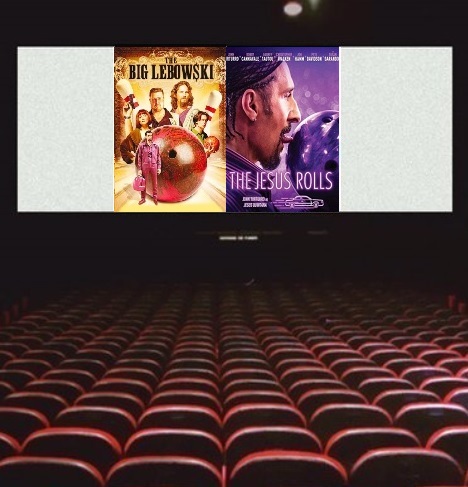
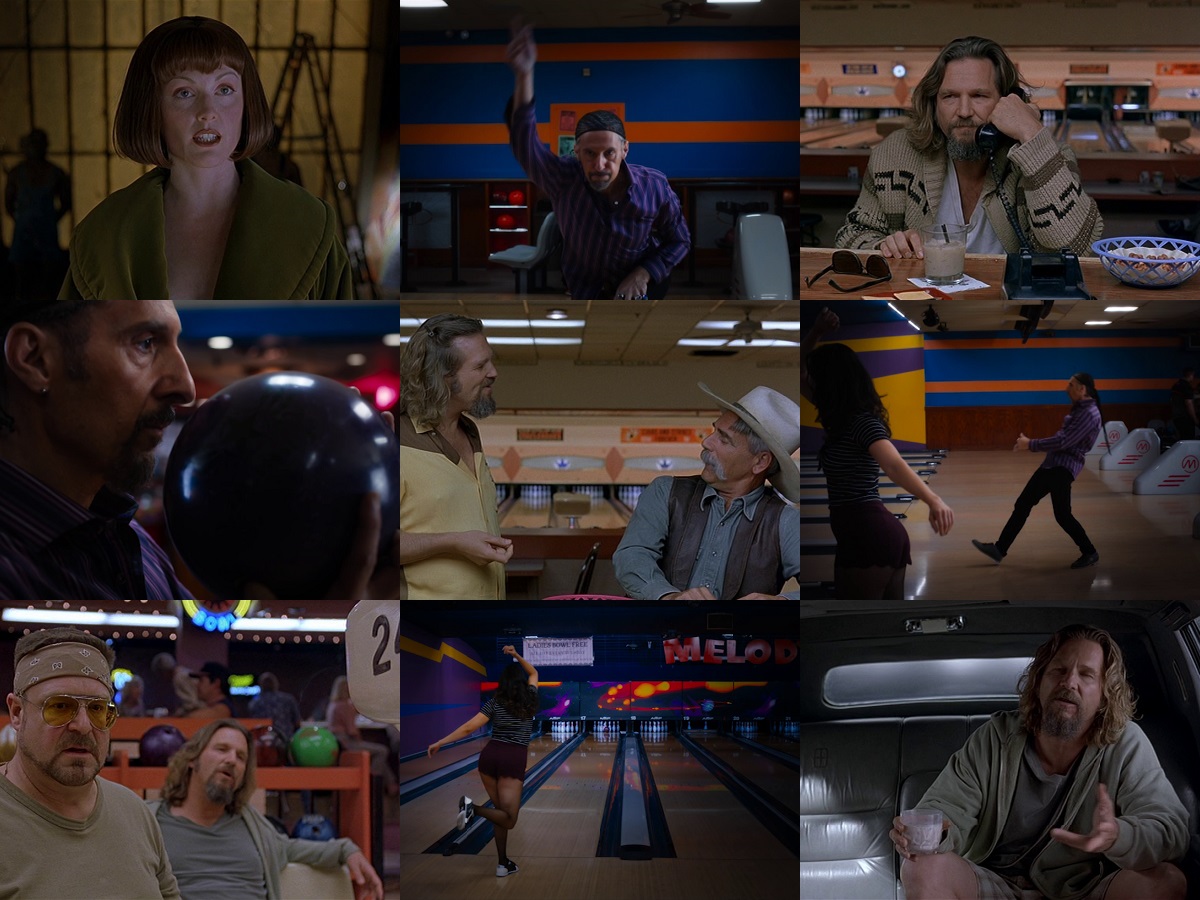
In the nineties the Coen Brothers rolled two strikes in a row with Fargo (1996) and The Big Lebowski (1998), two instant classics that both feature a kidnapping. Fargo is a bloody North Dakota-set crime story with humor that is darker than a black steer’s tookus on a moonless prairie night. The Big Lebowski is a Raymond Chandler-style mystery featuring a valued rug, bowling balls, white Russians and the question of what it means to be a man. I considered coupling them for this feature; in terms of bizarre characters, endlessly quotable dialogues and outrageous situations these movies certainly match, but for some reason I chose The Jesus Rolls (2019, dir: John Turturro) instead. Jesus Quintana (played by John Turturro) was one of the many memorable characters from The Big Lebowski and even though he was only in two scenes totaling less than six minutes in screen-time, he got his own movie. It’s as if Ned Ryerson would get his own flick two decades after Groundhog Day (Ned Ryerson Insures!). The Coens had nothing to do with it: but they gave John Turturrro permission to run with the character. It is both a spinoff and a remake of the French movie Going Places (1974), which was very controversial at the time for its vulgarity, depiction of sexual acts and amorality. The story revolves around a road trip taken by Quintana, Petey (Bobby Cannavale) and Marie (Audrey Tautou) during which they engage in sex and petty crime. Petey is an ex-convict like Jesus and Marie is what Maud Lebowski would call a nymphomaniac: a woman who engages in sex compulsively and without joy. The movie has one bowling scene and Jesus repeats some of his Lebowski lines, but the movie has nothing to do whatsoever with the events of The Big Lebowski (it even turns out that Jesus is not a pederast, he was only falsely accused of exposing himself to an eight year old). For a comedy it is not funny enough, and for a road movie it is too strange. But as a dessert after watching the masterpiece The Big Lebowski for the hundredth time, it is alright.
Tagarchief: Raymond Chandler
Verdoofde zinnen (de relatie tussen schrijvers en alcohol)
“It shrinks my liver, doesn’t it, Nat? It pickles my kidneys, yes. But what does it do to my mind? It tosses the sandbags overboard so the balloon can soor. Suddenly, I’m above the ordinary. I’m confident, supremely confident. I’m walking a tightrope over Niagara Falls. I’m one of the great ones. I’m Michelangelo molding the beard of Moses. I’m van Gogh painting pure sunlight. I’m Horowitz playing the Emperor Concerto, I’m John Barrymore before the movies got him by the throat. I’m Jesse James and his two brothers. All three of them! I’m W. Shakespeare.”
– Don Birnam in The Lost Weekend
Drinken schrijvers en journalisten meer dan mensen in andere beroepen? Mijn gut feeling zegt van wel. Er zijn natuurlijk wel vele voorbeelden van beroemde schrijvers met een drankprobleem – waaronder Scott Fitzgerald, Ernest Hemingway, Tennessee Williams, Truman Capote, Hunter S. Thompson, Jack Kerouac, Charles Bukowski, Stephen King, Aldous Huxley en Raymond Chandler – dus die kunnen mijn vooroordeel versterken.
Echter, er is ook wetenschappelijk onderzoek gedaan. Uit de ‘Study into The Mental Resilience of Journalists’ onder journalisten, verslaggevers en omroeporganisaties blijkt dat mediatypen meer alcohol drinken en mogelijk meer moeite hebben hun emoties onder controle te houden. In een artikel over het onderzoek werd een verklaring gezocht in het feit dat journalisten zich voor hun werk regelmatig in gevaarlijke situaties begeven, zoals bij het verslag doen van oorlogen, maar het is een zeer klein percentage van de reporters die dit werk daadwerkelijk doen. De meeste journalisten zijn tegenwoordig bureauredacteuren, een trend versterkt wordt door de krimpende redactiebudgetten en de technologie die werken op afstand mogelijk maakt.
Maar wat veroorzaakt dan wel dat hoge percentage alcoholisten onder deze beroepsgroep? Ik heb drie mogelijke verklaringen. De eerste is de aantrekkingskracht van het beroep op een bepaald persoonlijkheidstype. De decaan op de School voor Journalistiek in Zwolle vertelde me dat de instroom van studenten met psychische klachten in de studie journalistiek bovengemiddeld hoog is. Ik had dat zelf al wel gemerkt in de groep waar ik in terechtkwam, en was zelf dat jaar (2001) nou ook niet echt op mijn psychische best. Waarom het beroep deze aantrekkingskracht heeft op de psychisch minder stabiele groep weet ik niet. Misschien is het de mogelijkheid je te verdiepen in menselijke ellende en vooral de maatschappelijke problemen… Immers, media berichten hoofdzakelijk over alles wat niet goed gaat. Of misschien is schrijven en onderzoeken net als drinken en drugs gebruiken wel een manier om de leegte van het bestaan niet te hoeven ervaren.
Een tweede verklaring is werkdruk. Als schrijver / journalist wordt er toch een bepaalde creatieve prestatie van je verwacht binnen een bepaald tijdskader. Een paar biertjes, glazen wijn of whiskey kunnen je net dat zetje geven dat je nodig hebt om aan de verwachtingen te voldoen. De derde verklaring is de drinkcultuur van vele media-organisaties wat bevestigd wordt in het eerder genoemde onderzoek. Geen wonder dat er vaak een turbulent huwelijk ontstaat tussen de schrijvende mens en de fles.
Mijn eigen drinken was vooral tijdens de coronacrisis behoorlijk opgelopen door de toegenomen werkdruk en het compleet vervagen van de grenzen tussen doordeweeks en weekend. Ook daarna dronk ik gemiddeld wel vijf dagen per week en regelmatig meer dan een paar biertjes. Ook ben ik geen vreemde van leegte en zoek ik regelmatig naar een creatieve boost, zoals Don Birnam (zie citaat hierboven).
Maar tegenwoordig kan ik ook soms zonder die stimulans de nodige inspiratie vinden. Ik heb door mijn main issues heen gewerkt en heb minder leegte te vullen. Ik heb mijn bubbel verlaten. Toch blijft de verleiding altijd bestaan. Niks kan je zo in de flow brengen als een tot de rand gevuld glas rode wijn of een goudgele rakker op mijn bureau terwijl ik als een bezetene op de toetsen van mijn toetsenbord ram. Daarom heb ik op dit moment gesetteld voor een knipperlichtrelatie.
![]()
George Lucas, Not Guilty
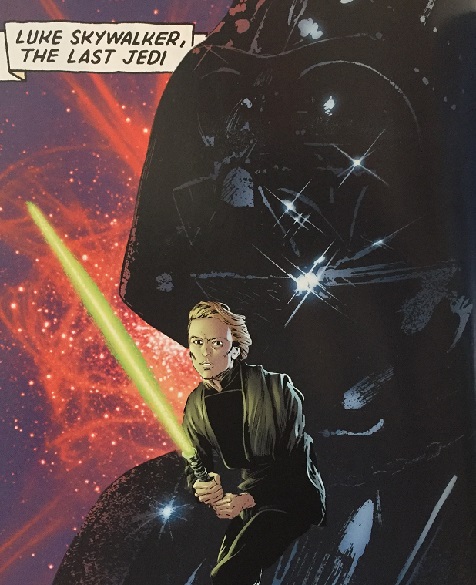
Today, on the premiere of ‘The Last Jedi’ – the eighth official episode in the Star Wars saga, creator of Star Wars – Mr. George Lucas – stands trial. He is accused of being a hack.
The prosecution (The internet)
Of the many things that catch blame for ‘ruining’ the Star Wars prequels – Jar Jar Binks, midi-chlorians, almost every line of dialogue George Lucas wrote for Padme and Anakin – there is one moment that makes almost every fan cringe, no matter how dedicated. We’re talking about Anakin Skywalker’s transformation into Darth Vader, literally the jumping-off point of the entire Star Wars saga.
In this moment, Vader learns that he has lost his wife and unborn children…and has been transformed into, like, a Space Robocop. So, what does he do? He breaks free from his shackles and lets out the now infamous, “NOOOOOOO!” that felt like it had a Kanye-level of autotune to it. It felt ridiculous when it should have been the defining moment of the prequels. What the hell was Lucas thinking?
The defense (Johnny Cochran)
This defense will be short and easy. This is the man who gave us Star Wars after all. The original Star Wars films still form the best trilogy ever created hands down. Even the third part – which is never the best in any series – is in case of Star Wars nearly perfect: ‘Return of the Jedi’ contains some of the best stuff of the series. Legendary film critic Roger Ebert (1942 – 2013) gave each of the three original films the maximum rating of four stars (read his awesome reviews here, here, and here).
So why is Lucas so hated despite being the man who gave us Darth Vader, Yoda, Han Solo, Princess Leia and Luke Skywalker amongst many others? Because he also gave us Jar Jar Binks? Because he writes remarkably terrible love scenes? So what? Didn’t the other great filmmakers of his generation make similar mistakes? Francis Ford Coppola cast his daughter in ‘The Godfather: Part III’ and it nearly ruined the film. Yet, he is never criticized in the way Lucas is.
Statistically, after sunshine comes rain. Lucas gave us the best trilogy ever made, so the prequels were never going to top that. Still, that is no excuse for not making better movies. But are they really so terrible?
Episode I: The Phantom Menace is the worst, most will agree. But look at what it does have: the pod race, Darth Maul (IMDb-poll names him the second greatest SW villain after Vader), and the return of many great characters: Palpatine, Yoda and Obi-Wan (Ewan McGregor is perfect casting as a young Alec Guinness). There is also fun foreshadowing going on of all that is to come. Finally, the world building is spectacular and unforgettable.
Roger Ebert – who gave ‘The Phantom Menace’ 3,5 stars out of 4 – concluded: “Mostly I was happy to drink in the sights on the screen, in the same spirit that I might enjoy ‘Metropolis’, ‘Forbidden Planet’, ‘2001: A Space Odyssey’, ‘Dark City’ or ‘The Matrix’. The difference is that Lucas’ visuals are more fanciful and his film’s energy level is more cheerful; he doesn’t share the prevailing view that the future is a dark and lonely place.”
Episode II: Attack of the Clones – The greatest weakness is the love story, we can be clear about this. But it would be a shame to let that ruin the whole movie experience, because episode II has a lot going for it. First of all, it has a terrific Raymond Chandler-style mystery plot. Also, there is a great sense of urgency; the battle for the galaxy has now really begun. And the filmmaking in general – the editing, sound, production design, music, etc – are all A-grade. There are few filmmakers with such imagination, and with the ability to bring it to the screen, like Lucas.
As for villains, usually the best thing about a Star Wars-film, I don’t like Jango Fett so much, but Count Dooku – played the uncanny Christopher Lee – is terrific, and so is his lightsaber duel with Yoda. The dark side is really prevailing now and Lucas effectively uses the principles of Eastern Philosophy to craft the story development. People may not like Hayden Christensen, but what is actually accomplished by his performance is that we get an uneasy feeling about Anakin. The air gets thick in the confrontational scenes. Unlike Obi-Wan – who was the perfect Jedi-student in episode I – Anakin is the pupil you always have to worry about. And these foreshadowing shots with Palpatine are grand. His quest to the dark side is thus very well handled.
Episode III: Revenge of the Sith – Episode III is a return to the classic space opera style that launched the series, and many agree that Lucas really approaches old trilogy greatness here. In the saga’s darkest chapter, Anakin really journeys to the dark side under the influence of the demonic Palpatine. Aside from the infamous ‘Noooo’-moment, episode III is a thoroughly exciting and enjoyable film with some of the best action sequences in the series.
And so, ladies and gentlemen of the jury, if George Lucas is a hack, then Chewbacca lives on Endor, and therefore you must acquit! The defense rests.
So let us all shut the hell up and enjoy Lucas’ legacy.