10 Writing Tips From Stephen King

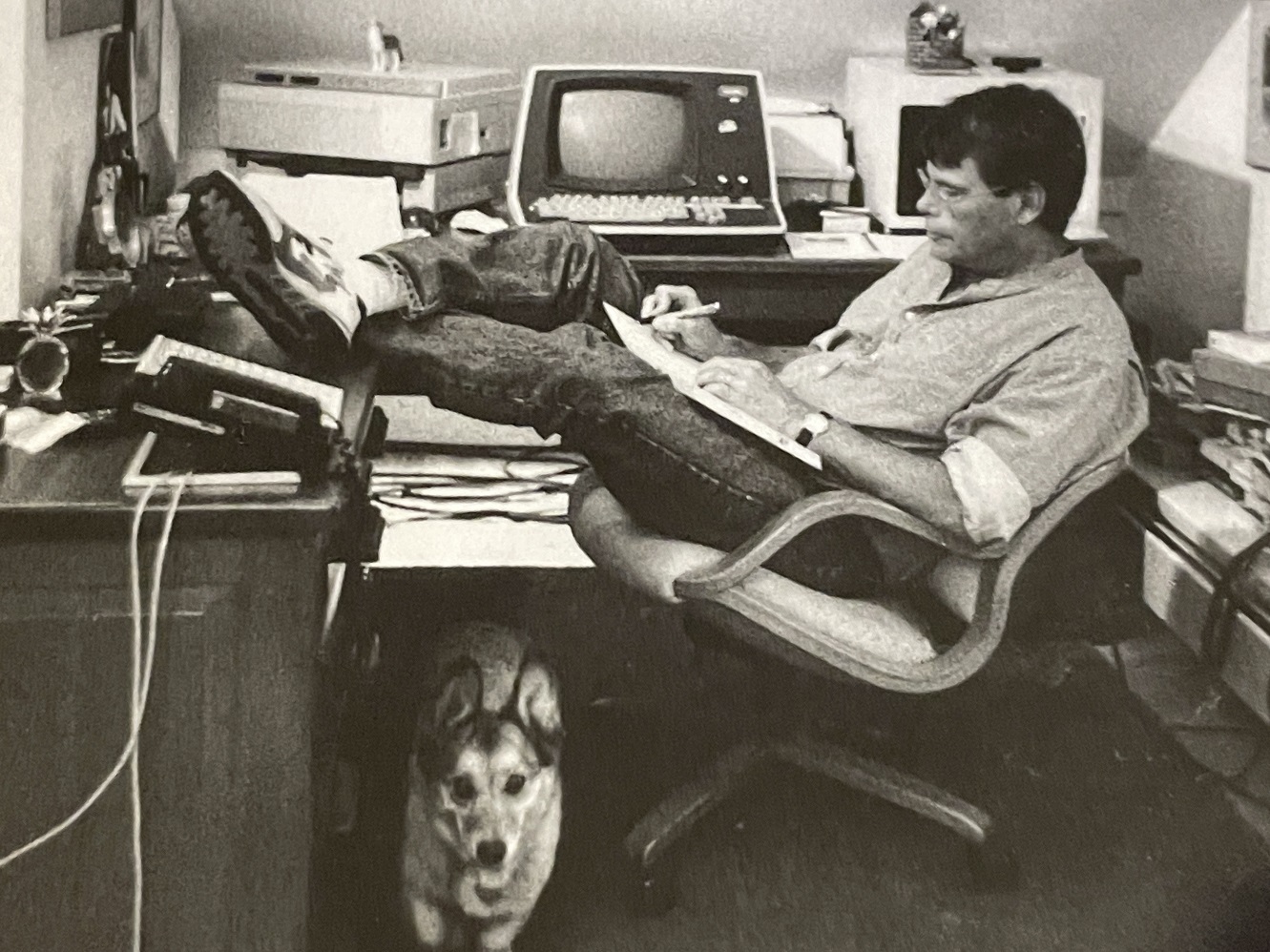
Stephen King (1947) is a renowned American author celebrated as the ‘King of Horror’ for his iconic contributions to the genre. He has also explored other genres, among them suspense, crime, science-fiction, fantasy and mystery. King has published 65 novels/novellas, including seven under the pen name Richard Bachman, five non-fiction books, and approximately 200 short stories.

Now, a writer with such a huge body of work can surely give some advice to those of us who are attempting to write fiction or have that ambition. I myself have been considering it for a long time, and I still have that crazy dream of one day writing a masterpiece. But I don’t think I can. I am a web editor and that is a completely different game than writing fiction.

Nevertheless, if I do want to make an attempt to write any kind of fiction in the future, the book ‘Stephen King on Writing’ – a lovely gift from my wife Loesje – is my must-read guide. It gave me much clarity on how to approach the process if I ever want to have a serious go at it. Below are ten tips for aspiring writers, who are serious about completing a work of fiction that will actually please their readers.

01) Start with story
Starting your novel with thematic concerns (like I always do ;-)) is a bad idea, believes King. Good fiction always begins with story and then progresses to theme. Another important belief of King is that stories are found things, like fossils. Stories pretty much make themselves. It is the job of the writer to give them a place to grow (and to transcribe them of course). Use your whole writer’s toolbox as well as you can to get as much of the fossil out of the ground in the best possible state.

02) Read, read, read
To become a good writer, there is really no way around this one. You must read vigorously. King: ‘We read to experience the mediocre and the outright rotten; such experience helps us to recognize those things when they begin to creep into our own work.’ Good writing, on the other hand, teached the learning writer about style, graceful narration, plot development, the creation of believable characters and truth-telling. Reading is the creative center of a writer’s life. ‘Do it because you enjoy it.’

03) Practice, practice, practice
Same thing as reading, you must write a lot to succeed. ‘If you want to be a writer, you must do two things above all others: read a lot and write a lot. There’s no way around those two things that I’m aware of, no shortcut.’ So there you have it.

04) Work on your book every day
One of the things that makes writing novels so different from writing articles or essays or even making magazines, is that you have to approach it like a day job. Except it shouldn’t feel like a job. King cranks out a novel in three months’ time, and he does that by showing up every day in his room and spending hours there behind his writing desk. I erroneously thought I could write my great novel in bars, cars, toilets, trains, in-between moments, et cetera, but that’s not possible. I have been able to do that with my essays on Free-Consciousness, but with a novel it simply won’t work.

To succeed, you must work on your book every day, writes Stephen King: ‘Once I start work on a project, I don’t stop and I don’t slow down unless I absolutely have to. If I don’t write every day, the characters begin to stale off in my mind – they begin to seem like characters instead of real people. The tale’s narrative cutting edge starts to rust and I begin to lose my hold on the story’s plot and pace. Worst of all, the excitement of spinning something new begins to fade. The work starts to feel like work.’

05) Keep the reader on your mind
Again, focussing on story is one of the most important tasks as a writer. If you want to achieve satisfying an audience with your book, that is. ‘Book buyers want a good story to take with them on the airplane, something that will first fascinate them, then pull them in and then will keep them turning the pages. Your reader must always be your main concern: without Constant Reader, you are just a voice quicking in the void.’

06) Focus on paragraphs
King argues that the paragraph, not the sentence, is the basic unit of writing – the place where coherence begins and words stand a chance of becoming more than mere words. It is a marvelous and flexible instrument that can be a single word long or run on for pages. You must learn to use it well if you are to write well. In fiction, the paragraph is less structured – it’s the beat instead of the actual melody. The more fiction you read and write, the more you’ll find your paragraphs forming on their own. And that’s what you want. When composing it’s best not to think too much about where paragraphs begin and end, the trick is to let nature take its course.

07) Avoid the passive tense and don’t use dialogue attribution
‘Stephen King on Writing’ also contains some style tips of which these two are especially important. First of all, avoid the passive tense. Don’t write: The meeting will be held at seven o’clock. Write instead: The meeting’s at seven. Don’t write: The body was carried from the kitchen and placed on the sofa. Write instead: Freddie and Myra carried the body out of the kitchen and laid it on the parlor sofa. Another tool that is often misused is dialogue attribution. Don’t do it, says King.

‘Put it down’, she shouted menacingly.
‘Give it back’, he pleaded abjectly, ‘it’s mine.’
‘Don’t be such a fool, Jekyll’, Utterson said contemptuously.

Just resist the temptation and write he said, she said.

08) Use descriptive writing in the right way
A description, according to the master, begins with a visualisation of what it is. ‘You want your reader to experience. It ends with translating what you see in your mind into words on the page.’ Don’t underdo it and don’t overdo it: ‘Thin description leaves your reader feeling bewildered and nearsighted. Overdescription buries him or her in details and images. The trick is to find a happy medium.’

09) Make good use of rewriting
His first editor – John Gould – gave young Stephen a tip on a sports article he wrote: ‘When you write a story, you’re telling yourself the story. When you rewrite, your main job is taking things out that are not the story.’ When rewriting your first draft, it should be possible to take out 10 percent.
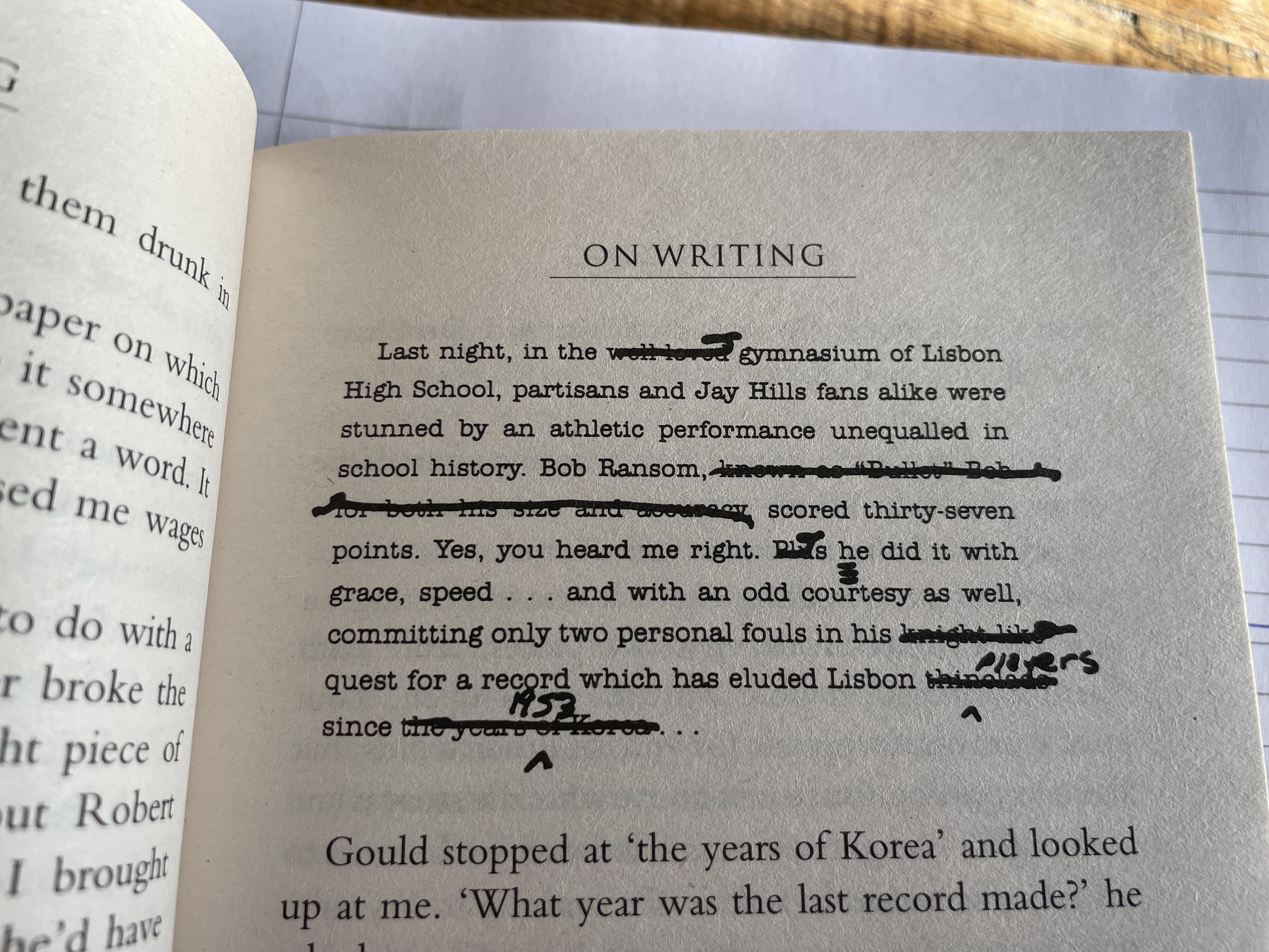
Gould added something else that was interesting. ‘Write with your door closed, rewrite with you door open.’ Your stuff starts out being just for you. But once you know what the story is and get it right, it belongs to anyone who wants to read it. ‘Or criticize it.’

When you have completed the first draft of your book, leave it alone for at least six weeks, King advises. Because then you have some more distance between your work and your authorship, you can more easily delete or rewrite passages. Then hand out the books to about eight proofreaders and let them criticize it.

10) Keep on going
A lesson King learned from almost abandoning his breakthrough novel ‘Carrie’ – which enabled him to pursue a career as a full-time novelist – is that ‘stepping away from a piece of work just because it’s hard, either emotionally or imaginatively, is a bad idea. Sometimes you have to go on when you don’t feel like it, and sometimes, you’re doing good work when it feels like all you’re managing is to shovel shit from a sitting position.’

Conclusion
Taking all this in, I wondered if this is really the thing for me. Besides the practical advice, King’s book is also like a confrontational eye-opener for dreamers like me. Is this really the sort of thing that I want to do and that I am able to do? The sort of strenuous reading and writing program King advocates – four to six hours a day, every day – will not seem strenuous if you really enjoy doing these things and have an appetite for them.

So that will be the litmus test for me if I ever want to attempt (again) to write a novel: will I really enjoy going through this process? If not, then just fuhgeddaboudit.

Read also: How to Write a Television Series

Verdoofde zinnen (de relatie tussen schrijvers en alcohol)

“It shrinks my liver, doesn’t it, Nat? It pickles my kidneys, yes. But what does it do to my mind? It tosses the sandbags overboard so the balloon can soor. Suddenly, I’m above the ordinary. I’m confident, supremely confident. I’m walking a tightrope over Niagara Falls. I’m one of the great ones. I’m Michelangelo molding the beard of Moses. I’m van Gogh painting pure sunlight. I’m Horowitz playing the Emperor Concerto, I’m John Barrymore before the movies got him by the throat. I’m Jesse James and his two brothers. All three of them! I’m W. Shakespeare.”
– Don Birnam in The Lost Weekend

Drinken schrijvers en journalisten meer dan mensen in andere beroepen? Mijn gut feeling zegt van wel. Er zijn natuurlijk wel vele voorbeelden van beroemde schrijvers met een drankprobleem – waaronder Scott Fitzgerald, Ernest Hemingway, Tennessee Williams, Truman Capote, Hunter S. Thompson, Jack Kerouac, Charles Bukowski, Stephen King, Aldous Huxley en Raymond Chandler – dus die kunnen mijn vooroordeel versterken.

Echter, er is ook wetenschappelijk onderzoek gedaan. Uit de ‘Study into The Mental Resilience of Journalists’ onder journalisten, verslaggevers en omroeporganisaties blijkt dat mediatypen meer alcohol drinken en mogelijk meer moeite hebben hun emoties onder controle te houden. In een artikel over het onderzoek werd een verklaring gezocht in het feit dat journalisten zich voor hun werk regelmatig in gevaarlijke situaties begeven, zoals bij het verslag doen van oorlogen, maar het is een zeer klein percentage van de reporters die dit werk daadwerkelijk doen. De meeste journalisten zijn tegenwoordig bureauredacteuren, een trend versterkt wordt door de krimpende redactiebudgetten en de technologie die werken op afstand mogelijk maakt.

Maar wat veroorzaakt dan wel dat hoge percentage alcoholisten onder deze beroepsgroep? Ik heb drie mogelijke verklaringen. De eerste is de aantrekkingskracht van het beroep op een bepaald persoonlijkheidstype. De decaan op de School voor Journalistiek in Zwolle vertelde me dat de instroom van studenten met psychische klachten in de studie journalistiek bovengemiddeld hoog is. Ik had dat zelf al wel gemerkt in de groep waar ik in terechtkwam, en was zelf dat jaar (2001) nou ook niet echt op mijn psychische best. Waarom het beroep deze aantrekkingskracht heeft op de psychisch minder stabiele groep weet ik niet. Misschien is het de mogelijkheid je te verdiepen in menselijke ellende en vooral de maatschappelijke problemen… Immers, media berichten hoofdzakelijk over alles wat niet goed gaat. Of misschien is schrijven en onderzoeken net als drinken en drugs gebruiken wel een manier om de leegte van het bestaan niet te hoeven ervaren.

Een tweede verklaring is werkdruk. Als schrijver / journalist wordt er toch een bepaalde creatieve prestatie van je verwacht binnen een bepaald tijdskader. Een paar biertjes, glazen wijn of whiskey kunnen je net dat zetje geven dat je nodig hebt om aan de verwachtingen te voldoen. De derde verklaring is de drinkcultuur van vele media-organisaties wat bevestigd wordt in het eerder genoemde onderzoek. Geen wonder dat er vaak een turbulent huwelijk ontstaat tussen de schrijvende mens en de fles.

Mijn eigen drinken was vooral tijdens de coronacrisis behoorlijk opgelopen door de toegenomen werkdruk en het compleet vervagen van de grenzen tussen doordeweeks en weekend. Ook daarna dronk ik gemiddeld wel vijf dagen per week en regelmatig meer dan een paar biertjes. Ook ben ik geen vreemde van leegte en zoek ik regelmatig naar een creatieve boost, zoals Don Birnam (zie citaat hierboven).

Maar tegenwoordig kan ik ook soms zonder die stimulans de nodige inspiratie vinden. Ik heb door mijn main issues heen gewerkt en heb minder leegte te vullen. Ik heb mijn bubbel verlaten. Toch blijft de verleiding altijd bestaan. Niks kan je zo in de flow brengen als een tot de rand gevuld glas rode wijn of een goudgele rakker op mijn bureau terwijl ik als een bezetene op de toetsen van mijn toetsenbord ram. Daarom heb ik op dit moment gesetteld voor een knipperlichtrelatie.

Bruce Campbell: A B-Moviestar’s Biography

For every George Clooney and Steven Spielberg, there are thousands of working class slobs in Tinsel Town. Bruce Campbell’s biography ‘If Chins Could Kill: Confessions of a B-Movie Actor’ is a homage to this B-crowd. Bruce who? That’s the point exactly. For those of us who grew up on a diet of classy horror movies in the eighties and nineties, he is a household name, for he was the star of one of the greatest horror series of that era: the holy Evil Dead trilogy (consisting of The Evil Dead, Evil Dead II and Army of Darkness).

‘If Chins Could Kill’ tells Bruce’s story. It was first published in 2001, so it doesn’t include the television adaptation of Evil Dead called Ash Vs. Evil Dead, but that’s no problem; there are plenty of great stories preceding that terrific cult show. In chapter 1, Campbell describes his childhood in Detroit, Michigan, with his parents and two older brothers. They did their fair share of monkeying around, and then good old Bruce became interested in girls. It became a lifelong obsession.

As he grew older, he had to find a way to keep on having fun. He discovered that his father Charles was an actor in a local theater. At age 14, Bruce joined the group and he soon played his first roles on stage. In the years that followed, he met various would-be actors and filmmakers, including one who would make it really big: Sam Raimi. After shooting a bunch of pretty cool 8 MM amateur films, Campbell, Raimi and another guy called Robert Tapert wondered: can we make a profession out of this?

The junior film crew decided to focus on the horror genre, because of the low budget required. For inspiration, they watched many horror shows at the drive-in theater and got a good sense of what audiences liked (when do they laugh? When do they scream?). Then they shot Within the Woods, the short predecessor of The Evil Dead. Their next challenge was a considerable one; they had to raise 150.000 dollars to be able to shoot their first feature length horror movie on 16 MM film (which they would afterwards blow up to 35 MM for cinema screenings) and to cover all other expenses. This seemed impossible, but they bought suits, went to work, and eventually raised the money.

After a grueling 12-week shoot in a run-down cabin in the woods of Tennessee, they canned the film, and luckily for the private investors, they delivered a genre classic. It turned out that its director was a genuine talent in visual storytelling, and Campbell undeniably a true horror star. True to the aim of his book, Campbell describes all the collaborators and the challenges they had to overcome to get this movie made. None of the other actors continued acting after The Evil Dead and all pursued other occupations.

If you’re serious about shooting a low budget movie, you should definitely read this book. It contains many tips on raising money, and then actually shooting it with hardly any resources. After that come the reshoots, the editing and sound editing, and then comes an even tougher part: marketing and selling the damn thing. Luckily for the crew, Stephen King saw their film at a movie event and wrote positively about it. His recommendation did miracles for the marketing of what was originally known as Book of the Dead, an unmarketable title; people might think they’d have to do reading at the screening. The investors of the retitled The Evil Dead made their money back, but the boys didn’t make anything. Yet, they now had a film under their belt.

What followed was the major flop Crimewave, co-written by The Coen Brothers. Campbell didn’t get a whole lot of work after that. He was in a soap series where he met his wife to be (a fragment from this show can be seen in Fargo, in the scene in which sociopath Gaear is watching television in the cabin). Crimewave could have been a career ender in Hollywood, but they had a fallback project: doing a sequel to the successful Evil Dead. Evil Dead II: Dead By Dawn (1987) became a legendary sequel and it is still considered to be among the greatest horror films ever made (it’s second on my top 10 horror list).

Still, Campbell – despite having played a lead role in a popular film – was no mainstream star and had to work as a security guard to make ends meet (“hey, you’re that guy from Evil Death, say that groovy line”). He also got divorced and met his new wife (a make-up artist) at a movie set. Campbell’s career would be closely tied to Raimi’s and in 1993, they would complete the trilogy with Army of Darkness. If you’ve ever wondered how much Bruce made with starring in the lead role in this movie ( I did!), the answer is in this book. It’s 500 K. This seems like an okay sum, but you have to subtract 25 percent for agents and managers leaving 375.000. Then deduct taxes (federal and state at the highest level) and you’re left with 187.500. Because he was recently divorced, his wife got half leaving Bruce with 93.750. This is still a lot of money, but considering it was two years work, he made just 46.875 a year, which is not what you’d expect a movie star (even a B-movie star) to make.

Still, Campbell continued to find work and most importantly: have fun. Especially when he went to New Zealand to work as actor and director on the tv-show Hercules: The Legendary Journeys and spin-of Xena: The Warrior Princess. In Campbell’s words: “shooting this show in New Zealand, away from studio interference, brought me back to the fun of filmmaking, like when we were shooting 8 MM movies back in Michigan.”

Read also: Ash vs Evil Dead: 5 Greatest Moments

Dungeon Classics #26: The Running Man

FilmDungeon’s Chief Editor JK sorts through the Dungeon’s DVD-collection to look for old cult favorites….

The Running Man (1987, USA)

Director: Paul Michael Glaser
Cast: Arnold Schwarzenegger, Maria Conchita Alonso, Yaphet Kotto
Running Time: 101 mins.

The Running Man is an adaptation from a book by Stephan King (published under his pseudonym Richard Bachman) and it’s another cult classic from Schwarzenegger’s golden years. It is about a futuristic game show (the film is set in 2017-2019) in which contestants have to escape violent hunters – who go by names such as Buzzsaw and Fireball – who try to kill them. Ben Richards (Schwarzenegger), who was framed by the totalitarian government for a mass killing at a protest, is forced to participate. That’s bad luck for the hunters! The film is shot as a typical American game show and it’s very enjoyable. Truth be told, the film didn’t age extremely well, but in Schwarz’s eighties/nineties action movie benchmark, it still manages to almost score a position in the top tier. And that is saying something! When Arnold Schwarzenegger ran for governor, he rode around in a campaign bus and named it after this film. Unfortunately, this was the final movie for Richard Dawson (who plays gameshow host Kilian) and Erland van Lidth (who plays hunter Dynamo).