In Brussels (1)

“You know what the funniest thing about Europe is? It’s the little differences. I mean, they got the same shit over there that we got here, but it’s just there, it’s a little different.”
― Vincent Vega, Pulp Fiction

[14-05-25] Jesus, Brussels again. I’ve been making this godforsaken pilgrimage for over a year and a half now — a regular descent into the bureaucratic underworld — ever since I signed on as a freelance journalistic gun-for-hire for some lean and hungry M&A startup out of Belgium. Side hustle to my main gig as Chief Editor for the more ‘respectable’ Dutch M&A outfit.

I checked into a hotel that looked like it hadn’t seen a fresh sheet since the Euro was introduced. A tight-budget startup means no minibar, no frills, no apologies. I scouted the bathroom for survival tools — wound up dumping the garbage can and using it as a makeshift ice bucket. Cold water from the shower, the poor man’s fridge. Cracked open a beer. Sat by the window and watched the Vlerick Business School across the street where I would attend an event later on – like a man waiting for the electric chair.

This city… it pretends to be something, doesn’t it? Capital of the European Union, epicenter of bureaucratic posturing. The flags are everywhere, waving like they know something we don’t. And the police — too many of them. Not the fun kind either. The serious, jaw-clenching, armored kind. I had the creeping suspicion war was sneaking in through the back door. Putin’s slithering shadow stretching over Europe, and these people — god bless them — are busy sipping wine and debating organic cheese subsidies.

We’re about one autocratic handshake away from the world catching fire, and no one’s really ready. Not here. Not back home. The Americans? Jesus, we’ve got that orange carcass still stinking up the joint. The man’s a threat to civilization, and I don’t say that lightly. But dictators don’t die quietly. They collaborate. And when they do, history tells us what comes next: fire, blood, and desperation.

Still, I get by here. Brussels is manageable for a Dutchman with a functioning liver and low expectations. The French is thick in the air, but there’s an international wash over it all. In M&A circles, at least, the Belgians tolerate us — maybe even prefer us to their own Walloon kin. Some speaker at the conference said Flemish dealmakers would rather do a deal in Amsterdam than in Liège. Culture clash, he said. Closer to the Dutch. I nodded. We’re all weirdos in tailored suits.

But under the gloss? This city’s bleeding. Homeless people tapping on your windshield at red lights, begging for spare change while banks loom overhead like glass castles. The façades look slick, but peer behind the curtain and you’ll see peeling paint and ignored rot. Still, Brussels feeds you. Every kind of restaurant. Every shade of hunger. Less charm than Antwerp, maybe, but more bite.

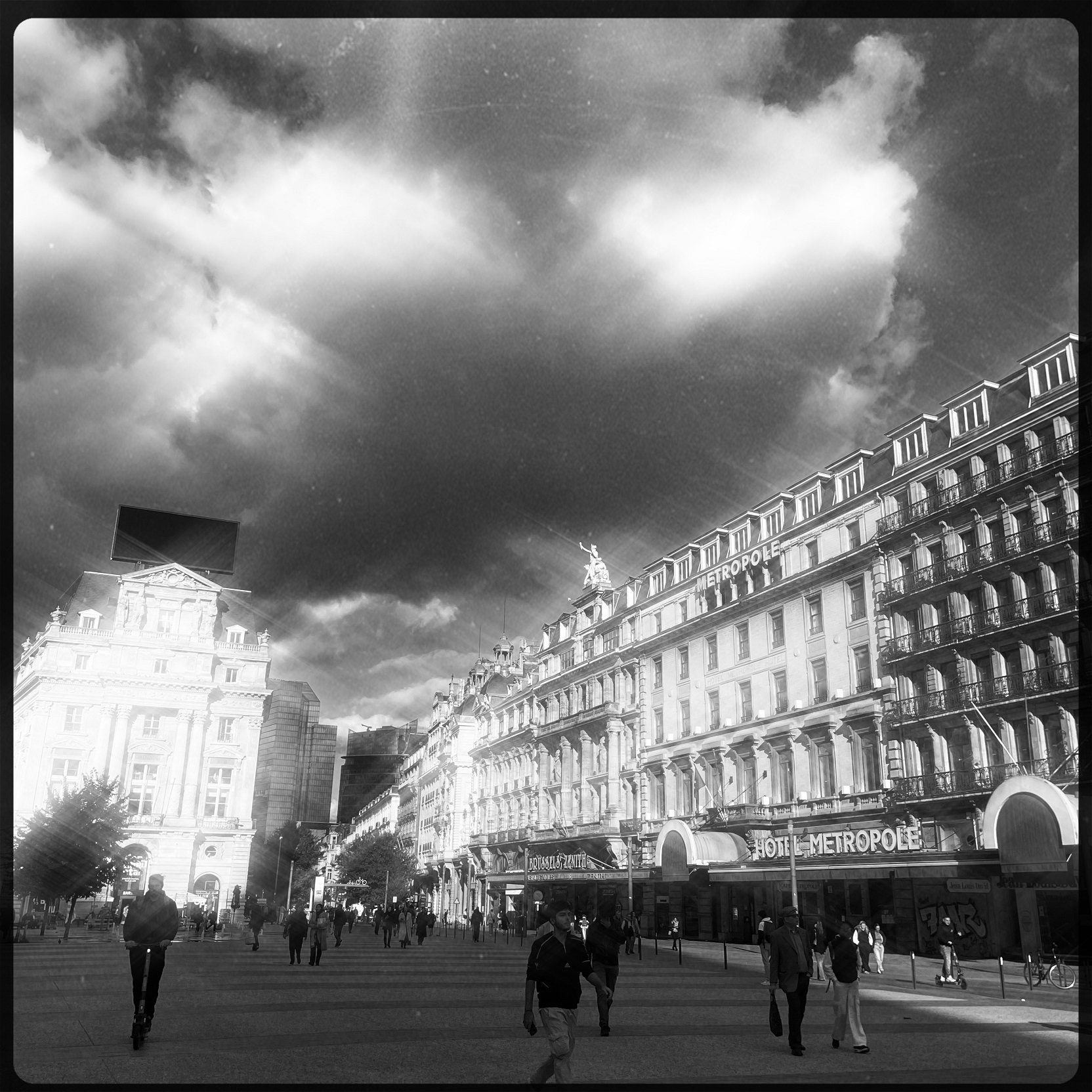
After the conference, I drifted toward the ghost of the Metropole Hotel at Brouckère Square. Closed for renovations. They say it’ll open again later this year. Last time I was here, I snapped some photos — a kind of spiritual homage. You see, in 1927 this place hosted the Solvay Conference — Einstein, Bohr, quantum mechanics, the whole mad circus of theoretical physics. And I plan to return in 2027, one hundred years later, to write where the debate has gone since. An essay. A novella. Something unhinged but honest. Because guess what? The issue is still far from settled.
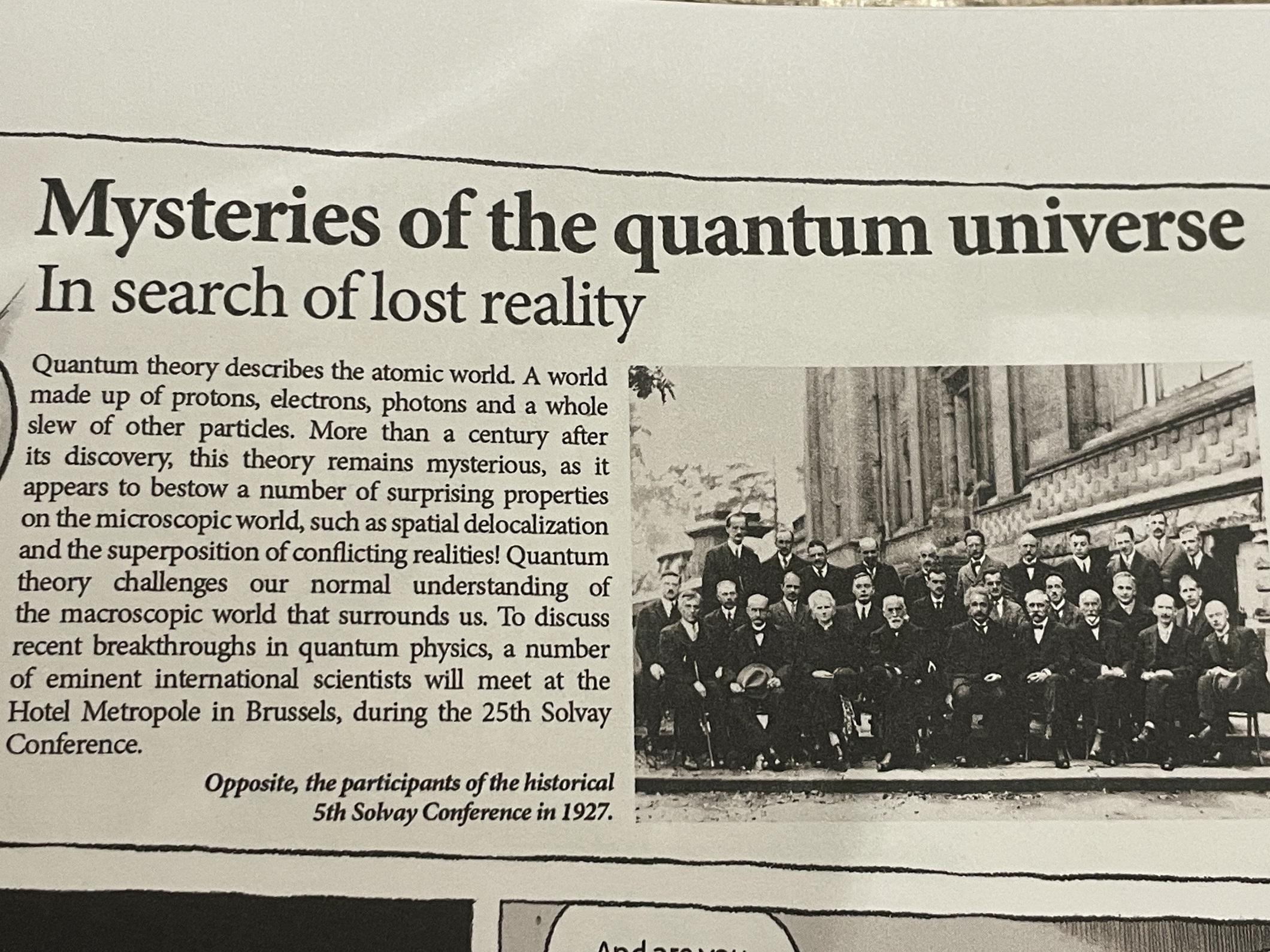
That thought spiraled into another: Free-Consciousness, my pet project. My Frankenstein. I launched the site last year after seven long years of mental spelunking. Wrote the big one — my theory on consciousness and reality. Put it out there. Hit ‘publish’. Thought the gods would not take notice. They didn’t. And that’s the rub. The writing is the easy part. It’s the screaming into the void that eats you.

Nobody tells you how much blood promotion takes. Daily work. Daily hustle. I’m not doing that. I admit it. I’ve got too many hobbies, too many dreams, and too little interest in turning my brainchild into a full-time marketing campaign. So it sits there. Like a loaded gun on the nightstand. Waiting.

But I keep moving. Blogging keeps the rust off. And video — that’s the new itch. I’m starting to get a taste for it. No production machine yet, but what’s coming down the pipeline is damn good. Trust me. There’s energy there. More momentum than Free-Consciousness, for now. But I haven’t given up on either. Not yet.

Even if no one reads, clicks, or shares — it’s worth doing. Soul in the Game, as Taleb says. Not skin. Soul. You do it because the act is holy. You put your guts on the page and make it sing. I bring that same madness to everything — journalism, blogging, my family, my cats, my dreams, even my juggling. Yes, juggling. Try it while lucid dreaming. It’ll change your whole view on reality.

Later that night, the pull of divine intoxication brought me to Beer Central. Oh man. The Belgians. Say what you want about the country, but these motherfuckers can brew. 333 bottles on offer. I tried four: Floreffe, Dirty Talk, Gouden Carolus, and something I can’t even name anymore. After that I stumbled back to my crusty hotel, half-watched an episode of Andor, and blacked out somewhere between galactic rebellion and existential fatigue.

Brussels. Beautiful, broken, bloated Brussels. I would be back soon. The madness continues.

Reservoir Dykes: Four Times Tarantino Referenced the Netherlands (VIDEO)

My first video for Jeppy’s Video Circus in 2025 is another pop culture special.

I’m kicking off the year with another deep dive into pop culture – this time, exploring how Quentin Tarantino has (knowingly or not) woven the Netherlands into his cinematic universe.

Most fans remember the famous Pulp Fiction dialogue about Dutch culture (you know the one). But fewer people realize that Tarantino’s nods to the Netherlands go beyond that. In fact, subtle references pop up in Reservoir Dogs, Jackie Brown, and Kill Bill: Vol. 2 – and I break them down in this video.

Right after wrapping up the edit, I stumbled upon something fascinating: Tarantino once had an idea for a movie set entirely in Amsterdam. The film, The Vega Brothers, would’ve brought together Vic Vega (Michael Madsen’s character from Reservoir Dogs) and Vincent Vega (John Travolta’s character from Pulp Fiction) in a prequel.

In a ReelBlend podcast, Tarantino explained the concept: the film would follow Vincent Vega as he runs a nightclub for Marcellus Wallace in Amsterdam. His brother Vic comes to visit, and – naturally – chaos ensues. Honestly, it sounds like it could’ve been an instant classic.

Sadly, the idea was shelved. Tarantino felt both actors had aged out of the roles and didn’t want to go The Irishman route with de-aging tech. A real shame, because that setting and those characters could’ve made for something special.

Anyway, check out the video below for all the Dutch connections you might’ve missed in Tarantino’s films. Hope you enjoy it!

QT8: The First Eight

I was 13 years old when I saw the video Reservoir Dogs at my local video store. There were – for me at the time – not many familiar actors in it. But the cover looked pretty cool with guys in suits with guns. Plus there was a lot of praise on it from critics, so I decided to give it a shot. I had no idea what to expect, but Jesus Christ was it a good movie! Ridiculously great filmmaking. One of the best movies I had seen at that point and to this day still.

It is funny to hear all these actors in the documentary QT8: The First Eight basically relate to the exact same experience. Tim Roth, shown while being carried in the warehouse by Harvey Keitel, remembers talking to Keitel about what they had just shot and saying: “Man, this is going to be a really great movie!” Keitel agreed.

Reservoir Dogs premiered on Cannes in 1992, very prestigious for a debut, and it was a great success. Everybody wanted to meet Quentin there and he became a movie making star overnight. Everybody said: “Can you believe this guy? He can write and direct and it’s sensational stuff.”

For a long time I was jealous of Tarantino. And when I watch this documentary I still am. I mean, wouldn’t it be something to be able to write screenplays like this guy? And this is also a shared emotion by many people interviewed for this doc. Talent like this is rare. Many people, including me, tried to write scripts like him. But to no avail.

His first screenplays – True Romance and Natural Born Killers – he had to sell to pay the rent. True Romance was originally told in non-chronological order Tarantino-style. Oh and the pop culture loving Clarence, basically Quentin’s alter ego – died at the end. Luckily Tony Scott changed that. At least I for one liked the happy ending.

Tarantino wanted to become a director, so he wrote a script that he could do on a low budget: Reservoir Dogs. Harvey Weinstein distributed the film. After that everybody in Hollywood wanted to work with him, but the Weinstein’s got to produce all his movies up until The Hateful Eight. Then the scandal broke out, and Tarantino – who according to Michael Madsen had known about Weinstein’s misconduct for some time (read Tarantino’s confession-story here) – switched to Sony for his ninth movie Once Upon a Time in Hollywood.

And this Weinstein-business is the only major stain on Tarantino’s career. That, and pushing Uma Thurman to do a car stunt in Kill Bill, which went wrong causing permanent physical problems for her. No good, Mr. Quentin. But there is a lot to balance it out. He is described by everyone in the doc as a very nice guy who enjoys life, and appears to be a great friend for his many cronies.

Pulp Fiction, that followed Reservoir Dogs, is one of the masterpieces of the past 50 years. Michael Madsen, for whom the part of Vincent Vega was originally written, was committed to Wyatt Earp at that time. Nightmare! He takes it well, commenting on the extremely successful casting of John Travolta. “It is one of main reasons the movie worked.” Plus Travolta can dance and Madsen – who did a dance scene in Reservoir Dogs – can’t, at least in his own opinion. “They would have had to change the script into that they don’t win the dance contest.”

How do you follow up a masterpiece like Pulp? You don’t. Just make a very good genre film instead starring Pam Grier, queen of the blaxploitation movies Quentin went to see during his childhood. Jackie Brown is a beautiful film about people trying to figure out what to do with their lives. Then he made another genre film with a strong female lead, a mash-up between Hong Kong cinema and a spaghetti western. Kill Bill is an astonishing accomplishment. Bit of trivia: The razor the Bride uses to escape from the coffin in Vol. 2 is the same used by Mr. Blonde in the torture scene in Dogs. Everything is related in the Tarantino universe.

Then he went on to make another feministic movie with powerful girls in it. Death Proof is a clever slasher flick / carploitation movie shot by the maestro himself. With an unforgettable Kurt Russell as Stuntman Mike. After that came his war movie effort. Inglourious Basterds is unlike any war film ever done before. It is storytelling at his best. Django Unchained is another historic film and it’s brutal. It might just be a little too funny for a film about slavery. But Tarantino likes to hand out justice to his characters. Hitler gets machine gunned to death in Basterds and in Django, the black hero – after having killed a ton of slavers – rides off into the sunset with his girl, an image you won’t find in many westerns.

The Hateful Eight, the final movie treated in this doc, is in a way Reservoir Dogs redone as western. Everything comes full circle. Even Weinstein’s story. Apparently John ‘The Hangman’ Ruth (played by Kurt Russell) is based on the monstrous Weinstein. He gets a big fat lesson in the film. Tarantino said many times that he wants to quit at ten movies, because otherwise he fears the quality will go down and people will say: ‘This one is not so good, but this guy used to make great movies’. Let’s hope he will break his word and continue to make movies forever. His style and voice are unique and irreplaceable in Hollywood. Whatever happens, currently nine films are in the can. And I will certainly keep enjoying his work till the end of my days and share it with friends. When you absolutely, positively, want to blow away everybody motherfucker in the room, accept no substitutes.

De Pulp Fiction vraag: Gebeuren dingen gewoon?

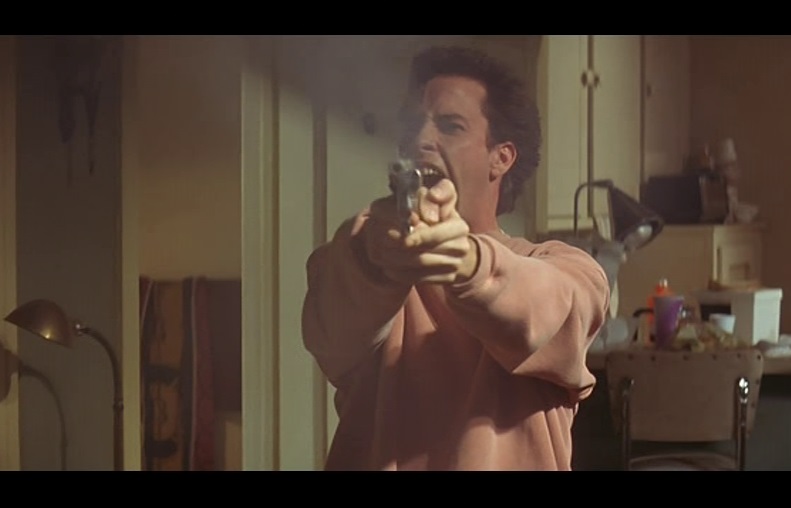
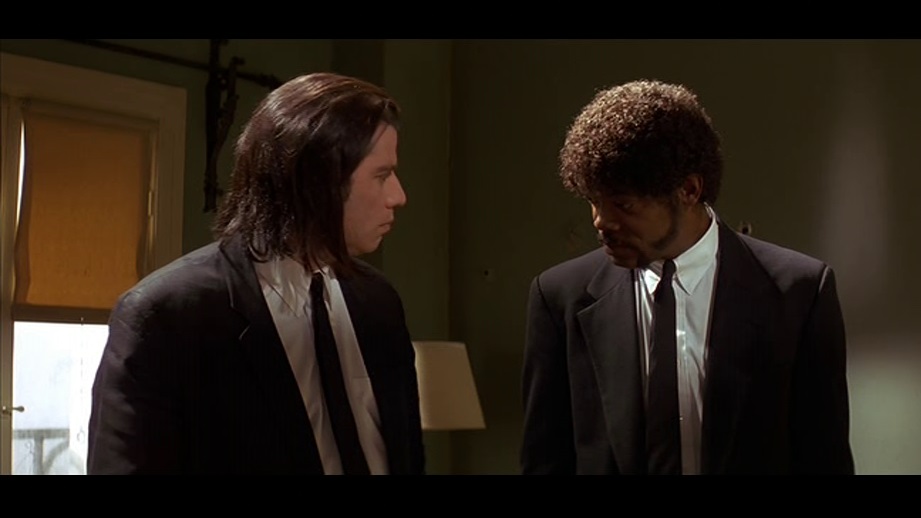
Ongetwijfeld herinner je de scene uit Pulp Fiction waarin huurmoordenaars Jules Winnfield en Vincent Vega na een moordpartij in een appartement zelf onder vuur worden genomen. ‘De vierde man’, zoals hij in de aftiteling wordt genoemd, komt de badkamer uitgestormd terwijl hij zijn magnum leegschiet op de compleet verraste gangsters. “Die, you motherfuckers!” Maar als zijn pistool na zes schoten ‘klik’ zegt staan Winnfield en Vega beide nog op hun benen. Het kost ze een paar seconden om te beseffen wat er is gebeurd. Daarna richten ze zich woedend tot de vierde man en blazen hem met een paar welgemikte schoten naar de andere wereld (voor trivia-liefhebbers, de kogelgaten zitten al in de muur voordat de vierde man ooit geschoten heeft).

Dan volgt een filosofisch debat tussen de collega killers. Vega schudt de gebeurtenis vrijwel direct van zich af en wijt het incident puur aan geluk en verder niks speciaals. “Die dingen gebeuren gewoon.” Winnfield kijkt hier duidelijk anders tegenaan. God is tussenbeide gekomen en heeft de kogels tegengehouden. Al kan de bijbel citerende gangster niet uitleggen waarom Hij dat gedaan heeft, baseert hij er wel een levensveranderende beslissing op. Namelijk om per direct stoppen met zijn werk voor gangsterbaas Marcellus Wallace en de wereld te gaan rondreizen. Je weet wel, zoals Caine in Kung Fu.

Het debat is een klassieker in de filosofie. Wordt het heelal geregeerd door toeval of staat er een machtige Goddelijk figuur boven die aan de onzichtbare touwtjes trekt? Wie heeft gelijk, Winnfield of Vega? De kwantummechanica – het absolute hoogtepunt van de moderne natuurkunde – lijkt Vega gelijk te geven. Een van Einsteins bekendste uitspraken is: “God does not play dice”. Hiermee bedoelde hij dat er altijd een oorzaak is aan te wijzen voor een gebeurtenis. Neem een potje snooker. Stel dat je een bal richting een bepaalde hoek schiet op de snookertafel – en je hebt informatie over alle krachten en hoeken die in het spel betrokken zijn – dan kun je heel exact het pad van de bal voorspellen. Oftewel, Einsteins macro-universum is deterministisch.

In de kwantummechanica – de natuurkundige theorie die het gedrag van materie en energie op atomaire en subatomaire schaal beschrijft – is dit compleet anders. Stel dat we een elektron van de snookerbal nemen en op twee nauwkeurig van elkaar geplaatste openingen in de tafel afschieten is er geen enkele manier om te weten in welke van de twee hij zal belanden. We kunnen alleen de waarschijnlijkheid weten dat hij in de ene of de andere zal landen, maar het resultaat is verder volledig random. Oftewel, kwantummechanica heeft Einsteins ongelijk bewezen: God dobbelt wel degelijk op de schaal van het allerkleinste. Het determinisme van de macrowereld is daarom slechts schijn; het toeval op microschaal wordt op grote schaal teniet gedaan. Er blijven slechts kleine fluctuaties over die te miniem zijn voor ons om waar te nemen. Maar het onderliggende toeval is er nog wel degelijk. Kortom, er is een sterke zaak voor toeval te maken.

Is er een uitweg voor Winnfield? Jazeker, maar niet in de vorm van een hogere God. Wel in de vorm van bewuste agenten die gebeurtenissen helpen bepalen. Daarvoor moet één van de twee interpretaties van kwantummechanica waar zijn die het vreemde dualistische karakter van materie uitlegt (er is een derde interpretatie, de Broglie–Bohm-theorie, maar die heeft weinig aanhang en laten we hier buiten beschouwing). Het vreemde gedrag komt tot uiting in kwantumexperimenten die laten zien dat deeltjes zich gedragen als zowel deeltjes en golven (niet strikt gelokaliseerd, maar uitgespreid). Op het moment van meting stort de golffunctie in elkaar en bevindt het deeltje zich op één plek in ruimtetijd. Wanneer het zich gedraagt als golfachtige entiteit houdt het deeltje zich het recht voor om op verschillende plekken te verschijnen op het moment van meting. Waar het zal verschijnen kan de onderzoeker niet weten, alleen de waarschijnlijkheid dat het hier of daar zal opduiken. Het deeltje – dat zich niet kan opsplitsen – is dus nergens écht, en bestaat voordat de meting plaatsvindt slechts als wiskundige mogelijkheid.

Een theorie die dit bizarre gegeven verklaart is ‘bewustzijn veroorzaakt ineenstorting’, een interpretatie van kwantummechanica waar o.a. wetenschappers (en mijn helden) Robert Lanza en Donald Hoffman bekende aanhangers van zijn. Zij stellen dat er geen externe buitenwereld is die onafhankelijk van de waarnemer bestaat. Realiteit is volgens hen een proces dat zich binnen bewustzijn afspeelt. Oftewel, de computer waarop ik deze blog nu tik bevindt zich in mijn hoofd en nergens anders. Het spatio-temporele domein dat ik waarneem wordt in zijn volledigheid gecreëerd door mijn geest of bewustzijn.

Als je dit radicaal vindt klinken, dan ben je zeker niet de enige. Dat is dan ook de reden dat dit niet massaal wordt opgepikt. Het wijkt teveel af van onze alledaagse intuïties, onze taal, onze cultuur, het heersende wetenschappelijke paradigma, van alles eigenlijk. Hoffman gelooft dat de nieuwe generatie, die reeds opgroeien met virtuele werelden en The Matrix, dit wel gaan omarmen. Het bewijs dat dit is hoe de realiteit werkt is namelijk behoorlijk overtuigend. Maar de wetenschap zal het pas accepteren als het onweerlegbaar wordt aangetoond in experimenten. Hier is al een begin mee gemaakt, maar het is erg lastig om financiering te ontvangen voor zaken buiten het materialistische domein. Parapsychologisch onderzoeker Dean Radin, die vanwege zijn specialisme al niet erg serieus genomen wordt in mainstream science, heeft wel een experiment op dit gebied uitgevoerd dat hij in deze video beschrijft. Met het onderzoek toont hij aan dat de bewuste waarnemer met intentie invloed kan uitoefenen op de uitkomst van het beroemde tweespletenexperiment.

Als de theorie klopt, dan zijn wij allemaal – en dieren en zelfs planten ook – onderdeel van het universum met ons bewustzijn en oefenen we ook invloed uit op de totstandkoming ervan. Er is overtuigend bewijs voor het bestaan van parapsychologische verschijnselen, zoals telepathie en telekinese, maar de invloed van onze verbonden geesten op de fysieke omgeving lijkt erg beperkt te zijn. Radin gebruikt echter proefpersonen die getraind zijn in meditatie en die lijken wel degelijk invloed uit te oefenen op gebeurtenissen op kwantumniveau. Donald Hoffman werkt aan een wiskundig model dat de relaties en hiërarchie van ons bewustzijn beschrijft. Dit model zou de theorie testbaar en dus bewijsbaar moeten maken. En daarmee zou Winnfield kunnen aantonen dat niet alle dingen zomaar gebeuren, maar dat wij er wel degelijk invloed op hebben.

Vega kan zich als antwoord hierop beroepen op de andere interpretatie: ‘de veel-werelden-theorie’ van Everett, waar ook wijlen Stephen Hawking aanhanger van was. In deze theorie vertakt het universum bij elke gebeurtenis waarbij potentieel meer dan een uitkomst mogelijk is. In het geval van de snookertafel belandt de elektron in één universum in de ene opening en in een alternatief universum in de andere. In het geval van Pulp Fiction zijn Jules Winnfield en Vincent Vega in de meeste alternatieve universums morsdood, maar in de versie waar wij toevallig als getuigen bij zijn, overleven ze het incident. De veel-werelden-interpretatie is een manier om het idee van objectief bestaand waarnemer-onafhankelijk universum in stand te houden. Maar dat maakt de theorie niet minder radicaal. Kun je het idee accepteren dat er ontelbare alternatieve universa zijn waarin je in sommige getrouwd bent met die afschuwelijke ex, in een andere Bitcoinmiljonair bent, en in weer een andere als kasplantje leeft na een bijna fataal auto-ongeluk?

Conclusie, beide huurmoordenaars hebben een beetje gelijk. Het is onwaarschijnlijk – en sowieso niet bewijsbaar – dat er een externe God bestaat die het wat kan schelen wat wij hier op aarde uitvoeren. Wel is er een overtuigende zaak te maken voor een actieve rol voor de bewuste waarnemer, zodat het universum niet volledig random kan zijn. Veel gebeurtenissen zijn dit waarschijnlijk wel, zeker zolang de bewuste agenten zich totaal niet bewust zijn van hun invloed op het tot stand brengen van de collectieve realiteit. Verder toekomstig onderzoek moet uitwijzen of deze theorie echt klopt en hoever de invloed van de menselijke geest reikt. Wie weet ontdekken we dan dat we met intentie veel meer kunnen bereiken dan we ons nu kunnen voorstellen, zoals misschien wel het impactpunt van een kogel bepalen.

Voor Vega maakt het niet meer uit. In tegenstelling tot Winnfield, veranderde hij niet van koers na de goddelijke interventie. Kort daarna liep hij tegen een met machinegeweer gewapende Bruce Willis op. We kennen allemaal het resultaat van deze interactie. En in de kwantumwereld is de uitkomst kennen hetzelfde als hem creëren.

Bronnen:
The Quantum Astrologer’s Handbook (Michael Brooks)
& Reality is not what it seems (Carlo Rovelli)

Meer over kwantummechanica en de aard van de realiteit:
Finally An Explanation For The Bizarre Phenomena In Quantum Mechanics