Today the International Film Festival Rotterdam 2021 started… Online. The pandemic has been going on for nearly a year now and live festivals have become a distant memory. It’s not that I don’t appreciate their online efforts, but unfortunately it’s impossible to capture the unique atmosphere the festival normally generates. Therefore, I don’t cover this years’ festival (sorry folks at the IFFR) but instead turn back to clock and return to the past, a time when pandemics and lock-downs were still only products of the imagination and Hollywood movies. Let’s hope that next year we can return to a sustainable new normal, including live film festivals.
International Film Festival Rotterdam 2008
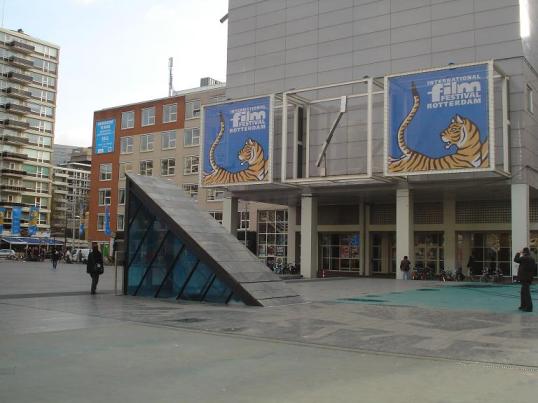
Day 1
26-01-2008 by Jeppe Kleijngeld
The annual Rotterdam Film Festival. I have been looking forward to this. A little too much maybe. I dreamed last night that I missed half the programme. Not a very likely scenario. I got two days in which I hope to see at least ten movies/short film programmes. Let the cinema frenzy begin.
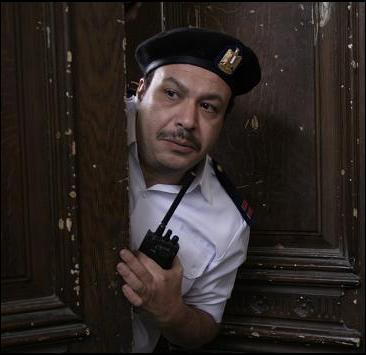
Lot’s of coffee and ready to see film number 1. The Egyptian drama Le chaos, directed by maestro Youssef Chahine. I haven’t seen many Egyptian films (not one). Nor was I aware of the existence of ‘popular Egyptian cinema’, as the festival catalogue describes it. Curious I entered the dark screening room of the Pathé cinema.
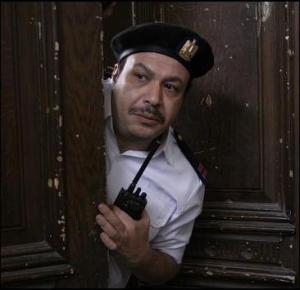
It was all right. A well-crafted combination of a romance and a political story. It revolves around the brutal police chief Hatem, who rules the Choubra district in Cairo with an iron fist. His only weakness is the passion he feels for his neighbour girl Nour, who in her turn is smitten by district attorney Cherif. A series of events unfold leading to a riot, the blossoming love between Nour and Cherif, and a showdown with tyrant Hatem.
Up to the next film, or rather event. Robert Breer: Image by Images 3, one of the compilation programmes of filmmaker in focus Robert Breer’s shorts. His background as a painter becomes immediately apparent with the first one; BANG!. It consists of animated drawings and real footage. Recently transferred to 35mm it looks pretty sharp. The following two shorts FUJI and SWISS ARMY KNIFE WITH RATS AND PIGEONS are very similar; no story, just images. And technically pretty neat.
Then follows STOCKHAUSEN’S ORIGINALE: DOUBLTAKES, a 32-minute documentary of some sort of performance in Germany (?). As Breer basically said himself in the Q&A afterwards; ‘what an underexposed, incoherent and hardly comprehensible mess. The programme finishes with two more animated short: TRIAL BALLOONS and TIME FLIES.
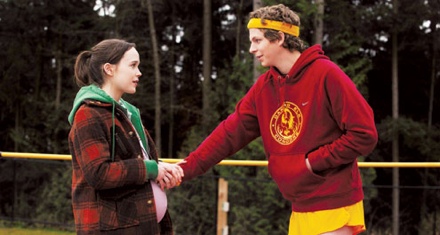
After an excellent lunch in Turkish eatery Bazar, it was time for something more commercial. In Rotterdam that usually means the latest American indie. I managed to get a ticket for Jason Reitman’s Juno. The much discussed and Oscar nominated comedy/drama that Roger Ebert describes as ‘one of the best movies of the year’.
And justly so. The audience obviously loved it and so did I. What is not to love about this movie? The razor-sharp script from first-time screenwriter Diablo Cody and the completely disarming performance from Ellen Page as the pregnant teenager Juno suck you into this movie and won’t let you go till the end. This is also due to the contribution of all the great supporting players. Some Oscars would be well deserved.
After a short break I headed for another venue. I was going to see a short film compilation called Short Stories 8: Crime Stories. The four shorts shown were a mixed bag. The first one PLOT POINT (2007, Nicolas Provost) was a pretty cool, atmospheric short from Belgium. About a hypnotic New York where the police force is acting strange. Through sound effects and well-shot and edited imagery, Provost creates a very cinematic and suspenseful little no-budget film. The second film was FOREST MURMURS (2006, Jonathan Hodgson). A beautifully animated short about a mysterious forest in Great-Britain where murders have taken place throughout history.
Then came LE PEAU DURE (2008, Benoit Rambourgh, Jean Barnard-Marlin). A French short about a juvenile kid and the relationship between him and his scumbag father. It was not as intense as it could have been. The final film was WAY OUT (2006, Chen Tao). About a Chinese peasant who starts to pick pockets to satisfy his wife. Beautiful cinematography but as regards content not very interesting.
As a midnight snack I selected a film from the Rotterdämmerung programme; genre films on a late hour. I saw nothing less then George A. Romero’s latest zombie shocker Diary of the Dead. In his fifth ‘Dead’ movie, Romero follows a group of film students who stumble upon a zombie outbreak and decide to cover it.
All in all not a bad day. Now get ready for the sequel.

Day 2
27-01-2008
Another day in Rotterdam. What to watch? I could go for the nine-hour lasting epos Death in the Land of Encantos by Filipino director Lav Diaz. On previous editions of the festival, Diaz had film screenings of similar length. In 2005 Evolution of a Filipino Family (10 hrs) and in 2007 Heremias (9 hrs). I haven’t seen those, so this is my chance to finally have a Diaz experience.
Nah. Lack of patience. I rather go for five quick rushes than one quiet and meditative experience. Exactly the point Diaz is making with his immensely long films. Perhaps next year I’ll go for the new Diaz. Yeah right, who are you kidding?
So of to the first gig. El Asaltante is part of the Sturm und Drang programme. This programme features films by young filmmakers that are still developing their own style. First time Argentinean director Pablo Fendrik made a film about an ageing mugger who commits three robberies in the course of the movie. The action is registered with a steadycam in primarily close-up and medium shots leading to an uncomfortable tension. Pretty good debut by Fendrik
During my break I saw an installation in the NEW DRAGON INNS exhibition. No time to stay for the upcoming screening though. The downside of viewing five films in one day is that the breaks are so damn short. So I rushed back to the cinema.
The second film was a low-budget Iraq movie. Directed by Brian De Palma! Redacted is about the rape of a fifteen year old Iraqi girl at the hands of a squad of US soldiers. The film is based on true events, and shot in very realistically looking staged footage. Not a very happy subject. But it is skilfully directed by De Palma and features strong acting from a completely unknown cast.
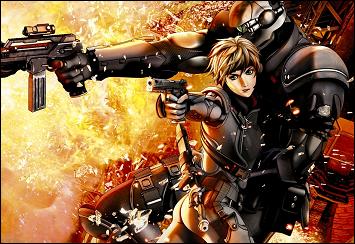
Afterwards, having observed this authentic horror, I felt pretty much like a drone. And I still had three movies to go. A double espresso helped me through the next movie. The Japanese manga-film Appleseed: Ex Machina.
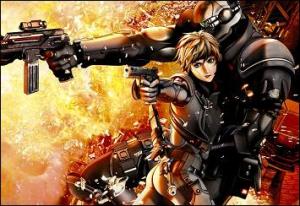
This sequel to the 2004 manga-hit Appleseed was a good wake-up call as it started with some ass-kicking action scenes. The story revolves around a high-tech futuristic world in which constant conflicts are taking place between humans and various types of cyborgs. The excitement level of the beginning is not matched later in the movie, but it was still an enjoyable screening.
Now I was going to see my first Tiger film of the year (one of the fifteen films nominated for a Tiger Award), namely Shanghai Trance. A Chinese film directed by young Dutch director David Verbeek. It is made up of three love stories edited together, all playing in the fast growing metropolis Shanghai. In every story, the characters have trouble dealing with the rapid change of their country, as well as dealing with their personal relationships.
Unfortunatly for Verbeek his film didn’t secure an award as I learned later in the evening. The three Tiger Awards went to Wonderful Town (Aditya Assarat, Thailand), Flower in the Pocket (Liew Seng Tat, Malaysia) and Go With Peace Jamil (Omar Shargawi, Denmark).
I booked a surprise film to close of the day. And I got to see…Lars and the Real Girl, the debut from American director Craig Gillespie. The story revolves around the solitary bachelor Lars, who orders a silicone doll from the internet who looks very real (and hot!). It turns out that Lars suffers from a delusional disorder making him believe that Bianca (the doll) is a real person. It wasn’t as silly as this sounds, but it still wasn’t my brand of Vodka. The audience liked it, but I thought this is the kind of movie they show on airplanes. A disappointing surprise festival organisation! Next year I want something better.
I headed back to my car and found my passenger window smashed! Some junkie had been going through my car. My only relief was that I had left nothing in it to steal. I still felt frustrated and angry. I knew I should have gone for that Diaz film. I bet I would have felt more relaxed about things then. Oh well, next year I’ll have another shot at Buddhist enlightenment.
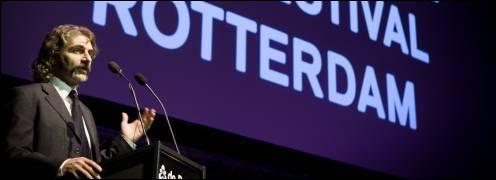
International Film Festival Rotterdam 2009
26-01-2009
International Film festival Rotterdam 2009 opened with the international premiere of The Hungry Ghosts, the directorial debut of Michael Imperioli, best known for portraying Christopher Moltisanti in The Sopranos. Imperioli was present, along with his whole entourage, including main actor Steve Schirripa (Bobby Bacala in The Sopranos).
Imperioli proves to be a talented director, besides an actor and a writer. In a mosaic way of storytelling, the film follows the lives of several characters in New York, all searching for something. Off course, the stories come together in the end. Not cinematically revolutionary, but well crafted and featuring some good acting. It reminded me of Scorsese, probably because of the typical New York scene.
Next was L’ange by Patrick Bokanowski, a rediscovered gem from Rotterdam’s regained programme. It’s not exactly a date movie, believe me. It has no story, but solely consists of images, edited in a bizarre and fascinating way. A pure trip movie. It surely put me in a trance for 70 minutes. The beautiful painting-like images would stay in my head for days after the film.
Time for some Asian cinema. Rotterdam always has plenty of that. Takeshi Kitano is one of the Asian directors that contributes a feature to the programme annually. His Zatôichi even opened the festival in 2004. His latest work is Achilles and the Tortois, the last instalment in a loose trilogy about the figure of the artist. The previous entries were Takeshi’s and Glory to the Filmmaker.
Takeshi is – besides a filmmaker – a painter. This film tells about that part of his life. A young boy who only wants to paint grows up to be…Takeshi. An artists who never sold a painting and is always ridiculed. He has some brilliant ideas for paintings though. Overlong, but occasionally very funny film. It is also warmer than most of Takeshi’s works. It might even be his most moving film so far, now that I think about it.

Besides the title of Michael Imperioli’s film, ‘The Hungry Ghosts’ is also a film programme, consisting of Asian ghost movies. Thai horror The Body is one of them. A scary movie it is! A young student starts having nightmarish visions that are só scary that it is almost unbearable. Feature debut of Thai director Paween Purijitpanya. He still has to learn to cut more rigorously, but his talent is evident and fantastic film lovers will undoubtedly hear more from him in coming years.
Mock Up on Mu is the latest creation of found footage director Craig Baldwin. It’s another weird collage of campy sci-fi flicks narrated together. Thematically it revolves around human evolution, space colonisation and military power. Pretty funny. Unfortunately it goes on and on, becoming too much nonsense to handle in one go.
Rotterdam traditionally puts two or three filmmakers in the spotlight at each festival. Not the usual suspects, but unknown talents. This year the honour befalls on Polish Jerzy Skolimowski, Italian Paolo Benvenuti and Swiss experimental filmmaker Peter Liechti, of whom I went to see his latest work, The Sound of Insects – Record of a Mummy.
Based on a true Japanese story, it tells the intriguing – if somewhat morbid – tale of a man who chooses to die of starvation. He retreats to the abandoned woods and waits for nearly 60 (!) days before his soul finally leaves his body. In voice-over, the man records his dying observations. Liechti chooses not to film the man himself, but merely the images the man sees and the sounds (of insects) that he hears. There isn’t much more to it. A curious experience.
British director Pat Holden presented his movie Awaydays, for which screenwriter Kevin Sampson adapted his own cult novel. Against the backdrop of Thatcher’s Britain, it tells the story of the rocky friendship between the two young thugs Carty and Elvis, who live between the hooligan gangs and primitive violence. With a fantastic post-punk soundtrack.
Followed up by stylish Mexican thriller Los Bastardos. Two outlaws keep a drug addicted mother hostage in her own house. The build-up is slow, but the story eventually heads towards an acts of stomach turning violence. The movie is directed by Amat Escalante, who made an impression at the festival a few years back with Sangre. In the Q&A after the film, Escalante says to have been inspired by the films of James Benning and For a Few Dollars More by Sergio Leone. Not by the more obvious Funny Games that is somewhat similar.

The final film for me is the Canadian comedy The Baby Formula, something like The L-Word with a sci-fi twist. Definitely one for the ladies. Two lesbians impregnate each other through medical innovation. Their very different families respond to the situation in their own way. A feel-good comedy that will undoubtedly score high with the audience.
Originally published on FilmDungeon.com
Images a courtesy of International Film Festival Rotterdam





 FRAGMENTEN UIT HET SCHEMERLAND