Mentaal-Universum.nl (werk in uitvoering)

Door Jeppe Kleijngeld

Mentaal-Universum.nl is een webplatform dat de mentale aard van de realiteit uitlegt.

In een droom is alles wat je waarneemt een constructie van je eigen geest. Wat nou als dit in je wakkere leven ook zo blijkt te zijn? Een verschil is wel dat je geest in de ‘echte’ wereld niet alleen van jou is, maar onderdeel van een alomvattend superbewustzijn. Het mentale universum vervangt één objectieve buitenwereld door een lappendeken van miljarden, subjectieve werelden van levende wezens. Werelden die door een gedeeld, non-lokaal bewustzijn met elkaar zijn verbonden.

Het idee van een wereld binnen bewustzijn, met geest als ultieme werkelijkheid, is niet nieuw. In de filosofie heet dit idealisme. In het hedendaagse Westen is echter de tegenhanger – het materialisme, de filosofie die alles terugvoert op materiële, kwantificeerbare grootheden – de dominante opvatting geworden. Die positie heeft het materialisme vooral te danken aan het grote succes van moderne wetenschap en Darwins evolutietheorie in het verklaren van een indrukwekkend aantal natuurlijke fenomenen.

Toch is deze zienswijze niet zonder problemen. Het vinden van een plausibele verklaring voor bewustzijn vanuit materialisme is tot de frustratie van de neurowetenschap niet gelukt. Met de opkomst van kwantummechanica in de jaren’ 20 van de vorige eeuw, waarbij het lijkt alsof subatomaire deeltjes ‘reageren’ op waarneming, is bovendien de subjectieve geest reeds de natuurkunde binnengedrongen. Dit tot de ontzetting van de natuurkundigen van die tijd die tot dan hadden verondersteld de natuur te kunnen bestuderen als externe, objectieve realiteit. Nu bleek de waarnemer ineens een fundamentele rol te hebben in het tot stand brengen van die realiteit.

Omdat de natuurkunde geen rationele oplossing kan vinden voor het zogeheten meetprobleem in de kwantummechanica, hanteren de meeste fysici een beleid van shut up and calculate en laten ze de metafysische implicaties over aan filosofen. Die zijn echter zelf vaak van de materialistische school en proberen bewustzijn weg te zetten als illusie (Daniel Dennett) of emergent fenomeen uit het brein (John Searle). De veronderstelde connectie tussen kwantummechanica en bewustzijn doen de materialisten meestal af als te belachelijk om zelfs maar te overwegen. De enkeling in de wetenschap die dit standpunt nog durft te verkondigen wordt al snel weggezet als charlatan en beoefenaar van pseudowetenschap.

Toch laat het beroemde tweespletenexperiment heel duidelijk zien wat er gebeurt wanneer je de waarnemer scheidt van de externe wereld op subatomair niveau: de manifeste buitenwereld verdwijnt dan in een vage waas van wiskundige waarschijnlijkheden. Dit duidt op een non-dualistische realiteit waarin de waarnemer en het waargenomene twee kanten van dezelfde medaille zijn. Wanneer we kwantummechanica letterlijk nemen als beschrijving van de realiteit, lossen we alle grote contradicties in de wetenschap op en zijn we hard op weg naar een holistisch begrip van de kosmos.

Ik ben Mentaal-Universum.nl begonnen voor diegenen die geïnteresseerd zijn in een dergelijk nieuw (of liever hernieuwd) paradigma in de filosofie en wetenschap. Zoals de titel al aangeeft is het uitgangspunt dat we werkelijk in een mentale wereld leven waarin wij levende wezens een directe rol hebben in het manifesteren van de fysieke werkelijkheid. In deze visie bestaan objecten die we observeren in de buitenwereld niet in definitieve staat, maar krijgen ze pas in onze waarneming een positie in ruimtetijd en kwaliteiten als kleur, geur, vorm en structuur. Ook voor ons levende wezens zelf geldt dat wij niet intrinsiek ‘echt’ zijn, maar manifestaties vanuit een diepere, verborgen dimensie die bestaat uit oneindige informatievelden en subtiele energie. Dat is de natuur zoals hij echt is, alleen kunnen we hem zo niet waarnemen. Wat we te zien krijgen is een gebruikersinterface van de natuur, maar niet de ware onderliggende realiteit.

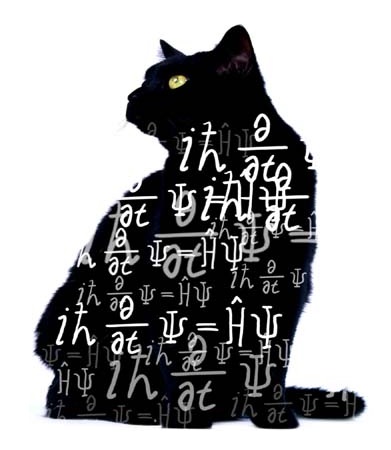
De filosofische grondslag van dit nieuwe wereldbeeld is natuurlijk het idealisme, ontwikkeld door o.a. Berkeley, Kant en Schopenhauer en het neutraal monisme van Spinoza. Ook de bekende natuurkundige Erwin Schrödinger (van de beroemde kat die zowel dood als levend tegelijkertijd is) onderschreef Advaita Vedanta, een spirituele traditie die sterk lijkt op idealisme. Hij zei dat “verscheidenheid alleen maar schijn is en dat er in werkelijkheid slechts één geest is.”

Wetenschapper Robert Lanza heeft in zijn boek Biocentrism (2009) het idealistische gedachtegoed onderbouwd met de nieuwste wetenschappelijke inzichten. Met zijn theorie van een fundamenteel levend universum legt hij uit hoe realiteit een proces is dat tot stand komt door de interactie van geest en materie/energie in superpositie (wolk van waarschijnlijkheden). Met zijn theorie lost Lanza de tegenstrijdigheden op tussen speciale relativiteit en kwantummechanica, geeft hij een verklaring voor de perfecte afstemming van de constanten van de natuur op het leven, en legt hij uit hoe ruimte en tijd niks anders zijn dan instrumenten van de geest om alles aan elkaar te knopen. Een idee van Immanuel Kant dat nu wetenschappelijk goed te onderbouwen is.

De kwantitatieve psycholoog Donald Hoffman heeft een vergelijkbare visie ontwikkeld (bewust realisme) en heeft zichzelf tot doel gesteld dit kwantificeerbaar te maken middels een wetenschappelijk valideerbaar, wiskundig model. Hiermee hoopt hij uit te leggen hoe alles – inclusief ruimte, tijd en materie/energie – tot stand komt door de interactie van bewuste agenten. Wanneer hij hier in slaagt zou hij de geschiedenis in kunnen gaan als de wetenschapper die het lichaam-geestprobleem heeft opgelost, het moeilijkste probleem in de filosofie dat al speelt sinds Plato. Al zal het verkrijgen van brede acceptatie voor het bestaan van immaterieel en non-lokaal bewustzijn misschien nog moeilijker blijken dan het kwantificeren ervan. Een paradigmaverschuiving van dit formaat gaat wel minimaal een generatie of twee overheen.

Er zijn naast Lanza en Hoffman nog een aantal andere wetenschappers die de status quo uitdagen, zoals de groep van het manifest voor post-materialistische wetenschap. Op Mentaal-Universum.nl komen deze bewustzijn-activisten uitgebreid aan bod en zal ik in losstaande essays het mentale universum verkennen en de implicaties duiden voor ons denken over realiteit, betekenis, cultuur, leven en dood.

Update Augustus 2024
In plaats van een Nederlands platform, is het uiteindelijk een Engelstalig platform geworden genaamd Free-Consciousness.com. De site staat nu live.

Andere essays over dit onderwerp
Bewustzijn in de 21e eeuw
Bezwaren tegen nondualiteit
De wetenschap achter ‘out-of-body-travel’
Espresso drinkende George Clooney toch niet ontstaan uit toevallig botsende moleculen?
Is ChatGTP bevooroordeeld over de relatie tussen materie en geest?
Mind Matters
De oorsprong van ons bewustzijn
De Pulp Fiction vraag: Gebeuren dingen gewoon?
De Vietnam-oorlog vanuit eenheidsbewustzijn
Vrije WIL bestaat WEL
Waarom zijn we hier?
Wat is het mentale universum?

What causes wave function collapse in quantum mechanics?

Quora Question: What is wave function collapse in the context of quantum mechanics, and how does (or doesn’t) it relate to consciousness?

My answer: I notice that a lot of physicists and others are still having problems with the ‘Consciousness Causes Collapse’ interpretation because they approach it from the old paradigm.

Old worldview
The universe a large billiard ball machine. Everything is made of particles and life and consciousness are both the result of pure randomness, physical processes and evolution. There is no proof for anything ‘magical’ going on.

From this perspective, consciousness – as merely a brain function – can have no effect on the physical world. The very idea is ludicrous.

However, is this the best worldview we have? I think not.

New worldview
Conscious life and the entire physical universe originate from a non-local mind field and is a unified whole. We are all part of an information matrix. Reality, therefore, is a process that involves your consciousness (which is really not your consciousness, but part of a larger cosmic mind). Therefore, the conscious mind transforms all quantum possibilities into a manifest outcome.

Strange loop: who collapses the conscious observer?

This new worldview, which is beautifully described in Robert Lanza’s Biocentrism, has a number of radical implications for how we view the universe:
– The physical world and conscious observer are intertwined and cannot be separated. There is no outside world that exists independent of mind.
– Non-living matter exists only in probability state when not being observed.
– Space and time are tools of the mind and have no independent, objective existence.
– The brain does not generate consciousness, but acts as reducing valve, keeping experience restricted to our local experience ensuring our fitness for survival.

There are many reasons to believe this worldview is much better suited to explain nature in its totality. Quantum mechanics is one of these reasons, because whatever the observer seems to do, impacts the experimental results. This goes so far that a decision an experimenter makes in the present, can impact the behavior of a particle in the past (delayed choice experiments).

There is still a lot of resistance against this worldview, because it is so radically different than what our current scientific culture dictates. However, there are some physicists reevaluating their thinking. Like Scott M. Tyson. In his book The Unobservable Universe: A Paradox-Free Framework for Understanding the Universe, he writes: “you simply cannot remove the observer from reality. It can’t be done and it is pointless to resist.”

Read more answers about the relation between quantum mechanics and consciousness in my posts on Quora.

Read also: Finally An Explanation For The Bizarre Phenomena In Quantum Mechanics


Trend Paper: The Impact of Technology – A MENTAL Revolution

How to succeed in an age of exponential technologies?

This text was originally prepared as presentation for economics students at the Association of Economics Students Nijmegen (EVS), the Netherlands.

The goal of author/presenter Jeppe Kleyngeld – in daily life editor at several Dutch journals and websites in business economics (Financieel-Management.nl, CFO.nl, AccountantWeek.nl) was to give students an overview of current technological trends and its possible implications on the economy, job market and society at large. This Trend Paper has the same purpose.

>>> Check out this publication here <<<

What Schrödinger’s Cat Tells Us About Reality

When you ask someone if it is possible to conduct an experiment in which a cat is both dead and alive simultaneously, she will wonder if you have gone mental (believe me, I tried it at work several times). “Off course this is not possible. That is complete rubbish!”

Or could it be that reality is much weirder than most people realize? In this short essay I will explain how this experiment is possible, why it works like it does, and what it means for our understanding of the world (it will turn out I have indeed gone mental, but in a different way). If you are willing to accept a paradigm shattering worldview, the result is not so crazy at all.

By the way, if you’re not yet familiar with the observer effect of quantum mechanics, check out this video first:

The Experiment
The Austrian quantum physicist Erwin Schrödinger (1887 – 1961) came up with the famous thought experiment to show how ridiculous the widely accepted Copenhagen interpretation of quantum mechanics is. According to this interpretation, physical systems generally do not have definite properties prior to being measured, and quantum mechanics can only predict the probabilities that measurements will produce certain results. The act of measurement causes the set of probabilities to reduce to only one of the possible values immediately after the measurement. This feature is known as wave function collapse.

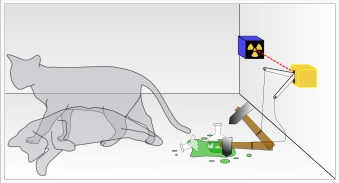
The experiment works like this: a cat is placed in a sealed box along with a Geiger counter, a bottle of poison and a radioactive particle that may or may not decay after an hour. If the Geiger counter detects that the particle has decayed, it will trigger the smashing of the bottle of poison and the cat will be killed. But because no one is observing the box, the radioactive particle exists in superposition, meaning it exists (or actually doesn’t exist) in all possible states at once. It is not until someone opens the box that the wave function collapses, the particle assumes a definite state and the cat is either killed or not.

The Implications
The paradigm that the world exists as independent reality and we are merely innocent bystanders is smashed by Schrödinger’s experiment. Nevertheless, this is still the dominant worldview today, especially in the West, while these experiments are already a century old. The observer is not observing an independent reality, but is in fact creating it. Not by herself; we are all part of a bigger consciousness that is determining what is manifested reality and what is not. It turns out that we are not living in a material world, but in a mental world. The only way to escape from the weirdness of the dead-alive cat is to accept mind as a property of reality besides matter. Off course I don’t mean mind as created by the material brain, but a mind that is linked to it, but also exists independent of the body.

What quantum mechanics shows us is that reality consists of two levels. One level is the everyday world we observe. Within this level we – as conscious observers – materialize objects within our relative perspectives of space and time. The other level is that of pure potentiality. At this level, everything merely exists as possibility, but nothing exists in a determined state. Within this level – that lies beyond the veil of our perception – space and time don’t exist as independent bedrock realities. And because these dimensions don’t exist, it is no longer possible to separate anything, so at this level we are all one. This is hard to grasp from our individual ego-states, but in special states of consciousness, such as near death, people experience it all the time.

That is the real radical stuff that quantum mechanics tells us, and most physicists don’t like it much. Schrödinger himself wanted to return to the objective worldview in which events were deterministic (meaning that if you have all information about a reality, you can predict what will happen). His experiment has become the perfect vehicle to demonstrate why this deterministic view does not work at all.

Quantum mechanics has shown us that a pure mechanical, material universe without mind could never exist. It has also shown us that living creatures could not have arisen out of dead matter, because without a conscious observer to begin with, matter has no definite place within reality. Consciousness must therefore be the unified basis of all existence.

Read also: Finally An Explanation For The Bizarre Phenomena In Quantum Mechanics