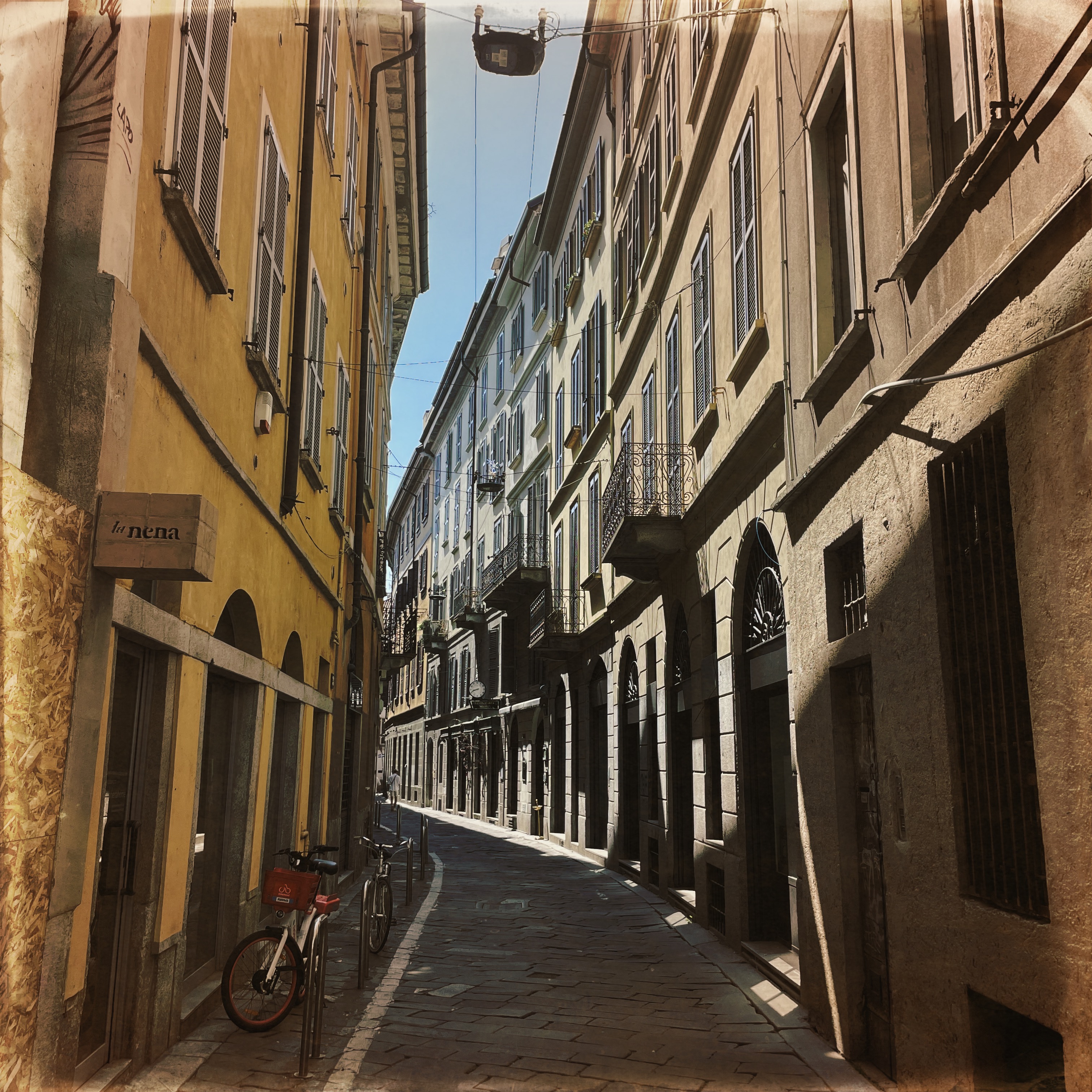
In Brussels (2)

“The mind is not only an internal phenomena, but an external landscape thing as well. When you walk around a city, it is located in your mind and you’re creating every external object you observe in this cityscape. Those objects wouldn’t be present without you. They don’t exist in the world, they exist strictly in observers.”
― Nicky Mento, ObserverWorld

[22-05-25] The road was becoming familiar by now. As I approached Belgium, five towers loomed on the outskirts of Antwerp, overlooking the highway. What a terrible, unnatural way to live, I thought. But I suppose, in this day and age, that qualifies as prime real estate.

Other landmarks slipped past on the A12: the Duvel brewery, the gleaming geometry of the Atomium, and of course, the beautiful cathedral that greets you as you enter Brussels. I was in the city for the second time that week – this time for an interview with the head of the Belgian antitrust authorities, which, in the world of M&A, is no small thing.

It was a week before my 45th birthday, and I felt good. Energized, even. Ready to explore this engaging city once more. The interview went well, and afterward, I ducked into a café to get some work done. Later, I made my way to De Brouckère Square again. But instead of stopping at the Metropole like last time, I went to the UGC cinema to watch Mission Impossible: Dead Reckoning.

I’d noticed Tom Cruise’s face of posters scattered across the city when I drove in. In this eighth – and possibly final – installment, he was truly up against the impossible: defeating a rogue artificial intelligence that had seized control of the internet.

The film wasn’t perfect, it dragged on in parts, but the finale was spectacular. The airplane sequence was a genuine triumph. It also tapped into one of the most pressing threats facing the modern world: the drift from information war to potential nuclear conflict. So kudos to Cruise and director Christopher McQuarrie for pulling it off.

Luther had the last word, and it was a hopeful one: there are countless possibilities ahead, and we can choose well: not just for ourselves, but for others. “Nothing is written.” A message that harmonizes beautifully with quantum physics – and fittingly so, given this city’s history. In 1927, the world’s leading physicists gathered at the Metropole on De Brouckère Square to grapple with the implications of their discoveries.

They didn’t phrase it in those exact terms, but the idea was present: the universe arises from unmanifested potential, and it is consciousness – expressed through living beings – that brings it into form, shaping reality within the space-time field they themselves create.

In the film, the AI, known simply as The Entity, can calculate the probabilities of human choices, predicting the future with uncanny accuracy. To defeat it, the characters must make wildly improbable decisions, thereby evading its forecasts. That concept stuck with me: What improbable choice should I make? Should I invest everything into Free-Consciousness and try to get the platform off the ground?

I wandered into a sushi restaurant to think it over. The waiter greeted me with a nod and showed me to my table. I felt a bit like Robert De Niro’s character, Noodles, in Once Upon a Time in America, being led to a bed in the Chinese opium den – where he proceeds to dream the second half of the film into existence. Or so it seems. Only my opium was sushi and cola from an unfamiliar brand.

But I was there to dream. To dream about life, about work, about writing and movies. The week before, I’d come to a realization: I have too many passions. And by trying to do them all, none of them is really going anywhere. I started Free-Consciousness to bring a small spark of awareness to a world in decline. But if I want it to succeed, do I need to go all in?

To help answer that question, I brought along a trusted companion: the I Ching, or Book of Changes – one of humanity’s oldest living oracles. For more than three thousand years, this ancient Chinese system of divination and wisdom has helped emperors, sages, and ordinary people navigate life’s complexities. While traditionally understood through classical philosophy, new interpretations suggest the I Ching might be an early interface for the consciousness field; a symbolic system for engaging with probability patterns and glimpsing potential futures.

My question to the book was simple: Is it okay to dabble in all my hobbies, or should I focus on just one and fully commit?

The system revolves around 64 hexagrams – six-line figures made up of either solid (yang) or broken (yin) lines. Each hexagram represents a universal situation or process. I took three coins from my wallet and cast them six times to determine which lines to draw.

The result was Hexagram 53: Chien / Development. And it was exactly what I needed to hear.

The text read:

‘The image of this hexagram is that of a tree growing high on a mountaintop. If this tree grows too quickly, without properly rooting itself, it becomes vulnerable to the wind and may be torn apart. But if it takes time to establish strong roots and is content to grow gradually, it will enjoy a long life and a lofty view. Human beings are no different. While we often crave rapid progress – immediate achievement of all our goals – we must eventually come to understand that the only lasting progress is gradual. Chien urges you to accept this truth and shape your thoughts, attitudes, and actions accordingly.’

Word. Free-Consciousness is like that tree. It needs time to root before it can rise.

In Brussels (1)

“You know what the funniest thing about Europe is? It’s the little differences. I mean, they got the same shit over there that we got here, but it’s just there, it’s a little different.”
― Vincent Vega, Pulp Fiction

[14-05-25] Jesus, Brussels again. I’ve been making this godforsaken pilgrimage for over a year and a half now — a regular descent into the bureaucratic underworld — ever since I signed on as a freelance journalistic gun-for-hire for some lean and hungry M&A startup out of Belgium. Side hustle to my main gig as Chief Editor for the more ‘respectable’ Dutch M&A outfit.

I checked into a hotel that looked like it hadn’t seen a fresh sheet since the Euro was introduced. A tight-budget startup means no minibar, no frills, no apologies. I scouted the bathroom for survival tools — wound up dumping the garbage can and using it as a makeshift ice bucket. Cold water from the shower, the poor man’s fridge. Cracked open a beer. Sat by the window and watched the Vlerick Business School across the street where I would attend an event later on – like a man waiting for the electric chair.

This city… it pretends to be something, doesn’t it? Capital of the European Union, epicenter of bureaucratic posturing. The flags are everywhere, waving like they know something we don’t. And the police — too many of them. Not the fun kind either. The serious, jaw-clenching, armored kind. I had the creeping suspicion war was sneaking in through the back door. Putin’s slithering shadow stretching over Europe, and these people — god bless them — are busy sipping wine and debating organic cheese subsidies.

We’re about one autocratic handshake away from the world catching fire, and no one’s really ready. Not here. Not back home. The Americans? Jesus, we’ve got that orange carcass still stinking up the joint. The man’s a threat to civilization, and I don’t say that lightly. But dictators don’t die quietly. They collaborate. And when they do, history tells us what comes next: fire, blood, and desperation.

Still, I get by here. Brussels is manageable for a Dutchman with a functioning liver and low expectations. The French is thick in the air, but there’s an international wash over it all. In M&A circles, at least, the Belgians tolerate us — maybe even prefer us to their own Walloon kin. Some speaker at the conference said Flemish dealmakers would rather do a deal in Amsterdam than in Liège. Culture clash, he said. Closer to the Dutch. I nodded. We’re all weirdos in tailored suits.

But under the gloss? This city’s bleeding. Homeless people tapping on your windshield at red lights, begging for spare change while banks loom overhead like glass castles. The façades look slick, but peer behind the curtain and you’ll see peeling paint and ignored rot. Still, Brussels feeds you. Every kind of restaurant. Every shade of hunger. Less charm than Antwerp, maybe, but more bite.

After the conference, I drifted toward the ghost of the Metropole Hotel at Brouckère Square. Closed for renovations. They say it’ll open again later this year. Last time I was here, I snapped some photos — a kind of spiritual homage. You see, in 1927 this place hosted the Solvay Conference — Einstein, Bohr, quantum mechanics, the whole mad circus of theoretical physics. And I plan to return in 2027, one hundred years later, to write where the debate has gone since. An essay. A novella. Something unhinged but honest. Because guess what? The issue is still far from settled.

That thought spiraled into another: Free-Consciousness, my pet project. My Frankenstein. I launched the site last year after seven long years of mental spelunking. Wrote the big one — my theory on consciousness and reality. Put it out there. Hit ‘publish’. Thought the gods would not take notice. They didn’t. And that’s the rub. The writing is the easy part. It’s the screaming into the void that eats you.

Nobody tells you how much blood promotion takes. Daily work. Daily hustle. I’m not doing that. I admit it. I’ve got too many hobbies, too many dreams, and too little interest in turning my brainchild into a full-time marketing campaign. So it sits there. Like a loaded gun on the nightstand. Waiting.

But I keep moving. Blogging keeps the rust off. And video — that’s the new itch. I’m starting to get a taste for it. No production machine yet, but what’s coming down the pipeline is damn good. Trust me. There’s energy there. More momentum than Free-Consciousness, for now. But I haven’t given up on either. Not yet.

Even if no one reads, clicks, or shares — it’s worth doing. Soul in the Game, as Taleb says. Not skin. Soul. You do it because the act is holy. You put your guts on the page and make it sing. I bring that same madness to everything — journalism, blogging, my family, my cats, my dreams, even my juggling. Yes, juggling. Try it while lucid dreaming. It’ll change your whole view on reality.

Later that night, the pull of divine intoxication brought me to Beer Central. Oh man. The Belgians. Say what you want about the country, but these motherfuckers can brew. 333 bottles on offer. I tried four: Floreffe, Dirty Talk, Gouden Carolus, and something I can’t even name anymore. After that I stumbled back to my crusty hotel, half-watched an episode of Andor, and blacked out somewhere between galactic rebellion and existential fatigue.

Brussels. Beautiful, broken, bloated Brussels. I would be back soon. The madness continues.

What Will Be Tarantino’s 10th and Final Film?

It is well established that Quentin Tarantino wants to complete his career as director with a total of 10 films. With Once Upon a Time in Hollywood (2019) as his ninth, that that leaves just one final movie to cap off an iconic career.

Tarantino has taken long breaks between projects before. After Jackie Brown (1997), he didn’t return with another feature until Kill Bill: Vol. 1 in 2003. So the current six-year gap since Once Upon a Time in Hollywood isn’t unusual, but fans are still eagerly waiting for news.

In 2023, it looked like Tarantino had settled on his swan song: The Movie Critic. The film was to center on a character inspired by a real-life reviewer for an adult magazine Tarantino encountered as a teenager while restocking porno mag vending machines. During his work, Tarantino said he came to really appreciate the writing of this film critic.

“He was as cynical as hell. His reviews were a cross between early Howard Stern and what Travis Bickle might be if he were a film critic”, Tarantino said. Tarantino wanted an actor he had never worked with as the main character and Brad Pitt was said to be in talks to join the cast, though not as the title critic. The project sounded promising, but in 2024, Tarantino shelved it for artistic reasons. Just like that, The Movie Critic was off the table.

There was also buzz about Tarantino tackling a Star Trek film – an unusual move, given his preference for original stories (with Jackie Brown, adapted from Elmore Leonard, being the lone exception). But on the ReelBlend podcast, he suggested that a Star Trek film perhaps wouldn’t ‘count’ as his tenth. That project, too, now seems dead.

So what’s next? According to The Hollywood Reporter, while rewriting The Movie Critic, Tarantino toyed with an ambitious idea: a ‘farewell metaverse’ in which characters from his past films might reappear in a ‘movie within a movie’ format – either as their original characters or as fictionalized versions of the actors who played them. But for now, that’s just speculation.


In my DVD collection, I left over a single place for Tarantino’s final film. His filmography as director so far: 1. Reservoir Dogs, 2. Pulp Fiction, 3. Jackie Brown, 4. Kill Bill (counting as one film), 5. Death Proof, 6. Inglourious Basterds, 7. Django Unchained, 8. The Hateful Eight, and 9. Once Upon a Time in Hollywood.

The only concrete Tarantino-related project currently in the pipeline is The Continuing Adventures of Cliff Booth, a spin-off from Once Upon a Time in Hollywood. In this film, Brad Pitt’s character – stuntman and all-around tough guy Cliff Booth – becomes a Hollywood studio fixer. The film is being directed by David Fincher for Netflix, marking the first time since From Dusk Till Dawn (1996) that Tarantino is writing but not directing a film.

So what about the final film? At the 2025 Sundance Film Festival, Tarantino addressed this very question. “I don’t want to rush into production”, he said. “I’ve been in a hurry for the last 30 years, but not right now.” The reason? His family. “My son turns five next month, and my daughter is two and a half. The idea of taking on a huge project when my kids are so young doesn’t appeal to me.”

Tarantino added that he wants to wait until his son is at least six. “That way, he’ll know what’s going on, he’ll be there, and it’ll be a memory for the rest of his life.” That could mean production starts sometime next year, but only if inspiration strikes.

Interestingly, Tarantino revealed at Sundance that he’s currently working on a stage play. While he didn’t share any details, he hinted that if the play turns out well, it might be adapted into his final film. “If it’s a fiasco, it’s just a play. But if it succeeds, maybe it becomes the movie.”

So there you have it: while Tarantino’s tenth film remains a mystery, we know he’s not in a rush. In the meantime, The Continuing Adventures of Cliff Booth promises to deliver more of the filmmaker’s signature style even if he’s not in the director’s chair this time. And who knows? That stage play just might be the unexpected final chapter in a legendary career.