An Open Letter to Bob Iger (and Other CEO’s)

Before Donald Trump was elected president, it was predicted that he would go full dictator the second time around. In his first term, he tested the waters and experienced the barriers of executive power. In the four years out of office, he figured out how he could change the game should he get in office again – helped by the Heritage Foundation, who drafted the diabolical Project 2025, an elaborate scheme to turn America into a conservative, Christian white nationalist hellhole.

So what the Trump regime is doing now is no surprise: he is implementing the authoritarian playbook step by step.

A little more surprising to me last year was how many business leaders in the US supported Trump. I thought: really? A convicted felon, con artist, and rapist with no morals whatsoever? I guess I was still pretty naive and did not realize yet that out-of-control capitalism in the United States is really in the terminal, self-destructive phase in which unlimited greed will bring down the entire system. I was naive because I thought that at least some leaders could also be a force for good and bring positive societal change.

These leaders – if they even existed – have now completely vanished. They supported Trump because they thought he would be good for business (boy, were they wrong). The level of greed is beyond appalling.

Just as appalling is the lack of push-back since Trump started his grand demolition of the former Land of the Free. I cannot name a single CEO who took a stance against Trump from a moral or even a business standpoint. Most CEOs, like Tim Cook of Apple, have sucked up to him and capitulated in advance. The disgusting tech billionaires have declared themselves morally bankrupt and decided to join the autocracy from Day 1.

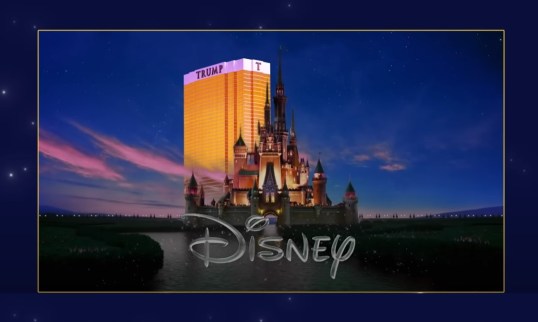
The latest example of this cowardice and reprehensible behavior is Bob Iger’s (CEO of Disney) capitulation to Trump. And this is one of the most damaging instances for the nation yet. ABC, a subsidiary of Disney Entertainment, canceled the show of comedian Jimmy Kimmel. They did this after Brendan Carr, chairman of the Federal Communications Commission (FCC) and Trump sycophant, threatened to pull ABC’s license after Kimmel made remarks about Charlie Kirk’s killer’s political leanings (“We hit some new lows over the weekend with the MAGA gang desperately trying to characterize this kid who murdered Charlie Kirk as anything other than one of them and doing everything they can to score political points from it.” ) and cracked a joke about Donald Trump’s ultra short grieving process.

The canceling of a comedian on orders of the regime is really the final nail in the coffin of America’s democracy. And one man is responsible for this atrocity. I am talking about you, Bob Iger.

Iger had a good reputation, but now – with one fell swoop – he has torched it. He will go down in history as a gigantic coward who gave up to the fascists and didn’t even try to stand up to them.

And he didn’t even have to comply. The FCC doesn’t even have the power to revoke ABC’s license over their content. And besides, Kimmel hadn’t even said anything that was over the line. Compare his remarks to Fox Media Host Brian Kilmeade, who in the same week said that homeless people in the United States should get a lethal injection. A remark that has probably led to the shooting at a homeless shelter soon after. But this guy works for Fox News, which is already in Trump’s pocket, so he can get away with anything.

Bob Iger presumably did it because he wants to make deals (mergers and acquisitions), and he needs the FCC’s approval for that. So it was a cold and calculated business decision, as though morals, rules, and common decency don’t count anymore.

The irony is that Disney is the company that delivers America’s democracy this deathblow. Disney, with its classic movies about good versus evil. Disney, which was a stern advocate for inclusion and diversity. Now we know what these values really mean to them: jack shit.

Earlier this year, Disney released the second and final season of the Star Wars show Andor, the ultimate series about how to stand up to tyranny. The answer is that it takes thousands of actions by thousands of different heroes to defeat an authoritarian regime. Did you even watch that show, Bob? Then you might have picked up lines like: “The Empire cannot win. You will never be right unless you’re doing what you can to stop them.”

I think Iger, and these other gutless business leaders, made the wrong decision. For several reasons. First of all, you should never ever capitulate to a fascist leader unless perhaps your family is at risk. Otherwise, it is even better to be thrown in jail than to capitulate. Because when you do that, you’re corrupting your soul and enabling evil by which you make life more difficult for millions of people.

Secondly, if your bottom line is all you care about, this will suffer as well. Not only is Disney getting boycotted, but also Trump is wrecking the US economy. You might think authoritarianism is good for business, but only look at Vladimir Putin’s Russia to see that this is not the case. All right, the oligarchs might do okay for a while, but when things go south, they tend to start flying out of windows fast.

Thirdly, you may think that Trump is for sale, and sometimes he is, but as soon as you meet the demands of a bully he will always come back for more. With Trump, we have seen this countless times. Eventually, he will take you for everything you’ve got.

In other words, you fucked it up, Iger. Why don’t you grow a pair and go on television and tell Brendan Carr to go fuck himself and that Disney supports freedom and will resist authoritarianism in every type, shape, or form? The people will love you for it, and your bottom line will grow. Yes, you will probably lose your job, but at least you will be remembered as somebody who used his prominent position to stand up to the fascists.

Same goes for all the other CEOs out there… Shame on you for remaining silent in this time of crisis.

To conclude, I’d like to share this hilarious video my countryman Lubach made about Disney’s pathetic capitulation:
It’s Official: The Acolyte is Disney’s First Real Star Wars Failure

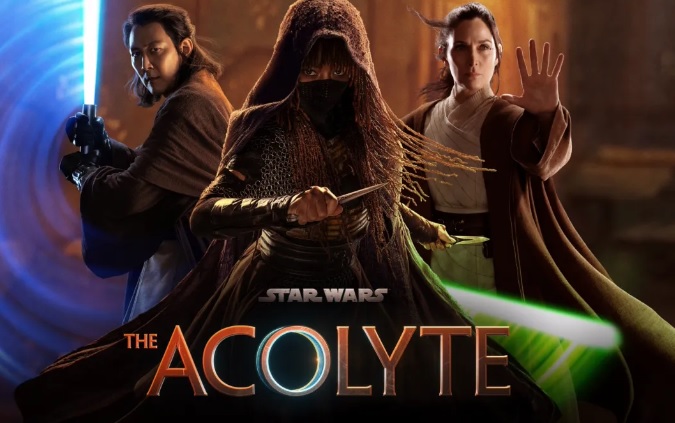
In recent years, Disney has released one Star Wars series after the other. Most were pretty good with especially The Mandalorian and Andor getting rave reviews. The latest is The Acolyte, of which the first two episodes were released on June 5 on Disney Plus.

If you ask the critics, the series is a successful addition to the SW universe. If you ask the fans you get quite a different view. At IMDb, the show is currently rated with a painful 3,4 and most of the 1.5 K user reviews are extremely negative. A sample of the comments: ‘Jar Jar Binks was a museum masterpiece next to this’, ‘this is laughably bad writing & direction’ and ‘the worst Star Wars project since the Holiday Special.’ Autch.

I am aware of the fact that Star Wars fans are notoriously difficult to please. Many of the prequels and sequels were also harshly criticized when they first came out, although since the Disney takeover of Lucas Film, the prequel films by George Lucas’ have risen somewhat in popularity again .

After viewing the first five episodes of The Acolyte, I have to say I am with the fans on this one though. Judging the series on the basis of plot, characters, acting, action and atmosphere, I find it to be a pretty terrible show. Yes, the fifth episode indeed contains some excellent lightsabre action, but because the writing is so weak, the showdowns lose almost all of their potential impact.

The Acolyte is the first series to venture outside of the Skywalker era. It takes place about a hundred years before the rise of the Empire in the peaceful High Republic era. The story revolves around a female force user who is killing off Jedi’s. Her twin sister is accused of the crime, but after her innocence is proven, she joins the Jedi in order to track down her sister and we learn of their family tragedy that caused her sister to crave for revenge. We also learn that she is guided by a dark master, whose appearance is very Sith-like.

The main point thematically, seems to be that the Jedi themselves can be an oppressive force, which in this case has resulted in the rise of evil. The problem is that the characters and their motivations are not one bit convincing. It is also problematic that this feels like another rise of the Sith story for which we have no need. Lucas has done this already in the prequels, and in my opinion he did a fine job, although certainly not flawless.

The show really gets embarrassing in episode 3 when the Witches are introduced: a new group of force users. The dialogues make George Lucas seem like a William Shakespeare. Things don’t improve in the following episodes. Were there no question marks with the producers when they read the scripts? What is it that convinced them to invest 180 million dollars (!) in this show? It’s mind boggling.

I am not gonna finish it after watching episode 5. It is now revealed who the bad guy is and frankly, I thought this was a terrible choice as well. I am not curious to find out what Sol is hiding nor do I care to find out how the relationship between the twin sisters is gonna develop. I am still interested in new Star Wars series by Disney, but The Acolyte is pretty much a disaster as far as I’m concerned. I can only hope that Disney will learn from this costly mistake.

The original ‘Let It Be’ documentary now on Disney Plus

‘I think the Beatles are crackin’, I said. You can’t beat ‘em, I said, they’re all out on their own. They’ve got a style of their own. And they… Well, it’s my opinion, I think they look — they’re a lovely crowd. They’ve got good, good quality, they sing well, and, well what else shall I say but they’re real good people.’
– Man on the street during the rooftop concert.

In 2022, Peter Jackson told the full story of the ‘Get Back’ sessions by the Beatles in 1969 and the eight hour film was met with positive critical appraisal. The original documentary ‘Let It Be’ by Michael Lindsay-Hogg was released at an unfortunate time in May 1970 when the Beatles had just broken up. Therefore the reception was pretty negative at the time.

It is time for a re-appraisal. For the first time in 50 years, the documentary can be seen again at Disney Plus. It is preceded by a conversation between Peter Jackson and Michael Lindsay-Hogg about this amazing project. Jackson notes that although the ‘Get Back’ sessions came to be known as the end of the Beatles, it was probably their most productive period. Not only did they write and compose all these terrific ‘Let It Be’ tracks, but also many of the songs that would end up on ‘Abbey Road’ later that year.

This was originally supposed to be a concert film with some of the studio stuff being more like a sort of introduction. But when the idea of a concert was dropped, Lindsay-Hogg didn’t quite know what to do with the footage. What he eventually did with it, is actually great. ‘Let It Be’ consists for the most part of the Beatles just jamming and trying to find the right approach for all these new songs they’re cooking up.

In the first part in the Twickenham Studio’s, there is some palpable tension within the group with Paul taking charge and correcting the others at times. There is also that famous exchange between Paul in George in which George tells him he’ll play whatever he wants him to play. The bit where George leaves the band is left out. When they move to the studio of Apple Corps and old friend Billy Preston joins the sessions, the atmosphere noticeably improves.

So while the ingredients of the eventual split are there, there is quite a bit of laughing and fooling around. That was how their creative process worked. Jackson’s ‘Get Back’ gives us more context and dialogue while ‘Let It Be’ is all about the music. And watching these guys playing passionately together is a real joy. It is great to see the songs we know so well emerging here.

When this was filmed, the boys hadn’t performed live in years, and they were noticeably unsure about how to pick it up again. They’re adrift as a band. But then the famous rooftop concert happens and they clearly find some footing again. They start out with the fantastic song Get Back, and then you realize that their original plan actually worked. At that point, the Beatles really were back!

THE OTHER FOUR BEATLES MOVIES

A Hard Day’s Night (1964)

The first Beatles movie is a documentary of sorts, shot in razor sharp black and white images, that follows the band in slightly fictionalized form as they travel by train to a studio to do a television performance. Sixty years after its release, it is still a delight to see. There is hardly any story, but it doesn’t matter because we get to spend time with the boys who are funny, charming and extremely musically gifted. The Lennon dominated soundtrack is absolutely fantastic. The film’s extensive use of handheld cameras and sped-up footage gives it a very energetic feel. It’s as if the camera crew had trouble keeping up with the boys, which is in fact the way it was. Director Richard Lester later admitted to using amphetamine during the shoot to get him through it. The mostly improvised shoot really captures the madness of the Beatlemania days and cemented the band members status as rock and roll legends.

Help! (1965)

The higher budgeted follow-up to A Hard Day’s Night revolves around an Eastern cult group who are looking for a sacrificial ring that is worn by none other than Ringo! (he got his stage name originally because of his love for rings). After several attempts to steal it back in London fail, Ringo becomes a target to be sacrificed to their god Kaili, so the boys flee to the Austrian Alps and later The Bahama’s. The comedy act by the Beatles was inspired by Duck Soup by The Marx brothers and the BBC Radio Comedy Programme ‘The Goon Show’ that they listened to in their teen years. The boys appear to be more distanced than in the preceding feature though. According to John that is because they were constantly stoned at the time of filming. Help! didn’t receive the same favorable reviews as their first film, but it is now credited with pioneering the music video.

Magical Mystery Tour (1967)

It has the reputation of being their worst film. Magical Mystery Tour is not really a film though, but a 55 minute television special. And it’s not that different from their preceding two screen efforts: It features the Beatles doing comedy (some jokes corny and some pretty funny) and performing songs from a terrific original soundtrack. Storywise, there isn’t much there. It’s about a busload of weird characters taking a journey through the English countryside. What’s most enjoyable about it are the psychedelic clips for great songs, including Magical Mystery Tour (obviously), The Fool on the Hill (a beauty), Flying (their only instrumental track), I Am the Walrus ( a highlight), Blue Jay Way (George’s misty thing) and Your Mother Should Know (Paul’s lovely granny music). It’s a bit of an unscripted mess with lots of silliness, but the same can be said of the Richard Lester films. And it does feature John serving a woman spaghetti with a shovel, so that is worth the price of admission.

Yellow Submarine (1968)

80.000 leagues beneath the sea is a happy place called Pepperland. Then the music-hating Blue Meanies arrive and freeze everybody and hide all instruments. Only Fred escapes in a yellow submarine which he takes straight to Liverpool to retrieve the four heroes known as the Beatles. This is the start of a series of psychedelic adventures as the crew pass through the Sea of Time, the Sea of Monsters, the Sea of Holes, Nowhere Land and eventually Pepperland. The Beatles did this film to complete the three picture deal they signed with United Artists. The voices are provided by actors and the Beatles only appear in a cameo appearance at the end. Like everything they touched, it became a pioneering work of pop art. Before Yellow Submarine, animation was considered a children’s medium, and this feature led to the art form being taken more seriously. Visually, it’s a stunning piece of work, and as opposed to their preceding films, it is well written with a truckload of references to Beatles lyrics. John Lennon said he thought this was the best Beatles film. I think he was right.

Light & Magic: The Making of Cinema Magic

Special effects have always been a huge part of movies. From King Kong (1933), to the Ray Harryhousen films with the brilliant stop-motion effects, to the stunning 2001: A Space Odyssey (1968). Movies offer viewers the chance to see things that cannot be seen any other way. The six-part Disney Plus documentary Light & Magic tells the story of Industrial Light & Magic (ILM) that played an enormous part in the evolution of visual effects in Hollywood movies. The company was founded by George Lucas when he was working on his first Star Wars movie in 1977. He visited every optical effects company in the industry, but found none that could deliver what he had in mind.

2001: A Space Odyssey had really pushed the boundaries in what could be achieved in visual effects, but the movie was slow. Lucas wanted to create speed and energy. He wanted to see dog flights in space. He met a special effects man called John Dykstra, who was part of a small community of special effects people. He hired him to set up the team of model makers, storyboard artists and camera and light people at the newly founded ILM.

The first two episodes show the extremely challenging process of getting the first Star Wars film made. Thousands of elements had to be combined into extremely complicated shots. There were many desperate moments, but the end result was amazing and audiences and industry experts were blown away. Nobody but the people at ILM could have done it back then. It inspired many directors to also push the envelope in special effects the following years and decades, like James Cameron: “I went home, and said to my wife; ‘I quit my job. You have to pay the bills for a while, cause I’m gonna make a film’.”

The third episode is about ILM’s challenge to create a worthy sequel: The Empire Strikes Back (1980). This classical space opera had even more complicated special effects to accomplish. Like always with sequels, the scale was much larger than the first movie. The team also got other assignments than Star Wars, namely Raiders of the Lost Ark (1981), Dragonslayer (1981) and ET: the Extra-Terrestrial (1982). Movies that were nominated for or won Academy Awards for their amazing visual effects.

Lucas also got interested in computers and he hired Ed Catmull to digitize processes. The computer team made the impressive terraforming sequence in Star Trek 2: The Wrath of Kahn (1982) and this can be seen as the beginning of computer generated effects in movies. This inspired Lucas and the ILM people to get into it. Catmull’s division (Pixar) was later sold to Steve Jobs and they turned it into a cartoon company.

The next major project was Return of the Jedi (1983), the most complex movie in terms of visual effects ever conceived. “It was not a fun movie to make”, says one of the team members. But the result surely was fun to watch. Each of the 900 visual effects shots was a triumph for the ILM team. It was followed up by a number of other eighties classics: Indiana Jones and the Temple of Doom (1984), The Goonies (1985) and Back to the Future (1985). Each new project had its own challenges, and the attitude at ILM always was: ‘let’s do something that’s never been done before.’

In episode 5 titled ‘Morphing’, the computer era is really about to take off. The first successful computer effect was the water creature in James Cameron’s The Abyss (1989). Now that film could be translated into pixels that could be manipulated, anything became possible. But the industry needed a proof of concept and the 90 seconds sequence in The Abyss was just that. But as always with new technology, there is resentment at first. They called digital ‘the dark side’. Digital wasn’t yet seen as the main thing, but as an addition to old school effects. The model shop remained the central place in ILM’s laboratory.

Then one day, James Cameron called and he wanted to do something way bigger than The Abyss. He pitched them: Terminator 2: Judgment Day (1991). A liquid metal man was a huge leap from a water snake. The team had only nine months to create the T-1000. They first had to capture actor Robert Patrick in data. They filmed his muscles and how he moved. Once they had him digital, they combined all special effects with the right lighting, so it all seems to be part of the same world. The end result was stunning. One ILM guy recalls the T-1000 walking through the bars in the mental institution; an impossible shot. This was truly groundbreaking stuff.

The following year, another major movie would truly signal the end of traditional special effects. They had planned to create the dinosaurs in Jurassic Park (1993) with advanced stop motion animation. Spielberg hired the best guys in the business. Stan Winston would design the creatures and Phil Tippett would animate them. He also hired Michael Lantieri, a practical effects genius and Dennis Muren, a visual effects wizard. The team had already built the dinosaurs, and Light & Magic gives us a few images of what the Velociraptors looked like with stop-motion. They’re certainly impressive, but since we are now used to digital effects, the unrealness becomes an issue. Once they did a successful test with a digital T-Rex running through a landscape everybody knew: visual effects will never be the same again. “I feel extinct”, said Tippett, and Spielberg used that line in the movie.

So 1993 was the year of the big breakthrough of digital effects, and they would be used for many successful movies in the nineties, like The Mask (1994), Forrest Gump (1994), Jumanji (1995) and Star Wars Episode I: The Phantom Menace (1999). The documentary series ends with the final innovation that the visionary George Lucas had anticipated all along. The tv-series The Mandalorian (2019) is shot entirely in a round set called ‘The Volume’. This is ILM’s replacement for the green-screen. It uses a massive, curved LED screen to create photorealistic backdrops, circumventing the need for outdoor locations or extensive physical sets. Due to this innovation, The Mandalorian is able to deliver Star Wars effects on a tv-schedule and budget. ILM, which had started with a group of creative designers in a warehouse at Van Nuys, is still pushing the boundaries in creating cinema magic today, now also for the small screen.