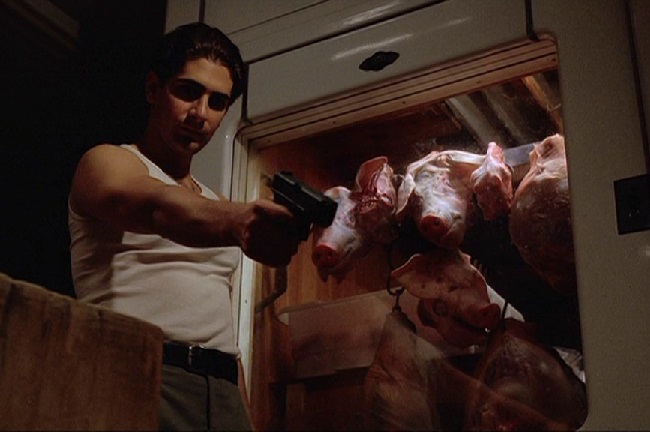
20 years ago the pilot of The Sopranos aired: the beginning of a total classic and still my all time favorite tv show. It was followed by many greats, such as The Wire, Mad Men, Breaking Bad, Game of Thrones and Westworld. What was that first episode about that started it all? Looking back at the beginning of a golden era of television.
Episode 1: Pilot
Directed by: David Chase
Written by: David Chase
Regular Cast
James Gandolfini … Tony Soprano
Lorraine Bracco … Dr. Jennifer Melfi
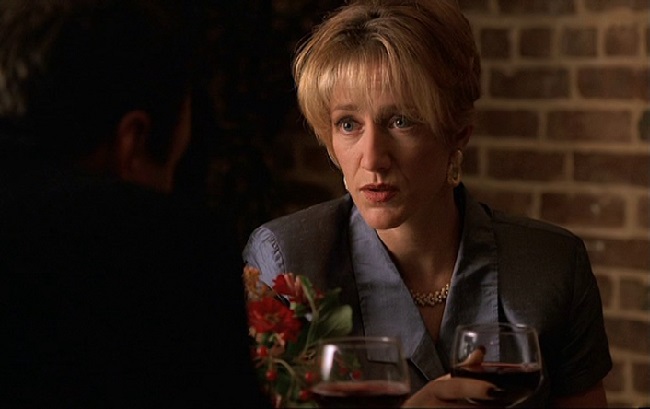
Edie Falco … Carmela soprano
Michael Imperioli … Christopher Moltisanti
Dominic Chianese … Corrado ‘Junior’ Soprano
Vincent Pastore … Salvatore ‘Big Pussy’ Bonpensiero
Steven Van Zandt … Silvio Dante
Tony Sirico … Paulie ‘Walnuts’ Gualtieri
Robert Iler … Anthony ‘A.J.’ Soprano
Jamie-Lynn Sigler … Meadow Soprano
Nancy Marchand … Livia Soprano
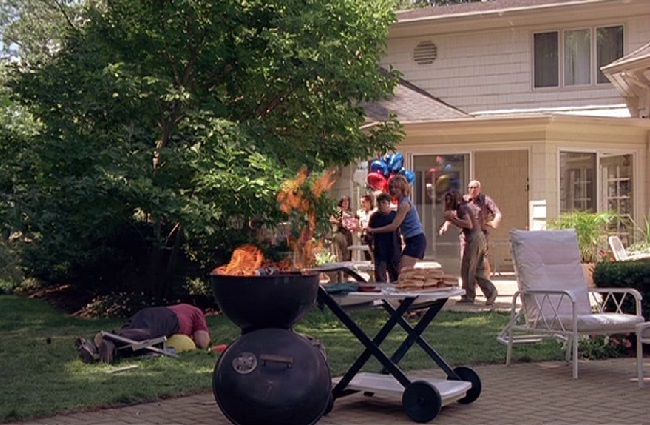
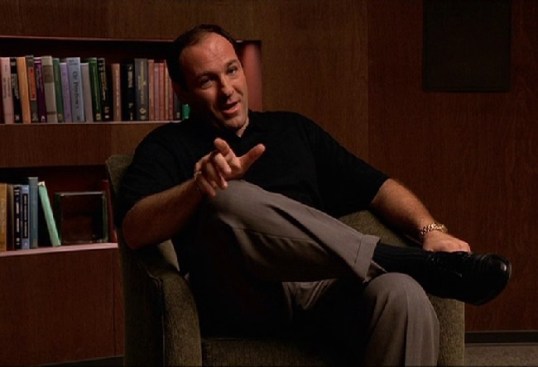
This is it. The first installment of a milestone in television history. Tony Soprano, family man and captain for the New Jersey Mafia, sits in the waiting room for his first therapy session with Dr. Jennifer Melfi. The session is a result of an anxiety-attack Tony had at his son’s A.J.’s birthday party.
Off course because of being a made man and all, it is only natural that Tony is at first reluctant to talk to Dr. Melfi. Tony feels that the whole world is seeing a shrink and he wonders what happened to the strong, silent type, like Gary Cooper. “He wasn’t in touch with his feelings. He just did what had to be done”, Tony tells the slightly intrigued Dr. Melfi.
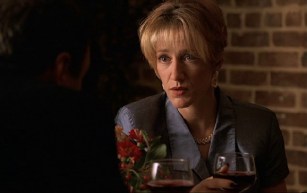
After a while Tony starts to talk. About a family of ducks no less. These ducks landed in Tony’s swimming pool a couple of months earlier and seem to be influencing his moods. Then, Tony starts to talk about his own family. His uncle Junior, also a Jersey Mob captain who in Tony’s words adds to his general stress level. His nephew Christopher, a kid who just bought a 60.000 dollar Lexus and who’s “learning the business”. His wife Carmela, jealous at Tony’s goomars (girlfriends) and having problems getting along with their daughter Meadow.
At work Tony also faces problems. His uncle Junior is planning to whack Little Pussy Malanga (often confused with Tony’s associate Sal ‘Big Pussy’ Bonpensiero). The hit is to take place in a restaurant owned by Tony’s old neighborhood buddy Artie Bucco. Tony wants the hit to take place somewhere else or Artie will lose business. So he sends his associate Silvio Dante to go and blow the place up. And Artie can collect the insurance money. In the meantime there are problems in Tony’s waste management business. The Czechoslovakian Emil Kolar is moving in on one of Tony’s garbage stops so he has to be dealt with. The ambitious Christopher is more than willing to whack Emil in the hope that Tony can open up the books, and Christopher can finally become a made guy.
Could these problems be the reasons for Tony’s attacks or is there more to it than just stress? What for example has been the role of Tony’s borderline mother Livia? This will prove a challenge for Dr. Melfi to find out if she and Tony decide to continue the treatment. One resolution is made already however. When Tony’s ducks fly away his depression kicks in and he is put on Prozac. He also dreams that one of the ducks takes off with his penis which indicates his fear for losing his family (and the beginning of a period of impotence).
This introduction in the Soprano world is absolutely terrific. We are thrown into this entrancing, twisted, funny, mysterious and often violent world where ‘good guys’ are virtually non-existent. Even most woman in the series are often portrait as materialistic and hypocrite. There are many things to phrase this first pilot episode for, the magnificent cast, the casual and sometimes off-putting violence, the humor, the brilliant dialogues, the inspired soundtrack, the beautiful realism of Tony’s therapy sessions, the fantastic film references and the mystery by which it totally engages it’s audience. This first episode creates a thousand promises to come.
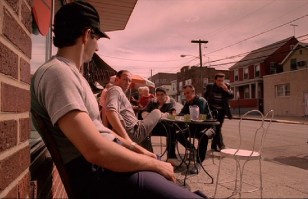

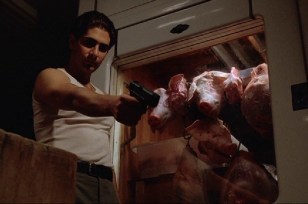
Gangster movie references in episode 1
Reference to The Godfather
(Dialogue)
CHRISTOPHER: Louis Brasi sleeps with the fishes.
BIG PUSSY: Luca! Luca Brasi
CHRISTOPHER: Whatever…
BIG PUSSY: There’s differences Christopher. From the Luca Brasi situation and this.
Reference to The Godfather Trilogy and GoodFellas
(Dialogue)
FATHER PHIL: Darn, these laser discs are incredible!
CARMELA: Tony watches Godfather II all the time. He says the camerawork looks just as good as in the movie theatre.
FATHER PHIL: Gordon Willis. Tony prefers II not I?
CARMELA: Yeah, he likes the part where Vito goes back to Sicily. With III he was like ‘What happened’?
FATHER PHIL: Where does Tony rank GoodFellas?
(Someone knocks on door)
Reference to GoodFellas
(Dialogue)
CHRISTPHER: You know my cousin Gregory’s girlfriend is what they call a development girl out in Hollywood, right? She said I could sell my life story. Make fucking millions. I didn’t do that. I stuck it out with you.
TONY(Grabs him): I’ll fucking kill you. What are you gonna do go Henry Hill* on me now?
* Henry Hill is a famous wiseguy who joined the Witness Protection Programme and gave up many of his former associates. His life story is told in the novel Wiseguy by Nicolas Pileggi on which the movie GoodFellas is based.
Dialogues in episode 1
TONY: A couple month before, these two ducks landed in my pool. It was amazing. They’re from Canada or some place and it was mating season. They had some ducklings.
LIVIA: And don’t start with the nursing home business again.
TONY: It’s not a nursing home! How many times have I got to say this. It’s a retirement community!
TONY: Hey all I’m saying is no marriage is perfect.
CARMELA: Well having that goomar on the side helps.
TONY: I told you I’m not seeing her anymore. How do you think I feel with having that priest around all the time?
CARMELA: Don’t even go there alright. Father is a spiritual mentor. He’s making me a better Catholic!
TONY: Yeah well we all got different needs.
CARMELA: What’s different between you and me is you’re going to hell when you die!
HESH: So ehh…I hear that junior wants to whack Pussy Bompensiero?
TONY: Pussy Malanga.
HESH: Oh Little Pussy.
TONY: Yeah Little Pussy. What? You think he’s gonna fuck with Big Pussy? My Pussy?