The James Bond Features

- Bond Intro
In anticipation of SPECTRE, FilmDungeon.com editor Jeppe Kleijngeld lists his favourite things about the James Bond series in 12 unique features. Enjoy!

10 Best Pre-Credit Sequences
James Bond: 10 Best Pre-Credit Scenes
10 Best Credit Sequences
James Bond: 10 Best Title Sequences

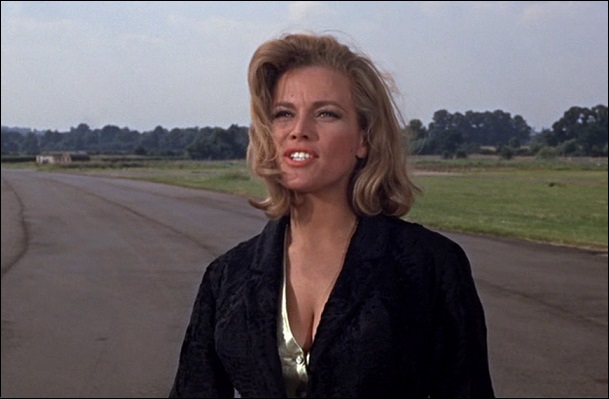
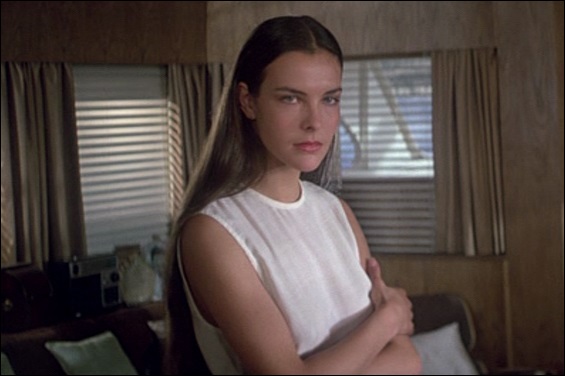
10 Best Bond Girls
James Bond: 10 Finest Bond Girls

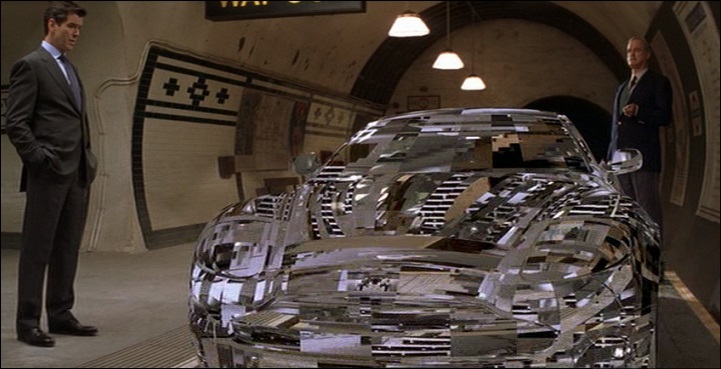
Top 10 Vehicles
James Bond: Top 10 Vehicles

10 Greatest Henchmen
James Bond: 10 Greatest Henchmen

10 Greatest Villains
James Bond: 10 Greatest Villains

10 Greatest Licensed Kills
James Bond: 10 Greatest Licensed Kills

10 Most Memorable Deaths
James Bond: 10 Most Memorable Deaths (Caused by Bond’s Adversaries)

Top 20 Action Sequences
James Bond: Top 20 Action Sequences

Top 10 Gadgets
James Bond: Top 10 Gadgets

The James Bond Films Rated From Worst To Best (24-11)

The James Bond Films Rated From Worst To Best (Top 10)

Het momentum van de jaren 70′

‘Maybe it’s the most important thing happening in the whole universe’

Ach ja, de seventies: het mooiste tijdperk waarin ik nooit geleefd heb. ‘Taking Woodstock’ (2009 – 40 jaar na Woodstock) brengt je er naar toe.

De Taiwanese regisseur Ang Lee (‘Crouching Tiger, Hidden Dragon’ / ‘Brokeback Mountain’ / ‘Life of Pi’) kan geen kwaad bij me doen. Alhoewel ‘The Hulk’ was………..

‘Taking Woodstock’ is alleen een aanrader voor een bepaald type freak. Voor iemand die in deze tijd bij de hippies had willen horen, maar niet helemaal. Voor een observator, een commentator, maar wel iemand die liefdevol is. En iemand die een hekel heeft aan het ‘establishment’, maar geen cynicus. Zo iemand dus.

De film gaat over een jongen – Elliot – die in het Amerikaanse gehucht El Monaco een motel runt met zijn ouders. De bank dreigt de boel te sluiten, maar door Elliot’s toedoen wordt het grootste festival aller tijden in de buurt georganiseerd: Woodstock, drie dagen vrede en muziek. Dat levert de familie de nodige cashflow op.

Het mooie van de film is de anticipatie. Er staat iets groots te gebeuren, het belangrijkste hippiefestival aller tijden. We zien het arriveren van duizenden hippies, die allemaal voelen: dit is het moment. Nu gaat het gebeuren… Liefde. En mooie, erotische, opwindende, magistrale, vreemde, magische, monumentale, en soms angstaanjagende momenten. Zulke anticipatie – als je het meemaakt – is goud. En de jaren 70′ zat er vol mee.

Binnenin het gebeuren plaatst Lee de dynamiek van een kleine familie, want Elliot moet ontglippen aan de grip van zijn dominante moeder. En familie dynamiek in Lee’s specialisme. Het neerzetten van een tijdsbeeld ook. En hoe pakt Lee het tot leven brengen van historische rockartiesten aan, zoals Jimi Hendrix, Janis Joplin en The Grateful Dead die op het festival hun opwachting maakten? Dat doet hij niet. Zoals een hippie het zegt; ‘je kunt toch niet zien wie op het podium staat’. En dat zal zo geweest zijn. Ach, wat ik zal zei; het gaat om de anticipatie.

Ja, de jaren 70’s was fantastisch: er waren idealen. Er was ook horror, neem de oorlog in Vietnam, maar er was een beweging gaande.

De hippies hadden uiteindelijk ook niet de antwoorden en de beweging stierf een tragische dood. Er is helaas niet iets blijvends ontstaan door Woodstock. Het zijn gewoon een half miljoen hippies geweest die uit hun plaat zijn gegaan op drugs. Ze hebben de wereld niet kunnen verbroederen. Maar daar waren ze wel mee bezig, en dat lijkt me een mooi iets om mee bezig te zijn. Stuur mij maar die kant op als de tijdmachine een feit is.

‘Wat gaat er nu gebeuren?’ vraagt Elliot aan één van de organisatoren van het festival. ‘Een nieuw festival in San Francisco’, antwoord hij. ‘Nog mooier dan dit festival.’ En dat is misschien wel een mooie metafoor voor de hele hippiebeweging. Ze hadden niet de antwoorden, maar hielden wel de mindset van vrede en liefde levend. En misschien bestaat die nog steeds wel. Ik voel de anticipatie al… Is het nog mogelijk anno 2015?

Woodstock 1

Woodstock 2

Woodstock 3

Woodstock 4

Woodstock 5

Woodstock 6

Woodstock 7

Woodstock 8

Woodstock 9

Woodstock 10

Woodstock 11

De volgende stap in de evolutie van de mens

Tijdens mijn vakantie bezocht ik met Loesje en Rosa de Veluwe, maar in mijn geest reisde ik stukken verder: naar Jupiter en daar voorbij.

Het begon met een bezoek aan de Apenheul waar mijn oog viel op deze poster:

Er staat op: ‘De aarde is een unieke planeet. Het is de enige planeet met miljoenen vormen van leven. Er is nog nooit een planeet gevonden waar de omstandigheden precies goed zijn voor zulk leven. Ergens oneindig ver weg in het heelal bestaat misschien nog wel zo’n planeet, maar daar zullen wij mensen nooit kunnen komen.’

Wat een kortzichtige, stellige, ongeïnspireerde en onware boodschap! Het klopt helemaal niet dat de aarde uniek is, en dat er misschien nog wel ergens zo’n planeet bestaat. Ja, de omstandigheden voor leven zijn op aarde bizar gunstig, maar het universum is zo onmetelijk en onvoorstelbaar groot, dat de kans zeer groot is dat er nog duizenden – misschien wel miljoenen – planeten zoals de aarde bestaan.

De laatste zin – daar zullen mensen nooit kunnen komen – is storend in zijn stelligheid. Het doet me denken aan de stelling van Dr. Lee DeForest (televisie en radio pionier) in 1957 dat de mens nooit de maan zou bereiken. Twee jaar later wisten de Russen al het ruimtevoertuig Luna 2 succesvol op de maan te landen. Tien jaar daarna volgen de eerste mensen.

Nu is het bereiken van planeten lichtjaren weg – in tegenstelling tot de maan – een bijna onvoorstelbaar lastige opgave. Ik schreef al eerder over de drie randvoorwaarden die daar voor in ieder geval opgelost moeten worden:
1. Ruimteschepen bemand met robots die de schepen kunnen besturen en door de ruimte kunnen navigeren en enorme afstanden kunnen afleggen, onderweg stoppend langs planeten om water en zuurstof uit de grond te onttrekken.
2. Deze schepen moeten uitgerust zijn met hyperslaapkabines zoals in de film ‘Alien’. Dit is de enige manier om zulke afstanden te overbruggen, want een ruimtereis naar een geschikte planeet kan wel honderden tot duizenden jaren duren.
3. Een systeem waarmee de astronauten de atmosfeer van de gevonden planeet geschikt kunnen maken voor overleving, dus de juiste verhouding zuurstof, stikstof en koolstofdioxide

Dit alles lijkt zeer uitdagend, maar niet onmogelijk voor het toekomstige, zeer geavanceerde menselijke ras.

Maar, later gedurende de vakantie, liet regisseur Stanley Kubrick me, middels een herkijk van zijn science fiction meesterwerk ‘2001: A Space Oddysey’, het licht zien. In deze klassieker vinden mensapen, en later hedendaagse mensen, een mysterieuze monolith. Dit is een machine die duidelijk door aliens op aarde en op de Maan en bij Jupiter geplaatst zijn. De openhaard is ons vakantiehuisje leek overigens wel wat op zo’n monolith:

Dit superieure alien ras heeft dus de afstand naar een ander zonnestelsel succesvol weten af te leggen. Wat de monolith precies is, en wat de bedoeling van de aliens is geweest, wordt in de film niet duidelijk gemaakt. De aliens zijn ook niet fysiek te zien en daarvoor staat op Wikipedia de volgende verklaring:

Astronomer Carl Sagan wrote in his book ‘The Cosmic Connection’ that Clarke and Kubrick asked his opinion on how to best depict extraterrestrial intelligence. Sagan, while acknowledging Kubrick’s desire to use actors to portray humanoid aliens for convenience’s sake, argued that alien life forms were unlikely to bear any resemblance to terrestrial life, and that to do so would introduce ‘at least an element of falseness’ to the film. Sagan proposed that the film suggest, rather than depict, extraterrestrial superintelligence. He attended the premiere and was ‘pleased to see that I had been of some help.’ Kubrick hinted at the nature of the mysterious unseen alien race in 2001 by suggesting, in a 1968 interview, that given millions of years of evolution, they progressed from biological beings to ‘immortal machine entities’, and then into ‘beings of pure energy and spirit’; beings with ‘limitless capabilities and ungraspable intelligence’.

Wow wow wow!!!! Dat is toch de gaafste opmerking ooit gemaakt over de aard van buitenaards leven? Het is daarnaast ook een directe visie op de volgende fase van de evolutie van de mens, namelijk van biologische wezens naar onsterfelijke machine eenheden. In deze tijden van digitale transformatie lijkt deze stap – die zowel verwondering als angst oproept – verre van onmogelijk. Hoe lang duurt het voor we allemaal ‘in de cloud zitten?’ Gezien het exponentiele karakter van de veranderingen die nu plaatvinden zou dit antwoord bizar dichtbij kunnen liggen: 20 jaar, 40 jaar, 100 jaar?

We gaan andere bewoonbare planeten dus niet bereiken als biologische wezens, maar als machines. En voor machines zijn afstand en tijd irrelevant. En de eerder geschetste randvoorwaarden ook trouwens. Machines hebben geen voedsel en zuurstof nodig. Zelfs de hele motivatie voor het vinden van een andere bewoonbare planeet verandert hierdoor. Net als in ‘2001: A Space Oddysey’ zou een nieuwe motivatie kunnen zijn het verder helpen van een beschaving die nog aan het begin van de evolutie staat. En zo zijn mensen geen mensen meer, maar goden. ‘2001: A Space Oddysey’ is daarmee een blik in het verleden en in de toekomst van het menselijk ras tegelijkertijd.

The Story of Film: Time Traveling For the Cinemad

It had to be done someday; making a literal odyssey through the history of cinema and documenting it into a film. The traveller is Mark Cousins. The film is a 15 hour documentary called ‘The Story of Film’. Through cinematic innovation, the story of film is told, from the silent era to the multimillion dollar digital age, covering all continents, major cinematic hallmarks and most talented people in cinema.

The Story of Film 1

The beginning
In 1885 George Eastman of Kodak came up with the idea of film on a role. Then Edison figured that if you spin the images in a box you get the illusion of movement. Lumiere went on to invent the film projector and with that: Cinema! It is not difficult to imagine the excitement of those first screenings. When cinemas started appearing everywhere, it enabled people – who did not travel back then – to see other countries. Not just places, but other worlds. Like what the position of woman was in other countries.

After the invention came the content. And despite of what many believe, it is not the money men that drive cinema. They can’t. Because what you need is the visual ideas, and a clear understanding of what is in people’s hearts. It is psychology that became the driving force of film if anything.

Cousins continues to show us the birth of basic cinema language and techniques that are now common, such as editing, the close up, tracking shots and flashbacks. The road trip then takes us further to the places and the people that brought life to this sublime art form.

1910s
In this period a lot was happening in Scandinavia. Maybe it was the Northern Light, Cousins comments. Or the sense of destiny and mortality in Scandinavian literature that made Danish and Swedish movies more graceful and honest. In 1906 the first feature film was shot in Australia: ‘The Story of the Kelly Gang’. The first feature film in Hollywood was ‘The Squaw Man’ (1914). In 1911 the first movie studio was build. Another interesting thing about this period was that a lot of women were working in Hollywood writing and directing, such as Lois Weber and Alice Guy. They did not always get the credits though.

1920s
In Hollywood, cinema became big business in this period (and a men’s world as well). The 1920s saw the birth of an industry in Hollywood. But the studio system did not get in the film, according to Stanley Donen (director ‘Singing in the Rain’). There were also rebels that emerged – like Orson Welles – that tried to break the bubble. In Europe, cinema developed also. Thematically, the city was often the Big Evil. Think for example ‘Metropolis’ and ‘Sunrise: A Song of Two Humans’. In Japan it was as if the Japanese filmmakers tried to compensate for the massacres their country caused by making very humanistic films. In 1921, the first great Japanese movie was made: ‘Souls on the Road’.

1930s
A lot of innovations were introduced in the 1930s like sound and the use of two camera’s with overhead lighting. From Hollywood came horror movies like ‘Frankenstein’ which borrowed heavily from Germany (Der Golem). And the first gangster pictures appeared, which is an original American genre. The cartoon also arrived and was a very successful new genre. Mickey Mouse was a smash hit and in 1937 came the even more successful ‘Snow White and the Seven Dwarfs’. In Britain, the legendary Alfred Hitchcock started working. He understood the basic human emotion ‘fear’ like no other, and his films are still extremely influential to this day.

1940s
The war years meant less glory, and more gloomy films. In Italy we witnessed the birth of neo realism. The sensational ‘The Bicycle Thieves’ (1939) is a movie that best illustrates this style. In 1941 came ‘Citizen Kane’ – a film that is still often considered by many as one of the greatest movies of all time. It used deep staging so audiences could choose where to look. This was previously used in films like ‘Gone With the Wind’ (1939) and ‘Stagecoach’ (1939), which Welles said to have seen 39 times. A dark genre arrived in Hollywood, called Film Noir. These films, such as ‘Double Indemnity’ usually had characters with flaws that drove them towards their faith, even while they tried to avoid it. The decade ended as depressing as it began with a massive communist hunt in Hollywood: the studios had to fire the (alleged) lefties. This is still a major trauma in Hollywood.

1950s
In America in the fifties, we had the suburban, Christian society. But under the surface there was anger, frustration and tension. Classic films like ‘On the Waterfront’ (1954) and ‘Rebel Without a Cause’ (1955) best illustrate this. In Europe four legendary directors led the way in changing cinema. They were Jacques Tati, Robert Bresson, Ingmar Bergman and Federico Fellini, and they made films more personal and self aware than they had ever been. The era ended with the new wave to which French director Jean-Luc Godard belonged and in Italy Pier Paolo Pasolini. The later used religious music for everyday struggles. He felt consumerism was taking over.

The Story of Film 2

1960s
Sergio Leone made his first ‘spaghetti western’ (Italian made Western) and introduced deep focus, which was made possible by the Italian cinematic invention technoscope in 1960. This gives Leone’s movies an epic feel to them. Thematically, Leone was inspired by Japanese Master Akira Kurosawa (lone gunman / lone samurai). Filmmaking went global in the sixties. In Eastern Europe, directors like Roman Polanski and Milos Forman started their careers. In the Soviet Union, one of the greatest directors ever started working: Andrei Tarkovsky, who knew how to create remarkable imagery. According to Tarkovsky: ‘Imagery contains an awareness of the infinite.’ Late sixties, film schools were popping up all around the USA and a new generation was on its way.

1970s
After the realism in movies in the sixties, the seventies saw a return of old fashioned, romantic and entertaining cinema – and of the box office smash hits, think ‘Star Wars’, ‘The Exorcist’ and ‘Jaws’. ‘The Godfather’ was the return of an old Hollywood genre: the gangster film. New kids were fighting to open up new form, most notably Martin Scorsese with ‘Taxi Driver’ and ‘Mean Streets’. When people think of the seventies, they think about Spielberg, Lucas, Coppola and Scorsese. But there was more. In i.a. Britain and Italy, identity was a major theme. In Germany, Rainer Werner Fassbinder (woman in closed places) and Wim Wenders (men in open spaces) had their glory years. And Werner Herzog the explorer went across the world. He was not so much interested in the feminism or Americana of his contemporaries, but in prime evil life. After John Ford, he is the most important landscape filmer in the history of film. The 70’s also saw the arrival of Asian mainstream, epic films from India (‘Sholay’) and a lot of cinematic activity in Africa.

1980s
After the magnificent seventies came the not-so-great eighties. ‘Protest’ is the central theme of this decade. The 5th generation in China – Chen Kaige and Zhang Yimou – made interesting movies. From Russia came one of the greatest war movies: ‘Come and See’. In America, ‘Top Gun’ was a smash hit, and many movies were influenced by music video’s, like ‘Flashdance’. In France, filmmakers got more into popular culture, which was a protest in itself. Notable directors that moved up in the film world were David Lynch (with ‘Blue Velvet’) and David Cronenberg in Canada with ‘Videodrome’, a prophetic vision of the modern world in which the real and the televisual are dangerously confused.

1990s
Described by Cousins as the last days of celluloid, before the coming of digital. And directors like Wong Kar Wai and Hou Hsiao-hsien used celluloid devotedly. The 90s saw passionate films about other worlds (‘The Matrix’), but also an obsession about reality, for example in the work of Iranian director Abbas Kiarostami who tried to eliminate all dolly’s and clapperboards from the set. From Japan came horror movies about the fear for technology, like ‘Tetsuo’ about a man blending with metal. In Copenhagen, filmmakers returned to primitive filmmaking with Dogma, while Hollywood saw the increasing use of digital effects (‘Terminator 2’ / ‘Gladiator’ / ‘Jurassic Park’). Not only what was in the camera changed, what happened in front of the camera changed as well. Modern became post-modern: The idea that there are no new truths and everything is recycled. Tarantino made this his trade, but respected established directors, like Scorsese, used it as well.

2000s
Documentaries – like ‘Fahrenheit 9/11’ – did as well as blockbusters and blockbusters tried to be like documentaries. Innovative movies were made in the USA. Like ‘Requiem For a Dream’: The great distortion movie. The subconscious got at work in ‘Mulholland Drive’. And in Thailand: ‘Tropical Malady’, a film that changes from simplistic tale of friendship to the mythical story of the hunter and the hunted. The film reincarnates like its main character. Another innovative example is ‘Russian Ark’, which consists of one 90 minute long take showing Aristocrats walking downstairs in a massive palace towards the slaughter.

And the future of cinema? Who knows. Perhaps one day we can share dreams like in ‘Inception’. One thing is for sure: Whatever form it may take, the art of cinema is here to stay and deserves to be celebrated likes this.

Icon 29 - Movie Camera


- Aanbevolen Divider

Top 10 intro (credit sequences) van TV-series

https://jkleyngeld.wordpress.com/2011/09/07/

5 elementen van een krachtig verhaal

10 management lessons from highly successful gangsters

5 Reasons ‘Scarface’ Rarely Makes it to Critics’ Favorite Lists