The Sopranos Ending Explained: Tony is not Definitively Dead, but his Future Looks Bleak

10 June 2007, 10 years ago today, the legendary finale of the legendary HBO-show ‘The Sopranos’ was aired. It became perhaps the most discussed moment in television-history…

I remember the day after when everybody was confused as hell about it (or just pissed off). Creator David Chase said he hadn’t intended to be coy, he just wanted to entertain his audience. That may be so, but what was the audience to make of the ambiguous ending in which protagonist Tony Soprano – after having his arch enemy Phil Leotardo killed – visits an American diner with his family to have onion rings? A suspicious looking man sits at the bar and goes to the bathroom later. And Tony tells his wife Carmella that one of his crew members, Carlo, will testify against him. That’s basically it. Then the screen suddenly goes black while on the jukebox, the song ‘Don’t Stop Believing’ by Journey is still playing. At ‘don’t stop’, it stops.

For those who need a reminder, it’s right here:

One theory that quickly appeared was that the suspicious man shot Tony when exiting the bathroom and that the moment this happened, the camera switched to Tony’s point of view, indicating his death with the black screen. Others claimed that the ‘hints’ for Tony’s suggested death didn’t mean anything, and that the show ‘just ended’.

These two opinions lead to furious debate on the International Movie Database that went on for nearly ten years, until IMDb shut down the message board early 2017.

In this article I will explain what really happened, what David Chase meant (and didn’t mean), and how we are to interpret certain clues. But in advance: both of the theories stated above are wrong. Chase has said so himself. Obviously there were clues for Tony’s death – it’s ridiculous and insulting to Chase to state the show simply ended. But he didn’t intend for the viewer to interpret these clues as Tony’s definitive death either… Here’s why…

‘There are only two endings for a high profile guy like me, dead or in the can, big percent of the time.’
– Tony Soprano in ‘For All Debts Public and Private’ (SE4, EP1)

In retrospect, this quote already told us how the show would end. Except it wasn’t one or the other. Rather, Tony Soprano got both. The New Jersey mob boss ended up like physicist Schrödinger’s cat, both dead and alive at the same time.

Why did he get both endings? Well, there are certainly clues that a hitman is after Tony in the final scene. I won’t go into great detail about this, but the most important clues are several instances of foreshadowing during the final season, most notably his brother-in-law Bobby Bacala telling Tony: ‘you probably don’t even hear it when it happens’ and New York mobster Gerry Torciano being murdered in a restaurant and Silvio not realizing it till blood splattered in his face. The way the final scene is shot – moving in and out Tony’s point of view – could mean a bullet entered his brain the moment the screen goes black.

But murder is certainly not the only option, as there is also the threat of indictment. as one of Tony’s associates, Carlo, has flipped and is about to spill his guts to the FBI. That means that besides the option of Tony getting whacked, he could be indicted. I refer once again to the quote above.

Dead or in the can… Wasn’t it Carmela who – earlier during the final season – feared these two options like a piano hanging over their heads? It was also Carmela who asked Tony in the episode ‘Sopranos Home Movies’ (during the opening scène of the final season, that should not be overlooked): ‘Is this it?’, referring to the FBI ringing the doorbell.

David Chase has said about the ending: ‘There was nothing definite about what happened, but there was a clean trend on view – a definite sense of what Tony and Carmela’s future looks like. Whether it happened that night or some other night doesn’t really matter.’

It is interesting that Chase uses the word ‘it’. This could refer to Tony’s death, but it might as well be referring to Tony’s arrest. Both options would have a significant impact on Tony and Carmela’s (lack of) future. That is the explanation for the ending right there. There is a sense of impending doom, but by the time the screen goes black, nothing has happened yet, unless a bullet has entered Tony’s brain at that point, ending his life immediately. And there are certainly reasons to think that, but it remains only one out of several bleak options for Tony’s future.

The ending is just simply showing us how Tony’s life is at this point. What has the show been about in the first place? In simple terms: a mobster in therapy. The ending shows us that Tony has made his choices. He had the opportunity to change his ways, but didn’t. So the consequences are his and are very likely going to be severe, like the monks told him in his coma dream in the episode ‘Join the Club’. A very significant scene earlier in the season was a conversation Tony had with Little Carmine Lupertazzi in which Lupertazzi (who was generally considered an idiot in mob circles) told Tony he had quit the gangster life in order to spend more time with his family in peace and happiness. If only Tony had made the same decision he could have perhaps avoided the only two endings of the mob life. Now it’s definitely too late.

That is the point the final scene makes. Death could come knocking at any time and for any reason. An indictment could come at any time as well. With Carlo in the hands of the feds, it is only a matter of time before they come for Tony….

We have witnessed the life of Tony for eight years. We have seen him steal, scheme, cheat and murder. He also reaped the benefits of his criminal life: woman, luxury, respect, money. But off course a price has to be paid. The mobster’s life is destructive, as we have seen many times during the series…

Most of Tony’s mob friends, who lived the same type of life, are now dead or in the can (but mostly dead) or in a coma. For Tony, who was always a little luckier and smarter, the consequences come a little later. David Chase didn’t want to show that crime doesn’t pay, but he also didn’t want to show that crime does pay. The ending gives us exactly that; a mosaic of possibilities, limited down to the overall negative. Logical consequences of a life in crime, but nowhere moralistic. The ending in that sense is crystal clear, but to explain it would be to diminish it. And that’s what Chase meant with: ‘there is no mystery’ and ‘I’m not trying to be coy’.

The major point is to not look at the ending as storytelling, but more in terms of the overall themes that the show was covering. David Chase has said he was inspired by ‘2001: A Space Odyssey’ in creating the final scene. What did Kubrick say about that ending? “They are the areas I prefer not to discuss because they are highly subjective and will differ from viewer to viewer. In this sense, the film becomes anything the viewer sees in it. If the film stirs the emotions and penetrates the subconscious of the viewer, if it stimulates, however inchoately, his mythological and religious yearnings and impulses, then it has succeeded.”

This 2001-influence was very palpable. For example when Tony enters the restaurant, he looks at a seat and then suddenly… he is sitting there without having crossed the space in between! That is quantum-weirdness going on… Chase is telling us: this is an experience, not straightforward storytelling. Chase has also said many times that he was inspired by David Lynch in making ‘The Sopranos’. Nobody ever claimed to fully understand a David Lynch film. They are moving paintings. There are always possible interpretations, but never convey one definite meaning or truth.

Chase is making a philosophical statement about the nature of life and death rather than showing death itself. It often arrives suddenly and you’re not necessarily ready or prepared. In the case of a Mafia member it is even worse. Murders usually happen from behind, so that makes for a shitty death experience. Ironically, sudden death came for James Gandolfini, one of the greatest actors ever who made Tony Soprano such an unforgettable character.

But it doesn’t have to be a murder that ends the mobster, there is prison too. What is the point of mentioning Carlo if the scene is only about the supposed hit on Tony? Another consequence of the life of the mobster is that you can get busted at any moment, and since a made member has certainly committed crimes that can get him into prison for life (like Johnny Sack who died in prison earlier this season), he is constantly facing the end. Tony and Carmella both knew this. What a way to live…

And since death comes suddenly, it is important to enjoy the good times with your family, exactly like A.J. reminds his father to do. David Chase has confirmed the above open interpretation in an interview with The Directors Guild of America. He states:

“I thought the possibility would go through a lot of people’s minds or maybe everybody’s mind that he was killed … Whether this is the end here, or not, it’s going to come at some point for the rest of us. Hopefully we’re not going to get shot by some rival gang mob or anything like that. I’m not saying that [happened]. But obviously he stood more of a chance of getting shot by a rival gang mob than you or I do because he put himself in that situation. All I know is the end is coming for all of us.”

He continues: “The biggest feeling I was going for, honestly, was don’t stop believing. It was very simple and much more on the nose than people think. That’s what I wanted people to believe. That life ends and death comes, but don’t stop believing. There are attachments we make in life, even though it’s all going to come to an end, that are worth so much, and we’re so lucky to have been able to experience them. Life is short. Either it ends here for Tony or some other time. But in spite of that, it’s really worth it. So don’t stop believing.”

Conclusion
This is the end. It might not be the epic conclusion some were hoping for, but it’s a unique scene nevertheless. Chase makes an almost cosmic experience out of something ordinary like eating onion rings in an American diner. Like he said, there is nothing definite about what happened, but we do get a clean trend on view on what Tony and Carmela’s future looks like. ‘The Sopranos’ was never the show to tie up everything neatly anyway. In that sense, there is quite a lot of closure in the final season. Therefore, the ending is as fitting an ending as it can be with loads of stuff to analyze for the fans even 10 years later. Salute.

Stanley Kubrick’s Favorite Movie

By David Lynch
Catching the Big Fish
(Jeremy P. Tarcher/Penguin, 2006)

KUBRICK

Stanley Kubrick is one of my all-time favorite filmmakers, and he did me a great honor early in my career that really encouraged me. I was working on The Elephant Man, and I was at Lee International Studio’s in England, standing in a hallway. One of the producers of The Elephant Man, Jonathan Sanger, brought over some guys who were working with George Lucas and said, “They’ve got a story for you.” And I said, “Okay.”

They said, “Yesterday, David, we were out at Elstree Studio’s, and we met Kubrick. And as we were talking to him, he said to us, ‘How would you fellas like to come up to my house tonight and see my favorite film?’” They said, “That would be fantastic.” They went up, and Stanley Kubrick showed them Eraserhead. So, right then, I could have passed away peaceful and happy.

I like all of Kubrick’s films, but my favorite may be Lolita. I just like the world. I like the characters. I love the performances. James Mason is phenomenal beyond the beyond in this film.

ERASERHEAD

Eraserhead is my most spiritual movie. No one understands when I say that, but it is. Eraserhead was growing in a certain way, and I didn’t know what it meant. I was looking for a key to unlock what these sequences were saying. Of course, I understood some of it; but I didn’t know the thing that just pulled it all together. And it was a struggle. So I got out my Bible and I started reading. And one day, I read a sentence. And I closed the Bible, because that was it; that was it. And then I saw the thing as a whole. And it fulfilled this vision for me, 100 percent. I don’t think I’ll ever say what that sentence was.

Read the review of ‘Eraserhead’ by Peter Sobczynski

5 Must See TV-shows Before You Die

In this age of distraction a.k.a. entertainment, a lack of time is always a factor. There are way too many great TV-shows out there to see them all, so which ones should you pick? Many are great to watch, but which ones are truly essential and epic? I assassinated my darlings and wrote down the absolute best. Before you die, you should definitely see these shows in their entirety. I calculated this will take you about 13.263 minutes of your life (or 221 hours). Trust me, it is worth every second.

1. The Sopranos
5 TV Shows - The Sopranos
The greatest drama series of all time about a small Mafia family in modern New Jersey. While ‘The Godfather’ shows the highest level of the mob hierarchy, and ‘GoodFellas’ shows us the everyday life of street level wiseguys, ‘The Sopranos’ has the psyche of the mobster as a central theme. Brilliantly complex, layered and beyond entertaining, ‘The Sopranos’ is the best thing to ever hit the small screen. With writing and a cast you can only dream off, led by the now legendary James Gandolfini, may he rest in peace.

2. Breaking Bad
5 TV Shows - Breaking Bad
A chemistry teacher with lung cancer steadily transforms into a crystal meth kingpin… and ruthless murderer. This philosophically charged odyssey through the dark corners of the human mind is an unforgettably tense and emotional rollercoaster ride. One of the rare series that is consistently brilliant throughout its running time. Absolutely unmissable.

3. I, Claudius
5 TV Shows - I, Claudius Snake
BBC-adaptation of Robert Graves novels’ about the reign of four Roman emperors: the mighty Augustus, the bloodthirsty Tiberius, the insane Caligula, and finally the wise Claudius who lived through all periods and serves as the navigator/protagonist of the mini-series. ‘I, Claudius’ is dialogue heavy and is almost completely filmed in the studio, but… the dialogues and acting are to kill for. Watching ‘I, Claudius’ is like having front row tickets for the greatest theatre in the world. Every minute you are longing for more and can’t wait to find out what will happen next. An immortal classic.

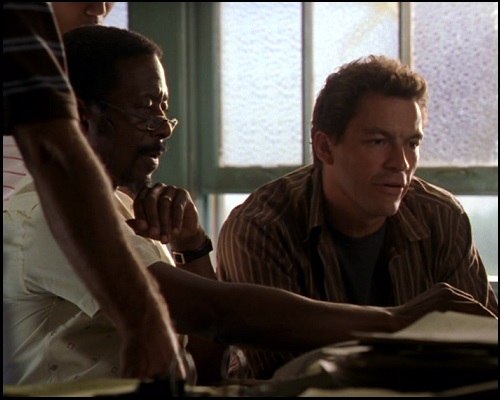
4. The Wire
5 TV Shows - The Wire
The major problems of an American city (Baltimore) experienced through all corners of society: drug dealers, police, politicians, school staff, high school kids, junkies, dock workers and media men. David Simon’s reinvention of the cop genre is a prime example of superior storytelling that – despite of all the street legends – always feel authentic and above all… human. It’s all in the game, yo.

5. Twin Peaks
5 TV Shows - Twin Peaks
David Lynch, in collaboration with writer/producer Mark Frost, captured the imagination of audiences worldwide with one of the most legendary television series to emerge in the nineties: ‘Twin Peaks’. What starts as a slightly offbeat whodunit, evolves into a complex and superbly intriguing mystery thriller. ‘Who murdered the high school beauty queen Laura Palmer?’, is the original premise. But with all sorts of supernatural stuff going on, new and bigger questions arise, such as: ‘what is the Black Lodge?’. The plot in ‘Twin Peaks’ often takes a backseat to just let the many bizarre characters interact with each other. The show often feels like a platform for all the crazy ideas that Lynch, Frost and other collaborators could come up with.

What makes the final result so great is the seamless integration of genres. With delicious black humour and countless fantasy elements such as dwarves, giants, aliens and demons, the viewer will get hooked in no time. It is constantly absorbing, even during long stretches in which basically nothing significant happens. ‘Twin Peaks’ is an endlessly fascinating show that took dramatic television into an entirely new realm.

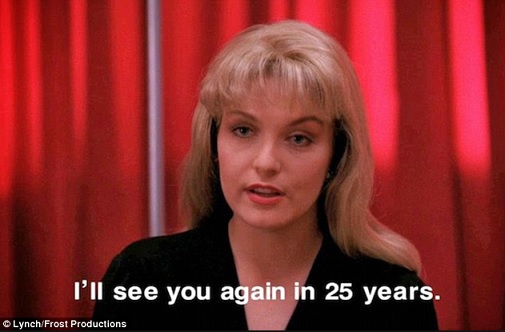
And good news for the fans. In 1991 when the show aired, Laura Palmer made a creepy prediction:

5 TV Shows - Twin Peaks 2

So that means that in 2016? Yes, it does. ‘Twin Peaks’ will return.

The Story of Film: Time Traveling For the Cinemad

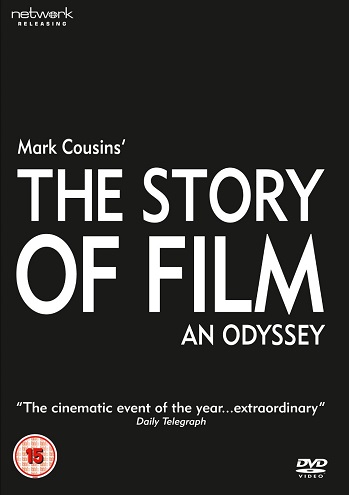
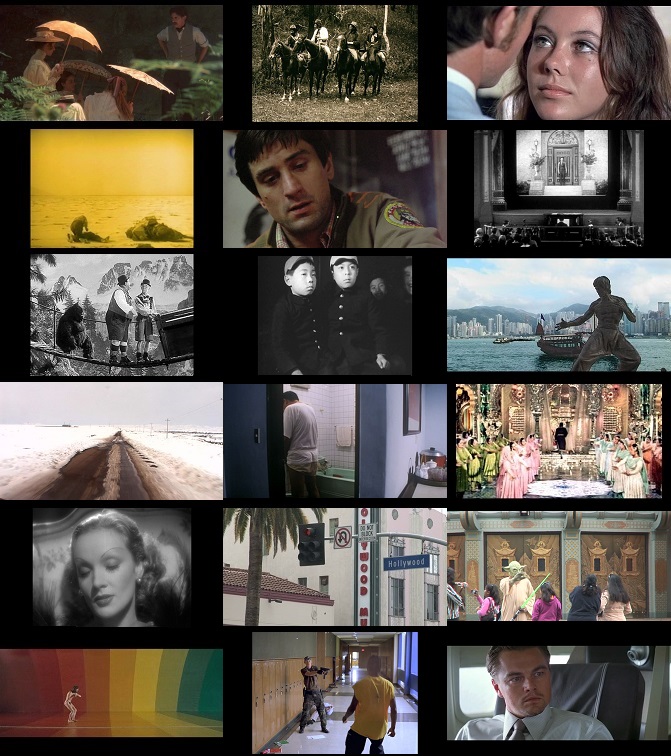
It had to be done someday; making a literal odyssey through the history of cinema and documenting it into a film. The traveller is Mark Cousins. The film is a 15 hour documentary called ‘The Story of Film’. Through cinematic innovation, the story of film is told, from the silent era to the multimillion dollar digital age, covering all continents, major cinematic hallmarks and most talented people in cinema.

The Story of Film 1

The beginning
In 1885 George Eastman of Kodak came up with the idea of film on a role. Then Edison figured that if you spin the images in a box you get the illusion of movement. Lumiere went on to invent the film projector and with that: Cinema! It is not difficult to imagine the excitement of those first screenings. When cinemas started appearing everywhere, it enabled people – who did not travel back then – to see other countries. Not just places, but other worlds. Like what the position of woman was in other countries.

After the invention came the content. And despite of what many believe, it is not the money men that drive cinema. They can’t. Because what you need is the visual ideas, and a clear understanding of what is in people’s hearts. It is psychology that became the driving force of film if anything.

Cousins continues to show us the birth of basic cinema language and techniques that are now common, such as editing, the close up, tracking shots and flashbacks. The road trip then takes us further to the places and the people that brought life to this sublime art form.

1910s
In this period a lot was happening in Scandinavia. Maybe it was the Northern Light, Cousins comments. Or the sense of destiny and mortality in Scandinavian literature that made Danish and Swedish movies more graceful and honest. In 1906 the first feature film was shot in Australia: ‘The Story of the Kelly Gang’. The first feature film in Hollywood was ‘The Squaw Man’ (1914). In 1911 the first movie studio was build. Another interesting thing about this period was that a lot of women were working in Hollywood writing and directing, such as Lois Weber and Alice Guy. They did not always get the credits though.

1920s
In Hollywood, cinema became big business in this period (and a men’s world as well). The 1920s saw the birth of an industry in Hollywood. But the studio system did not get in the film, according to Stanley Donen (director ‘Singing in the Rain’). There were also rebels that emerged – like Orson Welles – that tried to break the bubble. In Europe, cinema developed also. Thematically, the city was often the Big Evil. Think for example ‘Metropolis’ and ‘Sunrise: A Song of Two Humans’. In Japan it was as if the Japanese filmmakers tried to compensate for the massacres their country caused by making very humanistic films. In 1921, the first great Japanese movie was made: ‘Souls on the Road’.

1930s
A lot of innovations were introduced in the 1930s like sound and the use of two camera’s with overhead lighting. From Hollywood came horror movies like ‘Frankenstein’ which borrowed heavily from Germany (Der Golem). And the first gangster pictures appeared, which is an original American genre. The cartoon also arrived and was a very successful new genre. Mickey Mouse was a smash hit and in 1937 came the even more successful ‘Snow White and the Seven Dwarfs’. In Britain, the legendary Alfred Hitchcock started working. He understood the basic human emotion ‘fear’ like no other, and his films are still extremely influential to this day.

1940s
The war years meant less glory, and more gloomy films. In Italy we witnessed the birth of neo realism. The sensational ‘The Bicycle Thieves’ (1939) is a movie that best illustrates this style. In 1941 came ‘Citizen Kane’ – a film that is still often considered by many as one of the greatest movies of all time. It used deep staging so audiences could choose where to look. This was previously used in films like ‘Gone With the Wind’ (1939) and ‘Stagecoach’ (1939), which Welles said to have seen 39 times. A dark genre arrived in Hollywood, called Film Noir. These films, such as ‘Double Indemnity’ usually had characters with flaws that drove them towards their faith, even while they tried to avoid it. The decade ended as depressing as it began with a massive communist hunt in Hollywood: the studios had to fire the (alleged) lefties. This is still a major trauma in Hollywood.

1950s
In America in the fifties, we had the suburban, Christian society. But under the surface there was anger, frustration and tension. Classic films like ‘On the Waterfront’ (1954) and ‘Rebel Without a Cause’ (1955) best illustrate this. In Europe four legendary directors led the way in changing cinema. They were Jacques Tati, Robert Bresson, Ingmar Bergman and Federico Fellini, and they made films more personal and self aware than they had ever been. The era ended with the new wave to which French director Jean-Luc Godard belonged and in Italy Pier Paolo Pasolini. The later used religious music for everyday struggles. He felt consumerism was taking over.

The Story of Film 2

1960s
Sergio Leone made his first ‘spaghetti western’ (Italian made Western) and introduced deep focus, which was made possible by the Italian cinematic invention technoscope in 1960. This gives Leone’s movies an epic feel to them. Thematically, Leone was inspired by Japanese Master Akira Kurosawa (lone gunman / lone samurai). Filmmaking went global in the sixties. In Eastern Europe, directors like Roman Polanski and Milos Forman started their careers. In the Soviet Union, one of the greatest directors ever started working: Andrei Tarkovsky, who knew how to create remarkable imagery. According to Tarkovsky: ‘Imagery contains an awareness of the infinite.’ Late sixties, film schools were popping up all around the USA and a new generation was on its way.

1970s
After the realism in movies in the sixties, the seventies saw a return of old fashioned, romantic and entertaining cinema – and of the box office smash hits, think ‘Star Wars’, ‘The Exorcist’ and ‘Jaws’. ‘The Godfather’ was the return of an old Hollywood genre: the gangster film. New kids were fighting to open up new form, most notably Martin Scorsese with ‘Taxi Driver’ and ‘Mean Streets’. When people think of the seventies, they think about Spielberg, Lucas, Coppola and Scorsese. But there was more. In i.a. Britain and Italy, identity was a major theme. In Germany, Rainer Werner Fassbinder (woman in closed places) and Wim Wenders (men in open spaces) had their glory years. And Werner Herzog the explorer went across the world. He was not so much interested in the feminism or Americana of his contemporaries, but in prime evil life. After John Ford, he is the most important landscape filmer in the history of film. The 70’s also saw the arrival of Asian mainstream, epic films from India (‘Sholay’) and a lot of cinematic activity in Africa.

1980s
After the magnificent seventies came the not-so-great eighties. ‘Protest’ is the central theme of this decade. The 5th generation in China – Chen Kaige and Zhang Yimou – made interesting movies. From Russia came one of the greatest war movies: ‘Come and See’. In America, ‘Top Gun’ was a smash hit, and many movies were influenced by music video’s, like ‘Flashdance’. In France, filmmakers got more into popular culture, which was a protest in itself. Notable directors that moved up in the film world were David Lynch (with ‘Blue Velvet’) and David Cronenberg in Canada with ‘Videodrome’, a prophetic vision of the modern world in which the real and the televisual are dangerously confused.

1990s
Described by Cousins as the last days of celluloid, before the coming of digital. And directors like Wong Kar Wai and Hou Hsiao-hsien used celluloid devotedly. The 90s saw passionate films about other worlds (‘The Matrix’), but also an obsession about reality, for example in the work of Iranian director Abbas Kiarostami who tried to eliminate all dolly’s and clapperboards from the set. From Japan came horror movies about the fear for technology, like ‘Tetsuo’ about a man blending with metal. In Copenhagen, filmmakers returned to primitive filmmaking with Dogma, while Hollywood saw the increasing use of digital effects (‘Terminator 2’ / ‘Gladiator’ / ‘Jurassic Park’). Not only what was in the camera changed, what happened in front of the camera changed as well. Modern became post-modern: The idea that there are no new truths and everything is recycled. Tarantino made this his trade, but respected established directors, like Scorsese, used it as well.

2000s
Documentaries – like ‘Fahrenheit 9/11’ – did as well as blockbusters and blockbusters tried to be like documentaries. Innovative movies were made in the USA. Like ‘Requiem For a Dream’: The great distortion movie. The subconscious got at work in ‘Mulholland Drive’. And in Thailand: ‘Tropical Malady’, a film that changes from simplistic tale of friendship to the mythical story of the hunter and the hunted. The film reincarnates like its main character. Another innovative example is ‘Russian Ark’, which consists of one 90 minute long take showing Aristocrats walking downstairs in a massive palace towards the slaughter.

And the future of cinema? Who knows. Perhaps one day we can share dreams like in ‘Inception’. One thing is for sure: Whatever form it may take, the art of cinema is here to stay and deserves to be celebrated likes this.

Icon 29 - Movie Camera


- Aanbevolen Divider

Top 10 intro (credit sequences) van TV-series

https://jkleyngeld.wordpress.com/2011/09/07/

5 elementen van een krachtig verhaal

10 management lessons from highly successful gangsters

5 Reasons ‘Scarface’ Rarely Makes it to Critics’ Favorite Lists