The Doorway (1): LSD

“A fraction of a milligram and everything changes. A molecule that alters your consciousness. An unforgettable experience.”

On April 16, 1943, Swiss chemist Albert Hofmann, working at the Sandoz laboratory in Basel, accidentally ingested a small dose of LSD. Suddenly, he felt as if he were in another world. Fear gripped him: he worried he might never return to his wife and child, and panic set in. But later, the fear gave way to a positive wave. Afterwards, Hofmann felt he had crossed to the other side and returned.

Hofmann had been searching for a medicine to improve circulation. His work led him to ergot, a fungus that grows on rye and related plants. From this he synthesized LSD (lysergic acid diethylamide), a substance chemically related to psilocybin, the psychedelic compound found in magic mushrooms. At first, Hofmann did not know what had caused his extraordinary experience, but he soon realized it must have been the compound he had created.

At Sandoz, researchers recognized LSD’s potential value for psychiatric research. Samples were sent to Stanislav Grof, a Czech-born American psychiatrist and consciousness researcher. This marked the beginning of Grof’s decades-long exploration of non-ordinary states of consciousness.

Grof saw LSD as a catalyst. It does not create these experiences, he argued, but makes them accessible. “In that sense”, he said, “LSD is comparable to what a microscope is for biology or a telescope for astronomy. We don’t think the microscope creates worlds that are not there, but we cannot study these worlds without the tool.”

During the Cold War, the CIA became interested in LSD as a possible truth serum. The problem was that they were seeking predictable outcomes and LSD does not work that way. It was also considered as a potential weapon to incapacitate the enemy.

So how does LSD work? Our consciousness is the sum total of everything our senses perceive. LSD amplifies these senses dramatically. Psychedelic sessions can take people further than years of psychoanalysis.

In a positive experience, users may feel the ego dissolve, boundaries melt away, and control loosen. This can be deeply pleasant. Space and time lose their meaning; experience flows freely until one becomes pure experience itself.

In the 1960s, the psychedelic revolution erupted. The Merry Pranksters, led by Ken Kesey – author of ‘One Flew Over the Cuckoo’s Nest’ – embraced LSD and drove a brightly painted bus across America, inviting people to experience it for themselves.

In Millbrook, an abandoned estate in New York, psychiatrist Timothy Leary and Ralph Metzner established a psychedelic research center where anyone could participate. LSD was seen as a great equalizer. No matter one’s social background, the experience could dissolve hierarchy and expand cosmic understanding.

“We teach people to turn on, go out of their minds, and tune in”, Leary said. “The country is an insane asylum, focused on material possession, war, and racism.” His ambition was nothing less than a spiritual revolution, achieved by millions of people using LSD regularly.

Hofmann strongly objected to this approach. LSD, he warned, was a powerful instrument that required a mature mind. Promoting it indiscriminately to young people was irresponsible.

LSD often triggered strong anti-war sentiments, rooted in transpersonal experiences of unity with nature and all living beings. This directly challenged conservative values. In the United States, amid the escalating Vietnam War, tensions between the counterculture and the establishment grew. LSD became a convenient scapegoat for social unrest, and the government launched an aggressive – and often absurd – propaganda campaign.

In 1966, LSD was outlawed in California. In 1967, President Nixon declared Timothy Leary “the most dangerous man in America.” Grof later remarked, “In the irresponsible hands of Leary, it came to be seen as dangerous and that killed nearly all possibilities for research.”

Some clinical work continued for a while. Grof conducted LSD sessions with terminal cancer patients, profoundly altering their relationship with death. Many became reconciled with the fact that they were dying. “In our culture”, Grof said, “we are programmed to think we are only our bodies. LSD can show you that you are part of something much larger.”

Soon, however, LSD was internationally demonized. Research disappeared underground and remained there for decades.

Albert Hofmann died on April 29, 2008, at the age of 102. He never denied LSD’s risks, but he also believed its greatest danger lay in misunderstanding it. For Hofmann, LSD was not an escape from reality but a doorway… A doorway that, if approached with care, could reveal how vast and mysterious consciousness truly is.
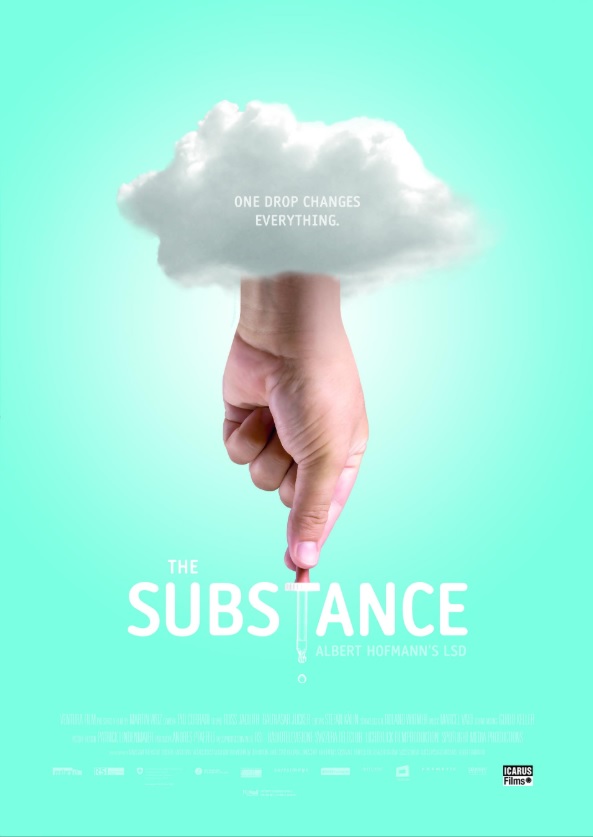
The documentary ‘The Substance: Albert Hofmann’s LSD’ is available for rent on the Apple TV app.

Waarom 1971 ongemerkt een historisch jaar blijkt te zijn

In 1971 verscheen mijn favoriete boek aller tijden; ‘Fear and Loathing in Las Vegas’ door Hunter S. Thompson (oorspronkelijk in twee delen gepubliceerd in Rolling Stone Magazine). Maar het jaar was ook economisch zeer significant te noemen; het was het jaar waarin president Nixon (Thompson’s zelfbenoemde aartsvijand) de dollar loskoppelde van de goudstandaard. En dit heeft veel grotere gevolgen gehad dan de meeste mensen zich realiseren.

In zijn boek ‘Keerpunt 1971’, beschrijft econoom Edin Mujagiƈ deze gevolgen. Volgens de econoom heeft het besluit van de Nixon administratie geleid tot eeuwige inflatie, zombiebedrijven, populisme en een middenklasse die er niet langer op vooruit gaat. De enorme geldschepping van de centrale en commerciële banken heeft geleid tot een gigantische schuldenberg en een steeds lagere waarde van onze valuta.

De architect van de Amerikaanse ontkoppeling, Paul Volcker, zei geen spijt te hebben gehad van zijn voorstel destijds. De situatie zoals die was, was volgens hem niet houdbaar. Maar hij was wel ontevreden met het onverantwoordelijke gedrag van de centrale bankiers sindsdien. De geschiedenis leert ons dat wanneer machthebbers geld kunnen scheppen, ze dit vroeg of laat zullen doen als er economische problemen zijn. In de crisissen van 2008 en 2020 zijn er inderdaad astronomische bedragen gecreëerd.

Volgens Mujagiƈ zitten we nu in de laatste fase van een tijdperk, een tijdperk dat begon in 1971. Vroeg of laat zullen de wereldleiders een nieuw systeem moeten ontwerpen dat – in tegenstelling tot het huidige systeem – regels heeft. Toch is de econoom optimistisch. De economie beweegt in grote cyclische golven. En na de grote neergaande golf waar we nu middenin zitten, komt er weer een opgaande golf van nieuwe economische groei. En dankzij de ontwikkeling van een grote verzameling nieuwe technologieën belooft de volgende golf spectaculair te worden met veel vooruitgang voor de mensheid. Maar voor we dit beloofde land kunnen bereiken moet er dus nog wat gebeuren om het kapitalisme te herstellen.

Daarbij is het vooral cruciaal dat het mechanisme van creatieve vernietiging vrij zijn werk kan doen. Crony capitalism, met zijn kenmerken als lobby en invloed van grote bedrijven op de politiek staat daar haaks op. Er moeten volgens Mujagiƈ tenminste drie dingen gebeuren als we het kapitalisme weer willen laten functioneren zoals het hoort:

1) Monopolies en oligopolies moeten worden aangepakt aangezien de aanwezigheid daarvan de economische groei afremt. Hier is een machtige mededingingsautoriteit voor nodig.

2) Het economisch model ‘groei door schuld’ moet verleden tijd zijn en de macht van de centrale banken moet drastisch worden ingeperkt. Misschien moeten ze zelfs wel opgeheven worden, aangezien blijkt dat er meer nadelen dan voordelen aan kleven.

3) Het streven naar aanhoudende inflatie moet van tafel, de markt moet meer ruimte krijgen om prijzen te bepalen, ook, of beter juist, als dat voor deflatie zou zorgen, omdat dalende prijzen dé aanjagers waren van stijgende welvaart na de eerste industriële revoluties.

Overheden hebben sinds 1971 veel te veel ingegrepen in de economie. Dat moet stoppen, behalve op het gebied van klimaatverandering. Dat is een externaliteit die de vrije markt niet gaat oplossen. De vierde industriële revolutie die aanstaande is biedt de kans op een nieuwe welvaarts- en welzijnstijging voor de mensheid, maar alleen als de in 1971 gemaakte weeffout in het geldsysteem hersteld wordt. Volgens Mujagiƈ is dit proces reeds ingezet en – zich baserend op soortgelijke perioden uit het verleden – is hij optimistisch over een positieve uitkomst.

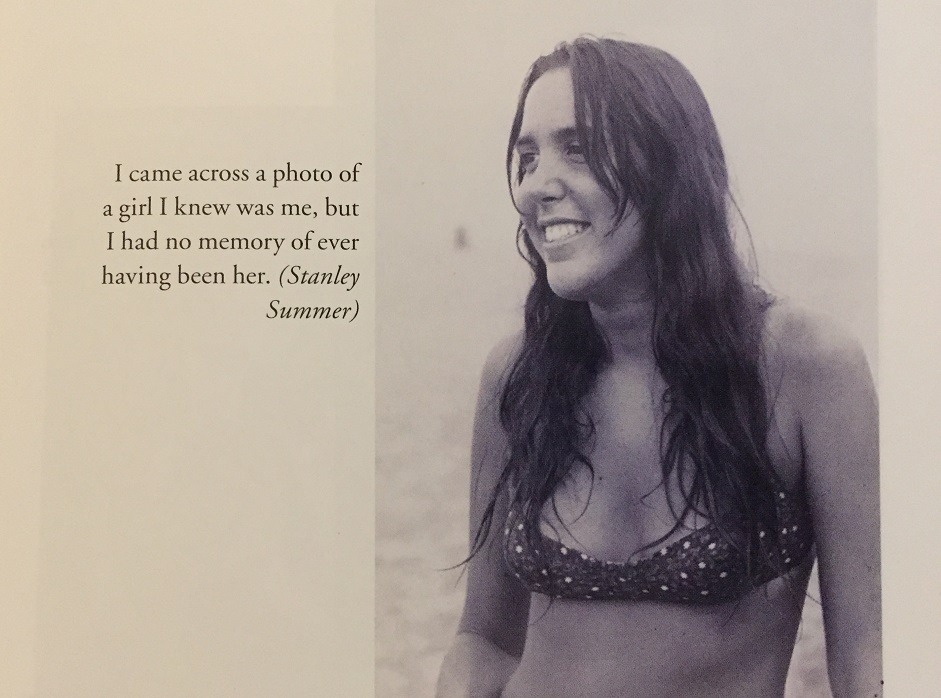
Robin Green, rock-‘n-roll schrijver…

De naam Robin Green kende ik wel van The Sopranos. Samen met haar echtgenoot Mitchell Burgess schreef ze 17 afleveringen van de beste serie ooit. Nu hoorde ik op de podcast Talking Sopranos dat ze in de jaren ‘70 schreef voor Rolling Stone Magazine samen met o.a. Gonzo-journalist Hunter S. Thompson. Haar ervaringen uit die tijd staan beschreven in haar memoir ‘The Only Girl’. The Sopranos en Hunter S. Thompson? Dat is een boek voor mij.

En het viel niet tegen. Op 26 jarige leeftijd kwam Green op de Masthead van Rolling Stone te staan, als eerste vrouw. Het was in 1971, het jaar waarin Hunter S. Thompson’s Fear and Loathing in Las Vegas in twee delen in het magazine werd gepubliceerd, mijn favoriete boek aller tijden. Green hierover: ‘Hunter had been sent to Las Vegas to cover a motorcycle race, and when the magazine – ‘aggressively’ according to Hunter, rejected the pages – that story resulted in ‘Fear and Loathing in Las Vegas: A Savage Journey to the Heart of the American Dream’, published in two parts. The first as Hunter had written it, the second derived largely from taped hours of Hunter and Oscar Acosta’s muttering and raving, tapes that landed on the desk of newly hired Sarah Larin to be transcribed’.

En nog meer over Hunter: ‘His writing seemed like a new form as close to rock itself as writing gets. Unrestrained and Unrepressed, wild and reckless and high as a fucking kite. Hunter had found the perfect venue in Rolling Stone. Neither a glossy magazine with a two month lead time nor a newspaper with its limited space and linguistic leeway.’

Green, die altijd schrijver wilde worden, maakte haar debuut bij Rolling Stone met een verhaal over Marvel waar ze als secretaresse van Stan Lee had gewerkt. Ze kreeg 5 cent per woord wat haar 500 dollar opleverde, veel geld in die tijd. Nog belangrijker: ze werd vaste bijdrager aan Rolling Stone en het artikel werd haar eerste cover story. Later schreef ze een onthullend verhaal over Dennis Hopper, waarna haar naam als eerste vrouw aan de masthead van Rolling Stone werd toegevoegd. Haar Hopper-stuk werd in 1992 opgenomen in Movieline’s overzicht van de ‘Ten Interviews That Shook Hollywood’.

Het was een goede tijd voor de journalistiek. Zoals bekend van Hunter S. Thompson’s escapades betaalde het magazine alle onkosten, en dus waren Green en collega’s niemand iets verschuldigd. Ze konden niet makkelijk omgekocht worden door de PR-industrie en schreven wat ze wilden.

En het was een tijd waarin vrouwen voor hun rechten opkwamen. Green: ‘In this world, the world of rock and roll, men ran the show. They were the rock stars. The journalists and editors were men too. Even before that, in college, it was guys who’d been the ones to grab the microphones at sit-ins and demonstrations. A chick’s mandate: to be by their sides at the revolution, looking hip. Women were seeking equality. Hair under the armpits and getting sweaty. Have sex with everybody. Not out of promiscuity, but for freedom. There were no consequences yet. AIDS would not arrive until the 1980’s.’

De tegencultuur waar ze onderdeel van werd wordt tegenwoordig misschien gezien als nogal puberaal, tegendraads gedrag, maar Green brengt hier tegenin dat er ook een hoop was om boos over te zijn in die jaren: Vietnam, Kennedy’s dood (twee keer), Nixon, Malcolm X, Martin Luther King… En niet te vergeten: de tragische dood van Jim, Janis en Jimi.

Na een periode van zo’n vijf jaar kwam er een einde aan haar carrière bij Rolling Stone. Ze had een verhaal geschreven over de kinderen van Bobby Kennedy, maar vond dat ze een journalistieke grens had overschreden door met Robert Kennedy Jr. naar bed te gaan. Hoofdredacteur Jann Wenner eiste het verhaal wat zij weigerde. Toen liet hij haar naam van de masthead verwijderen.

Jaren later na vele omzwervingen werd Green televisie-schrijver. Grappig dat ze bij The Sopranos terecht kwam, de eerste echte rock-‘n-roll sterren van de televisie. Ook bij dit andere culturele fenomeen was Green de enige vrouwelijke schrijver. Het laatste deel van het boek gaat over deze periode van haar leven en vond ik verreweg het interessantste. Over hoe ze David Chase ontmoette, het genie achter The Sopranos, en samen met haar man Mitchell in het schrijversteam terecht kwam. Over hoe ze haar eigen jeugdervaringen in de scripts verwerkte en over hoe de serie een fenomeen werd. En uiteindelijk, hoe Chase haar ontsloeg in het laatste seizoen omdat ze ‘de show niet zou begrijpen’. Het had iets met zijn moeder te maken, vermoed Green. Toch is er een happy ending voor de schrijver die nu in de zeventig is. Samen met haar man ontwikkelde ze de serie Blue Bloods, die nu al aan het twaalfde seizoen toe is.

Tegenover elk succesverhaal dat je leest staan vele verhalen over mislukking. In ‘The Only Girl’ is dat het verhaal van Robin’s jeugdvriendin Ronnie die keer op keer in een psychiatrisch ziekenhuis McLeans belandt, dat bekend is geworden door de film Girl, Interrupted. Later zou ze zelfmoord plegen. Green schrijft: ‘Life is strange in that way. Why is one in mental pain, and the other juicy, healthy and productive? Riding high.’ En ‘riding high’ heeft ze zeker gedaan. Dat weet ze met deze smakelijke memoires goed over te brengen.

Hunter Goes to Hollywood: Hunter S. Thompson Triple Bill

Who’s Hunter? Hunter Stockton Thompson (1937 – 2005) was an American journalist and inventor of Gonzo Journalism, a form of New Journalism. His persona and works inspired three Hollywood movies and several documentaries.

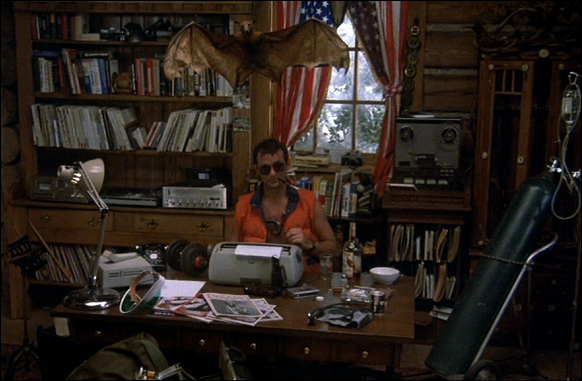
1. Where the Buffalo Roam (1980, USA)

Director: Art Linson
Written by: Hunter S. Thompson (stories), John Kaye (screenplay)
Cast: Bill Murray, Peter Boyle, Bruno Kirby, R.G. Armstrong

Running Time: 95 mins.

‘I hate to advocate weird chemicals, alcohol, violence or insanity to anyone, but in my case it’s worked.’

Where the Buffalo Roam is the first movie adaptation of the work of legendary Gonzo journalist Hunter S. Thompson, who is portrayed by Bill Murray in the movie. The story deals with Thompson’s encounters with his equally legendary ‘mutant’ attorney Oscar Zeta Acosta, who is called Carl Lazlo here and is portrayed by Peter Boyle. The movie is based on Thompson’s obituary for his attorney who disappeared in Mexico in 1974, three years after their two trips to Las Vegas that were immortalized in Thompson’s masterpiece Fear and Loathing in Las Vegas.

Screenplay writer John Kaye also drew from other works of Thompson, including Fear and Loathing: On the Campaign Trail 72’ and The Great Shark Hunt. The final result depicts three journalistic adventures of Thompson in which Lazlo shows up. The first one involves San Francisco drug trials in which Lazlo represents wrongfully indicted youngsters. The second story shows Thompson missing the Super Bowl to accompany Lazlo on a failed activist mission. Finally, Thompson is seen on the presidential campaign where he has a one-on-one encounter with his arch enemy Richard Nixon.

Most of the people involved, including Thompson himself, didn’t like the final result or even hated the movie. It is easy to see why. Much of Thompson’s razor sharp journalism resorts into a bunch of silliness. Especially the second half is very uneven. Still, it is a lot of fun hearing a number of great Thompson quotes being uttered by Bill Murray, who’s excellent in the role of Gonzo journalist. Boyle is also enjoyable as his dope crazed attorney.

As a whole, the movie is indeed too silly to be perceived a success or an effective movie translation of Thompson’s writing. However, separate parts range from funny to almost great. Especially the sequences in which Thompson has to meet deadlines, but is too preoccupied with weirdness and dope frenzies. Also includes an excellent soundtrack featuring: Neil Young, Bob Dylan, Jimi Hendrix and Creedence Clearwater Revival.

Gonzo Rating:

2. Fear and Loathing in Las Vegas (1998, USA)

Director: Terry Gilliam
Written by: Hunter S. Thompson (book), Terry Gilliam (screenplay), Tony Grisoni (screenplay), Tod Davies (screenplay), Alex Cox (screenplay)
Cast: Johnny Depp, Benicio Del Toro, lot’s of cameo’s including; Tobey Maguire, Gary Busey, Ellen Barkin, Christina Ricci, Cameron Diaz, Flea and Harry Dean Stanton

Running Time: 118 mins.

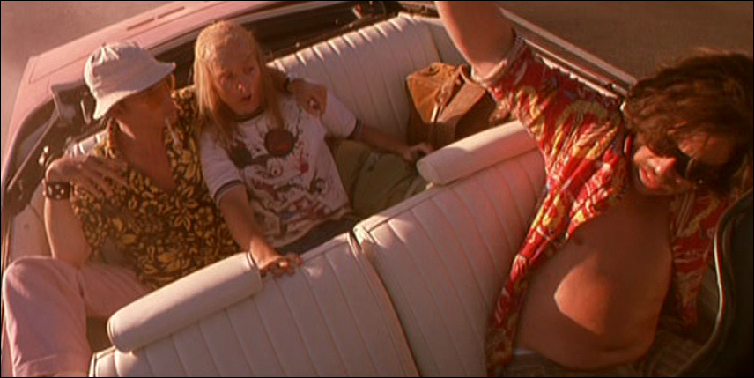
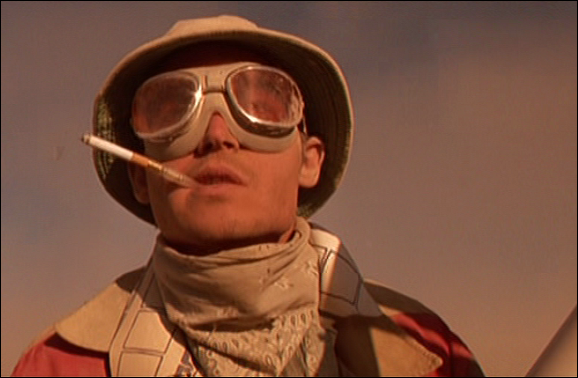
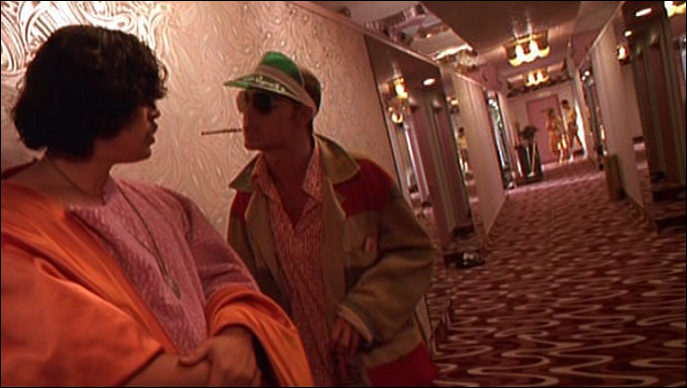
It is the foul year of our lord 1971 and Gonzo journalist Hunter S. Thompson (Raoul Duke in the story) and his Samoan attorney Dr. Gonzo decide to undertake the ultimate trip of the seventies. The official assignment is to cover the Mint 400 desert race in Las Vegas, but they have something bigger in mind. They want to find the American dream. Armed to the teeth with highly dangerous narcotics, they head out to Las Vegas in their fire red convertible… Some trip it’s gonna be.

While searching for the American dream, Thompson and Dr. Gonzo only find fear and loathing. Intolerable vibrations in a town not at all suitable for the use of psychedelic drugs. The atmosphere is extremely menacing, but as they behave as animals, nobody even notices them. Vegas turns out to be a truly savage town. And while soldiers are dying in Vietnam, used car dealers from Dallas throw their money in the slot machines, Debbie Reynolds sings in the Desert Inn and the national police force meets on a congress about marijuana. Thompson and Dr. Gonzo are there…

Thompson’s novel Fear and Loathing in Las Vegas, that was first published in two parts in Rolling Stone Magazine, became a cultural phenomenon (and my personal favorite book of all time). The movie adaptation by Terry Gilliam is a literal one. Thompson wrote his famous novel Gonzo style, which means the events are told through the eyes and vision of the author who fully participates in the story himself. Since Thompson was heavily under the influence during the writing process, he claims he can’t fully remember which parts truly happened and which ones did not (fully). Therefore this literal adaptation is a highly enjoyable blast, though not always realistic.

There is one downside to director Gilliam’s literal approach. In the novel, all the psychedelic escapades form an integral part of what is obviously a literary masterpiece. In the translation to film however, these escapades sometimes appear to be useless fuckarounds, especially during the final part of the film. However, that is a minor criticism for this is obviously a highly enjoyable movie. Depp and Del Toro are both terrific in their method acting approaches to their roles. Thompson’s poetic writing, beautifully spoken by Depp in voiceover, runs through the movie that captures the era and paranoid nightmare perfectly. Combined with a beautiful seventies soundtrack and Grade A settings, the great time capsule that is Fear and Loathing in Las Vegas is complete. Also, it is one of the funniest movies of all time. So buy the ticket and take the ride.

Gonzo Rating:


3. The Rum Diary (2011, USA)

Director: Bruce Robinson
Written by: Bruce Robinson (screenplay), Hunter S. Thompson (novel)
Cast: Johnny Depp, Amber Heard, Michael Rispoli, Aaron Eckhart

Running Time: 115 mins.

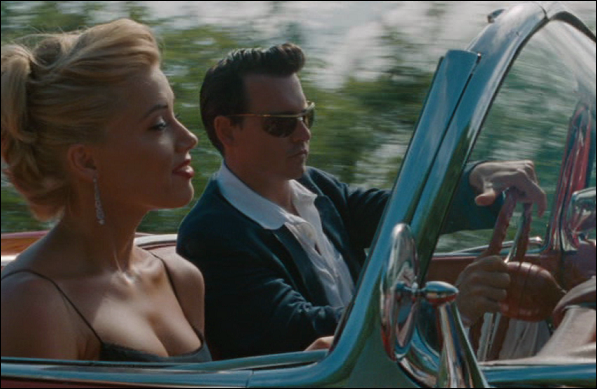
The title The Rum Diary can mean two things. Hunter S Thompson’s novel that is told in this movie or The San Juan Star, the near bankrupt Puerto Rican newspaper where main character Paul Kemp (Thompson’s alter ego) takes a job as journalist. Why? Because the entire writing staff is completely drunk. The same seems to apply for the whole population of Puerto Rico in the 1960’s, the setting of The Rum Diary.

This is a story about alcohol and lots of it. But, whenever Kemp takes time off of drinking, he engages in a compelling journalistic endeavour, shining light on the culture and problems of the relatively unknown country he resides in. This is also a love story. Kemp falls head over heels for the stunning Chenault, girlfriend of corrupt businessman Sanderson, who wants Kemp to write stories in favour of his unethical real estate plans.

Kemp’s dilemma, going along with the flow or exposing the ‘bastards’ as he puts it, is the backbone of this movie. The pace is as relaxed as the setting and director Robinson succeeds well in translating the mood of Thompson’s novel to the white screen. The cast is on a roll as well. Depp, who once said he would like to play Thompson every few years, is solid as always. He gets excellent comic support from press associates Michael Rispoli, Richard Jenkins and Giovanni Ribisi. Amber Heard and Aaron Eckhart play Chenault and Sanderson, whose characters add the necessary intrigue and substance to the story.

Obviously this is no Fear and Loathing in Las Vegas and the drug fueled craziness portrayed in that movie is largely absent. This is Thompson Light; a smaller movie without too much excessive behavior. Director Robinson did add one pretty funny drug scene that can be considered as a wink to big brother Fear and Loathing. In The Rum Diary, a novel that Thompson wrote many years before his Vegas-masterpiece, the author was still searching for his unique voice and it is pleasant to join him on this quest. It is best to keep some rum within reach though as you might get thirsty underway…

Gonzo Rating:

For Dutch speaking Thompson aficionados, check out also:
De Hunter S. Thompson kronieken
Blasted!!! The Gonzo Patriots of Hunter S. Thompson SH-2007
Dromen en dronken deliriums in San Juan (Over ‘The Rum Diary’ van Hunter S. Thompson)
Een authentieke dichtbij-opname van de Hell’s Angels (door Hunter S. Thompson)
Hunter S. Thompson in 1970 – Decadentie en verderfelijkheid in het Zuiden
Fear and Loathing in Las Vegas: De ultieme trip van de jaren 70′
Fear and Loathing: On the Campaign Trail ’72
‘The Great Shark Hunt’ – Gebundelde waanzin van Hunter S. Thompson
Instructies voor het lezen van Gonzo Journalistiek
‘The Curse of Lono’ – Het Hawaii avontuur van Hunter S Thompson
Image board on Pinterest

Reviews by: Jeppe Kleijngeld