John & Paul: A Love Story in Songs

‘Ticket to Ride’ glints with meanings; you can walk around it forever and see different shafts of light bounding off its surfaces. It’s about a break-up, viewed through a haze of pot smoke. It’s about a generational shift in the balance of power between men and women. It’s about a shift in the balance of power between John and Paul, as John comes to suspect that Paul doesn’t rely on him quite as much as he relies on Paul.’

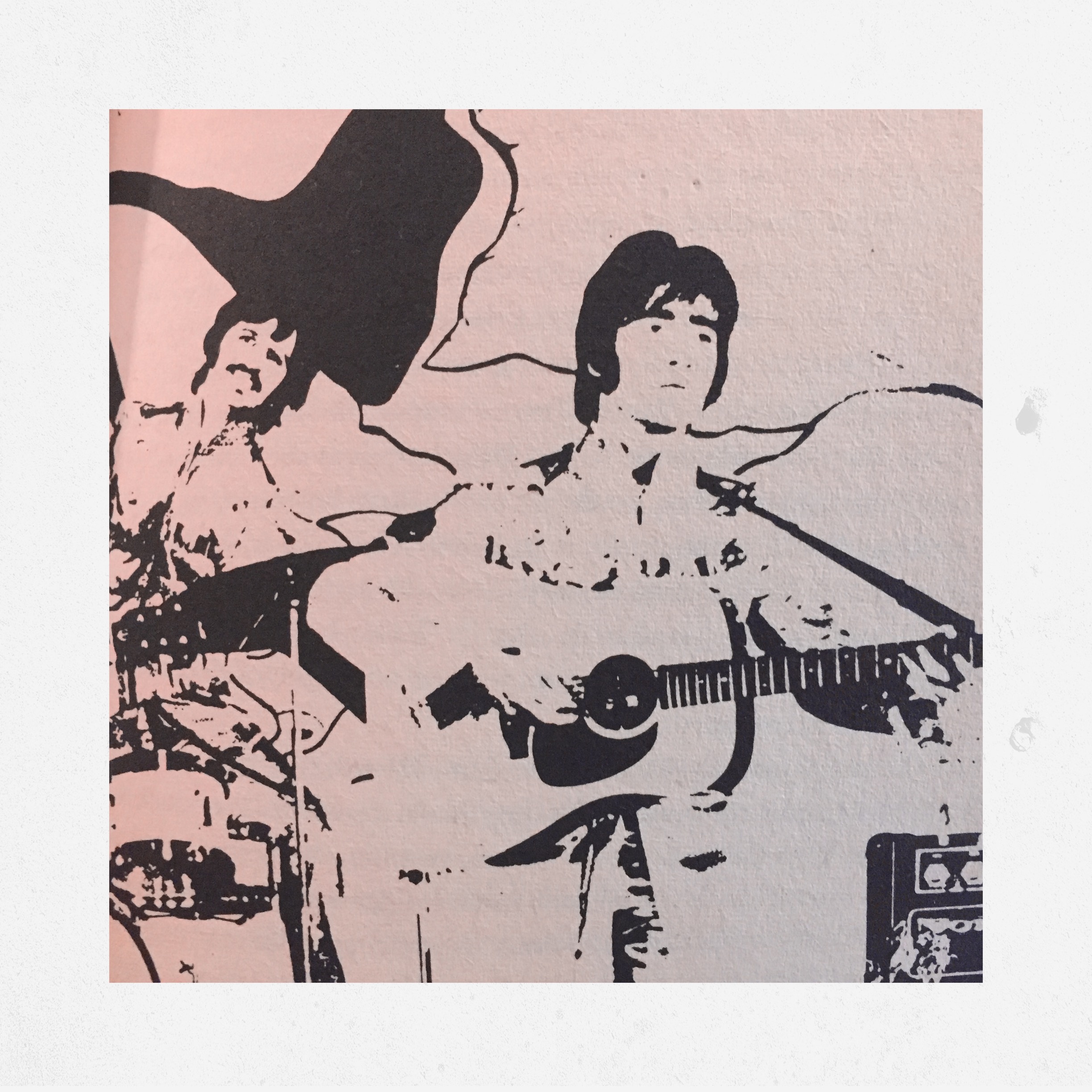
This new book by British author Ian Leslie tells the story of John Lennon’s and Paul McCartney’s intimate relationship. Starting with their first meeting at the Woolton Village Fête and ending with Paul’s response to John’s death in 1980. It tells the story by way of the richest primary source of all: the songs they wrote together. Each chapter is anchored in a song that tells us something about the state of their relationship at that time. The main point is that even after the Beatles broke up, John and Paul were inseparable. They merged their souls and multiplied their talents to create the greatest bodies of music in history.

This is also a love story. John and Paul were more than just friends or collaborators in the sense that we normally understand these terms. Their friendship was in a sense a romance, full of longing and passion, riven by jealousy.

The biographical stories told aren’t new – although I certainly learnt new things – but Leslie’s approach still feels fresh. The psychology behind the stories is what sets it apart. Every anecdotal story is approached by how things must have felt and been experienced by John and Paul. It delves into their state of mind at the time certain songs were written.

The first song Leslie discusses is ‘Come Go With Me’, which John performed with the Quarrymen at the Woolton Village Fête. His improvised lyrics impressed Paul, who realized they might connect through a shared passion for music and songwriting. It moves on with their first songs: ‘I Lost My Little Girl’ by Paul and ‘Hello Little Girl’ by John. This was right away the first instance in which the two were borrowing and building on each other’s ideas.

They began writing songs together, something nobody was doing at that time except the Great Ones from America. The two trusted each other enough to let the other hear their unfinished work, and the more they shared the closer they became.
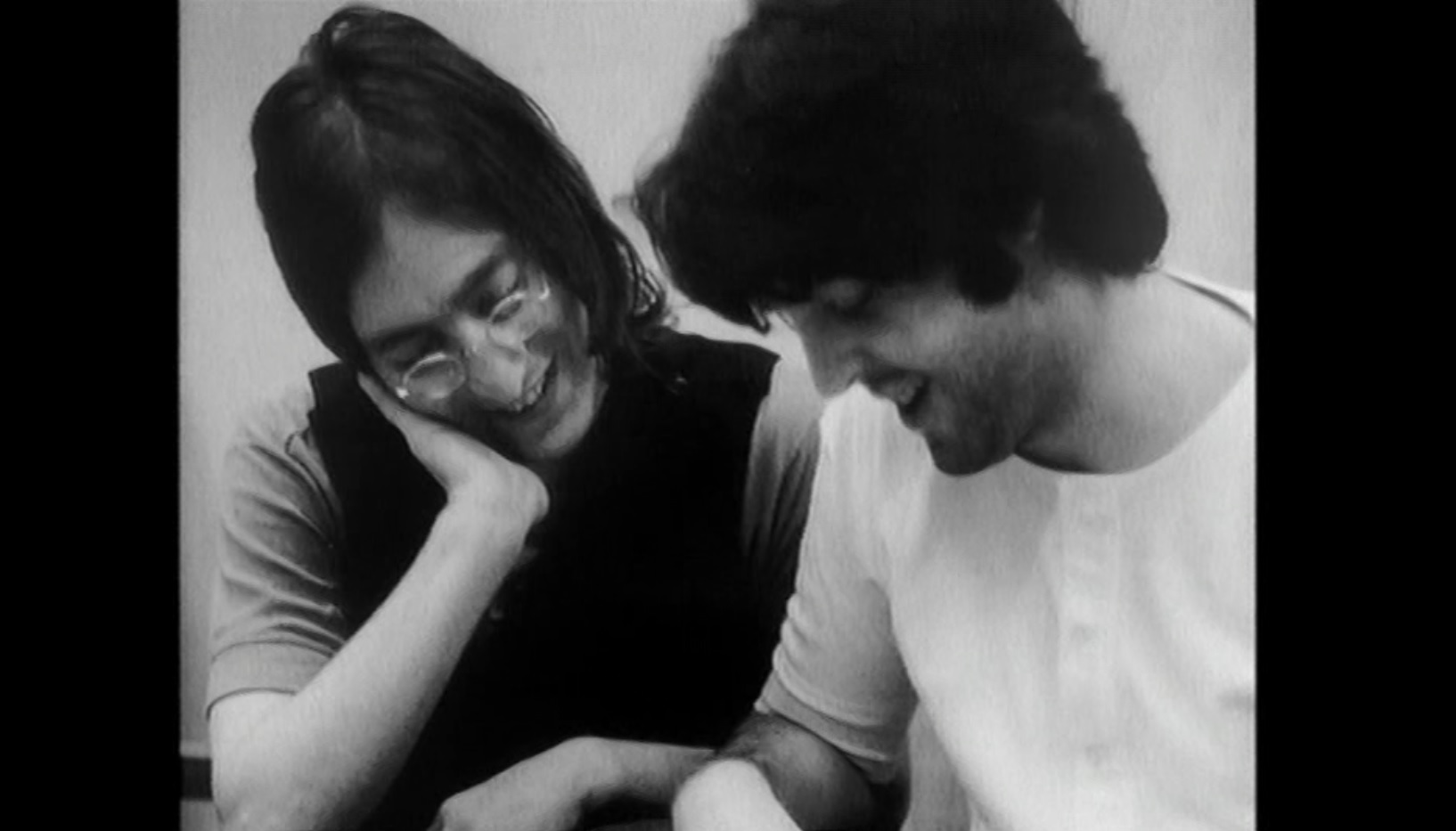
They bonded even more deeply over the loss of their mothers—Paul at 14, John at 17. Paul: “Each of us knew that had happened to the other. At that age you’re not allowed to be devastated and particularly as young boys, teenage boys, you just shrug it off.” It shattered them he later said, but they had to hide how broken they felt. “I’m sure I formed shells and barriers in that period that I’ve got to this day. John certainly did.”

Shells and barriers are defensive fortifications, but for John and Paul this shared trauma also blasted open an underground tunnel through which they were able to communicate in secret from the rest of the world, and even from themselves. In music they could say what they felt without having to say it at all. In 2016, McCartney told Rolling Stone Magazine: “Music is like a psychiatrist. You can tell a guitar things that you can’t tell people. And it will answer you with things people can’t tell you.”

The story goes on with their rise in Hamburg and then in Liverpool. Those who knew the pair marveled at how close they were. Bernie Boyle, a Cavern regular who did some work for the Beatles as a roadie, observed their eerie mental connection: “They were so tight, it was like there was a telepathy between them: on stage, they’d look at each other and know instinctively what the other was thinking.”

People were drawn to them, but were also wary of them, for both were capable of shriveling outsiders with wit. Together they had an aura of unbreachable assurance. This was partly the arrogance of the damaged. The well known trauma psychiatrist Bessel van der Kolk observes: “After trauma the world becomes sharply divided between those who know and those who don’t.”

In their early years, McCartney brought in ballads to their performances like ‘Till There Was You’. John felt discomfort during those moments, but he realized that these songs contributed to the band’s more varied approach than just rock ‘n roll. Besides, John – despite his tough image – secretly also loved the genres that they both got familiar with in their childhood, like folk, music hall, jazz and show-tunes.

It was the song ‘Please Please Me’ that really got the Lennon-McCartney songwriting partnership going. At that point, it became a second revenue stream within the band just for the two of them. ‘Please Please Me’ was their first number one hit and was the final move towards the Lennon-McCartney songwriting explosion that would soon be unleashed.

The book goes on to describe many of the songs that followed, focusing on how John and Paul conceived them, delivered them, and why their combination of voices and sensibilities made the music so enduring. Leslie also teases out the hidden meanings some songs carried for each of them; messages they sometimes couldn’t say directly.

There were also differences in their approach to songwriting. John’s song ideas were often used as a creative platform to which the others could bring their brilliant contributions. Paul – the most accomplished musician and instrumental allrounder – tended to bring more fully fledged songs to the band with clear ideas of what he wanted.

In the first five albums, John was mostly the song originator of the band. Paul’s ‘Yesterday’ was an important moment in their relationship, argues Leslie. John always felt uncertain about it, perhaps because it showed that Paul was such a brilliant songwriter in his own right and that he could do without John. After the break-up, John wrote ‘Imagine’ and according to a collaborator at that time, John felt he had finally written a melody as good as ‘Yesterday’.

After the creative highlight that was ‘Sgt. Pepper’s’, the disintegration of the band started in John’s mind. During their time in India, John was depressed as evident by songs such as ‘I’m So Tired’ and ‘Yer Blues’. The Beatles had been his closest connection and had pulled him through the most difficult of times. Now, it was time to start anew.

Leslie covers the break-up and post-break-up years in great detail, showing how the songs of that period reflect what was going on in their minds. For example, John’s ‘Look At Me’ – which was written in India – is about John’s sense of identity hanging on by being seen by Paul, his creative partner. And if he is not being seen by Paul, who is he supposed to be?

After the break-up, their connection always remained strong and they always kept communicating through music. There were the famous songs at which they were having digs at each other (‘Too Many People’ and ‘How Do You Sleep?’). There was also the instance of John’s final live performance at a concert by Elton John. He chose three songs to perform and one of them was ‘I Saw Her Standing There’. Why did he choose this Paul-song? Because he was scared and needed to summon Paul to get him though, Leslie argues.

The book ends with John’s murder and Paul’s heartbreaking response. The bond was severed forever, yet Paul found a way to keep speaking to John – as always through music. His song ‘Here Today’ is a conversation with the friend, rival, and partner he could never replace.

Robin Green, rock-‘n-roll schrijver…

De naam Robin Green kende ik wel van The Sopranos. Samen met haar echtgenoot Mitchell Burgess schreef ze 17 afleveringen van de beste serie ooit. Nu hoorde ik op de podcast Talking Sopranos dat ze in de jaren ‘70 schreef voor Rolling Stone Magazine samen met o.a. Gonzo-journalist Hunter S. Thompson. Haar ervaringen uit die tijd staan beschreven in haar memoir ‘The Only Girl’. The Sopranos en Hunter S. Thompson? Dat is een boek voor mij.

En het viel niet tegen. Op 26 jarige leeftijd kwam Green op de Masthead van Rolling Stone te staan, als eerste vrouw. Het was in 1971, het jaar waarin Hunter S. Thompson’s Fear and Loathing in Las Vegas in twee delen in het magazine werd gepubliceerd, mijn favoriete boek aller tijden. Green hierover: ‘Hunter had been sent to Las Vegas to cover a motorcycle race, and when the magazine – ‘aggressively’ according to Hunter, rejected the pages – that story resulted in ‘Fear and Loathing in Las Vegas: A Savage Journey to the Heart of the American Dream’, published in two parts. The first as Hunter had written it, the second derived largely from taped hours of Hunter and Oscar Acosta’s muttering and raving, tapes that landed on the desk of newly hired Sarah Larin to be transcribed’.

En nog meer over Hunter: ‘His writing seemed like a new form as close to rock itself as writing gets. Unrestrained and Unrepressed, wild and reckless and high as a fucking kite. Hunter had found the perfect venue in Rolling Stone. Neither a glossy magazine with a two month lead time nor a newspaper with its limited space and linguistic leeway.’

Green, die altijd schrijver wilde worden, maakte haar debuut bij Rolling Stone met een verhaal over Marvel waar ze als secretaresse van Stan Lee had gewerkt. Ze kreeg 5 cent per woord wat haar 500 dollar opleverde, veel geld in die tijd. Nog belangrijker: ze werd vaste bijdrager aan Rolling Stone en het artikel werd haar eerste cover story. Later schreef ze een onthullend verhaal over Dennis Hopper, waarna haar naam als eerste vrouw aan de masthead van Rolling Stone werd toegevoegd. Haar Hopper-stuk werd in 1992 opgenomen in Movieline’s overzicht van de ‘Ten Interviews That Shook Hollywood’.

Het was een goede tijd voor de journalistiek. Zoals bekend van Hunter S. Thompson’s escapades betaalde het magazine alle onkosten, en dus waren Green en collega’s niemand iets verschuldigd. Ze konden niet makkelijk omgekocht worden door de PR-industrie en schreven wat ze wilden.

En het was een tijd waarin vrouwen voor hun rechten opkwamen. Green: ‘In this world, the world of rock and roll, men ran the show. They were the rock stars. The journalists and editors were men too. Even before that, in college, it was guys who’d been the ones to grab the microphones at sit-ins and demonstrations. A chick’s mandate: to be by their sides at the revolution, looking hip. Women were seeking equality. Hair under the armpits and getting sweaty. Have sex with everybody. Not out of promiscuity, but for freedom. There were no consequences yet. AIDS would not arrive until the 1980’s.’

De tegencultuur waar ze onderdeel van werd wordt tegenwoordig misschien gezien als nogal puberaal, tegendraads gedrag, maar Green brengt hier tegenin dat er ook een hoop was om boos over te zijn in die jaren: Vietnam, Kennedy’s dood (twee keer), Nixon, Malcolm X, Martin Luther King… En niet te vergeten: de tragische dood van Jim, Janis en Jimi.

Na een periode van zo’n vijf jaar kwam er een einde aan haar carrière bij Rolling Stone. Ze had een verhaal geschreven over de kinderen van Bobby Kennedy, maar vond dat ze een journalistieke grens had overschreden door met Robert Kennedy Jr. naar bed te gaan. Hoofdredacteur Jann Wenner eiste het verhaal wat zij weigerde. Toen liet hij haar naam van de masthead verwijderen.

Jaren later na vele omzwervingen werd Green televisie-schrijver. Grappig dat ze bij The Sopranos terecht kwam, de eerste echte rock-‘n-roll sterren van de televisie. Ook bij dit andere culturele fenomeen was Green de enige vrouwelijke schrijver. Het laatste deel van het boek gaat over deze periode van haar leven en vond ik verreweg het interessantste. Over hoe ze David Chase ontmoette, het genie achter The Sopranos, en samen met haar man Mitchell in het schrijversteam terecht kwam. Over hoe ze haar eigen jeugdervaringen in de scripts verwerkte en over hoe de serie een fenomeen werd. En uiteindelijk, hoe Chase haar ontsloeg in het laatste seizoen omdat ze ‘de show niet zou begrijpen’. Het had iets met zijn moeder te maken, vermoed Green. Toch is er een happy ending voor de schrijver die nu in de zeventig is. Samen met haar man ontwikkelde ze de serie Blue Bloods, die nu al aan het twaalfde seizoen toe is.

Tegenover elk succesverhaal dat je leest staan vele verhalen over mislukking. In ‘The Only Girl’ is dat het verhaal van Robin’s jeugdvriendin Ronnie die keer op keer in een psychiatrisch ziekenhuis McLeans belandt, dat bekend is geworden door de film Girl, Interrupted. Later zou ze zelfmoord plegen. Green schrijft: ‘Life is strange in that way. Why is one in mental pain, and the other juicy, healthy and productive? Riding high.’ En ‘riding high’ heeft ze zeker gedaan. Dat weet ze met deze smakelijke memoires goed over te brengen.

John Lennon: De Rolling Stones Interviews

Vandaag 40 jaar en twee dagen geleden nam de wereld afscheid van John Lennon. De ex-Beatle werd op 8 december 1980 doodgeschoten voor zijn appartement in New York.

Lees ook: De dag dat John Lennon doodging

Om de legendarische muzikant te eren, publiceer ik vandaag een paar typische Lennon-uitspraken. Deze zijn afkomstig uit een interview dat Jann Wenner (hoofdredacteur Rolling Stone Magazine) eind 1970 met hem afnam, zo’n acht maanden nadat The Beatles definitief uit elkaar waren gegaan.

Zou je van alles af willen wezen?
“Als ik godverdomme visser zou kunnen wezen zou ik ‘t wel willen, weet je. Als ik geschikt was om iets anders te wezen wel. Er is geen lol aan om artiest te zijn. ‘T is net als met schrijven, er is geen lol aan, ‘t is een marteling. Ik heb wel es wat over Van Gogh, Beethoven, al die lui gelezen – ik las er pas nog een stuk over. Als ze toen psychiaters hadden gehad, hadden we nou Gauguin’s fantastische schilderijen niet gehad. En al die klerelijders die ons uitmelken tot we kapot zijn, ‘t enige wat we kunnen doen is ons gedragen als circusdieren. Ik heb er de pest aan om artiest te wezen, ik bedoel ik heb er de pest aan voor klotige idioten op te treden die er niks van af weten. Ze kunnen niet voelen; ik ben degene met ‘t gevoel omdat ik degene ben die ‘t uitdrukt. De plaats van hun leven wordt door mij en andere artiesten ingenomen, en wij zijn degenen…. ‘t is zelfs met boksers zo. Wanneer Oscar (Bonaventura) de ring in komt joelen ze hem de kloten van z’n lijf. Een keer raakt hij Clay en ze juichen hem toe.”

Ben je tevreden over je nieuwe album (John Lennon/Plastic Ono Band)?
“Ja, ik ben er erg tevreden over. Maar er zijn een hoop dingen die ik graag zou willen verbeteren.”

Zoals?
“Nou, met dit album heb ik in technisch opzicht veel geleerd. Vroeger hoefde ik niet zoveel te leren want gewoonlijk zaten, zeg, George, Paul en ik allemaal te luisteren en ik hoefde niet zoveel te denken over ieder afzonderlijk geluid. Er zijn nu een paar dingen die ik over de bas heb geleerd; waar ik méér had moeten gebruiken, en waar ik er een nummer mee heb verprutst; een paar technische dingen die me tenslotte zijn gaan irriteren. Maar over de opzet en het geheel ben ik tevreden.”

Denk je dat je op dit album beter zingt?
“Ik zing waarschijnlijk beter omdat ik alle tijd aan mezelf had. Deze keer was het mijn album en ik hoefde niet . . . ‘t werd gewoonlijk een beetje gênant tegenover George en Paul omdat we elkaar zo goed kenden… Oh, hij probeert Elvis na te doen, oh, nou doet hij dit. We waren een beetje al te kritisch ten opzichte van elkaar, dus we beperkten elkaar nogal. En nu heb ik Yoko erbij, en Phil erbij, afzonderlijk en gezamenlijk, die zo’n beetje van me houden, dus ik kan ‘t beter brengen; en ik ontspande me, weet je. Ik heb nu thuis een studio en ik denk dat ‘t de volgende keer nog beter wordt omdat dát me nog minder beperkt dan naar de EMI-studio gaan. Zo zit ‘t. Maar het losser worden van het zingen begon als met Cold Turkey door mijn ervaringen met het zingen met Yoko. Zij beperkt haar keel niet, begrijp je?”

Ik wil ‘t je nog eens vragen: ben je tevreden over het nieuwe album?
“Ik geloof dat ‘t het beste is wat ik ooit gemaakt heb. Ik geloof dat het realistisch is en voor mij staat ‘t vast dat ‘t zich door de jaren heen ontwikkeld heeft uit nummer als In My Life, I’m a Loser, Help, Strawberry Fields. Dat waren allemaal persoonlijke nummers. Ik schreef steeds over mezelf als ik de kans kreeg. Ik hield er niet erg van om songs in de derde persoon te schrijven over mensen met betonnen flats en dergelijke dingen. Ik hou van eerste persoonsmuziek. Maar vanwege m’n frustraties en talloze andere dingen kwam ik er maar nu en dan toe om alleen over mezelf te schrijven. Nu heb ik alles over mezelf geschreven en zo werk ik ‘t liefst. Ik ben ‘t zelf! En niemand anders. En dus hou ik ervan.”

Waarom heb je Mummy’s Dead aan het einde gehangen?
“Zo gebeurde ‘t nou eenmaal. Al die songs kwamen gewoon uit me los. Ik ging niet zitten denken ‘Ik ga schrijven over mijn moeder’ of ‘Ik ga schrijven over zus of zo’. Ze kwamen gewoon los, zoals al het beste werk dat iemand ooit doet, of het nou een artikel is of wat dan ook, ‘t zijn de beste die vanzelf loskomen. En ze kwamen allemaal los omdat ik de tijd had – en of je nou op vakantie bent, of in therapie, waar je ook bent, als je er tijd aan besteedt…. Zoals in India, daar schreef ik de laatste portie beste songs. Ik kon er een hoop schrijven als I’m So Tired en Yer Blues, want ze waren tamelijk realistisch. Ze gingen over mij en ik vond ‘t altijd – wat ik ‘t woord – grappig, ironisch of zoiets, dat ik ‘t deed in naar men mag aannemen aanwezigheid van een goeroe, en terwijl ik zoveel uur per dag zat te mediteren schreef ik I’m So Tired en songs over pijn als Yer Blues. Wat ik meende.”

Er werd altijd over de Beatles gepraat, en de Beatles praatten over zichzelf ook, als vier delen van dezelfde persoon. Wat is er met die vier delen gebeurd?
“Ze herinnerden zich dat ze vier individuen waren. Wij geloofden ook in de Beatles-mythe, begrijp je. Ik weet niet of de anderen er nog in geloven. We waren vier knapen . . . Ik ontmoette Paul en zei: ‘Wil je in m’n band komen?’, weet je. Toen kwam George erbij en daarna Ringo. We waren gewoon een band die ‘t erg, erg ver geschopt heeft, dat is alles. Ons beste werk is nooit opgenomen.”

Waarom?
“Omdat we podiummusici waren – wat Mick ook zegt over ons – in Liverpool, Hamburg en andere danszalen, en wat we voortbrachten was fantastisch wanneer we regelrechte rock speelden, en niemand kon ons in Engeland benaderen. Zodra we ‘t maakten maakten we ‘t, maar de boel werd bijgeschaafd. Brian deed ons pakken aan en zo en we werden zeer beroemd. Maar we verkochten onszelf, weet je. De muziek was dood voordat we zelfs maar de theater-toernee door Engeland maakten. We voelden ons al klote omdat we twee uur spelen dat we in zekere zin graag deden, terug moesten brengen tot twintig minuten en iedere avond dezelfde twintig minuten moesten herhalen. Muzikaal stierf de Beatles-muziek toen. We hebben onszelf vermoord om ‘t te maken. En daarmee was ‘t afgelopen. George en ik zijn meer geneigd om dat te zeggen. We hebben altijd ‘t optreden in clubs gemist omdat we daar muziek maakten. En later werden we technisch efficiënte studio-artiesten, hetgeen wat anders is. We waren vakbekwame mensen weet je, en welk medium je ons ook in zet, we kunnen altijd iets maken dat de moeite waard is.”

Hunter Goes to Hollywood: Hunter S. Thompson Triple Bill

Who’s Hunter? Hunter Stockton Thompson (1937 – 2005) was an American journalist and inventor of Gonzo Journalism, a form of New Journalism. His persona and works inspired three Hollywood movies and several documentaries.

1. Where the Buffalo Roam (1980, USA)

Director: Art Linson
Written by: Hunter S. Thompson (stories), John Kaye (screenplay)
Cast: Bill Murray, Peter Boyle, Bruno Kirby, R.G. Armstrong

Running Time: 95 mins.

‘I hate to advocate weird chemicals, alcohol, violence or insanity to anyone, but in my case it’s worked.’

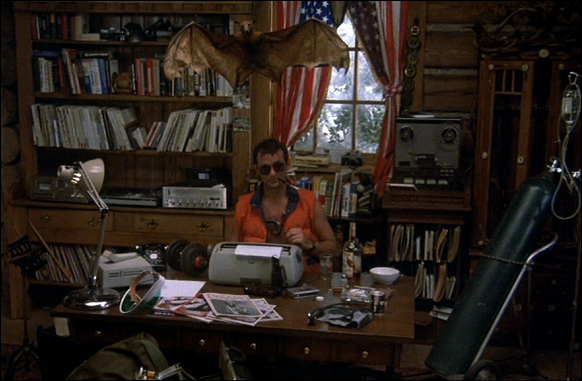
Where the Buffalo Roam is the first movie adaptation of the work of legendary Gonzo journalist Hunter S. Thompson, who is portrayed by Bill Murray in the movie. The story deals with Thompson’s encounters with his equally legendary ‘mutant’ attorney Oscar Zeta Acosta, who is called Carl Lazlo here and is portrayed by Peter Boyle. The movie is based on Thompson’s obituary for his attorney who disappeared in Mexico in 1974, three years after their two trips to Las Vegas that were immortalized in Thompson’s masterpiece Fear and Loathing in Las Vegas.

Screenplay writer John Kaye also drew from other works of Thompson, including Fear and Loathing: On the Campaign Trail 72’ and The Great Shark Hunt. The final result depicts three journalistic adventures of Thompson in which Lazlo shows up. The first one involves San Francisco drug trials in which Lazlo represents wrongfully indicted youngsters. The second story shows Thompson missing the Super Bowl to accompany Lazlo on a failed activist mission. Finally, Thompson is seen on the presidential campaign where he has a one-on-one encounter with his arch enemy Richard Nixon.

Most of the people involved, including Thompson himself, didn’t like the final result or even hated the movie. It is easy to see why. Much of Thompson’s razor sharp journalism resorts into a bunch of silliness. Especially the second half is very uneven. Still, it is a lot of fun hearing a number of great Thompson quotes being uttered by Bill Murray, who’s excellent in the role of Gonzo journalist. Boyle is also enjoyable as his dope crazed attorney.

As a whole, the movie is indeed too silly to be perceived a success or an effective movie translation of Thompson’s writing. However, separate parts range from funny to almost great. Especially the sequences in which Thompson has to meet deadlines, but is too preoccupied with weirdness and dope frenzies. Also includes an excellent soundtrack featuring: Neil Young, Bob Dylan, Jimi Hendrix and Creedence Clearwater Revival.

Gonzo Rating:

2. Fear and Loathing in Las Vegas (1998, USA)

Director: Terry Gilliam
Written by: Hunter S. Thompson (book), Terry Gilliam (screenplay), Tony Grisoni (screenplay), Tod Davies (screenplay), Alex Cox (screenplay)
Cast: Johnny Depp, Benicio Del Toro, lot’s of cameo’s including; Tobey Maguire, Gary Busey, Ellen Barkin, Christina Ricci, Cameron Diaz, Flea and Harry Dean Stanton

Running Time: 118 mins.

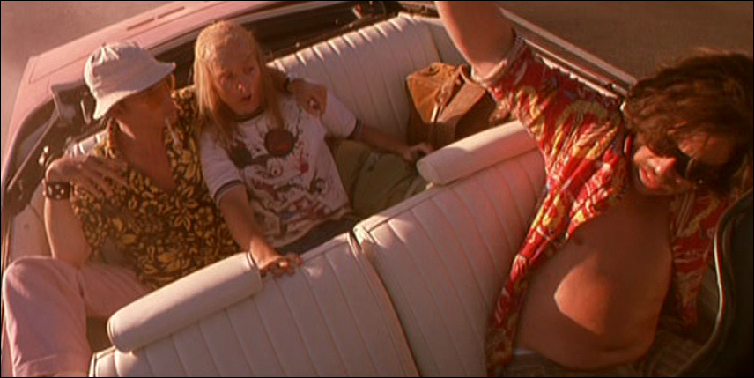
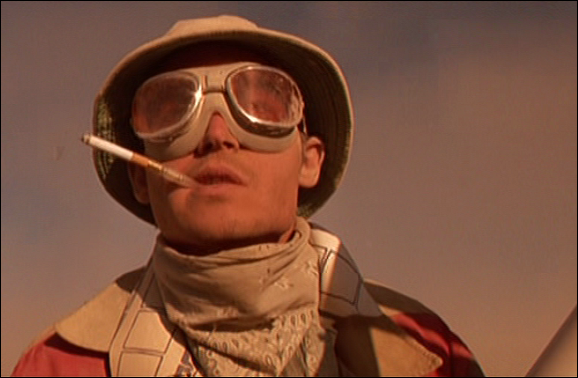
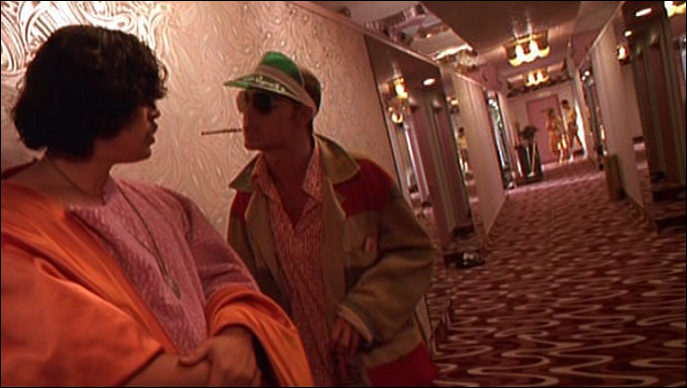
It is the foul year of our lord 1971 and Gonzo journalist Hunter S. Thompson (Raoul Duke in the story) and his Samoan attorney Dr. Gonzo decide to undertake the ultimate trip of the seventies. The official assignment is to cover the Mint 400 desert race in Las Vegas, but they have something bigger in mind. They want to find the American dream. Armed to the teeth with highly dangerous narcotics, they head out to Las Vegas in their fire red convertible… Some trip it’s gonna be.

While searching for the American dream, Thompson and Dr. Gonzo only find fear and loathing. Intolerable vibrations in a town not at all suitable for the use of psychedelic drugs. The atmosphere is extremely menacing, but as they behave as animals, nobody even notices them. Vegas turns out to be a truly savage town. And while soldiers are dying in Vietnam, used car dealers from Dallas throw their money in the slot machines, Debbie Reynolds sings in the Desert Inn and the national police force meets on a congress about marijuana. Thompson and Dr. Gonzo are there…

Thompson’s novel Fear and Loathing in Las Vegas, that was first published in two parts in Rolling Stone Magazine, became a cultural phenomenon (and my personal favorite book of all time). The movie adaptation by Terry Gilliam is a literal one. Thompson wrote his famous novel Gonzo style, which means the events are told through the eyes and vision of the author who fully participates in the story himself. Since Thompson was heavily under the influence during the writing process, he claims he can’t fully remember which parts truly happened and which ones did not (fully). Therefore this literal adaptation is a highly enjoyable blast, though not always realistic.

There is one downside to director Gilliam’s literal approach. In the novel, all the psychedelic escapades form an integral part of what is obviously a literary masterpiece. In the translation to film however, these escapades sometimes appear to be useless fuckarounds, especially during the final part of the film. However, that is a minor criticism for this is obviously a highly enjoyable movie. Depp and Del Toro are both terrific in their method acting approaches to their roles. Thompson’s poetic writing, beautifully spoken by Depp in voiceover, runs through the movie that captures the era and paranoid nightmare perfectly. Combined with a beautiful seventies soundtrack and Grade A settings, the great time capsule that is Fear and Loathing in Las Vegas is complete. Also, it is one of the funniest movies of all time. So buy the ticket and take the ride.

Gonzo Rating:


3. The Rum Diary (2011, USA)

Director: Bruce Robinson
Written by: Bruce Robinson (screenplay), Hunter S. Thompson (novel)
Cast: Johnny Depp, Amber Heard, Michael Rispoli, Aaron Eckhart

Running Time: 115 mins.

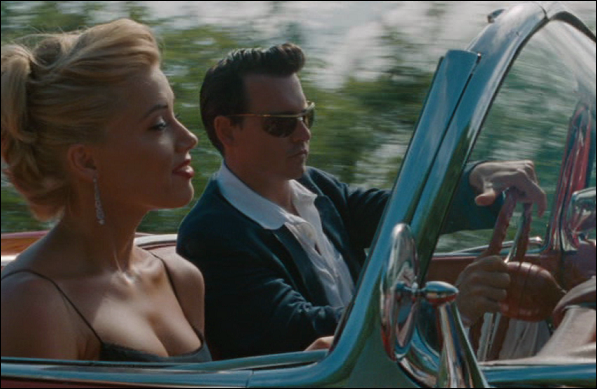
The title The Rum Diary can mean two things. Hunter S Thompson’s novel that is told in this movie or The San Juan Star, the near bankrupt Puerto Rican newspaper where main character Paul Kemp (Thompson’s alter ego) takes a job as journalist. Why? Because the entire writing staff is completely drunk. The same seems to apply for the whole population of Puerto Rico in the 1960’s, the setting of The Rum Diary.

This is a story about alcohol and lots of it. But, whenever Kemp takes time off of drinking, he engages in a compelling journalistic endeavour, shining light on the culture and problems of the relatively unknown country he resides in. This is also a love story. Kemp falls head over heels for the stunning Chenault, girlfriend of corrupt businessman Sanderson, who wants Kemp to write stories in favour of his unethical real estate plans.

Kemp’s dilemma, going along with the flow or exposing the ‘bastards’ as he puts it, is the backbone of this movie. The pace is as relaxed as the setting and director Robinson succeeds well in translating the mood of Thompson’s novel to the white screen. The cast is on a roll as well. Depp, who once said he would like to play Thompson every few years, is solid as always. He gets excellent comic support from press associates Michael Rispoli, Richard Jenkins and Giovanni Ribisi. Amber Heard and Aaron Eckhart play Chenault and Sanderson, whose characters add the necessary intrigue and substance to the story.

Obviously this is no Fear and Loathing in Las Vegas and the drug fueled craziness portrayed in that movie is largely absent. This is Thompson Light; a smaller movie without too much excessive behavior. Director Robinson did add one pretty funny drug scene that can be considered as a wink to big brother Fear and Loathing. In The Rum Diary, a novel that Thompson wrote many years before his Vegas-masterpiece, the author was still searching for his unique voice and it is pleasant to join him on this quest. It is best to keep some rum within reach though as you might get thirsty underway…

Gonzo Rating:

For Dutch speaking Thompson aficionados, check out also:
De Hunter S. Thompson kronieken
Blasted!!! The Gonzo Patriots of Hunter S. Thompson SH-2007
Dromen en dronken deliriums in San Juan (Over ‘The Rum Diary’ van Hunter S. Thompson)
Een authentieke dichtbij-opname van de Hell’s Angels (door Hunter S. Thompson)
Hunter S. Thompson in 1970 – Decadentie en verderfelijkheid in het Zuiden
Fear and Loathing in Las Vegas: De ultieme trip van de jaren 70′
Fear and Loathing: On the Campaign Trail ’72
‘The Great Shark Hunt’ – Gebundelde waanzin van Hunter S. Thompson
Instructies voor het lezen van Gonzo Journalistiek
‘The Curse of Lono’ – Het Hawaii avontuur van Hunter S Thompson
Image board on Pinterest

Reviews by: Jeppe Kleijngeld