Memories of Live Events

Today the International Film Festival Rotterdam 2021 started… Online. The pandemic has been going on for nearly a year now and live festivals have become a distant memory. It’s not that I don’t appreciate their online efforts, but unfortunately it’s impossible to capture the unique atmosphere the festival normally generates. Therefore, I don’t cover this years’ festival (sorry folks at the IFFR) but instead turn back to clock and return to the past, a time when pandemics and lock-downs were still only products of the imagination and Hollywood movies. Let’s hope that next year we can return to a sustainable new normal, including live film festivals.

International Film Festival Rotterdam 2008

Day 1

26-01-2008 by Jeppe Kleijngeld

The annual Rotterdam Film Festival. I have been looking forward to this. A little too much maybe. I dreamed last night that I missed half the programme. Not a very likely scenario. I got two days in which I hope to see at least ten movies/short film programmes. Let the cinema frenzy begin.

Lot’s of coffee and ready to see film number 1. The Egyptian drama Le chaos, directed by maestro Youssef Chahine. I haven’t seen many Egyptian films (not one). Nor was I aware of the existence of ‘popular Egyptian cinema’, as the festival catalogue describes it. Curious I entered the dark screening room of the Pathé cinema.

It was all right. A well-crafted combination of a romance and a political story. It revolves around the brutal police chief Hatem, who rules the Choubra district in Cairo with an iron fist. His only weakness is the passion he feels for his neighbour girl Nour, who in her turn is smitten by district attorney Cherif. A series of events unfold leading to a riot, the blossoming love between Nour and Cherif, and a showdown with tyrant Hatem.

Up to the next film, or rather event. Robert Breer: Image by Images 3, one of the compilation programmes of filmmaker in focus Robert Breer’s shorts. His background as a painter becomes immediately apparent with the first one; BANG!. It consists of animated drawings and real footage. Recently transferred to 35mm it looks pretty sharp. The following two shorts FUJI and SWISS ARMY KNIFE WITH RATS AND PIGEONS are very similar; no story, just images. And technically pretty neat.

Then follows STOCKHAUSEN’S ORIGINALE: DOUBLTAKES, a 32-minute documentary of some sort of performance in Germany (?). As Breer basically said himself in the Q&A afterwards; ‘what an underexposed, incoherent and hardly comprehensible mess. The programme finishes with two more animated short: TRIAL BALLOONS and TIME FLIES.

After an excellent lunch in Turkish eatery Bazar, it was time for something more commercial. In Rotterdam that usually means the latest American indie. I managed to get a ticket for Jason Reitman’s Juno. The much discussed and Oscar nominated comedy/drama that Roger Ebert describes as ‘one of the best movies of the year’.

And justly so. The audience obviously loved it and so did I. What is not to love about this movie? The razor-sharp script from first-time screenwriter Diablo Cody and the completely disarming performance from Ellen Page as the pregnant teenager Juno suck you into this movie and won’t let you go till the end. This is also due to the contribution of all the great supporting players. Some Oscars would be well deserved.

After a short break I headed for another venue. I was going to see a short film compilation called Short Stories 8: Crime Stories. The four shorts shown were a mixed bag. The first one PLOT POINT (2007, Nicolas Provost) was a pretty cool, atmospheric short from Belgium. About a hypnotic New York where the police force is acting strange. Through sound effects and well-shot and edited imagery, Provost creates a very cinematic and suspenseful little no-budget film. The second film was FOREST MURMURS (2006, Jonathan Hodgson). A beautifully animated short about a mysterious forest in Great-Britain where murders have taken place throughout history.

Then came LE PEAU DURE (2008, Benoit Rambourgh, Jean Barnard-Marlin). A French short about a juvenile kid and the relationship between him and his scumbag father. It was not as intense as it could have been. The final film was WAY OUT (2006, Chen Tao). About a Chinese peasant who starts to pick pockets to satisfy his wife. Beautiful cinematography but as regards content not very interesting.

As a midnight snack I selected a film from the Rotterdämmerung programme; genre films on a late hour. I saw nothing less then George A. Romero’s latest zombie shocker Diary of the Dead. In his fifth ‘Dead’ movie, Romero follows a group of film students who stumble upon a zombie outbreak and decide to cover it.

All in all not a bad day. Now get ready for the sequel.

Day 2

27-01-2008

Another day in Rotterdam. What to watch? I could go for the nine-hour lasting epos Death in the Land of Encantos by Filipino director Lav Diaz. On previous editions of the festival, Diaz had film screenings of similar length. In 2005 Evolution of a Filipino Family (10 hrs) and in 2007 Heremias (9 hrs). I haven’t seen those, so this is my chance to finally have a Diaz experience.

Nah. Lack of patience. I rather go for five quick rushes than one quiet and meditative experience. Exactly the point Diaz is making with his immensely long films. Perhaps next year I’ll go for the new Diaz. Yeah right, who are you kidding?

So of to the first gig. El Asaltante is part of the Sturm und Drang programme. This programme features films by young filmmakers that are still developing their own style. First time Argentinean director Pablo Fendrik made a film about an ageing mugger who commits three robberies in the course of the movie. The action is registered with a steadycam in primarily close-up and medium shots leading to an uncomfortable tension. Pretty good debut by Fendrik

During my break I saw an installation in the NEW DRAGON INNS exhibition. No time to stay for the upcoming screening though. The downside of viewing five films in one day is that the breaks are so damn short. So I rushed back to the cinema.

The second film was a low-budget Iraq movie. Directed by Brian De Palma! Redacted is about the rape of a fifteen year old Iraqi girl at the hands of a squad of US soldiers. The film is based on true events, and shot in very realistically looking staged footage. Not a very happy subject. But it is skilfully directed by De Palma and features strong acting from a completely unknown cast.

Afterwards, having observed this authentic horror, I felt pretty much like a drone. And I still had three movies to go. A double espresso helped me through the next movie. The Japanese manga-film Appleseed: Ex Machina.

This sequel to the 2004 manga-hit Appleseed was a good wake-up call as it started with some ass-kicking action scenes. The story revolves around a high-tech futuristic world in which constant conflicts are taking place between humans and various types of cyborgs. The excitement level of the beginning is not matched later in the movie, but it was still an enjoyable screening.

Now I was going to see my first Tiger film of the year (one of the fifteen films nominated for a Tiger Award), namely Shanghai Trance. A Chinese film directed by young Dutch director David Verbeek. It is made up of three love stories edited together, all playing in the fast growing metropolis Shanghai. In every story, the characters have trouble dealing with the rapid change of their country, as well as dealing with their personal relationships.

Unfortunatly for Verbeek his film didn’t secure an award as I learned later in the evening. The three Tiger Awards went to Wonderful Town (Aditya Assarat, Thailand), Flower in the Pocket (Liew Seng Tat, Malaysia) and Go With Peace Jamil (Omar Shargawi, Denmark).

I booked a surprise film to close of the day. And I got to see…Lars and the Real Girl, the debut from American director Craig Gillespie. The story revolves around the solitary bachelor Lars, who orders a silicone doll from the internet who looks very real (and hot!). It turns out that Lars suffers from a delusional disorder making him believe that Bianca (the doll) is a real person. It wasn’t as silly as this sounds, but it still wasn’t my brand of Vodka. The audience liked it, but I thought this is the kind of movie they show on airplanes. A disappointing surprise festival organisation! Next year I want something better.

I headed back to my car and found my passenger window smashed! Some junkie had been going through my car. My only relief was that I had left nothing in it to steal. I still felt frustrated and angry. I knew I should have gone for that Diaz film. I bet I would have felt more relaxed about things then. Oh well, next year I’ll have another shot at Buddhist enlightenment.

International Film Festival Rotterdam 2009

26-01-2009

International Film festival Rotterdam 2009 opened with the international premiere of The Hungry Ghosts, the directorial debut of Michael Imperioli, best known for portraying Christopher Moltisanti in The Sopranos. Imperioli was present, along with his whole entourage, including main actor Steve Schirripa (Bobby Bacala in The Sopranos).

Imperioli proves to be a talented director, besides an actor and a writer. In a mosaic way of storytelling, the film follows the lives of several characters in New York, all searching for something. Off course, the stories come together in the end. Not cinematically revolutionary, but well crafted and featuring some good acting. It reminded me of Scorsese, probably because of the typical New York scene.

Next was L’ange by Patrick Bokanowski, a rediscovered gem from Rotterdam’s regained programme. It’s not exactly a date movie, believe me. It has no story, but solely consists of images, edited in a bizarre and fascinating way. A pure trip movie. It surely put me in a trance for 70 minutes. The beautiful painting-like images would stay in my head for days after the film.

Time for some Asian cinema. Rotterdam always has plenty of that. Takeshi Kitano is one of the Asian directors that contributes a feature to the programme annually. His Zatôichi even opened the festival in 2004. His latest work is Achilles and the Tortois, the last instalment in a loose trilogy about the figure of the artist. The previous entries were Takeshi’s and Glory to the Filmmaker.

Takeshi is – besides a filmmaker – a painter. This film tells about that part of his life. A young boy who only wants to paint grows up to be…Takeshi. An artists who never sold a painting and is always ridiculed. He has some brilliant ideas for paintings though. Overlong, but occasionally very funny film. It is also warmer than most of Takeshi’s works. It might even be his most moving film so far, now that I think about it.

Besides the title of Michael Imperioli’s film, ‘The Hungry Ghosts’ is also a film programme, consisting of Asian ghost movies. Thai horror The Body is one of them. A scary movie it is! A young student starts having nightmarish visions that are só scary that it is almost unbearable. Feature debut of Thai director Paween Purijitpanya. He still has to learn to cut more rigorously, but his talent is evident and fantastic film lovers will undoubtedly hear more from him in coming years.

Mock Up on Mu is the latest creation of found footage director Craig Baldwin. It’s another weird collage of campy sci-fi flicks narrated together. Thematically it revolves around human evolution, space colonisation and military power. Pretty funny. Unfortunately it goes on and on, becoming too much nonsense to handle in one go.

Rotterdam traditionally puts two or three filmmakers in the spotlight at each festival. Not the usual suspects, but unknown talents. This year the honour befalls on Polish Jerzy Skolimowski, Italian Paolo Benvenuti and Swiss experimental filmmaker Peter Liechti, of whom I went to see his latest work, The Sound of Insects – Record of a Mummy.

Based on a true Japanese story, it tells the intriguing – if somewhat morbid – tale of a man who chooses to die of starvation. He retreats to the abandoned woods and waits for nearly 60 (!) days before his soul finally leaves his body. In voice-over, the man records his dying observations. Liechti chooses not to film the man himself, but merely the images the man sees and the sounds (of insects) that he hears. There isn’t much more to it. A curious experience.

British director Pat Holden presented his movie Awaydays, for which screenwriter Kevin Sampson adapted his own cult novel. Against the backdrop of Thatcher’s Britain, it tells the story of the rocky friendship between the two young thugs Carty and Elvis, who live between the hooligan gangs and primitive violence. With a fantastic post-punk soundtrack.

Followed up by stylish Mexican thriller Los Bastardos. Two outlaws keep a drug addicted mother hostage in her own house. The build-up is slow, but the story eventually heads towards an acts of stomach turning violence. The movie is directed by Amat Escalante, who made an impression at the festival a few years back with Sangre. In the Q&A after the film, Escalante says to have been inspired by the films of James Benning and For a Few Dollars More by Sergio Leone. Not by the more obvious Funny Games that is somewhat similar.

The final film for me is the Canadian comedy The Baby Formula, something like The L-Word with a sci-fi twist. Definitely one for the ladies. Two lesbians impregnate each other through medical innovation. Their very different families respond to the situation in their own way. A feel-good comedy that will undoubtedly score high with the audience.

Originally published on FilmDungeon.com

Images a courtesy of International Film Festival Rotterdam

Le samouraï (1967, Review)

Directed by:
Jean-Pierre Melville

Written by:
Jean-Pierre Melville
Georges Pellegrin

Cast:
Alain Delon … Jef Costello
Francois Périer … Superintendent
Nathalie Delon … Jane Lagrange
Cathy Rosier … Valérie, The Pianist
Jacques Leroy … Man in the passageway
Michel Boisrond … Wiener
Robert Favart … Bartender
Jean-Pierre Posier … Olivier Rey
Catherine Jourdan … Hatcheck Girl
Roger Fradet … First Inspector

‘There is no greater solitude than that of the samurai. Unless it is that of the tiger in the jungle. Perhaps…’
– BUSHIDO (Book of the Samuraï)

As the above quote that opens Le samouraï indicates, this film revolves around a loner. Hired killer Jef Costello (Alain Delon) lives in a greyish apartment with a bird as his only company. As soon as he gets up from his sofa, he engages in a dangerous mission: a contract murder in a crowded nightclub. Many patrons spot him in his conspicuous outfit: a raincoat, a hat and white gloves, much like how the gangsters in old Hollywood movies dressed.

After the murder, the police start to round up the usual suspects including Costello. He turns out to be a professional however; the beautiful Jane provides him with a watertight alibi. There is something strange at work though. The nightclub’s pianist, who clearly had a good look at Jef, lies to the police and says it wasn’t him. The cops are forced to release him, but the superintendent doesn’t trust it and has him tailed. In the meantime, we meet Jef’s employers who are unhappy with the many eyeball witnesses and plan to have him removed.

Le samouraï is a very minimalist film with also a sense of avant garde in it. It reminds a lot of John Boorman’s Point Blank that was released in the same year. The story is deceivingly simple, but leaves much room for various interpretations. Rather than on storytelling, director Melville focuses on style and he does so in a brilliant fashion. This movie is just perfectly crafted. Every image, many just showing uber-cool protagonist Jef roaming around in Paris, is shot amazingly and serves a purpose as well. The colour pallet consists of solely cold colours.

Although inspired by American gangster flicks, Le samouraï is still very distinguishable due to Melville’s master’s touch. In turn, it has inspired many modern gangster authors including John Woo and Quentin Tarantino. The films from Woo – most notably A Better Tomorrow and The Killer – feature scenes almost literally lifted from Le samouraï.

The first viewing is a bit awkward because of the cold, distant tone. But multiple viewings are bound to reveal a lot of hidden substance in the multi-layered screenplay. Both critically and commercially this is considered as one of Melville’s greatest successes.

Quote:
OLIVER REY: ‘A wounded wolf. He’ll leave a trace now. No, we have to get rid of him and quick.’

Trivia:
This is Johnnie To’s favourite film.

A Collection of Movie Trivia

PROLOGUE – THE LORD OF THE RINGS

Galadriel: The world has changed. I see it in the water. I feel it in the earth. I smell it in the air. Much that once was is lost. For none now live, who remember it.

It began with the forging of the Great Rings. Three were given to the elves: Immortal, wisest and fairest of all beings. Seven to the Dwarf-lords: Great miners and craftsmen of the mountain halls. And nine…nine rings were gifted to the race of men… who, above all else, desire power. For within these rings was bound the strength and will to govern each race. But they were all of them deceived…for another ring was made.

In the land of Mordor, in the fires of Mount Doom…the dark lord Sauron forged in secret a Master Ring…to control all others. And into this ring he poured his cruelty, his malice and his will to dominate all life. One Ring to rule them all.

One by one the Free Lands of Middle Earth fell to the power of the Ring. But there were some who resisted. A Last Alliance of Men and Elves marched against the armies of Mordor. And on the slopes of Mount Doom, they fought for the freedom of Middle Earth. Victory was near. But the power of the Ring could not be undone. It was in this moment, when all hope had faded…that Isildur, son of the king, took up his father’s sword. Sauron, the enemy of the Free Peoples of Middle Earth, was defeated.

The ring passed to Isildur, who had this one chance to destroy evil forever. But the hearts of Men are easily corrupted. And the Ring of Power has a will of its own. It betrayed Isildur to his death. And some things that should not have been forgotten were lost. History became legend, legend became myth. And for two and a half thousand years the Ring passed out of all knowledge. Until, when chance came, It ensnared a new bearer.

The ring came to the creature Gollum who took it deep into the tunnels of the Misty Mountains. And there…it consumed him. The Ring brought to Gollum an unnatural long life. For five hundred years it poisoned his mind. And in the gloom of Gollum’s cave, it waited. Darkness crept back into the forests of the world. Rumor grew of a shadow in the East, whispers of a nameless fear. And the ring of power perceived…its time had now come.

It abandoned Gollum. But something happened then the ring did not intend. It was picked up by the most unlikely creature imaginable. A Hobbit. Bilbo Baggins of the Shire.

For the time will soon come, when Hobbits will shape the fortunes of all.

CHARACTERS INTRODUCED BY CREDITS
– In order of appearance in the movie

The Good, The Bad and The Ugly
The Ugly (Eli Wallach)
The Bad (Lee Van Cleef)
And The Good (Clint Eastwood)

Mean Streets
Tony (David Proval)
Michael (Richard Romanus)
Johnny Boy (Robert De Niro)
Charlie (Harvey Keitel)

Snatch
Cousin Avi (Dennis Farina)
Sol (Lennie James)
Mickey (Brad Pitt)
Vinny (Robbie Gee)
Franky Four Fingers (Benicio Del Toro)
Turkish (Jason Stratham)
Gorgeous George (Adam Fogerty)
Tommy (Stephen Graham)
Bullet-Tooth Tony (Vinnie Jones)
Boris the Blade (Rade Serbedzija)
Doug the Head (Mike Reid)
Brick Top (Alan Ford)

Trainspotting
Renton (Ewan McGregor)
Sick Boy (Jonny Lee Miller)
Begbie (Robert Carlyle)
Spud (Ewen Bremner)
Tommy (Kevin McKidd)

The Faculty
Casey (Elijah Wood)
Stokely (Clea DuVall)
Delilah (Jordana Brewster)
Stan (Shawn Hatosy)
Marybeth (Laura Harris)
Zeke (Josh Hartnett)

The A-Team
Col. Hannibal Smith (Liam Neeson)
Lt. Faceman Peck (Bradley Cooper)
Bosco B.A. Baracus (Quinton ‘Rampage’ Jackson)
Capt. HM. Murdock (Sharlto Copley)

THE FOUR TELEVISION DAVIDS

It seems David’s with five-letter surnames make excellent TV-shows;

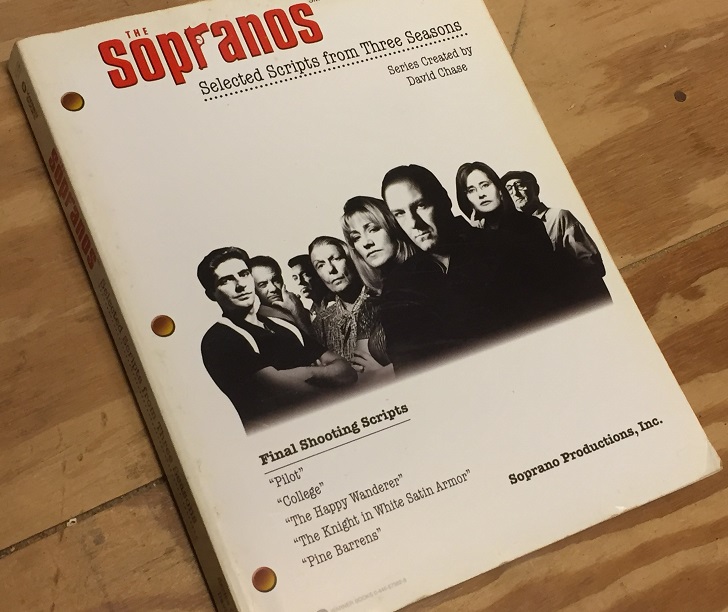
David Chase – The Sopranos
David Lynch – Twin Peaks
David Milch – Deadwood
David Simon – The Wire

JAY AND SILENT BOB

Who are they?
Two stoners from New Jersey. One has verbal diarrhea, the other hardly talks except to sum up the movie in one short monologue. They feature in films from writer/director Kevin Smith, who ‘plays’ the character Silent Bob himself. Jay is portrayed by his close friend Jason Mewes. They made an appearance in many movies, video games, comics and an animated television series. In Smith’s movies, they usually function as side-characters (only one scene in Chasing Amy). In 2001 they got their first own movie: Jay and Silent Bob Strike Back.

Films:
Clerks (1994), Mallrats (1995), Chasing Amy (1997), Dogma (1999), Scream 3 (2000, Cameo), Jay and Silent Bob Strike Back (2001), Clerks II (2006), Jay & Silent Bob’s Super Groovy Cartoon Movie! (2013), Jay and Silent Bob Reboot (2019), Clerks III (2022)

WHO’S THE MAN?

The Man Who Copied
is André (Lázaro Ramos)
The Man Who Cried
is Cesar (Johnny Depp)*
The Man Who Fell To Earth
is Thomas Jerome Newton (David Bowie)
The Man Who Knew Too Little
is Wallace ‘Wally’ Ritchie (Bill Murray)
The Man Who Knew Too Much
is Bob Lawrence (Leslie Banks) in 1934 and Ben McKenna (James Stewart) in 1956
The Man Who Shot Liberty Valance
is Tom Doniphon (John Wayne)
The Man Who Wasn’t There
is Ed Crane (Billy Bob Thornton)
The Man Who Would Be King
is Daniel Dravot (Sean Connery)

* More men cry in the movie but Johnny Depp’s character is the most obvious choice for the title role. However it is also suggested that the title is a reference to crying out or singing as well and that ‘the man’ can also refer to men in general.

DIRTY HARRY SERIES

Dirty Harry (1971)
Director: Don Siegel

Magnum Force (1973)
Director: Ted Post

The Enforcer (1976)
Director: James Fargo

Sudden Impact (1983)
Director: Clint Eastwood

The Dead Pool (1988)
Director: Buddy Van Horn

FILMS ABOUT FILMMAKERS

Chaplin (1992)
About Charles Chaplin
Played by Robert Downey Jr.

Dragon: The Bruce Lee Story (1993)
About Bruce Lee
Played by Jason Scott Lee (no relation)

Ed Wood (1994)
About Edward D. Wood Jr.
Played by Johnny Depp

Gods and Monsters (1998)
About James Whale
Played by Ian McKellan

Shadow of the Vampire (2000)
About Friedrich Wilhelm Murnau
Played by John Malkovich

Aviator, The (2005)
About Howard Hughes
Played by Leonardo DiCaprio

THE TERRORISTS IN DIE HARD

Hans Gruber – Alan Rickman
Karl – Alexander Godunov
Franco – Bruno Doyon
Tony – Andreas Wisniewski
Theo – Clarence Gilyard, JR.
Alexander – Joey Plewa
Marco – Lorenzo Caccialanza
Kristoff – Gerard Bonn
Eddie – Dennis Hayden
Uli – Al Leong
Heinrich – Gary Roberts
Fritz – Hans Buhringer
James – Wilhelm von Homburg

PETER JACKSON CAMEOS IN THE LORD OF THE RINGS TRILOGY

1. Carrot Eater

When and where: City of Bree in The Fellowship of the Ring

2. Wild Man

When and where: Isengard in The Two Towers

3. Spear Thrower

When and where: Helm’s Deep in The Two Towers

4. Pirate

When and where: Corsair ship in The Return of the King

ACTORS WHO PLAYED TWINS

Eddie Murphy – Bowfinger
Sean Young – A Kiss Before Dying
Jean Claude van Damme – Double Impact
Andy Garcia – Steal Big, Steal Little
Jeremy Irons – Dead Ringers
Lee Marvin – Cat Ballou
Nicolas Cage – Adaptation
Matthew Modine – Equinox
Armie Hammer – The Social Network
Bette Midler – Big Business
Lily Tomlin – Big Business
Leonardo DiCaprio – The Man in the Iron Mask
Edward Norton – Leaves of Grass
Lindsay Lohan – The Parent Trap
Bette Davis – A Stolen Life

CHEECH AND CHONG

Cheech & Chong are a famous stoner duo consisting of Richard ‘Cheech’ Marin and Tommy Chong who found a wide audience in the 1970s and 1980s for their films and stand-up routines, which were based on the hippie and free love era, and especially drug culture movements, most notably their love for cannabis.

Movies
Up In Smoke (1978)
Dir: Lou Adler

Next Movie (1980)
Dir: Tommy Chong

Nice Dreams (1981)
Dir: Tommy Chong

Things Are Tough All Over (1982)
Dir: Tom Avildsen

Still Smoking (1983)
Dir: Tommy Chong

Corsican Brothers, The (1984)
Dir: Tommy Chong

Get Out Of My Room (1985)
Dir: Cheech Marin

Born In East L.A. (1987)
Dir: Cheech Marin

Far Out Man (1989)
Dir: Tommy Chong

NEO REALISM

What is it?
A film movement that portrays ordinary people in the midst of the ruins of post WWII in Italy. A period dominated by angst, poor economics and extreme poverty. Neo realism is arguably more a trend than an actual movement by a group of people with similar thoughts and ideas. Its characteristics are the use of unknown actors (also for main parts), real locations and a realistic looking visual style.

Famous examples
Ossessione (1943, Luchino Visconti)
Rome, Open City (1945, Roberto Rosselini)
The Bicycle Thief (1948, Vittorio De Sica)
La Terra Trema (1948, Luchino Visconti)
Stromboli (1950, Roberto Rosselini)
Umberto D. (1952, Vittorio De Sica)

SELECTION OF ASH’S ONELINERS*

Ash?
Ashley J. ‘Ash’ Williams is the protagonist of The Evil Dead franchise. He is portrayed by Bruce Campbell. Throughout the series, Ash has to face off against his loved ones inside an abandoned cabin as they are possessed by deadites, the evil souls of the dead. Ash was named the 24th Greatest Movie Character of All Time by Empire Magazine.

Oneliners
– ‘Groovy’
– ‘Yo She-Bitch, let’s go!’
– ‘How’d you like the taste of that, huh?’
– ‘Name’s Ash, Housewares’
– ‘Come get some’
– ‘Can I borrow your face for a while? My ass is on vacation’*
– ‘That can’t be your face! What did your neck throw up?’*

* Videogame ‘A Fistful of Boomstick’

ACTORS WHO HAVE PLAYED PHILIP MARLOWE

Who?
Philip Marlowe is a fictional character created by Raymond Chandler in a series of mystery / detective novels including The Big Sleep and The Long Goodbye. Marlowe first appeared under that name in The Big Sleep, published in 1939.

Actors who have played this private snoop
George Sanders in The Falcon Takes Over (1942) [named ‘The Falcon’]
Lloyd Nolan in Time To Kill (1942) [named Michael Shayne]
Dick Powell in Murder, My Sweet (1944)
Humphrey Bogart in The Big Sleep (1946)
Robert Montgomery in Lady in the Lake (1947)
Robert Montgomery in The Brasher Doubloon (1947)
James Garner in Marlowe (1969)
Elliott Gould in The Long Goodbye (1973)
Robert Mitchum in Farewell My Lovely (1975)
Robert Mitchum in The Big Sleep (1978)

ACTORS / DIRECTORS AND THEIR BIRTH NAMES

Alexander Payne- Alexander Papadopoulos
Charles Bronson – Charles Dennis Buchinsky
Demi Moore – Demetria Gene Guynes
Jodie Foster- Alicia Christian Foster
Kiefer Sutherland – Kiefer William Frederick Dempsey George Rufus Sutherland
Martin Scorsese – Martin Marcantonio Luciano Scorsese
Martin Sheen – Ramon Antonio Gerard Estevez
Mel Gibson – Mel Columcille Gerard Gibson
Michael Keaton – Michael John Douglas
Nick Nolte – Nicholas King Nolte
Quentin Tarantino – Quentin Jerome Tarantino
Richard Donner – Richard D. Schwartzberg
Robbie Coltrane – Anthony Robert McMillan
Robert De Niro – Robert Mario De Niro Jr.
Robert Duvall – Robert Selden Duvall
Sylvester Stallone – Sylvester Gardenzio Stallone
Tom Cruise – Thomas Cruise Mapother IV
Woody Harrelson – Woodrow Tracy Harrelson

PUNNING PORN MOVIE TITLES

Anal Analysis
Battlestar Orgasmica
Beaverjuice
Blown in 60 Seconds
Buttman and Throbbin’
Cape Rear
Clockwork Orgy
The Cockateer
CreamCatcher
Driving Miss Daisy Crazy
Ed’s Wood
Edward Penishands
Erectnophobia
Fill Jill
Forrest Hump
The Flint Bones
Hannibal Lickter
Good Will Humping
Honey, I Blew Everybody
I Know Who You Did Last Summer
In Diana Jones and the Temple of Poon
Intercourse with the Vampire
Juranal Park
Jurassic Poke
The Last Anal Hero
Lost in Penetration
Lust, Ties and Videotape
Mad Jack: Beyond Thunderbone
Muffy the Vampire Layer
Plan 69 From Outer Space
Position: Impossible
Robocock
Romancing the Bone
Schindler’s Fist
Sexcalibur
Sexorcist
Sex Trek: The Next Penetration
Shaving Ryan’s Privates
Spermacus
The Sperminator
Star Whores
Total Reball
Twin Peeks
Wet Dreams May Cum
When Harry Ate Sally
White Men Can’t Hump

TITLES THAT FEATURE A COLOUR

The Black Dahlia
Pitch Black
Black Hawk Down
Tears of the Black Tiger
Black Narcissus
Black Rain
Pirates of the Caribbean: The Curse of the Black Pearl
Black Caesar
Meet Joe Black
Men In Black
Black Widow
Black Swan

Blue Velvet
The Big Blue
Betty Blue
Three Colours: Blue
Blue in the Face
The Blue Angel
The Blue Dahlia
Deep Blue Sea
Rhapsody in Blue
Blue is the Warmest Colour

Foxy Brown

The Boy With Green Hair
The Girl With Green Eyes
The Green Mile
The Green Hornet
The Green Man
The Green Slime
Monster From Green Hell
The Green Lantern
Green Inferno
Green Book
The Green Knight
Soylent Green
Fried Green Tomatoes

A Clockwork Orange
Orange County
Soldier of Orange

The Color Purple
Purple Rain

Red River
Three Colours: Red
Red Beard
The Thin Red Line
The Red Shoes
Moulin Rouge
Red Planet
Deep Red
Red Rock West
Red Desert
Raise the Red Lantern
The Man with One Red Shoe
The Red Balloon
Lady in Red

Pretty in Pink
Pink Flamingo’s

White Fang
White Heat
White Zombie
White Men Can’t Jump
Three Colours : White
Harold & Kumar Go to White Castle
The Bride With White Hair

Yellow Submarine
She Wore A Yellow Ribbon
The Clouded Yellow

5 stappen om kapitalisme te repareren

Kan het bedrijfsleven de wereld veranderen? Harvard professor Rebecca Henderson, auteur van het boek Reimagining Capitalism in a World on Fire, is optimistisch. De mensheid is extreem vindingrijk en we hebben de technologie.

Maar op dit moment staat de wereld in brand. Volgens Henderson staan drie problemen centraal:
1. Degradatie van het milieu;
2. Sociale ongelijkheid;
3. Falende instellingen.

Het is in het belang van het bedrijfsleven om deze problemen op te lossen, want in een kapotte wereld valt geen geld te verdienen. De incentives zijn er. En de businesscase is volgens de Harvard-professor ook vaak goed te maken. Een bedrijf dat dit als een van de eerste heeft aangetoond is Lipton, de theedivisie van Unilever. Toen dit bedrijf liet zien dat duurzaam geproduceerde thee slechts vijf procent meer kost en dat klanten het belangrijk genoeg vonden om het marktaandeel te vergroten, sprongen alle concurrenten er ook in.

Dat het mogelijk is, is duidelijk. Welke stappen zijn er nodig om te zorgen voor een duurzame ommekeer?

1. Het creëren van gedeelde waarden
Gedeelde waarden refereren aan bedrijven die winstgevend zijn voor investeerders én tegelijkertijd waarde creëren voor alle stakeholders. Dit is een lastige balanceeract die leiders zich eigen moeten maken. Een bekend voorbeeld is natuurlijk Paul Polman, tussen 2009 en 2019 CEO van Unilever. Hij kon het ene moment een gepassioneerd verhaal houden over de zeer ambitieuze duurzaamheidsambities van Unilever en het volgende moment een manager compleet doorzagen over gemiste omzetdoelstellingen. Beide gebieden moeten dezelfde aandacht en focus krijgen, niet slechts één van de twee. Hier is moed voor nodig. Het is makkelijker om je op het volgende kwartaal te richten dan op iets helemaal nieuws.

2. Geloven in een hoger doel van bedrijven
In ons huidige op rendement georiënteerde wereldbeeld maken gedeelde waarden geen kans. Ons wereldbeeld is nu nog sterk bepaalt door econoom Milton Friedman die redeneerde dat bedrijven de aandeelhouder altijd voorop moeten stellen. Zelfs in Nederland met het Rijnlandse model is het maken van winst het primaire doel van bedrijven. Niet het winstgevend zijn als randvoorwaarde om hogere doelen te kunnen nastreven.

Het centrale idee van Friedman werkt binnen een bepaalde context, maar is vandaag gevaarlijk omdat:
– Externe effecten niet adequaat geprijsd zijn (denk aan kolen, benzine, co2-uitstoot, vlees en cement);
– Er grote verschillen zijn in kennis en skills; er zijn geen gelijke kansen voor iedereen.
– Bedrijven kunnen valsspelen door beleid in hun voordeel om te buigen.

De discussie purpose versus profit is de verkeerde, volgens Henderson. Business as usual is namelijk geen rendabele optie. Opereren binnen de grenzen van de leefwereld wordt het nieuwe normaal. Dit is zeer disruptief, maar biedt ook enorm veel kansen.

3. Herbedraden van finance
Finance is volgens velen het grootste struikelblok in het heruitvinden van kapitalisme. Zolang investeerders alleen maar zo snel mogelijk geld willen verdienen gaat het niet lukken. Maar het beperken van de macht van de aandeelhouders via wetgeving is niet noodzakelijk de beste oplossing, denkt de auteur. Als investeerders teleurgesteld zijn omdat targets niet gehaald zijn, komt dat vaak omdat ze denken dat de bedrijven slecht gemanaged worden. Er ligt een taak voor CEO’s, CFO en andere bestuurders om de lange termijn doelen duidelijk te communiceren, wat er daarvoor nodig is (investeringen), en welke returns er te verwachten zijn. Wanneer ze dat goed communiceren, zullen sommigen investeerders erin stappen. Purpose gaat uiteindelijk winnen en dat snappen investors ook, dus moet je ze als bestuurder mee weten te krijgen.

Henderson stelt dat investeerders al bezig zijn met de omslag. Larry Fink, CEO van Blackrock, de grootste investeerder ter wereld, schreef in zijn jaarlijkse brief aan CEO’s dat klimaatverandering vraagt om een fundamentele hervorming van finance. Bijna 50 procent van de investeerders wereldwijd maakt inmiddels gebruik van een vorm van ESG (Environmental, Social & Governance) data. En de meldingen van ESG in de pers namen met acht keer toe tussen 2015 en 2018.

4. Leren SAMENwerken
Veel van de huidige wereldproblemen zijn problemen van het publieke goed. Jouw bedrijf kan besluiten bomen te laten staan, maar als je concurrent ze vervolgens omhakt, ga je failliet. Industriebrede samenwerking is nodig. Er zijn een aantal randvoorwaarden om een dergelijke samenwerking te laten slagen:
– Zorgen voor transparantie in bereikte resultaten.
– Er moeten duidelijke regels zijn die worden gehandhaafd. Er kan geen tolerantie zijn voor freeriders.
– Samenwerking met lokale overheden is cruciaal.
– Verhogen van incentives voor alle stakeholders.
– De publieke opinie moet met de coalitie zijn.

5. Beschermen van het democratische systeem
Voor vrije markten om goed te kunnen functioneren moeten bedrijven grenzen hebben. Een goed functionerende overheid, nationale instituten en kritische media zijn nodig om bedrijven in toom te houden. Het is aan de overheid om ofwel economische incentives te introduceren die bedrijven stimuleren de juiste kant op te bewegen of dit af te dwingen met regulering. Ook is het de taak van de overheid om ongelijkheid tegen te gaan zodat de kansen in de vrije markten zoveel mogelijk gelijk zijn. Een dergelijke goed functionerende overheid is verre van vanzelfsprekend, Maar ze is 100 procent noodzakelijk als we kapitalisme willen heruitvinden om de grote uitdagingen van deze tijd te overwinnen.

Conclusie
Bedrijven zijn goed in incrementele verbeteringen, maar wat nodig is in deze tijd is architectonische innovatie. Bedrijven die hier eerder dan concurrenten in investeren maken kans op duurzaam succes. Dat vraagt om een andere kijk op het bestaansrecht van bedrijven. Het zijn geen vehikels om geld voor aandeelhouders te verdienen, al moeten die ook goed geholpen worden. Bedrijven zijn er om positieve veranderingen te brengen in de samenleving. Als dat nou eens het nieuwe normaal kon worden na corona…