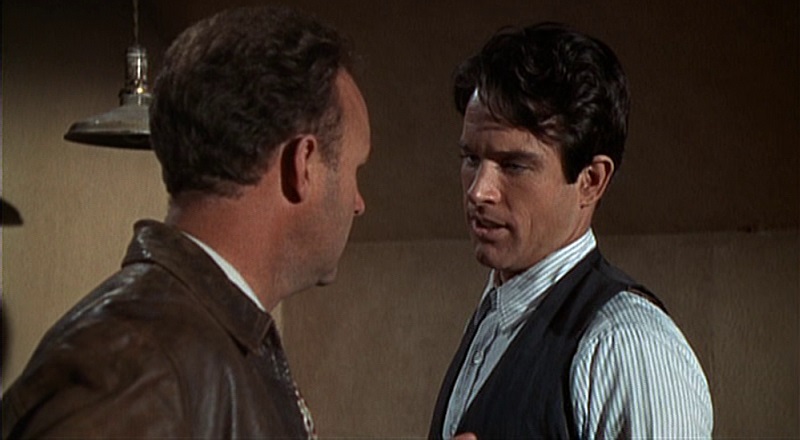
5 Reasons ‘Scarface’ Rarely Makes it to Critics’ Favorite Lists

Me, I want what's coming to me.

‘Me, I want what’s coming to me.’

Although Brian De Palma’s 1983 gangster movie ‘Scarface’ is legendary within the popular culture domain, it is hardly considered a masterpiece, such as ‘The Godfather’, ‘The Godfather Part II’ and ‘GoodFellas’. Should it?

Yes, I definitely think so. There is no other movie that shows the rise and fall of a gangster more effectively than Scarface. Okay, the high is pretty brief – and consists mostly of a musical number (‘Push it to the limit’), during which Tony Montana (Al Pacino) is buying tigers and snorting lot’s of cocaine. But I guess that is what a gangster’s high would ultimately feel like; empty, shallow and unsatisfying. Even the kick of having the desirable Elvira (Michelle Pfeiffer) doesn’t last more than five minutes screentime.

The late film critic Roger Ebert – who awarded ‘Scarface’ a maximum of four stars – said it very poignantly. ‘The movie has been borrowed from so often that it’s difficult to understand how original it seemed in 1983, when Latino heroes were rare, when cocaine was not a cliché, when sequences at the pitch of the final gun battle were not commonplace. Just as a generation raised on ‘The Sopranos’ may never understand how original ‘The Godfather’ was, so ‘Scarface’ has been absorbed into its imitators.’

‘Scarface’ is listed in IMDb’s Top 250 (position 117), but that list is put together by users’ votes. On critic lists, such as the AFI 100 Best American Films, the All Time 100 (by Time) or Rotten Tomatoes’ 100 highest ranked films, it doesn’t appear. So what is it about ‘Scarface’ that obstructs it from being seen as a masterpiece, like the before mentioned gangster classics? Here are the five most probable reasons:

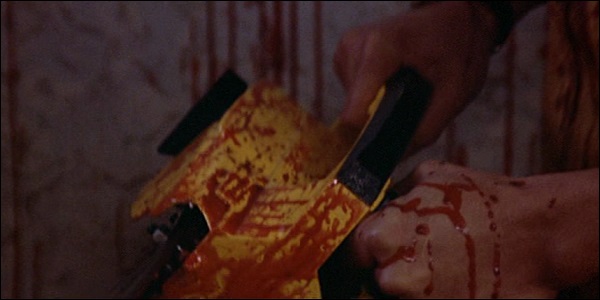
1.  The chainsaw scene
Scarface 1 - The chainsaw scene
Gangster films are violent, that is accepted. But Coppola and Scorsese have a way of turning even the most off-putting bit of violence into something really stylish and cinematic. The way De Palma handles the chainsaw scene, 24 minutes within the movie, is just plain ugly. ‘Now the leg huh’, remarks the sadistic Hector as he puts the saw in Tony Montana’s friend. This scene alone puts ‘Scarface’ in the extreme cinema league. And films that are extreme in this sense are rarely considered as Academy Award contenders.

2. The general ugliness
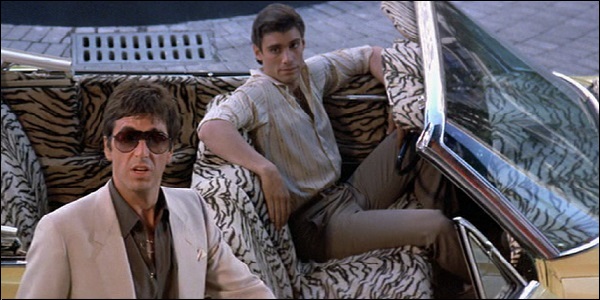
Scarface 2 - Ugly Car
Most of it is done deliberately, but the look and feel of ‘Scarface’ is just ugly dugly. That shirt that Montana is wearing, holy Christ! Also look at the sets. Miami in the eighties is just terrible. From the refugee camp where Montana and his partners murder the communist Rebenga, to the Miami Beach area where they start their careers as drug runners, these locations are just god awful. The language doesn’t help either: ‘Why don’t you try sticking your head up your ass, see if it fits’, Montana tells Hector. Can you hear Vito Corleone utter such a line? Or how about this one: ‘This town is like a great big pussy just waiting to get fucked.’ That doesn’t sound like ‘Casablanca’ does it? Last but not least: the music. From the cringe worthy synthesizer sounds to eighties hits like ‘She’s on Fire’. It is so wrong, it’s right.

3. The general foulness
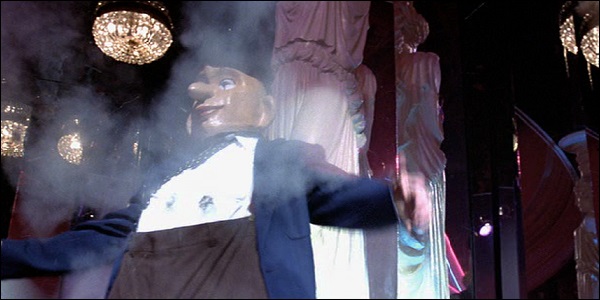
Scarface 3 - The Clown
‘Scarface’ is in the end a very cynical movie in which the American Dream can only be achieved through extreme violence and corruption. Tony’s quest for power leads to ton’s of dead bodies: even a clown is whacked for god’s sake! A world in which a vile assassin like Tony Montana is the ultimate hero, is just very hard to accept. And the film gets uglier and uglier as it progresses. Tony’s drunken diner speech is the ultimate example of the repellent worldview on display. ‘Is this it? That’s what it’s all about, Manny? Eating, drinking, fucking, sucking? Snorting? Then what? You’re 50. You got a bag for a belly. You got tits, you need a bra. They got hair on them. You got a liver, they got spots on it, and you’re eating this fucking shit, looking like these rich fucking mummies in here… Look at that. A junkie. I got a fucking junkie for a wife. She don’t eat nothing. Sleeps all day with them black shades on. Wakes up with a Quaalude, and who won’t fuck me ‘cause she’s in a coma. I can’t even have a kid with her, Manny. Her womb is so polluted; I can’t even have a fucking little baby with her!’ It is kind of depressing when he puts it like that.

4. The sister storyline
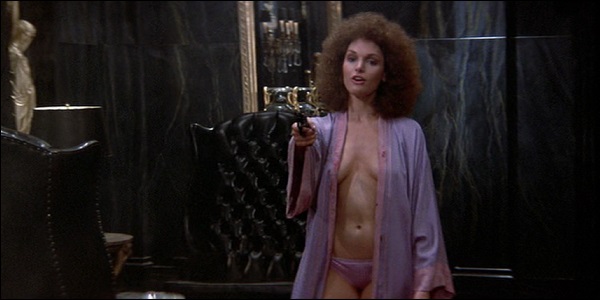
Scarface 4 - Sister Shooting at Tony
Incest is never a pleasant topic, and even though nothing actually happens sexually between Tony and his sister Gina, it still raises some controversy. It also adds further to the already unpleasant vibe that the movie creates. Tony’s sickening jealousy of every man who even looks at his sister, let alone touches her, leads to aggression and eventually the murder on his best friend Manny. One of the hardest parts to watch involves Gina walking into Tony’s study, undressed, asking him to fuck her while shooting at him.

5. The over-the-top climax
Scarface 5 - Climax
The climax of ‘Scarface’ is so over the top that it is hard to comprehend during the first viewing. Many gangster films end with a massacre, but this is Rambo on cocaine. Fitting how this ending may be, it is so much of everything, that it may affect the judgment of its more critical audience.

None of this really matters though. ‘Scarface’ is a true classic. And though it may not always be appreciated as it should, ‘every dog has its day.’ ‘Scarface’ could go right to the top.

10 Management Lessons From Highly Successful Gangsters

By Jeppe Kleijngeld

Running a large company or criminal empire, what’s the difference? The demands for its managers and leaders are very similar for sure. As a leader, your vision needs to inspire others and your actions need to have significant impact. You also need to be able to effectively solve problems and prevent painful blunders. Taking a close look at 10 highly successful gangsters from popular movies and television series can be inspirational. Eventually most of them went down, but they all had impressive careers as criminal CEO’s. What can business leaders learn from their successful approaches and significant failures?

1. Plan all your actions carefully
Neil McCauley
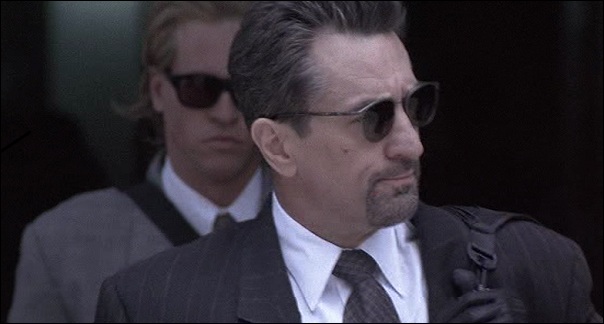
The Gangster: Neil McCauley, Heat

The Lesson: In the spectacular opening scene of Michael Mann’s Heat, criminal chief Neil McCauley and his team of robbers manage to take down a huge score. The key to their success? Planning, planning, planning. McCauley is a perfectionist; every detail needs to be scrupulously prepared, nothing can be left to coincidence. It there is even a slight chance that something is wrong; he will walk away from a job no matter how much money is at stake. Off course, there is a slight bump in the road for McCauley and his team later on, but that is only because pulling armed robberies is a highly volatile business. But even with a terrific investigation team on their tail lead by a fanatical Al Pacino, they manage to take down another – even larger – score later on in the movie.

2. Build a team you can rely on
Joe Cabot
The Gangster: Joe Cabot, Reservoir Dogs

The Lesson: ‘I should have my head examined for going with someone I wasn’t a 100 percent on…’ Yeah, you should have Joe. As a manager, your most important task is to choose the right people around you and make them perform optimally. When you have a crucial project to realise – a diamond heist in Joe Cabot’s case – you don’t want to take any chances on whom you hire for the job. Joe’s negligence at this point, allowed a special LAPD-agent to infiltrate his crew, leading to a disastrous outcome for the project and all those involved.

3. Always look out for opportunities and know when to strike
Henry Hill
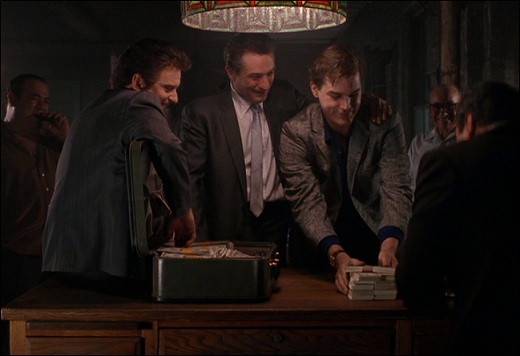
The Gangster: Henry Hill, GoodFellas

The Lesson: In Wiseguy, the novel on which the classic mob movie GoodFellas is based, protagonist Henry Hill describes his bewonderment at how lazy many people are. Great entrepreneurs like him are always looking for new ways to make money. Once in a while, a golden opportunity arises and a highly successful business manager will recognize this once in a lifetime chance and grab it. In Henry Hill’s case, this was the Air France heist in 1967. He walked away with 420.000 US dollars from the Air France cargo terminal at JFK International Airport without using a gun; the largest cash robbery that had taken place at the time. This was Hill’s ticket to long term success within the Mafia.

4. Analyse, decide and execute with conviction
Michael Corleone
The Gangster: Michael Corleone, The Godfather

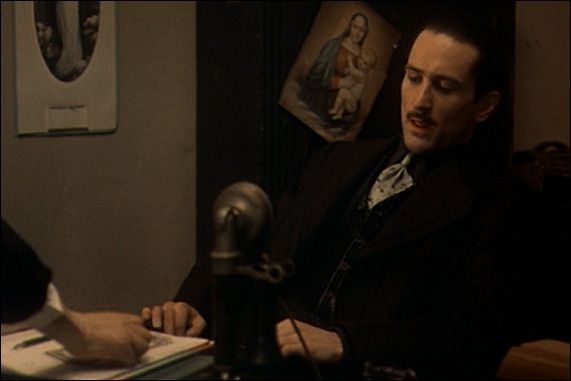
The Lesson: Your success as executive depends for a great deal on the way you make decisions and follow them through. When his father, family patriarch Don Vito Corleone, is shot by Virgil ‘The Turk’ Sollozzo, Michael Corleone knows the threat of his father’s killing will not be over until Sollozo is dead. That is his analysis. Then, without any hesitation, he decides to kill Sollozo despite the hard consequences that he knows will follow. The third part – the execution – he performs flawlessly, killing Sollozo and his bodyguard Police Captain McCluskey in a restaurant. Michael later in the film again proves to be an extremely decisive leader when he has the heads of the five families killed when they conspire against the Corleone family.

5. Support the local community
Young Vito Corleone
The Gangster: Young Vito Corleone, The Godfather Part II

The Lesson: For long term success, you need more than just great products (in the mob’s case: protection, gambling and theft). You will need commitment from all your stakeholders and especially goodwill from the communities you operate in. Young Vito Corleone sees that gangster boss Fanucci is squeezing out everybody in the neighbourhood he lives in. Nobody is happy with him. So he murders Fanucci and takes over as neighbourhood chieftain. Rather than squeezing out people, he starts helping them. Every favour he does for somebody, earns him a favour in return. Those are a lot of favours and a lot of people who think he deserves his success and wealth. They are willing to give everything for their Don.

6. Don’t be afraid to use your subconscious
Tony Soprano
The Gangster: Tony Soprano, The Sopranos

The Lesson: As a leader, you want to base your decisions on hard facts as much as possible, but sometimes your intuition is much more powerful than the greatest performance dashboard in the world. In the first season of HBO’s monumental Mafia series The Sopranos, family patriarch Tony Soprano’s own mother tries to have him whacked. He had revealing dreams about this before it happened, but refused to look at the painful true meaning of these dreams. Through therapy, he learned to use his subconscious like a true expert, so when his friend Big Pussy Bonpensiero starts ratting for the FBI in season 2, he knows something is wrong. In a fever dream, Big Pussy (as a fish), reveals the hard truth to Tony. When he wakes up, he knows exactly what to do. Big Pussy must sleep with the fishes. Tony’s new ability to listen to his subconscious makes him a much more effective leader.

7. Think and act faster
Nucky Thompson
The Gangster: Nucky Thompson, Boardwalk Empire

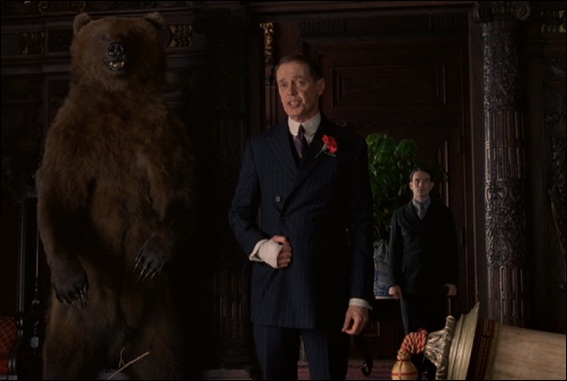
The Lesson: After a botched assassination attempt on bootlegger and crooked politician Nucky Thompson, his enemies are left numb and indecisive of what to do next. Nucky – on the other hand – immediately makes a counter move. He goes to see his enemies and tells them the attempt on his life changed his perspective on things. He will abandon the bootlegging business and politics, so his enemies can take over. In secret however, Nucky books a trip to Ireland the next day, where he purchases a huge amount of cheap and highly qualitative Irish whiskey. His enemies underestimated him. By thinking and acting faster than his opponents, Nucky manages to surprise them and outperform them in business.

8. Take compliance seriously
Al Capone
The Gangster: Al Capone, The Untouchables

The Lesson: He was the king of his trade; the bootlegging business in Chicago. He made millions importing booze and selling it to bars and clubs. The thing that brought him down was income tax evasion. Managers can learn a simple truth from this mistake; compliance is your license to operate. Off course in Capone’s case this was a little different because he did not have any legal income to begin with, but many CEO’s of businesses have fallen into the same compliance trap. Sure, sometimes it is cheaper to pay a fine than to spend a fortune on meeting some obsolete policy, but you should never fail to answer to the most important rules and regulations. So even when it is sometimes tempting to bend the rules, in the end: being non-compliant is always more costly than being compliant.

9. Ride the Industry Waves
Tony Montana
The Gangster: Tony Montana, Scarface

The Lesson: Every industry has its waves, and a great CEO knows how to ride these waves. Take the drug business in the 1980’s. Cocaine was coming up big time in Florida. After Montana gets rid of his weak boss Frank, he sets up a massive cocaine trade in Miami and surroundings. His supply chain is very efficient. He imports the stuff straight from the source in Bolivia. Nobody can compete with that. It isn’t before long that Montana is Florida’s one and only cocaine king.

10. Keep your friends close and your enemies closer
Don Vito Corleone
The Gangster: Don Vito Corleone, The Godfather

The Lesson: You want to know what your competitors are up to? Invite them over for dinner and a meeting. Don Vito Corleone does it all the time. When he invites the heads of the five families for a sit down, in this powerful scene in The Godfather, he learns a great deal. It is not Tattaglia he should worry about, but that treacherous Barzini. Now that he understands the conspiracy against the Corleone family, he can help his son Michael take the necessary precautions.

Once Upon a Time in America


As boys, they said they would die for each other. As men, they did.

Directed by:
Sergio Leone

Written by:
Harry Grey (book ‘The Hoods’)
Leonardo Benvenuti (screenplay)
Piero De Bernardi (screenplay)
Enrico Medioli (screenplay)
Franco Arcalli (screenplay)
Franco Ferrini (screenplay)
Sergio Leone (screenplay)

Cast:
Robert De Niro (David ‘Noodles’ Aaronson), James Woods (Maximilian ‘Max’ Bercovicz), Elizabeth McGovern (Deborah Gelly), James Hayden (Patrick ‘Patsy’ Goldberg), William Forsythe (Philip ‘Cockeye’ Stein), Tuesday Weld (Carol), Treat Williams (James Conway O’Donnell), Scott Tiler (Young Noodles), Rusty Jacobs (Young Max / David Bailey), Jennifer Connelly (Young Deborah)

In the late 1970s, master director Sergio Leone turned down the offer to direct The Godfather in order to make another gangster film, this one based on the novel ‘The Hoods’ by former mobster Harry Grey. When filming was completed, the total footage ran between eight and ten hours. Leone and editor Nino Baragli trimmed it down to around six hours, intending to release the film as two three-hour features. The producers, however, rejected this idea and cut the film down to just over two hours for the American market. In doing so, they also abandoned the film’s non-linear structure, rendering the story almost incomprehensible. Unsurprisingly, the film flopped in the U.S., and Leone was left devastated.

Fortunately, a 3-hour and 49-minute version was prepared for international release, with the original non-chronological storytelling restored. Audiences overseas responded more positively, and many critics recognized it as a cinematic masterpiece. With his spaghetti westerns, Leone revealed the gritty, opportunistic side of the Old West. Here, he does the same for the American city ruled by mobsters. He strikes exactly the right tone. His sprawling gangland epic shows a world that may sparkle with a thin coat of glamour, but beneath that lies grime and plenty of it.

The narrative jumps across time, following Jewish gangster Noodles (Robert De Niro) through three phases of his life. First, his youth in the Lower East Side, where he meets his lifelong friend, the cunning but volatile Max (James Woods). In their prime during the Prohibition era, the two – along with childhood friends – rise to control a lucrative bootlegging operation. But tensions rise, and their friendship deteriorates with devastating consequences. In the third act, Noodles returns to New York as an old man after 35 years, confronting the ghosts of his past.

The fragmented screenplay may not feel intuitive, but it doesn’t need to be. The film works on a dreamlike, emotional logic. Many interpret the second half as nothing more than an opium-induced fantasy – a fugue state in which Noodles imagines a resolution, a reckoning, and perhaps a redemption that never truly came. It’s an ambiguous, melancholic meditation on memory, regret, and American myth. This is not a typical rise-and-fall gangster story; it’s about life itself. The psychological depth is extraordinary. Few films give you such an encompassing sense of a person’s entire existence: memories, pain, joy, death and, of course, love.

As with Leone’s finest work, the film is packed with haunting, unforgettable moments: Max and Noodles beaten in the alley, Noodles’ opium haze in the Chinese theater, Little Dominic dying in Noodles’ arms (“Noodles, I slipped”), and Noodles peeking through the wall at Deborah’s dance rehearsal. The art direction and cinematography render every frame like a painting, each one worthy of being hung on a wall. In that sense, this is Leone’s The Godfather.

Together with composer Ennio Morricone, Leone achieves true cinematic synergy. The film’s pacing often mirrors the rhythm of Morricone’s hauntingly beautiful score, enhancing the emotional impact to mesmerizing effect. The casting is another strength: De Niro brings nuance and reluctant sympathy to a deeply flawed anti-hero, while Woods is chillingly effective as Max. Strong supporting roles are delivered by Jennifer Connelly, Joe Pesci, Tuesday Weld, and Burt Young.

Though it may have its imperfections, Once Upon a Time in America remains a towering, influential achievement. Leone spent over a decade bringing this vision to life and it shows. It’s a shame it turned out to be his final film, but few directors could hope to end their career with something so ambitious, haunting, and unforgettable.

Rating:

Quote:
NOODLES: “You can always tell the winners at the starting gate. You can always tell the winners and you can tell the losers.”

Trivia:
Robert De Niro suggested that James Woods wear a set of perfect, bright white teeth to demonstrate Secretary Bailey’s wealth and vanity. The producers balked at the cost, so De Niro paid for them himself.

Pulp Fiction (1994)


‘Girls like me don’t make invitations like this to just anyone!’

Directed by:
Quentin Tarantino

Written by:
Quentin Tarantino (stories / screenplay)
Roger Avary (stories)

Cast:
John Travolta (Vincent Vega), Samuel L. Jackson (Jules Winnfield), Uma Thurman (Mia Wallace), Tim Roth (Pumpkin), Amanda Plummer (Honey Bunny), Bruce Willis (Butch Coolidge), Ving Rhames (Marsellus Wallace), Eric Stoltz (Lance), Rosanna Arquette (Jody), Harvey Keitel (Winston Wolf)

After Quentin Tarantino’s insanely cool debut in 1992, Reservoir Dogs – which he wrote and directed – the expectations of him in movieland were quite high. Two years later he delivered. When Pulp Fiction premièred at Cannes in 1994, they didn’t know what hit them. Tarantino’s L.A.-based crime opus, inspired by the Black Mask pulp magazine, blew them all away.

The three intersecting stories that are told non-chronologically in Pulp Fiction are all amazing in their own way. The first one about two hitmen Vincent Vega (John Travolta) and Jules Winnfield (Samuel L. Jackson) that have to dispose of a headless body and blood-soaked car is both mean and hysterical. The second one in which Vega takes gangster boss Marcellus Wallace’s wife Mia (Uma Thurman) out on a date (“it’s not a date!”) is druggy, cool, sensual and exciting. The third story about boxer Butch (Bruce Willis) who swindles Marcellus Wallace is romantic, ironic and twisted. The whole plot is tied together by a crazy short about a young couple in love who decide to rob the restaurant they are having breakfast in.Whether a person knows about movies or not, it is hard to miss that this is an amazingly clever movie. The screenplay is out of this world and so is the cast (5 million dollars of the 8 million budget went to the cast). The non-chronological structure to which Tarantino holds the patent is never done better. And although not his most mature, the dialogues about foot massages, piercings, TV-pilots and uncomfortable silences are unforgettable. Especially the exchanges between Vega and Winnfield are absolutely hilarious.

Of course, this being Tarantino’s early masterpiece, it contains a trainload of movie references. One could even call it his ultimate homage to cinema. But what makes it richer and cleverer than just a highly entertaining crime flick stuffed with pop-culture dialogues and references, is the biblical thread that runs through it. It is truly remarkable how the separate stories intertwine and destiny comes into play the whole time. For example, Butch and Marcellus Wallace walk into the most terrible place on earth, but it does put them square in the end. And what becomes a life changing event for Winnfield, is ignored by Vega for whom things soon end badly. All the characters get a lesson in some sort of way. Some get a second chance and some don’t. The viewer can keep looking into this and discover new things all the time. In this respect, the screenwriters did a wonderful job and justly won an Oscar for it.

The nineties was a glorious time for cinema, when surprises like Pulp Fiction would still appear once in a while. Although, we can only hope for this period to return, we can also re-live the beautiful movie experiences from the past. Like the content of the mysterious briefcase in the movie, Pulp Fiction is a treasure that will undoubtedly still be viewed and honored long into the future.

Rating:

Quote:
JULES:  “Marcellus Wallace don’t like to be fucked by anybody except Mrs. Wallace.”

Trivia:
Samuel L. Jackson auditioned for the part of Mr. Orange in Reservoir Dogs (1992), but it went to Tim Roth. Tarantino enjoyed Jackson’s work so much that he wrote the part of Jules specifically for him.