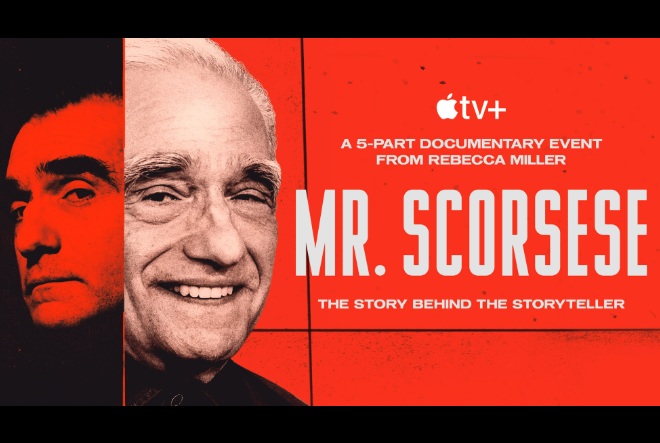
Apple TV Special: Mr. Scorsese

Mr. Scorsese is a five episode film portrait about one of the greatest film directors of all time now playing on Apple TV. It’s the most extensive documentary ever shot about the Italian American cinematic master, featuring interviews with a.o. Leonardo DiCaprio, Robert De Niro and Daniel Day Lewis. Reason enough for me to subscribe to Apple TV. An additional benefit of the subscription is that Marty’s latest film – Killers of the Flower Moon – is also available on the channel.

Scorsese is a very sympathetic guy; I have seen many interviews with him before, logical since he’s my favorite filmmaker, but in this series, you really get to know the man. He grew up in Little Italy and later Manhattan. He was very asthmatic as a child and he couldn’t play outside. There is this shot in GoodFellas where a young Henry Hill is staring out of the window observing the wiseguys outside. That’s Marty right there.

Movie theaters had air conditioning, so that’s where young Martin wanted to be as much as possible. He could breath there, and the movies formed his mind. At home he watched old Italian films with his family. He started making extensive storyboards which his father thought wasn’t very manly. Marty learned of the mobsters who controlled much of the economic activity in his neighbourhood. His father had a good job in the garment industry, which was worked out by the mob. He told young Marty: “Don’t ever let them do you a favor. They’re nothing but bloodsuckers.”

The young Scorsese initially wanted to become a priest, but that path wasn’t for him. Neither were the streets. Literature wasn’t part of his culture either, but a priest encouraged him and his friends to look beyond what they knew; to go to college, to read, learn, and explore. He attended a talk about film school and heard a professor speak passionately about cinema. That was the moment he knew what he wanted to do.

At New York film school he met Thelma Schoonmaker, his future editor. She recalls seeing his student work and knowing immediately that “he had it.” His student film It’s Not Just You, Murray! (1964) won the award for Best Student Film. In 1967 he made his first feature, Who’s That Knocking at My Door, starring Harvey Keitel.

Scorsese married young, but his first marriage collapsed quickly because his mind went more and more to making movies. He went to Hollywood to further his career and met an amazing assortment of talent there: Coppola, Schrader, Spielberg, Lucas and De Palma, known collectively as the ‘Movie Brats’. They were given this name because they were the first generation of formally trained filmmakers to unite film knowledge with artistic ambition.

In the early seventies, King of the B-movies Roger Corman gave Scorsese the chance to direct a movie. This became Boxcar Bertha (1972), a Bonnie and Clyde-style crime movie. His artistic friends hated it. Marty thought it was a good practice in shooting on budget and shooting on time, but his friends thought he had betrayed himself as an artist.

John Cassavetes had seen his feature Who’s That Knocking at My Door and advised him to make more personal movies like that. About Boxcar Bertha he said: “You just spent a year of your life making a piece of shit. Don’t do that again.” Scorsese showed him his Mean Streets screenplay and Cassavetes told him to go find a lead actor to star in it. Then he met De Niro who was from the same neighbourhood.

Mean Streets was based on people and experiences from his neighborhood and people fell in love with it, because it felt completely authentic. That makes sense, because it was real. Now, Marty got more opportunities. With his next film Alice Doesn’t Live Here Anymore (1974), he showed he could also direct women. Ellen Burstyn won the Academy Award for Best Actress for her lead role.

Although Scorsese gained recognition, this period also marked the start of heavy drug use. Film remained his way of working through deep inner turmoil. Drawn to darker characters, he was captivated by Paul Schrader’s script for Taxi Driver. He and De Niro set out to portray a loner like Travis Bickle without turning him into a caricature. Travis is isolated in almost every frame. Taxi Driver (1976) was a huge critical success and won the Palme d’Or.

Everybody praised it. It hit a nerve and showed a true understanding of the American unconscious. A lone man who commits atrocities, like the snipers who killed politicians at that time. Travis has a saviour complex: he wants to save the girls and kill the bad guys. The final scene was too violent for the sensors, so Scorsese changed the colour of the blood to dark, rusty brown or brownish-pink rather than bright red. Daniel Day Lewis was hypnotized by the film and went to see it five or six times. It was the first time he saw Bob (De Niro) act, which was a big thing for him.

After the success of Taxi Driver, he made the costly musical failure New York, New York (1977). His second marriage also fell apart and what started then was a period of self destructive behavior. He started doing lots of drugs and tried to find his cinematic muse again. He almost died – and part of him wanted to because he didn’t know how to create anymore. De Niro had a big part in getting him back on his feet. They went to Sint Maarten where they worked on the script for their next masterpiece: Raging Bull (1980).

Thelma Schoonmaker explains the film’s shooting and editing, and the documentary allows you to rediscover the beauty of its black-and-white imagery. It’s a true work of art. Scorsese had found his muse again, and also his third wife: the daughter of Ingrid Bergman and Roberto Rossellini.

After Raging Bull he wanted to do Gangs of New York and The Last Temptation of Christ. The scripts were there, but the movies were too expensive to make at that time. He did another project with De Niro, The King of Comedy (1982), which flopped. Scorsese’s career was now once again in a bad state. “He was done for in Hollywood”, they told him.

He made a comeback with After Hours (1985), an odd ball comedy shot on a low budget. Key to the film, Scorsese explains, was the collaboration with Director of Photography Michael Ballhaus, who would later shoot GoodFellas. In 1985, he married for the fourth time, this time with Barbara De Fina, who would produce a number of his movies, including Casino.
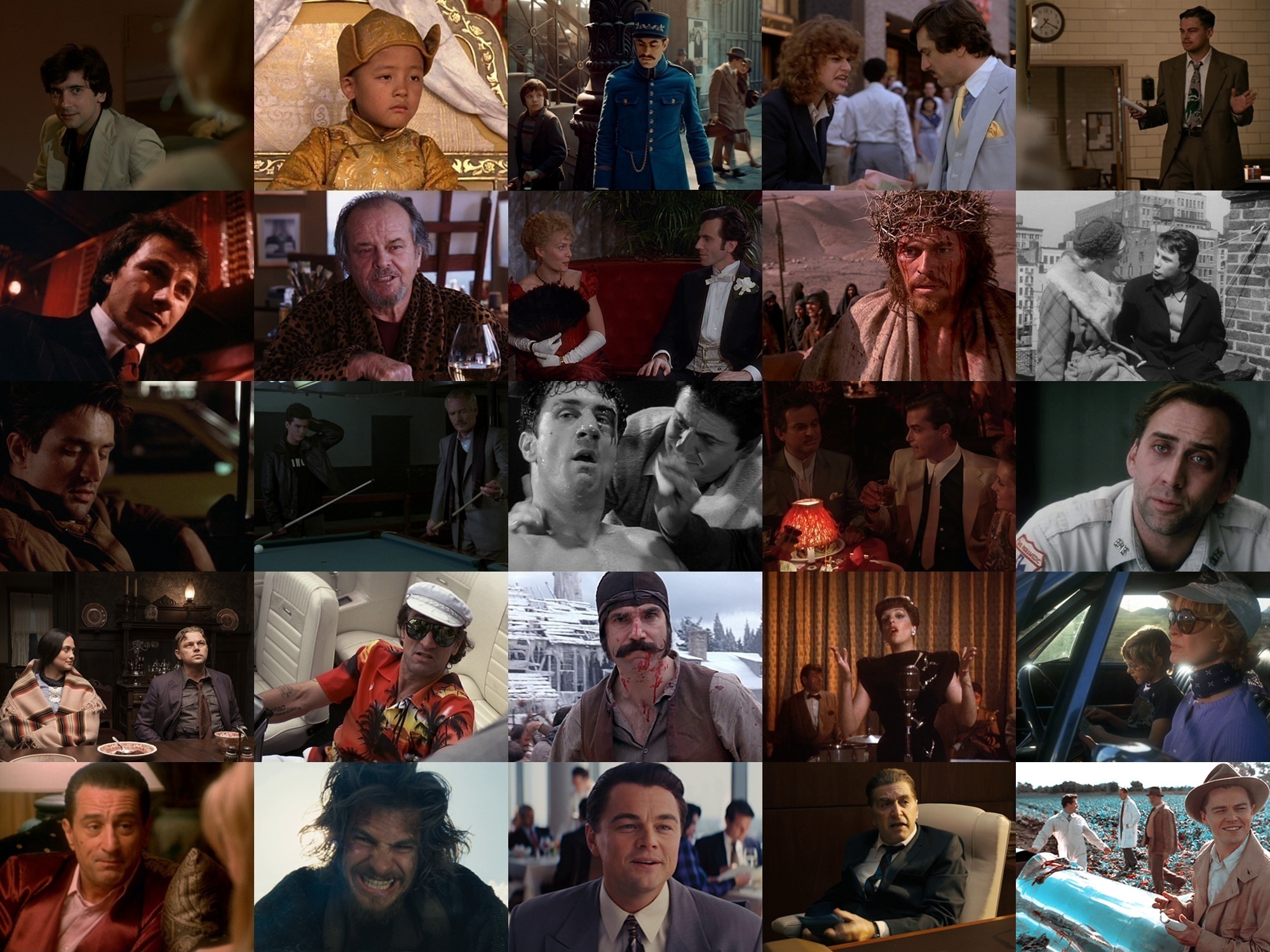
The re-established Scorsese followed up After Hours with The Color of Money (1986), a pool hall movie starring Paul Newman and Tom Cruise, and a sequel to The Hustler (1961). The movie did well, so now Scorsese could finally make his beloved project The Last Temptation of Christ (1988). He made the film to “get to know Christ better”, he explains.

The budget was tight, so he could only do two takes of every shot during the difficult shoot in Morocco. It was very tough, he says. Even tougher was the reception of the film: people were very upset. It was banned in Rome, Israel, and India – and someone set off a bomb during a screening in Paris. Blockbuster didn’t carry the film. Marty needed FBI protection for the second time (he had gotten threats after Taxi Driver and had needed protection then as well).

While working on The Color of Money, Scorsese read Wiseguy by Nicholas Pileggi, the true story of mobster Henry Hill and his life within the Lucchese crime family. Pileggi and Scorsese had both grown up in the same neighborhood and collaborated on the screenplay for GoodFellas. Scorsese had the film fully mapped out in his head – frame by frame, song by song. The result is pure montage, weightless and electric. Scorsese created a new cinematic language for this movie. “It has this crazy energy”, says Spielberg. “Like a runaway train.”

Previews strangely enough saw a lot of walk-outs. Executives wanted him to cut out the last twenty minutes, which is the whole cocaine sequence. Marty stood up to them and saved the movie. God bless him.

After GoodFellas, Scorsese worked with De Niro again in Cape Fear (1991), a successful remake of the 1962 thriller – and in 1995 they made another mob masterpiece with Casino. It’s about mob guys who were given paradise with Las Vegas – but they got kicked out of paradise because they are so evil. The movie has a unique structure like GoodFellas, but it takes it one step further.

In between, he explored another closed society with The Age of Innocence (1993), his first collaboration with Daniel Day-Lewis. It’s about a man imprisoned by the culture he belongs to, and a great love doomed to remain unconsummated.

In 1997, he returned to another genre he loved to do: the spiritual film. Kundun (1997) is about the Dalai Lama in Tibet. There were no actors in that country, so he had to get all these performances out of non-actors. The film was panned-down as dull. Then came Bringing Out the Dead, a loose follow-up to Taxi Driver, but it was still born at the box office.

Scorsese was dead again, but then who came knocking? Leonardo DiCaprio was now Hollywood’s new golden boy, a guaranteed name for box office success – and a movie star with resources to invest in the projects he chose to star in. Now, Scorsese finally got the opportunity to make his long awaited dream: Gangs of New York (2002).

The film reconstructs 1860s New York in massive sets built in Rome. This was the Five Points neighbourhood, which was dominated by gangs. Scorsese calls it science fiction in reverse. George Lucas came to visit the sets and said that “this is the last time sets like this will ever be built”.

The film has an uncanny reverence to today’s political violence, with the natives who can be seen as the proud boys of that time. People who claim to be the only true Americans and are prepared to use savage violence on immigrants.

Fortunately, the very expensive film – that was produced by Harvey Weinstein – did well at the box office.

He continued to work with DiCaprio, first on The Aviator (2004), a biopic about Howard Hughes, a man obsessed with filmmaking and aviation. The film received 11 Oscar nominations, and then it dawned on the film community that Scorsese never won an Oscar. But, even though The Aviator won in nearly every category, it lost the director award to Clint Eastwood for Million Dollar Baby.

But two years later, they made it up by giving him the Oscar for The Departed (2006), another gangster film. It was awarded to him by his old friends George Lucas, Steven Spielberg and Francis Ford Coppola – a bittersweet moment. In 2010, he made another film with DiCaprio, Shutter Island. And to complete the streak with Leo, he made The Wolf of Wall Street (2013), a commentary on how excessive and moralless capitalism has overtaken our society.

Marty once again portrays the dark side of human nature in all its forms, including terrible domestic violence. Scorsese has often been accused of glorifying bad behavior, but another way to see his work is that he refuses to sanitize human nature. The Wolf of Wall Street was a massive success, tapping directly into post-financial-crisis anger.

The documentary concludes with The Irishman (2019) and early footage from Killers of the Flower Moon (2023). We also see Scorsese at home, caring for his fifth and final wife, Helen Schermerhorn Morris, who suffers from Parkinson’s disease. It’s deeply moving to see the great filmmaker in this intimate setting.

Steven Spielberg provides the perfect closing tribute for this must-see documentary about the legendary director: “There is only one Marty Scorsese. He is a cornerstone of this art form. There is nobody like him and there will never be anybody like him again.”

Indeed.
The Sopranos – 100 Greatest Moments: 90-81

90. ‘Make It Happen’

Episode: The Blue Comet (SE6, EP20)
Characters: Phil, Butch DeConcini and Albie Cianflone

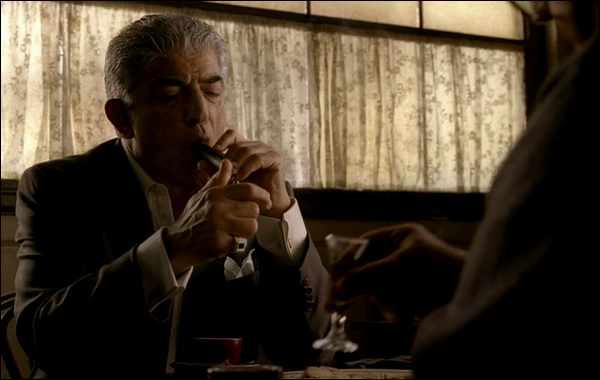
Phil declares war on Tony’s ‘glorified crew’, motivating his decision by stating that Jersey doesn’t live by the old mob standards anymore, ignoring the fact that nobody does and the mob is all about the money. Great scene, for the dialogues but also because it makes the tension level rise sky high. You know an old school mob war is about to break loose and anybody could get hurt. All bets are off now and the adrenaline is rushing through our bodies.

89. Louisville Slugger

Episode: Second Opinion (SE3, EP7)
Characters: Tony and Angie Bonpensiero

You gotta love how Tony handles this one. The widow Angie Bonpensiero is on Tony’s payroll since Pussy went MIA (whacked), but she’s still crying money problems to Carmela. When Tony arrives to sort it out, he sees that she is driving a Cadillac. His anger management lessons go straight through the window then and there. He takes a Louisville slugger from his car and takes out his frustration on the caddy. He then tells the frightened Angie: “You see my wife, you talk about oven cleaners. Anything else you come directly to me.”

88. The Oklahoma Kid

Episode: The Legend of Tennessee Moltisanti (SE1, EP8)
Characters: Christopher and Bakery Clerk

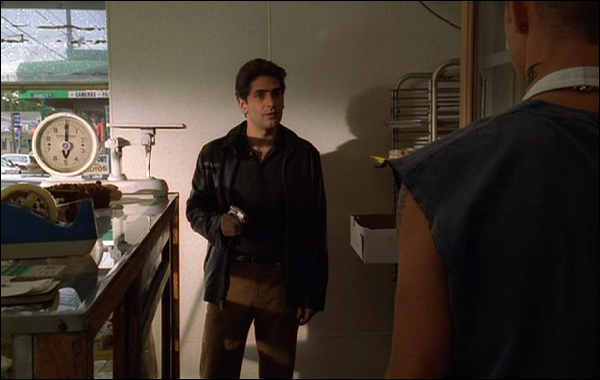
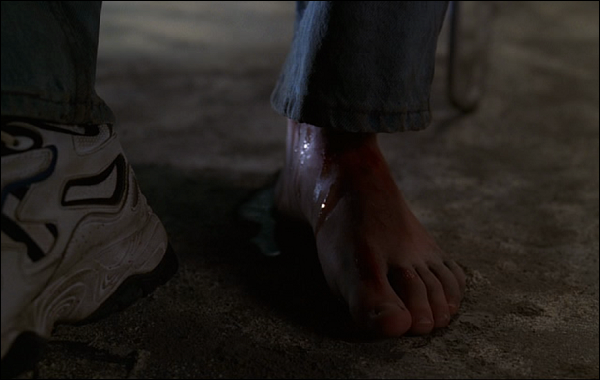
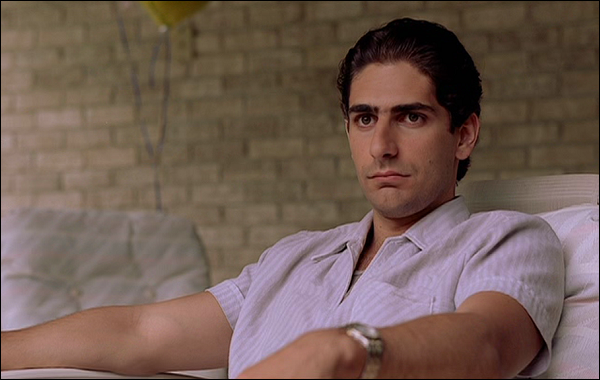
The postmodern movie references are one element in making The Sopranos a great show. The best one appears in this scene. Christopher feels depressed because of his low ranking status in the mob, so he starts acting like a cowboy. “What is it, do I look like a pussy to you?”, he asks a bakery clerk who doesn’t, in his view, shows him the proper respect. Then he shoots him in the foot to teach him a lesson. The same thing happens to Michael Imperioli (who plays Christopher) in GoodFellas. He gets shot in the foot by Joe Pesci for forgetting to serve him a drink. Therefore Christopher’s reply to the clerks; “Arghh, you shot me in the foot”, is all the more hilarious. “It happens”, he says before walking out the door. Genius! Ps: That customer whom Chris sends away is indeed Vito in a different role.

87. Old Plotters

Episode: Pilot (SE1, EP1)
Characters: Junior and Livia

This little dialogue between Junior and Livia feels like a scene from a Roman tragedy like I, Claudius in which – not accidently – the evil mother character is also named Livia. During their drive to A.J.’s birthday party, Junior feels out Livia about a possible hit on Tony. First he pisses her off a little: “Remember the long hair and the drugs? Now, it’s fags in the military”, and then he says that “something may have to be done about Tony.” She doesn’t say anything! Brilliant set-up for one of Season 1’s major plot lines.

86. Bevilaqua’s Death

Episode: From Where to Eternity (SE2, EP9)
Characters: Tony, Pussy and Matt Bevilaqua

With Christopher almost shot to death, Tony is keen on revenge. This is an opportunity for FBI-informant Pussy to prove himself. He tracks down Bevilaqua and takes Tony there to whack him. Matt is understandably scared of what is coming, so he pisses his pants. After a brief interrogation, Tony finishes him off with a shot in the head. Matt is crying for his mother before the end. Then Tony and Pussy send out a message and pump Matt’s dead body full of lead. Afterwards, they go celebrate with a steak meal.

85. Phone Games

Episode: Whoever Did This (SE4, EP9)
Characters: Ralphie, Mrs Gualtieri, Vito and Eugene Pontecorvo

Ralphie figured it was Paulie who told the Ginny Sack joke to Johnny Sack. He calls Green Grove to get back at him. Paulie’s mum answers. Ralphie: “Hello, Mrs Gualtieri, this is detective Mike Hunt, Beaver Falls, Pennsylvania Police Department. We found your son in a public men’s room in Lafayette Park. I don’t know how to put this delicately; he was sucking a cub scout’s dick.” He goes on for a while and has everyone in stitches. Including the audience. Too bad Ralphie goes this episode; he is one funny motherfucker.

84. Popping Cherry

Episode: Sopranos Home Movies (SE6, EP13)
Characters: Bobby and Rene LeCours

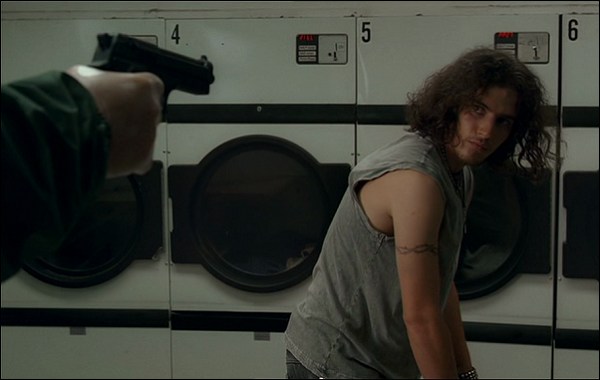
While Carmela claims that Tony Soprano is not ‘a vindictive man’, he still sends out Bobby to commit his first murder because he kicked Tony’s ass in a fist fight a couple of days earlier. The murder scene is delivered in quite a dramatic way; Bobby is obviously upset and his victim – a young guy – is seen badly suffering. A clever detail is that the first bullet ends up in the Laundromat and is heard quaking around till the end of the scene.

83. Furious Debut

Episode: Big Girls Don’t Cry (SE2, EP5)
Characters: Tony, Furio, Dr. Melfi, Dominic and wife

Fresh from Naples, Furio is given a first assignment by Tony. He has to straighten out the owner of a bordello and his insubordinate Filipino wife. He passes the test. Within a minute, he has caused more physical damage, pain and fear than any of the other guys would have achieved. Tony is enjoying himself in the car while he listens to the anguish inside. Then Melfi calls that she wants to take him back as a patient. How appropriate.

82. Happy Times

Episode: Pilot (SE1, EP1)
Characters: Tony and Christopher

This is a beautiful early moment in the relationship between Tony and Christopher where everything is still peaches and cream. Chris is unhappy because Tony did not compliment him on solving the Triborough Towers situation (the hit on Emil Kolar). Instead of kicking his ass, Tony understands. He has gone all soft because of the therapy he has been having. “That’s how I was parented, never supported, never complimented”, Tony says. Very soon after, Tony explodes anyway after Chris starts babbling about writing Hollywood screenplays. “You gonna go Henry Hill on me now?” Then they makes nice again. “Everything is gonna be alright from here on in. What could be bad?” Well, with these highly unstable characters, quite a lot.

81. Cheese Fuck

Episode: The Happy Wanderer (SE2, EP6)
Characters: Silvio, Tony, Paulie, Christopher, Sunshine, Johnny Sack, Frank Sinatra Jr., Dr. Fried, Matt Bevilaqua, Sean Gismonte and Davey Scatino

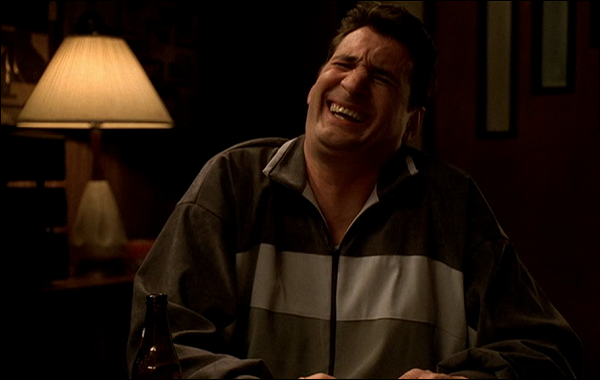
During the high stakes ‘executive game’, things get tense when Silvio is on a losing streak. When Matt starts wiping cheese under his seat he explodes. It is hard not to laugh at the ridiculous outburst that follows; “Leave the fucking cheese there, all right? I love fuckin’ cheese at my feet! I stick motherfuckin’ provolone in my socks at night, so they smell like your sister’s crotch in the morning. Alright? Now leave the fucking cocksucking cheese where it is!” Chris had already warned Matt; “he’s a sick fuck when he gambles.” Yes, he obviously is.

Lessen in scenarioschrijven #1 – De basis

“To make a great film you need three things – the script, the script and the script”
—– Alfred Hitchcock

Een scenario schrijven is makkelijk. Een goed scenario schrijven is ontzettend moeilijk. Ik heb zelf verschillende scenario’s geschreven en ben nu bezig met mijn eerste echte goede. Verwachte opleverdatum: 31 december 2028.

Van het vermoeiende en niet erg bevredigende proces heb ik een aantal lessen geleerd die ik graag deel in een aantal blogposts. In dit eerste deel bespreek ik de absolute basis, zoals uitgelegd door Rogier Proper in zijn boek ‘Kill Your Darlings’.

Hoe kom je van niks naar een compleet filmscenario in 14 stappen? (12 stappen zet je voordat je aan het scenario zelf begint).

Stap 1: Het idee
Het scenario begint met een idee voor een film dat voort kan komen uit bijvoorbeeld iets wat je leest in een boek, krant of tijdschrift. Waarom is het een goed idee voor een film? Wat maakt het speciaal? Een voorbeeld is ‘Fargo’ van de Coen Brothers. Het idee: een typisch waargebeurd verhaal vertellen (wat niet echt waargebeurd is, maar zou kunnen zijn) over een man die zijn eigen vrouw laat ontvoeren om losgeld van zijn schoonvader af te troggelen waarmee hij een zakelijke investering wil doen. Vervolgens gaat alles mis wat er maar mis kan gaan…

Stap 2: Het genre
Voor welk genre of combinaties van genres kies je? Zelf ben ik liefhebber van het misdaadgenre, maar daarin is al heel veel gedaan (geldt voor alle genres trouwens). Daarom heb ik voor mijn script gekozen voor een combinatie met het business genre (denk aan ‘Wall Street’ en ‘Glengarry Glen Ross’). De maffiawereld is in mijn script een metafoor voor de financiële wereld.

Stap 3: De arena
Waar speelt de film zich af? Dit komt automatisch voort uit het idee. ‘Fargo’ speelt zich af in de Amerikaanse staat Noord-Dakota waar het plaatsje Fargo ligt. Het plaatsje wordt gekenmerkt door prachtige besneeuwde landschappen (erg geschikt voor cinematografie) en de mensen praten met een bijzonder dialect, wat de scriptschrijvers veel gelegenheid geeft voor humorvolle dialogen: “you betcha”, “thanks a bunch” en “you’re darn tootin!”.

Stap 4: De logline
In de logline probeer je de belangrijkste verhaalelementen (held, obstakels en uitkomst) te vatten in één zin. Bijvoorbeeld deze van ‘The Matrix’: A computer hacker learns from mysterious rebels about the true nature of his reality and his role in the war against its controllers. Deze is belangrijk om de interesse van investeerders en medewerkers te wekken.

Stap 5: De karakters
Karakters komen vaak voort uit voorgaande elementen. Het milieu of de milieus waarin het verhaal zich afspeelt (arena) is bijvoorbeeld bepalend bij het ontwikkelen van de personages. De boosaardige tovenaar Voldemort uit de Harry Potter-reeks groeide bijvoorbeeld op in een weeshuis in een arme wijk in London. Toen hij ontdekte dat hij over magische krachten beschikte ontwikkelde hij een haat tegenover niet-magische mensen (‘muggles’). Naarmate hij opgroeide zocht hij steeds meer naar status en grandeur binnen de magische gemeenschap en wilde hij de ‘muggles’ overheersen die hij als minderwaardig zag. Hij probeerde zijn afkomst met alle macht te ontstijgen en schuwde daarbij niet het gebruik van moord en marteling.

Stap 6: De relaties tussen de karakters
Drama ontstaat door de relaties tussen hoofdkarakters en hun tegengestelde belangen en doeleinden. In ‘Miller’s Crossing’, een ander meesterwerk van de Coen Brothers, raken de Ierse maffiabaas Leo en zijn rechterhand Tom in conflict met elkaar. In eerste instantie over hoe ze met een gevaarlijke concurrent moeten omgaan, in de tweede plaats om de liefde van de verleidelijke, maar gevaarlijke dame Verna.

Stap 7: De synopsis
De synopsis verschaft alle sleutelinformatie over het script, inclusief karakters, het plot, belangrijke ontwikkelingen, thema’s en het einde. Duik niet teveel in de details en maak het spannend en intrigerend. Kort is beter dan lang: twee pagina’s moet ruim voldoende zijn.

Stap 8: Perspectief, stijl
Hoeveel verhaallijnen ga je vertellen en hoe pak je dat aan? Bij ‘Fargo’ past een hele objectieve stijl; we zien de gebeurtenissen zich voltrekken en alles langzaam rampzalig mis gaan. In ‘GoodFellas’ – over het leven van maffialid Henry Hill – kiezen schrijvers Martin Scorsese en Nicholas Pileggi ervoor om alles vanuit Henry’s ogen te bekijken middels een voortdurend aanwezige voice-over. Verrassend genoeg voegen ze er na een tijdje nog een voice-over aan toe; die van Henry’s vrouw Karen Hill. Zo krijgen we er extra perspectief bij over hoe het is om deel uit te maken van een maffiafamilie.

Stap 9: Spanningsboog, plotwendingen, begin en einde
De spanningsboog van ‘the Matrix’ is een hele sterke:

“Is NEO the ONE”?

Maar er zijn naarmate de film vordert en zich vele plotwendingen voordoen (bijv. het verraad van Cypher) meer spanningsbogen:
– Lukt het Neo en Trinity om Morpheus te bevrijden van de agenten?
– Zullen ze het alle drie overleven?
– Zal het lukken de vijand een stevige klap toe te brengen?
– Krijgen Neo en Trinity elkaar?

Als je bij stap 5 en 6 goed werk hebt geleverd zal het publiek zich daadwerkelijk bekommeren om wat er met de personages gaat gebeuren.

Het begin en het einde zijn cruciale bouwstenen die klaar moeten zijn voordat je met het scenario begint. Scriptgoeroe Syd Field zei dat je het einde al moet kennen voordat je het begin kunt schrijven. In ‘Once Upon a Time in the West’ is dit duidelijk het geval geweest. De film opent met de held Harmonica die drie schurken verslaat in een revolverduel op een treinstation. Hier begint zijn wraakmissie op bandiet Frank die hem in het verleden iets heeft aangedaan. De film eindigt nadat Harmonica zijn missie heeft volbracht en de treinrails bezig is aan verdere opmars in het oude Westen. De trein staat symbool voor het nieuwe tijdperk dat aanbreekt waarin wellicht geen ruimte meer is voor mannen als Frank en Harmonica.

Stap 10: De hoofdstukken
Het is nu tijd om structuur aan te brengen in het verhaal. Hier zijn geen vaste regels voor. De indeling maak je volledig op je eigen gevoel.

Maar een schrijver die dit uitstekend kan is Tarantino die zijn hoofdstukken ook vaak titels meegeeft die hij ook laat zien in de uiteindelijke films. Zoals in Kill Bill: Vol. I en II:

– Chapter One: (2)
– Chapter Two: The Blood-Splattered BRIDE
– Chapter Three: The Origin of O-Ren
– Chapter Four: The MAN From OKINAWA
– Chapter Five: Showdown at House of Blue Leaves
– Chapter Six: Massacre at Two Pines
– Chapter Seven: The Lonely Grave of Paula Schultz
– Chapter Eight: The Cruel Tutelage of Pai Mei
– Chapter Nine: ELLE and I
– Chapter Ten: Face to Face

Stap 11: Het treatment
Het treatment behoort een vijftien tot twintig pagina’s lang verhaal te worden, min of meer gestructureerd in de volgorde van de beoogde filmvertelling en dus gebaseerd op de hoofdstukindeling. Vol met leuke details, maar niet te veel, hier en daar een dialoogje of kwinkslag, een prettig lezend verhaal waardoor je de film helemaal ‘voor je ziet’ en waarmee je een scènelijst kunt maken. Een treatment kun je gebruiken om financiering aan te vragen voor verdere ontwikkeling van het script en uiteindelijk de film zelf. In het geval van een Nederlands script kun je dat doen bij het Nederlands Filmfonds.

Stap 12: De scènelijst
Voordat je aan het scenario kunt beginnen heb je een scènelijst nodig. Dit is de volgorde van de kort beschreven scenes zoals ze in het script gaan komen (natuurlijk kun je hierin nog wijzigingen aanbrengen zodra je met het script bezig bent). Belangrijk is dat elke scène een functie heeft in het geheel: het helpt het verhaal verder, het maakt het spannend, het vertelt meer over de karakters, het legt hun motieven uit, of maakt juist alleen maar nieuwsgierig naar motieven of mogelijke handelingen.

Dit voorbeeld komt uit de film ‘Body Heat’ (1981, Lawrence Kasdan):

3. INT. COURTROOM – DAG
Een onderonsje met de rechter en de officier van justitie, waar advocaat Ned Racine door de rechter op zijn nummer wordt gezet, maar toch krijgt zijn cliënt het voordeel van de twijfel.
(Functie: Racine is advocaat, charmant en womanizer)

Bron: ‘Kill Your Darlings

Zoals je ziet: het is een kort samengevatte scènebeschrijving waarin de belangrijkste actie wordt beschreven en waarin de personages worden neergezet en achtergrond krijgen. Dialoog ontbreekt evenals nuance. Die komen pas in de volgende stap aan bod: het echte scenario.

Stap 13: Het scenario, de dialogen
Het scenario is de uitwerking van de scènelijst, waarbij de volgorde vrij nauwkeurig wordt gevolgd – al is natuurlijk elke afwijking toegestaan, hoe groot ook. Bij de uitwerking wordt voor de invulling van de scènes rijkelijk geput uit het treatment en alles wat daaraan vooraf is gegaan. Qua lengte moet je rekening houden met circa 1 minuut per pagina, dus een standaard script komt tussen de 90 en 120 pagina’s uit. Voor het format kun je een gepubliceerd scenario aanschaffen of downloaden. Hier bijvoorbeeld: http://dailyscript.com/.

Stap 14: De revisie
Het is maar heel zelden dat de eerste versie van een scenario ook direct de geslaagde versie is die uitgangspunt is voor het shooting script. Van het allereerste begin tot de uiteindelijke productie zal er voortdurend veranderd, bijgeslepen, opnieuw begonnen, geschrapt, gevloekt, herschreven, afgewezen, heroverwogen of weggegooid worden. Het hoort allemaal bij het grote spel. Weet waar je aan begint.

In het volgende deel van de serie gaan we het hebben over inspiratie. Stay tuned….

Het defecte management control system van de maffia

Lees ook:
De maffiaboeken van Nicholas Pileggi – Deel 1: Wiseguy: Life in a Mafia Family
De maffiaboeken van Nicholas Pileggi – Deel 2: Casino: Love and Honor in Las Vegas

Waarom gaat het altijd mis met gezworen maffialeden? Waarom kunnen ze niet gewoon hun mond houden en hun tijd uitzitten als ze gepakt worden? Sommige kunnen het wel: John Gotti bijvoorbeeld. Maar er zijn ook talloze ratten die hun familie verraden om hun eigen hachje te redden. De bekendste zijn Henry Hill, Joseph Valachi en Sammy ‘the Bull’ Gravano (die John Gotti levenslang bezorgde). De reden is dat het strakke managementsysteem van de maffia zich regelmatig tegen de organisatie keert.

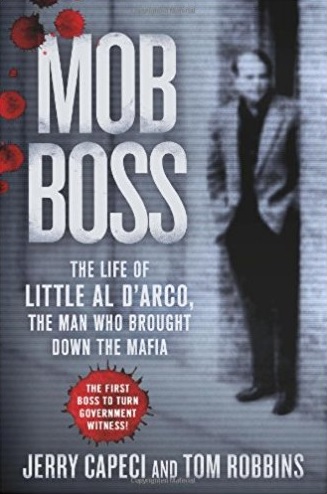
In 1991 werd Alphonse ‘Little Al’ D’Arco – ‘made member’ en zelfs enige tijd ‘acting boss’ van de Luchese familie – bijna geliquideerd in een hotelkamer. Hij wist te ontkomen en besloot kort daarna getuige te worden voor de FBI. Hij was het lid met de hoogste rank binnen de maffia ooit die getuige voor de overheid werd. In 2013 verscheen het boek ‘The Life of Little Al D’Arco, the Man Who Brought Down the Mafia’ van Jerry Capeci en Tom Robbins over het leven van D’Arco.

D’Arco geloofde in de maffia; het bezorgde hem een inkomen en bovenal respect. In ‘Mob Boss’ beschrijft hij hoe hij na een lange loopbaan eindelijk officieel lid werd gemaakt van de Luchese familie. De ceremonie is al vaak beschreven: het mes en pistool op tafel, een prik in de vinger en het bloed van de ingewijde op de kaart van een heilige. Deze kaart wordt vervolgens verbrand en de leider van de familie zegt; ‘als je ons verraad zal je ziel eeuwig in de hel branden, zoals deze kaart’. Ook wordt duidelijk gemaakt dat de maffiafamilie voor alles komt, inclusief je eigen gezin. Dit lijkt een slechte deal, maar er komen ook voordelen met het lidmaatschap: andere criminelen kunnen niet meer aan je bezittingen komen; wat van jou is, is nu echt van jou.

Natuurlijk kunnen gemaakte leden van de maffia ook vermoord worden als ze de regels overtreden. D’Arco had hier begrip voor, al was hij het niet altijd eens met de manier waarop het ging. Zo was hij er getuige van dat gangster Tommy de Simone (in GoodFellas legendarisch neergezet door Joe Pesci) een bar binnenkwam helemaal in mooie kleding gestoken. Hij dacht dat hij gemaakt ging worden. Kort daarna zag hij hem in een pizzeria met twee ‘vrienden’. Het zou zijn laatste avondmaal worden. Ook al had DeSimone de regels gebroken (een made guy vermoord) vond D’Arco dit disrespectvol. “Ze zeggen dat ze hem gaan maken en ze whacken hem.”

Maar moord is soms nodig om het strakke regime van de maffia in stand te houden. Problemen ontstaan als het middel onnodig wordt ingezet. En dat is waar het misging in de Luchese familie en bij andere maffiafamilies. De baas en onderbaas van de familie – Vittorio ‘Little Vic’ Amuso en Anthony ‘Gaspipe’ Casso (ja, alle maffialeden hebben bijnamen) – werden gezocht voor een grootschalige bouwfraude en moesten onderduiken. Ze stelden D’Arco aan als tijdelijk leider. Het duurde niet lang voor het eerste moordcontract binnenkwam. Er zouden er vele volgen in korte tijd. De slachtoffers waren meestal andere leden die ervan beschuldigd werden verrader te zijn. D’Arco liet de contracten uitvoeren, maar begon steeds meer twijfel te krijgen bij de legitimiteit van de opdrachten. Toen werd hij er zelf van beschuldigd rat te zijn en had hij geen keuze om onder te duiken.

Wanneer je er als organisatie zulke extreme regels op na houdt is de ‘tone at the top’ nog belangrijker dan normaal. Bazen, zoals Paul Castellano, die hun mannen drugshandel verbieden, maar er zelf rijk van worden vragen erom dat hun manschappen gaan muiten.

Door deze hiërarchische machtsstructuur voort te blijven zetten heeft de maffia in de Verenigde Staten flink veel macht moeten inleveren. In de tijd voor Lucky Luciano (jaren 50’) – onder de oude ‘Mustache Pete’s’ (Siciliaanse bazen die de connectie met de oorspronkelijke maffia op Sicilië bleven onderhouden – werkte het nog. Toen kwam Luciano met de oprichting van de commissie en brak de glorietijd voor de Amerikaanse maffia pas echt aan. Maar door hebzucht begonnen de oude maffiawaarden in rap tempo af te brokkelen. In de jaren 70’s werden de boeken gesloten en namen de bazen lange tijd geen nieuwe leden aan omdat ze dan hun inkomsten dan met meer leden zouden moeten delen. Deze manier van denken heeft de maffia pas echt de das omgedaan.

Is het tijd voor een nieuw ‘losser’ maffia organisatiemodel voor de 21ste eeuw? Daar is het al veel te laat voor. De maffia had al veel eerder moeten veranderen hadden ze onderdeel van deze eeuw willen uitmaken. De macht die ze ooit hadden krijgen ze nooit meer terug. Dit is een les voor ondernemingen: organisaties bestaan uit niets anders dan het geloof van de mensen die er werken. Verliezen ze hun geloof, dan verliest de organisatie zijn macht.