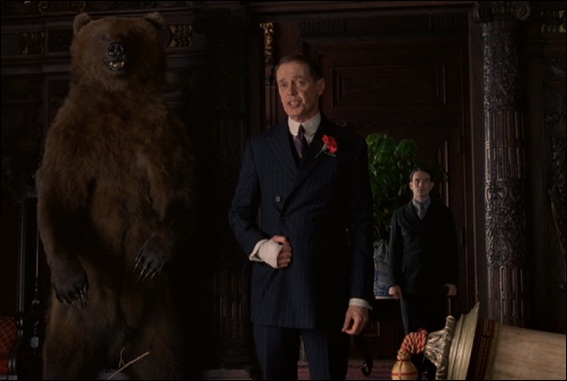
Apple TV Special: Mr. Scorsese

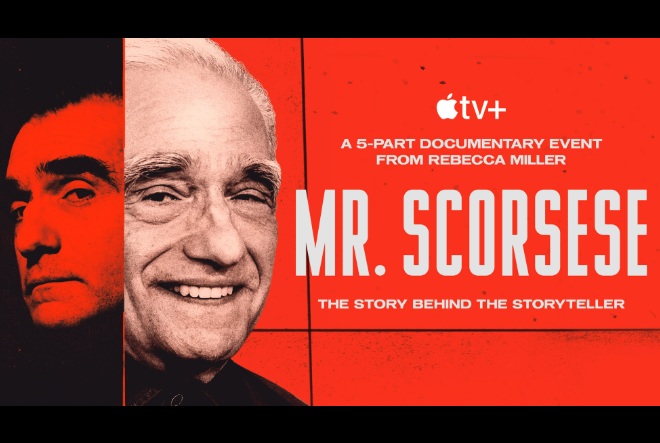
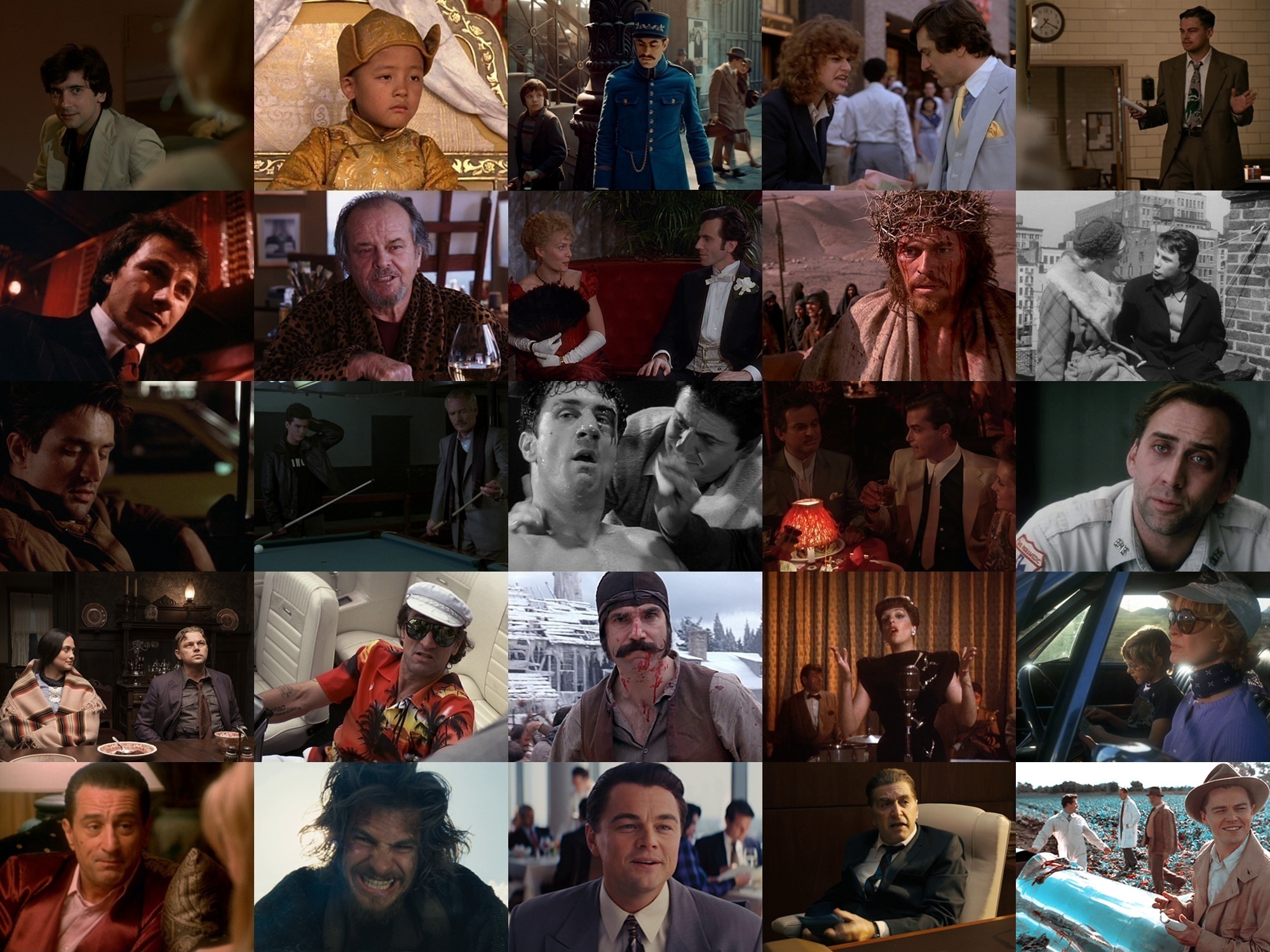
Mr. Scorsese is a five episode film portrait about one of the greatest film directors of all time now playing on Apple TV. It’s the most extensive documentary ever shot about the Italian American cinematic master, featuring interviews with a.o. Leonardo DiCaprio, Robert De Niro and Daniel Day Lewis. Reason enough for me to subscribe to Apple TV. An additional benefit of the subscription is that Marty’s latest film – Killers of the Flower Moon – is also available on the channel.

Scorsese is a very sympathetic guy; I have seen many interviews with him before, logical since he’s my favorite filmmaker, but in this series, you really get to know the man. He grew up in Little Italy and later Manhattan. He was very asthmatic as a child and he couldn’t play outside. There is this shot in GoodFellas where a young Henry Hill is staring out of the window observing the wiseguys outside. That’s Marty right there.

Movie theaters had air conditioning, so that’s where young Martin wanted to be as much as possible. He could breath there, and the movies formed his mind. At home he watched old Italian films with his family. He started making extensive storyboards which his father thought wasn’t very manly. Marty learned of the mobsters who controlled much of the economic activity in his neighbourhood. His father had a good job in the garment industry, which was worked out by the mob. He told young Marty: “Don’t ever let them do you a favor. They’re nothing but bloodsuckers.”

The young Scorsese initially wanted to become a priest, but that path wasn’t for him. Neither were the streets. Literature wasn’t part of his culture either, but a priest encouraged him and his friends to look beyond what they knew; to go to college, to read, learn, and explore. He attended a talk about film school and heard a professor speak passionately about cinema. That was the moment he knew what he wanted to do.

At New York film school he met Thelma Schoonmaker, his future editor. She recalls seeing his student work and knowing immediately that “he had it.” His student film It’s Not Just You, Murray! (1964) won the award for Best Student Film. In 1967 he made his first feature, Who’s That Knocking at My Door, starring Harvey Keitel.

Scorsese married young, but his first marriage collapsed quickly because his mind went more and more to making movies. He went to Hollywood to further his career and met an amazing assortment of talent there: Coppola, Schrader, Spielberg, Lucas and De Palma, known collectively as the ‘Movie Brats’. They were given this name because they were the first generation of formally trained filmmakers to unite film knowledge with artistic ambition.

In the early seventies, King of the B-movies Roger Corman gave Scorsese the chance to direct a movie. This became Boxcar Bertha (1972), a Bonnie and Clyde-style crime movie. His artistic friends hated it. Marty thought it was a good practice in shooting on budget and shooting on time, but his friends thought he had betrayed himself as an artist.

John Cassavetes had seen his feature Who’s That Knocking at My Door and advised him to make more personal movies like that. About Boxcar Bertha he said: “You just spent a year of your life making a piece of shit. Don’t do that again.” Scorsese showed him his Mean Streets screenplay and Cassavetes told him to go find a lead actor to star in it. Then he met De Niro who was from the same neighbourhood.

Mean Streets was based on people and experiences from his neighborhood and people fell in love with it, because it felt completely authentic. That makes sense, because it was real. Now, Marty got more opportunities. With his next film Alice Doesn’t Live Here Anymore (1974), he showed he could also direct women. Ellen Burstyn won the Academy Award for Best Actress for her lead role.

Although Scorsese gained recognition, this period also marked the start of heavy drug use. Film remained his way of working through deep inner turmoil. Drawn to darker characters, he was captivated by Paul Schrader’s script for Taxi Driver. He and De Niro set out to portray a loner like Travis Bickle without turning him into a caricature. Travis is isolated in almost every frame. Taxi Driver (1976) was a huge critical success and won the Palme d’Or.

Everybody praised it. It hit a nerve and showed a true understanding of the American unconscious. A lone man who commits atrocities, like the snipers who killed politicians at that time. Travis has a saviour complex: he wants to save the girls and kill the bad guys. The final scene was too violent for the sensors, so Scorsese changed the colour of the blood to dark, rusty brown or brownish-pink rather than bright red. Daniel Day Lewis was hypnotized by the film and went to see it five or six times. It was the first time he saw Bob (De Niro) act, which was a big thing for him.

After the success of Taxi Driver, he made the costly musical failure New York, New York (1977). His second marriage also fell apart and what started then was a period of self destructive behavior. He started doing lots of drugs and tried to find his cinematic muse again. He almost died – and part of him wanted to because he didn’t know how to create anymore. De Niro had a big part in getting him back on his feet. They went to Sint Maarten where they worked on the script for their next masterpiece: Raging Bull (1980).

Thelma Schoonmaker explains the film’s shooting and editing, and the documentary allows you to rediscover the beauty of its black-and-white imagery. It’s a true work of art. Scorsese had found his muse again, and also his third wife: the daughter of Ingrid Bergman and Roberto Rossellini.

After Raging Bull he wanted to do Gangs of New York and The Last Temptation of Christ. The scripts were there, but the movies were too expensive to make at that time. He did another project with De Niro, The King of Comedy (1982), which flopped. Scorsese’s career was now once again in a bad state. “He was done for in Hollywood”, they told him.

He made a comeback with After Hours (1985), an odd ball comedy shot on a low budget. Key to the film, Scorsese explains, was the collaboration with Director of Photography Michael Ballhaus, who would later shoot GoodFellas. In 1985, he married for the fourth time, this time with Barbara De Fina, who would produce a number of his movies, including Casino.
The re-established Scorsese followed up After Hours with The Color of Money (1986), a pool hall movie starring Paul Newman and Tom Cruise, and a sequel to The Hustler (1961). The movie did well, so now Scorsese could finally make his beloved project The Last Temptation of Christ (1988). He made the film to “get to know Christ better”, he explains.

The budget was tight, so he could only do two takes of every shot during the difficult shoot in Morocco. It was very tough, he says. Even tougher was the reception of the film: people were very upset. It was banned in Rome, Israel, and India – and someone set off a bomb during a screening in Paris. Blockbuster didn’t carry the film. Marty needed FBI protection for the second time (he had gotten threats after Taxi Driver and had needed protection then as well).

While working on The Color of Money, Scorsese read Wiseguy by Nicholas Pileggi, the true story of mobster Henry Hill and his life within the Lucchese crime family. Pileggi and Scorsese had both grown up in the same neighborhood and collaborated on the screenplay for GoodFellas. Scorsese had the film fully mapped out in his head – frame by frame, song by song. The result is pure montage, weightless and electric. Scorsese created a new cinematic language for this movie. “It has this crazy energy”, says Spielberg. “Like a runaway train.”

Previews strangely enough saw a lot of walk-outs. Executives wanted him to cut out the last twenty minutes, which is the whole cocaine sequence. Marty stood up to them and saved the movie. God bless him.

After GoodFellas, Scorsese worked with De Niro again in Cape Fear (1991), a successful remake of the 1962 thriller – and in 1995 they made another mob masterpiece with Casino. It’s about mob guys who were given paradise with Las Vegas – but they got kicked out of paradise because they are so evil. The movie has a unique structure like GoodFellas, but it takes it one step further.

In between, he explored another closed society with The Age of Innocence (1993), his first collaboration with Daniel Day-Lewis. It’s about a man imprisoned by the culture he belongs to, and a great love doomed to remain unconsummated.

In 1997, he returned to another genre he loved to do: the spiritual film. Kundun (1997) is about the Dalai Lama in Tibet. There were no actors in that country, so he had to get all these performances out of non-actors. The film was panned-down as dull. Then came Bringing Out the Dead, a loose follow-up to Taxi Driver, but it was still born at the box office.

Scorsese was dead again, but then who came knocking? Leonardo DiCaprio was now Hollywood’s new golden boy, a guaranteed name for box office success – and a movie star with resources to invest in the projects he chose to star in. Now, Scorsese finally got the opportunity to make his long awaited dream: Gangs of New York (2002).

The film reconstructs 1860s New York in massive sets built in Rome. This was the Five Points neighbourhood, which was dominated by gangs. Scorsese calls it science fiction in reverse. George Lucas came to visit the sets and said that “this is the last time sets like this will ever be built”.

The film has an uncanny reverence to today’s political violence, with the natives who can be seen as the proud boys of that time. People who claim to be the only true Americans and are prepared to use savage violence on immigrants.

Fortunately, the very expensive film – that was produced by Harvey Weinstein – did well at the box office.

He continued to work with DiCaprio, first on The Aviator (2004), a biopic about Howard Hughes, a man obsessed with filmmaking and aviation. The film received 11 Oscar nominations, and then it dawned on the film community that Scorsese never won an Oscar. But, even though The Aviator won in nearly every category, it lost the director award to Clint Eastwood for Million Dollar Baby.

But two years later, they made it up by giving him the Oscar for The Departed (2006), another gangster film. It was awarded to him by his old friends George Lucas, Steven Spielberg and Francis Ford Coppola – a bittersweet moment. In 2010, he made another film with DiCaprio, Shutter Island. And to complete the streak with Leo, he made The Wolf of Wall Street (2013), a commentary on how excessive and moralless capitalism has overtaken our society.

Marty once again portrays the dark side of human nature in all its forms, including terrible domestic violence. Scorsese has often been accused of glorifying bad behavior, but another way to see his work is that he refuses to sanitize human nature. The Wolf of Wall Street was a massive success, tapping directly into post-financial-crisis anger.

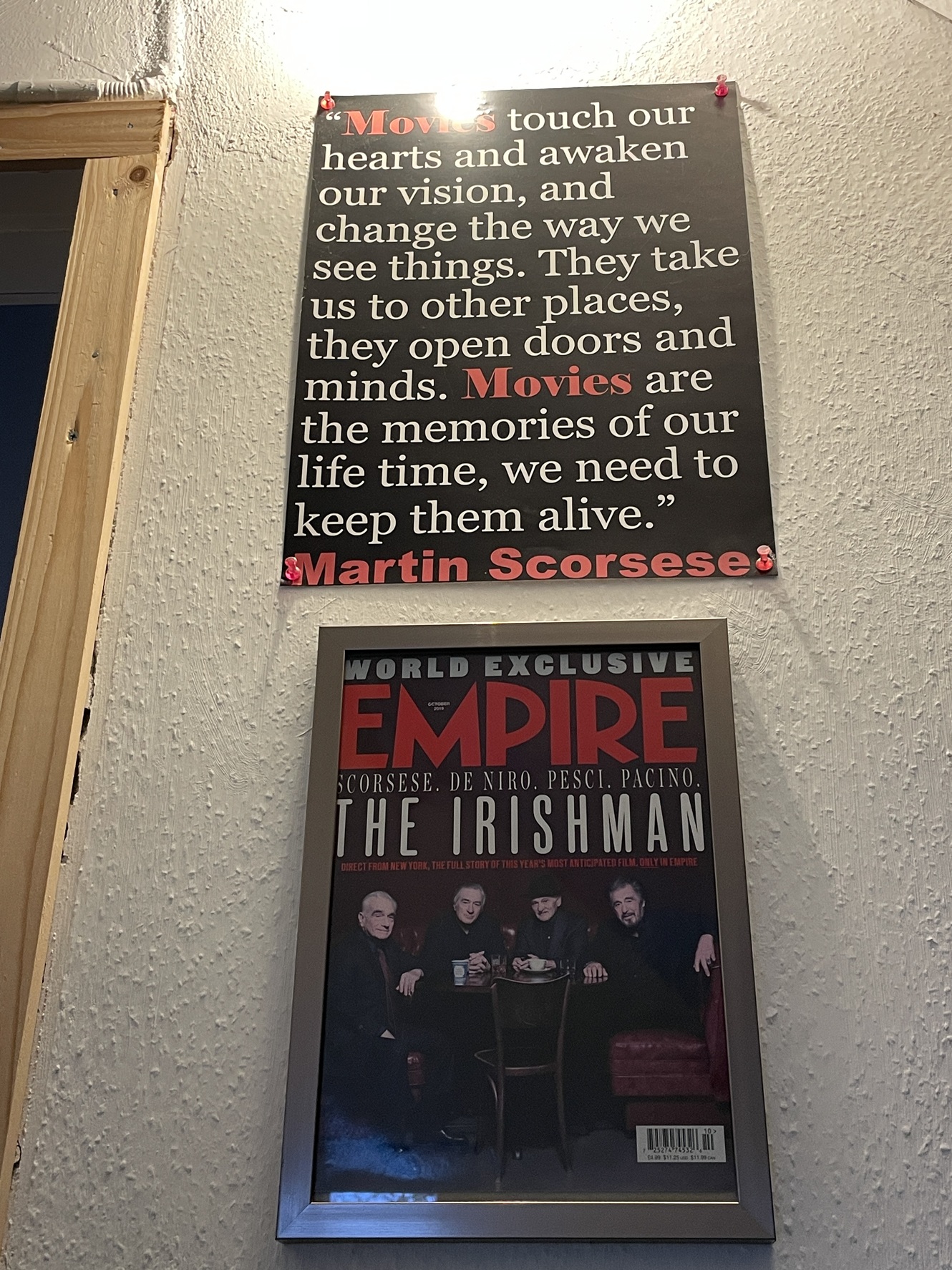
The documentary concludes with The Irishman (2019) and early footage from Killers of the Flower Moon (2023). We also see Scorsese at home, caring for his fifth and final wife, Helen Schermerhorn Morris, who suffers from Parkinson’s disease. It’s deeply moving to see the great filmmaker in this intimate setting.

Steven Spielberg provides the perfect closing tribute for this must-see documentary about the legendary director: “There is only one Marty Scorsese. He is a cornerstone of this art form. There is nobody like him and there will never be anybody like him again.”

Indeed.
Wiseguy Guide for Rookies

Terminology

Agita: Stress
A good earner: What wiseguys are supposed to be.
Associate: Involved with Mafia but not yet a made guy.
Bada Bing!: Stripclub owned by Silvio Dante (in The Sopranos).
Busting someone’s balls: Bothering somebody with sh*t.
Bust Out: Ordering on a company’s account till it runs out of credit and goes bankrupt.
Capo / Captain: Crew boss. Leads a number of soldiers. Reports to underboss.
Consigliere: Counselor of the Don. For example Tom Hagen in The Godfather and Silvio Dante in The Sopranos.
Contract: Someone needs to disappear by means of a hitman.
Don: Boss of organised crime family.
Fanook: Gay
Goomar: Steady girlfriend on the side. Of course most wiseguys are married like good Catholics ought to be.
Illegal gambling: A wiseguy’s main source of income
La Cosa Nostra (LCN): Literally ‘our thing’. Mafia. Organised crime families.
Made Guy: Connected to the mob by blood-oath.
Making one’s bones: Performing a first kill for the mob.
Mustache Pete: An old-fashioned mob boss.
OC: Short for Organised Crime. Term used by the FBI.
Omerta: Bow of silence. Never rat on your friends and always keep your mouth shut.
Opening the books: New members (made guys) are accepted by the mob commission.
Outstanding loan: It’s time for a weekly visit to collect or bust some skulls in.
Points: Interest over debt. Average mob rate is two points weekly.
Pop someone: To shoot someone.
Rat/stoolie/turncoat: Wiseguy that betrays his friends. Usually because he fears a lengthy prison sentence or getting whacked (or both).
RICO Laws: Main government tool for prosecuting members of the Mafia. Stands for ‘Racketeer-Influenced and Corrupt Organizations’. According to the federal statutes, RICO can be applied to anyone who is involved in the ‘operation or management’ of a ‘pattern of racketeering activity’ designed to acquire or maintain an interest in an ‘enterprise’.
Sit down: Conversation between the Don and two conflicting made members.
Soldier: Lowest rank under made guys.
To eat: To be allowed to earn.
To flip: To turn FBI informant.
Vig: Amount charged by bookmakers for services. Short for Vigorish. Also known as juice.
Whack someone: To kill someone.
Wiseguy, Goodfella: Made member of the mob.

Expressions from The Godfather

Moe Green Special: Gunshot clean through the eye because someone’s eyes became bigger than his stomach.
Going to the mattresses: Going to war.
‘Take the gun, leave the Cannoli’: What you say after you have popped a guy.
An offer you can’t refuse: Either your brains or signature will be on the contract.

Rules

Never insult, threaten or hit another made guy. (*GoodFellas, The Sopranos, Gotti)

Stick to the omerta (never rat out your friends). (*GoodFellas, The Sopranos, Gotti)

Money should be carried in a bundle. Not in a wallet. (*Donnie Brasco)

Mustaches are not acceptable. (*Donnie Brasco)

Who kills a don can never become a don. (*Mobsters, Gotti)

A made guy is untouchable for anyone except of course the bosses. (*GoodFellas)

A soldier kicks up money to his capo who gives a piece to the (under)boss. Never keep income secret from the bosses. (The Sopranos)

Never start an affair with another member’s wife. (Casino)

* Examples of movies in which those rules were broken.

Read also: The Sopranos – 100 Greatest Moments

10 Management Lessons From Highly Successful Gangsters

By Jeppe Kleijngeld

Running a large company or criminal empire, what’s the difference? The demands for its managers and leaders are very similar for sure. As a leader, your vision needs to inspire others and your actions need to have significant impact. You also need to be able to effectively solve problems and prevent painful blunders. Taking a close look at 10 highly successful gangsters from popular movies and television series can be inspirational. Eventually most of them went down, but they all had impressive careers as criminal CEO’s. What can business leaders learn from their successful approaches and significant failures?

1. Plan all your actions carefully
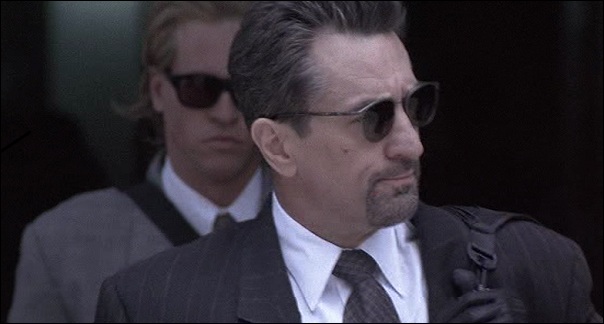
Neil McCauley
The Gangster: Neil McCauley, Heat

The Lesson: In the spectacular opening scene of Michael Mann’s Heat, criminal chief Neil McCauley and his team of robbers manage to take down a huge score. The key to their success? Planning, planning, planning. McCauley is a perfectionist; every detail needs to be scrupulously prepared, nothing can be left to coincidence. It there is even a slight chance that something is wrong; he will walk away from a job no matter how much money is at stake. Off course, there is a slight bump in the road for McCauley and his team later on, but that is only because pulling armed robberies is a highly volatile business. But even with a terrific investigation team on their tail lead by a fanatical Al Pacino, they manage to take down another – even larger – score later on in the movie.

2. Build a team you can rely on
Joe Cabot
The Gangster: Joe Cabot, Reservoir Dogs

The Lesson: ‘I should have my head examined for going with someone I wasn’t a 100 percent on…’ Yeah, you should have Joe. As a manager, your most important task is to choose the right people around you and make them perform optimally. When you have a crucial project to realise – a diamond heist in Joe Cabot’s case – you don’t want to take any chances on whom you hire for the job. Joe’s negligence at this point, allowed a special LAPD-agent to infiltrate his crew, leading to a disastrous outcome for the project and all those involved.

3. Always look out for opportunities and know when to strike
Henry Hill
The Gangster: Henry Hill, GoodFellas

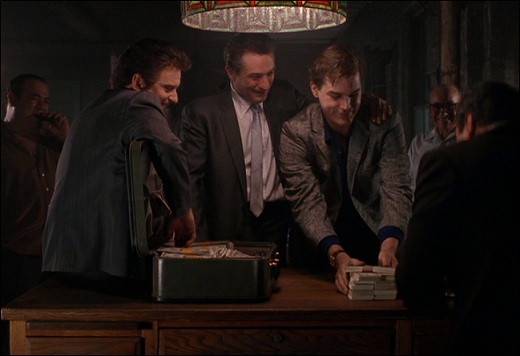
The Lesson: In Wiseguy, the novel on which the classic mob movie GoodFellas is based, protagonist Henry Hill describes his bewonderment at how lazy many people are. Great entrepreneurs like him are always looking for new ways to make money. Once in a while, a golden opportunity arises and a highly successful business manager will recognize this once in a lifetime chance and grab it. In Henry Hill’s case, this was the Air France heist in 1967. He walked away with 420.000 US dollars from the Air France cargo terminal at JFK International Airport without using a gun; the largest cash robbery that had taken place at the time. This was Hill’s ticket to long term success within the Mafia.

4. Analyse, decide and execute with conviction
Michael Corleone
The Gangster: Michael Corleone, The Godfather

The Lesson: Your success as executive depends for a great deal on the way you make decisions and follow them through. When his father, family patriarch Don Vito Corleone, is shot by Virgil ‘The Turk’ Sollozzo, Michael Corleone knows the threat of his father’s killing will not be over until Sollozo is dead. That is his analysis. Then, without any hesitation, he decides to kill Sollozo despite the hard consequences that he knows will follow. The third part – the execution – he performs flawlessly, killing Sollozo and his bodyguard Police Captain McCluskey in a restaurant. Michael later in the film again proves to be an extremely decisive leader when he has the heads of the five families killed when they conspire against the Corleone family.

5. Support the local community
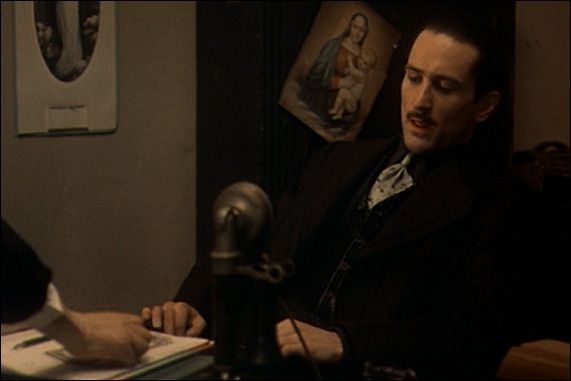
Young Vito Corleone
The Gangster: Young Vito Corleone, The Godfather Part II

The Lesson: For long term success, you need more than just great products (in the mob’s case: protection, gambling and theft). You will need commitment from all your stakeholders and especially goodwill from the communities you operate in. Young Vito Corleone sees that gangster boss Fanucci is squeezing out everybody in the neighbourhood he lives in. Nobody is happy with him. So he murders Fanucci and takes over as neighbourhood chieftain. Rather than squeezing out people, he starts helping them. Every favour he does for somebody, earns him a favour in return. Those are a lot of favours and a lot of people who think he deserves his success and wealth. They are willing to give everything for their Don.

6. Don’t be afraid to use your subconscious
Tony Soprano
The Gangster: Tony Soprano, The Sopranos

The Lesson: As a leader, you want to base your decisions on hard facts as much as possible, but sometimes your intuition is much more powerful than the greatest performance dashboard in the world. In the first season of HBO’s monumental Mafia series The Sopranos, family patriarch Tony Soprano’s own mother tries to have him whacked. He had revealing dreams about this before it happened, but refused to look at the painful true meaning of these dreams. Through therapy, he learned to use his subconscious like a true expert, so when his friend Big Pussy Bonpensiero starts ratting for the FBI in season 2, he knows something is wrong. In a fever dream, Big Pussy (as a fish), reveals the hard truth to Tony. When he wakes up, he knows exactly what to do. Big Pussy must sleep with the fishes. Tony’s new ability to listen to his subconscious makes him a much more effective leader.

7. Think and act faster
Nucky Thompson
The Gangster: Nucky Thompson, Boardwalk Empire

The Lesson: After a botched assassination attempt on bootlegger and crooked politician Nucky Thompson, his enemies are left numb and indecisive of what to do next. Nucky – on the other hand – immediately makes a counter move. He goes to see his enemies and tells them the attempt on his life changed his perspective on things. He will abandon the bootlegging business and politics, so his enemies can take over. In secret however, Nucky books a trip to Ireland the next day, where he purchases a huge amount of cheap and highly qualitative Irish whiskey. His enemies underestimated him. By thinking and acting faster than his opponents, Nucky manages to surprise them and outperform them in business.

8. Take compliance seriously
Al Capone
The Gangster: Al Capone, The Untouchables

The Lesson: He was the king of his trade; the bootlegging business in Chicago. He made millions importing booze and selling it to bars and clubs. The thing that brought him down was income tax evasion. Managers can learn a simple truth from this mistake; compliance is your license to operate. Off course in Capone’s case this was a little different because he did not have any legal income to begin with, but many CEO’s of businesses have fallen into the same compliance trap. Sure, sometimes it is cheaper to pay a fine than to spend a fortune on meeting some obsolete policy, but you should never fail to answer to the most important rules and regulations. So even when it is sometimes tempting to bend the rules, in the end: being non-compliant is always more costly than being compliant.

9. Ride the Industry Waves
Tony Montana
The Gangster: Tony Montana, Scarface

The Lesson: Every industry has its waves, and a great CEO knows how to ride these waves. Take the drug business in the 1980’s. Cocaine was coming up big time in Florida. After Montana gets rid of his weak boss Frank, he sets up a massive cocaine trade in Miami and surroundings. His supply chain is very efficient. He imports the stuff straight from the source in Bolivia. Nobody can compete with that. It isn’t before long that Montana is Florida’s one and only cocaine king.

10. Keep your friends close and your enemies closer
Don Vito Corleone
The Gangster: Don Vito Corleone, The Godfather

The Lesson: You want to know what your competitors are up to? Invite them over for dinner and a meeting. Don Vito Corleone does it all the time. When he invites the heads of the five families for a sit down, in this powerful scene in The Godfather, he learns a great deal. It is not Tattaglia he should worry about, but that treacherous Barzini. Now that he understands the conspiracy against the Corleone family, he can help his son Michael take the necessary precautions.

De maffiaboeken van Nicholas Pileggi – Deel 2

Door Jeppe Kleijngeld

Casino: Love and Honor in Las Vegas

De journalist / schrijver Nicholas Pileggi heeft tweemaal in zijn carrière een onthullend boek geschreven over zijn grootste fascinatie: de maffia. Eerder schreef ik al over zijn boek ‘Wiseguy’, dat in 1990 door Martin Scorsese werd verfilmd als ‘GoodFellas’. Dit keer bespreek in zijn tweede maffiaboek: ‘Casino: Love and Honor in Las Vegas’. Ook dit boek werd door Scorsese verfilmd, namelijk als ‘Casino’ in 1995 met Robert de Niro, Sharon Stone and Joe Pesci.

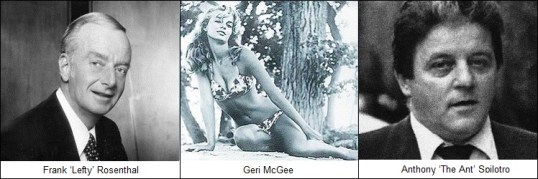
Pileggi heeft wederom een fascinerend non-fictie verhaal ontdekt en de juiste personen om er aan mee te werken. Het meest fascinerende aspect van ‘Casino’ is hoe de hoofdpersoon, beroepsgokker Frank ‘Lefty’ Rosenthal, die normaal niets aan het toeval overliet, trouwde met de meest instabiele vrouw van Las Vegas. Een gigantische gok, die catastrofaal is uitgepakt. Later overleefde Rosenthal op miraculeuze wijze een bomaanslag… Het is bijna te vreemd om echt gebeurd te zijn.

Casino 1

In ‘Casino’ schetst Pileggi een beeld van de gokstad Las Vegas die in de jaren 70/80 nog het soort glamour had waar échte gokkers op af kwamen. Maar ook normale families kwamen al in groten getale om het collegegeld van junior weg te spelen op de roulettetafels. Rosenthal herinnert zich van zijn begintijd in Vegas dat hij een camper buiten de stad zag stoppen om te lunchen. Binnen stond een blackjack tafel en binnen drie uur had de man er 2400 dollar doorheen gespeeld en ging de familie rechtsomkeert. Ze hebben Vegas niet eens gehaald. ‘Dat ben ik nooit vergeten’, aldus Rosenthal.

Las Vegas is een stad met een maffiageschiedenis. Opgericht door Bugsy Siegel en later geëxploiteerd door maffia families uit het Midwesten van de VS: Chicago, Kansas City, Milwaukee en Detroit. Een man die zelf geen deel van de maffia uitmaakte, maar wel veel geld voor ze verdiende was professioneel gokker Frank ‘Lefty’ Rosenthal. Hij werd uitverkoren de vier casino’s te leiden die onder geheim bestuur van de maffia vielen. Hij was een fenomenaal casino manager, maar het liep allemaal verkeerd af…

Problemen kwamen uit verschillende hoeken. Lefty’s huwelijk met Geri McGee was een ramp. Ze zette Lefty vaak voor schut en was vooral op geld belust; ze heeft nooit van hem gehouden. Niet dat hij zelf een heilig boontje was. Hij ging continu vreemd en vernederde haar voortdurend. Ze hadden constant ruzie en vaak publiekelijk; dit was slecht voor Lefty’s gezondheid en carrière. Daarnaast had Lefty continu problemen met de gaming commission, het orgaan dat toekent wie wel en niet mogen opereren in de stad. De FBI deed daarnaast fulltime onderzoek naar de vermoedelijke afroompraktijken in de casino’s en het was een kwestie van tijd voordat ze voldoende bewijsmateriaal verzameld hadden.

Dan is er nog Lefty’s jeugdvriend, de levensgevaarlijke gangster Anthony ‘The Ant’ Spilotro. The Ant, zo genoemd vanwege zijn beperkte lengte, trok naar Vegas om te profiteren van het door de maffia onontgonnen terrein. Buiten het zicht van de maffialeiders begon Spilotro links en rechts te roven, te moorden en te stelen. Dit ontging natuurlijk niet de lokale politie en Spilotro werd met zijn continue publiciteit een steeds groter probleem voor de bazen in het Midwesten. Hij kwam gewelddadig aan zijn einde.

Casino 2

Het meeste wat in de film ‘Casino’ te zien is, berust op de waarheid zo blijkt uit het boek. De wat onrealistische moord in een bar waarin Spilotro (Nicky Santoro in de film) een man doodsteekt met een pen komt niet in het boek voor. Maar de beruchte martelscene waarin hij het hoofd van een gangster in een bankschroef stopt en samenperst tot zo’n 10 centimeter, zodat zijn ogen uit hun kassen poppen is echt gebeurd.

Uiteindelijk viel de maffiaoperatie in Vegas als een kaartenhuis in elkaar en de stad veranderde vervolgens in een soort Disneyland. Het was de laatste keer dat straatgangsters zoiets waardevols in handen kregen…

Een boeiend boek, maar haalt het niet bij het fenomenale ‘Wiseguy’.