Cult Radar: Part 12

FilmDungeon.com is glad to explore the video trenches to find that oddball treasure between the piles of crap out there. Of course, a treasure in this context can also be a film that’s so shockingly bad it’s worth a look, or something so bizarre that cult fans just have to see it. Join us on our quest and learn what we learn. Hopefully we’ll uncover some well-hidden cult gems.

Researched by: Jeppe Kleijngeld
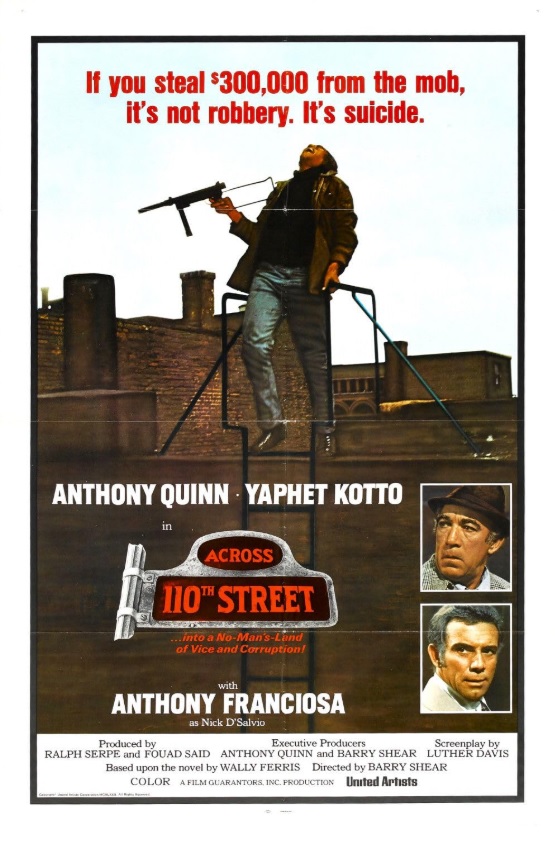
Across 110th Street (USA, 1972)

Directed by: Barry Shear
Written by: Luther Davis, Wally Ferris
Cast: Anthony Quinn, Yaphet Kotto, Anthony Franciosa

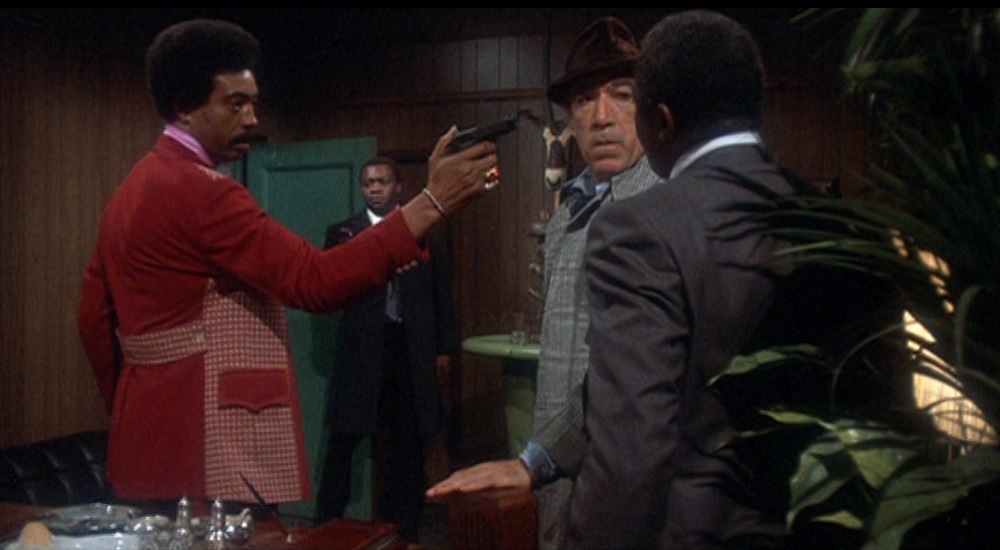
Tarantino’s Jackie Brown opens to the same rip-roaring title song as this movie: ‘Across 110th Street’ by Bobby Womack. It’s a homage to an exploitation classic, a New York set crime thriller about a gang of black criminals who rob the mob, sparking a brutal chase involving both the Mafia and the police. The police duo in charge consists of the corrupt captain Frank Matteli (Anthony Quinn) and Lieutenant William Aylesworth Pope (Yaphet Kotto); a street guy versus a guy who wants to do it by the book. Their chemistry is electric, giving the movie an emotional and moral backbone amid the chaos. The film was slammed at the time for the extreme violence, and while the film is indeed gritty, it is generally well acted and executed. Beneath the grit lies a sharp commentary on race, corruption, and urban decay in 1970s America. Watching it now, it’s easy to see why Tarantino holds it in such high regard.

The Curse of Frankenstein (UK, 1957)

Directed by: Terence Fisher
Written by: Jimmy Sangster (screenplay), Mary Shelley (novel)
Cast: Peter Cushing, Hazel Court, Robert Urquhart, Christopher Lee

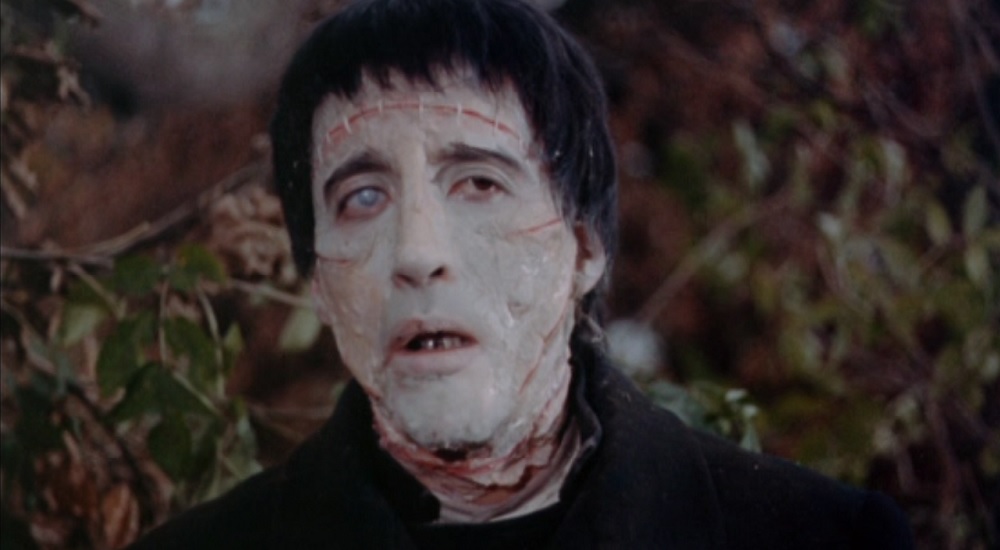
Peter Cushing stars as Dr. Frankenstein and Christopher Lee as the creature in Hammer Studios’ retelling of the Frankenstein legend. Directed by Terence Fisher, who would go on to make Horror of Dracula a year later, this film is often regarded as one of the finest adaptations of Mary Shelley’s novel, even rivaling the classic Universal versions. Told in flashback from a prison cell, Victor Frankenstein recounts the story of how his obsession with discovering the secret of life led him to commit unspeakable crimes. For a film made in 1957, the horror remains remarkably effective, due in large part to Lee’s chilling performance. As Hammer’s first color horror film, The Curse of Frankenstein was notable for its bold use of gore in color and its vivid gothic style. It marked the beginning of the studio’s signature brand of horror and launched a successful series of sequels, with Fisher directing several of them.

Dark Star (USA, 1974)

Directed by: John Carpenter
Written by: John Carpenter, Dan O’Bannon
Cast: Dan O’Bannon, Dre Pahich, Brian Narelle

John Carpenter’s debut film gives us a cynical look at outer space travel. Not the majestic kind Kubrick showed us in 2001: A Space Odyssey, but more like space travel as a monotonous, blue-collar grind. Dark Star is the name of the ship that looks like a surf board. The job of its crew is to destroy unstable planets. And while this may sound exciting, the five crew members – who have been on board Dark Star for twenty years – are mostly bored out of their minds and increasingly detached from reality. Co-writer and actor Dan O’Bannon originally conceived the idea of an alien aboard the ship, but budget limitations forced him to turn that concept into the film’s now-infamous beach-ball creature. His alien idea would later become Ridley Scott’s Alien (1979). Tarantino once called this movie a masterpiece. I don’t see it that way, but I like the 2001 parody concept and the execution, including the inventive special effects, is certainly well done.

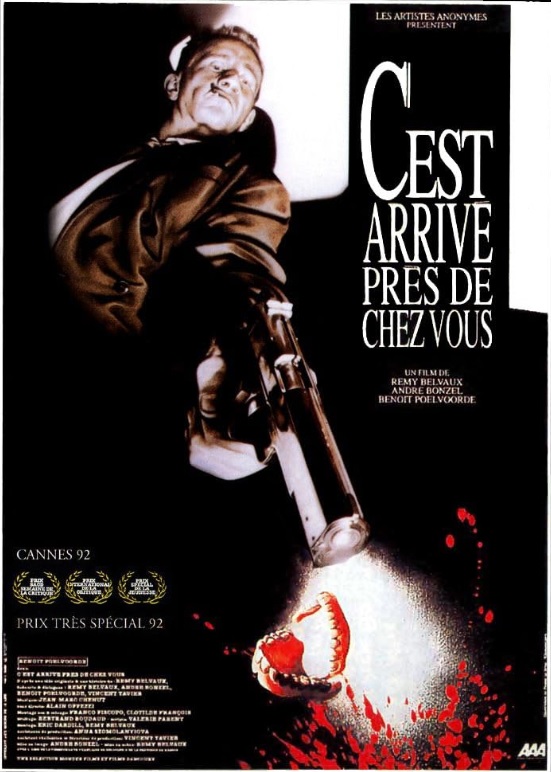
Man Bites Dog | C’est arrivé près de chez vous (Belgium, 1992)

Directed by: Rémy Belvaux, André Bonzel, Benoît Poelvoorde
Written by: Rémy Belvaux, André Bonzel, Benoît Poelvoorde
Cast: Benoît Poelvoorde, Jacqueline Poelvoorde-Pappaert, Nelly Pappaert

In this notorious cult classic from the French part of Belgium, a three-headed camera crew follows the gleefully depraved serial killer Ben, as he spends his days gruesomely murdering people for sport and profit. During the shoot, the crew becomes more and more complicit in Ben’s crimes. The sheer amount of killings is not very realistic, but the profiling of the killer, chillingly portrayed by Benoît Poelvoorde, convinces in all its sickness. The mockumentary concept was pretty new at the time, and the approach – taking the viewer inside the mind of a horrible human being, who – when he’s not busy killing people against depressing urban backdrops – is offering his warped and racist views in interviews – makes for disturbing cinema. The filmmakers, who worked on a shoestring budget, wanted to make something different, and they have succeeded in this task. C’est arrivé près de chez vous (‘It Happened Near You’) became a unique, deeply unsettling, and darkly comic milestone of cult cinema.

The Lady in Red (USA, 1979)

Directed by: Lewis Teague
Written by: John Sayles
Cast: Pamela Sue Martin, Robert Conrad, Louise Fletcher

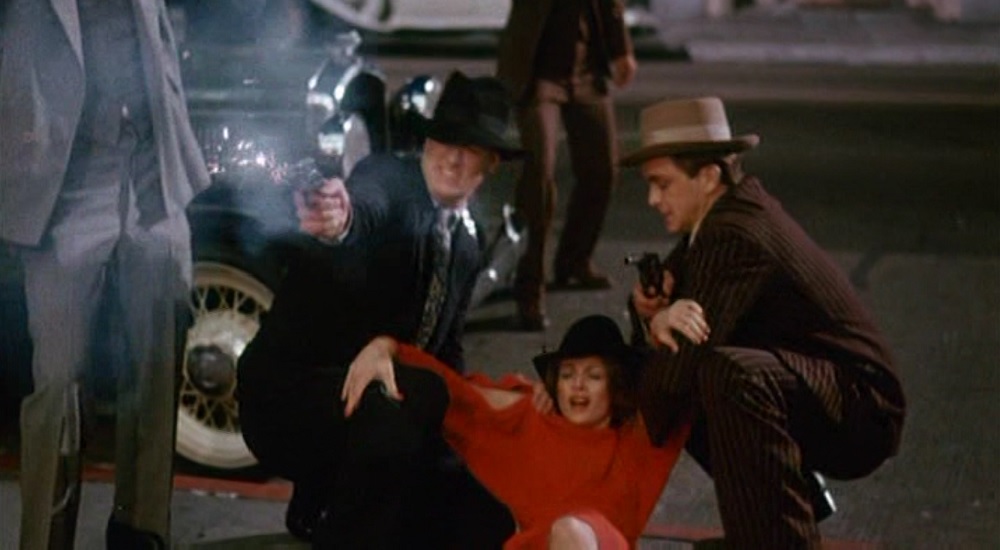
Farm girl Polly moves to Chicago, where she becomes romantically involved with gangster John Dillinger. The film is curious in that it’s not really about Dillinger, but about his girlfriend and the unwitting role she played in the gangster’s famous demise at a movie theater. It traces Polly’s own descent into crime: she starts out as a seamstress, tries her hand at prostitution, and eventually ends up in jail. After Dillinger’s death, she organizes a dangerous but lucrative armed robbery on her own. Written by John Sayles, directed by Lewis Teague, and produced by Julie Corman – indeed, Roger Corman’s wife – the film unmistakably feels like a Corman-style exploitation picture, complete with plenty of bloody, machine-gun action. In his 2021 book ‘Once Upon a Time in Hollywood‘, Quentin Tarantino mentioned that in an alternate Hollywood universe, he directed a remake of this film. It certainly sounds like something he’d do well. Who knows – maybe an idea for his tenth and final movie?
Light & Magic: The Making of Cinema Magic

Special effects have always been a huge part of movies. From King Kong (1933), to the Ray Harryhousen films with the brilliant stop-motion effects, to the stunning 2001: A Space Odyssey (1968). Movies offer viewers the chance to see things that cannot be seen any other way. The six-part Disney Plus documentary Light & Magic tells the story of Industrial Light & Magic (ILM) that played an enormous part in the evolution of visual effects in Hollywood movies. The company was founded by George Lucas when he was working on his first Star Wars movie in 1977. He visited every optical effects company in the industry, but found none that could deliver what he had in mind.

2001: A Space Odyssey had really pushed the boundaries in what could be achieved in visual effects, but the movie was slow. Lucas wanted to create speed and energy. He wanted to see dog flights in space. He met a special effects man called John Dykstra, who was part of a small community of special effects people. He hired him to set up the team of model makers, storyboard artists and camera and light people at the newly founded ILM.

The first two episodes show the extremely challenging process of getting the first Star Wars film made. Thousands of elements had to be combined into extremely complicated shots. There were many desperate moments, but the end result was amazing and audiences and industry experts were blown away. Nobody but the people at ILM could have done it back then. It inspired many directors to also push the envelope in special effects the following years and decades, like James Cameron: “I went home, and said to my wife; ‘I quit my job. You have to pay the bills for a while, cause I’m gonna make a film’.”

The third episode is about ILM’s challenge to create a worthy sequel: The Empire Strikes Back (1980). This classical space opera had even more complicated special effects to accomplish. Like always with sequels, the scale was much larger than the first movie. The team also got other assignments than Star Wars, namely Raiders of the Lost Ark (1981), Dragonslayer (1981) and ET: the Extra-Terrestrial (1982). Movies that were nominated for or won Academy Awards for their amazing visual effects.

Lucas also got interested in computers and he hired Ed Catmull to digitize processes. The computer team made the impressive terraforming sequence in Star Trek 2: The Wrath of Kahn (1982) and this can be seen as the beginning of computer generated effects in movies. This inspired Lucas and the ILM people to get into it. Catmull’s division (Pixar) was later sold to Steve Jobs and they turned it into a cartoon company.

The next major project was Return of the Jedi (1983), the most complex movie in terms of visual effects ever conceived. “It was not a fun movie to make”, says one of the team members. But the result surely was fun to watch. Each of the 900 visual effects shots was a triumph for the ILM team. It was followed up by a number of other eighties classics: Indiana Jones and the Temple of Doom (1984), The Goonies (1985) and Back to the Future (1985). Each new project had its own challenges, and the attitude at ILM always was: ‘let’s do something that’s never been done before.’

In episode 5 titled ‘Morphing’, the computer era is really about to take off. The first successful computer effect was the water creature in James Cameron’s The Abyss (1989). Now that film could be translated into pixels that could be manipulated, anything became possible. But the industry needed a proof of concept and the 90 seconds sequence in The Abyss was just that. But as always with new technology, there is resentment at first. They called digital ‘the dark side’. Digital wasn’t yet seen as the main thing, but as an addition to old school effects. The model shop remained the central place in ILM’s laboratory.

Then one day, James Cameron called and he wanted to do something way bigger than The Abyss. He pitched them: Terminator 2: Judgment Day (1991). A liquid metal man was a huge leap from a water snake. The team had only nine months to create the T-1000. They first had to capture actor Robert Patrick in data. They filmed his muscles and how he moved. Once they had him digital, they combined all special effects with the right lighting, so it all seems to be part of the same world. The end result was stunning. One ILM guy recalls the T-1000 walking through the bars in the mental institution; an impossible shot. This was truly groundbreaking stuff.

The following year, another major movie would truly signal the end of traditional special effects. They had planned to create the dinosaurs in Jurassic Park (1993) with advanced stop motion animation. Spielberg hired the best guys in the business. Stan Winston would design the creatures and Phil Tippett would animate them. He also hired Michael Lantieri, a practical effects genius and Dennis Muren, a visual effects wizard. The team had already built the dinosaurs, and Light & Magic gives us a few images of what the Velociraptors looked like with stop-motion. They’re certainly impressive, but since we are now used to digital effects, the unrealness becomes an issue. Once they did a successful test with a digital T-Rex running through a landscape everybody knew: visual effects will never be the same again. “I feel extinct”, said Tippett, and Spielberg used that line in the movie.

So 1993 was the year of the big breakthrough of digital effects, and they would be used for many successful movies in the nineties, like The Mask (1994), Forrest Gump (1994), Jumanji (1995) and Star Wars Episode I: The Phantom Menace (1999). The documentary series ends with the final innovation that the visionary George Lucas had anticipated all along. The tv-series The Mandalorian (2019) is shot entirely in a round set called ‘The Volume’. This is ILM’s replacement for the green-screen. It uses a massive, curved LED screen to create photorealistic backdrops, circumventing the need for outdoor locations or extensive physical sets. Due to this innovation, The Mandalorian is able to deliver Star Wars effects on a tv-schedule and budget. ILM, which had started with a group of creative designers in a warehouse at Van Nuys, is still pushing the boundaries in creating cinema magic today, now also for the small screen.

Double Bill #01: 2001: A Space Odyssey & A Clockwork Orange

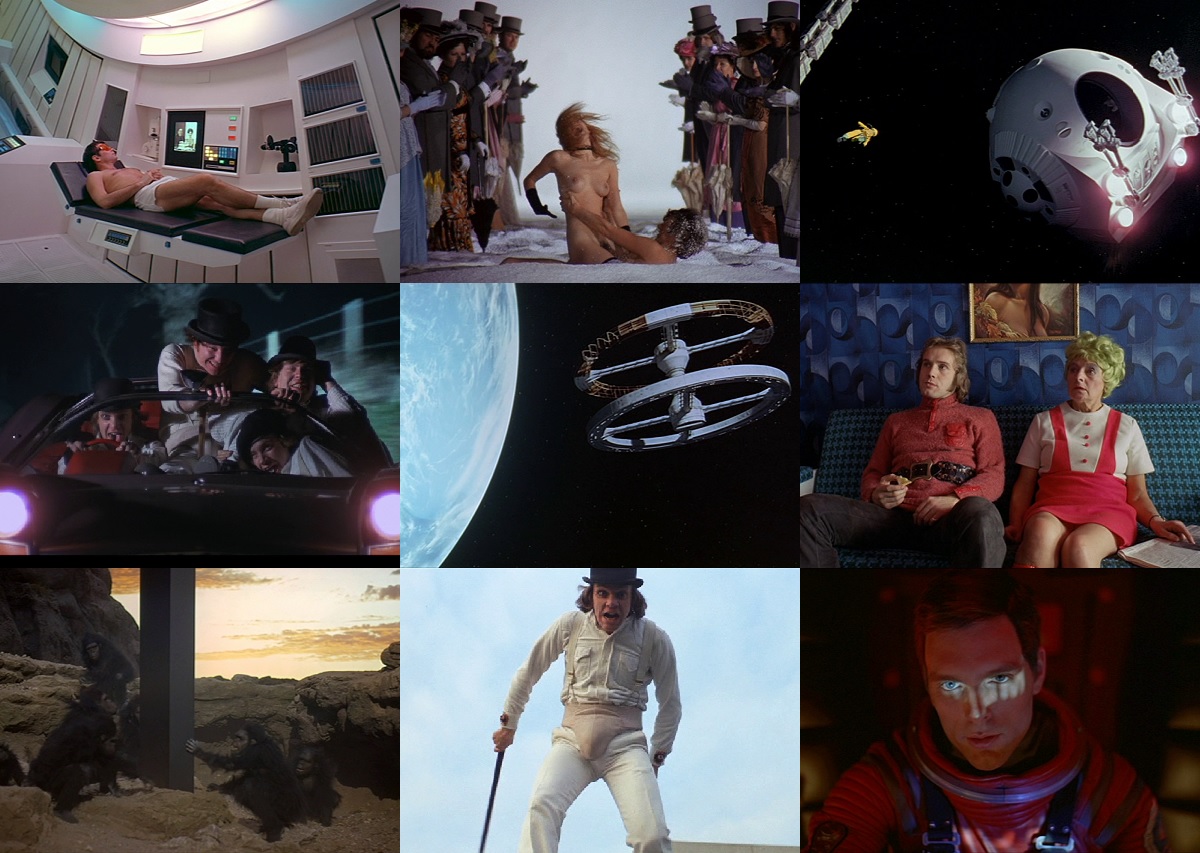
In 1968 and 1971 master director Stanley Kubrick released his two best movies as far as I’m concerned. 2001: A Space Odyssey and A Clockwork Orange are both as perfect as films can be. They are also linked in an interesting way and therefore I thought it would be appropriate to couple them for this first edition of my new feature ‘Double Bill’. The connection is as follows; In 2001 we witness the next phase of evolution for mankind. This civilization appears to be peaceful and focussed on deploying technology to improve society for the better. In A Clockwork Orange on the other hand, we witness a society much like our own in which many people are still little more than violent savages. There is a shot of main hooligan Alex that is visually very similar to one of 2001’s angry apes. We are really not yet that evolved and the space age is still a distant dream. This point is made abundantly clear in the very beginning when Alex and his three droogs batter an old homeless drunk nearly to death just for kicks. “What kind of world is it at all? Men on the moon. Men spinning around the world. And there’s not no attention paid to earthly law and order no more”, the man tells them before the beating and he is right. Another link or rather similarity is the magnificent use of classical music. One of 2001’s highlights is the space waltz on Strauss’s The Blue Danube.

The cinematography alone of these immense, beautiful objects floating in space is breathtaking and then this beautiful music added to it makes this a unique accomplishment in cinema. Kubrick wanted to create a non-verbal experience that did not rely on the traditional techniques of narrative cinema, and in which music would play a vital role in evoking particular moods. Alex would certainly approve. Only he imagines quite different imagery when he listens to his favorite symphonies by Beethoven. In A Clockwork Orange too, many of the best scenes feature fantastic classical tracks that effectively enchant the viewer. Every time I watch these movies, the images and music stay in my mind for weeks afterwards. Another reason to appreciate these films is the intelligence of the screenplays. For instance, HAL9000 is still today – more than 50 years later – the finest depiction of machine intelligence in a film. And A Clockwork Orange treats various themes like free will, politics and good versus evil in a fascinating way. But what these films do absolutely better than any before or since is depicting what mankind is really capable of, both in the very good and the very bad sense. Humanity at its most beautiful and most terrible (and with A Clockwork Orange sometimes a twisted combination of both). An amazing feat by a director who is still unsurpassed in his skill and dedication.

Ready Player Two: Ultieme nerd fantasie vervolgd

Het vervolg op ‘Ready Player One’ – dat in 2018 verfilmd werd door Steven Spielberg – is een must voor nerds en geeks. In deel 1 won de wees Wade Watts, met een aantal vrienden, een Easter egg hunt met als hoofdprijs de ‘Oasis’, een virtuele wereld gebouwd door de excentrieke game designer James Halliday die de wedstrijd organiseerde toen hij hoorde dat hij stervende was. De wedstrijd was een soort Willy Wonka contest voor geeks, want de Gunters (Egg Hunters) moeten vooral verstand hebben van jaren 80’ films, muziek en games – de allergrootste passies van Halliday en mede-oprichter Ogden Morrow (gespeeld door de geweldige Simon Pegg in de film).

In deel 2 zijn Watts en vrienden dus de eigenaar van het grootste economische asset ooit gecreëerd. Want in de toekomst – het boek speelt zich af in 2048 – hebben milieu- en klimaatproblemen de planeet dusdanig verziekt dat alleen nog in de virtuele wereld plezier te beleven valt (zoals wel vaker bij sci-fi’s een realistisch scenario dus). De overleden Halliday heeft in het vervolg wat nieuwe verrassingen in petto voor Watts en zijn vrienden. Allereerst nieuwe technologie, waarbij het mogelijk is je brein direct aan de Oasis te koppelen, zodat je de virtuele wereld als een soort lucide droom kunt ervaren. Ook heeft hij een nieuwe wedstrijd georganiseerd, ditmaal een zoektocht naar zeven scherven die verstopt zijn in verschillende virtuele werelden in de Oasis. De helden zullen al hun popcultuurkennis en game skills weer keihard nodig hebben.

Zoals iedere sci-fi fan weet is het nooit slim om je brein direct aan een machine te koppelen en dit blijkt ook hier weer het geval. In het eerste deel waren de corporate Sixers onder leiding van de ‘giant dickhead’ Nolan Sorento de grote vijand. In dit deel is de avatar van Halliday, genaamd Anorak (vernoemd naar de ‘dungeon master’ in Dungeons and Dragons), zelfbewust en evil geworden. Een doorgedraaide AI dus, zoals HAL in 2001: A Space Oddysey en Agent Smith in The Matrix films. Zeer toepasselijk voor dit type verhaal.

Anorak houdt miljoenen Oasis-gebruikers gegijzeld in de Oasis via hun brein-computer-interfaces en eist dat Watts de zeven scherven vindt zodat hij een digitale versie van zijn oude geliefde tot leven kan wekken. In de zoektocht komen Watts – of liever gezegd zijn avatar Parzival – en vrienden op o.a. een Prince-planeet, een John Hughes wereld, Middle-Earth en andere met popcultuur doordrenkte werelden.

Het boek kreeg bakken kritiek omdat het slecht geschreven zou zijn. Dit is wel terecht, maar ik heb er toch een zwak voor. Het zijn vooral de beschrijvingen van de Oasis die de fantasie prikkelen. Ik denk dat de metaverse hier serieus op gaat lijken: de mogelijkheden zijn onbegrensd voor nerds om hun passies om te zetten in virtuele creaties. Tijdreizen met Doc Brown, de strijd aangaan met Morgoth op Midden-Aarde, Prince uitdagen voor een dans contest, zwemmen met Jaws, optreden met de Rolling Stones, verzin het maar. Was het maar vast 2048 minus de verwoeste natuur. Maar de Oasis? Bring it on.