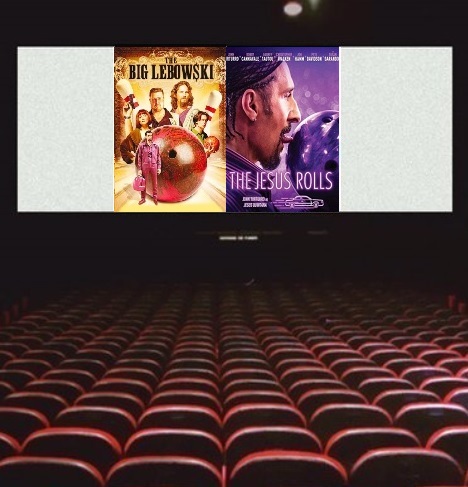
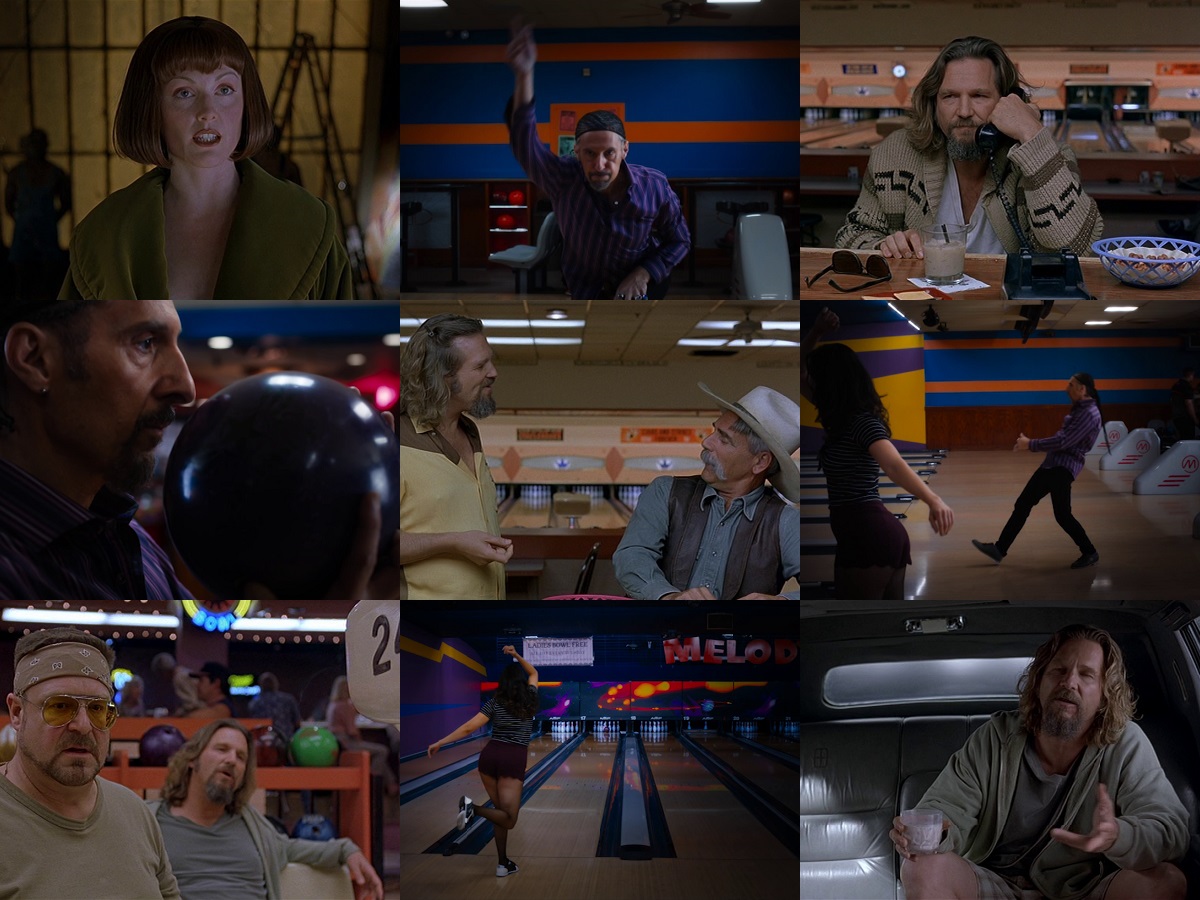
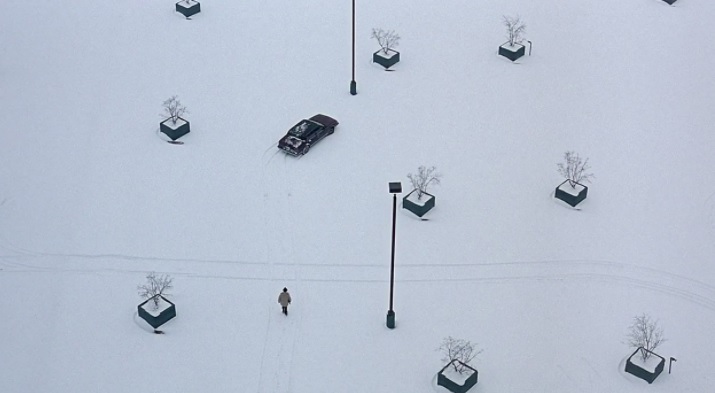
In the nineties the Coen Brothers rolled two strikes in a row with Fargo (1996) and The Big Lebowski (1998), two instant classics that both feature a kidnapping. Fargo is a bloody North Dakota-set crime story with humor that is darker than a black steer’s tookus on a moonless prairie night. The Big Lebowski is a Raymond Chandler-style mystery featuring a valued rug, bowling balls, white Russians and the question of what it means to be a man. I considered coupling them for this feature; in terms of bizarre characters, endlessly quotable dialogues and outrageous situations these movies certainly match, but for some reason I chose The Jesus Rolls (2019, dir: John Turturro) instead. Jesus Quintana (played by John Turturro) was one of the many memorable characters from The Big Lebowski and even though he was only in two scenes totaling less than six minutes in screen-time, he got his own movie. It’s as if Ned Ryerson would get his own flick two decades after Groundhog Day (Ned Ryerson Insures!). The Coens had nothing to do with it: but they gave John Turturrro permission to run with the character. It is both a spinoff and a remake of the French movie Going Places (1974), which was very controversial at the time for its vulgarity, depiction of sexual acts and amorality. The story revolves around a road trip taken by Quintana, Petey (Bobby Cannavale) and Marie (Audrey Tautou) during which they engage in sex and petty crime. Petey is an ex-convict like Jesus and Marie is what Maud Lebowski would call a nymphomaniac: a woman who engages in sex compulsively and without joy. The movie has one bowling scene and Jesus repeats some of his Lebowski lines, but the movie has nothing to do whatsoever with the events of The Big Lebowski (it even turns out that Jesus is not a pederast, he was only falsely accused of exposing himself to an eight year old). For a comedy it is not funny enough, and for a road movie it is too strange. But as a dessert after watching the masterpiece The Big Lebowski for the hundredth time, it is alright.
Tagarchief: Coen Brothers
10 Reasons the Nineties’ Cinema Kicked Ass
I was a little young to realize what a terrific time for cinema the nineties were. Holy crap. Around forty percent of my favorite movies come from the nineties, including my number one of all time: GoodFellas. In this article, I will give you 10 reasons why the nineties kicked complete ass as a movie decade.
1. Tarantino’s Arrival
In 1992, a young film maverick silently arrived with Reservoir Dogs. Many viewers and critics were a little off-put by the violence and immoral characters, but yet loved the non-chronological storytelling, the brilliant dialogues and the awesome performances. The talent of this new writer/director named Quentin Tarantino was undeniable.
Two years later he blew critics and audiences away with his epic Pulp Fiction. Tarantino was for the nineties what Scorsese was for the seventies; a significant promise. And he delivered. The nineties saw him direct an excellent third movie, Jackie Brown (1997), and two of his screenplays were turned into memorable films: True Romance (1993) and Natural Born Killers (1994). In 1996 he also made From Dusk Till Dawn with another promising young director from Texas. Robert Rodriguez had debuted in 1992 with the low budget miracle El Mariachi which he followed up with Desperado (1995). A duo was formed…
2. It Was a Time to Thrill
The nineties was the decade of the thriller. Especially the detective versus serial killer genre flourished with The Silence of the Lambs (1991) and Se7en (1995). Of course these two spawned countless imitations, but none as good. Another excellent movie in the psychopath category is Rob Reiner’s adaptation of Stephen King’s Misery in 1990. That movie’s villain Annie Wilkes (played by Kathy Bates) is probably even scarier than Hannibal Lecter, Buffalo Bill and John Doe combined.
The nineties also had more than its share in fantastic crime thrillers. Top examples include Brian de Palma’s Carlito’s Way (1993), Luc Besson’s Leon (1994), Michael Mann’s Heat (1995), Brian Singer’s The Usual Suspects (1995) and Curtis Hanson’s L.A. Confidential (1997). Special mention in the Thriller department goes to Paul Verhoeven’s erotic contribution Basic Instinct (1992), an absolute classic in its genre.
3. Glory Days For the Coens
They already made an impression as independent filmmakers in the 1980’s. Both their debut Blood Simple and second feature Raising Arizona tasted like more. In the 1990’s they really became film-buffs’ favorites. Miller’s Crossing (1990) is a perfect take on Dashiell Hammett and possibly their finest crafted work. Later, this decade, they had a brilliant black comedy run with the unforgettable classics Fargo (1996) and The Big Lebowski (1998). These Coen Brothers are absolutely terrific.
4. History Can Be Fun
Sure, every period has produced great historical movies, but the nineties had a very impressive reaping in the War / History genre. Way above average to be sure. In 1990 a certain Kevin Costner brought the American frontier to the big screen with the Oscar-winning epic Dances With Wolves. It was a marvelous revitalization of the Western genre. World War 2 is also captured in several Oscar-winning pictures, most notably Steven Spielberg’s Schindler’s List (the ultimate WWII film), but also in Saving Private Ryan (also by Spielberg), La Vita E Bella (by Roberto Benigni) and The Thin Red Line (by Terrence Malick).
Another great war story is spectacularly told in Braveheart (1995), the bloody epic that showed that Mel Gibson is a highly competent director. A number of excellent historical biographies also saw the light of day, most notably JFK (1991, Oliver Stone) and Ed Wood (1994, Tim Burton). And last but least, Titanic (1997, James Cameron) and Forrest Gump (1994, Robert Zemeckis) came out and successfully combined fictional stories with historic events.
5. Great Stand Alone Triumphs
While many masterpieces made in the nineties are part of a larger oeuvre or movement, there were also loads and loads of standalone triumphs. Movies that seemingly came out of nowhere and surprised friend and foe. Below, I picked one of my favorites of these surprises for each year of the nineties. Choosing just one was very difficult in some cases…
1990 Edward Scissorhands (Tim Burton)
1991 Thelma & Louise (Ridley Scott)
1992 Hard Boiled (John Woo)
1993 Groundhog Day (Harold Ramis)
1994 The Shawshank Redemption (Frank Darabont)
1995 Toy Story (John Lasseter)
1996 Bound (Lana Wachowski, Lilly Wachowski)
1997 Boogie Nights (Paul Thomas Anderson)
1998 Festen (Thomas Vinterberg)
1999 Fight Club (David Fincher)
6. Harvest of Horror
O.k., so the eighties ruled in the Horror territory. That doesn’t mean the nineties sucked. What is so great about it then? Well, Wes Craven’s re-invention of the slasher genre with Scream (1996) and Scream 2 (1997) was a terrific postmodern treat leading to many new series, such as I Know What You Did Last Summer (1997), and new installments of old horror series like Bride of Chucky (1998). It goes without saying that some of these were better than others.
Abel Ferrara made a significant contribution to the genre with Body Snatchers (1993), a very effective remake of the classic Invasion of the Body Snatchers, and The Addiction (1995), a great original take on the vampire genre. Speaking of vampires, what to think of Bram Stoker’s Dracula (1992) by Francis Ford Coppola? It’s the best version since Tod Browning’s original from 1931.
The formidable Sam Raimi completed his magnificent Evil Dead trilogy with Army of Darkness, the funniest installment yet. Peter Jackson also combined humor and supreme gore in Braindead (1992) and also delivered The Frighteners (1996). Anything else? Certainly. A selection: Joe Dante’s Gremlins 2 (1990), Adrian Lyne’s Jacob’s Ladder (1990), Ron Underwood’s Tremors (1990), David Fincher’s Alien 3 (1992), Jean-Pierre Jeunet’s Alien: Resurrection (1997) and Taylor Hackford’s The Devil’s Advocate. Last but not least, Daniel Myrick and Eduardo Sánchez’s The Blair Witch Project (1999) spawned a new horror genre with its handheld camera. It’s also the first movie that successfully used the internet to create a hype.
7. The Brits are Back in Town
After a period of recession, the British film industry bloomed again in the nineties. Four Weddings and a Funeral (1994) launched the career of Hugh Grant and was a smash hit at the box office. In 1995 James Bond returned after a long period in the pretty awesome Goldeneye. What’s really great about British cinema in the nineties is the emergence of new talent though. The trio John Hodge, Danny Boyle and Andrew MacDonald made a terrific debut with Shallow Grave (1994) and followed it up with one of the best films of the decade: Trainspotting (1996). In 1998 Guy Ritchie was another positive British surprise with the very funny and exciting Lock, Stock and Two Smoking Barrels.
8. Scorsese Scores Big-time
He delivered brilliant work in the seventies (Mean Streets, Taxi Driver) and eighties (Raging Bull). In the early nineties the maestro showed that he could deliver masterpieces in every decennium. He started by breaking all cinematic conventions in GoodFellas (1990), the greatest film ever made about the real Mafia. Then he made the highly influential thriller Cape Fear (1991) and the excellent costume drama The Age of Innocence (1993) before returning to the mob genre with the superbly realized Casino (1995). He ended the decade with the underrated Bringing Out the Dead (1999).
9. Indie Cinema to the Max
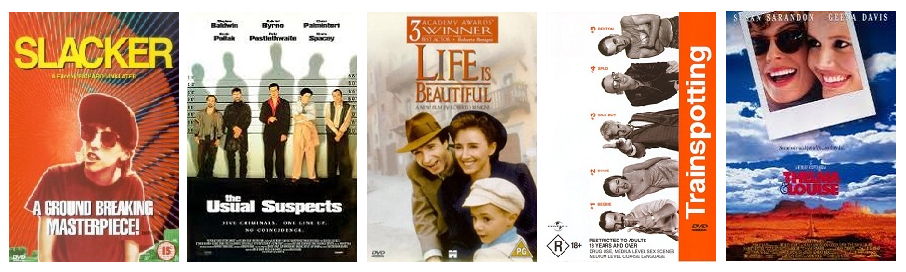
Tarantino and the Coens are already honored in this overview, but there are many other great independent American directors who made their entrance in the nineties or definitely established themselves as masters. In the debut department, we saw Richard Linklater arrive with Slacker (1991), Dazed and Confused (1993) and Before Sunrise (1995). Kevin Smith also made a super impression with the low budget comedy Clerks (1994).
Other indie directors delivered some of their finest work in the nineties. For instance, Jim Jarmusch made Dead Man (1995) and Ghost Dog: Way of the Samurai (1999), David Lynch made Lost Highway (1997) and The Straight Story (1999), Steven Soderbergh made King of the Hill (1993) and Out of Sight (1998) and Todd Solondz made Happiness (1998). If we could only go back to re-experience this richness in indie cinema again. Oh boy.
10. Sci-Fi is Booming
The early nineties saw Schwarzenegger star in two of the most kick-ass Sci-Fi / Action movies of our time: Total Recall (1990) and Terminator 2: Judgment Day (1991). The director of the first one, Paul Verhoeven, would write more sci-fi history in 1997 with Starship Troopers (1997). Other excellent movies in this genre that came out in the nineties are: Robert Zemeckis’ Back to the Future III (1990), Steven Spielberg’s Jurassic Park (1993), Terry Gilliam’s Twelve Monkeys (1995), Roland Emerich’s Independence Day (1996), Luc Besson’s The Fifth Element (1997), Paul W.S. Anderson’s Event Horizon (1997), David Cronenberg’s ExistenZ (1999) and Dean Parisot’s Galaxy Quest (1999).
The final year of the millennium also saw Star Wars return to the big screen, but Star Wars: Episode I – The Phantom Menace (1999) was not an all positive experience. It was another sci-fi film released in 1999 that formed the perfect transition into the new millennium: the cyberpunk story The Matrix by the Wachowski brothers (now sisters). An exciting (and very, very good) surprise hit and the greatest ending imaginable for a movie decade that completely rocked.
Bruce Campbell: A B-Moviestar’s Biography
For every George Clooney and Steven Spielberg, there are thousands of working class slobs in Tinsel Town. Bruce Campbell’s biography ‘If Chins Could Kill: Confessions of a B-Movie Actor’ is a homage to this B-crowd. Bruce who? That’s the point exactly. For those of us who grew up on a diet of classy horror movies in the eighties and nineties, he is a household name, for he was the star of one of the greatest horror series of that era: the holy Evil Dead trilogy (consisting of The Evil Dead, Evil Dead II and Army of Darkness).
‘If Chins Could Kill’ tells Bruce’s story. It was first published in 2001, so it doesn’t include the television adaptation of Evil Dead called Ash Vs. Evil Dead, but that’s no problem; there are plenty of great stories preceding that terrific cult show. In chapter 1, Campbell describes his childhood in Detroit, Michigan, with his parents and two older brothers. They did their fair share of monkeying around, and then good old Bruce became interested in girls. It became a lifelong obsession.
As he grew older, he had to find a way to keep on having fun. He discovered that his father Charles was an actor in a local theater. At age 14, Bruce joined the group and he soon played his first roles on stage. In the years that followed, he met various would-be actors and filmmakers, including one who would make it really big: Sam Raimi. After shooting a bunch of pretty cool 8 MM amateur films, Campbell, Raimi and another guy called Robert Tapert wondered: can we make a profession out of this?
The junior film crew decided to focus on the horror genre, because of the low budget required. For inspiration, they watched many horror shows at the drive-in theater and got a good sense of what audiences liked (when do they laugh? When do they scream?). Then they shot Within the Woods, the short predecessor of The Evil Dead. Their next challenge was a considerable one; they had to raise 150.000 dollars to be able to shoot their first feature length horror movie on 16 MM film (which they would afterwards blow up to 35 MM for cinema screenings) and to cover all other expenses. This seemed impossible, but they bought suits, went to work, and eventually raised the money.
After a grueling 12-week shoot in a run-down cabin in the woods of Tennessee, they canned the film, and luckily for the private investors, they delivered a genre classic. It turned out that its director was a genuine talent in visual storytelling, and Campbell undeniably a true horror star. True to the aim of his book, Campbell describes all the collaborators and the challenges they had to overcome to get this movie made. None of the other actors continued acting after The Evil Dead and all pursued other occupations.
If you’re serious about shooting a low budget movie, you should definitely read this book. It contains many tips on raising money, and then actually shooting it with hardly any resources. After that come the reshoots, the editing and sound editing, and then comes an even tougher part: marketing and selling the damn thing. Luckily for the crew, Stephen King saw their film at a movie event and wrote positively about it. His recommendation did miracles for the marketing of what was originally known as Book of the Dead, an unmarketable title; people might think they’d have to do reading at the screening. The investors of the retitled The Evil Dead made their money back, but the boys didn’t make anything. Yet, they now had a film under their belt.
What followed was the major flop Crimewave, co-written by The Coen Brothers. Campbell didn’t get a whole lot of work after that. He was in a soap series where he met his wife to be (a fragment from this show can be seen in Fargo, in the scene in which sociopath Gaear is watching television in the cabin). Crimewave could have been a career ender in Hollywood, but they had a fallback project: doing a sequel to the successful Evil Dead. Evil Dead II: Dead By Dawn (1987) became a legendary sequel and it is still considered to be among the greatest horror films ever made (it’s second on my top 10 horror list).
Still, Campbell – despite having played a lead role in a popular film – was no mainstream star and had to work as a security guard to make ends meet (“hey, you’re that guy from Evil Death, say that groovy line”). He also got divorced and met his new wife (a make-up artist) at a movie set. Campbell’s career would be closely tied to Raimi’s and in 1993, they would complete the trilogy with Army of Darkness. If you’ve ever wondered how much Bruce made with starring in the lead role in this movie ( I did!), the answer is in this book. It’s 500 K. This seems like an okay sum, but you have to subtract 25 percent for agents and managers leaving 375.000. Then deduct taxes (federal and state at the highest level) and you’re left with 187.500. Because he was recently divorced, his wife got half leaving Bruce with 93.750. This is still a lot of money, but considering it was two years work, he made just 46.875 a year, which is not what you’d expect a movie star (even a B-movie star) to make.
Still, Campbell continued to find work and most importantly: have fun. Especially when he went to New Zealand to work as actor and director on the tv-show Hercules: The Legendary Journeys and spin-of Xena: The Warrior Princess. In Campbell’s words: “shooting this show in New Zealand, away from studio interference, brought me back to the fun of filmmaking, like when we were shooting 8 MM movies back in Michigan.”
Read also: Ash vs Evil Dead: 5 Greatest Moments
Lessen in scenarioschrijven #1 – De basis
“To make a great film you need three things – the script, the script and the script”
—– Alfred Hitchcock
Een scenario schrijven is makkelijk. Een goed scenario schrijven is ontzettend moeilijk. Ik heb zelf verschillende scenario’s geschreven en ben nu bezig met mijn eerste echte goede. Verwachte opleverdatum: 31 december 2028.
Van het vermoeiende en niet erg bevredigende proces heb ik een aantal lessen geleerd die ik graag deel in een aantal blogposts. In dit eerste deel bespreek ik de absolute basis, zoals uitgelegd door Rogier Proper in zijn boek ‘Kill Your Darlings’.
Hoe kom je van niks naar een compleet filmscenario in 14 stappen? (12 stappen zet je voordat je aan het scenario zelf begint).
Stap 1: Het idee
Het scenario begint met een idee voor een film dat voort kan komen uit bijvoorbeeld iets wat je leest in een boek, krant of tijdschrift. Waarom is het een goed idee voor een film? Wat maakt het speciaal? Een voorbeeld is ‘Fargo’ van de Coen Brothers. Het idee: een typisch waargebeurd verhaal vertellen (wat niet echt waargebeurd is, maar zou kunnen zijn) over een man die zijn eigen vrouw laat ontvoeren om losgeld van zijn schoonvader af te troggelen waarmee hij een zakelijke investering wil doen. Vervolgens gaat alles mis wat er maar mis kan gaan…
Stap 2: Het genre
Voor welk genre of combinaties van genres kies je? Zelf ben ik liefhebber van het misdaadgenre, maar daarin is al heel veel gedaan (geldt voor alle genres trouwens). Daarom heb ik voor mijn script gekozen voor een combinatie met het business genre (denk aan ‘Wall Street’ en ‘Glengarry Glen Ross’). De maffiawereld is in mijn script een metafoor voor de financiële wereld.
Stap 3: De arena
Waar speelt de film zich af? Dit komt automatisch voort uit het idee. ‘Fargo’ speelt zich af in de Amerikaanse staat Noord-Dakota waar het plaatsje Fargo ligt. Het plaatsje wordt gekenmerkt door prachtige besneeuwde landschappen (erg geschikt voor cinematografie) en de mensen praten met een bijzonder dialect, wat de scriptschrijvers veel gelegenheid geeft voor humorvolle dialogen: “you betcha”, “thanks a bunch” en “you’re darn tootin!”.
Stap 4: De logline
In de logline probeer je de belangrijkste verhaalelementen (held, obstakels en uitkomst) te vatten in één zin. Bijvoorbeeld deze van ‘The Matrix’: A computer hacker learns from mysterious rebels about the true nature of his reality and his role in the war against its controllers. Deze is belangrijk om de interesse van investeerders en medewerkers te wekken.
Stap 5: De karakters
Karakters komen vaak voort uit voorgaande elementen. Het milieu of de milieus waarin het verhaal zich afspeelt (arena) is bijvoorbeeld bepalend bij het ontwikkelen van de personages. De boosaardige tovenaar Voldemort uit de Harry Potter-reeks groeide bijvoorbeeld op in een weeshuis in een arme wijk in London. Toen hij ontdekte dat hij over magische krachten beschikte ontwikkelde hij een haat tegenover niet-magische mensen (‘muggles’). Naarmate hij opgroeide zocht hij steeds meer naar status en grandeur binnen de magische gemeenschap en wilde hij de ‘muggles’ overheersen die hij als minderwaardig zag. Hij probeerde zijn afkomst met alle macht te ontstijgen en schuwde daarbij niet het gebruik van moord en marteling.
Stap 6: De relaties tussen de karakters
Drama ontstaat door de relaties tussen hoofdkarakters en hun tegengestelde belangen en doeleinden. In ‘Miller’s Crossing’, een ander meesterwerk van de Coen Brothers, raken de Ierse maffiabaas Leo en zijn rechterhand Tom in conflict met elkaar. In eerste instantie over hoe ze met een gevaarlijke concurrent moeten omgaan, in de tweede plaats om de liefde van de verleidelijke, maar gevaarlijke dame Verna.
Stap 7: De synopsis
De synopsis verschaft alle sleutelinformatie over het script, inclusief karakters, het plot, belangrijke ontwikkelingen, thema’s en het einde. Duik niet teveel in de details en maak het spannend en intrigerend. Kort is beter dan lang: twee pagina’s moet ruim voldoende zijn.
Stap 8: Perspectief, stijl
Hoeveel verhaallijnen ga je vertellen en hoe pak je dat aan? Bij ‘Fargo’ past een hele objectieve stijl; we zien de gebeurtenissen zich voltrekken en alles langzaam rampzalig mis gaan. In ‘GoodFellas’ – over het leven van maffialid Henry Hill – kiezen schrijvers Martin Scorsese en Nicholas Pileggi ervoor om alles vanuit Henry’s ogen te bekijken middels een voortdurend aanwezige voice-over. Verrassend genoeg voegen ze er na een tijdje nog een voice-over aan toe; die van Henry’s vrouw Karen Hill. Zo krijgen we er extra perspectief bij over hoe het is om deel uit te maken van een maffiafamilie.
Stap 9: Spanningsboog, plotwendingen, begin en einde
De spanningsboog van ‘the Matrix’ is een hele sterke:
“Is NEO the ONE”?
Maar er zijn naarmate de film vordert en zich vele plotwendingen voordoen (bijv. het verraad van Cypher) meer spanningsbogen:
– Lukt het Neo en Trinity om Morpheus te bevrijden van de agenten?
– Zullen ze het alle drie overleven?
– Zal het lukken de vijand een stevige klap toe te brengen?
– Krijgen Neo en Trinity elkaar?
Als je bij stap 5 en 6 goed werk hebt geleverd zal het publiek zich daadwerkelijk bekommeren om wat er met de personages gaat gebeuren.
Het begin en het einde zijn cruciale bouwstenen die klaar moeten zijn voordat je met het scenario begint. Scriptgoeroe Syd Field zei dat je het einde al moet kennen voordat je het begin kunt schrijven. In ‘Once Upon a Time in the West’ is dit duidelijk het geval geweest. De film opent met de held Harmonica die drie schurken verslaat in een revolverduel op een treinstation. Hier begint zijn wraakmissie op bandiet Frank die hem in het verleden iets heeft aangedaan. De film eindigt nadat Harmonica zijn missie heeft volbracht en de treinrails bezig is aan verdere opmars in het oude Westen. De trein staat symbool voor het nieuwe tijdperk dat aanbreekt waarin wellicht geen ruimte meer is voor mannen als Frank en Harmonica.
Stap 10: De hoofdstukken
Het is nu tijd om structuur aan te brengen in het verhaal. Hier zijn geen vaste regels voor. De indeling maak je volledig op je eigen gevoel.
Maar een schrijver die dit uitstekend kan is Tarantino die zijn hoofdstukken ook vaak titels meegeeft die hij ook laat zien in de uiteindelijke films. Zoals in Kill Bill: Vol. I en II:
– Chapter One: (2)
– Chapter Two: The Blood-Splattered BRIDE
– Chapter Three: The Origin of O-Ren
– Chapter Four: The MAN From OKINAWA
– Chapter Five: Showdown at House of Blue Leaves
– Chapter Six: Massacre at Two Pines
– Chapter Seven: The Lonely Grave of Paula Schultz
– Chapter Eight: The Cruel Tutelage of Pai Mei
– Chapter Nine: ELLE and I
– Chapter Ten: Face to Face

Stap 11: Het treatment
Het treatment behoort een vijftien tot twintig pagina’s lang verhaal te worden, min of meer gestructureerd in de volgorde van de beoogde filmvertelling en dus gebaseerd op de hoofdstukindeling. Vol met leuke details, maar niet te veel, hier en daar een dialoogje of kwinkslag, een prettig lezend verhaal waardoor je de film helemaal ‘voor je ziet’ en waarmee je een scènelijst kunt maken. Een treatment kun je gebruiken om financiering aan te vragen voor verdere ontwikkeling van het script en uiteindelijk de film zelf. In het geval van een Nederlands script kun je dat doen bij het Nederlands Filmfonds.
Stap 12: De scènelijst
Voordat je aan het scenario kunt beginnen heb je een scènelijst nodig. Dit is de volgorde van de kort beschreven scenes zoals ze in het script gaan komen (natuurlijk kun je hierin nog wijzigingen aanbrengen zodra je met het script bezig bent). Belangrijk is dat elke scène een functie heeft in het geheel: het helpt het verhaal verder, het maakt het spannend, het vertelt meer over de karakters, het legt hun motieven uit, of maakt juist alleen maar nieuwsgierig naar motieven of mogelijke handelingen.
Dit voorbeeld komt uit de film ‘Body Heat’ (1981, Lawrence Kasdan):
3. INT. COURTROOM – DAG
Een onderonsje met de rechter en de officier van justitie, waar advocaat Ned Racine door de rechter op zijn nummer wordt gezet, maar toch krijgt zijn cliënt het voordeel van de twijfel.
(Functie: Racine is advocaat, charmant en womanizer)
Bron: ‘Kill Your Darlings’
Zoals je ziet: het is een kort samengevatte scènebeschrijving waarin de belangrijkste actie wordt beschreven en waarin de personages worden neergezet en achtergrond krijgen. Dialoog ontbreekt evenals nuance. Die komen pas in de volgende stap aan bod: het echte scenario.
Stap 13: Het scenario, de dialogen
Het scenario is de uitwerking van de scènelijst, waarbij de volgorde vrij nauwkeurig wordt gevolgd – al is natuurlijk elke afwijking toegestaan, hoe groot ook. Bij de uitwerking wordt voor de invulling van de scènes rijkelijk geput uit het treatment en alles wat daaraan vooraf is gegaan. Qua lengte moet je rekening houden met circa 1 minuut per pagina, dus een standaard script komt tussen de 90 en 120 pagina’s uit. Voor het format kun je een gepubliceerd scenario aanschaffen of downloaden. Hier bijvoorbeeld: http://dailyscript.com/.
Stap 14: De revisie
Het is maar heel zelden dat de eerste versie van een scenario ook direct de geslaagde versie is die uitgangspunt is voor het shooting script. Van het allereerste begin tot de uiteindelijke productie zal er voortdurend veranderd, bijgeslepen, opnieuw begonnen, geschrapt, gevloekt, herschreven, afgewezen, heroverwogen of weggegooid worden. Het hoort allemaal bij het grote spel. Weet waar je aan begint.
In het volgende deel van de serie gaan we het hebben over inspiratie. Stay tuned….